What a Rock Radio DJ Learned That Every PT Needs to Hear
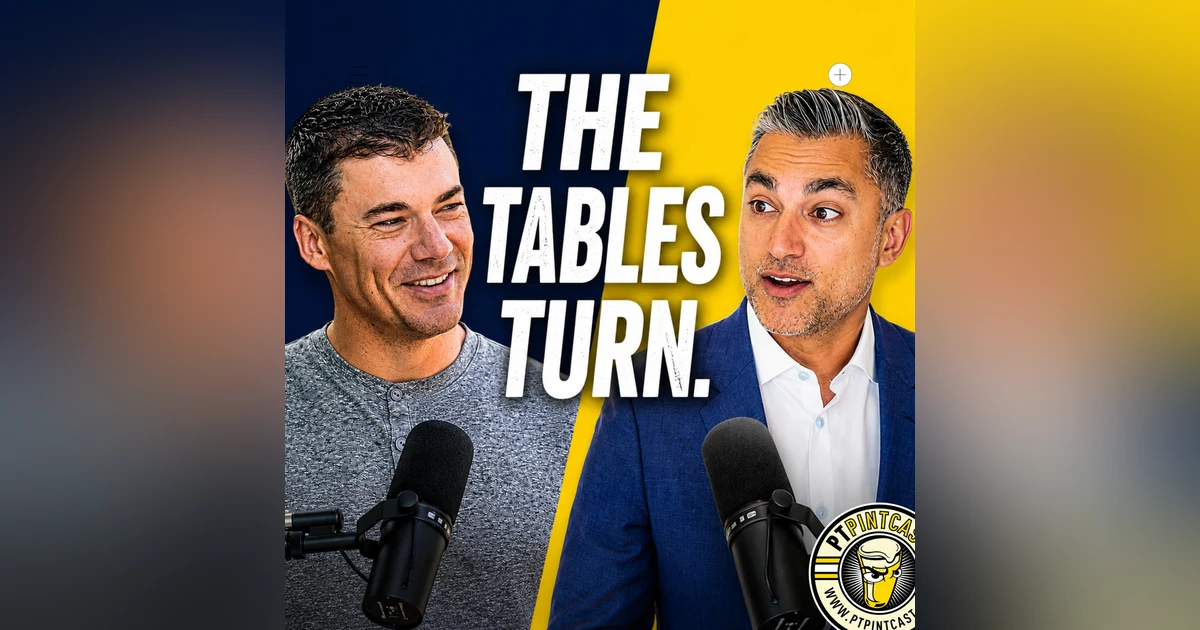


Most episodes, Jimmy McKay is the one asking the questions. Not this time.
In this episode, Amit Gagliani flips the script and turns the mic on the host himself — using AI-generated questions to dig into the story Jimmy rarely tells. You'll hear how a morning announcement in sixth grade led to running a rock radio station, interning at K-Rock (yes, Howard Stern's station), and eventually walking away from the dream job he'd had since he was 11 years old.
Then: why he almost went to law school, spent a year in business school, and finally found physical therapy through a triathlete friend on a bike ride.
Plus — what radio actually taught Jimmy about healthcare communication, why the PT profession's biggest problem has completely shifted in the last decade, and the one thing he says every clinic owner needs to stop saying on their website.
If you've ever wondered who Jimmy McKay is when he's not the one holding the mic — this is it.
Topics covered:
- Rock radio to PT: the iPhone moment that changed everything (2008)
- Interning at WXRK / K-Rock in New York
- What PT school looked like at 28, surrounded by 21-year-olds
- "Accidentally" starting the PT Podcast
- The $125K CSM fundraiser — and why no one stole the idea
- Why talent retention has replaced patient acquisition as PT's #1 challenge
- The PASO framework and why "mentorship" on your website means nothing
- "I make suggestions. You make decisions." — and what that really means in the clinic
<p>This episode is part of the <a href="/physical-therapy-business-podcast">Physical Therapy Business Podcast</a>, where physical therapists and clinic owners learn how to get more patients, improve operations, and grow their clinic without relying only on referrals.</p>
<p>Looking for more episodes? Explore the full <a href="/physical-therapy-business-podcast">Physical Therapy Business Podcast</a> for real-world strategies on physical therapy marketing, patient acquisition, and clinic growth.</p>
0:00 You're listening to the PT Pinecast, where smart people in healthcare come to make noise. Here's your host, Jimmy McKay. Amit, thanks for hosting my show. Is that what we're doing? Feels like it. We're going to flip things around. Here, usually I'm on the left and now I'll switch. Now I'm on the right. Good. Now I'm in the guest chair. I am the host interviewing you this time. And people who listen to this will get an idea of why we're doing what we're doing with this stuff. And I think this was spurred from an idea that you and I had when we were doing the NBA thing. And I said, you know, you provide such a great thing for everybody and opportunities to voice our opinion about what's going on in the industry. You voice your opinion.
0:40 But how many people know your origin story and know you? And I'm going to get into it. And I kind of figured out, let me figure out how to use AI. AI's in here doing all this stuff. And I said, you know what? I said to AI, I said, this host, Jimmy McKay, you know, what could I ask him? What questions could I ask him if I was the actual host? So if this stuff is talking about things that you didn't do, then obviously I put the wrong Jimmy McKay in. I'm curious to find out. I'm eager. Yeah, let's see what it says. So basically, I'm going to read off questions and I can't do it like a DJ like you. So everybody out there, forgive me, but I'll do my best. So Jimmy, you went from a rock radio physical therapy.
1:23 Wait, what does it say? You went from rock radio to physical therapy. Yep. What was the moment that made you decide to take that leap, to go from rock radio to physical therapy? Oh, I know exactly when it was. I was driving home from the radio station one day. So like, I'll set this up. All I wanted, I did the morning announcements in sixth grade. then said i don't know what this is but this is cool i went to college for journalism and communications i ran the college radio station for three years and when i say college radio station small tiny little upstate new york um catholic school you know it's probably nine people listening to the radio station when i did my first show at like midnight no idea what even physical therapy was at the time no no no yeah i'm twenty one years old right i all i want to do is be a radio dj And I worked the college radio station.
2:14 I get internships. I wound up getting an internship one year for a big station in New York. If you're in, if you're in New York area, you knew as K rock, it was WXRK where Howard Stern was like based out of. So he was simulcasted, but that was the station. That was like sort of my last internship. And that was, I mean, just an insane summer. After that, I got to come back home to the Hudson Valley, New York and run my hometown radio station or help run my hometown radio station. I was on the air and then I would do off the air stuff. So like dream job. So I'm twenty one years old. I have my dream job. Right. Fast forward a couple of years. I moved to a bigger station and a bigger market. I get to do a little more.
2:55 Eventually, my boss moves on to a bigger job. I get to now take over my boss's job. I now have my dream job. Eleven year old Jimmy McKay is now Could not be happier. I run a rock radio station. I have a radio show five hours a day. I help other. We just make up contests, give away. The goal is just be interesting or try to be interesting or be entertaining. Right. I'm doing that for several years. And then in two thousand and eight to get to your question, when was the moment I knew I had to make the jump is I had the my iPhone. We didn't call it the iPhone seventeen. It was just iPhone. the first one that came out, right? It wasn't even iPhone one, it was just iPhone. And someone had texted me a link to listen to something.
3:37 And I like pressed it in my car and I have my car like plugged into like my aux cord to my stereo. And I was listening, they sent me a link to listen to a live stream from a radio station in California when I was in Pennsylvania. And I remember just thinking like, wait a second, you can do radio over this thing? Like, What does that mean? And like, it was like stuttery and buffery in two thousand and eight. But in my brain, I was like, where does this go? What happens when this gets less stuttery and less buffery and gets better? And went back to work the next day and was like, hey, everybody, we need to pay attention to this. And nobody in the room thought this was a threat at all. And I looked at this as a thread up and down.
4:18 And I didn't know what the jump was going to be. But I was like, radio is not going to be the same in ten years. And I was like twenty eight at the time. I'm like, what am I going to do for the next thirty years of my life? So went to go to law school, got halfway through the Kaplan prep course before I was like, no, not I have no idea what language this is. I did a year of business school, didn't mind that, but I didn't love it. Um, and then I was a weekend warrior triathlete and the guy in charge of like our bike rides was sort of a, was a PT. And I was like, this seems cool. This seems interesting. It seems people centered and hung up everything I do. Well, I still needed like a year of prerequisites. So I was still like taking classes while I was in the radio studio. Um, so I did that for a couple of years until I got into PT school and that was it.
5:02 So that's, that's, that's where the change came from. So while you're in PT school, you see, obviously you're learning anatomy, which is very different than being a DJ. Did you at any point while you're in PT school realize, Hey, you know, I have a different, not take on things, but my communication skill is very different than some of these other people's communication skills. How do I meld the two together? Or what can I use from my radio background to make this more interesting? Or were you just like, I want to get through PT school. I just want to be a clinician. Yeah, I think the last one, I think literally I looking back or what I would tell someone is like, if you have these different skills, lean into them. I think I was trying to just blend in. Like, no, I can. I was trying to prove myself because a lot of people were tenured.
5:44 Most of my class was ten years younger than me. So I was just trying to like, no, I can do this. I can keep up. I can learn and I'm smart here. It was probably like in the second year of PT school when we went to do like subjective exam. And I remember my classmates were like, very much like, what are the nine questions I need to ask? And I'm like, well, you don't just ask one and then wait for the answer, then pick your next question. And to some of them, that was like... gibberish. They were like, no, no, no, no. I need to memorize nine, the nine questions. We're going to be graded on this. And I'm like, no, like ask a question and then let that answer dictate your next question. But I never, it wasn't until I accidentally started a podcast.
6:27 Did I ever actually, and even then I started it as a goof. Like I didn't think it was going to be a thing and I'm still not sure what the hell it is. I think it's just art imitating life, but no, I'd love to say it was strategic. It wasn't. It wasn't. We got PT podcast, which I call a media company, but you know, so tell me this, you've done hundreds of episodes. What conversations changed the way you think about our profession? Everybody's in there giving their takes on different things. Is there something that you've heard that you were like, Oh, this changes the way I've been thinking about things. Um, most of them do. Most of them change it. Maybe it's not like the most profound, you know, world changing way, but I'll give an example.
7:09 I was probably like seven or eight months in maybe a year and change into the podcast. I was getting close to graduating. And we went on a service learning trip to Costa Rica. So we spent two weeks in an orphanage in Costa Rica at the end of PT school. And I was like, this is cool. But I still have no idea what the hell I'm going to do when I graduate. Everybody else is like locking up jobs. They know exactly what setting they're going to be in and where they're going to work. And I had no idea. I was still like, I don't think I belong here. Just felt, always felt like the black sheep. And I met a kid in Costa Rica who had muscular dystrophy. And he had the greatest attitude on life and didn't own his own clothing.
7:50 And yet woke up every day like the happiest person on the planet. Lived in an orphanage. Isn't that just incredible? I was like, I couldn't wait to go down there and show... the people who worked in the orphanage and the people down there, how much we knew. And then that was the exact opposite is I wound up learning from that. So the thing that pissed me off was he, he just sat in a tilt and space wheelchair all day. He had some wrist function. And I remember turning to a professor and said, if he was in the U S what would he have technology wise? And she was like, Oh, he'd have a, probably have a power wheelchair, but Use this as learning experience. How do you like price one of those? How do you build one of those? So we use like, you know, company's website and she was asking me questions and I was answering and then she built it and she's like, now, how much do you think this costs?
8:33 And I was like, I don't know, fifteen grand. She's like probably about thirty three. And I was like, wow, it was I think it was a little more. And I just started the podcast. And then I was just pissed that like, here's this kid who's got this great outlook on life and he's just not going to get this thing that could change his minute to minute existence because he's what? He's born in Costa Rica and that's it. So we started a GoFundMe page that night. So the night the service ordering trip ended, spring break started for a week. So instead of flying home, some of us stayed in Costa Rica and had a couple bottles of rum. And instead of me doing backflips into the pool the first night, I was at the kitchen counter figuring out, how do you get thirty three grand for a kid who doesn't own his own clothes?
9:19 So I just started doing episodes about it and said, give me ten bucks, give me ten bucks, give me one hundred bucks. And companies started coming on board. People would be like, here's a hundred bucks, you know, here, just giving and never asking for anything in return. So I think we raised thirty three thousand dollars in sixty six days. Wow. And so you asked me like what the what the interview or the episode was that showed me something. It sort of showed me that like you can use your familiar skills in unfamiliar ways if you really lock on to a goal. Um, so like my goal was like, I want to make sure I at least accomplished something by the time I graduated. And that was the thing I was like, I don't know what this, these two things are connected, but they're connected somehow.
10:03 So do you use your PT podcast company or PT podcast website to help other, let's say, um, companies launch their own podcast or their own companies to launch their own podcast? I've done that, but before we hit record, um, Gosh, healthcare. Before I came to healthcare, I was like, healthcare is just this big, stable thing that has lots of money and lots of smart people. And this will be great. Once I get in, I'm in. And then I get here and realize what margins are. Yeah. What margins are and what PT margins are. And then, you know, I mean, it's not like radio is unregulated, but it wasn't as highly regulated.
10:44 Maybe it's, you know, obviously healthcare should be regulated. But like, I remember just like talking to smart people and watching them just be so like, I understand your idea is good, Jimmy, but like, it can't happen in healthcare. And in the beginning being like, I'll prove you wrong. And most of them were like, I'd love for you to prove me wrong. They weren't doing it to be difficult. So I've helped people. It's a different planet. Healthcare is a different planet. I've been in it almost as long as I was in radio. And I can see the differences. So yeah, I've done a little bit of everything. I threw a party at CSM a couple years ago. um where the thing was i was a little pissed off i was like we all come together we drop tens of you know thousands and thousands of dollars on hotel rooms and money and renting out a conference center as a profession we go to a city and drop lots of money but i'm like where's the give where's the where's the as soon as we leave and you know the accounting association comes in next week no one knows we were here so i was like you can do cool stuff and make an impact.
11:48 So I rented out the San Diego Children's Museum, got liquor and a band and a comedian and music and the whole nine. And I raised one hundred twenty five thousand dollars, spent ninety and then gave the margin away to three nonprofits. And then I gave away how I did it in a YouTube video and was waiting for everybody to come Russian and steal the idea. And no one did so. Yeah, I don't I look at things differently, but I also understand that there are rules Yeah. Well, you definitely give back. I mean, that's the whole reason that I was here, and that's the reason I'm asking you questions. You served on the Foundation of Physical Therapy Research Board of Trustees. You've worked with the Academy of Orthopedic PT.
12:31 You've held roles in Fox Rehab and Mount Sinai. What drives you to keep saying yes to these opportunities? Is it a meld of something? What is it? Yeah, there's a good fight. Yeah. I talked to a buddy who's sort of a semi-career coach not long ago, and we built this fictitious... Because I'm like, I don't know where to go. For me, there's no job description that I can typically apply for. Sometimes there are. A marketing or communications role would be a good fit sometimes. But there's not a ton of them out there. And he literally said, but what's the difference? Why don't you just... So he said, he's like... if I gave you as much money as you think you need all the resources and you're going to go work at Samsung and you're going to sell TVs, would you want to do it?
13:17 And I was like, no. And he's like, why? And I'm like, there's no good fight there. You know, I'm not worried that the world is lacking TVs or whatever. And he's like, right. So he's like, you got to look for that. So, and it might seem like there wasn't a good fight in radio, but there was like, When you work for a radio station, you try to make the radio station cool because you have to build up audience. So people think the product of a radio station is the radio station. It's not. The product of a radio station is the audience that you build every day. Because then you take that audience and you turn to a car dealer, a restaurant franchise in your local community and you go, I can marry my audience to your needs.
14:00 I can put those things together. And I like it because the audience never paid for... us to listen to us. They voted with their time every single day, every hour, every minute. And if we earned it, we had to earn it. And we knew who our audience, we knew what we owed them. So I look at that in healthcare where I'm like, I know you're good at what you're doing, but you have to earn their attention before they think of you. And I don't think that's on the first things for people who own their own health practices to think about. Yeah. Well, you spent years putting other people's stories out there. What's something about your own journey and in our profession that no one knows about?
14:45 That no one knows? I talk a lot, so I don't know if there's anything that people don't know about. I think the funny part is I forget that new people come to listen all the time. And I feel like I've told my story, you know, fifty times in the last decade. But still, when people come in, they don't they don't start with my background. You know what I mean? Like I remember someone's like, I've been listening for three or four years. I just found out you used to be in radio. It makes complete sense. And I'm like, how'd you not know that? But I'm like, I don't start every conversation with that. So I think like people need to remind, people need to be reminded that a lot of times they're interacting with you for the first time. But really the goal is them.
15:26 The goal is I make sure whatever I'm doing is valuable to you or you're going to stop listening or they get focused on. Right. So is there anything that people don't know about me? I don't know. Well, you sit at a rare intersection, and I was saying this to you before too, of clinical knowledge and professional communication, right? Which is very different than the typical PT. Where do you think that combination is needed most right now in healthcare? Oh, right now in healthcare is making sure that organizations can find the right clinicians, right? It used to be patient acquisition, making sure people know what we do and get them.
16:08 And from all the people that I talked to, they're like, that's a problem, but not in our top three right now. We need to find and keep talent. And then I come in and I go, why can't you? I just start doing what a PT does. But it's also what a good journalist or communicator does, which is like, what are you doing now? Who are you looking for? Why can't you find them? What have you tried that's worked? What hasn't worked? Let's write that down. What are you trying to communicate? Show me now how you're doing that. And let's dissect what you're doing. Because it's a shame to have a great service or product That could really help people, not like just selling TVs. And the reason you can't deliver more of it is you can't find the right people.
16:50 And there are the right people out there. So I didn't expect that because I don't think that was the problem ten years ago. It definitely was not the problem ten years ago. So that's the big one for me. Ten years ago was explaining to patients that we weren't personal trainers, that we were physical therapists. And how can you come to us and what can we do for you as opposed to a massage therapist? It was just convincing people. Now it's how do we get more people into the profession or how do we recruit more people? Because we have now delivered a service that people recognize and want. How do we get more clinicians that want to stay and they'll get burned out and just enjoy what they do and wake up in the morning wanting to help people? Correct. So I think in radio, one of the things I got to do or had to do was listen both ways.
17:36 So it wasn't just like, here's this thing, audience, listen to it. It was really like, how do I pay attention to it? Like, they don't like this. okay, well then do I, at what point do I stop doing whatever it is that they don't like, right? If one person doesn't like it, that's nothing. But if ten or a hundred of them don't like it, that's signal. So I do sit at that intersection where I talk to a lot of clinicians and a lot of owners and I'm saying, you know, they're begging for mentorship. What do you have? I'm like, oh, we put mentorship on the website. And I'm like, is there a program for that? Yeah. Is it good? Nah, it could be better. Or it is good. How do you communicate that? We say mentorship. You say mentorship, they hear nothing. They hear vagueness.
18:17 So it is, I know people know me as the guy who talks a lot, but I do pay attention. I do read and listen a lot because that's the way to know what to talk about, in my opinion. Right. Well, as far as you're headed, okay, if the right opportunity landed in front of you tomorrow, one that fully used both your peaky brain and your media skills, what does that look like? One of two situations for me, because I'd like to stay in the profession. I really would. It would either be working for a practice, and I guess they would have to be large enough to be able to hire someone like me. So we'll say like a mid-size to large practice and help them just make their good work well known so that they can attract the people that they're a good fit for.
19:05 I'd rather have them have... half as many applications but have the batting average of those half of those applications be higher as in half the amount of people apply next year but of those people twice as many are good fits and stick around for two to five years so that's one side the other is i do think there's a lot of opportunity for technology And I do hear from a lot of technology people who are just like, I made this great app or I made this great platform and everyone's going to buy it and love it. All I got to do is buy some apps. And I'm like, yes, my friend, I really wish it was that easy because we'd have all this technology all over the place that worked.
19:46 Right. So I think there's some, I think that's all because practice owners are inundated with this is the next thing. This is the next thing powered by AI. Here's where it is. So I think it's marrying the right people. So a practice to the right clinician or the technology to the right company to make the best impact. I don't want to just do more. I want to do more right. And I think that's simple, but not necessarily easy all the time. yeah i get it well what does it feel like to be on the other side of the mic being interviewed a little out of control right because because do you do more talking with me asking questions and you're talking a lot or is it usually the other way and while you're playing you're playing tetris yeah i get to listen a lot more uh when i'm when i'm you know when i'm on your seat and then i get to sort of i just look at like everything someone's talking about is like a point in the middle of a dry erase board and then i'm just wondering how does that apply to this or how does that apply to that because there's a straight line between any two points you learn that in you know fifth grade geometry and that's sort of how i look about how i look at topics or what we're talking about was like okay how would that affect this or what now or what next or how would you i mean one of the one of the first like ideas for launching the podcast I sat in a room full of, I don't know, a thousand people at a conference and listened to someone on stage and they were, you know, yammering on about something that was going over my head.
21:13 And I just assumed it was because I was a second year student. Well, I meet him in the bar an hour later and over two pints of beer, I realized I understood everything that guy was saying, but he was on stage and he was all buttoned up and he was a presenter here. We're having a conversation there. He was doing a presentation and one beats the other. So I was like, if I could do smart conversations at scale, Gosh, yeah, I mean, the show's got like five or six million downloads in the last couple of years. Like it's a lot of just like information bumping around in a digestible way. Look where we are now with AI. You could figure anything out, but the problem is now you can figure everything out. What thing do you work on?
21:53 Now it's not the lack of information or processing. Now it's, you have to focus on one thing. What am I going to focus on? It's wild. Yeah. It is wild, yeah. Unfortunately, sometimes you chase shiny objects, but yeah. Overwhelm. Absolute overwhelm. Completely agree. Absolutely. Anything that we did not touch upon that you want everybody to know about you? No, I mean, one thing you said, you know, is like my communication skill when I was going through PT school, I think a lot of people will undervalue their own ability to communicate. And the way they do it is they try to over professionalize it where I want people to keep it simple.
22:37 I'm like, you can only ask six questions, right? Who, what, where, when, why, how? Like, that's it. Now there's variations of those things. Well, I've seen your LinkedIn posts and you keep it pretty simple. I will tell you that. It's like your superpower. You simplify something and then you get a lot of people interacting and people jump on it and want to interact on it because they're like, hey, I have something to add to this. They look at it like an open door. I can understand this. Now, there are some things that require more nuance and can get complicated. But the person who can take a complicated thing and explain it simply, he really understands it. I think that was Einstein. If you can't explain it simply, you don't understand it.
23:19 That might take a little longer, but that was, I think, our problem. And I think our profession has gotten better at that in communicating what our value is. When you say I'm valuable, I'm like, great, show me. Can you point to the value? Point to the outcome. Um, I, that, that's why I'm still bullish on, on PT and healthcare is we're now in a society that really values wellness. And the one thing you can't, the one thing you really own, right? Your health. Um, and I think people are willing to lean in a lot more now lean into doing the work for that than they were maybe ten or fifteen years ago. And I think that's a good thing.
23:59 It's a good position to be in. Yeah. Yeah. I think, I think overall the APTA profession or the APTA, you know, had, had put a lot of value on what we did and how to convince people and just educate people, the public, right. And they went hard at it and, and, and I've seen it and that has changed. Now I see them putting their sites on reimbursement and educating re you know, payers and things. So, you know, let's see if something comes there too, because that would be great. Agreed. Yeah. Yeah, that's great. I think that's all the questions that I could come up with that I felt like they were intriguing enough and not boring. How did I do as a host?
24:40 You seemed curious. I think that's all you need. I mean, and hosting a podcast or hosting a video and talking to a patient for the first time or the hundredth time, I think it's the same thing. right? I mean, Chris Voss is a hostage negotiator. He said, every conversation is a negotiation for information. I either want you to know something or I'm trying to get information from you or to you. That's it. Yeah. Yeah. So I know like a lot of times it'll feel like, uh, um, Well, that's funny because it sounds very similar to what I used to tell our new PTs that would come in and they were like, oh, I don't like sales and things like that. I said, you understand that everything is sales. When you go with your girlfriend to a movie theater and you want this movie and she wants that movie, you're selling your idea.
25:25 When you're going to watch Netflix, you're selling your idea. When you go to a meal, you're selling your idea. That's all that is. If you believe in what we do and you believe that you can help the person, you're not selling them. You're educating them so they can make the right choice. Agreed. And I'll even actually further bring the crossbars closer, which is I make suggestions, but you make decisions. So I know people are like, I sold that. I'm like, you explained it. They still had to decide to buy or do, right? So we've heard this phrase before. It's like, you're pushing too hard on the sale. And that makes the person just sort of go, and you've heard, I've heard, listened to really great salespeople say, don't oversell.
26:10 Don't talk past the sell, right? Explain it and then learn when to shut up Because that's the key. They're going to now decide, yay or nay, do I want to invest time, effort, or money? And that's really all you can invest, time, effort, or money into getting an outcome. Your job is not to get them to buy. It's to explain as well as you can what it is and what it solves, what it does in the future, and then let them decide. I make suggestions, but ultimately, whoever they is, they make decisions. I get it. I may have a little bit of a different take on some of those things, though. I will tell you, if I'm talking to somebody that I care about, let's say it was my mom or a family member, I will overcome their barriers to something.
27:00 If they're like, no, I don't want to do this. Okay, well, explain why you don't want to do it. Well, sorry, that's a barrier. You're still explaining the whole time. Unless you got a gun... Unless you got a gun. Yeah, you're not forcing them, correct. They have to decide. Yeah, yeah, yeah. So absolutely, like I make suggestions, you make decisions. But ultimately, unless I'm robbing you, which is a pretty, it's still a suggestion, right? You can still decide if I got the gun in my hand. But really, it's like, especially what we do in PT, it's behavior change. And you've been with people, you're like, you're going to do this for a week and you're going to stop. I know it. I know it. That's true because they weren't bought in. They weren't bought in and it wasn't their idea.
27:42 They just kind of did it because they got forced into it. So there's truth to that, a hundred percent truth to that. We make suggestions and some people suggest better than others. A hundred percent agree. Yes. Some people are like, do this. No. Okay, moving on. No, no, no, no, no, no, no. There's an art and a science to this, which is- I was working with someone this morning and there's an acronym called PESO, Problem, Agitation, Solution, Outcome. So it's a paradigm. Don't you hate when ants start coming in your house in the spring? Ants can lead to infestations and damage. Uh, but putting these two dollar ant traps around your house, a hundred percent removes all the ants.
28:24 They, they eat it, they go home, they die. And now you never have to worry about ants in your house. Problem solved. agitation, solution, outcome. Look at any infomercial. That's the order. They go P-A-S-O, P-A-S-O. They just repeat, repeat, repeat. And then that's all they can do. They suggest, they suggest, they suggest. Do you want this outcome? Yes. And you have to do this. Got it. What's it cost? Nineteen ninety five. And operators are standing by while supplies last. Jimmy, I'm always following you on LinkedIn, but are there other channels that we should follow you on that? I do the, the, the big four right now, which is also my suggestion. If you don't like.
29:05 playing or or consuming on a channel don't go there so i do linkedin facebook instagram youtube just because to me uh i like like i don't do tiktok should i haven't figured out your tiktok dances yet i haven't done tiktok yes no no no next but those are the big four that i'm on Nice. Very nice. Well, thanks for the opportunity to interview you. Thank you. I enjoyed it. It was kind of fun sitting on this side as opposed to the other side. Yeah. We'll figure out something for another episode. Sounds great. I appreciate you interviewing me. Thanks for making it not feel weird. All right. Thanks.
29:46 That's it for this one, but we're just getting warmed up. Smash follow, send it to a friend, or crank up the next episode. Want to go deeper? Hit us at pgpiecast.com or find us on YouTube and socials at pgpiecast. And legally, none of this was advice. It's for entertainment purposes only. Bullshit! See, Keith? We read the script. Happy now?