Communication Skills PTs Need But Don’t Learn
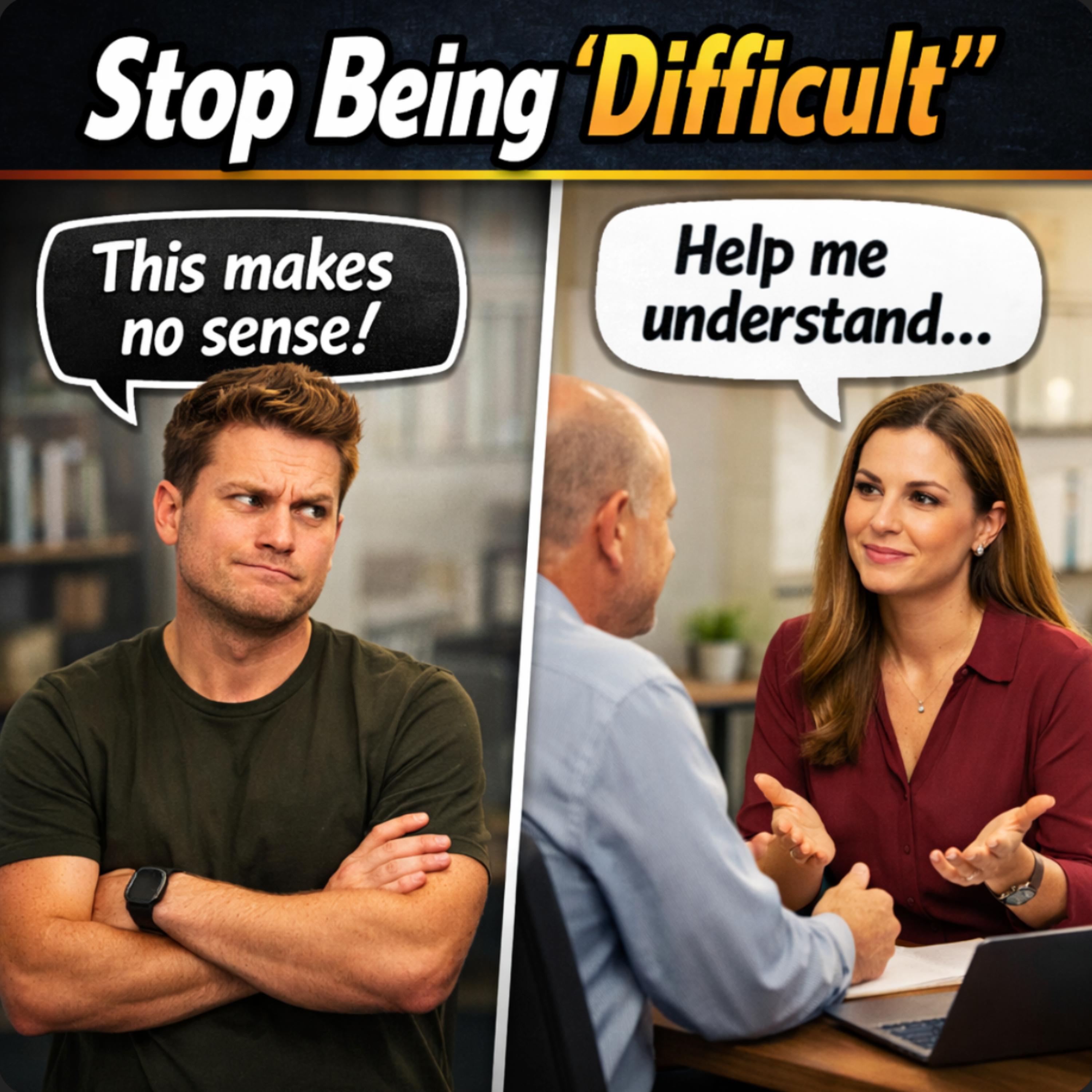


This episode dives into one of the biggest frustrations in physical therapy: feeling unheard at work. Rebecca Griffith breaks down how to communicate with leadership, advocate for patients, and avoid being labeled “difficult.”
Key Insights:
• Most leadership decisions are system-driven, not personal
• Curiosity beats criticism in tough conversations
• Timing, tone, and delivery matter as much as the message
• Not all feedback moments are created equal
• Small organizations allow more personalized communication
What This Means for PTs & Clinic Owners:
• You can advocate without damaging relationships
• Better communication leads to more influence—not less
• Understanding the system helps you navigate it
• Emotional reactions can sabotage valid concerns
• Leadership communication is a learnable skill
Tactical Takeaways:
• Ask: “Help me understand the goal of this decision”
• Write questions first—don’t react in the moment
• Clarify: is this decision final or open for input?
• Choose the right time and setting for feedback
• Focus on system impact—not just personal impact
Guest
Rebecca Griffith, PT, DPT
Sponsors
SaRA Health – patient engagement solutions
EMPOWER EMR – faster, smarter documentation
U.S. Physical Therapy – clinic growth and career pathways
<p>This episode is part of the <a href="/physical-therapy-business-podcast">Physical Therapy Business Podcast</a>, where physical therapists and clinic owners learn how to get more patients, improve operations, and grow their clinic without relying only on referrals.</p>
<p>Looking for more episodes? Explore the full <a href="/physical-therapy-business-podcast">Physical Therapy Business Podcast</a> for real-world strategies on physical therapy marketing, patient acquisition, and clinic growth.</p>
0:00 You're listening to the P.T. Pinecast, where smart people in health care come to make noise. Here's your host, Jimmy McKay. Rebecca Griffith is back. Off script, I believe we're going with the name of this right now. We promised last time that we were going to talk about something. I'm glad you remembered what it was because as people may or may not know, I talk about a lot of things. By the time we get back to talking about the thing we promised, I forget. So what was it? We brought up a topic towards the end of last conversation and it was a good one. Yeah. So last time we talked about negotiation, but one of the other things that people have been asking me about, because I talk about practicing at the top of your scope all the time.
0:41 And so people will message me and they'll say, hey, I really want to practice at the top of my scope, but I can't because of barriers at the place where I work. And those barriers seem to be like policy changes and decisions coming from administration that don't seem very clinician-centered or clinician-focused or patient-centered or patient-focused. And these clinicians are having a hard time advocating because they feel like when they do, they're being labeled as problematic. They feel like they get in trouble. They feel like things are punitive. They feel like clinicians aren't included in decisions. the policy changes at the phase where they should be where that input would be valuable and then they just have these policies thrust on them and they feel like they just have to smile and continue on even if they disagree so we were going to talk about how do you have those conversations with your leadership team is there a better way to understand where those decisions are coming from and how do you bridge the gap between like us versus them Yeah.
1:37 So I know I have worked in very, very structured organizations, like large organizations and also smaller. There's some structure, but maybe less structured organizations. And this happens in both of those things. So I feel like we need to give advice for like super structured. I'm thinking like hospital system routes. And also smaller organizations, some structure, but maybe a little less structure. What do you do in those situations? When you said that person gets labeled difficult, you know that's me. And I figured out why that is. We talked about this a little while ago, the six types of working genius. And once I figured out what my two strengths were, my two working geniuses, wonder and invention, I love, well, I ask questions, but the purpose is to figure out why are we doing that?
2:30 And I understand because I've been in leadership and other people have asking a lot of questions, I can see how that gets frustrating. So I've been on both sides. So I try to sort of temper my amount, the volume and the speed at which I ask questions. And when, like right in the meeting, maybe that's not the best time. Maybe it's time for a pause and talk afterwards. So let's go with super structured because you work in a lot of like very structured hospital systems or help people do that. What are the best things to do? Well, I think one of the things that I've realized over the last several years is that like as a clinician, you feel very much like don't infringe on my clinical judgment and I'm here to help patients and you're taking away my autonomy.
3:13 And in large organizations, I feel like it does feel like that when they're trying to standardize across a large system. So it does can feel like that. But the thing that I remind myself is like, The leadership team is not really there to advance practice physical therapy. They're not there to make sure all of their staff are happy. Like their goal and your goal, really, if you work in a large organization like that, is to advance the mission of the hospital. and so they're looking at ways to do that and i think if you can see that where that like what they're bringing to you how does that advance the mission of the hospital it may not advance your mission as a clinician so i think leading with curiosity and we talk about this a lot curiosity and not criticism because i think we also get defensive very quickly And our immediate response is to be like, what?
4:02 Are you kidding? And I think like backing off from that and being curious and saying like, hey, can you help me understand the goal of this policy? How does this align with the hospital? And how does this align with our ability to provide patient care as physical therapists? Sounds like you're trying to quote Ted Lasso, which is be curious, not judgmental. I have never seen that show. You? Oh my God, really? From what I know about you, I figured you were a... Lasso head or whatever. No, I don't really watch a lot of TV. So I'm like pretty outdated on all of the shows. So, but I have seen that clip where he's like playing the darts and, you know, and we talked to our kids about that too, like with their interactions with other people, curiosity, not judgment.
4:47 But I think it's, In this case, even curiosity and not criticism, because I think our default reaction is just to be immediately critical without really understanding all the work that goes into a leadership decision, particularly across an entire health system. The person who cuts you off in traffic. did not cut you off in traffic that person has no idea or is a jerk yeah it is not personal um the decision being made hopefully came from a place that they took into consideration lots of different options and this is the decision so first it sounds like you're saying take a breath this was not made for you right this was not personal and try to under that seek to understand and not to criticize And I think the next part is just like really, truly listening, understanding the goal, understanding why that decision was made and then understanding how is it really going to impact you?
5:51 Is this actually like, it feels very impactful. It feels very heavy, but is it actually going to impact you and your ability to provide care? Does it change anything? And if it does, and if there's actually going to be a problem, once you've calmly assessed that, I think just saying, are you open to feedback about this process? I have clinical concerns. Okay, so that moves to like sort of my first suggestion, which would actually be lead with a question, large structured organizations, smaller organizations, that maybe you could ask this question before a decision is made, either upon hiring or later on in your career, which is, hey, if I have questions or concerns, what's the best way to find out more information about them?
6:35 Do you want me to raise my hand in the meeting? Or is that not... because we've all i've at least i'm assuming you have been in that meeting and now it turns into like the town hall but the town hall outside of like frankenstein's yeah you know uh cottage which is pitchforks yes and once somebody breaks the seal right so like i'm all for asking questions early and often but the question also has to be so what someone taught me this ask yourself these three questions does this need to be said Does this need to be said by me? Does this need to be said by me right now? And if the answer is yes to all three, by all means.
7:16 If the answer is no to any of those three, then either no, not you, or not you right now. And I would even go with a fourth, in what way? So like, does this need to be said? Does this need to be said by me? Does this need to be said by me right now? Does this need to be said by me right now this way? And typically in the middle of a staff meeting, when the change is announced, that ain't the place. Yeah. Unless they ask, unless they say, But again, I typically would default to, hey, what is the best way to... Can you talk me through this? Again, because managers are people and systems are just people connected. What's the best way for me to do this?
7:57 And I feel like... that at least reduces the opportunity for someone to label you as difficult. It's like, I did the thing, you told me to come this way. I'm actually trying to engage. The funny part is I think the person who like, the type of person who wants to find out why are we doing this? What is this going to affect? It's typically super engaged. The person who's checked out is like, all right, whatever. Whatever, yeah. They're like, you could lose that person who is engaged. You could turn them into someone who's disenfranchised and that isn't the goal. But I think the best way to lose that person is to make them feel psychologically unsafe after they ask a question. Oh, totally. I've been that guy. Yes, yes.
8:37 And they're like, hey, help me understand this. I have some concerns about this. And then there's a punitive response. I think that's a really good way to like completely lose that person. I've been that guy. Oh, I have an open door policy. And whenever you want to ask a question, then I do. And then, hey, listen, seventy percent of communication is nonverbal, said someone. I know when I'm Being told to ask a question, but when I do, I'm being told to stop asking questions. And when I do and I feel that, good luck getting me going again in a good way. Like, all right, I'm out. I think it's also helpful to understand, is that decision already final? Like, is it something we're considering or is this a done deal?
9:19 And all I can do is ask clarifying questions. And when they ask, are you do you have any questions is a very different question or a different statement than do you have any feedback or comments? Those are different things. I did not understand this until I made my career change to physical therapy and started going to conferences and then realized that there was a whole meme behind what you just said, which is after someone says something clinically, non-clinically, gives a presentation, panel doesn't matter. And then they open it up to the floor and there's microphones around the room. And then the meme or the cliche is sort of, This is less of a question and more of a comment. Actually, it's all comment. And that's not what we...
10:00 If you didn't ask for that, not the time, nor the place, nor the way. I think that's also a good way to put your foot in your mouth. I heard this the other day that made me feel very you. And I wrote it down, which was... When someone asks you a question or brings you a problem or is looking to interact, they're looking for one of three things. And your job is to figure out which one of those it is or even ask. That's a way of figuring something out. And then understanding if you can deliver that. And the three ways were, is this person need to be hugged, heard, or helped?
10:45 So hugged would be more like, I'm going to commiserate with you. Like, that's not okay. I understand how this makes you feel. Like sometimes some people do not need that at all. Some people are seeking that, might not know it. Heard would be like, you just needed to vent it and you needed to vent it to a human. Yelling about it in your car is not enough. I agree on that way too sometimes. And then helped is, are they actually coming to you to have you help them fix it for you to fix it? What is the reason that they're bringing? So this feels like the person in management will assume that the management person is bringing that decision down. The management person should take this sort of triple H approach, which is, does this person just need to be hugged?
11:30 Does this person need to be heard? Or does this person need to be helped? Are they looking for you to change it? And then your response comes off of that. Because sometimes just be heard. Like, okay, your concerns are heard. I see that. And then they're okay with that. Some people, that's all they're looking for. The hug is like, hey, man, I commiserate. Like, that's not, you know, and then I'm here because I disagree and I want you to change it. And I'm like, okay, but I can't because that's the decision that was made above me. Don't kill the messenger. But like, I thought I found that was interesting that someone said, Because this works in lots of relationships. Sometimes I just want to say stuff and people are like, well, how do we fix it?
12:10 I'm like, I don't need you. I'm not like, that's not what I'm here for. I don't need you to fix it. I wanted to vent it. Now that I'm vented, I'm good. I think the other thing we forget is that I definitely have learned as being part of a board is that once the decision is made, you might not agree with that decision, but you still have to go out and present that and own that and carry that and implement it. So I think we forget about the humanity of the people in leadership, too. They may not even agree with the decision that's been made, but it's still their job to implement it. And I think we put them in the middle unfairly because obviously we're not going to go five levels above them and start screaming at that person. We would never, right. It's almost like when your kids are like meaner to their parents than they would be to their teachers.
12:54 Cause there's like different layers there. And I think sometimes we just kind of go after our management team because we disagree, but they might too, but they're not allowed to like, show that. So I think just having grace with the people in leadership as well. It's not personal. They're not doing it at you or to you. I agree. I think people I think sometimes the most engaged people need to hear that because they're so engaged and they feel, I mean, I'm even using that word, they feel connected and they feel that a direction might not be the right way. And it's hard for, I'm saying this from experience, hard to disconnect the decision from your feeling because you're like, no, this is not the direction, but there's also ten other people around me on a board.
13:43 And that's how decisions are made at large organizations. And if you don't like that, go start a one person organization. But then you lose the things that you get with a larger organization. Yeah. So I think what's the biggest what's the bigger picture? How does this align with the organization? Not necessarily my role in the organization, but how does this further the mission of the organization? Why was this decision made? This is impersonal. What is the best way for me to communicate about this? Is this actually impacts me? Is it worth it? And then how am I going to talk about it? Yeah. Is this as bad as I think it is going to be? Or is this even actually what I think this is?
14:25 I heard a guy speaking the other day that said, one solution to misinformation is typically we share too much at one time. Just want to give everybody everything. And the guy really put it in great perspective. This was Donald Miller. He said, would you ever communicate your next seven chess moves all at once? It's like, well, no, it's like too much. Even Martin Luther King said, you don't need to see the whole staircase. You need to see the next step and know that you're going in the right direction. That's the direction you want to go in. So I think that happens a lot where here's the nine things that we're changing. And that person is trying to digest nine changes.
15:06 Gosh, we don't like a little bit of change, never mind nine. And I find that in large organizations. Knowing that nine things by a large organization need to be decided, but does it need to be said? Does it need to be said by me? Does it need to be said by me right now? Does it need to be said by me right now in this way? And a lot of times it's TMI. It's too much information. Not because you want to keep people in the dark, but because they can't digest some of those things. It's hard. Yeah. She always says, think of it like toothpaste. If you, can you put the toothpaste back in the tube? You cannot. I've tried.
15:47 Like imagine like squirting out an entire tube of toothpaste. Could you put that back in? And so do you like think about your words, how you think about toothpaste? Because if you can't get it back in the tube, so that seems to work well with like children as an analogy about how you should use your words. Yes. I think very good communicators are good at communicating. They're also pretty good at thinking about what the audience will think, feel, do when they hear a message. And before they send that message, they change the message to say, now taking into consideration. I mean, know your audience is so obvious and basic. Yeah.
16:27 know your audience and how will they react? Does that change your message? Of course it should. You would say something one way to your children as you would communicate it differently to a coworker. Same thing, different audience, different message. But a lot of times, how we communicate where, when is sort of my preference. I'm going to send an email to all staff because I want to be as efficient as possible. And I'm going to give you the entire plan, copy paste and good luck with it. And that ain't how brains work. No. That's a giant game of telephone. We know how that game goes. Fun game to play in third grade.
17:08 Good example. Funny game. But if you understand that that is a good example on how information spreads well or poorly, not great. Yeah. I think alignment, which we talked about last week. How can we all be aligned on something? What are the barriers to that? So at a large organization like a board or a hospital system, what would you tell the sender one thing to do different to improve communication? And what would you tell someone who's in the audience to improve receiving information?
17:52 Realistically, if I was the sender, I would probably find my most difficult person, quote unquote difficult, my most engaged person that I know is going to be the first one out of the gate, like upset, complaining about it, has feedback. And I would practice it with them because then you're making them feel engaged. You're making them feel important. You're getting that knee jerk reaction immediately in a smaller setting. And then that can help you tailor your message when you go for the big group. So I think there's probably different categories of people. I would get your like people who are always going to push back your people who always kind of accept things without saying anything. And then your people who are sort of like somewhere in the middle that are always like sort of more positive, more optimistic, like your innovators and like, I would do a dry run with those different people and to say, Hey, I want to get your take on this.
18:44 And then when you go to the bigger group, you have a little bit more sense and maybe you've, gotten some of that pushback and figured out how to address it so that it doesn't blow up and you don't have staff like complaining to each other and everybody kind of bringing morale down. So you mean actually take that person who might be the most, quote, difficult or labeled as difficult and actually bring them into sort of the team of messaging. That's cool. When you first were saying that, I thought you were saying picture that person and how would you communicate to them. No, I just run it. You're saying actually, hey, can we meet? Listen, there's a change coming and I've got to communicate it. Let's talk it through. And I value your input and I would like to have it before we do this presentation.
19:29 And that person does want to be, as Oprah has always said, seen, heard, and understood. Yeah. And now, you know, it's a sneaky good way because if you can make that person, I don't want to say happy, but if you can craft a message where that person understands in a good way... Um, who can't you improve? When I've, when I've worked on technology adoption, I'm like, give me three really forward thinking people to test this out for two weeks and give me three people who you think are going to hate this. Yeah. And if I can, I mean, obviously like the layup is the people who are forward thinking and early adopters, but man, what would happen if I can make the people who are crusty and don't want to do things and hate change, I can make them consider it and actually almost like it.
20:10 Is that a good, is that, is that a good bit of information? That's what I would do. And then how about from the other side? So that's what a sender would do. What would you tell people, which is more people? More people are going to be in the audience of hearing. Is there a step? Is there a thing or a couple of things which is like, first, exhale, reread the thing or redigest the thing, right? Or what else would you tell them to do so they can be better parts of the team? I think listen for the bigger picture. not just how this impacts you but how is this going to impact the system because that's that's realistically why they're doing it they're not doing it because of you and then write down your questions And then when you're feeling calmer, reread them later.
21:01 And then maybe ask what the best way to ask those questions is because I'm not going to lie. I'm obviously that person that raises my hand and I'm like, well, I don't feel like, like I am that person, obviously. I'm that person with the whole profession. So I feel like I, I have learned that I need to take a minute. I need to look at the bigger picture and I need to take a breath and you know, You can be a positive hole poker, but you need to make sure you're coming correctly. Yeah. What is the goal of my question? And I think a lot of people do come correctly and they still are corrected. And I don't love that. But I think just I can only control what I can control, which is how I'm receiving the information and how I'm processing it and then how I engage in that process.
21:45 Yeah. I like to remind people that systems are just a bunch of people connected. When someone's like, this place... I'm like, it's a bunch of people. I know there is a building, but it's people. And the larger the organization... the smaller that person is in terms of like a part. They're just a part of that, right? So a lot of times that person is just a messenger. This was handed to them or they were a small part of that decision being made. So try to separate, again, like going back to that analogy, like the guy who cut you off in traffic might be a gigantic inconsiderate jerk.
22:26 That's a him problem. But it wasn't, he didn't cut you off because he saw you in traffic and It's not personal. So removing that. I can say that very, very with a straight face because I am guilty of that or have been and try to not be now. Yeah. So that's my best big organization advice. And I'm obviously a big advocate at legislative advocacy, facility advocacy, self-advocacy. But I think we need to be mindful of how we're doing it. Understood. Yeah. I've said this before. It was a parallel I saw when I was in PT school.
23:08 And then going forward, I feel like the analogy or the comparison still holds up, which is frequency, intensity, time, type, volume, progression. Those are exercise principles. Those are also communication principles. Giving someone one really big, dense thing to understand. Like, well, I sent you the seventeen-page email. What's the problem? It's sent. It's in there. Per my email from last week, that's not how we absorb information. That's not how change is made, typically. It's just not. And the same as an exercise. I did one really hard deadlift. Where's the change?
23:48 I'd rather you do Less difficult deadlifts, but more of them spread out over a time period. The parallels for me are very, very obvious. Yes. That when you see organizations or people who communicate well, the exercise is crafted for that patient. The message is crafted for that person or that audience. It's done. Frequency, intensity, time, type, volume, progression over time. Things like that land better. work better. And I always say, the job of communication is not to convince you. The job is to achieve understanding. So this is where you might have a thing that you're saying in a meeting or a board meeting or a staff meeting.
24:33 And the thing might be bad. It might be. What are we doing here? My job as the sender is not to convince you that this is a good idea. The job is to make you understand it and what it is. I always move the goalpost closer to the kicker. The job is to achieve understanding. Yeah. That's it. How about smaller organizations? Let's say an organization of, you know, five to fifteen people, which is pretty small when you compare it to other organizations. Does it change at all? Yeah, I think it does, because you I feel like, you know, the people more intimately, like there's more of a relationship there.
25:14 So I feel like. I don't know. Maybe it feels more personal. Maybe it feels more like it should be a team decision in a group that small. I feel like when you're that small, when you're smaller... So now I'm picturing the radio stations I worked for. Because we might have like five to ten on-air staff people and then some support people. I rarely called an everybody meeting. Because the things I needed to communicate were different for each person based on task and visibility and what they were working on. So with smaller organizations that I worked in, I tried to make them whenever possible one-on-one because I could.
25:55 You can't do that in a hospital. You might not be able to do that in a large franchise of clinics. You can't do it. And keep in mind, I was a small organization as a radio station and asynchronous. The morning guy was not there at three o'clock in the afternoon. So me asking him to stay an extra six hours is mean and rude. So when I saw my agility as a small organization was, if I had something to say, I had no problem saying it eight different times in a day instead of one time to eight people. I also crafted, I changed the message based on the person I was talking to.
26:35 Again, that's something you can't do in a giant hospital situation, but you can do if the organization is smaller. And I feel like my adoption, at least I gave myself a better chance. Well, and I think too, when you're in a small organization like that as well, when you're making those big decisions, you can actually sit and say, how is this going to impact Jimmy? How is this going to impact Rebecca? How is this going to impact Chuck? And you can like really think about that as opposed to like, how is this going to impact the twenty thousand people in this hospital system? Right. All right. Let's keep this short today because we're sort of winging this one. What would your parting shot be for this topic?
27:19 It's not personal. It's really hard to remove that though. Yeah. Cause you're saying it to me and this will affect me in some small or big way. So it is hard to remove the, I mean, that's, Yeah. So I feel mine will be the same thing. It's not personal. I had a really good angle a second ago, or maybe I'm just having trouble like sort of communicating it, which is this wasn't decided for you. Yes. Very rarely have the things that I think are going to be a big, huge, scary deal that end the world actually end the world. Right. But I know in the moment when I'm hearing it, Gosh, it sure feels like that to my core.
28:03 I remember there was a situation, the radio station I was working for and running had gotten purchased. And I'd never been involved in a radio station getting purchased before. To me, it was like, oh my God, the moving truck is going to come and what happens? And some people who had been there longer than me were like, just relax. They handed out name tags. Like legit, like magnetic, high, you know, twenty five dollar pop name tags with the new company logo and my name on it. And I was looking around going, I'm not wearing a name tag, dude. What's this? And my boss who had been there through changes was like none of it. Oh, and the other thing was vacation accrual time had been changed.
28:48 So if you had like four weeks vacation, if you've been there for fifteen years, everybody was at two. And that made people freak out. And my boss was like, relax. He's like, I'll explain. And it turns out companies do that to get people who've been there a long time to retire early. He's like, now let me... So he did exactly that. They did an all-person meeting, communicated what the person above them had told them to communicate. These changes are going into order. And he pulled me aside and he's like, we're going to work around that. He's like, Jimmy, if you've got three weeks vacation, you've been here for eight years on the books, you'll be out for two weeks a year.
29:30 And then we'll be here. So essentially he was saying, and he knew how to say it to me because he saw my eyes in the meeting. Like, I just earned my third week of vacation after working here for six years. He's like, relax. It's not going to be as bad as you think. I think that is a good ending. Like, relax. It's not going to be as bad as you think. Right. Yeah. Again, I've brought this up before. My dad's great advice too is always, is the building... My dad was a fireman. Is the building on fire? And I'm like, no. And he's like, then breathe for a second. We'll figure it out. As bad as it... Is anybody bleeding? Is the building on fire? If any of those answers are yes...
30:10 We have a problem. The answer to any of those is no. Okay. I'm not saying what you're facing is not important, but we've got more time and we can figure it out. It's probably not as bad as you think. We're not on fire. We're not believing. Those are good things. Let's work it forward. Rebecca Griffith, what do you have coming up and what do you have coming up? What are you looking forward to? Oh, goodness. You know, I am presenting at a conference at the end of this month for emergency medicine and rural indigenous communities, which I'm really excited about. That's fun for you. I feel like that would be a step. Hill Day is what I wanted to mention. We'll be in person for Hill Day. Maybe we'll do some short form videos. That was my pitch. I want to get as many people who are going to Hill Day. If I can get thirty seconds with thirty of them.
30:51 why you go i feel like that would get more people to go a year three five so maybe we'll we'll meet we'll do one of these live at hill day as we're walking the hill perfect rebecca griffith the eddpt thank you see ya That's it for this one, but we're just getting warmed up. Smash follow, send it to a friend, or crank up the next episode. Want to go deeper? Hit us at pgpinecast.com or find us on YouTube and socials at pgpinecast. And legally, none of this was advice. It's for entertainment purposes only. See, Keith? We read the script.
31:32 Happy now?