AI in PT Clinics: What Actually Works
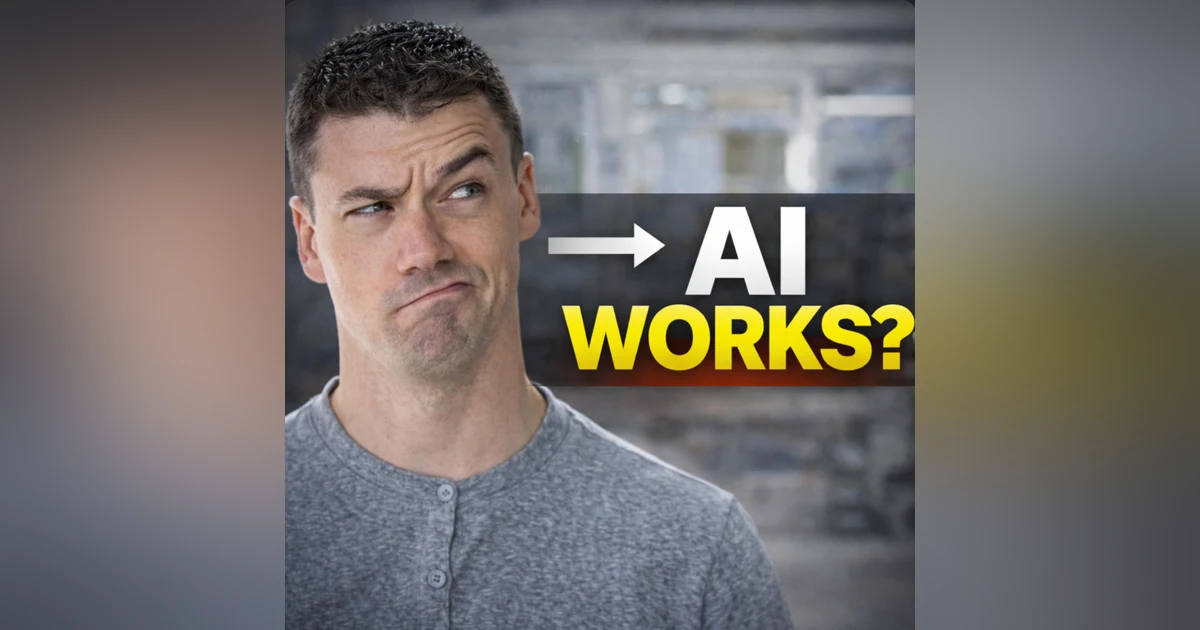


This episode breaks down how AI is being used inside real physical therapy clinics—not as hype, but as a tool to improve operations.
The biggest mistake clinics make is treating AI like a feature instead of building it into workflows. When
Sal Aprea from Flagler Health shows you that done right, AI helps reduce no-shows, improves patient engagement, and creates new revenue opportunities without adding staff.
Key Insights:
- AI fails when it feels like “extra work”
- Clinics must focus on workflow, not tools
- Trust drives adoption: staff → patients → operations
- RTM is underused because no one owns it operationally
- Done right, AI improves the patient journey between visits
Guest shares how clinics can:
- Increase patient follow-through
- Improve operational efficiency
- Add revenue streams through RTM
- Build trust with both staff and patients
<p>This episode is part of the <a href="/physical-therapy-business-podcast">Physical Therapy Business Podcast</a>, where physical therapists and clinic owners learn how to get more patients, improve operations, and grow their clinic without relying only on referrals.</p>
<p>Looking for more episodes? Explore the full <a href="/physical-therapy-business-podcast">Physical Therapy Business Podcast</a> for real-world strategies on physical therapy marketing, patient acquisition, and clinic growth.</p>
0:01 There's a lot of noise around AI in healthcare right now. You can't get away from it. Now, some people see efficiency, others see risk, and most just aren't sure where to start. But behind the scenes, there are people working directly with clinics, helping them figure out what actually works, and what doesn't when it comes to applying AI in real operations, not theory, not hype execution, the kind that actually impacts patient follow-through outcomes. And yeah, I'll say it, revenue. And if you've ever said, I just wish I had somebody who could explain this clearly, I got a guy. You better call Sal. And that's why he's here. Sal, welcome to the show, man.
0:42 Hey, thanks for having me, Jimmy. Love the intro. All right. So you're doing this every day and you see a lot of the emotion behind why people either adopt or don't. Automation, AI, all those things. So when you talked about operators doing this, what's the first reaction you usually get on that call? Well, I'm over here with Flagler Health. I'm the senior account executive and the director of PT integrations at Flagler Health. And what Flagler Health is, it's an AI operation system that primarily, but not exclusively, works with MSK clinics. So from PT to ortho and pain and then beyond, but that's who we usually work with.
1:28 And quite honestly, like what I usually get is half the room thinks it's gonna replace their entire front desk team by Tuesday. And the other half thinks it's just another overhyped tool that's gonna get put into the patient portal and no one's gonna log into it and check it out or just have to be constantly reminded to do that. That's some of the major things that I'm hearing when I first speak to some of my prospects around AI integrations. But that's where we lean in here at Flagler is because if AI feels more like work, it's already failed. Sure. Yeah. It sounds like people are saying like, number one, does this work?
2:10 Yes or no? And I have to see it to believe it. And number two, am I actually going to use it? Because if I buy it, we've all had that buyer's remorse. You buy something and then six months later you realize, man, I'm not using this. It's not in my workflow. So what did I actually get my money out? So what are clinics getting wrong about AI operations right now? You mentioned a few things. Some people think this. Some people think it's going to do this. So what are they getting wrong about AI operations beyond that? And then also maybe we'll flip that. What are they getting right? Well, I feel like what they're getting wrong is that they're treating it more like a feature instead of a workflow that could optimize their current operations.
2:51 For instance, what I mean by that is clinics will say they want to bolt, they want to put AI onto tiny parts. They want to maybe get AI call right, or they want to do billing right, or they want to do scheduling better, etc. But they're not thinking of that like continuity, right? So when we like to work with clinics, We understand that the patients, they don't experience clinics in silos, right? So when they do call and if the AI interaction, they don't think that was the part of the AI interaction. Now, let me think about the human interaction. they think about the overall experience of that practice and sometimes the friction that lies within when it's not done right.
3:35 Where we spend most of our time is stitching that journey together, right? So when it's done right, AI isn't just like answering the phone, it's actually moving a patient forward into their system and getting them into their program as fast as possible so if they're doing it right that's how they're doing it they're optimizing the workflow and they're thinking of us more as just a part of their to enhance their operations not get in the way of their operations um but not just be a band-aid for certain little fixes that they want we could help with anything you want but i think that's the best way to do it and that's yeah Whenever someone's going to adopt something into their business, I feel like it rivals the decision-making process for your kids.
4:18 There's got to be an element of trust there. What does building trust actually look like when introducing something as new and emotionally impactful or emotionally stirring as AI into something personal like a clinic? yeah i mean that's a great question jimmy i mean trust is so critical in any relationship whether personal or business um because we're asking to be part of their operations we're asking to get into their system and optimize it and working it so if you go into there and just say hey this is ai we're great we're going to solve all your problems i think it has the adverse effect and you're going to lose trust with that right so um when i look at trust i'd look at as like three layers into the system um so for trust it's more first it comes with staff trust Right.
5:06 So so like if the front desk feels that in any way this is here to replace them, they're going to quietly resist that and you're not going to get complete buy in. But if they feel like it's something that's going to protect their time and help them work more efficiently, then they'll be a champion. Right. So so first thing is trust with the with the staff. The second is patient trust. If a patient picks up a call and they feel that it's very robotic or just leading me in a different place and it's it's it's not it doesn't seem like it's part of the culture of that of that clinic that we're trying to work with. They're not going to have buy in and they're not going to have trust as well. And they might just hang up the phone and you lose a patient right there.
5:47 And the third part of trust, the third layer, I like to say, is the most important because it's operational trust. Right. So Clinics trust what they can measure. If we work with a system and an operation sees that AI is consistently reducing the no-show rate, it's consistently increasing touches, and then it's leading to increased revenue, then adoption is a no-brainer, and then trust is gained that way. So those are the three layers of trust that come with. But it is a real barrier in getting it because there's so much noise around AI right now. So I go into it understanding that and totally hearing what they're saying instead of kicking it.
6:30 Don't worry about it. We're going to be great. Yeah, yeah, yeah. Let me hear about what you think, your perceptions, and how can I gain your trust? So those three ways, you know, you got to go staff first, patient second, operations third. You get those, you're going to get buy-in. Let's talk about something that, I mean, I don't know if I heard of this term three years ago, four years ago, definitely hadn't, RTM. You've said it's underutilized. Why do you think remote therapeutic monitoring is so underutilized, especially in the profession of physical therapy as we record now in twenty twenty six? Yeah, another great question, Jim. I love that question because I have over twenty years experience working in the PT space as an athletic trainer.
7:12 So I'm constantly thinking of why it's slow to get adopted by by some PT clinics or falls off when they do have it. I feel it's in like a dangerous middle ground in health care with RTM specifically for for PTs. Everyone agrees it's valuable. Everyone sees that part of it, but no one wants to own it operationally, right? Because clinicians are focused on visits and care, front desk is focused on scheduling, and then billing is focused on claims and revenue there. So RTM lives in between all three of those, right? So when it's viewed as extra work, the buy-in is poor and it often gets dropped.
7:54 So that's where they're getting it wrong with RTM that I could see right now. And over at Flagler, we definitely offer a different way because in reality, it's only extra work if the system isn't doing the heavy lifting, right? If the platform for RTM isn't identifying and enrolling those patients, right? Or the support team or, you know, It's just not working efficiently. That's when the buy-in is poor. So if the AI identifies the candidate and then our support team reaches out and does all the work on the back end, which is our business model, a little different than most RTMs, and then we send over the codes, the only thing that's there is for the clinic to do is collect newfound revenue and then increase outcomes.
8:44 How about your hot take, right? Why should clinics not take all the risk themselves? You're talking about spreading out and deferring the risk. It feels like that's your hot take, but it actually feels like a safe take. yeah i if the ar partner isn't willing to to stand behind outcomes and share the risk with you and just be a fee for service sort of a program um the outcomes are going to lag and and it's just not going to be as efficient as it as it needs to be i mean we partner we take the risk with all of our clients we grow as you grow so that's why it's so important smart and probably is a pretty big step into building trucks uh how about this walk us through what done right actually looks like for rtm in a clinic six twelve months after it started because i imagine the transfer period everybody expects that there's some work involved but when it's done right what does that look like or feel like for a clinic Done right, I mean, it should feel like a program, just another service that's getting added on to your current program as a concierge sort of a service.
9:58 It should feel like the clinic never forgot about the patient, right? So it just helps them along their journey. There's a hundred and sixty eight hours in a week. i worked in pt for for a long time i know that you're lucky if you get three visits a week usually you get between one and three and it's for an hour and you know they they what's happening in between what's happening in between the other hundred and sixty hundred sixty five hours of the week that the patient's not really getting followed up with that's where rtm done right really comes in um You know, from the patient's perspective, done right is it's simple. There's no app to download.
10:40 They leave a visit and communication continues, right? And it just seems like it's seamless and it's just, they feel more valued. That's where it's done right on that side. So from the patient perspective, I feel that if you're using an RTM platform and the first thing you're asking a patient to do is download an app, you're ready to find the eight ball a little bit there. Another way done right looks great is the check-ins are based around the care that the patient's getting. It shouldn't feel like a survey, like they're taking a survey. One to ten, how do you feel about this, and check this box, or check this box, and then check this box.
11:22 It should feel more intimate. It should feel more personal. And that's where we come in over here at Flagler is that our software is FDA approved as a service software as a service where you don't need to download an app. You just need to have one of the smartphones or a computer and you can interact with one of our care takers and get honest feedback in real time. The another way if it's done right is you get nudged if you get a patient who's enrolled, but they're not really compliant. You know, are they giving a little friendly nudge to the patient just to see what's going on there so you can report back to the therapy clinic? You know, and then behind the scenes, if it's done right, like I said, the heavy lifting is done on our part.
12:08 We track all the interactions. If it ties back to billable activity, we build the codes that are feasible and can get you the best return on revenue. And most importantly, it doesn't rely on someone else to do it. We do it for them. So they can focus on the care. And then us on the backside, we focus on bringing in that extra revenue. So we want it to be a quiet revenue engine that also improves outcomes. And that's our goal here. Yeah. If a clinic owner is listening right now and still unsure about AI, right? Maybe they're fearful. What's one thing they should do next to move forward without feeling overwhelmed, without messing things up in their mind?
12:54 What's the first step? I would say, you know, look us up. Look up Flagler Health, flaglerhealth.io, or I'm on LinkedIn. You can come slide into my DMs, say what's up, ask me a question. It costs absolutely nothing to get on a ten to fifteen minute discovery call. So understand that I get physical therapy and I get apprehensions to your team and your workflow. I get that totally. So I want to talk to you. I want to get over any of those objections you may have. and maybe build that trust where we could just grow together. That's what I say to them. Yeah. We'll drop your information in the show notes below, but Sal, appreciate you doing this.
13:35 Thanks for sort of pulling back the curtain on these things in healthcare right now. Absolutely. Love to do it. All right. Hot take. What do you got for me, Sal? What's the hot take that you want to leave the audience with? all right well before the hot take jimmy i just want to first uh as the kids say today give you your flowers and as we said back in my day our day is give you your props i i really like your show i really enjoy what you're doing here um and just bringing in all these different ideas and i i watch it often on on linkedin and i think it's just a great job you guys are doing there not brown nose and the host i just think you're doing a great job so i wanted to give you props on that um My hot take is basically AI is often overhyped and underdelivered when the risk is not shared.
14:22 We talked about that before. So if your AI partner isn't willing to stand behind outcomes and share the risk with you, we are. I would love to chat. Perfect. And we'll drop your information, as I mentioned, in the show notes below. Sal, appreciate what you're doing. Thanks for making things that are confusing and overwhelming clear and concise and understandable and digestible as we sort of proceed into this new world that we're in. Yeah, absolutely. Let's go. Thanks, Jimmy. That's it for this one, but we're just getting warmed up. Smash follow, send it to a friend, or crank up the next episode. Want to go deeper? Hit us at pgpinecast.com or find us on YouTube and socials at pgpinecast.
15:08 And legally, none of this was advice. It's for entertainment purposes only. Bullshit! See, Keith? We read the script. Happy now?