Would You Like to Supersize Your Practice?

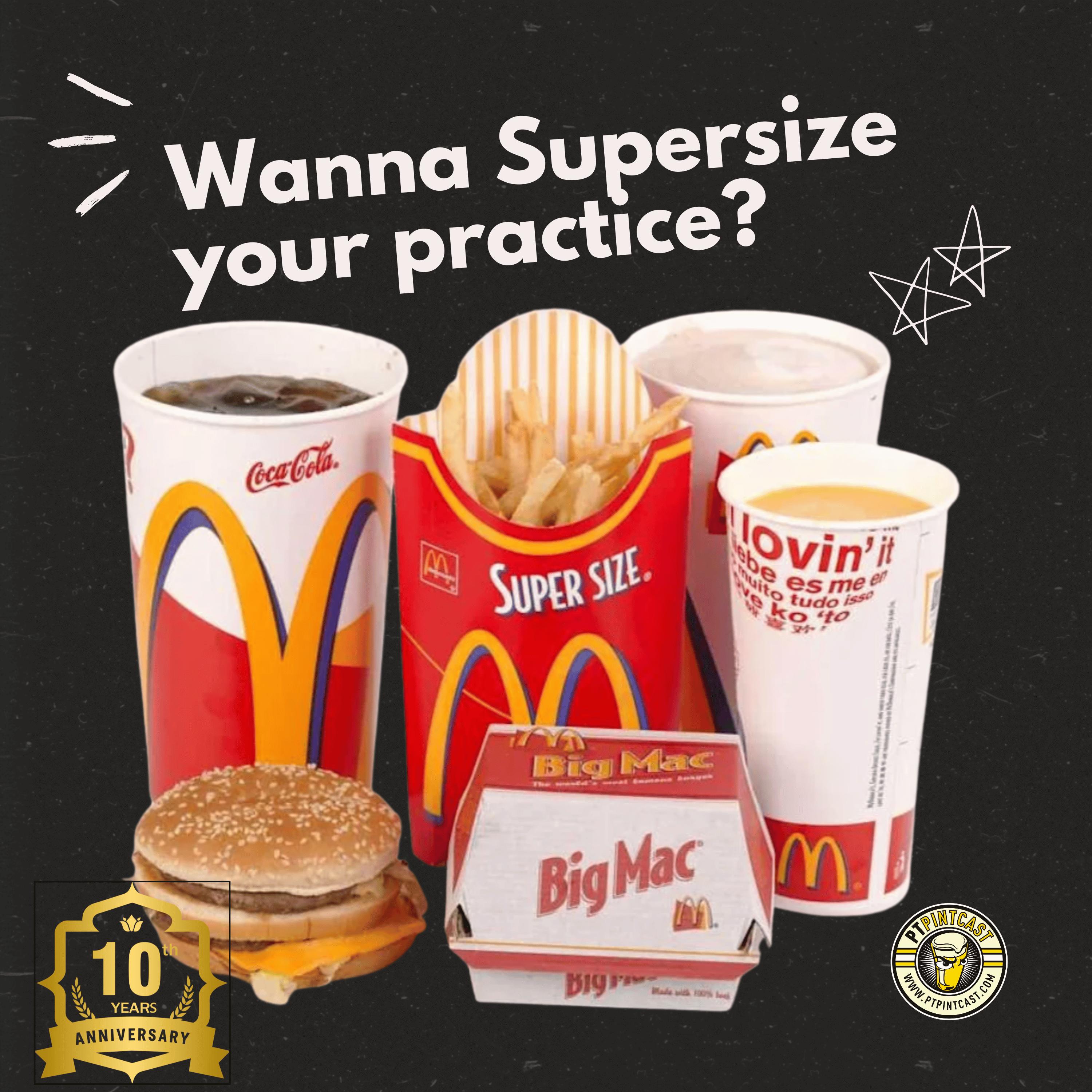


In this episode, Jimmy, Dave, and Tony go deep into the evolving world of physical therapy, self-pay models, and the surprising economics of "train the trainer" models — including caregivers and personal trainers stepping into rehab roles.
00:00 - Intro: Coaching Caregivers & Trainers?
02:35 - Why Yanni’s model wouldn’t work 1-on-1
04:30 - Train the trainer: scam or strategy?
07:40 - Real-life example: training personal trainers for high net worth clients
10:12 - Talking numbers: $2K–$5K for short-term consulting?
13:45 - Client perception vs. price: mid-tier care model
16:10 - What if the caregiver is a spouse or child?
18:50 - The risk: trainers claiming to be “rehab pros”
22:40 - Dave’s fear: giving away your IP?
26:00 - Why PTs should think like restaurants (value meals!)
29:20 - Supersize it: self-pay services + product sales
32:10 - Massage guns & missed revenue streams
35:00 - Satire: Stim Nap™, CPT Sauce™, SuctionX™
38:42 - The burnout talk: PT students losing hope
41:20 - Asking for a raise the right way
43:00 - Final thoughts + guest links
We unpack:
- Why training caregivers or trainers might be the future of scalable PT.
- The real risks when unlicensed individuals start acting like rehab pros.
- Lifetime value of self-pay patients vs. quick-turn training models.
- What PTs can learn from the fast-food model: visits as value meals, and the "supersize" upsell approach.
- Hilarious sponsor pitches: ZapNap, CPT Sauce, and SuctionX make an appearance.
- Advice for PTs burned out or disillusioned with the profession.
- How to confidently ask for more money — and what your boss actually thinks when you do.
???? Guest shoutouts:
???? Whether you're a clinic owner, employee, student, or side-hustler in PT — this one's packed with strategy, honesty, and a good dose of sarcasm.
<p>This episode is part of the <a href="/physical-therapy-business-podcast">Physical Therapy Business Podcast</a>, where physical therapists and clinic owners learn how to get more patients, improve operations, and grow their clinic without relying only on referrals.</p>
<p>Looking for more episodes? Explore the full <a href="/physical-therapy-business-podcast">Physical Therapy Business Podcast</a> for real-world strategies on physical therapy marketing, patient acquisition, and clinic growth.</p>
0:01 Any lag on my side? Broadcasting way too early from three separate Wi-Fi connections. It's PT Breakfast Club with Tony Maritato, Dave Kittle, and Jimmy McKay. All right, good morning. PT Breakfast Club here live on a Tuesday. What do McDonald's burgers, cruise ships, and smart bird feeders have to do with physical therapy? We're going to explain. This week, we're serving up profit lessons, untapped niches. some real fake sponsors, do the math on that. And one bird feeder that might explain the cash pay crisis.
0:41 Let's start by paying some of the, by paying some of the bills. We've got to get one of our sponsors. Welcome to the show. CPT sauce, the only FDA questionable condiment designed for physical therapists. Whether you're applying manual therapy, neuro re-ed, or aggressively nodding along during a soap note, one squirt of CPT sauce instantly makes it billable. choose from thrilling flavors like nine seven one one oh jalapeno justification and therapeutic ranch warning may cause spontaneous audits cpt sauce because ketchup doesn't reimburse now is there an image there's no image that came up there was i got i gotta get better at um there it is cpt sauce there it is one squirt instantly billable tell me you wouldn't buy a case of these we've even got we've even got billing facts jalapeno justification neuro ketchup re-add therapeutic activities uh billing breakdown purse these are all units per squirt per squirt is what we're doing here uh we gotta start off with a laugh right we if we don't laugh we're just gonna cry so good morning to you guys how we doing good morning dave i'm sorry for your morning good morning your birds then the brutal loss is my i know i had connection issues last week my it's Is my connection all right, or is it lagged?
2:00 Let me know. You're good now. Yeah, yours is random. I don't think yours is an equipment issue. I mean, you're in New York. There's a lot of people on the same straw with the Wi-Fi, I imagine, there. I imagine Wi-Fi works a lot like straws, but I'm sure there's technology people out there saying it's not actually how it works. Let's talk burgers and fries and CPT codes. I started with sauce. What you'll start to see now is the sponsors will have something to do with the story, like sauce. And then Tony was on LinkedIn and you did, I think it was a three-part series, three posts. I'll bring them up on screen. We can go through them and I'll set the stage. You pretty much said McDonald's built its empire by engineering the profit inside a single meal.
2:42 there's that famous line, I think B.J. Novak talking to Michael Keaton in the McDonald's movie where they're saying, do you want one fourteenth of a burger, the price of a burger, or do you want to own the land that the burger is cooked on? That's the first time I ever heard of that idea. I didn't know that. I was just a random dude the first time I saw that movie. I was like, oh, I would want that one. Can I have that one? A great non-line acting moment is when Michael Keaton is sitting there listening to B.J. Novak And he's in the position of power, Michael Keaton. He's the boss. And he's got BJ and he's recognizing this kid's right. And he's like doing the math of like, where could this go? Or what would this look like? And that's when McDonald's, that's the moment McDonald's was born.
3:24 It's not when the first restaurant, when Dick and Rick, Dick and Ray, Dick and whoever the McDonald brothers were. So, Tony, I'll bring it up on screen, but I'll bring up part one. Or is there a part you want me to bring up? You have three. No, no, it doesn't matter. The big picture is we've all talked about it. OK, McDonald's is not a food company. It's a real estate company. They make their their money on real estate. I think everybody watching this episode has heard that back story. But what I wanted to do was I wanted to understand how the individual franchisee, the actual restaurant makes money. Like, how do they afford to operate? How do they continue to work?
4:05 And so I'm using ChatGPT and we're going back and forth and we're talking about these ideas of, you know, profit models, business models. And I'm like, OK. I've heard the beverage is where the profit is. Tell me more about this. I didn't realize that the fries were a high profit, high margin part of it. But the thing that really kind of broke the paradigm for me was the value meal. And I was like, oh, this is totally making sense now. When you think about the value meal and how they brought the hamburger, which is basically not very profitable. And I compare the hamburger to the manual therapy because the hamburger is the protein.
4:48 If you're looking at this as a solution to hunger, the protein is the solution to hunger. I've got a hunger problem. I need a fast solution. I go buy protein. the cheapest, most effective solution to that is I buy the hamburger. That's the manual therapy. It's low profit, high workload takes the most cost in terms of sourcing the meat, sourcing the resources, heating the burger, doing all the things that the employee has to do. Um, But then you say, well, how do I get more high profit items sold? Nobody's going to buy two and three drinks with a burger. So you say, okay, I'm going to make the value meal where I sell two high profit with one low profit.
5:34 I sell the drink and the fries along with the burger. And then you go into Super Size Me, which I don't even think they have anymore. Do they still have Super Size? I don't think so. No, I don't think so. Because that movie was so effective, Super Size Me. Yeah, I think it completely destroyed like a huge profit center. So then you say, okay, Super Size, what does that do? Well, it increases the size of the drink. It increases the size of the fries. Both of these are high profit items and it does nothing to change the size of the lowest profit item, which is the burger.
6:15 So it was like magic when I saw this. And then, of course, you start comparing it to, OK, I know practices today who love manual therapy, who are doing two and three units of manual therapy in a sixty minute session and just throwing a unit of exercise in there. They're basically saying, hey, I'm going to sell you three burgers and one set of fries, one thing of fries, as opposed to. really optimizing around understanding what is clinically effective. I think when we look at the research, and this is where every PT has to go back to, we look at the research and we say, okay, is manual therapy in general more effective than therapeutic activity?
6:58 I don't think the research says that it is. So we say, why would I deliver something low profit, high workload, high burden, high cost of attention and focus and resources when I've got something else that's probably supported just as much, if not more, in the clinical research to be effective to achieve the goal? And like, thirty percent higher revenue, I'm going to say one hundred percent higher profit because there is a bigger margin there. When we look at a treatment, a treatment is effectively a value meal. We can optimize for efficiency in that value meal, especially in a third party payer system like I have.
7:42 I mean, it's called a value meal. As soon as you said that, I was like, oh, wait a second. It's been there in plain sight the whole time. It's like, but this has value. Number one, tell the person it has value. How do you do that? Put it in their name, right? That's smart. Oh, I'm seeing these things now. It's been there in plain sight. If you just sold me burgers, fries, and sodas or shakes separately, that's a whole conspiracy theory, right? Those things separately... are worth X, but you combine them and they are worth more than the sum of their parts because it's solving a complete hunger problem.
8:24 Netflix doesn't solve a movie problem. It solves a boredom problem. Understand what problem you're solving first. Now, I want to hear from Dave before I mention what one of the comments were on LinkedIn. So the thing that resonated with me with this, first of all, is that all these fast food places, it was like you kind of you drive up to the window or you walk into the place historically. Let's let's say for decades. Right. And you just pick one item. You pick two items, three items, whatever. And the customer was in the lane of decision in terms of like what they were actually going to get. And whenever I don't know with your research, did you come across when when McDonald's rolled out the value meal?
9:05 I'm just curious as to when that was. I'll look that up. So the fact that they then said like they almost like what what other place does this? Like you go to a restaurant and they're not going to they'll tell you like, hey, we have some specials and here's oh, you're new here. You've never been here before. Here here's the you know, here's here's where the drinks are on the menu. Here's the appetizers. This appetizer, this flatbread is popular or whatever. But you go to any restaurant, and there's not usually a condensed meal unless it's one of those pre-fee menus. That is different, but then that's obviously usually higher ticket. The fact that McDonald's kind of took that whole approach and was like, we're going to package this meal for you. Value meal is one of the most genius things, I think, almost of all time in fast food, to name it that.
9:50 Apparently, we have to give credit where credit is due. It was Wendy's. Wendy's did it in. Nineteen eighty nine. Yeah. Not that long ago. Okay. And then McDonald's followed suit in ninety one. So there's also. There's also something else. So in the nineties. The thing that. got me or my family to go to McDonald's, there was something, there was something that was a hook. There was something that was a magnet. What am I referring to? Do you guys, do you guys know? Yeah. Three prizes. Happy meal. The happy meal. also a meal, also a meal, happy meal, value meal, value meal for the adults who understand the word value.
10:32 Happy meal is like, I get a toy that's valuable to me. I don't know what the word value means, but I, I see a toy on a commercial and the kids are like, mommy, daddy, I want to, I want to go to McDonald's another genius layer. Obviously the food has been proven to be horrific and horrible. I know Tony still goes there a little bit, but you know, once a week or twice a month or whatever. But in general, like, yeah, I don't go there. But they've done so many things that, yes, absolutely, we could model in physical therapy and healthcare. And they wrap it in a box. What kid doesn't like opening a present? I mean, like, now you're seeing it when you're like, why do they do that? Very few accidents. Very few were not doing this on purpose.
11:13 Rest in peace, Dave Thomas, the realest OG in the fast food game. It's not a... I have got a couple of Dave Thomas stories that I'll tell later before we're done with the segment. But understand what business you're in. And I don't know, but I think all of us probably agree there are people in our profession who would turn their noses up at the thought of doing any of these things in their practice because I am an autonomous practitioner. And I want to stress this. We're not asking you to do that. If you don't exist three years from now, you help no one understand the physics of the games that we're in.
11:54 We're in a game, whether you like it or not. And you do not like the fact that I'm calling it a game. It is like economists use things called game theory for a reason. Oh, man. So many thoughts now. How? Yeah. Wow. A lot of thoughts going on here. So real quick, I think it was Garrett on LinkedIn had shared a post saying, you know, he appreciates the analogy. The trouble is where it falls apart is physical therapy. It's, you know, a higher cost. It's more you're relying on professionals, licensed professionals, the regulator on how much volume you can do. Like McDonald's, it's all about how many people can come through the drive-thru or the door.
12:39 Throughput. Yeah. Throughput. Yeah. Physical therapy. It's all right. You have a limit on how many units can be delivered in a day. You have a limit on how many licensed professionals you can bring into the business. Like you need scale to make the McDonald's formula work. You don't have that capacity for scale in a physical therapy business. And I totally agree. Totally agree with everything that he said. I said, but. you're looking at physical therapy through the lens of where we've been, now bring in Hinge Health, Sword Health, bring in new models, bring in old models that might come back where the physical therapist just does the evaluation, develops the plan of care, and then an unlicensed but trained by you individual actually delivers the service.
13:26 As we're moving toward more beneficiaries paying more out of pocket, I think we look at new models, alternative ways of delivering the service. Once again, McDonald's is about solving the hunger problem quickly. It's not about serving you the best possible beef and the best possible bread. It's not about... Yeah, it's not. Yeah, it's not sourdough that was aged forty eight hours before it was put into an artisan's oven. It was about solving my hunger problem quickly so I can continue to work. That's that's what it's about for a lot of people, me included. Yeah. So I agree with what he's saying, but I think he's holding the standard of where physical therapy has always been.
14:10 And I don't think that's where we're going to be. I was going to not nitpick, but he was saying first is hiring unskilled environments. Labor is abundant and replaceable. If someone walks out, another person can be hired quickly. I thought we had so many PTs, but labor was easy to get. You just had to pay them, right? Isn't that the issue? It's not like we can't find PTs. You have to pay them. So it's the cost of labor, right? It's not the abundance or lack of abundance. it's going to sound like I'm changing topics, but I'm not. Do you ever hear me talk to a guy named Yanni Corey, Next Step Fitness? I'll give you the quick and dirty. Met Yanni. Actually, Sky Donovan, one of my professors, was like, there's a guy in Georgetown right now for a talk.
14:55 Drive across the river and meet him. Yanni dove into a wave after college playing beach volleyball, dove into a wave, hit a sandbar, spinal cord injury. Yanni needed this much neuro PT, but his insurance gave him, and I was going to shock you, this much neuro PT. Now, Yanni had the means and the network to say, no, we're going to move him to Connecticut. And he worked with this amazing neuro PT for a crazy amount of time and was able to get a lot of function back. But he sat there and was like, dude, I'm in the one percent. No one else is doing this. And then he figured out now he's not a PT, but he's like, oh, this system sucks. So he did something similar. He was like, well, how do I get the cost down?
15:37 Well, the problem is PTs in a way that we can. I agree with Yanni, but he gets a lot of heat. So what he wants to do, his big, hairy, audacious goal is he wants one of his facilities in every single major city in the world. He's got like nine right now. Next step fitness. So he builds a gym, a gym. filled with all the neuro equipment that like, so, you know, FES bikes and all the things that neuro people know better than me. But he can't put PTs in it because that screws the model. So what he does is he brings a PT in to train the trainers, to train, and I'm using air quotes, less skilled people. They gain skill because a PT just touched them and trained them and comes in to oversee.
16:20 But if it was one-on-one PT, Yanni's model does not work. So Yanni's in the solving the problem business, not in the making people happy business, making PTs happy business. So that's what he does. So, Dave, I'm just curious. Do you ever have scenarios where you go in and train the trainer of your client? Oh, that's interesting. No, no, no. Because because because how am I going to why would I do that? How am I going to make money off that? I would imagine. You know I'm a nice guy. You know I'm a mensch, but I need to make some money. I'm not going to train the trainer with physical therapy skills and then be like, all right, see you, and then go make money off this client. Wait, wait, wait.
17:01 I have a production company that helps people launch YouTube and podcast channels, but I have no problem if someone's like, can you just come into APTA Home Health and teach us? I go, yes, but it's going to cost you this. And then I'm like, it's four days worth of work. And then I go, if you're going to do it, have a great, and you're going to do it well, have a great time. I charge them for that. That's like Con Ed. That's Con Ed. Is there a portion of your, Dave, is there a portion of your existing clientele over the years that has their own personal trainer already before they came to you? Yes, of course. Yeah. So, I mean, I go back to like when I was on Siesta Key in Sarasota and we had a clientele of high net worth.
17:44 They all had trainers. They all have professionals. They had gyms in their office. They had gyms in their home. And one of the things it was like its own service. was, okay, you already have the infrastructure. I will come in, like Jimmy said, for an elevated fee, and I will train your trainer to carry out your program. We would do this when we were in a CrossFit gym or doing anything in a fitness center. The personal trainers had good relationships with the clients already. They didn't want to disrupt that relationship. So we would come in kind of as its own program to say, okay, this is a layer between what you've been doing and what you need to do for this particular client.
18:26 We train the trainer and then the trainer would carry out the sessions. Yes, we would lose like the value of doing the sessions with the client, but we would gain the shorter term, higher profit. of just training the trainer. Yeah. So I would, I would be, I would be open to, are you saying just the evaluation? So the physical therapist goes in just for the eval and, and evaluates the client or maybe, maybe a visit or two or what are we talking about? Maybe, maybe value mail it. Yeah. You get an eval in like two or three visits and then a consult, a consult evaluation, maybe a bridge visit or that visit that the trainer shadows us, whatever. let's just talk number, you know, I love talking numbers.
19:07 So at the, at the very least, and this is why, this is why we'll break down at the very least. We're going to say to the trainer, like, I mean, if, if you're going to carry these out and we're going to basically kind of coach you on how to like help this person almost like in a rehab way, when you're not a rehab professional, I mean, at the very least, it's going to be two grand. It could be three, four grand. Like we have some people that stay with us for a long time. Some people stay with us a short time, but on average, like, You know, my average the last time I checked was like four or five grand in terms of average lifetime value per self-pay patient. Not the out-of-network insurance folks, but the people that are running through Stripe or a credit card processor.
19:50 It's like five grand. So, I mean, you think a personal trainer is going to pay me five grand for us to teach them? The client. Yeah. But then the client's paying double. They're paying the two to five grand for my value, but then they're also going to pay for the trainer's time with whatever that package is. Lower than yours, likely. It's lower than yours, likely, right? But they're paying mine if they're going to pay me a lump sum up front for me to release them to the trainer. Yes. I think there is a market, whether it's within the existing clientele or a market that you could attract of individuals. And I'm just going to throw random numbers out there.
20:32 Let's say your average plan of care, you go from five thousand to twenty five hundred. So let's just go somewhere in the middle at thirty five hundred. I think there is a client out there who doesn't know you, who wants to do their therapy with their existing team, with their existing trainer, their massage therapist, their dry needler, their personal trainer. I think that they would be willing to pay you somewhere in the mid range of what you would typically get for an entire episode of care. And let's just say an episode might be nine visits where you would come in for three, You would do the evaluation. You'd consult with the team that's in place. You'd show them how to do what you do and what needs to be done.
21:17 Maybe you'd be available for some consults by phone, like as they're progressing through. but I think they would be willing to pay you and pay their team. And to Jimmy's point, it would still be less than paying you for the whole plan of care, but the price isn't the issue. It's they don't know you, they don't have a relationship with you, but they hear that you're the professional who will come in and give their existing team the information they need so they could be in a comfortable environment with people they know, people they've been working with. You're warming me up to it. I like it. Go ahead. Let me twist one wrinkle and see if it changes the value or perceived value.
21:57 All values, perceived value. It's not a trainer anymore. It's the caregiver. Yeah. Do you know what I mean? Does that change it? You're taking someone who's going to be there. It doesn't change it. That's what I mean. But does that make you what I'm asking is, does it make you feel better about it? Because there you're like, oh, I'm not replacing myself here. This person is going to be on site all the time. I'm now empowering them. That's not as much as the caregiver is going to be there. Or close to that. So this is you leveraging your expertise. This is a very niche thing that you'd be finding. Because as Tony was saying, the person has to know you, like you, trust you, trust you, trust you. And your value. But you're like, yeah, I could do this. So seeing me every week or twice a week for six months would cost you X.
22:40 Or I could train your trainer or train your caregiver. And it would cost you less than X, but definitely not. Definitely not an hourly rate. It's a value rate, value meal. Another thing that we're not talking about is at least in New York City, because there are some bold people that I've seen in the caregiver world, whether they're a personal trainer, a home health aide, a care companion, a certified nursing assistant, but especially the unlicensed folks, the folks that are in these homes that are caregiving or they're providing some level of support to my previous clients that I've seen in person. If I were to coach the trainer on this, the client, let's just say the client pays thirty five hundred.
23:23 This is what this is what in New York City. I don't know about anywhere else in New York City. This is what will happen. That trainer will then tell their other clients, hey, I was trained by Dr. Dave Kittle and blah, blah, blah. And now I can do rehab stuff for you. And they're going to say that to all the other clients. That is what will happen. So two things. Number one, what's to stop them from just going on YouTube and watching four hundred physical therapy videos? They absolutely can do that. My point is, by me coaching the trainer to care at the plan of care for this one client, it will empower most of the time. It will empower this individual tremendously. to then be a little bolder and a little more confident and speak up to offer this.
24:06 Because I've seen unlicensed care companions try to take a patient's blood pressure in front of me with the stethoscope and the blood pressure cuff. And I saw a woman put the stethoscope in, take blood pressure pump up the pump up the the the airbag but but she forgot to put the cup on the arm and she said one twenty over eighty she gave a number of blood pressure one twenty over eighty and it was impossible because the cup was not even on the arm guys i've seen some crazy stuff trust me and i'm telling you this is this would empower personal trainers to then be like oh i'm i'm the rehab I'm the rehab personal trainer as well.
24:46 And then, Tony, I'm not able to capture or any other physical therapist in the market are not able to capture this offer that we're talking about. Am I thinking too short-sighted? Maybe. Am I generalizing? Maybe. But I'm telling you, I've seen some crazy stuff. I've seen personal trainers on a baseball field say, hey, do you want me to reset your shoulder? And I'm like, bro, you're a personal trainer. And then the guy got hit by a line drive and it was a fracture humerus. Fractured humors. The trainer didn't know that, obviously. In real time, he just got injured. But he was ready to reset that shoulder. This happens all the time, Tony. I'm telling you, it's crazy stuff. I believe it. This is a different level. So when I threw this wrinkle out, my brain, when I said caregiver, I thought husband or wife or son or daughter.
25:29 I think I would be more inclined to do that because then they're not going to go off on a tangent and try to tell everyone that they're the unlicensed rehab professional in the area. That was my thing, which is like, hey, listen, I can't afford bringing Dave Kittle. I understand your value, but I'm taking care of my dad. If I didn't have a PT degree, I'd be sitting there. Home health came in once or twice, and they were amazing when they were there, but it just wasn't enough. So I was like, can you just teach me two things to make sure my dad doesn't fall? I mean, I know it's patient education, but this is more than that. And I feel like people would pay for more than that because value. I will say this. So back to the menu. Manual therapy is a hamburger, right? That's high labor, low margin.
26:12 E-stim is like a drink, low labor, high margin. neuromuscular, rehab, fries, medium effort, medium margin. But you have to understand this. This is what I'm trying to say is understand the scoreboard. So a visit is a value meal, not a visit anymore. But you need to envision it that way. At no point do I want someone saying, well, we're just going for money. It's not what we're saying to do. But understand how you can make sure people understand. This is a communication issue. What's our version of supersize it before we move on to the next topic? What's our version of supersize it? Would you like this? That's where I think you layer in self-paced services, non-covered services.
26:53 You sell a product. I can't even believe. Every single year, there seems to be one or two big things that happen in my business that I'm like, why wasn't I doing this before? All of a sudden, it just opens a new door. So we've been using the massage guns, the percussion massage guns. Every single patient, I was like, oh man, that feels amazing. How do I buy one of these? And like, we're selling so many of these massage guns that we didn't sell last year. Why didn't I sell them? Why wasn't I doing this? I don't know. I don't have a good reason for it, you know, but using a device like that makes it so easy for somebody to say, Hey, I want to buy this, whether they buy it through our Amazon link or they buy it from us directly.
27:39 I don't care. It doesn't matter to me, but these, that's where I would say the supersize me is you either sell them a product, you sell them a non-covered service, you develop something else that they don't, they didn't have access to before when it was just insurance. Yeah. I feel like your model of use the gym whenever you want in between visits is like it's it's paid for. Right. This person is not going to break the leg press. You know, that's not really how it works. Health, health bundle, knee bundle. Right. So massage gun, maybe one of Joe Lowe's bands and a stretch out strap or or compression boots or whatever or tens unit. I know Tony's bundled stuff before.
28:20 Here's a crazy idea that I don't think I've ever heard before. What if you sold our new sponsor? Yes. Yes. Yes. You can build a stim nap, the revolutionary system that turns patient nap time into revenue time. Here's what you do. You plug in, press go, and let the gentle hum of an unintended electrical stimulation unit do the work while you pretend to check notes nearby. Each stim nap comes with a free, totally therapeutic sign to hang above your plinth. Stim nap, because why should machines nap alone? Stim nap, you can bill for it. I have a slightly better name.
29:02 Okay, go. Zap nap. Zap nap is right there the whole time. I'll talk to Keith, my rep over at Stimna. So real quick, real quick, on that same topic, NuFit sells the newbie. They have a protocol. It's like a neurologic reset. They put two direct current electrodes under the occiput. They put two at the base of your feet. They run a current through your body. You lay there for like, twenty minutes. I never did it, I never understood it, but I saw, like, videos of them and went through.
29:42 That's exactly. They've been doing this. The people who use it and do it say it's amazing. I mean, it's right there. You mean the people who take a nap in the middle of the day are happy to take a nap in the middle of the day? That's weird. The only people who don't like taking naps in the middle of the day are five-year-olds. Everybody else loves it. Dave, do you nap? Are you a napper, Dave? I during during baseball, I definitely try to I would when my son was napping from eleven to one. Some days I was napping in the same room or the next room over. Yes. Right now, I don't need it. But during spring or summer baseball, when we were doing like double headers and all that and like the next day or two, I was like extremely fatigued or tired.
30:26 Yeah, I definitely have been. I'm a twice a day napper. I nap twice. Who's that? Who's that? Are you a hobbit? No. Typically, I will leave the clinic around twelve, twelve thirty. I'll get a twenty minute nap. And then usually again at like six thirty seven p.m., I'll hit a nap. Hold on. What time do you wake up and what time you go to bed? I wake up at six o'clock, pretty much six, six, ten every morning, usually before the alarm goes off. And then I try to go to bed at ten, like ten, ten, twenty is the perfect time for me to go to bed. And I get to two quick twenty minute naps in and it's perfect.
31:10 This I've now reorganized the people on the screen in the likelihood of us napping. And it's Jimmy, which is zero. I would love to do it sometimes, Tony, twice a day. A double header. A double header of naps. The reverse. All right. Do you guys want to go the cruise ship thing I posted? How come no one's been the cruise BT? Or do you want to have this on like on? It's it's eighty five percent of a good idea. I don't know how to modify it to PT. You want to go cruises or. I think I think we hit cruises a bunch already. Yeah. Let's do the other one. The eighty five percent of a good idea. so steal this strategy i love coming this is like where like rory sutherland comes along and he gives you an idea and you're like that doesn't make any sense to my profession but then like the cool part is it rattles around your head and then i i call them idea parts other people it's like let me get the essence of this or what's the emotion of this and then how do i do that i was taught at an early age in my career when you have an idea when i would pitch things to my bosses when i was younger They're like, it's not there, but put that in a file.
32:13 Like, that's good. We don't have a place to put that, but that's good. That's some good ingredients there. Save that. I thought this was brilliant. Have you ever chained a coffee mug to a fence before? I had never done that. But Nescafe did this in a city in one day, and they essentially went completely analog in the digital world. Here's what they did. They pulled off a masterclass in physical and digital engagement. They went around the city and they took bike locks. And red Nescafe mugs. And they bike locked the mugs to benches and railings and pay phones. They got permission to do this, right? But it was obviously, this doesn't belong here.
32:55 Kind of like what I was talking about with Dave the other day. The door hanger from hotels doesn't belong in an apartment. There's the juxtaposition. There's the purple cow. So they did this. So there's a bunch of mugs hanging all over the city. And I can touch the mug, but I can't get it without breaking it because there's a combination bike lock. And then there's a little tag with a QR code. So all you had to do was scan it, check in in their location with, who am I with? Nescafe. So they get a little online buzz from a digital thing. And then, oh, pops the combination. I've unlocked the mug. that alone would have been, hold on that alone. I would have been like, no notes, like clap, clap.
33:36 It goes further that same day. I'm guessing it was a Saturday or a Sunday, right? Cause you don't want people in a rush for the next part. There were little coffee carts. I bet you they just took people who normally sold coffee and said, we're going to slap this logo and we'll pay you for all your coffee for today. Now there are coffee carts around the city that are now all Nescafe red, same color as the mug. And if you have a mug, you come up and they give you the free coffee. They'll put the coffee in it and hey, have a Nescafe. That alone would have been clap, clap, clap. Well done. They did not stop there because the campaign's name was was Nescafe, bringing people together. So when you walked up to the cart, they gave you another mug and said, give this to anybody that you want and we'll give you both coffee.
34:21 So now you have the physical to online engagement. People are checking in. So people online are like, what is going on? Steve checked in with free coffee. And of course, he's going to take a selfie with the mug. I solved the prize. There's a little bit of a scavenger hunt part of this. You've got the physical gift. I mean, I don't know. What's a mug cost if you buy them at scale? Four dollars? Twelve? I don't know. The bike lock. I already looked online. Bike locks are six. You can get them for six. And you don't need the best lock. You want them to be broken into in this situation. And then you are hopefully already distributing coffee or someone was distributing coffee in this. To me, I'm looking at this, and I'll say it in public, dude, how do I steal some of this magic for CSM? If my audiences hire Jimmy to do whatever, this would be good.
35:05 I might have to price myself out of it because I'm going to get permission from a conference, the conference hall. you move a cardboard box in a conference hall and it's ten grand. So I don't know if I could do this. Or do I go completely guerrilla? But anyway, I love this campaign. Guerrilla. Guerrilla. I think I'd go guerrilla. But no notes for Nescafe. Like, wow. Like, they thought about it. And I bet you the CEO never touched this campaign. Because if they did, they would have been like, what's the ROI? And I'm like, I don't know if you can measure ROI right off of this. But it's in there. So Nestle and Nesquik already have brand recognition, so obviously it's easier for them to do this. Also, as you're talking about the three steps of this, this sounds like a complex campaign.
35:49 Like you, you described it easily, like simply, but in terms of executing it and actually implementing that type of a campaign, only big companies can do that. In my opinion, like that's like multi-step and like, yes, you get the cup of coffee and the QR code, and then you got to find the cart. And then once they find the cart, now they get the, they get the coffee and the genius, uh, you know, like warm feeling kind of layer of here's another cup to give to a friend. But now the friend or colleague or whoever, like they have to come back here or find another coffee cart nearby in the city. It's a little complex to execute in my opinion. So here's how I thought about it at CSM.
36:32 What if I went to Home Depot and I went into the hardware aisle and I got a bunch of different nuts and bolts? And I gave away nuts and bolts of different sizes and thread sizes and diameters. And I said, you get the prize, but you have to walk around and introduce yourself to someone. You have to say, hi, I'm Tony from Ohio. And then you attempt, I have a bolt, you have a nut, and you attempt to put them in there. And if it unlocks, you come and show me, both of you new friends, come and show me. And I go, here's your beer. So I was like, how do I still steal this? That would cost me twenty eight dollars in nuts and bolts in the aisle seven of Home Depot or Lowe's.
37:12 Could I do that? The question is, how do I where are these people and how do I gain their attention? Like it's an attention game at first. Like, so do I do this at a party? I stole the nuts and bolts idea. I so I was going to shock you. No fraternities or sororities at the college I went to. St. Bonaventure University. It was too small. But if you had an off-campus house, it was like you just, if you were lucky enough to get some, because there weren't a lot that were zoned, you could throw parties. Of course, legally, the statute of limitations, twenty-five years ago. And if you were like the soccer team, you wanted to have a party, but you couldn't rent out a ball place because a lot of people were under twenty-one. So people would pay us to throw parties for them. So we were a venue. So they would come to us.
37:53 We could have just said, have a party at our house. We'll get the kegs. No problem. What I did was I said, I'm going to throw your theme. So a nuts and bolts party was a thing. That was the thing we did. So the idea was you can drink from the keg until you unlock the nuts and bolts. Then you can go to the bar and get the good stuff. So it was an upsell. The team paid for the whole thing. But what it did was it forced guys to talk to girls. Actually, it forced girls to talk to guys. That was the idea there. So it was like, how do you force the interaction but make it feel not forced? So maybe, I don't know, maybe I could pull that off at CSM somehow. Well, what are people going to CSM for?
38:35 Belonging. Huh? Belonging. They want to meet people and be â it's a big party in a good way. I'm not knocking it. Yes, there's continuing education, but you can get it better â not better, but you can get it cheaper, faster at home. You're going because you want â here's what I said. If I had to write copy for APTA and CSM, you want to see future versions of yourself everywhere or past versions of yourself everywhere. You want to see where you are. You want to meet people. If it's not about people, that's number one. You don't know how to do math because flying to LA and paying five hundred bucks, whatever it costs and doing this and hotels, you don't understand unless it's primarily about people. It's got to be about people. It's why I go. I feel like you go.
39:19 I'm trying to think like, why don't I go? I think because I don't have a need to fill. Yes. So like you said, there are people going because they have a need to fill. Now, is it because they're looking for their next employer? Is it because they're looking for the next thing they're going to bring into their clinic that's going to make their clinic more profitable or grow? Are they trying to grow a professional network? Are they trying to sell something to other people? Like, what is the reason? Let me, let me, let me frame it again. It's not a party. It's a carnival. And there's something of value for everybody. Are you a rides person? No, I get nauseous. Okay, well, we have those. So we get some rides people to come. So in a little friend group, you got a rides person and a games person.
40:02 Oh, I love the thing with the water and the balloon and the clown's head explodes. And then I love the hammer and the ding. Oh no, I go for the food. I love fried this and fried that. Did you know they can fry an Oreo? Oh my God. So there's something for not everyone. But there's a lot of itches to be scratched or scratches for your itch. But here's my problem with APTA. They try to sell it as CEUs, which it is. That's the ride person. But don't forget about the games person and the let's just hang out person and the food person and the just being around person person. I think they advertise it too heavily as get all your CEUs. And I'm like, dude, I can MedBridge that for three hundred dollars and I could do it in my underpants and I like lazy.
40:47 That can't be the reason for me. I get paid to go and get free and I go to CEU things rarely. I'm like, I'm here for a good time, not a long time. Let's go. So I'm not everybody, but I'm one avatar. So I'm trying to capture the people. And then as soon as the five o'clock, everybody's there for the same reason, which is let's hang out. Like that's what it is. Let's hang out. So I'm trying to capture a little bit of fun during that time. It's like, it's like the, well, some people are there for the networking stuff and the challenges is now your nuts and bolts idea is absolutely the conduit for potential serendipity. Meaning people could find their next job. They could find their future manager or boss or the bosses and managers could find their future candidates and team members and all that.
41:32 And they could, you know, help relocate therapists from this state to the other state or whatever and Your idea is satisfying that the challenges is like, you know, some people don't want to do that or they, they don't want to have that engagement or it takes a little extra. Right. Or they could watch. Or they could just like, I want to be. event adjacent. Like if there's a dance party, I'm against the wall. I do not dance. I don't mind being around dancers, but I'm not dancing. It's not going to happen, but I'm not going to run out of the room. So there's something there like parties you, you would think. And if I don't, Jimmy hates, I don't hate Dan. I mean, I kind of hate dancing. Um, I don't hate when other people are dancing.
42:12 I don't like to do it. So you would think, oh, parties or weddings, Jimmy hates them. No, I love them. I just don't want to dance. So I find other things. I walk along the walls and talk to people as they come off the dance floor, all sweaty. I don't dislike it. It's a little sweaty, by the way. If you did the nuts and bolts thing, I think you would have to have it set up where... like there's a necklace or something that has the nut or the bolt like on full display. So people with the nut and bolt can see each other. You don't just randomly walk up to strangers and be like, Hey, do you have a nut? Do you have a bolt? You want to see my nut? What? That's a, don't say that. HR has said, do not say that. Yeah. So people like us do things like this. I think it has to be visible. It has to be, you know, outwardly available.
42:56 Um, I like that. I could do that. I'll do that at a party. So I'll spend getting nuts and bolts through a TSA checkpoint. So I'm going to have to buy them at a Home Depot in California because I don't know if that's going to fly. Excuse me, sir. Why do you have seventy eight nuts and bolts in your carry on? Oh, it's for this game. They'd be like over here to this other patch. That's going to be heavy. Yeah, you're going to have to get it shipped to the hotel or something. Yeah, I do want to say thanks to one of our new sponsors, Force Fun Fridays. Force Fun Fridays, the number one corporate wellness program designed to distract staff from burnout with lukewarm bagels, team-building icebreakers, and interpretive trust falls. Includes a Spotify playlist your boss thinks is cool and a stress ball shaped like your CEO.
43:41 Force Fun Fridays. And pizza. A stressful shit like your CEO. Amazing. Amazing. Captain Steve, the guy who I love the bingo card. Although Force Fun Fridays, it's going to affect productivity because you can't be producing and being busy and performing if you got these Force Fun Friday parties. It's true. Yeah. David's comment. As soon as I saw Boeing, that's exactly what I thought he was going to say. If you're, what is it? If you're flying Boeing, just tell me you're ready to make repairs in the air.
44:23 Things are falling apart. I brought that. Um, we've got, I went, so I think we have a mailbag segment, right? And on ptpinecast.com, the bottom right, you can send an email or a voicemail. You can just hit record and it'll pipe me a little MP three. I've been going out into the wild. Do you know one of the wildest corners of the internet? I mean, it's been one of the wildest corners of the internet. I just discovered this Reddit. And I just spent like an hour on Reddit. And I was like, what are people talking about when their only goal is to interact with other people? So went through Reddit again. This week, we found a PT. Ready to ask advice from you if you were responding on Reddit.
45:05 Ready to ask for their first raise. Uh, so asking for a raise, do it has eighty two K salary, no four or one K. They have the highest productivity in the clinic. This is self-reported on Reddit. Want to ask for ninety. They want to go up eight thousand doll hairs. And I want to tell them, divide that by twenty five paychecks. And I don't you want to ask for more, but keep going. What is your advice for the PT who's like, this is my first raise. I'm obviously still there after a year, according to my math and how I'm looking at schedules. I am have the highest productivity in the clinic. I'm do I have eighty two with no four one K. I want to ask for ninety one. What's your advice to the PT?
45:46 How should they frame it? And then I'll ask follow-up questions about the clinic if they say what they're thinking. So where would you start with this? Dave? Did they disclose what state? I'm just curious. They did. I just don't have it in front of me. I'll look for it while you answer. I want to say it was out west somewhere. Got it. Okay. So if I were that PT, so the salary is eighty-two and they want to make ninety? I want to get ninety. I want to get that bag. So I think it's fairly simple. You bring in the objective numbers. You use, you know, see if you're able to run reports, if not manually from the EMR and see if you're able to get some numbers.
46:27 You get the numbers, you practice it a little bit, you practice a little spiel. And I would say to, if I'm that person, say to the manager or the owner or whatever, like, hey, based off of my rough calculations, of course, you can confirm this with the medical record if the therapist does not have access to the other reports. therapists and can't run reports of the productivity of the other therapists. But from my rough numbers, it looks like I might be producing the most at this practice. And assuming that I am equally as good in terms of respecting team members and morale, and I'm not doing anything to sabotage team members or make them look bad.
47:09 There's no issue. Assuming this person is on good standing with all the other normal stuff, they're punctual and all the other, they're dressed appropriately, they're not coming in smelling like cigarettes or alcohol or anything crazy. Assuming that's all table stakes and all that, you say, hey, I would I'm looking at the figures and it seems like I am leading the team in terms of productivity and performance. What are your thoughts on that? First of all, is that true? I just wanted to confirm that. You got to get the owner or the manager or whatever talking. You just want to start with questions.
47:50 Then I think they'll get it. I think they'll understand because at the end of the day, especially with in-network and Medicare and all that with insurances with capped payment and reimbursement, if this therapist is truly performing the most, seeing the most patients, billing the most units, all that, everything is legal and ethical, documentation is timely and all the table stakes stuff, then yeah, they have the most leverage because if they don't get what they want, if they don't get the ninety K or whatever, they could absolutely easily bounce somewhere else and leave. So you could ask, you know, consequence questions like, Hey, like what, um, What would happen to the practice if you happen to lose your top performing therapist?
48:30 Like if you didn't have that performance, like what, you know, so like there's ways to flip it and ask questions as opposed to saying, I want this. But if you lay out the numbers, either way, you could lay out the numbers and say like, I think, I believe that my, my performance warrants this. more compensation. I'm delivering more value to the bottom line than other team members, respectfully. And you could go that way as well. It just depends. Like, do you want to go like questions based route and have them make it their decision to up your pay? You could also go directly. It's really going to depend on the therapist and the manager, business owner, decision maker around who's going to, who's the decision maker for higher compensation.
49:13 But I would love to hear what Tony thinks. Yeah, you have to understand who the decision maker is, just like Dave said. And what are they really making their decision based on? There have been times throughout my twenty five years of private practice ownership where I made a decision to pay someone more just because I didn't want the hassle of replacing them. They were the least productive. They were the least effective. They weren't the best therapist, but I just didn't have the capacity to replace them, so it would be worth the nearly ten percent increase in pet. There were times where I chose to pay somebody more just because they were the social person in the clinic.
50:01 You know, I'm not the social person. The other therapists weren't really the social, but this, so you have to understand the motivation of the person who's going to make the decision, but like nine thousand dollars or eight thousand dollars, it's not a big deal in the big scheme of things, but If you look at it on a percentage basis and the person making the decision is so used to three percent and nothing more, now you're saying I want eight or nine, ten percent. There's no way they're going to say yes. You just have to understand what you're selling that person on this idea. You have to understand what they are willing to buy, what they need, what are their pain points.
50:43 Sometimes it's productivity, but I find that it rarely is. I just don't see productivity, profitability being the deciding factor. The pain point is usually I don't want to replace somebody. I don't want to go through interviews. It's going to cost me more than eight thousand dollars to find somebody who's going to do your job. So that that is what they're paying the eight thousand for. I was on Reddit, great answers, and you covered both bases. I was going to ask you now go from the clinic side, but you did that. uh dave i was on reddit and found this one and thought of you so i will let you go first second i don't care okay this is a student talking about their first clinical rotation uh very first rotation and it's only been a week and i am honestly so exhausted and burnt out already i've been waking up super early for my ten to eleven hour day four days a week so they're doing four tens i gotta be honest Okay, I won't put any thoughts in there.
51:43 Every nurse in the country has done it. Go ahead. Got it. And I don't know how early super early is, but like, okay, so you're doing ten to eleven hour days, four days a week. You've been getting one to two walk-in evals with little prep time. Oh, my God. You got to wake up early? I'm so sorry to hear that. And seeing seven to eight patients. I'm like, I don't know how long or what time. I don't know the setting yet. I guess the only saving grace is I just have to run the exercises with them, but I also have to do the notes after. The other CI has been super helpful on somewhat on quizzing me and making me do manual stuff and taking measurements. So where's the question? I feel like I hit the ground running and trying to think about it, but I'm dreading wondering, is this really all there is to clinical rotations?
52:23 I know it's not the word, so I don't know. Are they mad they're not doing... I couldn't figure this out. Are they mad they're not doing enough or they're doing too much? So I call this one Goldilocks. Are we mad that you're being asked to get up too early and work too long and do too much? Cause I gotta be at seven to eight patients a day. Are they spinal cord injury patients? Like that's a lot. Are they not like, so you're leaving out a lot of information. And when you leave information out, I get to make stuff up. The last three words of this post, the place is so fast-paced, but treating seven to eight patients a day in ten hours is more than one-on-one. That means you're having, you know, fifteen minutes in between patients or whatever for the documentation that they're saying that they have to do the notes after.
53:10 This... I'm going to try to be really nice, but I... From reading this, probably... This is a person that never got punched in the face as a kid. They didn't work in hospitality. They never got their butt slapped. They never had resistance, challenges, adversity. That's what this sounds like. Because everyone else watching or listening in the physical therapy world... Man, in an eight-hour day, there's some practices, some therapists that are routinely seeing twelve to twenty-four patients a day in eight hours. My other thing, too, is I'm waking up super early for my ten to eleven-hour day.
53:52 I want to ask, is that ten to eleven hours in the clinic, or are you counting when you open your eyes to when you get home? Is that your time, too? If they're doing fours, I'm guessing it's ten hours or eleven hours in clinic, which still... That's a work week. Like we've all sort of looked around and said, forty. Are we good with forty? Forty feels OK. Let's do forty. All right. Forty is good. Eight times five. Four times ten. Great. This this will be my parting shot because I got a bunch of people walking in. You got walk-ins coming. What are you doing, Tony? We're in a clinic here. It sounds it's too fast paced. This has been my frustration is, you know, we're using these subjective experiences.
54:37 And for some reason, we think these are objective measures. You know, now you can compare this to a subjective pain report. You can compare this to other people talking about the mental cognitive load of something. I have no doubt this individual perceives this experience as hard, air quotes, hard, challenging. For them, eight to whatever patients a day is tough. Yes, it is hard. But it's not necessarily objectively hard. It is subjectively hard. It is hard to you, not to other people. And just because it's hard to you, You know, you put something out that this is the same frustration I get when somebody says houses are unaffordable.
55:24 No, the house you want to buy is unaffordable and it's unaffordable to you. And so I don't know if this is social media that's making everybody has a voice. Everybody has a platform. This complaint would never have surfaced if we didn't have access to so much information. I had always assumed this stuff would just eventually drown out like every, we would be flooded with it, but it's still persistent here. So I don't know. Yeah. I don't know if we need to bring pain science into like social media and, you know, acknowledge, I understand you feel this way, but don't confuse your feelings with the reality of the world.
56:07 Um, But that's my parting shot, guys. I will catch up with you guys next time. Thanks for having me. See you, Tony. David says we need to make a Prison Mike meme for Dave. I didn't know what Prison Mike was. And then, of course, Google has it. The Office. You don't watch The Office? I did, but I don't remember Prison Mike. I mean, I guess I remember. It was a great episode. Also, I'm a little annoyed with David Reuben D three because on LinkedIn, he was giving kudos to Jerry Durham about congratulations to the Niners for knocking off my Eagles. So David Reuben, I love you, but I don't like that you're a Niners fan or you were saying congrats to Jerry for the Niners beating my Eagles.
56:52 I'm still bitter about it from two days ago or three days ago. Yeah, I want to make sure we don't lose money by not mentioning one of the sponsors. So let's make sure we get this live read-in for this sponsor. SuctionX. Ask your PT if SuctionX is right for you. SuctionX is a breakthrough external decompression enhancement therapy using time-tested circular discoloration protocols to create the illusion of clinical progress. Mmm. Hmm. Side effects may include awkward bruises, unsolicited gym questions, cult-like devotion, spontaneous TikTok videos, and a temporary belief in ancient air vacuums.
57:33 Suction X because recovery should be dramatic. Jimmy, I don't care what you say. Cupping feels amazing. It helps me. Sometimes I've used it with clients. I have cupping marks on my back right now. I love cupping. Listen, I'm not saying don't love cupping. I'm saying take the money from Suction X. That's what we do. All right. All right. Uh, uh, parting shots. I, I, I do think we can loop back around in the future to talk more about, uh, physical product bundles or service bundles with patients the way that we were talking about value meal for McDonald's and how can there be like, what would be the value meal for physical therapy? So every patient is different. That's a challenge. Every patient is different.
58:14 Every condition is different. You know, some people are like, Oh, I don't like tens and electrical simulation or modalities or whatever, or massage guns are useless, but, people like we don't need to recreate the wheel. Like people know what value meal means. So like if you went into a physical therapy office and it was like, here's literally like, Hey, we're ripping it off a hundred percent here. I want to, I want the value meal, the value meal for your knee or your back or whatever. And it's a tenjunit and a foam roller and suction X cupping or whatever, whatever it is. You have temporary tattoos that look like cupping dots. David Rubin, you're a Ravens. I think they already, I think the Ravens got knocked out.
58:55 Yeah, I don't disagree. Perfect. All right. My parting shot would be understand what game you're playing and don't hate the player, hate the game or love the game, but understand the game. I feel like this came up several times. If that type of patient population and that speed and that work isn't for you, don't do it. I was in the clinic for two years. I knew I didn't want to be in a clinic during my clinical rotations. I knew it. Went to leave PT school. I was like, this isn't for me. This isn't too hard. This wasn't the heart I wanted to do. I didn't like it. I was like, I love ice cream, but this flavor ain't for me. So I went somewhere. I didn't bitch about it. You didn't go on social media. You didn't go on Reddit.
59:36 You didn't go and flame the whole industry. No. What I did was I talked to my roommates and I was like, do you like this? And they're like, we love it. And I'm like, oh, this isn't for me. And I felt bad about it. I was like, what's wrong with me that I don't love this? And then they looked at me hosting a podcast as a PT student from my couch. And they were like, that's weird. I'm like, dude, I love this. I learned so much. And look what happens when we do this. I'm like, oh, so my heart and your heart are different. And you not liking my heart is totally cool. If we all like the same stuff, there would be no jobs for that. Do you know what I mean? If there were no crazy enough people to walk into burning buildings, like all the burning buildings would just burn to the ground. Like we have to have people who like and are OK with different stuff.
1:00:19 That's OK that you're that student. Choose your heart. If this ain't it, man, you signed up for the end. I want to be a PT and tell people I'm a PT and do this. And now you're doing it. And if those two things don't match, you will hate getting out of bed every day. That is I mean, that's that I'm going to stand behind that. Choose your hard. Right. Same thing with business, though. If you're like, well, I just want to do what I want to do and get paid as much money. And the insurance company sucks. You're doing the same thing as that student. You're bitching about the thing that you signed up for. You signed a contract. They said, if you do a we pay B, you do see we pay D and you're mad about it. That's OK. That ain't going to change it, though.
1:00:59 It's not going to change it. And you probably should have done more shadowing and more due diligence when you were younger before you actually went into the program, the doctor physical therapy program or whatever. So sorry to tell you, but it's your fault that if you didn't do enough due diligence or have advisors or help or whatever to say, hey, why don't you go shadow at the concentra down the street? Then you would have been there. Then you could have talked to the therapist four or five years ago, whatever. And then you would have said, then maybe that's not right for me. So here's the problem. I agree with eighty nine percent of what you're saying. Talking to therapists, if they like the job, if they like it, if they think that doesn't work, you have to ask them, what do you like about it?
1:01:40 Why do you like? Well, I see eight to ten patients a day and they're like, that's fine. And you're like, oh, God. I get up at five thirty because I live an hour away and I don't want to do that. Good. Then you don't like the job. Somebody I think it was Seth Godin or someone reframed it. They were like, you know how many people I hear just say I want to quit my job. I want to open up a coffee shop. And the guy came in and such great way of framing it. Do you like spreadsheets and ordering things and making and paying for things and shipping things like no. That's what the owner of a coffee shop does. They make sure there's cups and lids and coffee and danishes on site. You want to be a barista. You're like, I want to hang out and make coffee and talk to people and yuck it up all day. You want to be a barista, but you want to make coffee shop owner money.
1:02:22 Everybody wants to be a gangster until it's time to start doing gangster things. Dave ducked out. All right. We'll be back on Thursday. And feel free to weigh in. I think we're going to talk about value meals again and how you can strategize that. And if someone is doing that already, I would love to hear from you how you are framing that, what you are doing, what you are calling it, all the simple and all the big things. We'll see you. That's it. We're out. Boys, what the hell are you doing? Follow Tony Meritato on YouTube at Total Therapy Solution. Find Dave Kittle at ConciergePainRelief.com and on YouTube at The Dave Kittle Show. And follow Jimmy McKay at PT Podcast on YouTube, the socials, and wherever you binge podcasts you pretend are for CEUs.
1:03:08 And hey, just a reminder, none of this was for advice. This was for entertainment only. Our lawyers say that counts. Thanks, Keith.