If Physical Therapy Is for Everyone, Who Are You Actually Talking To?
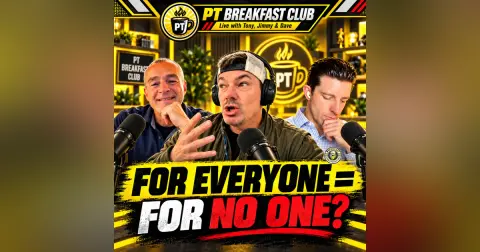


Physical therapy is for everyone.
But if your marketing is for everyone, who exactly are you talking to?
On the first day of Physical Therapy Month, Jimmy McKay, Tony Meritato and Dave Kittle dig into APTA’s public-facing messaging, “PT for future me,” the role of professional associations, and one of the biggest communication problems in physical therapy:
We keep trying to say everything at once.
The episode explores the difference between representing the entire profession and creating communication that actually resonates with an individual person.
Jimmy argues that broad messaging often becomes bland messaging. Tony and Dave push into what APTA membership should actually provide, whether professional associations should offer more structure and accountability, and why peer-to-peer groups may create more tangible value than another webpage full of resources.
Then the conversation turns practical.
Tony shares recent social media numbers and explains what kinds of images are generating hundreds of thousands or even millions of views. Dave breaks down how he turned a simple comment into a reaction video in minutes. Jimmy explains why most clinicians already have a massive content library sitting on their phones.
And eventually the conversation lands on the biggest obstacle:
Fear.
Fear of looking stupid.
Fear of being criticized by another clinician.
Fear of posting something that flops.
Fear that the work won’t be worth the effort.
The technology is already available.
The barrier may simply be hitting publish.
KEY THEMES:
• Physical Therapy Month
• APTA’s “PT for future me” campaign
• Why broad marketing can fail
• Targeting one specific audience
• “Aim small, miss small”
• APTA membership value
• Professional associations
• Peer-to-peer groups and masterminds
• Information versus structure
• Accountability
• Content creation for PTs
• Facebook, Instagram and TikTok
• Reaction videos
• Repurposing old content
• Using existing photos and video
• Fear of criticism
• The 28-day content challenge
FEATURED:
Jimmy McKay
Tony Meritato
Dave Kittle
Tony Meritato:
https://www.youtube.com/c/MedicareBilling
Dave Kittle:
https://www.youtube.com/@thedavekittleshow/featured
FOLLOW PT PINTCAST:
Apple Podcasts:
https://podcasts.apple.com/us/podcast/pt-pintcast-physical-therapy/id1000443325
Spotify:
https://open.spotify.com/show/3LmMUT64yrUc2iGo9Emafc
YouTube:
https://www.youtube.com/@PTPintcast
Instagram:
https://www.instagram.com/ptpintcast
LinkedIn:
https://www.linkedin.com/in/jimmy-mckay-pt-dpt-a4207659/
Website:
https://www.ptpintcast.com/
X:
https://x.com/PTPintcast
<p>This episode is part of the <a href="/physical-therapy-business-podcast">Physical Therapy Business Podcast</a>, where physical therapists and clinic owners learn how to get more patients, improve operations, and grow their clinic without relying only on referrals.</p>
<p>Looking for more episodes? Explore the full <a href="/physical-therapy-business-podcast">Physical Therapy Business Podcast</a> for real-world strategies on physical therapy marketing, patient acquisition, and clinic growth.</p>
0:00 going live broadcasting way too early from three separate wi-fi connections it's pt breakfast club with tony maritato dave kittle and jimmy mckay howdy hey hey happy physical therapy month day number one yeah what does that mean You know what we call that in communications is a hashtag holiday. And it's cute. I'm going to Tony Meritato this. What's the point? Good question.
0:40 I did a little research because I had completely forgotten. Of course you do. Which is telling, right? I'm not surprised you did the research. That's what I mean. Yeah. Well, one of the things that ChatGPT said is APTA is continuing the PT for future me. PT for future me. Which look, as much as we want to make fun and poke, i like the idea what i want to hear from you guys is is this moving us away from what physical therapy has always been is this moving us away from what physical therapist was originally designed to be we were rehab we were fixing a problem an injury a stroke a brain injury a orthopedic surgery Now we're moving into wellness, prevention, longevity, health span.
1:39 These are the words that APTA is using. And the question is, are we deluding ourselves out of the profession? What are your initial responses? I think. Gosh, I would need to compare physical therapy to other types of professions, to be honest. But again, I've said this before. I'll say it again. I'll say it ten million more times. One of our strengths is that we're so wide and broad, and one of our weaknesses is we're so wide and broad. So I'm purely acute care PTs. Like, what are you talking about? PTs are the future me. I'm trying to get you to the bathroom right now. I'm trying to get you out of the hospital in five days or less. I don't mind it. Like, if you said, like, what's the, you know, always, like, take the temperature of the world, right?
2:20 Like, health and wellness. is at an all-time high, right? Not to jump on this would be, in my opinion, a giant mistake. So I'm not giggling at the idea behind PT future me. That's the best name you could come up with? Who says that? Who says that? It rhymes. It rhymes. It does, but I think the grammar people would be like, what? What? I don't know. That was the best name. And you know me about names. If it's got a dumb name and a great idea, you reduce the likelihood that people are going to say it to someone else. Could you imagine two sixty-year-old women are sitting on a deck and they're going, You know, I haven't invested in PT for future me lately.
3:04 No, no, no one ever. No human being ever says that. I guarantee you that meeting came out of a committee of of people and we paid a lot of money for that name. And that name sucks. And I will say it right now. Well, I don't want to miss my opportunity. I was going to say, don't call me a wide broad. You call me a wide, wide and broad. I just wonder, and you would know better than me, it's always been my impression that APTA's core base is academia, hospital-based therapists, and then the small sliver of outpatient private practice doesn't even account for a measurable seat at the table, per se.
3:51 In terms of leadership, you mean? Just in terms of membership, in terms of... I don't know. I'm going to look that up. So, hey, AI, when I'm done with this transcript, I want the percentage. Are you talking about membership, leadership? Let's look into those data because I don't know if that's true. I think a third of them are students. That's a big one. Okay. That's another big one. Yeah. So, looking at that, to me, PT for future me is cash base. It's moving outside of all of those realms. It's not insurance reimbursement. It's not hospital. It's not acute rehab, inpatient rehab, any of that stuff. So like, are we kind of, you know, again, alienating the core that has kept the APTA running?
4:37 I don't know. I think it could be. I think you can have more than one message, right? Barstool Sports is a good example. It's not all about football or bars. It's about sports and the many different ways it touches people. So I don't think that the move is necessarily bad. I don't know if the APT is equipped for it, right? Because PT for future me is public facing, correct? Yeah, yeah, yeah, yeah. That's their main campaign. Yeah, it's not what they're good at. If you need evidence of me proving it's not what they're good at, just look at the names. I think the grammar people would be very excited to break down PT for future me. So I want to bring Dave into it. Dave, we were just saying, today is the first day of physical therapy month.
5:20 APTA, from my understanding, I'm going to research it, has a campaign running PT for future me, moving the profession toward wellness, longevity, prevention, What I said to Jimmy, two things, and I wanna hear what you have to say. One is that's moving away from what PT has always been. PT is about recovery, rehabilitation. It's fixing an injury. It's bringing a person out of a stroke, out of a brain injury. If we cut that piece of it off, we lose a huge, huge element of the profession.
6:02 And is it starting to alienate the real base of APTA? Like is, and I'm going to research it. My understanding was APTA was mostly made up of members that are in hospitals, that are in academia. Jimmy brought up students are a big portion of it. So like, if this is the campaign PT for future me, I like the idea. I just don't know if it moves us that the profession of physical therapy in the right direction. What do you think Dave? I mean, I think these campaigns are always going to be around something around movement or health. I was thinking, because, you know, we always have our bias of like the outpatient or like the orthopedic or neuro type of, or geriatric type of group of folks, not really like necessarily the PEDS subset or the acute care subset.
6:55 But when I think of like either home visits or brick and mortar, I was thinking sarcastically, I think the campaign should be Get ready to pay out of pocket. Meaning, you know, the reimbursement and all that. Obviously, that would be, you know, there might be some comments negatively about that. I'm just kidding, folks. But that's kind of, like, at least my reality or the reality of, like, a lot of people, and there's still a lot of places that take insurance. But I think it's okay. I think maybe in terms of grammar that, like, I think they're doing it more just for simplicity and trying to make it maybe like a fifth-grade reading level type of a campaign, which I think that is always important.
7:36 Fifth-grade reading level is important. Don't write it like a fifth grader who can't read. I know. I know. But I think maybe they were trying to simplify it maybe too much. I thought mine was the podcast where you drank and then talked about things. So Gemini says private practice and outpatient settings represent sixty percent of. There you go. clinical and a sixty percent of memberships, but that includes hospital outpatient. It includes physical therapists who own their own private practice and independent business. Hospital based settings represent the second largest clinical category.
8:18 These are acute care inpatient and large health systems. And then academia, about eight percent of the membership. Right. Yeah, that's about what I thought it would be. But I still think we're comparing apples to pears, not oranges. They're close. Yeah. People, what are the reasons people belong? If you belong, if you're going to give the APTA five hundred dollars a year and expect five hundred dollars of value in terms of, well, I gave them five hundred dollars, where's my five hundred dollars of advocacy? You're never going to get that. People belong to a professional association so they can associate with other professionals.
8:59 If that's not valuable to you, don't join. And I'm saying that as a member of the APTA. I just gave this talk to students at College of Staten Island. We were talking about it from a prompt technology perspective and why people leave the profession. Here is my one take. When expectation meets reality, that's where friction lies. That's when people get angry or frustrated or drop off. When expectation and reality, when the expectation is low but the experience is high, that's what we call surprise and delight in marketing. So I think if you go into APTA being like, all my problems will be solved. All my content will be solved. That is not on the brochure. Those are the people who come in and churn, as we call.
9:42 Set better expectations. But that starts with taking an assessment of what APTA actually is and what they actually provide. Then communicate that. So this could be a... Kismet, I think that's the word, like a fortunate situation. Happenstance. Happenstance. You guys know today is October first, first day of PT Awareness Month. I had no idea. First day of our twenty eight day challenge for publishing more content. Dave, I want to talk about your response video on TikTok to the guy who said you're basically don't use the word doctor.
10:22 oh you did a video i was watching it this morning um nice because that was like uh it was like a week and a half two weeks ago so really yep it just showed up on my tick tock feed this morning Which I'd like to point out, understand the physics of some of these platforms. And we can get into the nitty gritty. I'll share some screenshots. Tony's got them too, where something is nothing, nothing, nothing, nothing, nothing. Boom. So I know you posted that a week ago, two weeks ago. You just said, I never saw it. And I'm pretty connected with you. Doesn't mean it doesn't pop. Yeah, but before we move on, so back to APTA, they have a hashtag, PT for me is what they want you to use when you're posting content and anything related to this month.
11:10 Consumer member toolkits, they have graphics, sample social copy, infographics, press release material, patient education, and life stage fact sheet. um they have october tenth is global pt day of service and national media exposure they're going on the today show on october ninth in new york dave you should go down there stand up i want to go i want to go and i want to bring a megaphone that's my idea and anybody wants to come with me i'll buy the megaphone you bring the bagels my wife and i were down my wife and i were down at the today show like waving and trying to get their attention i want to see dave and mini dave out there so i've got some thoughts right like a toolkit is a great first step and i will tell you from the guy who's been in a lot of marketing boardrooms that is the thing that comes out well what can we do we can just find a cool a toolkit and let people know it's there the toolkit is a C plus, right?
12:14 The people who are actually going to use it know how to make better content than that. That's what this challenge is about. Being crappy, being better. It's through reps. It's not by repeating a toolkit. But listen, doing the toolkit is a B plus effort, C plus deliverable. What would be an A plus deliverable is if they hired Tony, Jimmy, and Dave to go to a state chapter, and they gave us PTs and locked them in a room for eight hours, and we did your twenty-eight day challenge in eight hours and held their hand and said, you will click this, you will stand in front of this camera, you will read this, you will record this video. Repetition. Ironically, reading a toolkit about how to do PT doesn't get people to do PT.
12:57 We need someone to go in person, as Dave would say, and put hands on them and say, do this, I will teach you. Otherwise, they won't. Yeah. C, C plus delivery on the ABTA's content that they provide for practice owners. And no offense to them, because at least they're trying to help. Yes. But to expand more off of what Jimmy's saying is like, the content that gets the most attention or that gets the most attention clicks or shares is like what Tony does, where it's for a specific avatar, a specific person. So Tony's not gonna grab the APTA's graphics and say, and just repost it, which by the way, I think, ABT is trying to help, but this would be like the lazy way of marketing where you're just like, you put up a graphic and it's like, we can help shoulder pain, stroke patients, runners, knee pain.
13:52 And then it doesn't connect with anyone. Whereas Tony does something about, there you go. What does it say? Physical therapy is for everyone. Is for everyone across all life stages, all ages, all abilities. Physical therapy helps people. And then it goes through everything. Now, if you were going to make an ice cream flavor for everybody, you would call it mayonnaise-flavored ice cream because it would check all the boxes except no one wants it. And that's why when you go into an ice cream shop, do you want a cup or a cone? Do you want a small, medium, or large? And then there's ten or twenty or whatever different flavors. So when you're posting content, this is what I'm trying to do. And Tony does it a lot around knee replacements.
14:34 He used to do a little bit of rotator cuff stuff, but mostly knee replacements. For us, when we post content, every time that we post something, it's really meant to be for one person, like one condition, like just a high rocks athlete or just a CrossFit athlete, or just a corporate executive who's stressed out that has back pain and stiffness that's affecting their day. Every single piece of content needs to be for literally one person. Think of a current patient, think of a previous client or patient, make content just for that one person at a time, not this like, uh, Shotgun. Yeah, the shotgun lazy way of regurgitating the marketing from ABTA. So ABTA, it's good that they're helping.
15:16 They're trying to put it out. But it's like if you're just going to repost and reshare it, it's not going to resonate with anyone when it says physical therapy is for everyone. It doesn't even talk to the avatar. You got to talk directly to the avatar, the end client, someone that's a fifty five year old lawyer with back pain. That's one piece of content. Agreed. Yeah, it wasn't on my bingo card to quote the movie The Patriot, but Mel Gibson, I forget his character name, but aim small, miss small. Aim big, miss big. And you can miss big all month. I don't care how many hashtags you're going to pop on that, my friend, you will miss big. uh real quick they were i thought that and again like you guys both said i will reiterate i appreciate the apta for making content i appreciate them for putting stuff out i don't want them to take this personally and i don't think any of them would no but it's designed by committee like jimmy said um who are physical therapists well physical therapists are doctorate educated i am not licensed health care providers i am they evaluate diagnose develop personalized health wellness plans to improve movement manage pain prevent future injury and chronic disease people of all ages and all abilities um i still feel like by necessity it just it leaves so much out you know and again obviously i would say i think all of us would say it's
16:47 so much more than just those things But those things aren't necessarily the things that I would focus the message on. If we want to go down the road of longevity and independence and personal freedom and autonomy, I would want to focus on staying in your role as a person, like picking up your grandkids and doing those things. I was going to share, I didn't share it, a video somebody in the fitness space made where basically it was a video of two older adults, man and a woman, probably husband and wife, jumping off of a plyo box.
17:31 And they're like, if you don't effectively, if you don't like exercise, if you don't do this, this is your future. And then it pans to a wheelchair, a walker, you know, a recliner. And of course, there was the typical, this is ableism, ableist don't, you know, just because somebody doesn't exercise doesn't mean they can't stay active and can't stay fit. But it's the idea behind the message. I love the fact that when that comes in, right, I got pulled into my boss's office, month two of running a radio station. I was twenty-four or five years old. Month one, I did everything my boss did before me for the first three years. I did exactly that. Then I started getting a little, uh, what would I do in this situation?
18:12 And I got pulled into my... boss's office. I wasn't in trouble. We just had a spirited discussion between the boss and everybody else. And at the end, we walked out friends and the boss told me to stay behind and he goes, Jimmy, you run my rock station. If I'm not pulling you into my office once a month for trying some stuff, it means you're not trying hard enough. If you're not putting out content that pisses some people off, you're not making content for anybody. I need you to disagree with me. The edges are where things grow and you build a business on not the messy the boring middle so that's not what i want put that up there okay i think i should do all the live streams from newark airport because i'm too espresso steve and walking around here not standing still at my desk so what i shared before was the the therapist toolkit this is the patient toolkit um why physical therapy that's for the patient This is for the patient.
19:10 The previous one was for the therapist. Same stuff, though. Still says who are physical therapists, doctorate educated, licensed healthcare professionals. It's basically, yeah, same thing across the lifespan, childhood to adult. This checks a box. Again, like... A for effort, but here's the funny part. I bet you the marketing people that designed this knew exactly what they were doing. They had to cover a base, so they covered a base. Yeah. I wonder if there is ever a point, infographic, downloadable, so this is something that you would be able to share with your consumer base, your patient population.
19:55 But nobody's going to share that. Is there ever a point where, and maybe they have, where they would create something very targeted, very specific to a demographic or even the chapters or the subgroups, the academies. That's who should, but they don't have the time or the expertise to do that or see that. Nobody here thinks it's their problem. Because nobody is financially in trouble if that problem doesn't get solved. That's why I say APTA is not a consumer-facing organization. They don't have the relationship.
20:35 If nobody knows what PT does is true, which I don't think it is, but if it were, then people definitely don't know who the APTA is and why they should trust it. They're not built for it. It's not what they're built for. They're a professional association. They're where professionals associate. Dave, any feedback before we move on? No, that's enough. But I think Dave's feedback is this. I think Dave is your avatar if you're APTA. Dave's like, show me why me giving you five hundred dollars solves one problem or gives me back something. Like if there was a peer, PPS does this great thing called peer to peer where And I haven't looked into it, but I've got a buddy, David, who's like, I loved it.
21:16 It was great. They, they sent, they, they put you in small groups of people who are similar to you in what you're doing, but maybe they're five years ahead of you in your career, five years behind, but you're all different. That is terribly imagine that imagine you're like, Dave, why am I giving you five hundred bucks once a month? We're going to put you in a pod with five people. one hour a month, we're gonna do that twelve times, and you're gonna learn some stuff. I feel like Dave would be like, yeah, that makes sense, because five hundred bucks over twelve months, that's a layup. If I learn one business, imagine you were in a pod with someone who's like, I've done direct mail, try this, not that, and you were like, oh my god, was that five hundred bucks worth it? Because I met this dude who gave me a trick, who helped my business. Yes, that's the value, not that web page.
21:57 Yeah, it's like, no, I've had buddies that have done that, the peer-to-peer. And it's almost like group coaching, but like, yeah, sharing ideas, sharing best practices. Here's what worked for me. I mean, we all do this on the show all the time, right? I share my mailers. I said how many addresses I sent it to and how much I spent on it and how many calls we got from it or whatever. Like we share a lot of that. So it's sharing with other owners that are similar to you and hopefully your group would have like maybe one or two owners where like they're ahead of you and then they can share like best practices that you should probably test like now or in the near future down the road. Listen, that webpage from APTA is a cute little map.
22:38 It's a map of an amusement park. It's a pretend area, right? What you need is a Sherpa. A map tells you where you're going. A Sherpa tells you where not to go. to step or you fall off the mountain. That's the difference. And if you can structure that, cause like us doing this, we're a little bit weird, right? Who the hell else is going to do a live stream twice a week for an hour, two plus three years. That's fine. We love the fact that people can listen to it, but all the APTA needs to do is create the structure. You've been matched with these five people. We put the zoom thing on your calendar once a month, just click and accept it. And now you've got to show up. I'm going to hold you accountable. They just need to provide the structure. That's all university does. I can Google or chat GPT all the information.
23:20 Why do I go to university? Structure and certification. That's the only thing universities are hanging on. That's their thread. That's all it is. So Dave has been part of Masterminds. I shared with you guys a couple, like now because I'm sharing them, my feed is filled with ads for the Ryan Pineda Golfing Business Mastermind. Two or three other like big podcast channels trying to get guests doing Masterminds. They're charging fifteen to twenty five thousand to be part of the mastermind, plus all of the travel expenses. Correct. And, you know, APTA is struggling to sell five hundred to a thousand dollar membership.
24:02 They have the academies. Is that their version of trying to create a mastermind or should they go full blown like, Let's do a twenty five thousand dollar a year mastermind. Let's put people in different stages, but in the same category together. Let's put them on location. What is that where they should be? It should be. Well, they never will though. They will keep it at, specifically PPS will definitely keep it around the same dollar amount because they just want to help the most practice owners, the most people. But I agree. I do agree that when you pony up more money, You take it more seriously. And unfortunately, like again, you know, health as a right and healthcare and all that type of stuff in the United States.
24:46 But like, I've seen it. I've been in network clinics, two, three different clinics working and more through rotations versus when we're charging out of pocket. And magically there's less cancels and no shows when people are paying out of pocket. So yeah. I'm going to disagree with Dave, but I'm going to disagree with Dave for Dave. it's not because it's not just because people pay more out of pocket to come see dave dave also delivers and communicates what communicates what he's going to deliver there's the other side of that coin it's not just because someone's paying two fifty that magically because you have to you have you have to have better messaging if you're gonna charge fifteen twenty twenty five k for whatever for coaching or whatever whatever the thing is but i want to make sure people hear it's like well he's It's not just the, it's because I paid for it with cash and I touched the money.
25:39 I agree with you. There's a difference when Dave walks in a room and says, this is what we charge. I'm sure the first fifty times you said it, you were a little apprehensive. Because you were like, now I'm going to actually charge what I'm worth. Which is, we want to complain about that under our breath when the insurance companies are paying. But it's not easy to stand there and be like, I'm worth three hundred dollars. And if you want this, that's what it costs. And if you don't, that's OK. You could do something else. It's not just the paying. It's also the people who are willing to put their livelihood on the line. Who's like, now I need to deliver or this is just one transaction and I got a couple hundred bucks from someone. There's someone who does what Dave does for more than a year or three years with that. Isn't that the line of three years of a business is three years.
26:21 Somebody who does that for three years, it's not an accident. And it's not just because you charge more. There needs to be stuff on the back end. All right. So I definitely think APTA should move into that space. How? So hitting on what Dave said, PPS, they're going to keep it at that price point, trying to help more people. And I'm going to add to it. And as a result, they help no one because there's no specificity. I had a great time going to PPS. First time I think I met Jimmy in person. I got to see so many people in person for the first time. It was awesome. But I didn't walk away with anything outside of that.
27:02 There was no tangible benefit. My business didn't grow. Nothing changed behind the scenes. So I do think PPS... Go ahead. So you were saying, is this something the APTA should do or is this their academy? The sort of... Could the APTA grow eighteen arms? And that's how many academies and sections there are. Could they? Should they? Yes, yes. Do they... PPS does it with peer-to-peer. APTA's Academy of Leadership and Innovation does it with their LAMP courses. I've never heard anybody say anything bad about peer-to-peer. I've never heard anybody say anything bad about LAMP because that is structured.
27:42 Having a bunch of people who also have the same membership card with you and have access to the same website is not a membership. Can you take me from here to there? You need structure. So you walk into the LAMP Academy thing You pay money, you pay your own money, but then someone is holding you accountable for whatever it is, a weekend or several months. They could do that, but they're not built for it. They think that, here's what APTA is standing on. Thirty years ago, the only way to get access to a lot of this information without the interwebs here was them. And then this showed up. Gatekeepers, gatekeepers. And they didn't pivot. And that's their problem. And that's why I'm worried about some chapters of your academies being financially insolvent in a few years.
28:25 I'm doing math that is publicly available. If you look, they have to publish their financial data. Isn't that what it's for? Data, data, data, data. And the math ain't mathing, people. So I'm questioning, are you going to have a staff or anything? I said, I think it was two years ago, I said three or five years. So I'm still, my parlay is still in play if these things go out. But they could. But I don't think they think that's the problem. I think their thing is tell people to be a member because it's their professional duty. No, it's not. No, it's not. No, it's not. This next generation is thinking everything that you're saying and you, you, you are not listening.
29:09 So just real quick, I'm looking at numbers. Nineteen, almost twenty million a year for APTA in twenty twenty five was dues and subscriptions. Uh, million accreditation and exam fees, eight million, almost a million royalties, uh, meetings and conferences, seven and a half million other advertising revenue, million total revenue, million. Um, and what is that their financial statement? Yeah, basically this is kind of what I would love to do is take the last ten years. Are we doing this? Are we doing this or are we doing this? And if so, where? That's the health check.
29:51 I want to check the future of PT, not just the future PT for future me. What is the name of the campaign again? PT for future me. PT for future me, isn't it? Future me, yeah. I always talk about me in the third person. PT, I'm thinking about... You get an oil change for future me. You know what I mean? I was thinking about taking it for future me. So the twenty five million in twenty five million in dues and it's about five hundred bucks per year. Yeah. A hundred thousand hundred thousand members. Twenty million, not twenty five. Twenty million says approximately one hundred thousand members. That's five hundred bucks. Plus if you now here's the fun part.
30:33 Some of that money goes to state chapters. So like the state chapters benefit financially because like, hey, if you're in New York and you become an APT member, you're automatically an APT New York member. The struggle is if you're APT in New York, you can't just get a member that just wants to be in New York. You have to be national to be state. So there's a double, there's a two-sided sword there for these organizations. There's flexibility and mobility. I'm pulling up a photo, a screenshot real quick. I think Jimmy's going to be surprised at the chart that ChatGPT generated. But while I'm pulling this up, you guys keep talking. All right.
31:14 What should a DTA do? I think their skills are size, scale, brand recognition, and structure. You have a bunch of smart people put together programs to walk people from a current state to a future state, make the future state that actual path forward. valuable to them emotionally identity and financially and then you got a shot so what is this so this is annual dues and subscriptions they combine dues and subscriptions and I mean it was up then it flat then it was up again like twenty twenty five was a big year I would love to know what that is that's an outlier I would love to see I would say you know I would love to interview someone from APTA on this the likelihood of them doing that i mean i would probably tell them not to do that if i was a pr person but like what'd you do right and what did you do and are we going to continue to do that and was it more of those generic pdfs circulated on the internet how many pdfs got you from x million roi it's a let's pivot just a second um i want to hear from dave about how his media is going real quick before i do that i want to share my screen with you guys and show you uh i had my biggest day yesterday Did I say that you posted something and then like the next morning it made you four thousand dollars?
32:39 Is that what you posted? It was a month, right? September has been the biggest month generating four thousand in ad revenue from share a screen from Facebook. But here is I'm just going to show you guys a couple of photos. I knew this was going to do well. Let's pull it up. If you guys look at this, that Barbie total knee replacement deal, I don't know how I never thought of this before, partly because I'm scared to get sued by Hasbro. Half a million views in like, twelve hours.
33:21 G.I. Joe, like two thousand views. Nobody cares about G.I. Joe. I think it represents something here. Can I give you an idea to play off of in this challenge? All right. So I want you to do a subsection of your of your channels. And I want you to sort of borrow the imaging from a little company called OnlyFans. But it's going to be I want you to shift. I thought you were going to say Disney, but go ahead. No, I want you to shift from knees to feet. And for like a week, I want you to do only feet. yeah it's about feet because i think you're gonna get a lot of weird crossover audience but hey man attention is attention why not only knees why not only knees only knees there you go see we're back to the middle i like it so real quick that uh adhesive dermatitis half a million views i've shared that video that photo or a version of that photo at least ten times and every time it's good for half a million to three million views But then also this, this little comparison on the top right, bow legs versus straight legs.
34:26 I think that one crossed a million views in twenty four hours. It generated a couple hundred dollars. You know, and these are basically just like real photos that I generate to modify and change. Some of them are my real photos. Some of them are photos I've harvested off the Internet. Yeah. The interwebs. One that just popped for me, I don't know if you guys saw this, I think Dave might have commented on it, was I did an image of a pie chart, but it was just one thing. It was what people think PT is, and I just put exercise, one thing. And then, of course, I did the after, what PT actually is, and I showed it's this, it's this, it's this, it's this.
35:08 Now, I'm aiming at a different audience than Tony is. Tony wants to talk to you. people with knee replacements or the general problem, right? It's a big total of tan or total addressable market. Mine's a little more constricted for just PTs, but I'm aiming at identity. So when Tony shows before and after of knees, people who've had knee issues identify with that. That's why it's good for half a million views. I'm trying to tap into something different, but we're using the same tactics. We're just aiming at different audiences. So our images change. so yesterday this will probably go up just a little bit more yesterday i hit almost three million views in a day and the carryover from yesterday on a twenty four hour you know cycle let me get this i'm already at six hundred thousand views today and i haven't published anything today you haven't even had breakfast yet Can I ask you a tactic question?
36:05 Yeah. So here's something I do because, again, I'm working with a smaller audience. An image that pops, do you go into that image, click on the likes, and then invite everybody who's liked it to follow your page? i don't do it often enough i might might do it once in a month once in every other month um again it's it's i focus my time on where i get the biggest return i think facebook limits you to fifty people like fifty invites and i i can okay well i don't i I think it might limit you for just inviting random people. I think if they let me do as many as I want, if you like, that's sort of the permission marketing idea with Seth Gooden.
36:50 It's like you've stepped halfway forward. I can now invite you. But I got to be honest, Tony, I don't even think you follow my page because whenever I click and you like everything, your little invite thing is grayed out because I invited you like ten years ago. This is true. I might not. But I think I'm accumulating like, ten thousand followers a month or something like that right now. Not even doing that? Wow. Yeah. You don't need that tactic. I do. You don't. Okay. So I'm just looking. Over the last twenty-eight days, I've had eight thousand followers join and that's down seventeen percent from the previous month.
37:31 I would say the total. Last thing, I would say to Tony, hey, listen, if you're getting that organically, pay an intern to be like, your job is to go into every image and invite everybody who likes it to follow because you're thinking, if I can get one person, how many one people do I need to make an extra dollar? Because now that person is going to be delivered that content faster. Dave, how's the media going? Today is the first day of your media challenge, but you've been doing it. So what's new? It's a good nudge for me to increase volume. It's really just coming down to posting the content that I already have, but no, it's going well. And a little bit more on the video you were talking about.
38:13 So yeah, I just figure like anytime that there's something that you can, it makes it easier to create content from something that occurs. Like let's just do that too, right? So like the previous videos that I did about like the one-star Google reviews that we got, And then on TikTok, the video that you guys were referencing at the top of the show, someone, this guy, David had just commented. It was a video I'm talking, I'm recording it. And it was my therapist, Dr. Ethan Berger in front of like the anatomy chart. And he was describing core is important and all that for overhead athletes. But so this guy, David commented, his comment just said, Ethan, it's Ethan. And obviously it means like, you know, that we shouldn't be random guy on the internet with whatever, whatever account.
39:00 I was just saying that basically like, you know, we're, we're not like, he's not a doctor or whatever. And so one minute below, I was like, Hey David, uh, you know, thanks for your comment or whatever, but, um, we both have our doctor of physical therapy degree. That's literally, I'm looking at it right now. What's on our diploma, doctor of therapy. Um, we never claim or say that we're physicians or MDs or medical doctors or anything like that. And that we also did, uh, gross anatomy, cadaver dissection from people that donated their bodies to science for, you know, a semester or two. Uh, So like, so I commented that and then I thought, I think it's a good idea to screenshot this.
39:43 And then I did like the green screen overlay of my head talking about this, about the comment. And I'm pointing to the comment and not that, you know, definitely not getting any amount of views like Tony gets, but it definitely got a little bit more views than some of my other stuff or most of my other clinical stuff. Ballpark, how much time it took you to go from idea to completed piece of content with the green screen video? Ballpark. Two hours, maybe five minutes. Yeah, I want people to hear that. Like they're thinking, did you script it? And did you have to buy a green screen? No kids, these are tools that are available on your little Google box that's in your hand right now. Yeah. And so you got to use I think you have to or you would want to use the edits app that is from Facebook or Instagram because that doing a green screen overlay of yourself talking about it could be any it could be any screenshot.
40:35 It could be the abstract of a research article. It could be an overlay of a knee replacement that, you know, is red and infected, like whatever, anything. It used to be native inside the Instagram app. And now it's not in there anymore. Months ago, it wasn't in there. I couldn't find it. And then I had to find online like, oh, you actually have to download the edits app. And I was like, oh, right. Jimmy said this already like a month ago. Download the edits app, right? So the green screen ability, you do it through edits app. And then you do get some benefits of using the edits app because then you can easily look in the app and see how are all your videos performing. You could search them based off of impressions and views and all that. So it gives you some data.
41:15 Maybe it's like an extra step, but like you just hit download. I hit download. Once I'm done doing the video and the edits app, I hit download so I can post that to TikTok. And then I'll also hit the Instagram button from the edits app. It opens it up into the Instagram app and then I can just do the caption and then post it and be done with it. Yeah, that data, I'd be honest with you, is I'll use the edits app to publish, even if I make it in captions for that data and insight. Like it's just... The juice is well worth the squeeze. I do love when the influencers on Instagram are like, Instagram just released a new hack. And I'm like, Instagram is literally screaming these hacks from the rooftops. But yeah, that's a great content, right?
41:55 It's a great content. I found a trick in Instagram. The dude in charge of Instagram did a live stream about this thing that they added, and they're telling you to use it. But if you frame it as a hack, our brains are wired to think it's a sneaky thing, and that's a good thing. So that's interesting. I've never used the edits app. But yes, two days ago now, two days ago, I was doing the second live module for the October challenge. And I showed people on my phone. I was like, look, here's the video. This is the video that I recorded. I'm going to open Instagram, just native Instagram. I upload the video. I trim it. I post the video.
42:36 I post a screenshot from the video. I post a social media, which Jimmy took my template and ran with it. What looks like old Twitter X kind of post. So three pieces of content, and I'm looking at it right now. This was posted September twenty ninth at seven fifty one p.m. seven fifty one seven forty eight seven forty seven and collectively they've got eighty like ninety five thousand views you know and like dave was saying i mean it just took three three minutes i'm looking at the time stamps right now to get those three pieces of content from one piece of content dave did a reaction video Those do incredibly well for multiple channels.
43:28 Like you get one video clip, and I think this is what people don't understand. One video clip, Dave has gotten multiple pieces of content out of it so far. And even for me, I go back to two thousand twenty four, two thousand twenty five. I find those clips. I pull them forward. I put new captions. Maybe I do a voiceover. Maybe I do a green screen. Maybe I show the original one, just cut and edited a little differently. huge value in that library, that bank of content, how much at your best guess, how much content do you already have collected that you could potentially repurpose down the road?
44:09 Oh, total? Yeah. Like total pieces? Total pieces. I mean, probably a hundred at least. I mean, maybe not as much as you because you have done this for years and you have a whole bunch of images and videos and all that. Actually, if you're taking a video and I could take screenshots from the video, I mean, then it's like five hundred or a thousand. I mean, it's like limitless. A video is thirty frames a second. There's an infinite supply of stills that you could pull. And now with ChatGPT or any of the image models, you could take that still like multiple times, I'll say. Process this photo. It's my photo. Process this photo. Change the person's shorts from red to black.
44:51 Change the flooring from wood to carpet. Change the lighting. Make this woman into a man, but preserve the element of the knee and the incision and things like that. I have a virtually infinite supply. Can you let Jimmy back in the studio? He just texted me. He's not able to get back in. But yeah, I know that. I don't know if the folks know that. But yeah, Tony, you have an infinite supply of content, of images, a ton of videos. And then you can grab images from those videos. It's a good reminder because I think a lot of PTs probably have a lot of that content already sitting on their phone. I think that's the point you're trying to make. Puns. Can I talk about the one reason, the largest reason that people who actually even listen to us, agree with us, believe us, will not actually take on this free challenge?
45:40 Do you want to know what the reason is? Yes. What? Fear. I would say number one reason is fear. I have to prepare too much. I don't want to look bad. I'm going to do something. It's going to flop. It'll be fear and inaction. And I want to say to those people... When you are done, or how about this? When people are done, we will interview them. Let's bring three people who actually go ahead and complete the challenge. And they will say, verbatim, way easier than I thought it was going to be. I thought it was going to be way harder and way scarier. That's the biggest compliment that you can give if you're a dentist or a skydive instructor. Something where people have high fear, high stress.
46:21 When they walk out and they go, that wasn't nearly as bad as I thought it was going to be. Man, I was putting that off for years, right? That will be the reason they don't do it. If you do, I guarantee you will say that was easier, worth it, than I thought it was going to be. But most people won't do it for that simple reason, psychology. I think fear is part of it. I want to hear from Dave because this is fundamentally what we do every day as physical therapists is we get people to exercise who don't normally exercise. Fear even in that is an element. Insecurity is an element. There's other elements. um so it's one thing to identify and dave do you agree or disagree is it fear is it lack of resources is it some other family life other obstacles that's keeping people from doing it Family life is still fear.
47:14 Family life is still fear. Just to clarify, I'm afraid that this isn't worth it. I'm afraid I'll do these ten push-ups, but the ROI won't show. That's still fear. It's a base of my fear. I think there is a lot of fear with, because I feel like I've felt this before, where now that I was doing patient-client-focused content, and even the captions, I'll kind of write them in a certain way where I do want it to resonate with the ideal client, but I'm also like, sometimes I feel like, What would other, you know, what would other therapists say about this? Because I also don't want to, because a lot of other therapists refer to us, right, Tony? So it's like, there is a monetary thing of like, like, for example, maybe we'll say now I'm saying the word like overcome or resolve a little bit more than fix, like fix your back pain.
48:01 I'm still saying fix your back pain, but... resolve resolve your back pain or or address physical therapy now with the second location in florida new york their first location serving the residents of monk oh is this hot is this a growth ad or a hiring ad yeah you're not focusing the reason we do a live stream is we could be swimming in free t-shirts just hey if you're a clinic send us your t-shirt i'll wear it during the show We need to be swimming in sponsorships. Come on now. Jimmy, you can buy all the shirts you want after that. All right, go ahead, Dave. So where were we about?
48:42 Oh, so the fear, right? So I do think it's fear. I think when we, like, for example, I posted a couple of videos of either Dr. Crystal treating me or me treating Dr. Crystal's, like, hip. And I definitely... made sure to talk in a certain way where I'm talking about like the hip mobilization and like the angle of it and all that. So like, I definitely feel like, and I just, I don't let that stop me, but I could definitely see how that would stop a lot of therapists. Like they don't want to get critiqued. They don't want to have what we've seen online before where other therapists will comment on their, one therapist will comment on another therapist video and about the therapeutic exercise or the manual therapy technique or whatever which i think it's good for us to get it out there so that the potential clients and consumers out there can see what we do but it's when other other other uh colleagues across the country that you don't know judge you or say oh that's wrong or i would do it this way or that doesn't make sense or whatever i think that is the biggest limiting factor everyone's got images and videos on their phones of some of their patients or clients and google reviews and success uh and outcomes and all that type of stuff but i definitely think fear is it i think that's the biggest thing there's no barrier to entry in terms of cost or you know the technology and the apps all that makes it makes it easy peasy it just it just fear is the biggest thing let's let jimmy do his parting shot before he gets on the plane parting shot would be the success that you're uh not achieving is hiding in the work you're not doing and we're setting it up for you it's twenty eight days do
50:14 this zero dollars and if you have a problem i don't know dm one of us All right. My parting shot. I wish Jimmy would have hired two security guards to surround him while he was waiting for his plane and we could see the response of the people around him. He would have accumulated a crowd. Dave, parting shot. You got to get rid of fear. You got to get videos of your patients and clients or you yourself treating your therapist, treating each other, talking about what types of techniques you're doing, who this might help, what types of conditions that might help. Get those images and videos, especially the videos, get them out there and don't worry about what someone's going to comment because you will get some comments like me.
50:54 You're going to get some comments and judgment, but the more stuff you get out there, the better. All right, guys. Scott says fear kills more dreams than failure ever will. Absolutely. October first, if you're participating in the challenge, get out there and start posting. If you're posting stuff for physical therapy month, get out there and start posting. We will all collectively see you next week, Tuesday, Thursday, eight thirty Eastern. Guys, have an amazing weekend. You too. Thank you. That's it. We're out. Boys, what the hell are you doing? Follow Tony Meritato on YouTube at Total Therapy Solution. Find Dave Kittle at conciergepainrelief.com and on YouTube at The Dave Kittle Show.
51:40 And follow Jimmy McKay at PT Podcasts on YouTube, the socials, and wherever you binge podcasts you pretend are for CEUs. And hey, just a reminder, none of this was for advice. This was for entertainment only. Our lawyers say that counts. Thanks, Keith.