Why Saying Yes to Everyone Is Killing Your Clinic

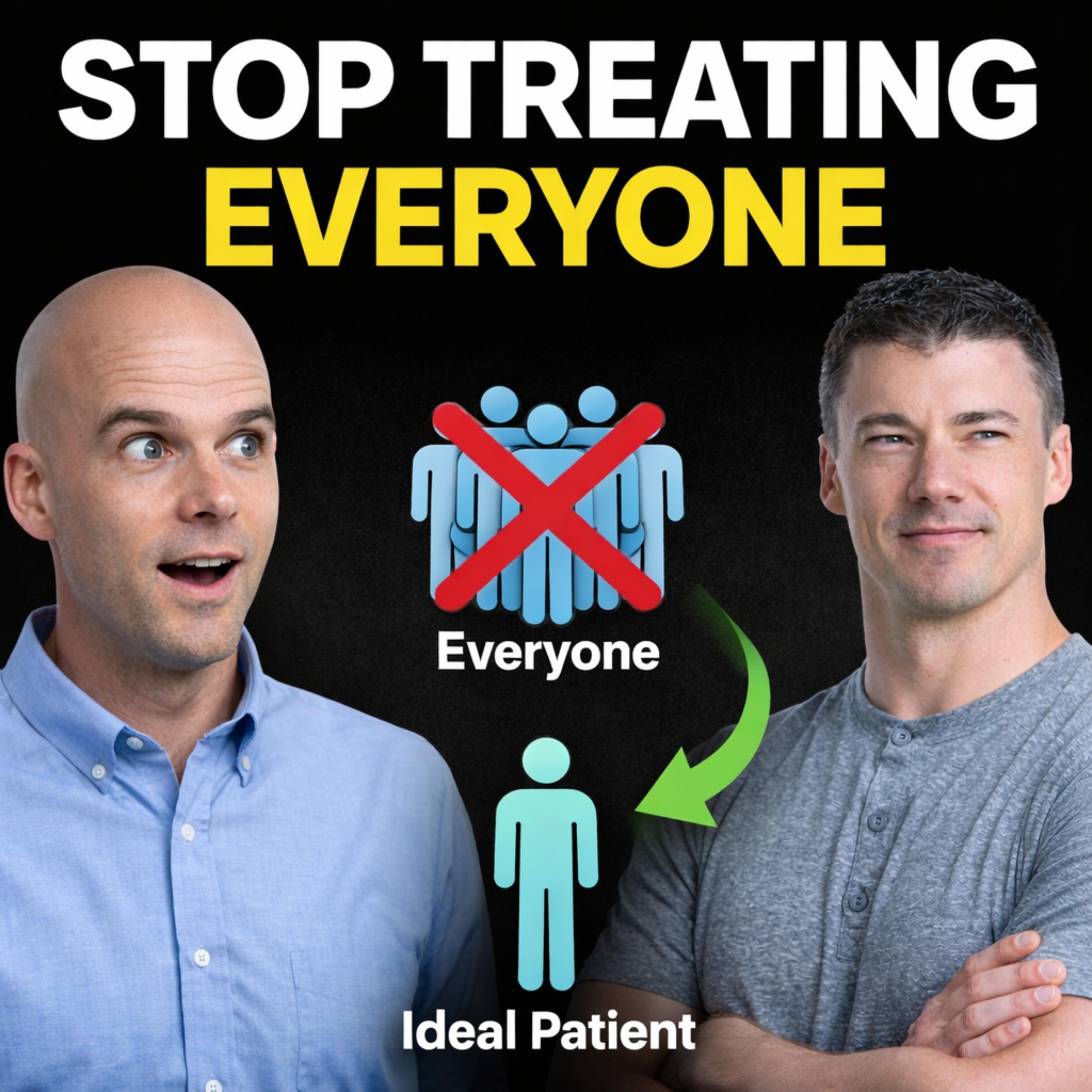


If your clinic feels busy but profit isn’t increasing, this episode will hit home.
Doug Adams joins Jimmy to break down one of the most uncomfortable truths in private practice physical therapy: growth does not come from treating more people. It comes from treating the right people.
Key Takeaways:
• Why every PT clinic needs a defined sales process
• The difference between commoditized visits and transformational outcomes
• How defining your ideal patient increases revenue per client
• Why word-of-mouth only works when the experience is aligned
• The danger of the “just get more patients” mindset
• How AI and “good enough” rehab advice threaten generic clinics
• The uncomfortable decision clinic owners must make to grow
If you’re a clinic owner chasing volume, this episode challenges you to rethink your model. Revenue per visit, lifetime value, and brand alignment matter more than raw visit counts.
<p>This episode is part of the <a href="/physical-therapy-business-podcast">Physical Therapy Business Podcast</a>, where physical therapists and clinic owners learn how to get more patients, improve operations, and grow their clinic without relying only on referrals.</p>
<p>Looking for more episodes? Explore the full <a href="/physical-therapy-business-podcast">Physical Therapy Business Podcast</a> for real-world strategies on physical therapy marketing, patient acquisition, and clinic growth.</p>
0:01 You're listening to the PT Pinecast, where smart people in healthcare come to make noise. Here's your host, Jimmy McKay. All right, our guest today built clinics. And then he studied why some PT practices scale and others stay busy but broke. He's worked with more than, I don't know, two hundred clinic owners and keeps seeing the same pattern. The problem wasn't necessarily marketing or staff or reimbursement. That's a different episode. It was who they were trying to treat. He believes most PTs are accidentally capping their income by saying yes to everyone, that every clinic needs a real sales process, whether they admit it or not.
0:46 CEO of RunDNA and co-founder of the Omega Project, Doug Adams, back on the show. Doug, there he is again. Jimmy, thanks for having me on. Great intro. Appreciate it. Good to wave by you at CSM, by the way. I remember when I first... Yeah, I'm busy. But I remember when I first started going to my CSM, I was like, oh, I'll interview people because everybody is going to be there. And I remember people in the beginning would be like, I don't have... And I remember thinking people are all big time in me, man, who these people are. And then I went to a CSM and I was like, Oh my God, these things are nuts. It's just, it's, it's just, it's controlled chaos. You try to get things done at once because, because you're on site because you can.
1:28 Everyone's in one spot. And you're like, this will be great. But because everyone's in one spot, everyone's competing. And it's a madhouse. We should grab a drink. It's like, when? Yeah. I've been booked for three months. Yes. It's a blast, though. It is a blast. All right. So... So you're doing a four-part webinar series. Yes. This is... I like when something is not on the syllabus and this is not on the syllabus. What you're going to teach was not on the syllabus in PT school necessarily. Yeah. It's sort of a dirt... I mean, it can be looked at like a dirty word, which is like sales. Right.
2:08 But I feel like what you're saying is if there isn't a process, are we really surprised... when something doesn't happen consistently. I feel like healthcare people would like that better, because they're like, well, yes, first we do A, then B, then C, and then D shows up. And if you think just sales falls out of the sky, it might every once in a while, but that's not reliable. That doesn't become a process. So talk about like, you were mentioning a minute ago, the origin story. You were asking everybody in an audience, you were giving a presentation with Chad Madden and you're saying, do you have one of these? And everybody in the audience said, I have a process for this. I have a process for this. And then sales, no hands.
2:49 It was crickets, right? Yeah, we asked like, all right, what's your sales process? And everyone was before that saying how they wanted to grow revenue and they're adding cash based services. And they kind of have this expectation like, oh, if I just get a laser, if I just start dry needling, if I just start doing this, like the cash is just going to start rolling in. and it's not really the case you have to have a process of how to get there just like you have a process of how to get somebody's termini extension back post-op total knee like you have to have a process of how to get people to the thing that you're offering for sale and say you're right like people view sales as a dirty word and that we really need to get over that because it's not sales it's like the way we think about it What are you trying to get people to?
3:39 Like, what is the transformation that they are going and what's the best way to do this? I use analogy all the time with this of if you went to a physician and you've got a little bit of a cold and they look at you and it's like, oh, yeah, you're positive for strep. If they were like, well, you could wait it out three or four days and maybe see how it is. or i could give you this antibiotic but you know you could get a little upset stomach from that or we could do this other antibiotic but you probably have to take that for ten what do you want to do that you'd be like no doc tell me what to do like i came here because i wanted an outcome so tell me the fastest path i also think what i tell i tell people i've given this before my dad was a new york city fireman He never had to sell when to call, not like to call nine one one.
4:30 He didn't have to sell, stop, drop and roll. No, he just repeated it. So you're not selling. You're clearly concisely and consistently explaining something. And if someone wants to make a decision and they're an adult and they want the, they want the result of the thing that you said you have, that's a process, not a package. Right, exactly. And that's what we're looking for. Like a package, it's exciting to open, but then I have the package. A process is a multi-step process. I don't want to use the word process in the definition of process. It's multi-step to get an outcome. An outcome. And there is a difference. Yes. And when you're building these, right, it's not going to be for everyone.
5:11 And when you start building it like a package, you commoditize what you are doing. We've gotten in this world of like visits and reimbursement and hourly instead of the transformation that we're selling. Right. Like we're taking a total knee patient that can't go to Disney and we're getting them. Grandma's coming to Disney with you and grandma's going to be able to walk the whole time. And that's hugely valuable. Or a lot of my patient population, we get to that finish line of the marathon. You are ready to go. You are not only confident that you can get there, you can get there in a time you're happy with and you get there feeling good. That's what we're selling.
5:51 I'm not giving you five visits or ten visits. I'm the marathon completion program. That's what we really have to focus on and stop commoditizing every single thing that we do. Yep. Okay. So this is going to be a four-part series of webinars that you're doing. We'll have the link to the first one in the show notes. The first one is coming up later on this week. It's on Wednesday, correct? Yes. Thursday. Thursday night, eight Eastern. Thursday, what is it? The fifth or so? Yes. So Thursday the fifth at eight Eastern. In the first part, I'll ask questions specifically about that. This one's going to go a little sideways, which is where I like. when did you first realize that treating everybody was actually slowing growth because looking at it like if i treat everybody yes i'm wide open i have lots of options this is counterintuitive when did you first realize that treating everybody was actually slowing growth Yes, that is a great question because that's what we see.
6:51 The default method for most clinics is I need to go get more patients. I just need more people on the schedule. Give me more, give me more, give me more. And then we're reducing the value that we're providing with each of those if we're not providing that same level of one-on-one care and the skill set that we're known for here. So when I first realized this, I had opened my practices, and I was fortunate. I had a wait list within two weeks of opening. But at that point, I knew I needed to have growth. And how can I grow from here? Because I'm already having the schedule filled. So I had a gentleman come in that had said, hey, I heard you're really good.
7:34 I'm not a runner. This is what I want to do. I want to come in, but I'm not really sure about like your cash-based prices. And I was like, come on in, do one session with me. Let me see. And I realized like when he came in, he didn't value what I was offering. He didn't value the same thing. And him questioning the price and doing that, I was like, if I put those type of people on, he's not going to come back for another visit. I'm not going to be able to give him a program that's going to get him an end result because that's not what I'm selling. I'm selling that you can run faster, farther with fewer injuries. And people that value that are going to not ask at all about the price.
8:18 They're just going to be like, when do I get started? So for me, I realize that. And then, like you said in the beginning, we've now worked with two hundred plus clinics to help them add cash based services through three D motion analysis. And we've seen it time and time again with them as well. Any runner, right? It's like, no, we can boil it down and start to really understand what runner and little preview. But even we can boil it down to two questions will tell me exactly Which runner is going to come in and sign up for that program? Two questions, but there's a process to get there, right? You have to figure it out. And then you can ask these two questions and that person you'll know before that person even shows up.
9:02 Is this person ready for what I'm offering? Wow. I like that. All right. So let's talk about cost, or I should say the hidden cost of nice. So why do physical therapists, and I can say this because we are, why do physical therapists struggle to define an actual ideal client? What are they afraid of? Go psychological on me. There could be the imposter syndrome that everyone knows. That's the obvious answer, is that they think, oh, well, if I get this high-level marathon runner coming in, can I deliver on this promise of getting them faster, further, fewer injuries?
9:43 Can I deliver on that? Right. So that's where we really need to show our work and show like that's another whole soapbox in mind of like you need objective data to show that you're providing tangible outcomes. That's a huge part of it. The other one, I think there is the hesitancy around what you were saying of mixing medicine and business. And I think that that's a very like they feel going back to the sales is a dirty word. They feel conflicted because they think, well, if I'm selling this two thousand dollar package to this person, that kind of feels a little sleazy. Right.
10:24 When I might be able to do it that way. But I would say, how do you know what that person invests? I give a story. Right. I had this one client come in. I'm you know, I'm not cheap. I'm not super expensive, but I'm not cheap to come in to see me. And this guy comes in and he's got his flagger gear on. He's a construction site flagger. And we're coming in and I'm charging five hundred dollars for an evaluation for this guy. And he comes in and he is just the happiest customer leaving. And if I had convinced him out of it, it's like, oh, he's working an hourly wage job. And, you know, this isn't this is an expensive rate for him.
11:04 His life is marathon training. He is his whole identity is wrapped around in marathon training and he wasn't able to do it. He has to stand a lot for his job. So the transformation he went through, he was like, can I come back tomorrow? Like he saw the value in coming in, having a calf injury, not being able to run a step. And then within an hour evaluation, being able to run for five minutes pain free. And to him, he would have paid any price in the world for that. So who am I to tell other people what they value? We all spend on things, right? Like, hey, I don't care much about fashion, right?
11:46 So I don't own a lot of clothes, right? So if I go into an expensive store, it's like I might be a customer for them on paper based off of my age and demographics and income and things like that. But I don't value that. So why would that company spend their time talking to me? Cause I don't value it. And it's the same thing. Like PTs go through the roller coaster of emotions of business, where what they do is they get all excited about ideal. They start marketing it. They start designing all these things. They put all this effort in, then they get busy. And then all of a sudden they don't do any of that marketing. And all of a sudden they don't do any of those things.
12:26 And now they're not as busy. And then they go, oh, no. And they go back and they go up. And then guess what growth is? It's the average of those two, the peak and the valley. Yes. This comes down to fear, right? If the question is why do PTs struggle to define growth, and go narrow we're afraid that if i go narrow i might lose referrals saying no to people feels gross right because that's saying no to money but we've all heard that if you're saying yes to the wrong thing it means you're saying no to the right thing that might walk in fifteen minutes later fear of maybe even like looking arrogant like nope you're not the right person for me Right.
13:10 And people appreciate that. Like I've told people them and they appreciate it. And we've created a referral network for my clinics. We say, hey, we've got a great insurance based clinic down the street that would really do a great job for you. And I think that I can. Here's their phone number. We have a list of those numbers right up there and we send them out. Yeah. Because in the end, they're going to appreciate that because it does nobody any good to have somebody come in that isn't valuing what you do. Yeah, I love quoting my favorite Peloton instructor, Dennis Morton, who says, listen, I make suggestions, you make decisions. If you come in and you're the wrong person, I'm making the suggestion.
13:52 I don't think I'm right for you. Or I love this for a plan of care, which is like, I can't run one mile for you if I'm a PT who works with runners. I can't run any. I make suggestions to do these things. You make decisions whether you do them or not. I'm making a suggestion that you working with me is a good idea. It costs X. I'm not selling you â I don't know if I've ever been sold on anything in my life. I've either made good or bad decisions, but I've made them. You know what? Your question also about what are PTs afraid of also gives me another idea and something I've talked about before that PTs are not always aware of what they actually want.
14:32 Right. That we're a very, uh, service oriented group. And we think about, I want to help other people. Like, why did you get into physical therapy? The first thing that they're going to say is I want to help people or it's interested in things like that. But what do you want? Right? Like you want freedom of time. You want freedom of money. You want freedom of purpose. Like, I don't think there's a physical therapist in the world that wouldn't want freedom of time, money, and purpose. I want to treat who I want when I want, and I want to create a good living. doing that there. And if you're not surrounding yourself with people that value what you do, you'll never get that. Right? Like having a system and having the ability to do that, like, that's what maybe people don't realize.
15:18 Maybe it's not that they're afraid of it. Maybe it's they don't realize what's on the other side. Right? Where? Yeah, that that's truly starting with the end in mind, right? Yeah. And it's okay to want things, right? I listen to a great podcast, like The Art of Achievement. The other day, it's actually, it's a podcast on Audible. And it was talking all about how we should want things. Because if you don't want things, you're never going to get yourself closer to the next step there. So you have to like, you have to want things and it's okay to want things. Yeah. I like that. You've said, and we talked about this a second ago, every clinic needs a sales process.
15:59 Yes. Things don't, you know, success doesn't happen by accident. Most PTs hate that word though with sales. What's the first, I'm sure you're going to go through this, but what's like, what's the first thing you do as soon as someone at least like a PT says, okay, I agree with you. Yes. I understand I need a sales process. Okay. Where do you start with them? It's probably not the whole thing, right? It's probably baby steps. What's the number one? Part one, exactly what the webinar on Thursday is, identify your ideal customer profile and go deep. Don't start writing all these ads. Don't start designing processes until you know who you're selling to.
16:41 Who is that ideal customer that is going to pay you that two thousand dollars for what you're offering? Who is that customer that really values the service that you're providing? And that is entirely what this whole thing is about for the people that attend. We're even giving the workbook that we give to our Helix three D customers. So if you show up for it, we're going to have a link for you to download a workbook that will take you through our whole process. Because if you don't have this, the rest of it is all assumptions and guessing. Yeah. That's the whole thing with the process. It all starts with your ideal customer and being willing to identify who's not your ideal customer as much as who is.
17:24 This is what I do, and I didn't have this slide. I had this slide because I always just have it handy, but Simon Sinek wrote that book, Start With Why. And of course, you're never going to disagree with a guy who's a multi-best-selling author. But I do, and it sounds like you do too, which is I think you need to get to why, but you have to start with who. Because I do this with communications. I talk to my best friend and my grandmother infinitely differently about different things for different reasons. They're different whys. So it starts with who, and then we have to get to why. Yeah, well, I agree. And it's funny, that's one of the slides in this presentation on Thursday, Simon Sinek start with why great minds.
18:09 But you know, one of the things too, is you have to first understand your why, as the tradition, which is what we just said, and what you want. So they he talks about the golden circle, why you do how you do it, what you do, right? And most PTs, a little spoiler alert, will tell you first what they do, instead of why they do it. That's the big thing there. Like, oh, why do you do it? Like, oh, I really like manual therapy. It's like, you just told me what you do, not why you do it. But then when you do the ideal customer, you also have to understand their why. Big time. That's the next thing of like, why is this person coming in to see you? What is their why?
18:50 What is their motivating factor? And then when you speak to that and design your products and services around that, you It isn't selling. You are delivering value. That's all you're doing. And it's not a, hey, do you want to buy this? It's like, is this important to you? And if it is, I make suggestions, you make decisions. You take the greasy part out of it. Yeah. Sales is neither good nor bad. How someone might do it might feel good or feel bad. But sales is being a great decision for a problem someone has at the right time.
19:31 Yeah, absolutely. Good way to segue. Do you want to thank our sponsors, U.S. Physical Therapy? You built something special, but scaling feels overwhelming. U.S. Physical Therapy partners with clinic owners who want to grow without giving up control. Learn more at usph.com or check them out at usphpartnership.com. All right. How about the math? If I define my ideal client clearly, what actually changes in my revenue? And then you can just go downstream with that because you can understand what you can do with that. Invest it in the business. Use it for your family. So I know sales feels icky, but it's not about just collecting money.
20:11 It's about what you're able to do with those things. So if someone defines their ideal client, what actually changes in their revenue? Right. So what you're going to see is your revenue per client is going to go up, which means that you don't have to go through that same up and down cycle like we talked about here. So now each customer is worth more to you. So if you see less customers, you have more time for developing sales process, for adding extra things, or maybe you want some personal time and you want to go out for a run yourself instead of helping more runners. So what you do there is you're freeing up, you're valuing your time more for the true value of what you're offering here. Then you can start developing other areas of the business.
20:53 You start doing one revenue stream, you say, okay, we figured out this three D gate thing. Man, that's great. But we need to now really get pain down quickly for some of these people. So I'm going to do wind back or laser or like, you know, shockwave, dry needling, name it, right? Like, okay, now I need to add this on here. So then you start building more and more valuable things. And That actually creates more and more customers because now instead of focusing on more people, you're focusing on more value. And that's the shift is instead of focusing on more revenue, focus on the value first and then the revenue comes.
21:35 Because if you have a program that says like, okay, great, we're doing a longevity program. All right, well, if you start off with it and you're doing their gait and you do some things like that and you're doing some strength assessments and range of motion, that's great. That looks awesome. Now you add blood work. Okay, that's pretty cool. Now you start doing basal metabolic rate. Oh, here's how many calories I should be eating. All right, now we're checking out skeletal muscle and we're starting to track that over time. So each time you add more value and when you have a little free space to do that, instead of just saying, I need more and more and more clients, now you're adding more value and you don't need as many and the revenue is still going up. So you have value.
22:17 And those people are leaving happier. You want to talk about what marketing is? This is from a guy who creates content marketing. Marketing is what other people are saying about you when you're not around. Yes. What do you think the right people who got the right thing at the right time, the right way, what do you think they say to other people? They don't shut up about you. And everyone says word of mouth is the gold standard. That's what everyone wants. And it's true. Word of mouth is extremely valuable. But it comes from how you deliver it and how you take care of those people. And if you have a bunch of non-ideal customers, then you're not getting that word of mouth because they're like, yeah, it was okay.
22:59 Like, that's fine. Yeah. You're literally writing the script. I partnered with Hyperice after talking with Eric Fernandez at CSM, and I'm going to be doing some stuff with them online. Yeah. And they sent me essentially one of everything they make. So it was like Christmas for Jimmy. I've only opened like two things because I'm like, I really want to play with these things. Of course, I opened the Norma Tech boots first. Oh, yeah. And I said, I can make these videos. And I've seen Hyperice's content on Instagram. It's slick. I'm never going to make... That's not me. Yeah. And I literally looked at this and I go, these boots are a marketing device. That's my lens, right? That's, of course, my lens. But it is because... I don't know what the square footage of your clinic is or how many people you have with how many certifications, but I talk about how I felt.
23:46 And if the last thing I felt, felt good. Yes. That's easy for me to tell you about. Like if the experience of, hey, there's Doug and I've, you know, Doug and I have talked fifty times and every time I see him sort of always in a good mood. That's marketing. Yeah. Right. So I look at like all the things you're talking about this. It's the sum of all those parts. Yes. Adds up to the experience. And listen, man, I can get a cup of coffee down here at the seven eleven or at Starbucks. I'm buying two different, I am buying two different things. I'm not buying the same thing in two different places. They are in fact different. Yes. There's, have you ever read the book?
24:27 I think it's Made to Stick. It's by Chip and Danny. Chip and Danny, yeah, it's a great one. And they talk about the hotel and they exemplify a point here where people remember the beginning, the end, and a highlight in between. And this hotel had a dedicated phone line for popsicles. Oh, I remember this. Yeah. You can call and get a popsicle at any time in the day. And they had good popsicles, not like twenty five and Costco. They had good popsicles. You could call at any point. Guess what? That gave somebody that stayed at the hotel. You got to go there. I got a popsicle at like two o'clock in the morning after a long night out.
25:08 It was the best thing. Like, so cool. Popsicles. I don't know if it was in that book. Or, you know, I read a lot of things similar. I forget what hotel brand it is. Now, am I defeating my own story? The one that you go up and they've got the hot chocolate. They always have a plate of cookies that are warm. They're always just out of the oven. It's like Homewood Sweets or whatever. Yeah. That's what it is. Whenever I've been there, I've been like, oh yeah, this is the cookie one. Good, right? And I think they did like an analysis and they're like, the new CEO or someone came in and was like, what are we doing with the cookies? Where's the ROI on the cookies? And someone finally was like, my man, the cookies quite literally leave a good taste in someone's mouth when they're checking in or checking out.
25:56 And to go with Chip and Dan Heath's The Beginning, The End, and Something in the Middle, That's it because what else besides a hotel stay could be a lot of it needs to hit a certain bottom. But if there's a bad thing, you remember that. But the Popsicle phone thing is weird and it's remarkable, as Seth Gooden would say. And whatever it costs, it makes up for it. It would just be hard to draw a straight line, but it's there. So you're drawing on a point that was my CSM talk that I did because we did a talk called Be a Brand, right? And what you're talking about is brand alignment too. If you want to be known as the facility for seeing athletes in your area, you're going to need â You're going to need hyper ice.
26:46 You're going to need boots. You're going to need things like that. It's like it has to align because people are going to feel misalignments where if they come in and you're charging five hundred dollars for an evaluation and they're sitting on a folding chair in the waiting room and there's dust everywhere and like you've got no pictures or things like they're going to like like is this like it was great care. I really love that. But man, little they're not going to talk about it. Yep. Like this is, they might talk about negatively. This is show me, don't tell me. Yes. I was just interacting with someone on LinkedIn. I'm not going to call who they were. I think they, I think they mean well.
27:26 Yeah. And they were talking about when people work there, when clinicians work there, they, they feel the mentorship, they distance this. And I sort of challenged this person and I don't really know. And I was like, Hey, this sounds great. Where can I see this? And they said, when people come in for an interview, they, we can show them. And I was like, my man, I'm already interviewing you on my phone. If I'm a clinician, I have choices. If I can't see it on your website or in your socials, it doesn't need to be slick. But I've worked with organizations where like, we do that. And I said, oh man, it's going to be, I sit back in my chair and I go, this is going to be an easy meeting. Can you just show it on the screen? Well, it's sort of here. It's implied.
28:06 I'm like, my man, if it's implied, it ain't said, and you got to show me, don't tell me. Yeah. People need to see the process. People need to understand it. They need to know exactly what's going on. It needs to be in alignment. It needs to be in alignment. If you're telling me this is a premier experience and all those things aren't in alignment... It's just so funny to watch other organizations like hotels, spas... If you see one that gets it, I mean, I worked for an organization who would bring in the Ritz-Carlton management group every year, and they would just show you, it's like, why is Ritz-Carlton coming here? Right. We're healthcare providers because you're in a service business and you're not looking at it.
28:49 Unreasonable hospitality. Unreasonable hospitality. Unreasonable hospitality. Should be part of our language. It's a service we're providing. It needs to be. So let's go the other way. Let's go contrarian take. What's the advice that PTs keep repeating about growth that you think is wrong? What is parroted or said a lot that you're like, I actually disagree, you know? Huh? Good question. I mean, the the just more patients is probably a lot. That's, that's the thing of like, we need to market to get more people in and all they talk about is there. But if I ask a clinician, it's like, what's the lifetime value of a customer? Most of them don't even know.
29:30 Most of them have no clue, right? They're like, well, what do you mean? And it's like, well, they come in once for insurance and I see them for ten visits and it's like ninety seven dollars. So they're not. Yeah. But like, how often do they come back to you? Do they do other things? Are you offering them other things? Like, what's the lifetime value of a customer? They're like, I don't know. like don't you want more customers that like are more valuable instead of just more customers that are not that valuable for you because they don't understand the cost of customer acquisition so they just think get more customers in but at a most pts clinics are between a five and ten percent margin so you have almost no room to acquire the customer but imagine if like that margin was even twenty percent would be a huge value for it there.
30:19 So I think the biggest thing is like just focusing on getting more is the issue. I think people need to specialize and niche down. I think they need to stand out. I think like this isn't a direct response to your question, but I think we're in trouble with AI that people are going to get a good enough answer for how to treat my achilles uh online here and if we're not providing something that's extremely more valuable people are just going to search for that and self-manage because why are they yeah Good enough, right?
31:00 Unless you are remarkable or what you provide feels that way. Hey, listen, I could... I mean, this is years ago. I had books on triathlon training. I had those things. I bought them because they felt good. Yeah. And then I hired a coach. And then I had a better experience. But the book was thirty dollars and the coach wasn't. And I don't even remember what I what he charged me. But I felt I got this is that this is the money ball. Right. I felt I got more than I paid. I just want to make just make sure that's the math. Yes. Yep. So there's the value equation that we talk about in the webinar series about how to balance the equation now so that the value is perceived to be significantly higher than the cost.
31:46 Bingo. When you do that, there's no need to sell. You just say, here's what you get. Oh, I cheat all the time when I talk to people. I go, hey, how many people in here have Amazon Prime? And of course, everybody in the room, it's cheap. And I go, I can't remember, what's it cost? And you get a bunch of people looking around the room. Oh, I think it's, hang on a second. You have a recurring debit from a company- And you are not sure what it costs. And then I tell them why, which is exactly what you said. It's because Amazon looks at value and cost like a seesaw. And a lot of us, myself included, used to focus just on the price.
32:28 Yes. And Amazon said, I'm going to lose there because then that's what we call the race for the bottom. Then if we're focused on price, I want to be a better price. My price is lower than I need more. And that's a race to the bottom. Amazon and good brands focus on the other side, which is value. So, hey, you give us money and we give you value. Two-day free shipping, hassle-free returns, Amazon video, and this, and this. And they just keep saying, and, and, and, until your brain doesn't even know it's doing this math, and it just goes, got it. I don't even care what you think it's going to cost or what you're telling me. I already know. You're going to take that membership out of my cold, dead hands.
33:08 Stop focusing on the wrong side of the seesaw. Yeah. Almost nobody is doing a cost-benefit analysis of their Prime membership. Correct. Correct. They're doing it in their brain without thinking about it. It's not there. It's here. It's in their gut. People buy on emotions more so than they buy on hard facts. So let's stop trying to put it hard facts and commoditizing what we do. Well, you can get me on a soapbox because this is also when you're trying to make health decisions. If you statistic, statistic, statistic me to death, my brain turns off. Yeah. People make decisions to buy or do things or marry people based on emotions.
33:49 And then... We create a logical backstory for ourselves and others, but it is not the other way around. It is not logic. We are big, dumb animals. It is not logic and emotion. It's emotion and animal, and that's okay. It's not going to change. Recognize it and embrace it. And that is understanding how your audience communicates. Emotion. Talk about emotions. Yes. All right. Here's the last question before we do a parting shot. You're stuck in an elevator with a second year PT student. So they're halfway through. We'll say they're halfway through PT school. Stuck in an elevator. You got sixty seconds.
34:31 What do they need to understand about business before they graduate? So you know that they're a second year student and I'll give you a softball on this one. They want to treat runners too. So they're like, it's like Doug's jam. Yeah. You know, this was in our like prep and I wrote something good down and I'm drawing a blank on what it was like. Oh, I like that. I'm going to remember that for that. And first of all, I think I'll half answer for you. First, understand it is a business like you have to understand you need to operate like a business or it's going to run you. So you either run the business or the business runs you. And trust me, you don't want that. You don't want the business running you.
35:11 I think I would throw, instead of giving them advice, I would go to them and say, why should they see you? Say, if you can't tell me why they should see you, then you're never going to be able to do what you want to do. You need to be able to tell me in one to two sentences why they're going to see you. And if you do that, you're not going to have what you want there. If you can't tell me why I should see you, are we shocked when people don't pick you around? You know, I call it the sea of sameness. You look at websites and you look at branding. You're like, well, this feels safe because it sounds like everybody else.
35:51 Well, everybody else is doing it. So I'll blend in my man. Twenty twenty six. Can't afford to blend in. You can't. You can't do it. Yeah. You got to stand out. All right. Parting shot. Everything. Every time we do an episode, we do a parting shot. Here it is. This is The Parting Shot. One last mic drop moment. No pressure. Just your legacy on the line. uh parting shot brought to you by empower emr built by pts who were tired of slow documentation clunky workflows learn more at empoweremr.com they'll give you the full demo sharif will take good care of you over there uh plus our friend sarah health uh the remote care platform helping clinics increase revenue without adding staff sarah automates daily patient check-ins via text Do the math on that.
36:38 That means no app. That means I don't have to remember one more password. Great. It's just texts. Just better outcomes and reimbursable RTM between visits. Visit them at sarahhealth.com. It's S-A-R-A health.com. All right. You've been on the show before, so you've done Parting Shot. Do you want a wide open Parting Shot, or do you want me to give you a question, like a batting practice question? Go wide open. Let's go big. All right. Go with it. Parting Shot, what do you got? Wait, this is where I ask you a question, right? No, no, no. I'll ask you one. Here it is. If a clinic owner is listening right now, is busy, tired, wondering why revenue isn't matching the effort, because that's what we see, I'm busy.
37:23 But how come these things aren't changed? Busy feels good. What's the first uncomfortable decision they need to make this month if they're just caught on the hamster wheel? What patience to fire. These are the ones that I need to get rid of. These ones are not helping me get to my goal. I need to eliminate them so that I can add the people that value what I do. It's counterintuitive, but I need you to lean into that uncomfortable question and answer, but which patients to fire. It's also good for the patient. If you're not like, look, it's your, it's sort of your duty, right?
38:03 Like I'm not the best for you. You're not the best for me. This isn't a good fit. We're not going to work together. All right. Part one in a, in a four part series, run dna.com and click on webinars and just sign up for all four. Right. I mean, you're not going to want to miss any of these. Yeah, I think in the webinar we have, yeah, we have the link for all four of them there. Yeah, this is what we roll out with our customers on a much quicker scale, but we're like giving a little peek behind the curtain there. This is not on the syllabus, which is exactly. And listen, hey, if you want to be a staff clinician, that's good. Yeah. If you're even thinking about a business or you're in business and business owners are like this, I've noticed this anyway.
38:45 They'll read a book about business. They'll listen to it. But like, they're just like, OK, what? Knowing that I'm going to listen for forty five minutes, I'm going to pick up three. Got it. Got it. Got it. Got it. The little thing about Chip and Dan Heath. Got it. Got it. How do I apply? This is going to be one for you. Doug, love to see it. And I'll be tuning in. I'll be in the audience. Awesome. Jimmy, thank you as always. Always a pleasure. Great conversation. Appreciate you having me on. All right, man. See you this week. That's it for this one. We're just getting warmed up. Smash follow, send it to a friend or crank up the next episode. Want to go deeper? Hit us at pgpiecast.com or find us on YouTube and socials at pgpiecast. And legally, none of this was advice.
39:27 It's for entertainment purposes only. See, Keith? We read the script. Happy now?