Why PTs Struggle to Negotiate (And What to Do About It)
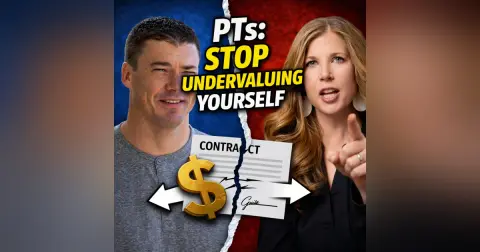


Most physical therapists know they should negotiate—but few feel confident doing it.
In this episode, Jimmy McKay and Rebekah Griffith break down why negotiation feels uncomfortable in PT and how that hesitation impacts salary, contracts, and clinic growth.
This isn’t about becoming a “salesperson.” It’s about communicating value clearly so you can get paid appropriately and build better professional relationships.
Key Insights:
• Negotiation isn’t about you—it’s about the impact you create
• If you don’t define scope first, price conversations fall apart
• Most PTs start negotiating too late in the conversation
• Asking better questions is more powerful than “selling”
• Saying no is a critical business skill—not a failure
• You need a clear “floor” before entering any negotiation
• Every conversation is a negotiation for information
Why This Matters to PTs & Clinic Owners
If you can’t negotiate:
• You accept lower reimbursement
• You underprice your services
• You limit clinic growth
• You burn out doing work that isn’t aligned
Better negotiation = better business decisions and better patient outcomes.
GUEST
Rebekah Griffith
SPONSORS
SaRA Health
Helping clinics increase revenue between visits with automated patient engagement
EMPOWER EMR
Faster documentation, better workflows, built for PTs
U.S. Physical Therapy
Clinician-led growth and career development opportunities
<p>This episode is part of the <a href="/physical-therapy-business-podcast">Physical Therapy Business Podcast</a>, where physical therapists and clinic owners learn how to get more patients, improve operations, and grow their clinic without relying only on referrals.</p>
<p>Looking for more episodes? Explore the full <a href="/physical-therapy-business-podcast">Physical Therapy Business Podcast</a> for real-world strategies on physical therapy marketing, patient acquisition, and clinic growth.</p>
0:01 You're listening to the P.T. Pinecast, where smart people in healthcare come to make noise. Here's your host, Jimmy McKay. And we're back. Welcome to Off Script with Rebecca Griffith. We used to call it like books and stuff. That was like your recurring. And we used to talk about books more often. Yeah, I've been busy. I did finish a book this weekend, though. What did you finish? I think Essentialism. Oh, I don't know that one. That's good. We should go back to a book club sort of format. Maybe they'll get me back into reading. I go on spurts. When I was traveling a lot for work, I was reading like two books at a time. Like I would take a break from a book with a book. And now I don't think I've read a book in the last eight months.
0:44 Okay. We need to fix that. I go through phases. But I talk to people a lot. So that to me is also good as well. Rebecca Griffith, Jimmy McKay, we had a discussion, a sort of like a text sort of convo where I was like, what is the big hairy scary? What is the big hairy scary thing that's going on with you that you're like, I wish this was easier or better or I wish I understood more? And what is it for you? What did you throw out there to me? So negotiating. Negotiating. is the thing. In what way? So I feel like, well, realistically in many ways, right? I think it's like, and you and I have talked about, we did a book club on like the art of negotiation, but I still feel like it's really easy to tell other people how to negotiate.
1:31 And when it like comes down to like the actual person doing the negotiating, it's really hard. And I think one thing that really shocked me over the last year or two was just when I'm looking at payment for physical therapists, one of the statistics I heard is that most practice owners don't ever try to renegotiate their rates, either with insurance companies. The number of people that actually try to renegotiate is extremely low. And when I talk to other PTs about negotiation, it feels like it's a weak spot for us. So that's why I wanted to talk about it. Personally, a weak spot. Professionally, I feel like it's a weak spot. There are cultures where if you don't negotiate, you are seen as like it's confusing to them.
2:13 Yeah. There are cultures where it is expected and it is confusing when you don't. I don't think my culture and your culture are those cultures. I think negotiation feels like a challenge. Number one, challenge in the word that it's hard for us. Number two, it feels like I'm pushing back against you. Like a job, like talking to a patient about why I'm raising your rates. Those are all negotiating of why you should... Hey, you'd like to hire me for this project. My rate is this. Well, we only have that. Well, we are now negotiating. And this feels icky, awkward, bad. It feels weird. And I don't know, too.
2:53 I'm going to throw this out there, too. I don't know if it's a generational thing. Like my kids are great negotiators. Really? Why do you think that is? I don't know if it's just like they don't have an issue with understanding their value and like they feel safe going back and forth. I would like to do this for ten more minutes before I go to bed time. What if I do this and not that? I understand why you want me to do this. And maybe that's just like I've raised them to be able to have this back and forth. But I feel like to like newer grads and things like that, when I when I talk to them about they're going into interview for their first jobs, they will say, you know, I didn't take that job because we couldn't we couldn't get close enough on the negotiation. So I don't know. I feel like I was taught to like. Take what you were offered, right?
3:34 Like, right. Be thankful. Earn more labor. like even if you think about like how we were given dinner at night, right? Like you can eat this or you can not eat at all. Right. Right. Now it could be more seen more of, I don't have kids, but I've, I've seen it and heard it from friends. It's more of a negotiation. Well, I'm like, you know, here's the thing that we've made for dinner. I'm going to make sure that some of the side items are something that I know everybody will enjoy and eat. And then if they want to eat something else, they can negotiate that after they've eaten their dinner, whatever the case may be. Right. But you know, I was definitely like, this is what's for dinner. Yeah. All right. So the goal is to walk out of this conversation with a listener or a viewer and at least have, you're going to throw out three suggestions on how to do it better, make it feel better, any of those things.
4:20 I'll do three. So you'll at least have six suggestions and maybe one or two or all six will be actionable for you. So I'll let you go first. When you sort of thought about this and then talking about it to others, and we don't know what our suggestions are, by the way. So we might have crossover, which I think is not a bad thing. I think it might be a good thing. So my first thing, because when I go to negotiate, I feel like it feels very personal to me, even though it's not. Agreed. It feels like I am asking you to judge my value. I am asking to like declare myself a value. So my first solution is to shift away from it being about me. and shift towards the impact that I'm bringing.
5:04 So is it about me? No, it's about the impact that I can bring to you and why is that valuable to the person I'm negotiating with. So I'm not asking you to judge me as a person. I'm asking you to judge the impact that I'm bringing to you. And I think that helps me. So I'm not great at negotiating for myself, but I am great at negotiating for patient care and systems impact, right? okay good so it sounds like the first suggestion you're throwing out there is to change what's being negotiated stop thinking about it as you're negotiating about you and then so how would you give someone like sort of tactical advice on how to actually change that conversation so i think like um my first thing would be just like framing your mindset around it Like think about what is the thing.
5:51 So say somebody asked you to come and do a presentation for their clinic. For example, you're an expert, say maybe in pelvic health and another practice is asking you to come in and give a presentation on that. Is it about you as like a person or is it about the expertise and impact and value you're going to give to their clinic? What worth does that value have? Not necessarily you giving a talk. I agree. So check your mindset about that. I think you shift away from who you are because you're not the thing being negotiated. Right. And this is dinner or a later bedtime or the price of a product or a project and you put it on... That's why I like to ask qualifying questions like, what are we solving for?
6:34 So do you think I'm going to give you a better solution, a faster solution? Are we talking... I ask people... to envision a seesaw and the two things on the seesaw are the cost or the price on one side. And we quickly want to negotiate that one. And I think I call that and other people have called that a race to the bottom. Can I, do I bring more value? We can get someone else to do it cheaper. Are we solving for cheap or are we solving for solved? Are we solving for good? Are we solving for bad? If you're solving for cheap, I got a list of people I could suggest to you. they're going to have varying degrees of better of what that is. I like that.
7:15 Yeah. So that's my number one is make it, it's not about you. It's about... There it is. That's number one. It's actually not about you. It's about their problem, your solution, and what comes out of that, the result. So talk about the result. All right. So my first suggestion is sort of in line with yours, which is I'll tell people, stop asking for more money. I want you to find people who are better buyers. So instead of trying to get blood from a stone, that doesn't happen. So I have taken on the goal of trying to get to the no as quickly as possible.
7:57 I cannot do two things well at the same time. No one can. There's research on this. Someone will find it. We are not multitaskers. We are multi-doers. We can do lots of things poorly. This is slightly different though. What I'm saying is I can't convince you of the problem and the solution at the same time. If you don't think that there's a problem... Me trying to convince you that there is makes me feel like I'm selling snake oil. And a lot of times makes the other person feel like they're snake oil too. I'll give you a ridiculous example and then I'll reel it in.
8:38 My dad was a fireman. He never had to convince people that their house was on fire. It was. By the time that they called, and the time that the bell rang and they slid down the pole and got on the fire truck, there was no negotiation. That's an extreme sort of facetious, ridiculous example. But I don't think that it is. Which is, if I'm talking to someone who owns a business that I think I could help, but they don't think what I do is a... Sorry. If they don't think they have a problem that I am positioned to solve, I don't try to convince them that they have the problem.
9:19 What I'm looking for is people with problems, not people with situations. And I used to just say, let's say I wanted to solve media problems for clinic owners. If they don't think creating media is a problem, I've now got to create that problem. And I don't want to do that. It's a lot of effort. It feels disingenuous. If they don't think that they have that problem, in my mind, they don't. They only have the problem once they believe they have the problem. Same with therapy if we're going to stay in PT. If you don't think that that's a problem, me selling you physical therapy as a service gets real hard. Yeah. I think that you should be paying attention to people who have the problem, people who don't believe that they have that problem.
10:05 I'm very glad for you. I think the other point about what you said about getting blood from a stone is you need to know who's got the blood. Correct. So that you're not spending time negotiating with people who never were going to be able to play ball either. And I think a lot of PTs don't know who they should be negotiating with. Correct. A lot of healthcare providers, their market is everyone. And I'm like, I'm going to need you to carve that up. I'm going to need you to carve everyone up down to people... who might have this problem? And then how do you figure out the people who might have this problem from that smaller subset who believe they have that problem? And one step further, who are willing to invest time, effort, or money into solving it?
10:52 Time, effort, money, if you're able, right? Do you want this solved? Yes. Are you willing to invest? Are you willing to pay me or do it? Well, call me back when you are. Yeah. Respectfully, I don't think I've ever convinced anybody of anything. I think my favorite Peloton instructor has the line that if I'm going to get a tattoo, that would be it. I make suggestions. You make decisions. If you don't think it's a problem, I'm not going to convince you otherwise. Okay. But if you do have that problem and you do want it to go away, I mean, someone famous that I can't remember said, if you have a problem that costs a thousand dollars to solve and you have a thousand dollars and you're not solving it, you have decided not to solve that.
11:37 Megan Brown, my friend, says an excuse is a problem you decided not to solve. And I told her, I was like, that's crochet on a pillow. Yeah, I don't like that one. An excuse is a problem you have decided not to solve. So that's my first, which is find the right people first instead of trying to negotiate with the wrong people. Not bad people. These people aren't bad. They don't have the problem. They don't want to solve it your way. That's their right. Who are you to convince them otherwise? So that's a negotiation thing.
12:17 And sometimes the negotiation thing is with yourself. The first step is yourself. I believe in that. All right. What's your second idea or suggestion? That you need to negotiate the scope before the payment. Yes, yes, yes, yes, yes, yes. Talk more about this because I agree and think everyone should understand this. Because I think part of it is unfulfilled expectations, right? If somebody hires you to come in, Jimmy, and fix all of their content, but they don't understand what the goal of that content is, you can give them three times daily content. But is the goal to drive people to their business?
12:58 Is their goal clicks? Is it likes? Is it followers? Is it conversions? What is the actual goal? And then you don't know what work you're supposed to do for them if you don't understand the scope of that. So I think understanding the goal and the scope of the work that you're doing, how are you supposed to create the value and then add a price to that value and then negotiate that? And I think if they don't know what the scope is, they don't know what they're paying for. And when you say... This is going to cost five thousand dollars. And they're like, that shouldn't cost five thousand dollars. Well, let me tell you what the scope of that work is. And if you divide that out per hour, it's like when people complain about daycare, like the cost of how much daycare is.
13:43 And I get it. I've got three kids. Right. There's a reason why I didn't work full time for a very long time. if you think about the dollar per minute of care that is being provided to your biggest most precious item per day hours minutes per week and that includes safety fun enrichment food like all of those things socialization if you if you divide that out like per minute per use of value gosh it's such a good you're actually getting a really great deal. It's like when I go to buy a new cell phone and I'm like, oh my gosh, this is so expensive. Do you know what they say to me every time that gets me?
14:23 What? How many times do you use it? How many times per day do you use your phone? It's a bajillion. And how much does this cost? A thousand dollars. And if you divide that out for how many years you're going to have it and how many times you're going to use it, it's a pretty banging good deal, right? I think you're in the tenths of pennies. Correct. But if you don't know the scope of it, if you don't know the scope of it and they don't know the scope of it, you're negotiating with no foundation. Correct. That's brilliant, which also shines a light on why geriatric and pediatric physical therapists are wildly underpaid.
15:05 Wildly for what they provide, what they actually provide. So I see them. Yes. This is misaligned expectations. So if you expect X and X is low, and then I throw you a price that is Y and Y is... It almost doesn't even matter what it is. If I say, hey, I got this thing for sale. It's ten thousand dollars. Your first reaction is, whoa, whoa, whoa. That's insane. But what if I told you it was a house? You're like, oh, suddenly. So as soon as you understand the scope, all of a sudden things come in clear. Saying I provide daycare and it's I don't even know what daycare is.
15:47 I don't want to throw out two thousand dollars a month a week. I don't even like something wild. Right. But it's like I'm going to provide the safety, education, socialization, food, shelter and warmth for your child. Forty hours a week. You don't think that's worth two grand? Like walk me. Oh, got it. But daycare. Daycare looks like swings and a slide and some blocks. That's not what it is though. So yes, the scope needs to be negotiated first. Then you attach a value to what that is, right? Then here's the power move, all yes and your move, which is if they would like to pay less or they just honestly don't have it or don't want to, you decrease the scope.
16:33 Correct. You don't have to be done with the negotiation. Correct. You've negotiated the scope now, and then that drives the remainder of the negotiation. Yep. You decrease the scope. You shrink the scope, not the value per unit. And that's not to say you need to charge per hour. Do you know who Chris Doe is? I've heard that. Yes. Chris Doe, he has this great, he's a graphic designer by trade, but he's sort of a thinker and creative guy. And he has this great video online of him interacting with someone in a workshop that's obviously there. And Chris is like, this logo is worth ten thousand dollars. And the guy's like, I don't think that it is.
17:15 And he's like, why? And he's like, because you're going to go design that. It's going to take you an hour. And you're in charge with ten thousand dollars. And he's like, OK, well, so you value time more than quality. He's like, well, yeah. And he's like, great. Then I'm going to take your money, ten thousand dollars, and then I'll call you back in six months. I'll take six months to do it. I could do it in an hour because I'm that good. So do you want the result of the interaction or do you want to know that I'm slaving away for it? Does it matter? Right. I mean, you need to describe this to health care providers. Not at all. Because this fee for service, if I can get you better in three visits, the person who takes twenty four is rewarded more.
18:02 Well, and I just heard somebody say to the other day, there's no incentive for being a great physical therapist because you get paid the same money as somebody who's not a great physical therapist. Because, you know, it doesn't matter how great your outcomes are, especially if you're discharging patients quicker because of the system that we work in. And, you know, I don't work in the outpatient system, for example, so I can't speak to that. But we really like there really isn't a huge pay differential for quality. Correct. I fired everybody up on LinkedIn a few weeks ago when I said the crappy therapists and the great therapists. You're de-incentivizing people to work well or quickly. I have a friend who calls that discretionary effort.
18:46 That's a very good, there's a, there's a HR, right? So discretionary effort. She's like, I want people's discretionary effort, but if you never incentivize that, like, and again, an example from our generation, like, do you remember when you would read a book and you would get a little pizza, Jimmy, the personal PM pizza? That's why you haven't read books in eight months. You haven't gotten your personal PM pizza for like your discretionary effort of reading books outside of school. Larry Benz taught me this thing called good hearts law. Did you see the video I made on that? It's like one of those like concepts that you're like, Oh, like you, you're not shocked by it, but like once you see it, you're like, so good hearts law is described in this little story from, from Russia.
19:28 So that's an, it's a factory that made nails. And when the, they were like, we need to somehow incentivize these factory workers to make more nails. Cause the more nails we make, the more nails we sell, the more money we make, the more money we make, the more we can pay them. So Goodhart's Law comes and they go, okay, hey, everybody, it's Monday. New rule. You get paid more the more nails you make. So they say, great. So the end of the day, the manager comes in and goes, what did we make? And they said, we made three times as many nails today. That's great. But the nails were small, tiny, and useless. You made three times as many useless nails. They couldn't sell them. So like, okay, we incentivize the wrong thing.
20:09 We incentivize for quantity. Let's go on. And they picked another arbitrary KPI. And they said, let's target weight, the weight of all the nails. Okay, manager goes away, comes back, end of the day, what do we get? A little less nails, but heavier. Okay. And they made five gigantic nails, also useless. So, so far, we're two days in and we've produced nothing because you're incentivizing the wrong thing. And the idea with Goodhart's Law is when the metric that you're measuring becomes the target, you're no longer...
20:51 Making what matters. Yeah. And that needs to be understood. A ridiculous KPI is a ridiculous... When you gamify it, people will gamify for that. Yeah. I mean, Antonio is saying he's gotten people in trouble for making people better, faster in outpatient offices because they wanted the KPIs to be twelve weeks. When the metric becomes, when the measure becomes a target, it fails to measure what matters. I threw this suggestion out sort of facetiously. I like using facetious examples and then reeling it back in.
21:32 There's a company, global brand, one of the best in the world, and they optimize for smiles per hour. Smiles, not miles. It's Disney. They incentivize all their people from the person with the broom to the person wearing the Mickey Mouse head to the person operating the ride. Your goal is smiles per hour. How do you over-serve every one of these people? They already paid for the ticket, bro. We got them. How do we get them to come back? How do we get them to tell ten other people? How do we get them to feel that thing? And that's simple but not easy because Disney is not in a third-party payer environment. Right. So I'm not also saying, oh, just optimize for smiles and you get paid more.
22:15 I'm not an idiot. Most of the time, I'm not an idiot. All right. So how would we summarize that suggestion for you? What would be... You got to understand what you're negotiating. You need to align on scope before you make any attempt to negotiate. There it is. Yeah. You'll also figure out if you're the wrong person. Correct. Get to the know as quick as possible. Yes. I love that. I think that that's a really good. You could pay twice as much to do the wrong job and I will hate it. And you're going to hate the result and I'm going to hate doing it. And that's not good. So align on scope first. Hey, how much does it cost to rehab my knee?
22:58 I've never seen your knee. I can't give you a price. How much does it cost to do this giant marketing project, Jimmy? I don't know what they're solving for yet. I have no idea. We need scope first, then price. But the first question we usually ask ourselves or other people is, what's this going to cost? What am I going to make out of this? I don't know what I'm doing yet. All right. My second idea... is i think people start negotiating too late i think the minute you start conversing i would even say before you even get to the conversation about let's work together this sort of isn't aligned with what i talk about the circle with three levels no like trust When someone knows, whatever someone knows about you, and this goes along the lines of like, you know, no press is bad press.
23:47 I disagree. Just because someone, oh, it's not who you know, it's not what you know, it's who you know. One level deeper, it's what those people know about you. Let's say a lot of people know about you and they think you're a jerk. That ain't good either. Right. You're negotiating because they're negotiating in their mind, who is this person? So they've got problem and they're trying to come up with a solution. If you're in the mix, that's good. They're already negotiating in their brain. Is he too expensive? Is he good enough? They're negotiating in their brain. So when someone calls you to work for you or to maybe want you to execute on a project, they've already begun negotiating.
24:33 I think the biggest mistake is when we start selling. And Antonio is pointing that out live. To Sell is Human. That's Daniel Pink. It's a great book. I think the smartest and best salespeople do the least amount of what we would think is actually selling. Your job is to... I try to get other people talking as much as possible. That's not a trick. The goal is to get as much information. What are we solving for? Is this a five hundred dollar problem, a five thousand dollar problem or a fifty thousand dollar problem? Got it. What have you tried so far that has sort of worked and not worked? Where do you think the solution lies?
25:14 Like if if a lot of those things sound like a patient, right? I was just going to say, if this sounds a lot like a patient interaction, like an evaluation, I I see a gigantic parallel. I did a book like Daniel Pink. or Never Split the Difference are books about business or negotiating. They're about communication and it directly, it's not one degree from Kevin Bacon. It is zero degree. They are aligned perfectly. So I think you're negotiating too late. I think you think the negotiation starts when someone says, all right, well, how much? The negotiation is we are already negotiating. When someone says that's too much, if they don't say no, you're still negotiating.
25:58 Help me understand why that's too much. What do you think you're going to get out of this? And then like a lot of these questions in clinical situations, in my opinion, or business negotiations, we need to shut up more. You're not going to really talk me into a solution. And if you do, I'm probably not going to feel good about it. I want to talk myself into the solution. So the goal is to just keep asking questions about what is the future state of this being solved about. That is part of negotiation. This is in reputation. This is in content. This is in positioning. This is in relationships. If you're negotiating at the moment of the ask, you've already lost.
26:39 That's why I think it feels icky. So that's my suggestion. You're negotiating too late. That's my number two. I like that. All right. What's your number three idea? My number three is that it's okay to say no and walk away from a negotiation. And I feel like that's where I'm really bad, right? Like I'm still like in this like flattered to be asked category. I'm in this never say yes to everything in every one category. I'm in this like people pleaser category where I want to make this work for you. I guess I could do it. Well, maybe there's non-financial value that I'll get out of this.
27:21 But then when I would talk about physical therapists in the emergency department, I really talk about leveraging the right provider at the right time and seeing the worth of the value that we're providing. But then when I'm looking at these contracts that I'm negotiating, is it worth my time? I need to understand what my time is worth. It's not just time, too. It's annoyance. You have to do the work. If you don't like that work or you feel like you're undervalued, you're going to hate doing that work. And I think this fear of walking away also feels like scarcity, right? Like if I walk away from this opportunity, maybe there won't be anymore. This is the only opportunity I have. I shouldn't let it pass me by.
28:01 And I think it's right opportunities, right? We need to be looking for the right opportunities for us and the person we're negotiating with, like really looking at the fit. It's like you don't marry everyone, right? You don't even date everyone that you potentially asked you. So I'm not sure why, like when I look at negotiations that I am looking at it that way. Oh, I can't believe he asked me. I should definitely go out with him, even though I'm not interested in him in any way. I don't want to do the thing that he's asking me to do. And it's not going to make me feel good while I do it. And it'll keep me from doing these other dates, maybe. Right. So to use that as an example. So it's OK to say no and it's OK.
28:43 to know that the right opportunities are out there. You just said it, though. Scarcity. No one else is asking. This could go for a date or a job. Larry Benz just said something the other day. Failing to prepare, like in a healthcare environment, needing to hire twenty people leaves a big need. And he goes, that leads people to make a lot of expensive decisions quickly. Not a good position to be in. So yeah, if it's a week before the prom and you're like, I need a date, you probably should have started working on that earlier. But you said scarcity, no one else is asking, and self-worth.
29:24 Well, why is no one else asking? Imagine you don't have a job and the first job that comes along, are you not going to say yes? All of your friends are going to go, dude, you said no to the only person asking right now? And this is a personalized decision. I'm not saying you should say no or you should say yes. These are sort of paradigms to run all these ideas through. But the question is, what are you saying? This goes back to your previous one. What are you saying yes to? And what does that look like and feel like to you the day you say yes, a week later, a month later, a quarter later? And what will that maybe keep you from being able to do, right? Like if I run for my kid's school board and I get that opportunity, that's great.
30:07 But that will then preclude me from doing all kinds of other things that I could be doing. And am I the right person for that? So I think like looking at negotiations, looking at opportunities and making sure they fit you. And I think that goes back to what you were saying about the negotiation needs to start much earlier. It needs to start in your brain first. Am I even interested in having this negotiation? Yep. Or is this just a no from me? I was flirting with the idea of working with an organization on a volunteer basis to create something I thought should exist for the greater good. I was going to make no money on this, but I was like, I like doing these things. Once I started talking to the organization, they agreed that we should create this, that I would be part of it.
30:47 Like, yeah, you'd be a good part. I'm like, I don't want to be the only part. I want to have other people. And they were like, let's work on it with a goal of coming out in two years. I was out. I can't work that slow. This should take two months, not two years. But on their end, they have other priorities. Yeah. So at that point, I know to be like, hey, listen, I respect everything you just said. But for my own sanity, I understand the scope and the time. I don't know why it takes two years, but we're going to move so slow that I'm going to hate the process. And then I need to sound like a shark. But for that reason, I'm out. Yeah. I just wanted to be clear.
31:28 I'm like, I do not dislike where you're going. I like everything about it, yada, yada. But how you're going to go about it, I won't like that. So I understood the scope there, understood that I would hate this more than like it. And I was giving my time. So I better feel net positive about it. But this also goes back to understanding the scope and being able to say no for a right reason. Because every yes to something you don't want to do is a potential no for something you'd be better off doing. Yeah. All right. My third suggestion is, I teased it a second ago when I brought up Chris Voss. negotiation and communication of the same skill.
32:12 You didn't like him at all. I didn't like it. But I think I need to give it another shot now that because I'm in a completely different life space now too. I think it might be more valuable now. So for people who haven't heard, I've talked about him a lot, former FBI hostage negotiator, but he gets into the psychology of conversing. And I actually looked it up because I took away, I was like, can I summarize this book in one sentence? I said, I thought I stole the line from the book, which I thought was a safe thing to do. But I've looked and I have not seen the line. I think I made it up. And the line is, every conversation is a negotiation for information. I thought that was in the book. I've looked in AI. It's not in the book.
32:52 I made that up. But that's how I summarize it. Every conversation is a negotiation for information. Whenever someone says every, always, or never, your antenna should go up. But I still think this holds true. You're either trying to get information from someone, big or small, How was your weekend? How's the weather? What's up? That's a request for information, or at least it is low value or high value information. Or why are you holding these people hostage in a bank, which was his job? Every conversation is a negotiation for information. I want you to know something or do something, or I want to know something or have done something.
33:37 And I think that people, now bring it back to negotiation for the traditional sense, probably not the, I don't want to be in a hostage negotiation situation ever. I don't want to be taking hostages, negotiating hostages, or be a hostage. But I think you learn a lot from it, from Chris Voss. We avoid the hard conversations. Chris explains how to lean into them. In fact, the only way out of a hostage negotiation or negotiation is through negotiation. The book is called Never Split the Difference. He was like, listen, what am I going to do? Say, hey, listen, you got ten hostages. Why don't you keep five? I'll take five and I'll just let you go. It's ridiculous. So why do we say, hey, we're ten thousand dollars apart on this annual salary. Why don't we split the difference at five?
34:20 What if you're worth ten? Why would you take five? Because it feels fair. He talks about how fair is a myth. More comfortable. Yeah. Yeah, because we don't want it. So number one, avoiding hard conversations. Yeah. He also is very tactical. He doesn't just say, do this. He shows you how. Yeah. And these are simple, not easy. Yeah. Hoping versus asking. Well, I implied that I would need this to do this. Did you ask? Did you ask? Did you ask? Did you say the words out loud? And as Chris Rock would say, say it with your chest. Say it confidently. If you think you're worth it, don't shut up about it.
35:00 Don't be a jerk about it, but say it. Did you ask? If you didn't, be pissed at yourself, not them. And then, you know, closed mouths don't get paid. Closed mouths don't get fed. Closed mouths don't get paid. Silent people don't get paid attention to. You might be the best anything, but if you aren't explaining, showing, having a conversation about it, don't blame anybody else for not knowing it. Don't do it. When everybody says nobody knows the value that physical therapy provides. Whose fault is that? Whose fault is that? Oh, it's the APTA's fault. Oh, well, physicians should know what we do. Why don't patients know what we do?
35:42 Yeah. No. Somebody did. We'll get specific because you're the APTA Colorado president. I am in no way related to any APTA organization at all. Other than being a member. Somebody had said, and it was in good faith. They were like, I think APTA should. And they just did. Future PT for future me. I'm not going to knock the campaign. But I don't think direct to consumer conversations is in the APTA's top five strengths. It's not. They are a professional association. They are where professionals associate.
36:22 I think the better strength would be teaching clinicians how to sing from the rooftops, not APTA singing from the rooftops. Well, I will tell you part of that campaign includes provider training on how to do that. That's the win. When people say, why don't we buy a Super Bowl commercial? I, as a guy in marketing, would say, do not do that. The juice will not... I know it'll feel good to you, but the juice ain't worth the squeeze. I'd rather teach a hundred clinicians... or a thousand clinicians with that money and get ten x the value just well and so you know just to push that out there to people the campaign for future me it does include media training it includes like how to tell your story includes how to reach out to your community it includes how to like talk to patients about the value that you provide all of that is part of that which is kind of that's that's the answer yeah that's the that's the member benefit right I also love when people say APTA is not good.
37:23 I said, which one? Like, what do you mean APTA? No, which, which person, which person isn't good at their job or the, or they're volunteering their time, effort, and money, which can you point, which the weakest link? Well, no, just all of them. Oh, all the people are bad. All of them. Some. Okay. Are you mad that they're doing it or mad that they're not doing it your way? And then I like to say, are you a member or not? That's a negotiation tactic, right? I did see someone sent me a screenshot. Their membership had lapsed or was about to lapse. And it was like just not a great written email.
38:04 And I was like, ooh, missed opportunity for a negotiation. Yeah, it was like, hey, I'll find it. We could talk about it off air, but it was like that was the last opportunity. That was your Hail Mary to mention a movie that is out that I've heard good things about. That was your Hail Mary to get them to stay. That conversation should have started twelve months ago. Yeah, it should have been consistent. It should have been their customer member centric. It was like it felt it didn't feel on brand. That's OK. These are things to learn from. But you start to see that negotiation feels like a job interview thing or a project interview thing.
38:46 It's not. You're negotiating ten thousand times. All right. Maybe ten thousand times is a lot. Your negotiation doesn't dozens of times a day. More food, more time before bed, this, that, letting people into traffic. It sounds like I'm oversimplifying, but I don't think I am. But every in my mind, every conversation is a negotiation. Well, I feel like you know some things naturally in life that aren't negotiable, right? And you've just sort of opted into that. Like, I know when I go to the grocery store, I'm not going to fight with them about the price of eggs. I can have them or I can not have them. That negotiation is complete. Correct. So why are we different? Because we question our worth. A supermarket knows it has traffic and knows if I knock a dollar off the eggs, I lose money on the eggs.
39:30 And I can't, that is non-negotiable. I think a lot of times another mistake to add a bonus one would be, you need to go in and understand what your floor is. You will take less than this. I cannot, it does not, I have said that. Oh, I just had this conversation recently. I'm like, I cannot do it for less than that. Because I will be losing money. And the day one when we signed on this line, I just got money. But I'm like, I mathed it out. I will lose money doing this. So I'm not in the business of losing money because I won't be in business long. And I'm not in the business of feeling like crap. So no, this is my floor. I would not go any lower than this. And they were pushing and pushing. They tried to change the scope on time or deliverables.
40:13 And I was like, this is my floor. I am at my floor for you. And I had to go in saying, my job is not to win this negotiation. My job is not to give up too much. Yeah. And I knew where the line was. And I said, no. And I felt great about it. Now, did I want that person as a client? Yes. Do I think I could have overperformed for them? Yes. But what I was doing for them was going to take twelve to eighteen months. And I think they even understood that. But they were like, we want to pay less. And I said, you're not taking the same risk as I am. I'm going to be doing all the work. And in eighteen months, you're going to be getting the reward. And if that blows up, I don't really get paid in exposure.
40:58 I've tried. I've gone to the bank and said, hey, I got a lot of impressions on LinkedIn. Can I pay my mortgage this month on exposure? And they said no. Weird. Weird. Rachel wants to know about free advice at the gym, a.k.a. a free consult and no follow-up. What do you do there? I don't know because people ask me for free advice all the time, right? My answer is whatever you're comfortable with. Yeah. And so I am that person that gives people free advice all the time. I think you just have to decide what that time is worth to you. I made some people angry because I don't mind giving people advice.
41:43 Yeah. Knowing that some people are a company of one. Right. Or that person works for a company. So that advice would work. So I don't mind when I'm talking to a clinician about like content creation or marketing. Yeah. I sort of don't want to take money from that person if they're too small. There's a line for me. I'd rather just give it to you. The problem is when companies, when like a person who runs like ten locations is like, can I pick your brain? So to answer Rachel's sort of Rachel's question, I developed two doors. If you want to pick my brain and you want an hour of my time, I say, you pay me. I actually started doing it.
42:24 And I got wild payment options. I'm like, hey, what do you charge patients per hour? And they're like, two hundred dollars. I go, great, two hundred bucks. I just used your logic for me. And people have said, OK, that's fair. Great. I am yours for an hour and I will record that conversation and transcribe it and give it to you. That's your information that you paid for. And I will happily give it to you. The second door that I've been trying, and only a couple people have taken me up on this, is we will record the conversation, the hour, and then I can use it for content. Yeah. Because I can show my thought process and you win. But I'm showing a hundred people now. Oh, that's not exactly my problem, but I see how he's carving that up. Yeah.
43:04 That's kind of cool. But as Antonio is also putting in the comments too, it's certainly a vibe you have to feel out for advice. Yeah. And then they're also... I will say this to everybody watching live or listening. There's a term for this. I didn't coin it, but it's an ask hole. People who just ask and ask and ask and ask and ask. And then the worst part is if they ask and ask and ask and ask and ask and you keep giving them the same information and they don't do anything with it. I cannot deal with that. After three, I was at a wedding once and my date was another PT. So the woman was there, was like the mother of the bride, was like... I'm in PT and you're a PT. I'm like, oh, great. I can't wait for the questions.
43:45 A lot of times I tell people now that I work retail and they don't ask me any follow up questions. When you're a PT, you get it. So this woman was like my and she was older, not to be ageist, but she was like, my physical therapist was trying to get me to do squats at my age. She was being ageist against herself. And after the third time of her being like... She was trying to get me to agree with her. Squats are ridiculous. And I was trying to have as many vodka sodas as I could because it was an open bar. And I was like, you are harshing my mellow, lady, that I don't know. So this is how I dealt with her. Just brutal, punch in the face honesty. I wanted to end the conversation because it was like three times. And then I'm like, lady, I'm doing the Macarena and drinking vodka sodas.
44:27 I'm having my best life and you're ruining it. And I just said, do you like pooping alone? She was like, what? And I was like, do you like going to the bathroom by yourself? And she's like, I don't know what kind of question that is. And I go, your PT is understanding if you can't squat, you can't get on and off the toilet alone. The PT is dead on track. I'm with your PT. Conversation over. And Rebecca, no more questions. No more follow-ups. No follow-up from that. That was a negotiation. Negotiation over. Dunzo. Finite. All right. So how do we wrap this up? That was six ideas. And there's more. This isn't a finite guide.
45:09 This isn't universal. But I think some of these are actionable. And I think Antonio bringing up Daniel Pink's to sell as human is a good... I know it feels icky selling. You're selling. If you have a product or a service and someone you want to use it is deciding, that's selling. And you can do it. You are either doing it poorly or well, but you're doing it. You decide. I liked our suggestions. This was good. Did you like this format? We take one idea and then you bring three and I bring three and then we just hash it out. I think it's good because at worst, I'm learning three things I didn't think of. And at worst, you're losing. You're learning three things maybe. And then if people learn for value.
45:50 All right. Well, we always do a parting shot. What's your parting shot for today? My parting shot is that you're not negotiating for yourself. You're negotiating for impact. Ooh. and alignment and alignment. I think alignment, you're negotiating for alignment. Yeah, I'll just go back to the line that I thought I stole, but I might've made up, which is every conversation is a negotiation for information. And when you start to look at it that way, Things get simpler, not easier necessarily. Simpler. And what I mean by simple is you understand what your floor is, what you can take and what you shouldn't in time, effort, money, whatever those things are, or what the purpose of this interaction is.
46:37 And then you get to, I think in my mind, when you put it in that context that every conversation is a negotiation for information, The questions that you will ask get easier to spot. What are we solving for? What does good look like? Help me understand. Help me understand three powerful words that get the person talking. So I would say that's my parting shot. All right, we're back next week. Do we want to forward tease or are we going to figure out what our thing is later? I don't know what our next topic would be for next week. Well, so the other thing that I wanted to talk about, so I'm just going to declare that it's the next topic, is the other thing that people have been asking me about a lot lately is I don't agree with the policy changes happening where I work.
47:17 But I don't want to say anything because I feel like then I'm the problem child or there's retribution. I don't know how to advocate or communicate about my concerns with a policy change or a leadership decision without harming my career. Yeah. How do you do that well? That's a good one. Because listen, that's real. So real. And I think it really contributes to burnout too if you feel like you can't safely go back and forth with your leadership team. Hell yeah. I mean, and a lot of things will come into play to forward tease this would be, dude, I used to walk around the radio station that I ran when I was, you know, and I said whatever the hell I wanted because I knew I was and I didn't have a mortgage or kids.
48:03 I didn't have any of those things. So I was a little more gunslingery, but now I'm a little older and I know people are like, dude, I can't afford to those things. But how do I do this the right way? So this is good. This might bring in some framing and some good questions. All right. So that'll be our next discussion. Be back on Monday. Rebecca Griffith. I'm Jimmy McKay. Thanks for listening. Thanks for watching. That's it for this one, but we're just getting warmed up. Smash follow, send it to a friend, or crank up the next episode. Want to go deeper? Hit us at pgpiecast.com or find us on YouTube and socials at pgpiecast. And legally, none of this was advice.
48:45 It's for entertainment purposes only. Bulls**t! See, Keith? We read the script. Happy now?