Why PTs Burn Out: A Raw Look at Rewards, Pressure & the Profession



Why PTs Burn Out: A Raw Look at Rewards, Pressure & the Profession
Episode Summary:
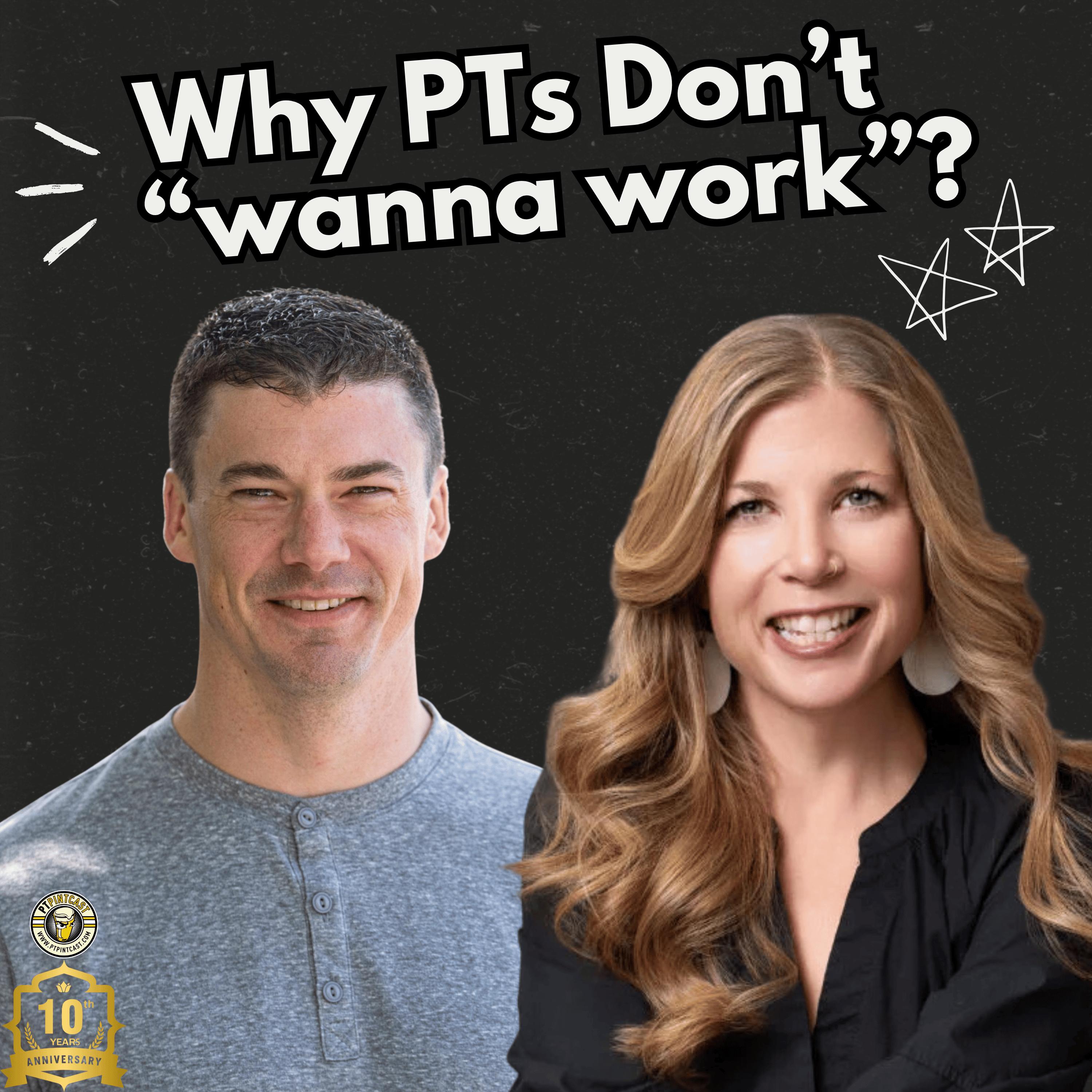
What’s really burning out today’s physical therapists? In this episode, Jimmy chats with Dr. Rebekah Griffith — aka the EDDPT — about why PTs are questioning the reward system, the cost of conferences that don’t deliver, and why "no one wants to work anymore" might not be the real issue. From Graham Sessions to predatory conferences, manual therapy in acute care, and redefining value in the profession — this one hits hard and goes deep.
???? Whether you’re a student, new grad, clinic owner, or educator, this conversation challenges the status quo and leaves you asking: Is the juice worth the squeeze?
00:00 - Cold Open & Welcome
03:12 - The “Elite Secret Job” Recruitment Rant
06:20 - Predatory Journals & Conferences Explained
11:40 - The Hustle Game in Academic Publishing
15:55 - Conference Time Limits vs. Content Quality
22:10 - What Makes Graham Sessions Different?
29:20 - Why "Cool Kid Tables" Need More Chairs
34:00 - Practicing at the Top of Your Scope
37:42 - Tactics vs. Complaints: What PT Needs More Of
43:05 - Shark Tank for PT Ideas?
47:00 - Jimmy’s Radio Wisdom: Tight. Bright. Informative.
49:15 - Rebekah’s Parting Shot: People Want to Work, If It’s Worth It
<p>This episode is part of the <a href="/physical-therapy-business-podcast">Physical Therapy Business Podcast</a>, where physical therapists and clinic owners learn how to get more patients, improve operations, and grow their clinic without relying only on referrals.</p>
<p>Looking for more episodes? Explore the full <a href="/physical-therapy-business-podcast">Physical Therapy Business Podcast</a> for real-world strategies on physical therapy marketing, patient acquisition, and clinic growth.</p>
0:01 You're listening to the PT Pinecast, where smart people in healthcare come to make noise. Here's your host, Jimmy McKay. Rebecca Griffith, Jimmy McKay, Rebecca Griffith, the EDDPT, Jimmy McKay, just Jimmy McKay. I'm coming to you from a place that I think has more snow than where you're coming to me from, and that should be switched because you're in Colorado. It did snow last night. But I think it snowed here last night, and I'm in New York, where it should have some snow here, but it should be a lot more snow. Are you feeling that? I heard the industry is not doing well. It's not. We've got about an inch and a half of snow out there. We probably have less than six inches all season down here.
0:43 You guys would get six inches an hour or more. Yeah, and in the mountains, when we went up to the mountains for New Year's and there was no snow, like none. Wow. If almost climate change, if climate change was a thing. So I wrote an article. I'm going to pause for dramatic effect because I rarely do that. Articles are way too long. I get excited when I read an article. But this was good. I saw this guy, Rob Panarello. And Rob's been a PT for like, four years. He's done a lot of different things. Business, clinical, he's worked professional sports, the whole nine. And he had like this series of... posts for people interacting.
1:25 And I don't want to try to sum up his posts. I don't want to put words in his mouth, but he's essentially saying like, you got to work hard if you want to get stuff. I agree. I'm being very careful with my words, which is unique with me. Let me summarize my big point. I don't think it's a work ethic problem. I think this is, in Jimmy McKay words, this is a juice versus squeeze problem. I think it's a conversion problem where, again, try to be careful, where I think the people who are established in PT business or clinical, what might say, and I am using hyperbole, I think, I'm not even sure what the word hyperbole means.
2:12 I'm being a cartoon where I might say they would do this motion, a finger wag. These kids today don't know how to work. They don't work hard enough. They want this, but they're willing to put in this. And I think the percentage of people who are lazy and want a lot but won't do a lot is the same as it was forty years ago. I think the percentage is the same. That's how bell curves work. I think the problem is for our profession and others, is that once smart people get into our profession, they see that the juice isn't worth the squeeze and they get pissed about it. And I agree with them. So I don't think it's a work ethic problem.
2:53 I think there are the same amount of lazy people and hardworking people now, but there were four years ago as there were four hundred years ago. I think people are coming in going, so hold on a second. Forty years ago, it was... graduate, work hard, gain skills, work hard, take on extra assignments, be plucky, be hardworking, go the extra mile. And then there was a higher... You could look around and see people who did the thing and they got something out of it. as in you might be on rung number one of your career and you're like, don't look at Rob who's forty years in. That's not fair.
3:33 How did he get there? And saying the same way Rob or anybody got there is the same way it works today. I'm not saying, please don't put words in my mouth, hard work isn't a differentiating factor. I agree. I'm saying the smart people leaving our profession are the canary in the coal mine. They are the indicator because I do not think the same unit of hard work gets the same unit of reward today that it did forty years ago. I also think my citations are this is where you see independent providers just being like, then I'll just be my own thing.
4:14 And for every minute of work and hard work, it's for me. I will get or not get or not get reward. So I think that's where people will be like, these kids come into these clinics and they want one hundred thousand dollars. And I would push back and say, Well, when you graduated, what did it cost? And I'm not just talking about money, but I will say, what did it cost money-wise and effort-wise and time-wise? And you have to factor all these things in because if you say the juice and the squeeze are different, I need to understand what the squeeze is. The squeeze is not buying a house for fifteen years. I don't know. That feels very squeezy. Or what did I pay versus what did someone else pay?
4:56 That's real squeezy. And if the squeeze is bigger and the juice is smaller, smart people do that math and they piss off. That's what I'm saying. I don't think this is a, the next generation is lazy and they need to get their shit together. And the ones that do will survive. I'm saying the smart ones do the math and they go, I'm just going to do it differently. And then they do. So I don't think I'll end. And you don't have to agree with me because we're on a live stream. I mean, we're friends, not on a live stream. But I'll end with how I started. This isn't a work ethic problem. This is a conversion problem. And if the profession doesn't solve it, this will keep going in this direction.
5:40 I wrote an article. It's on LinkedIn. Well, I'm proud of you for writing an article. That means you worked really hard at that. It took me... And I didn't... I didn't expect to. I woke up and saw the things that Rob had laid out, and a lot of them he is right about. Well, I have to tell you, I am a tryhard, for sure, and I've been called a tryhard. Me too. Um, I work very hard and I always have. And discretionary effort for some, some period of time was definitely rewarded, but whether that's academically or like, you know, even my first job was at McDonald's and I gave a lot of discretionary effort and I was promoted and I was a shift manager when I was, you know, I was a, I was a, I was a, I was a, I was a, I was a, I was a, I was a, I was a, I was a, I was a, I was a, I was a, I was a, I was a, I was a, I was a, I was a, I was a, um but i have found the system that we're in whether you're in acute care whether you're an outpatient whatever the case may be it's not really set up to reward discretionary effort like healthcare in general is is not um so i can like hustle hustle hustle hustle and be at the top of any clinical ladder right but if you're if you're compensation differential between like meeting expectations and exceeding expectations for example even my husband has this in his corporate job like if that differential is like a half a percent Is the juice worth the squeeze there?
7:09 Probably not. So what are you doing to actually reward that discretionary effort? So I kind of tend to agree with you. I think people do want to work hard. I think they want to feel like their work meant something. And I think they want their work to be appreciated. The other thing that I've run into is we expect nothing less. like that, this, that, that like above and beyond is now the baseline. We expect nothing less of our staff. We expect nothing less. And it's like, well, then you need to compensate them for that. Like if that's the baseline, where's, where's the compensation there. And then I hear other people say, well, some people just want to clock in and do their job and go home.
7:49 Like that's a bad thing. Um, I don't know. Do we say that about people who like work at the gas station at the at the like checking you out? Oh, my gosh. Can you believe this guy just clocks in, does his job and clocks out? Like how lazy is he? Like, why do we do that? So I think we need to have a shift in the narrative about like. What is working hard in this profession mean? Even if you're clocking in, you're seeing patients all day, you're giving them the best of yourself and then you're clocking out. You've given them time, expertise, emotional energy, and hopefully an outstanding plan of care. That's that should really be enough.
8:29 And I also think I haven't seen this culture of you shouldn't take your time off. And I'll hear people bragging about not taking any PTO. And I'm like, why? And they're like, well, we work hard around here. And I'm like, well, but you're entitled to take a break, too. So when I hear people say I can't hire anybody because they don't want to work eight to five, five days a week, they want an alternate work arrangement. Or I'm also like child care is so impossible now. like even i'm i have three kids and the child care situation when i when i have my first kid in the child care situation now like it's insane so if you take kids to school you have to drop them off at eight eight twenty in the morning and then they need to be picked up at three thirty in the afternoon how are you supposed to work eight to five like that then you have to pay extra on top of that but if your hourly rate doesn't even match what you're paying for that child care like it doesn't mean you don't want to work hard it means you need to be able to feed your children you know so i wrote this I wrote this in the article.
9:33 Professions don't lose talent when people stop caring. They lose talent when effort and reward drift too far apart. That's what you started saying. Yeah. This is fine in finance. Yeah. If I show up and I'm a stockbroker, and I know very little about stockbroking. I have no idea. But if I do more and I get less... you know that stockbroker is going to leave. But it's weird in a profession because we're all heart. We have the Peace Corps gene. That's looked at as weakness. I'm not saying that owners should pull money that doesn't exist. What I'm saying is, and I feel like, I know you didn't love Chris Voss's book, right?
10:18 Yeah, Chris Voss would be like, I think how he would look at the situation and say, you have one side of the table talking in logic and the other talking in emotion. Neither is wrong, except I didn't say this generation needs to work harder. I didn't say owners need to pay more. What I'm saying is the conversion factor isn't there. Well, and I'll go to the other side of the aisle here too. The generation that's saying people don't want to work hard, we were raised on hard work. if you, you and I have talked about that before, if you have time to lean, you have time to clean, like don't sit down, like rest is like, if you get caught resting, it was a bad thing.
11:02 Right. Right. Right. But look at your example. Yeah. You saw and it played out when I hustle, when I out hustle my age match peers and people older than me, there was a reward for that. And it wasn't like she did three percent better today. I will give her three extra nickels. This was over time. And you were OK with that arrangement. And had you kept putting that effort in over two to three or four years and saw nothing. You had two options. Quit. Dial it back. Yep. And that makes complete sense when Rebecca said that working at McDonald's, but it doesn't in healthcare. I don't understand why, but these are deep-seated emotional feels.
11:42 But I also think there's this perception that if other people aren't working as hard as I am, that they're doing it wrong or they're not as good as I am or whatever. And I also know that our practice owners out there are struggling and they are hustling. And I think for them, for some of their clinicians, they're like, why aren't you hustling? I'm hustling. Why aren't you hustling? First of all, an employee should never be expected to work as hard or harder than the owner. I agree as somebody who teaches classes. Sometimes the people who teach with me make way more money than I do. Right. That's a Gary V line. He's like, he had like, he does like with these Q and A's at one of these like symposiums.
12:23 And the guy was like, I can't find anybody who works harder than me. And he goes, why would they? You get more reward. You own the joint. Now that's not saying I need somebody who busts their ass. That's not what the guy said. The guy literally, he showed his cards. He was like, nobody works harder than me. No shit. No shit. But I also think there is this other factor where people are waiting for opportunity to come to them and they're just waiting. And that's different. Right. The funny part was, I think I agreed with eight out of ten things Rob was saying. I think most of me, I mean, I'll math that on me. And Rob said he would come on.
13:04 I was like, I'll give you a question list. Yeah, I'm not looking. This isn't a dunk on Rob. No, no, no, no. I think it's a great conversation to have. Do you ever see the meme where it's like two dogs barking at each other through a chain link fence? And then slowly the owner slides the chain link fence out of the way and the dogs are just they just sort of stop barking and sort of like. They're fine with each other. That's what I feel like the two sides of the argument are. I think one side of them is like, these kids, they don't work hard. And the other side is like, we don't have problem working hard, but this equation sucks. I think more people, I think you're closer than you are further. Well, and it's, I mean, it's just like one of my kids is a runner, right?
13:45 And like the harder he works, the faster he gets. And the faster he gets, the more races he wins. Like, so there's, for him, there's like a direct correlation to the amount of grind that comes to the amount of success. And I think that's the breakdown is that we're grinding. What would happen in a running, he works harder and doesn't win. Let's say his body is built for sprints, but your kid's a cross country runner. Or he can pivot. Correct. I played sports in high school. I played fast Twitch sports and I did. All right. Like I was B minus athlete.
14:26 And then I graduated from college. Well, first of all, I hit puberty real late in high school and probably even in college. When I graduated, I started distance running and I was like, oh, for every unit of effort, I got like four units of reward. I was never going to play pro baseball. I could have outworked you and not got... I was five nine. I was not going to be a power hitting first baseman. Wasn't going to happen. I could have screamed and been pissed about it. I just said, pivot. Where does my, maybe that's a better way. Where does my one unit of effort compound over time? Again, I'm not saying you show up and one unit of effort gets one unit of reward. I ate shit and worked for free for years in radio.
15:08 My first salary was fifteen thousand five hundred dollars. All year working six days a week. I was OK with it until I got promoted three times in six months with no with no monetary raise, just more work. and more. Actually, I took a pay cut. Here's why. I was making my salary. Happy to do it. When do you need me? Nights, overnights, weekends. I'm Jimmy the Hustler, baby. No one's going to out hustle me. I got promoted to be on the air days, ten to three. Oh, man. I'm between the morning and the afternoon shifts. Awesome. My work is paying off. In Rob's model, I'm proving Rob's point.
15:52 Until I got there and there was no monetary raise, I was still okay with it because I'm like, it'll come eventually. And then after a year, I actually lost money because I was a high school substitute teacher during the day when I was working at night. Now I got put during days and I lost eighty bucks a day. And I was like, this math feels shitty. I just did more and got less. But hey, Jimmy, don't be short-sighted long-term. I didn't see anybody around me at the organization I was working for or in my profession that the juice was worth the squeeze. So I left. On the way out the door, ironically, I had a boss who was sort of a dick.
16:38 So I just said, I tried to negotiate. I was like, hi, I've been promoted three times. I did everything they told me to do. Put it in writing, be respectful. Hi, I feel like I'm doing what you're asking me to do. Effort above and beyond. I've been promoted three times in six months or eight months, but I'm losing money. So can we talk about this? And do you know what the general manager, not my boss, but the boss's boss, he goes, we could put you back on nights if you want to go be a sub again. You can get that eighty bucks back a day. Oh, so you don't reward work. You just demand it. Lots of squeeze, no juice.
17:20 So yeah, so we'll fast forward to, I was like, I had no money. I'm twenty four years old. I just busted my ass from age seventeen to twenty four to get a job at a radio station. I did it. I did all the right things. I got promoted three times in eight months. No financial reward. That's OK. I, you know, I can use this title to leverage it later. Was sitting there enough to do the math and go, this isn't going to math. I quit. The reason I got my break, I was quit. I was out of broadcasting. I'm done. On the way out the door, there was an industry magazine that would have who gets hired, fired, whatever. I was a nobody at a random ass station in market like one sixty. He puts it in there.
18:00 McKay, music director after a midday jock quits. No reason given. That was a middle finger to me. And I was like, well, all right, I can't really counter that. But I did give a reason. It was very, very clear. Someone read that, needed a me, called the front desk person to get the real deal and goes, hey, McKay left. What's the deal? What kind of a guy is he really? And she goes, he's awesome. They're not paying him. Be nice to your front desk people. Melissa is the reason I ever got that second job. That next job...
18:41 effort-matched, reward-matched effort better than it was. Perfect? No, but I was okay with the arrangement. I think clinicians are doing the same math I did in the first place and going, this math don't math, I'm out. And we're mad at them for it. I think the other thing is just having conversations with the people that work for you. If you can't provide them with more money, have that conversation. Then ask them, what are other ways that I can reward your discretionary effort? I don't need pizza. I'd like to leave an hour early. Is there a way that we can both still get what we need from this relationship that may not be monetary?
19:22 Because that struggle is so real. I get that. And also asking people like, this is the expectation that I have. Do you feel like you're able to meet that expectation or not? And having that clear conversation with people I think is valuable. Hey, this is what I expect. And this is what I'll give for the, if you meet or exceed that, is that a fair juice versus squeeze? I had a boss years later, Bill Palmieri, who brought me to his office is like, Jimmy, I should be giving you a raise. You do more than I ask. I don't have it. And then he said, what can I give you? Do you know what he gave me? Free gas. The radio station had a gas card. He goes, Jimmy, I should be giving you more money in your paycheck.
20:04 I can't do it. It ain't there. I don't want you also leaving my office and feeling like this place doesn't respect me. He laid it on the table and goes, I don't have it. Here's what I do have. Tell me what is of value to you. And I go, free gas. Okay. I was twenty eight. I go, I don't pay for gas anymore. This is great. I had to be within like, you know, fifty miles of this one gas station because we had the account at that guy. But hey, for Mike. Okay. Thank you. And what did he give me? I don't know how much gas was I burning, driving twenty eight minutes to and from. But I felt like, oh, okay, cool. You can't. I still value being here. I believe that you can't give me what I'm looking for, but you asked me, what would it be?
20:47 Yeah. What do you want to be? You want a better title? You want less responsibility? Is there a product you want to work on? Right. Let me support you while you put yourself out there. I heard this yesterday in a podcast, and I don't know anything about moviemaking or Hollywood or anything like that, but apparently there's this... If you get to a certain level of fame, you can ask for in your contract a one for you, one for me. What this means is, if you're Robert Downey Jr., I'll use him as an example, and they're like, we need another Iron Man movie. And Robert Downey Jr. is now at the point in his career where he's like... I don't want to do that anymore for whatever reason. He can go one for you, one for me.
21:28 Meaning if Robert Downey Jr. wants to do a movie about a pet project, I want to do a movie about Napoleon and I want to play Napoleon. It's probably going to lose some money or not make a lot of money. He goes, I'll give you the Iron Man. You give me Napoleon. One for you, one for me. We don't have any more money to pay you for Ironman. That's as much. So Robert Downey Jr. goes, good. I want something else. You can negotiate that. I think we'd be a better profession if we thought more like that and less like these kids today don't want to work hard. I don't think that's true. And I think then I would want you to... This is what I do for people who don't like the APTA.
22:10 And I go, point at the member you don't like. Zoom in. Same as racism. I don't like them. Great. Can you show me one? Well, not that person. He's my neighbor. He's cool. But them in general. When you break it down to specifics, usually the argument falls apart. So it's like, show me the PT, the new grad PT that doesn't work hard enough. And I'll go, great, then fire them. Fire that person. But making a sweeping generalization is lazy and it's a house built on sand. The argument doesn't hold water. I think some other pieces are in PT school, we don't really learn about business, right? Like we don't. We barely learn about insurance. We barely learn about business. Certainly not prepared to go out and run a business.
22:52 And so for business owners feeling these people don't work hard, like they probably don't understand, A, everything that goes into running a business. B, you didn't hire them to run the business. And C, like... maybe if you could teach them a little bit more about that so they understand all the components that go into that business's success then they can see the goal post a little bit better but what we've promised students when they go into the field is that you work hard which they've done like this i mean to say that pts are not hard workers it's hard to get through college it's hard to get into pt school it's hard to finish pt school It's hard to pass the boards and get licensed. It's expensive to do all those things too. School's longer, it's more expensive.
23:32 Yes. And we've promised them that at the end of that hard work, you can have a safe job where you get compensated for all of your hard work to date and all of your ongoing hard work. And then when it feels like that promise isn't fulfilled, I think it's also hard for new PTs to be like, why am I still hustling like this? And they leave. I had so many, I wouldn't say so many classmates. It was the class, I think, behind me and two classes behind me. I see a lot of them being like, they did that math. I didn't love being in the clinic, so I shouldn't have been, so I didn't. But I definitely saw the math on the wall. I mean, peds, PTs, gosh, they should have pitchforks and torches out all the time, notoriously.
24:17 Because I saw that math. And the owner of the PT clinic that I worked in in Peds, she was like, I will show you the math. She would. She was an OT. She was like, I would love to pay you more. She's like, I will show you the math. And she did. The bookkeeper. She let me sit with the bookkeeper. I was like, I'm not disagreeing. I don't think you're lying. I just want to see this because I want to understand it. And they showed it to me and I was like, damn, that math is stupid. stupid and but then i left i was like i can't i i will be unhappy because it will feel unfair every time i walk in the door so leave and i did yeah but then people will go the same finger waggers that will say to in general again not pointing the finger everybody but i am saying this happens a lot these kids today don't want to work hard that's why i mean it must be said so much i'm able to say it as a cliche Those same people, I feel like a lot of times will also say, there's no one that we can't hire anybody because these kids don't want to work.
25:15 Or do you have a shitty conversion factor? And it might not be your fault either. Or do they not want to work for you? Like, what are you doing, too, to, like, encourage people to do that work? Like, I don't know. When we have a conversation with our kids about, like, everybody needs to help out at home, like, why? If mom's going to do it, like, why would I, like, hustle and, like, do more of that? So when we have conversations about, like, the team and their shared goals, shared mission, what everybody's reward is for us all working together, like, that kind of thing improves. And I feel like Like, I also wouldn't want to work for somebody that's like, nobody wants to work and who's complaining all day either.
25:55 So I think, you know, it's just, it's a hard thing. It's a hard thing. And I feel like to a certain extent, largely nobody wants to manage or lead either. And that is also a little bit of a void in our profession. Matt Huey, you know Matt Huey, right? Mm-mm. You know him. I'll look up what his Instagram account is, but he makes really funny Dr. Glaucum-fucking-type videos. Okay. He did this one the other day where he was like, who's pretending to be his inbox. So there he is at his computer. And he's like, here's my LinkedIn inbox. And someone knocked on my door.
26:36 And it was like, hey, we have a great job opportunity for you with competitive salary. And then flip back to Matt. And Matt goes, awesome. How far away is it? And they're like, four hours. And it's like, okay, well, why are you targeting me? So he's poking fun at the typical interaction. And then he goes, and they go, well, how much are you paying? I would need... to be compensated more to do something that far away or to do whatever. They go, well, we have a clinic director position open twenty minutes away from you. He goes, great, how much is that paying? And they're like, six thousand dollars more a year. And he goes, what would I be required doing? Like how many hours of clinical and how many hours of clinic directing? And they said, well, forty hours of clinical still. You would just do the other work when you could. In your spare time.
27:17 In your spare time. So, of course, he is being facetious and tongue in cheek, but Not really facetious or tongue-in-cheek. That literally is sometimes the equation. I mean, I worked for a... My last clinical... And I won't even say what the company was, but the clinic director who was there to just tell me, my job is to bang this out, make some extra money, and then get the hell out of here in three years. And having a student will help me do that because you doubled my output, was very clear that that's exactly what... He's like, I'm a clinic director and I get paid pretty much the same salary, pretty much. than the average clinician. He goes, I'm here for bonuses to game the system, to hit bonuses.
27:58 And then I'm going to use this as a launchpad to go somewhere else. Yeah. And it's not like a lot of reward for his hard work. Correct. He's like, so I'm getting an extra... After taxes and all that, he was like, I'm getting an extra two hundred dollars a check. be the clinic director and when do i do that work whenever i can what what type of work do you think that will be the lowest you you've you've just structured it so he does the le the if you're going to give him the least reward he's going to do the least work you can't be mad don't hate the player hate the game and supposedly the finger waggers are the ones who are in charge of the game i mean did you watch the movie the martian with matt damon no They essentially said, like one of the guys was like, don't worry about it.
28:48 He was sitting in a rocket ready to take off. I was like, don't worry about it. You're sitting on fifty thousand pounds of metal held together together by screws filled with rocket fuel that was created by the lowest bidder. It wasn't the best. It was the one willing to do it the cheapest. And then you're upset about the results. Don't hate the player. Maybe I should have titled my article, Don't Hate the Player, Hate the Game. But instead I titled it, Hard Work Didn't Stop Working, Physical Therapy Stopped Rewarding It. Well, and I don't think you're wrong. I recently met with clinicians in Durango, Colorado, which is a really rural part of Colorado. And I think there are hiring problems, right?
29:31 Like they're like a lot of private practices have to close because they couldn't hire people to work there. And why? Because they're in a rural setting, they can't compensate people for that. And like the amount that the clinic gets, it doesn't, the reimbursement that they get Doesn't care that they're in rural Durango, right? Like it doesn't care. They get paid the same amount. So how are they supposed to entice people to rural parts of the state where it's harder to access things? There's fewer opportunities and there's no extra like reward for that. And so I don't blame clinic owners either. Like where are they supposed to get that extra reward? But it doesn't mean people don't want to work. It might just mean they can't afford to.
30:11 This is where barking at each other. Ain't this year. Don't hate the players. Hate the game. yeah and i wrote a post the other day that was like the the meme with the dog sitting in the fire and it's like it's fine it's all fine and because somebody said to me i'm just whenever i have a pt student come shadow with me i tell them not to go into the field oh yeah how'd that go and so i you know and i said i understand that to a certain extent there are fires on all fronts of our profession And we're the dog, right? But I'm choosing to be a fire extinguisher and put out fires on all sides, right? And I'm doing that through advocacy. I'm doing that through talking to other clinicians.
30:52 I'm doing that through making continuing education content. I'm doing it by meeting with our legislators. Like I'm doing it by being in the APTA. Like there are so many ways that I'm going to fight for our profession because I think it's worthwhile. But if you're also that person who's like, I am going to just sit here and burn, then maybe you should get out of the house while it's burning. Either help put the fire out or maybe step out. And there's no shame in that. If you don't want to be in a burning building, I totally get it. But the building is going to continue to burn unless we put the fires out. And standing there saying, well, I just wouldn't get in the house in the first place. I just don't feel like it's very helpful rhetoric. Yeah, you can make it. I always tell people, it's your First Amendment right to bitch and moan.
31:35 It's just if you understand what the juice versus squeeze ratio is in that, are you getting anything out of it? I will say a particular annoyance of mine is something you alluded to a second ago. I can't find anybody to work for me. And then I'll look at their job posting and it'll be... Oh, yeah. we have a job, do you want it? And I'm like, and I call that, and I've now coined this phrase, and if anybody wants to use it, they can, but that is mayonnaise-flavored ice cream. Everybody wants ice cream. Nobody wants mayonnaise-flavored ice cream. Everybody wants a job, but nobody wants that job. Why? Because you've made it, I'm already picturing what that tastes like, and no bueno.
32:20 So I would say- I got a new line this week, though. A new what? A new kind of job pitch. Oh, please lay it on me. So I got an email that said urgent confidential. You are being recruited for a highly coveted non-clinic or non-entry level clinician clinic job. And because of your specific roles in these three areas, you are headhunted elite talent. Yeah. You are the elite supreme empress of physical therapy. And we won't tell you what the job is unless you send your resume, your contact information, and then we'll reveal all.
33:02 But this elite, secret, high-level, magical clinical position that somehow meets your weird talents is exclusively available through headhunting. Oh, and by the way, the only way to unlock it is for you to tell us who you are. So we know you intimately, but also... We're sure you're the right fit for this job. But just send your resume so we can make sure. It'd be like the Yankees reaching out to a recruit who's in AAA, who's going to be the next whatever, Derek Jeter, and being like, you're it, man. You're our future. Highly elite. Don't tell anybody we're recruiting you. By the way, could you send us film on you and your stats for the last three years?
33:43 Also, what position you play? But we know you. And part of me was like, when I first started reading it, I was like, ooh. And then I was like, ew. I did this a while ago. But have you, you're someone who's probably had this. Have you ever been invited to like, you know what predatory journals are? Yes. I get a lot of those. But have you ever been invited to a predatory conference? Yes. I would have assumed so. And it sounded really cool. And it was in the UK. And I was like, oh, I would love to go to the UK. So for people who don't know, a predatory journal... And again, I am not in academics. So I will say this and then you correct me where I'm wrong.
34:24 Essentially, you're rewarded. Talk about reward. You're rewarded or you're required to be published. depending on your academic arrangement, right? Yeah. That's where the term publish or perish comes from. So let's say... This is great. I didn't understand this, but this is a good parallel. Let's say you do a lot of academic work or research work or whatever, but nobody accepts you to get published, should you not be rewarded. But that was the agreement that you signed on. So if you don't get published in whatever... I don't know this type of journal or a lot of them are published. It's binary. The answer is published.
35:04 You don't have to be published in a respected journal because of course respected is subjective or a journal with an impact rating of blah, blah, blah. Is that the right word? Impact rating? I don't know. They're graded somehow. Again, not in academics. There's my asterisk. But this sort of sucks, which is like, you could be a great everything, but because someone else didn't want to publish your work, you get shortchanged. But you know what? Don't hate the player, hate the game. So this is very enterprising. Organizations pop up and they go, well, we're a journal. We'll publish it for two hundred and fifty dollars. And for two hundred and fifty dollars, you can be published and we'll just come to you. So that's a predatory journal, which there might be some good research in there that just didn't get in other places.
35:46 But from what I've talked to, I had Chad Cook on here once and it was great. That's a different story. But he he did this on purpose. got published in a predatory journal to show how insane and they'll publish anything. Just give us two hundred dollars and we'll publish you up a predatory conference. Same idea, except maybe part of your conference is presenting. And then, yes, they'll do it. They're smart, though, like it's a smart business model. I know this is a problem. So what they do is they rent out a few ballrooms in Vegas, call it the science conference conference. the healthcare science conference elite of Las Vegas international. And you don't just pay for your ticket to be in the audience.
36:29 You pay for your ticket to be in the audience. And then you also pay because you need so that they can put on their website that you spoke. And now that you have your credit and you're like, well, for five hundred dollars, I'm going to get my raise now because I've checked box and now I'm going to get I've checked that off. Now I'm one step closer to, I don't know, tenure. Again, not an academic, but like, it's a crappy game. But that's the game. So don't hate the player. Hate the game. But if you hate the game, pick a different game. Or help change the rules, right? Or help change the rules. Agreed. Tony Maratato's live. We just submitted to, Tony and I just submitted to speak at PPS next year.
37:09 It's so odd that PPS just happened and now it's January and you have to submit. But that's how it works. It's time for AOMT. Can I tell you about something funny that I see? Tell me. You and I have been at AOMT together. These are all great conferences, right? If you understand what you're getting out and that's what you want and that's a good agreement. I think it's funny coming from my particular background. So when you submit to AOMT or PPS, because I just did this, it's like there's three types of talks. We have like a big fancy talk, a breakout, like whatever. And they tell you each one is X amount of minutes. Yes. That is so funny to me. Here's what I mean.
37:49 If Tony Meritato were the morning show host at my radio station, and I was the plucky young broadcaster who wanted to go above and beyond and get some airtime on the morning show where most listeners are, what I would do is I'd meet Tony as soon as his show is over one morning with a cup of coffee. Hey, Tony, great show. Here's your coffee. And then I go, hey, got a great idea for you tomorrow. And then I'd pitch a bit. Hey, I think we should do a thing where we do this and this, and then you could do that. Tony is deciding two things. Is the idea worth it or not? It's binary. Am I going to, is this worth, because he understands he has social capital with his audience.
38:30 Same thing for, we are also talking about conferences here, right? Yes. So he decides, is this worth doing or not? Because if it's not, we could just stop talking right there. If it is, Tony, the morning show host, the conference would then tell you this idea is worth seven minutes. This idea is worth twenty. Just like SNL, right? So it's very odd to me that we pitch and the conference just goes, yeah, it's an hour. Like I've been asked to speak when we used to have national student conclave, they picked one of my ideas and they were like, that's a ninety minute talk. And I went back to them and I was like, at best, I've got forty two minutes. And they're like, can't you just stretch?
39:10 And I was like, yes, I will give you a hot forty two minutes and then a shitty whatever is after that. I'm not great at math. So I said, here's a crazy idea. I know I need forty two. You said you need to fill ninety. Pick someone else. Yeah. It's just odd to me because I see it on display. You're going to Graham Sessions this week. Oh, we're going to see each other this week. This week, we're going to see each other. That's great. Are you going for sure? Yeah, I decided I'm going. So it's just funny to me because we've all been in talks and this is not knocking the speaker. Be very clear. I am knocking the game. Yeah, but as somebody who also puts on a conference, Jimmy, it is very hard to design a conference with varying time limits and things like that.
39:52 Like it's hard. Oh, okay. I'm sorry. I do not. I'm just telling you, it is hard. And so if I'm making a call for submissions. Pick your heart. Go ahead. If I'm saying I would like to fill. Ninety minute slots and you're like, here's forty five. I'm like, did you read the instructions? And I would say, yes, yes, yes. No, no, no. Don't disagree. I needed to fill one hundred and sixty eight hours worth of radio every week. My best idea would have just been playing Stairway to Heaven because it's seven minutes. Or understand that every once in a while I play Blur Song too. What? You can have both though. I can say, Jimmy, I have ninety minutes slots available. If you don't have ninety minutes slots, don't apply.
40:34 That was the thing. When you applied, it was like, do you want to speak? And I was like, absolutely. Then like, great, here's ninety. And I go, I don't have ninety on this. Here's the problem. Here's what you get, Rebecca. We've been there. We've been in a sixty minute session at minute twenty-three and you're like, oh, they got nothing. but they're going to stretch for another forty minutes. Well, and as somebody now who like makes content and makes all day, like full day content, like I now know what it takes to like fill that time. And it's harder than people think, too. That's your hard, right? And that's the difference between good and bad. That is the line, in my opinion. Tony and Dave and I do a live stream.
41:15 It's an hour every Tuesday, Thursday. If we struggled to get... We do not, by the way. We wind up leaving things that don't make it on the show. But if we struggled to hit sixty, I would turn to those guys and I think they would probably turn it to me faster. Let's do thirty... leave ten minutes on the table on the cutting room floor and let's just do thirty. Maybe you guys just don't work hard enough, Jimmy. We just don't work hard enough. Nobody wants to work anymore and do a full podcast. So wait, you're going to Graham Sessions. This is foolish of me. I have not looked at the agenda. Why are you going to Graham Sessions? What do you like about it? Because a lot of people listening do not know what it is. Yeah.
41:55 This year I'm going because I have gone twice and I spoke both the two times that I went. This time I'm really going to be a listener and hear things and to talk to people. And I'm really excited about the small group networking dinners and things like that too. I really enjoy that. So that's where I'm going. How do you, without looking, I do not want the... So Graham Sessions is a meeting put on by APTA's private practice section. That's all I'm going to say. I will not say an How do you describe it? I describe it as a day and a half of conversations. That's how I describe it. Yeah, but be more specific with about what?
42:36 Like sell it. So like when I have gone in the past, there's usually a theme for the time. And then there are panels that discuss different aspects of the theme. And then between each panel, there's like a fifteen minute, almost like TED talk called the what I believe speech. And it's about the theme or it's about, you know, physical therapy. And those are usually different physical therapists who give those little presentations. I've been on a panel and I've given a what I believe speech. And the idea is for the conversations to be interesting, provocative, and authentic, I think. This year, the theme is diamonds are made under pressure. It's the juice worth the squeeze.
43:18 I will be deeply disappointed if Queen is not played several times during this. Okay, I'm going to text the organizers to make sure that happens. Jimmy, I'll just follow you around with my phone and play it every time you walk in the room. So I describe it as this, and it's not a knock. I've been to Graham Sessions two or three times. It's meant to be sort of like the, because you have to be invited. And, and the rules are, I'm not actually sure what the rules are, but this is what's whispered is you can talk about what was talked about, but you can't talk about who said it.
43:58 Yes. But not people this way. People aren't like dissuaded from saying what they think and be penalized by it. Do I have that? Is that especially like if you're say you're at Graham sessions and you're like representing a company, but right. you want to make a comment as an individual and it can be really difficult for people to do that. So I think separating like you from who you work for other things like that. But frankly, I don't think I've ever heard anything where I'm like, wow, if, if somebody knew you said that, like, Yeah, I've never, I've been, I think I've been. I haven't experienced that. Well, I mean, I swore a lot during my speech. So maybe, I mean, maybe somebody was offended by my speech and if it had been live streamed, it would have been a problem.
44:41 I don't know. You're a Muffet. So I'll be there live streaming and interviewing. I will not be live streaming the things, the talks in the room. I will not be live streaming the game. I will be live streaming every time the players walk off field and then go, would you, don't tell me who said anything. I don't care. I don't want to know. what happened in there what's the big idea like I'll probably just get three to four questions and ask twenty seven people the same three to four questions knowing I'll get twenty seven vastly different conversations so I think it's you know it's a hundred fifty people invite only it's supposed to be like macro and micro about the profession I describe it this is like the cool kids lunch table right or trying to be the cool kids lunch table in a good way historically, maybe it was like that.
45:30 I feel like the last several years, they've really brought in the conversation and invited people from other tables. So I think I'm a really good example of a person from another table. I'm not really a private practice owner. I just see some concierge patients. I don't work in outpatient orthopedics. So I feel like they've really done a good job the last several years trying to invite people who aren't normally at that private practice table in to talk to people who own private practices and have conversations. So one of the things that I brought in the first time was like, This is what it's like when you see patients in the emergency department who are uninsured. This is what COVID was like in the emergency department. Two people who had no idea. This is what burnout looks like from this side of the coin, right?
46:12 So my presentation was called A Letter to the Status Quo. And my goal was to shake things up a little bit. And last year, my presentation was called I Believe that Physical Therapists Can Change the World, But We Won't. Ooh, okay. And you can say this about Graham Sessions because you are the person.
46:52 because of the people who were in the room and their willingness to share beyond those walls. So I really like that piece of it. I don't know. I've made some really good friends through those experiences also. I also agree. The funny part is now they're doing these dinners where everybody signs up. Hopefully, you sign up for a dinner with some people you don't know. Otherwise, this is just people hanging out and that's a silo. But I've said this for the last decade, which is the best conversations happen at happy hour. Yes, which basically is the premise of Graham Sessions. This is supposed to be more like a happy hour conversation. But I'll tell you what, when I signed up for my dinner, I made sure to sign up really quickly when there wasn't anybody signed up so that I didn't do that familiar safe thing of sitting with people that I knew.
47:41 So I picked the restaurant I wanted to go to and then shut it down. That's a good choice. I don't know who I'm sitting with, but I'm excited. I haven't picked anything yet. Mostly because I'm lazy. I'm also confused why I was invited. Because the funny part was I had to ask for permission. I didn't want to just start live streaming something or recording at someone else's conference without permission. But I essentially said, if I can't record or share this, I don't know what I'm doing there. Because I don't know why I'm invited in the first place. Because I'm the guy who interviews people. So I'm assuming that's it. Because I don't run a clinic. I don't work clinically. I don't teach. I don't do research. What is Jimmy? I don't know. So I was assuming this is why I was there. I did get permission to do that.
48:23 As long as I stayed within the rules of people have to know that you're being interviewed. I'm like, well, I have big giant headphones with a microphone on the front. I'm going to assume that, you know, I'll start off every year. I should start like I should have a funny disclaimer. You do realize that the giant microphone you're putting in front of you is going to record everything you're about to say. Are you OK with that? Yes. Now we can begin this way. But some of the topics. Can I read the topics about that? Am I right? Well, I think... I don't know, so I won't. I don't know either, actually. I'm not going to do it. But I did ask on a poll on LinkedIn, how many of you know what the gram sessions are? And I can pull up what the data is, but it was not a lot of people. Well, I would also argue there aren't a lot of people that even know there's a private practice section.
49:05 Agreed. Yeah. So I don't think it's necessarily like that. Yeah. Yeah. Agreed. I think a lot of what we think is commonplace is commonplace to us only. That's why I call it the cool kids lunch table. Because when I say that, if you were at something you thought was the cool kids lunch table, you're like, oh, he's talking about me. And if you're like me, I was never at the cool kids lunch table. But I know who you're assuming because those people think that they're at the cool kids lunch table. But I'm excited. It's in Alexandria. I call it Avengers Tower. In Alexandria, APTA headquarters.
49:45 What do you hope you get out of it this year? Let's define success. So we're broadcasting this on the nineteenth. What would success look like to you a week from now when it's done? I think when it's done that I would have a new perspective on the direction that the profession is going. Like I would like to hear something new. I don't want to like rehash all the problems. I would like to hear like some new solutions and feel inspired about that. And I would like to meet people that want to have the kind of conversations that I'm having about practicing at the top of their scope. So I think meeting new people and really like hearing something different. Yeah.
50:25 I want to hear results. I want to hear tactics. Right. I think... My other concern is just diamonds formed under pressure. I don't want it to turn into a room where we just complain about the pressure. That's what I felt. My first year of Graham Sessions. Yeah, my first year at Graham Sessions, I literally had graduated a few months before. So I was like flattered and honored and had no expectations. I had no idea what I was doing. Steve Anderson, who was one of the founders, asked me to come and do an interview because I think then in twenty sixteen, it was their tenth year. I don't know, it was an anniversary year.
51:06 And I like sort of did the founders interview on stage. So I had no preconceived notions. And then I went back again a year later and it felt the same. Like it felt like the same conversations with the same people. It was a bunch of this, but not like what I'd rather see is like, and oh, I suggested the second year and we did this sort of. I was like, what about Shark Tank? Because Shark Tank forced people to come up with solutions to a problem, not just don't you hate when. That's a great beginning to a pitch, right? That's a great Shark Tank pitch. Don't you hate when this? Well, we solved it. And now it's twenty one ninety nine. And hey, Mark Cuban, do you want to give me one hundred grand for ten percent?
51:46 There was a lot of the first part and not all the second part. I hope Diamonds Under Pressure isn't just don't you hate when I think it's wouldn't it be great if we could put people on stage who've solved some of them in unique ways. That's tactical to me. I also would like to know, too, if there's any like this is what has come out of. this oh look at look at great bar rescue or stay with shark tank every once in a while on the episode they'll go back oh remember that thing we did three years ago this is what happened they're thriving or bar rescues is bold they go this restaurant changed back to their ways and they close their door six months later yes this is why we study history isn't it i was told so we don't repeat it or so we can learn from it do different stuff i don't know maybe that's just me uh we've got eight minutes left do you want to just do a parting shot Well, yeah, we can totally do that.
52:39 Because it doesn't have to be at sixty minutes, Jimmy. It doesn't. So that's radio. I'll give you... Here's my parting shot. Here's my parting shot. When I was in radio, the rule was TBI, not traumatic brain injury. It was TBI. Tight, bright, informative. That's how... So when I turned the microphone on, my boss was not... Ninety-nine percent of the time, my boss wasn't in the room or listening when I was on the radio. So I was like, how do I know when I should talk for five seconds, fifty five seconds or five minutes? And the acronym was tight, bright and informative. And I was like, but that's not enough. I was talking to my boss. We were having this great dialogue.
53:19 But how do I know what's the feeling? And he said this and it stayed with me. Jimmy, you're in that room. You're going to make that decision. I can't. It's just not scalable for you to call me and run it by me. He said, so when you think you have something worth talking about, turn the microphone on and talk. And when you're done, shut up and play some Pearl Jam. Instead of talking for the sake of filling, instead of giving someone a When appropriate. When you have something to say, say it. And when you're done, shut up and play some Pearl Jam.
54:01 That's my parting shot. Are you going to play Pearl Jam at the end of this? I'll play. I can't because our live stream will get kicked off. Yeah, I'll play it in my house when we're done. What's your parting shot? I think because we were talking about nobody wants to work anymore and nobody wants to work hard. I think my parting shot is why, like, why don't people want to ask them? Why, why is what, what, what is the problem? Because I don't think it's that people don't want to work hard anymore. I think it's that people don't know what they're working hard for. And I think there has to be a reason there. I mean, like I work very hard as an independent business owner because I'm deeply committed to what I'm doing. But if people aren't asked them why and give them a mission to be committed to, It could be like, why? Because you should grow and that'll help you in your career.
54:43 Great. Why? Well, because the answer should be because eventually that will return to you. You will get more than you gave. If you tell me for every dollar I put in, I'm going to get three. Trust me, my man, I'm going to give you lots of dollars. If that is unclear, I don't give you any dollars. Confused people don't. So why aren't people working hard? Maybe it's confused people. Don't. Rebecca Griffith is the EDDPT. You can find her everywhere, the EDDPT. When's your next speaking engagement? CSM. I've got two presentations and a poster at CSM.
55:23 We need to get on your podcast to talk about our presentation. So I'm going to tell you one of them, managing the unmanageable, eight holes of the emergency department. I can't wait. I'm so excited about that. And then hands-on in the hospital, manual therapy and acute care. Uh, Tony and Drew Cruz. Thanks for listening in. I will see you later this week at Graham sessions. I have a feeling we'll be live streaming from there as well. Uh, Rebecca. That's it for this one. We're just getting warmed up. Smash, follow, send it to a friend or crank up the next episode. Want to go deeper? It is at PG podcast.com or find us on YouTube and socials at PG podcast.
56:04 And legally, none of this was advice. It's for entertainment purposes only. See, Keith? We read the script. Happy now?