Why PT Keeps Talking — But Nothing Changes
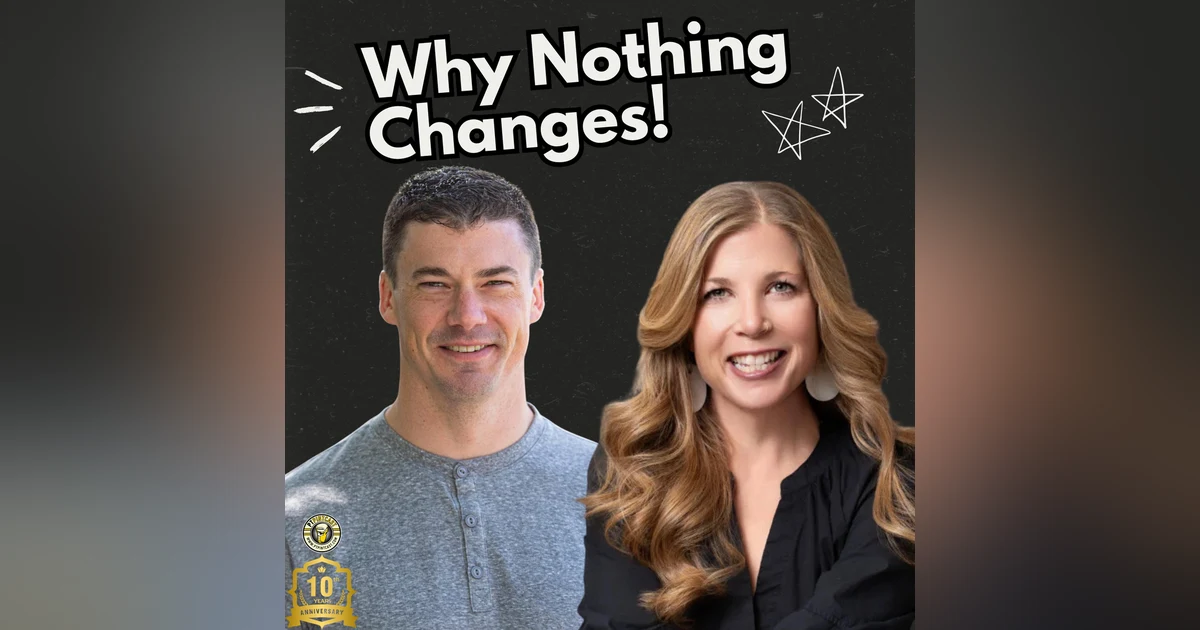


Physical therapy doesn’t lack ideas — it lacks follow-through.
In this episode, Jimmy McKay and Rebekah Griffith unpack why PT conferences, committees, and leadership spaces often feel repetitive and disconnected from real-world change. They explore how clearer communication, intentional content, and defined success metrics could radically improve engagement across the profession.
Topics Covered
- Why habits beat motivation
- The danger of “safe rooms” where nothing leaves the room
- Why you are the profession — not “they”
- How chapters and sections could engage members year-round
- Why studying success beats obsessing over failure
???? Sponsors
- EMPOWER EMR – Built by PTs, for PTs. Faster notes, better workflows.
- ???? https://www.empoweremr.com
- U.S. Physical Therapy (USPH) – Helping clinics grow without losing identity.
- ???? https://www.usph.com
- Brooks Institute of Higher Learning – Residencies, fellowships, and elite PT education.
- ???? https://www.brooksihl.org
???? Subscribe & Follow
???? https://www.ptpintcast.com
<p>This episode is part of the <a href="/physical-therapy-business-podcast">Physical Therapy Business Podcast</a>, where physical therapists and clinic owners learn how to get more patients, improve operations, and grow their clinic without relying only on referrals.</p>
<p>Looking for more episodes? Explore the full <a href="/physical-therapy-business-podcast">Physical Therapy Business Podcast</a> for real-world strategies on physical therapy marketing, patient acquisition, and clinic growth.</p>
0:01 you're listening to the pg pinecat where smart people in healthcare come to make noise here's your host jimmy mckay look at that new intro new intro for twenty twenty five twenty twenty six rebecca griffith jimmy mckay rebecca griffith how are you i'm well and you i'm doing good i don't think your microphone's on i think i'm only hearing you you know tap it that's the way we test it this is uh technical yeah oh no it is you sound a little far away from it How about now? Now you sound magical. There we go. All the audio listeners were like, wow, now we can hear. From the room. All right. We have to do a very small mic. There's a dial on your microphone.
0:41 I know this because I had that. There's four little indicators. Which one is it pointed at? Does it look like the one that is shaped like a heart? Yes. Okay. Then you have to point the microphone with that blue logo at yourself. Bam. Now talk. How about now? now you sound magical oh my goodness you have a one hundred dollar most of the people i see so that's for the for the podcast listeners and people who want to get into this that is the yeti blue it's one of the most popular starter microphones i think it is a magical microphone you could hammer nails with that microphone and still record a podcast episode here's the problem it has four little switches that no one reads the instructions that one that that mode that you have it on that's great but then you have to talk into the side of the microphone that has the little logo and now we've talked about microphones for sixty seconds I love that, though, because now I just learned sixty seconds of information about my microphone.
1:31 I see people doing anything courses, just short little videos, and they have that microphone. And I'm like, you sound like you're across the room. And I know why it is, but I can't reach the screen to help them. And I wish I could. Maybe this is a maybe this is a little bit of a non sequitur, which is I'm launching like a little cohort because people have been telling me like, Hey, you should teach people how to podcast. Yeah. So we're doing invisible to visible, or I don't even know what the name is yet, but we're helping people launch their podcast. It's not magical. You could Google this and do it yourself, but you're not going to. And I've done it for a decade. So I can just, and I want to help people in healthcare because I think their message, I actually said no to a guy.
2:15 I won't say who this is, but I said no to a guy because he started, because I looked back at his profile and the guy spouts a lot of sort of nonsensical, non-science related stuff. And I was like, hey, we're all full. And he's like, you just launched this today. And I was like, yeah, we're good. I don't wanna help people who shit crazy stuff. So I'm like, yeah, we're good. So if you're a healthcare provider, just DM me. I mean, it's not a hard sell. I don't really hard sell, but step point zero one is make sure you use your microphone correctly. So that's where we are right now. Well, here we are, but I wanna ask you a question. Cause I know we didn't talk about what we're going to talk about, but I'm going to tell you what I think we should talk about.
2:57 Okay. I have an idea too, but keep going. Okay. So my business coach said that I have homework before. Okay. And the homework is to go back through my calendar and like, take note of what I've done. Love it. and what I've accomplished and what I've like failed at and like actually sit with it and be present about it and like celebrate the success and like review the failure. And I really don't want to do it. Oh, why? Oh, well, yeah. Would you do it if the person did it? If you do it, would you be more apt to do it if someone was doing it with you? Maybe, but I think too, I'm a what's next kind of person.
3:40 Okay, great. Finish that thing. If I fail at something, I'm going to relive it forever. But if I succeed at something, I'm like, great. Okay, what's next? What have you done for me today? And so I think that's part of it. So I want to know... Would you do that homework? And like, do you celebrate your accomplishments? And then how do you process your failures? I think it's a really good way to wrap up the year. It is. And someone had a really great post. I forget who it was on LinkedIn. They're like, everybody's coming together now for resolutions. And then of course, like the famous visual one, especially in our profession is like, gyms are going to be packed first week in January.
4:23 And then there's two sides of this fence, which is like, screw all these people who take the spots and they're not going to be here in February. And then, you know, of course, most, most healthcare providers are like, we know out of the hundred people who are doing it only like, you know, small percentage you're going to be doing it in june but we're really challenged to those people who act like that is what could you do to make sure that yeah but that's the thing that's like very like um uh it's a mindset where it's like closed it's like well if you're here you're taking up my spot instead of the rising all right so your health care provider that's like a trash take i just deflected from your question would i do that yeah i think i should I sort of did that about a month and a half ago because I was like, I don't like the job I'm doing anymore.
5:10 I don't think I'm a good fit for it. I think everybody in the room agreed. And then the next question is like, cool story, bro. What are you going to do? And then I just went, I turned my headphones on real loud, played loud, angry music and went on LinkedIn and I went on complete offense because I did look back, probably not as in-depth as you're talking about. But I was like, what do you what would you be excited to do? I ask this question to people all the time. What type of patient, client, whatever you want to call them? Are you excited to see when they walk in the door? And then I reframe very quickly because I don't want because then health care providers give me like logical answers, like diagnoses. And I'm just like, no, no, no.
5:51 If you had a tail. Who would it be wagging for when they walked in? Describe that person to me. And then that's, that's what I sort of, and then they're like, oh, it's somebody who's motivated. Good. I don't want a diagnosis. I don't want a client that is in the healthcare space. I don't want a school that this, I don't want an E an ED that no, I want people who are motivated to change. Great. Where do you find those people? How do you find those people now we're into where and what and how questions I like those questions. So I gestured a second ago off to the left. Those are all because I did exactly the opposite of what you did. I did, what am I doing in twenty twenty six? Like, where's Jimmy going in the first one, two, three, four months? But I think I did that, but I think I should.
6:32 And then I feel like I can't decide where I'm going in twenty twenty six until I actually maybe take a moment in twenty twenty five, because this time last year I was like so excited about like all these things that were coming that I was doing. And now I don't even like Now I'm like, didn't take any time to actually like experience it, enjoy it, like process that, be present to what it was. And now I'm like, well, what am I possibly going to do in twenty twenty six? So I don't know. But I have she probably gave me this homework like two months ago. And I'm like, so let's start. Why? Why are you like how long do you think this job will actually take you? Oh, like fifteen minutes to like make a list. Maybe.
7:13 I don't know. Yeah. So what are your top, what were your top three from twenty twenty five? You did a lot of accomplishments. I don't know. What was the exact homework? What are you supposed to like? What did you accomplish? And then like, where were your perceived failures at also? I mean, obviously I finished my fellowship, which was really good. And I. You know, gave a presentation I was like really excited to give. Was Asia this year? Was that twenty twenty five? No, that was twenty twenty four already. That's OK. Calendars are made up. You know that. I don't even know. Like there's been. Oh, and I recorded for Medbridge, which was really exciting.
7:55 That twenty twenty five. Yeah, I finished my first. That's like saying think about this. I recorded for Medbridge essentially is like saying I have a show on Netflix. Like that's kind of a big deal. it's a huge well that's the problem is i'm like well i did this and i did that like i'm not taking any time to be like wow look at what you did this year so i think the reason your business coach had you do this is uh and someone said it better and i can't remember who it was but like people typically don't celebrate you until you're already the success right like nobody's really there for you cheering during marathon training but lots of friends come out and bring you gatorade or a funny sign during marathon day yeah and that's not because they don't believe in you it's because like two things number one they can't it's not their thing and they've got their own things that's two different things it's not their thing and they have their own things it's not that they're not cheering for you like this whole do it because the hate you prove the haters wrong i'm like there aren't haters like there's just someone who throws a jab every once in a while Oh, I got one this year.
9:01 I have a hater. Yeah, but what I mean is haters aren't long-term. Haters are just like, I want to... And then what I want to do is if you can lean in, and I'm not a psychologist, but I play one on the internet, it's like, who hurt you? Everybody who tells you you can't do something, it's because they try to do something, maybe similar, maybe not, to what you're doing, and they're just like, it's not going to work. Well, what if I put on my success list that I got a hater this year? That feels like a new level. Yeah, I guess if you're... Yeah, I mean, yeah, that's good. I don't know. Was this person like actively over a long period of time, like dumping on you? No. Yeah. There's this woman on Instagram. I forget what her thing is, but she speaks out politically.
9:42 Notice I didn't say what her political leaning thing, and I won't. But when people, and she's very good at research. Her background is research. So when people take shots about her, and she's also female, so people take shots about her looks a lot. I know this is going to shock you. She goes and does a deep dive on who they are and then sends those comments to their mom. I mean, sometimes I guess their boss too, but a lot of times it's their mom or their wife. like hi i just interacted with john on on instagram i posted a video about this and then he called me these things just wanted to think if i want to see if you thought that was okay and like that's that's next level devious i like that that's some effort but like all right so what do you content too so all right medbridge that was that was this year medbridge fellowship number two um like i gave a couple of keynote presentations and i was really excited about that I taught my sixteen-year-old how to drive.
10:43 Like that's probably my number one accomplishment. And we're still friends. Good on, good for you. It doesn't, I've never, I've never really taught. I sort of taught my little brother how to drive, but that was a long, long time ago. And I think I just, it's good for you. That's the skill. Yeah, well, and he still likes me. It's not easy being a teenager. I think that's good. So I think it's been a really good year. I think at the end of the year, I'm like, what did I do to move anything forward? And I don't know if other people feel like that, but I'm like, did I move my family forward? Did I move my profession forward? Did I move my business forward? Did I move any students forward? Okay, stop, stop.
11:24 Let's go. Let's go into each one of those. So go to family first. Did you move? What did you do to move your family forward in twenty twenty five? I taught my son how to drive. All of my kids just got a four point. Oh, you know, my husband's thriving in his business and doing great. I was very present. I was able to be home and present for almost every major milestone this year. You know. i don't know like i think so that's good yeah and if i were your business coach i've never met your business coach i would say awesome how are we going to make sure those things those types of things happen again in oh jeez what all right look back the answer is always in the past right yeah what did you do to make sure those things happen in twenty twenty five spoiler alert let's do some of that magic and then if it was like i could have done more great let's slip right that in too i think that's what your business coach is trying to get you to do totally and i'm trying to avoid it and here we are like live in front of all the people like doing it no one's listening anyway But they're learning.
12:30 That's the point. Well, and I think, too, like a good place to start with the family would be to just ask everybody, what did I do this year that helped make you feel successful? You know, you had a really successful year. How did I contribute to that or detract from that? I have my kids give me a performance review every year when I take them for their physical. I ask them to give me a performance review. Like, how did I do as mom this year? Is there anything I could have done better? Is there anything I did that made you feel hurt or sad? And I try and go through that. I also have a rule that they can ask me anything. And if I don't know the answer, we'll find the answer together. No judgment. We'll figure it out. So I think that leads to being able to have those conversations with them.
13:11 so have you ever heard of stop start continue yeah yeah it's like a business thing like you sit down yeah it is i've done it a lot i love the idea i've never seen it executed in the last ten years with me well like for me working with people i've been like all right i'm happy to give feedback and like hey thanks and i'm like are we gonna we're gonna do you're not going to happen or we just was that just oh we're done got it okay cool but i think also simple enough that like kids could easily understand that and well i think kids understand it i think it does for sure let's just be very clear i think yeah they i feel like kids can answer these questions way faster than adults and i feel like kids will also be like so are we going to do that like three months from now you're doing the thing i told you to stop and you haven't done the thing i started told you to start yeah know what i mean yeah so um all right so that's family now what's next business yeah personally yeah like my business i feel like you know that's the question like did did i help people did i make an impact did i transform anybody's practice like all of those things did i help my patients like all of those questions i need to like sit with i think like if i think about it like you know i helped a hospital in arkansas have their first emergency pt in the entire state of arkansas so that's great you know
14:43 i and i think about all these like little sacred patient interactions that i made me feel good and made me feel like this is a job I'm meant to do. Mentoring other PTs has been really fulfilling. Like all of those things I think has been helpful. I just don't know how to like measure that impact. How would you measure it? How would you tell me to measure it? I don't, I mean, I guess I don't even know what success looks like. So how would I like. Yeah. So there you are. So that's gross. And if I look at the feedback from my courses, the feedback is super positive.
15:25 But then it's like, did it make a difference long term? Do I go back to those people and be like, hey, did this course actually help you? I know it felt great in the moment. Your feedback was really good. I'm surveying you six months later maybe. Did the course change your practice? Might be a good way to look at that also. Like you could say it's a good marketing move or business move to like ping past customers or patients and go, did it work? Did it elicit the change or not? But it's also good for you. Right. If you can get them to give that feedback, which is simple but not easy. But you have to ask. Step one is asking. Right. And that's scary. Yeah. Yeah.
16:07 I think that's this whole process is scary. It's like actually like objectively reflecting on what was successful and what was not. And I think it's really easy for me to discount my successes. I probably overanalyze my failures a little bit too much. And then are they actually failures? Are they just growth moments? Like, I don't know. Yeah. I don't know. What was your biggest accomplishment this year? I have no idea. I haven't thought about it. Right. I feel like you've spent some time with it and I haven't. I meant some spending some time trying to avoid thinking about it, but then thinking about it subconsciously. Yeah. I think we're really, really good at saying like, here was my biggest failure. Cause we, we, we attach to those or we stick to those.
16:49 Yeah. There's probably something deeper psychologically there. Generational thing. I saw a meme this morning that said, if you're a millennial, you take comfort in productivity instead of rest. Probably. i think it was this whole like if you have time to lean you have time to clean mentality i don't know if you've heard that yeah that was everywhere what was your what were your first like couple of jobs what would you do mcdonald's yeah hustle hustle mentality right i was a boy i was a waiter as a bus boy it was barbacks bartender all those things which were like let's keep moving there's always a job for you oh you're done No, you're not. We're going to clean, or you're going to prep for tomorrow.
17:31 And so you just moved for eight, ten, twelve hours, and that was good. All right, so now you're looking forward. What's on the plan? This part should be easy for you. Gosh, it's not like, and so I was sitting here thinking about like, what am I going to do in twenty twenty six? I got my big calendar down to start filling it out. And I'm like, well, I'm not even doing anything this year. I know I haven't found the opportunities I'm looking for. I don't know if I'm going to host any courses this year. Like, I don't know what I'm doing. And then as I'm filling out the calendar, I'm realizing I have some things already in January and February and April and October. Like there are things on the calendar, but I'm not which calendar you use specifically sounds like a weird question but do you have like just a giant paper calendar do you get it like staples giant multi-colored wall like each month has a beautiful colored wall i bought one of these it's called it's called the big ass calendar yeah it comes tomorrow so do you know who j uh uh uh jesse itzler this guy is I've never heard of this guy until like six months ago, maybe a year ago.
18:36 And he's everywhere. And he, and this is why people, this is a lesson in people, why people follow you, people, why what they listen to you is because you see either a future or current or past version of yourself in that, or you want to, right? Okay. So I saw this guy and like his vibe is like, Well, he married, I think he did pretty well in the marriage department. So this guy married up. Sarah Blakely, do you know who that is? She invented Spanx, which is a product that everybody told her not to invent because it was stupid. And now she's a billionaire, like quite literally a billion dollars. Great story. I think she had a sleeper billionaire success this year. Ah, but you don't know that.
19:16 I'm sure if you interviewed Sarah Blakely, like when she was in year one or six months or whatever, like it was just a big dumb idea in her head. And then she was like- I'm just going to keep going. And then she did. So anyway, Jesse's got a weird, he like, he started marquee jet, which was like, Hey, you don't have enough money for like, he just, he just fricking decided to solve millionaire problems. He's like, you don't have enough money for a jet. What if you rented jets per hour? And I'm not even saying he's the first person to have invented this, but he's like, we do marquee jet him and a friend who were like, we barely knew anything about airplanes. And they just were like, we just have to position ourselves to solve this problem for people with lots of money. And I've heard this before from people who, you know, sharks on Shark Tank or just successful people.
20:01 It's like the only difference between solving a five dollar, fifty dollar, five hundred dollar, five thousand dollar, fifty thousand dollar, five hundred thousand dollar problem is just zeros. They're just different problems, different things at stake. everybody's like do you want to solve a million five dollar problems then you can make five million dollars that's hard right that's hard or do you want to solve five one million dollar problems it's also hard but scope feels a little bit better so anyway i've listened to this guy jesse for like a million you know weeks now several years listen to stuff he puts out and he's pretty logical and he's like listen and and also i feel like like i said you see either past current or future versions of yourself in people yeah i'm very visual and it sounds like you are too right because you have a calendar so i i use digital apps i'm digital pretty much with everything and then i get it's like how do you lose that it's in your calendar it's in your digital whatever it's like because i don't see it yeah i needed this thing and it was like forty bucks and i was like you know what i know that i'm just buying a thing to buy a solution i get it and we've failed with that although things visually for me things i use over and over again and i'm gesturing again off camera which is my stupid dry erase board on wheels that people come to my house and like you have a dry erase board in your kitchen i go yep like but you have a macbook i go yep dry erase boards better to start with.
21:31 And then I make the magic. It's like, this is my cutting board, my dry erase board. And then the computer is like my food processor, my oven, my distribution center to get the food out. Well, I do like that you can see all of that in one thing. And I have my calendars like hung over my computer so I can see them, but they're also like hard to get to. So once I hang it up, I don't know that I usually like update it. Yeah, I'm going to tape this on one side of my rolling dry erase board. Because I was like, same thing. Where am I going to put this? Downstairs in my office that I'm not in? Ninety percent of time I'm in my living room. Want to know why? Number one, it's got my Christmas tree. Number two, big windows. Big ceiling. Number three, it's next to my kitchen. Like, be logical about it. I have an office.
22:11 It's all my stuff's down there. I just don't really use it. Why? Because I'm a human. We do humanizing. So I said, when this calendar arrives tomorrow, Where am I gonna put it on? And I was like, I'm gonna tape it to the back. I'm gonna lose one half of my dry erase board. That's good though. But it's so visual and you can like see it just in this picture of it, Jesse's holding up. You can see it. And I also like this. So I want, this was the purpose of me. This was my purpose of talking about our episode today. So Jesse's like your big ass year starts here. So I bought the calendar. Look, I bought in. It's all about commerce and capitalism, but it's not. Cause Jesse, the reason I bought his calendar was this, this is pretty much what he like is preaching all year.
22:53 So have you ever heard of a Masogi? No. So Jesse talks about a Masogi, which is a year defining event. I feel like your business coach would like this. Probably. So he's saying when you look back on twenty twenty now move that number twenty twenty six as the year that you made it happen. What is a thing, a trip, a business goal, a life bucket item? Make sure it's within the realm of possibility, but plan out. Like this is your, I'm gonna run a marathon. Maybe that's it. It doesn't have to be physical. But he's like, I'm going to do a Mussogee and I'm going to climb, I climbed a mountain with my PT school roommate, David. And I don't know if I've done anything physical like that big since then. I've done physical stuff, but like I liked climbing mountains.
23:35 Want to know why? Because I'd never done it before. And I was, I'm more of a guy who's like, you're going to do what? Okay. I'm less of the guy who's going to map it out though. right if you're going i'm coming so david one year was just like we're gonna climb mountains in washington state and i was like okay he's like does that mean we're going yeah like just show me what i need to buy where do i click when do i need to land where are we staying kind of like i just generally so jesse is like the only way this happens is if you're intentional about it And it doesn't need to be climb a mountain. But he says, choose a Masogi, a one year defining event. This way, if you're for me, I'm a big, dumb animal. If I'm going to get in shape, I need to I need to sign up for a triathlon.
24:16 There's got to be a thing. I'm dumb. I chase, you know, like I chase tennis balls like I'm a golden retriever. Yes. Being in shape and being fit does not do it for me. It doesn't. But if I were on a team and we had a season and a championship, different. I play beer league hockey. That's just sort of like we just hang out for an hour or two a week. It's not enough. So I know in twenty twenty six, I need to plan a race or a trip. So I'm actually looking at and I've talked about several times and someone actually emailed me from the podcast. I've talked about I don't know why I've never done this, but I want to go somewhere like in Utah. I don't even know why Utah. Well, this person said they live very close to Colorado or they live in Colorado, but very close to Moab.
24:58 Is that right? Yeah. So I don't know why. Maybe it's because I'm from New York and I've never been. And to me, that's magical. Maybe from people from Utah look at New York and they think it's magical. And I just want to do one of those trips where you like bike all day and then like you have your tent on your bike and you just like drop and there you are in the beauty. Backpacking. Backpacking, but on a bike. Yeah, bikepacking. Oh, bikepacking. See, I didn't even know it was a term. Great. I want to do that. Why? Never done it. That's what I wanna do. So that is a Misogi. So then he goes on to say, okay, pick a Misogi and obviously put it on the calendar. And then he says, plan six mini adventures. These are like, they're not gonna be like, climb a mountain maybe, but like you should be doing stuff.
25:40 So maybe it's for me, I've always wanted to learn how to like climb, like I've done rock climbing before, but I wanna do it more. And there's one like, twenty minutes from my house. uh at like minnewaska state park and i'm like let's do that that's a mini adventure he calls it kevin's rule because his buddy kevin just like told him to do it but he's like every other month do one thing you wouldn't normally do here here's the thing because you start looking at when you have a calendar like jesse's sold you start looking at things like man i just burned another week and there's only fifty-two. When you're looking ahead, you're like, three hundred and sixty-five days, there's a lot. But you just burned another week.
26:21 So he's like, plan six mini-adventures and do it every other month. He's like, it doesn't need to be massive, but this way you've done stuff. There's something to look forward to, there's something to look back on. So that's his step two. Number one is the Misogi, number two, plan six mini-adventures. So instead of watching TV on Sunday, which is fine, do a hike, do a polar plunge, take a cooking class or a trip, but just have something. Yeah. And notice like this one from big to smaller. And then his next step is even smaller. Create four winning habits. Not thirty two, not I'm going to do this and this and this and this and this. Jesse says create four winning habits to find one new daily winning habit for each quarter of the year.
27:04 And I'm like, oh, I have that. Now you're doing like James Clear said in his book, which is your your habit stacking. What does it say? You're pointing at something. It says habits. In my new planner, there is a spot for six daily habits. Yeah, that's it. Oh, I kind of like that. So what would your big one be? my i started doing this recently which is i blocked off time on fridays to plan next week when i walk into my week and i'm like i got a call here and here and here usually i'm planning for the call twenty minutes before i'm planning for the live stream an hour before yeah i said on fridays i planned all of next week and i've done this before and it feels like i have hired an assistant but the assistant was smart So I, but I, it has to be on the calendar.
27:53 So I had to block my calendar and be like, no one can call me from noon on, on Friday. I'm busy, but then it's not, let's go play video games or watch whatever, do whatever it's accomplished this task of setting up yourself for success next week. And when you're done, then you can go do whatever you want. And it felt like I had an assistant. I think my problem is my schedule is so wildly different every single week. It makes it really hard for me to have any systems. I put in my Google calendar that you have to book a call X number of hours ahead of time. You can't be like, can I talk to you tomorrow? Be like, no, here's my calendar. And you have to hold to that. It sucks. It's just like some weeks I'm traveling and some weeks I am working a shift and some weeks I'm teaching and some weeks I'm just home with my kids.
28:37 It's like very hard to be like every Friday I could do this. Okay. Then erase Friday. Then erase Friday, but just say, I need to dedicate one and a half hours prepping my next week. Or maybe it's a month. Like, right. Like, listen, like my dad gave me great examples, like New York city firefighter. their truck was ready to go at all times. That's proactive, but stuff goes sideways. You're a fireman, like stuff goes sideways. They're like, but we can react when we've been proactive. And then every time when they would come back to the firehouse, they'd all like go, you know, if it was like a bad fire, they'd go get showered, they'd get cleaned up. Are we now ready to go after the bell rings? Yes, good, we're back online and everybody meet in the kitchen and we talk about what just happened.
29:19 What did you see? What did you see? What did you see? What could we have done better? What stops our continue? Didn't matter if you've been a fireman for twenty five years. Didn't matter if it was your first week. What did you see? This is important. So Jesse says to stack four habits. Here's the thing. What I I don't know if he specifically says here now. He does not say come out of the gate January one and give me four winning habits. He says to find one new daily winning habit for each quarter. So pick one for the first quarter, and then when second quarter comes, hopefully you're still holding onto that first one, and then slowly add. This is digestible. Yeah.
30:00 I like that. It doesn't feel like too much. And notice, smart guy, he says, simply check the box each day. Choose a system for marking your daily habit as complete. What are the winning habit ideas? uh it should take a few minutes it could be like for me i have a new thing someone and this is an old statement which is uh don't put it down put it away oh yeah i am freaking horrible with that so i started that's for me that's number one don't put it down put it away like you've heard that admiral's commencement speech where he's like make your bed Oh, his whole commencement speech, he's like a Navy admiral and he's like, make your bed. And it's like, why? And then he gives all these neurological and these like reasons why he's like, because you'll have accomplished one thing before you even like leave like a foot and a half from your bed.
30:47 And he's like, that's what military sort of based on. It's like, I need you to do this. Why? Why does our why does our uniform have to be perfect? It's like it's not about the uniform. It's about the fact that you have a habit. And we all say that this is the standard. And if you're below it, you're out. But when you're a one person crew, there's no standard. You might set, you have a mission statement, you have a vision statement. Those are bullshit. Do you make your bed? Do you put it down? Don't put it down, put it away was one. For me, you know how inbox zero, people are like, I'm an inbox zero. I am not an inbox zero. Legitimately, I think I'm at six figure unread emails, but that's because I just have a bunch of pull. Yeah, but a lot of those are just spam emails that I just like. Well, you gotta have a separate email address for that. Yeah, yeah, yeah, I'll work on that.
31:28 Mine is sync zero. It's either clean or it's in the dishwasher, but it doesn't sit in the sink anymore. so it's like it's similar to like don't put it down put it away with like dishes why i move fast and i'm just like bang bang bang bang and then i feel miserable and then i don't touch it for two days and then it's like this and then you don't do it because it's insurmountable so i think it doesn't really matter what your habits are i think we can get into this i think i think the answer for this would be have you read james clear yes habits then pick four well he has a list there it says fifty winning habits on that thing that you oh does he oh i didn't even notice that yeah how do i get that Health and wellness.
32:12 Mindset. Write down one thing you're grateful for. Set one clear intention for the day. Read ten pages. Eat one serving of fruit. Get thirty minutes of fresh air. Pick four of these. Literally, he's not saying start a new LLC. What he's saying is very, very small. And the thing is, some of these will stick and some of them won't. but that's okay because you picked important ones. So now looking back, the math is simple. Jesse says, one Misogi, six Kevin's rules. Wow, six, that added up quick. Yeah, one every other month for a year, six, that'd be cool. And then four winning habits. Just make sure you do them and hold yourself accountable. so i bought a calendar was gonna be my uh discussion point even though my most used app what are your what are your most used apps without your computer without your phone telling you what do you think your most used apps most uh sorry instagram really okay keep going gmail uh text yeah and whatsapp I would say mine, like outside of like text and social platforms, mine are notes and calendar.
33:22 Notes and calendar for sure are probably my other two. Yeah. Those are like, let's the, you know, it's like hammer screwdriver, like social apps. So like output devices, but I guess, yeah, they also are input devices cause we're consuming. So I think you're right. Yep. All right. So I got a calendar. I got a new planner. I got a beautiful new planner. It's great. To me, the planner I have to open. Planners for me are like jotting things. Well, and I had a planner last year that I hated, and I didn't use it. And I got permission to stop using it in the middle of the year. I really needed that. I needed to be freed from it. But this planner layout is one I've had before, and I really like it because it has a lot of spaces for me.
34:03 If I write down a to-do list, I'm kind of unstoppable. If I don't write it down, I'm sort of hosed. And I just didn't, my other planner didn't have a space for that. Is it really about putting things on the calendar? I don't think so. It's more about like planning out intentionally each day. It's less about planning out the year. It's about planning out what am I doing this week? What am I doing today? And then each week also has like a space for you to write your priorities. It has a space for you to take notes. So when I have ideas and I'm like, I really want to do this for content or I want to you know, send this email or I want to do a podcast about this. I can write it all in there and it doesn't get lost. And I actually went through some of my old planners that were set up like this. And I was like, well, these were really good ideas that I didn't use.
34:45 And I still have them and I'm able to go back to that. So I really like that. I also have a goal of like everywhere I travel this year, I want to get a sticker from that place and cover my planner with stickers from the places that I've traveled. So at the end of the year, I can visually see to where have I been this year? Because I do travel a lot. kind of cool right like almost like your uh your passport and where the stickers are from and stuff like that so i'm already thinking about where i'm going you know i'm going to arizona i'm going to washington dc in january i'm going to california and boston what are you going to dc for oh is it graham sessions yep i'm i'm trying to decide if i can go if i should go you should go why though Because I think the conversations are important, even if they feel redundant.
35:30 Sometimes I think- That's my only beef with them. But that's why you need different people in the room, right? So that you can push the conversations in different directions. I also like to hear the conversations because my goal really is to push the entire profession forward in any small way that I can. So I need to listen to people in all different spaces about like what works for them in the profession, what doesn't. So I like to hear from people in that room because I feel like the thoughts are just a little bit, maybe more unfiltered than in other places. So I like hearing that conversation. So my only beef is... So I was invited back in twenty sixteen, twenty seventeen to record there. Right. So to me, I was like, you invite me to a meeting where I'm not where no one's supposed to say anything outside the room.
36:13 They're like, well, no, not that's actually not what the deal is. It's just you're not supposed to tell like anybody's supposed to feel it's it's a safe space. Like you can say whatever you want. No one will hold you accountable for the idea. Although I've been in the rooms like none of the like no offense, but none of the ideas. We're so egregious that like people are like, I don't want my name attached like that wasn't said. yeah none of those things they were all like yeah everyone like everyone said those ideas before my problem was i went two years in a row and i was like these are the same things we talked about last year right and i noticed because i noticed language people kept saying they or we and i was like but no me or i like we need to change this and i was like cool who's that yeah like our profession i'm like a profession like when people say the blah blah community i'm like there's no community There is none.
37:04 It's you. People are like, APTA sucks. And I'm like, no. And then I go, which ones? Which members? Point at them. I'm like, is that person cool? And they're like, well, that person's cool. I'm the APTA. You're the APTA. Because the community is made up of the individuals, right? Or if you're like, well, I'm not a member. I'm like, cool. All right. But you're still in the boat. You're still in the boat where you're being pulled along by the boat. I'm not saying join or don't join. I know you're APTA Colorado president. I'm pro APTA, but I understand why people don't join. I think it's a messaging issue. That's a different topic. But my thing is when people like they stand, like they spend so many calories bitching about a thing that they're in charge of.
37:48 Well, and I want to hear that because I have ideas, right? Like about what we could do to be better as a profession. So, and I try to implement those in my own life. I try to share those. I try to be the provider I would like to see. I would like to be the provider I would want to send somebody to. I want people to think forward. But I want to be in rooms where those conversations are happening, whether that's Graham sessions, whether that's CSM, whether that's in the comments on Instagram, like I want to be part of those conversations because I can only do what i can do and i want to contribute well in those spaces back to grant sessions yeah love the idea love the concept right i was invited i i reached out to some people who were putting graham sessions on and i was like listen i really want to come but i need to be able to do stuff that leaves the room and everybody says it's probably a good idea but i don't want to say yes or no to you That's usually when you know you have something.
38:38 When no one says no, also no one says yes, but they're just like, I don't want to make this call. This call feels dangerous. Like if I say yes and it gets out of hand and I'm like, I've been doing this for a decade. Can you point to one time when I've done something that got out of hand? Like I have a microphone. Let's not, let's not make this bigger than it is. You know, like we're going to have conversations. I'm also not running around with a hidden microphone. Like people know when they're speaking to me. So for me, I'm just like, I want to make sure that what happens there actually moves the needle. Like there's a hundred and fifty people that go to that thing. That's it. Cool.
39:20 i personally i'd rather converse with the other ninety nine point nine nine nine here's the magical part you can have the hundred and fifty people their ideas touch the other ninety nine point nine nine nine nine nine if you and so i'm like hey can we do something here with guardrails again i'm not gonna have a hidden mic thing um and again i was invited to do this a decade ago which i thought would be a nice revisit i think you should do it uh still waiting still waiting for yes But I don't, no offense, like I'm not going to pay three hundred bucks drive for six hours to maybe do something. Because I have those conversations that look similar types conversations with those same people in my living room.
40:03 Yeah. Like to say, to quote, like to go look at Jesse, I'm doing that like this, like just a calendar. Like this is what I do every damn day. Why do we need to do it once? Now I see the advantage of doing it all in one spot. People play off each other well. So I was like, hey, I was invited to this thing, but I need to ask like stipulation. Like, can I do this? And everybody's like, I don't know. I don't know. And I really like the conversations that happen at happy hour, which obviously is you are a huge proponent of that, right? The best conversations happen at happy hour. And so I think being in person for those types of events is great too, because even if you're having these conversations in the room, I think what they spark are the conversations that come after that.
40:47 And I really enjoy that piece. So otherwise I'll save myself three hundred bucks and a round trip, you know, drive to Virginia and I'll just call ten. I'll be like, hey, give me ten people who are at Graham Sessions. What were the top three things that you saw, heard and what's one thing you're going to implement? That's an entire episode. That could be a week's worth of episodes. I could do that for my living room. So explain why I need to be in the room. I don't know the answer. I think if you're not in the room, you can't participate in the conversation. Sure you can. In that moment. You just told me your most used app was Instagram. I know, I just mean you can't get up to the mic and shift the conversation if you're having it. How about anybody shifting the conversation? I don't either, but it doesn't mean I'm not going to stop trying.
41:31 I still think, five years ago, I needed to explain to people why better messaging and more communication and clarity in communication and frequency in communication was important. And people were like, yeah, Jimmy, but I think that's a down the road problem. That's like a top-fifty problem. And I think it's now said, this is a top-two problem. It's an upstream problem. And I'm saying, you have a conference that no information will leave the room. And I'm like, that's not a conference, it's a meeting. Yeah, that's valid. So I don't want to come to your meeting. Cause this feels like I'm not gonna get anything out of it. But then you look at the itinerary, it's not a meeting. It's their sessions. Like you can see the sessions and whatnot. Like those all sound great, but like we're also gonna go to CSM in a couple of weeks.
42:11 What's the difference? There's a different audience. There are different problems. Good. But if it never leaves the room, this is performative. I don't know that that's the intention. I don't think it's the intention, but I'm like, you've done this for how many years? I think it's twenty years because I was invited in twenty twenty. Oh, this will be nineteen years. I think I was invited in twenty sixteen to interview the three founders, Steve Anderson, Patrick Graham and oh, my God, freedom. Sorry, it's blanking right now. I'll remember it as soon as we stop this live stream. But I was I was invited because they were like, let's look back at the last ten years. So I would say let me play Rebecca's business coach.
42:54 to the Graham sessions. Can you show me three things that happened because of this meeting that you're proud of? Yeah. And if you can, awesome. Let's reverse engineer how that happened. And if not, how do we know if this is successful? We got together and felt good. That's awesome. That's a cool event. That's a reason to get together. It's not a reason not to. No. For me, I need something more because this has not changed in how long. So that's what I'm looking for. I think it is important. The funny part is I actually think it is important and powerful if we do it differently. Everybody wants change. What do we want? Change. When do we want it?
43:34 Now. What are we willing to do to get it? The same thing we did yet. Let's do the same thing again. No! That's exactly why I need to look back on my year and see what was successful, what I did to make it that way, what wasn't successful, what my responsibility is in that. And otherwise, my change for twenty twenty six is not coming. Agreed. Agreed. So I would say, what does success look like for this? How do you know? How will you measure that you achieved it? It could be out of one hundred and fifty people. Seventy three of them said this was awesome. That is a measure of success. I don't know because I'm not involved. Yeah, I say that to my patients. What does success look like for you today?
44:14 Yes. I need to apply that to my year. What does success look like for you in twenty twenty six? Yeah, it's tough to hit a goal unless you name it, unless you say it out loud, unless you write it down. Stupid and dumb and feels like it doesn't work. But for me, it does. I can't speak for me. For me, it does. And I need to get better at that. If I want to see the results that I want to see. Yeah. I mean, I went full aggressive. We're getting messages on the side. Someone told me that, oh, you asked me before what my biggest accomplishment was. And I was like, I don't know. Someone told me my biggest accomplishment was I decided to lock in what I really wanted to do for a living and ignore the noise. I stopped trying to get a job and started doing what I really wanted to do. And that's the answer. How is that going to happen? I got like six ways.
44:55 One of the ways is working directly with APTA sections and academies. I've had probably twenty something phone calls with APTA sections, academies, state chapters for this idea. I'll share the idea. Magic isn't the idea, bless you. Do you know how many have said yes, no or maybe? Where do you think all the answers are? Twelve. Twelve yeses. No, no yeses. Twenty. No yeses? Twenty maybes. Twenty maybes. No yeses. Do you know what I need? And I've got it. I need one chapter, a large one, to say yes. And then I can call all the other nineteen and go, I won't say who it is, but I pretty much have one that's like, I can see, everybody has said, I see no reason not to do this.
45:38 And I was like, great. So do I get a yes? Here's why. If I wanted to do this idea, and you know my idea, and I'll explain it in a second. If I want to do it in Colorado, how many yeses do I need? Oh, the whole board. Oh, my God. How many times a year does the entire board agree on anything? Well, I guess if you need the whole board, you would need a majority of the board. Okay. but I had this idea a month ago and no one can say that's a bad idea. I said, well, you really willing to do that? I'm like, yes, I know how to do this. I could do this tomorrow. And also it's not a new idea. It's an old idea with a new wrapper on it that now works.
46:19 And here's the idea. I'll just say it out again. If I can't explain it in thirty seconds or less. State chapters and academies have three problems. You need new members to keep your members engaged and you need non-dues revenue or you will not survive. Am I correct? Please push back if I'm wrong. get new members you need someone to become an apt member you can help do that but that's not a direct line to success to me it's keeping members engaged and non-dues revenue if you don't have those things i actually think keeping members engaged helps not needing new members right right people so i i don't think the issue is that you don't do enough or you're doing the wrong things i think you're fine i think you're let the board be in charge of that i think if people don't see what you're doing and they don't feel what you're doing there's a disconnect and they just say, well, then there's nothing going on.
47:04 There's nothing of value. So my offer is I will come in, I will launch and or if you already have one, a podcast or a YouTube channel, you already have one. I will then take over some production with a production team that I have and we will now create content for you. This is at no risk financially to a state chapter or academy because I will also hold your hand and find the money. There are sponsors out there. go to CSM walk in the walk in the expo hall go to state how many you guys have sponsors at your annual conference right so you make I don't care how much money you make but you make money on one two three four days a year and the other three hundred and sixty one not too much yep so offer them everybody wins here The section or chapter or academy gets exposure.
47:54 They keep that environment. They get non-dues revenue. Sponsor gets exposure, which is what we're willing to pay for. And members actually see, taste, hear, feel, smell their membership. That's my model. I hope someone else steals it as well. That's proof of concept. So I'm not trying to gatekeep the idea, but here's the thing. No one else is doing it. So everyone says maybe. say well eventually probably get ts and i go here's your here's the thing you have to remember i can only do this with so many chapters like there's going to be a point where i'm like i don't know how to scale i got to start hiring people which might happen like right now we're at zero except for one one has been like okay we're gonna push this through and i'm like when like ballpark is this a ninety day thing is this a six month thing is this a is this a let's do it tomorrow thing So that's my big, hairy, audacious goal for twenty twenty six.
48:43 I'm saying it out loud. I've been saying it out loud for the last three weeks. But I don't. Yeah. So am I is my strategy wrong? How why am I getting maybes but not yeses? I think there's a fear about how much stuff costs and what like the return will be. And so I think that's that's where people are thinking. Can I allay that? I think the other issue is you're like, well, we'll have a podcast and our volunteer members here, that's more work. So when I hear, probably, but I'm just telling you like, as a chapter president, if I hear that, I'm like, podcast, oh my gosh, that's one more thing I have to do. So I think it's those things.
49:24 Can I allay one and two? So your first thing was cost. I will not start production. I will never charge you until you already have that amount of money plus money in the bank. Great. What I'm saying is you will help. You'll give me the list of your sponsors and you can come on the call with me. We will now call your sponsors from twenty twenty five and say we want you back for our state chapter annual conference. How many do you have? Do you have one or two? Just what we used to have to. When is yours? October. Looking forward to having you back in October. It's this much again. By the way, three sponsors from this year can also have it's an upsell. If we go O for thirty, I just never start the YouTube channel or the podcast.
50:06 I tell you it's going to cost X amount per month. We don't start until we already have that in your bank account. The second part, the amount of work, agreed. You will launch this as a volunteer organization, and then three weeks later, it'll stop. Right. I'm telling you, I will not start production until we have a twelve month runway. This will be going on for the next twelve months. We build that cost in. So it will be it will get done because my team is going to do it because they're getting paid to do it. Volunteer efforts get volunteer results. Correct. Results. And this this should be a revenue generator for you, not a cost. You should be covering my costs and also making money.
50:49 And I can guarantee that. Or I just don't do the work. Don't do it, yeah. And I think that's part of it. But then who's going to be on the podcast? You tell me. Now that's the question to get into. That's the thing I have to do. Hold on. And this is how I answer that. I love that because that is also injection. This is where boards or state chapters, academies, they have PR teams or PR committees. that are typically do not have the tools, training or the time to do the PR thing. So I say, can this PR committee give me one hour every quarter? And they're like, well, yeah. I'm like, okay, four hours a year. I mean, you're on a committee, right?
51:30 One hour every quarter, I will run the meeting and I will ask you questions like, let's go real high level. Give me some like feeling words. What do you want people to feel about your chapter, your section, your academy? I want them to feel inspired. I want them to feel like they're part of something. Good. I want them to feel motivated to participate, especially because we're going to have a lot of legislative battles. Like I want them to feel informed. Got it. Now pause and say, love those words. I got inspired part, uh, like it mattered and informed. Okay. So you give me four things that have to happen. Yeah.
52:10 So our first episode is gonna be about inspiration. Give me someone from your chapter who did something inspirational in, out of the profession, I honestly don't care. Give me someone in episode week number two, someone who's part of something. Show me someone part of the committee that they did something legislatively maybe in twenty twenty four that you accomplished something great. It's gonna be about that. But it's not just a story about that. person listening to it or watching it is now saying oh i can do that oh look at that i could do that oh that's important oh they're doing that number three that it was it mattered i'd scribbled i don't have great like like being a member matters to them specifically good can you so give me we're live doing this give me an example of one of those things Like if you take patients who have Medicaid and Medicaid is going to get cut in this legislative season, almost certainly for all providers, that should matter to you.
53:05 And we need members to help us with testimony. We need members to help us with patient letters. We need members to help us with lobbying money. We need members to help us with PAC donations, like all of that, because that cut will impact your bottom line. So you need members or potential members to know something, feel something, and then maybe potentially do something. Do something. So I would say, hey, Rebecca, sounds like we have the topic and the ingredients. Who are one or maybe two people that you can think of about that topic that I should talk to? Members, your lobby team that you pay, right? That's enough. So there's another week. We just solved three weeks. I need you to do that for one hour, one hour, and we're gonna come up with thirteen topics or people.
53:49 And then I'm just gonna go, got it. See you in a quarter. So that PR team needs to give me four hours a year, because they're gonna write my, they're gonna write our episodes for us. The topic, the guest, whatever. Now Rebecca sees where this is going. Now we're proactive. We've got the fifty two weeks lined up. What would happen if something happened in Colorado, like legislatively, you needed to react. Great. We're already recorded. Thirteen weeks ahead of time. We can now sit down and do a live a live stream or a webinar or one of those and we can backfill. Yes, this is communications one on one, baby. This is why in radio we scheduled music for two to three days out. Why is it because we wanted to be boring and programmatic?
54:29 No, it's because we understand how the world works. Yep. So there's no risk at cost. There's not a ton of extra work. In fact, I would actually say, if I sign up for the PR committee for APT Colorado, and I wasn't involved in this, I'd be pissed. I'd be like, dude, I thought I was signing up for this. But this is giving them stuff to do with guardrails, which is like, within this box, you are going to put what's on the menu. You're creating the menu of the soundtrack using mismatching analogies. You're creating the soundtrack of your state chapter. Ta-da! We don't have a PR committee. You could in about eleven minutes.
55:10 I need four motivated people who can give me four hours in twenty twenty six. OK. Give me someone who's a student. Give me someone who's a new grad. Give me someone who's a seasoned clinician. Give me someone who's an academic. And that way you don't get too much of this. Not enough of that. And then you get someone who's had to run a meeting. This isn't really a meeting. I don't really love running meetings. A creative sesh. And I go, great. We have to get to the number. In the next sixty minutes, we need to get to the number thirteen. And then you just make them talk and talk and talk. And then I just go, hang on. Sounds like you wish this or you saw this. Or when you signed up, you thought you'd get this, but you actually got this. And then I turn to Rebecca and I go, well, does that happen?
55:50 You're like, actually, yeah, it happens over here. Oh, they didn't know that. Let's do an episode on that. Let's just shine a little light on that. Here it is. Oh, look at that. Shine a light on it. That's it. That is, in my opinion, the difference between people feeling engaged and not. It does not need to all be ten thousand dollars. It doesn't. And should be paying for itself because sponsors are like that does sound like good content. People are going to listen to that. I want to be wedged in the first fifteen seconds of that. Great. Then you will pay for it. Companies understand that. They do. There's my idea. I said it would take thirty seconds to explain. I feel like I explained the gist of it in thirty seconds. I feel like it. But anyway, like twenty-two maybes, no yeses, no nos.
56:33 So what I'm hearing is you want to be on the agenda at the board meeting in twenty-twenty-six. If this is a bad idea, I'll stop asking. I still think it's a good one. I think it's good. No one has shot a hole in it. No one's like, well, what about this? Or why you, Jimmy? Like, so give me like, pretend you don't know me. Why you? Well, I've ran radio stations for fifteen years and I've been doing podcasts for ten. And by the way, I have a PT degree. I think that's extremely helpful. And I think the other thing is that you've talked to physical therapists in literally every niche in the entire like profession more than once. More than once. If there's a niche I haven't hit, call me and we'll get it on the show. I'm excited for that. Here's the thing. I like doing it.
57:15 I think I do it pretty okay. The world needs it and you can get paid doing it. And that's that Japanese theory that Aikigai, we've talked about that before, right? The four circles, there it is, bam, Aikigai. What you love, what the world needs, what you can get paid for and what you're good at. I think I have all four there and that's in the middle. And I feel like it does something good. Man, I have to think about that diagram again for twenty twenty six. Why are you doing this? You're like making my homework list longer. Well, it is the twenty ninth of December as we record. I'll release this later on today because I think this is a good time for people to have this. This is that last week. It is between Christmas and New Year's. What are you doing? What day is it? Have you eaten? Yeah, I don't know.
57:56 I was surprised today was Monday. I am not working this week. Like, do you do productive things to, like, go? I don't know. Yesterday I felt guilty. Yesterday I felt guilty. I was like, I'm not doing anything. And someone was like, you just Sunday of, what'd you do when you were eleven? I'm like, just play with toys, walked around in socks. Maybe they matched. Probably didn't. Just hanging out, man. Like, how happy were you? I was like, greatest week of the year. Then why do you feel like you should be getting something done? And I'm like, I don't know. If you got time to lean, you got time to clean. There's the episode. There's the episode title. You got time to clean. Well, time to lean, you got time to clean. Yeah.
58:37 We got two minutes left. Time to think about everything that you've cleaned or take any time to lean and reflect on it. These are all true. Yes. Time for parting shots. This is the parting shot. One last mic drop moment. No pressure. Just your legacy on the line. No pressure, just your legacy in the line. Oh, I forgot to mention our sponsors. I do wanna say thank you to Empower EMR. They have supported us for several years. An EMR that's just, it's not really an EMR. It's just like a communications, it's not a point solution. It's got this, it's got that, it's got the AI, it's got the scheduling. Just as a PT or a business owner, you touch your EMR, probably your most used app even more than you know text and phone and instagram uh it should be smooth so empower emr uh check them out online they're great designed exactly for um physical therapists like you know empoweremr.com schedule a demo kick the tires light the fires the whole thing also do want to say thank you we're going to be doing more with them in twenty twenty sixes uh us physical therapy one of the largest brands in pt that you might not have heard of because When clinics join them, they get all these sort of backend resources, but they don't change their name.
59:49 So if you're just standing in front of a clinic, you don't know. But they also have a need for PTs across the country. So check them out online, USPH. USPH is US Physical Therapy. USPH.com. We also want to thank Brooks Institute of Higher Learning, brooksihl.org. Residencies, fellowships, geriatrics, orthopedics, neuro, whatever you got, brooksihl.org. Look, I got all three sponsors in just before the parting shot. What is your parting shot for today? I think my parting shot is that there is some potential for us to learn more about what works for us if we examine our successes more than we dwell on our failures. Gotta reinvent the wheel every time.
1:00:30 It's like, I don't know, dude, maybe just look at the like, rule like twenty eighty percent of your success comes from twenty percent of what you do maybe do more of the twenty percent thing yeah instead of how do I do this again it's like I don't know man the guy from the pet rock was like I got an idea let's sell rocks and they did it and they're like what should we do next year he's like still feel like we should sell the rocks and eventually that ran out but Why change before you have to? Yeah. So I'm going to try and prove that in twenty twenty six by examining my successes more than my failures. I like that. That's good. I will say be pro and reactive, but let's try to let's try to be eighty percent proactive, twenty percent reactive.
1:01:11 And thank you, Jesse, for getting me my big ass calendar, which I believe comes tomorrow. Rebecca Griffith, I can't wait to hear all about your homework assignments and we will join each other again. I'll see you next year. Oh, it's so cheesy, but it's such a dad joke. That's it for this one, but we're just getting warmed up. Smash follow, send it to a friend, or crank up the next episode. Want to go deeper? Hit us at pgpinecast.com or find us on YouTube and socials at pgpinecast. And legally, none of this was advice. It's for entertainment purposes only. Bullshit! See, Keith? We read the script. Happy now?