Why PT Clinics Are Missing the Biggest Opportunity
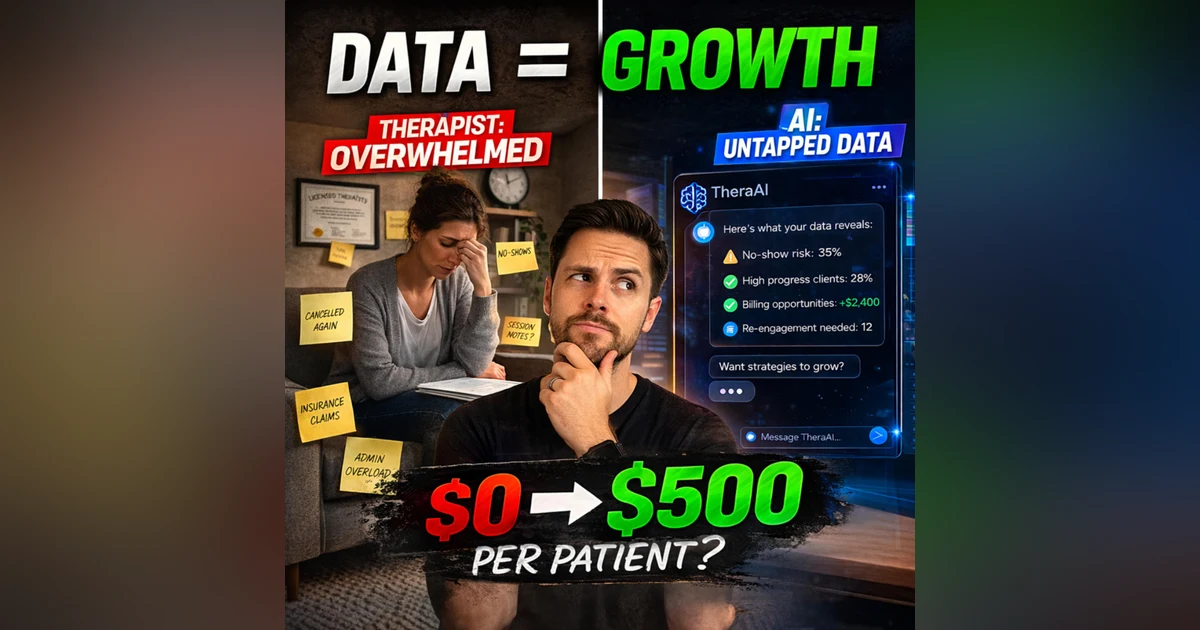
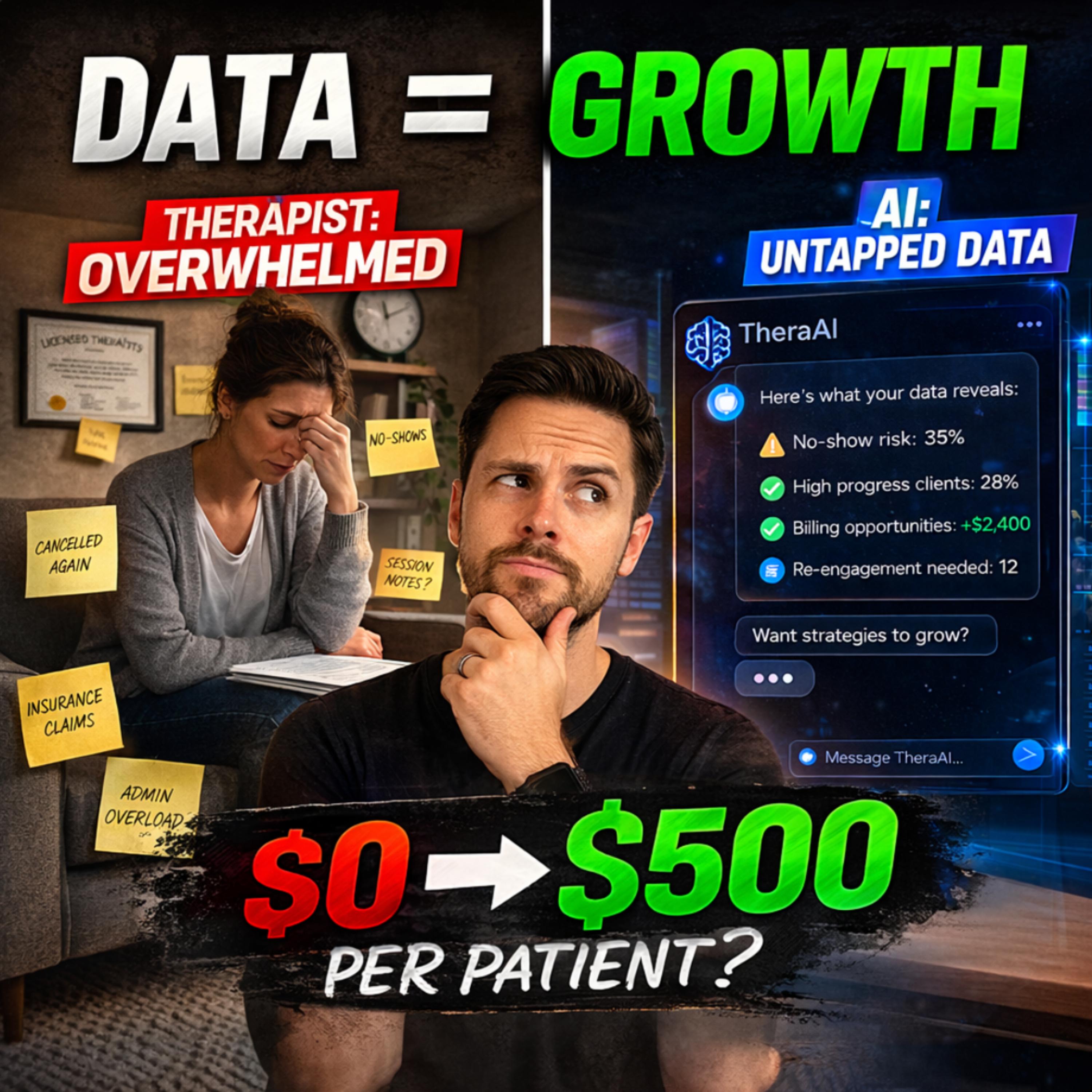


This episode explores how AI, business strategy, and human relationships intersect in physical therapy—and what clinic owners should actually do about it.
Key Insights:
• AI can scale listening and communication—but not human connection
• In-person relationships still drive referrals and business growth
• Other industries (sports, retail) are winning by owning attention and data
• PT clinics are sitting on valuable data but not using it strategically
• Partnerships and distribution matter more than tactics
What This Means for PT Owners:
• Use AI to enhance—not replace—patient communication
• Double down on in-person referral relationships
• Look outside healthcare for business models that work
• Start leveraging your EMR data beyond billing
Guest Links & Resources
Tony Maritato YouTube: https://www.youtube.com/@TotalTherapySolutions
Dave Kittle YouTube: https://www.youtube.com/@TheDaveKittleShow
Sponsors
SaRA Health – helps automate patient engagement and improve outcomes
EMPOWER EMR – faster documentation and better workflows
U.S. Physical Therapy – career growth and clinic support
<p>This episode is part of the <a href="/physical-therapy-business-podcast">Physical Therapy Business Podcast</a>, where physical therapists and clinic owners learn how to get more patients, improve operations, and grow their clinic without relying only on referrals.</p>
<p>Looking for more episodes? Explore the full <a href="/physical-therapy-business-podcast">Physical Therapy Business Podcast</a> for real-world strategies on physical therapy marketing, patient acquisition, and clinic growth.</p>
0:03 Broadcasting way too early from three separate Wi-Fi connections. It's PT Breakfast Club with Tony Meritato, Dave Kittle, and Jimmy McKay. All right. Happy Thursday morning to you guys. Tony Meritato. I believe Dave Kittle's coming in in a minute. I'm back. I missed like two or three, didn't I? Because I was on the road, I think. Yeah, you've been out. A little hot. We'll bring David in a minute. I'll shoot him a link right now. But how are you doing? Awesome. Got a new phone. Hopefully I have a better connection. Camera's very clear.
0:43 Oh, nice. Which is totally great. So I got this like Sony, like really nice one or whatever. And every once in a while, like I have camera problems and I run with chat GPT. Of course, now I'm going to go to a YouTube video. This is happening. What do I do? And then finally, do you know what the solution was? What? Turn everything off and restart your computer. And it worked. It was like, go into this deep setting and da-da-da-da-da, the frame rate. And I'm like, I don't know what I'm doing, but it's right. And then eventually it was like, you know, we should probably just restart the computer. And then, poof, it worked. Dave, I have a question for you. How many Concierge Pain Relief hats do you have? How many different colors?
1:24 I know you have black. I know you have gray. I have those colors. I want to give them â I'm just going to give them away, though. Like, I want to print more of them. Obviously, I'm going to keep a few for myself, but we're â You know, I wanna identify clients that are actually gonna wear it in Manhattan, right? So anyone that, I'm telling my therapist, anyone that already has a hat, tell me, we're gonna drop them off, send it to them, whatever. I don't know, but we're getting it out there. Okay. I do like the CPR idea. That feels, you know, it feels fitting. All right, Tony, what do you want to start off with today? You had dropped some ideas into the chat. You said China AI boyfriend.
2:05 This is when you know you talk about interesting things. When you get a message that just says China AI boyfriend, women replacing boyfriends with AI, AI ultimate wingman. And I'm like, I think I know where this is going, but what are we talking about here? It is already blowing my mind, Dave. I think the people who are shaking their head like Dave just aren't using it in the right way. So let me give you a little context and I'll hit it. We've been trying to sell our commercial real estate for a while now. And when an offer comes in or something comes in, we go to ChatGPT, we brainstorm, my wife, myself, and ChatGPT.
2:50 And what I noticed was... I could have an idea, good or bad, but my wife gets reassurance of my idea when she goes to chat GPT, good or bad. And so this morning, she and I were sitting there, we're having our coffee, we're talking about an offer that came in and I was like, no, this is a horrible offer. Don't stress out. There's no urgency. The buyer wants all of the protection. We're getting the short end of the stick. And of course, ChatGPT was like, Tony has a great point and, you know, he's totally right. And these are things to watch out for. So I was like, holy crap. I was like, if I was twenty and in the club, air quotes club, and you used to have the wingman who would like go out there and find the girl and talk you up and then you'd come in and the girl would be all primed and ready for you.
3:42 And in her mind, you were like the amazing person. I'm like, that is what ChatGPT does. Then I'm driving to drop my kids off this morning and I hear a headline that in China, a big problem is women. There's a business, there's a company that's targeting women specifically. It used to be men, now it's women, where they're saying, look, we can replace men. We can give you a system that will answer all of your questions, listen to all of your complaints, talk to you about anything you want. Basically, and as you interact, it learns what you want. That dopamine, that dopamine, what's it called?
4:24 Slot machine is kicking and it's becoming a problem. You know, we already know birth rates are down. We already know all of these other things, but like, so my thing would be, okay, let's not replace human relationships, but let's bring it AI in as the wingman, whether it's a husband and wife, a guy looking for a woman, a woman looking for a man or anything in between. And I'm like, AI is just this incredible influencer that never gets tired, never gets sick of you complaining. And obviously there are applications to selling your plans of care, to getting patient buy-in, to getting better outcomes in the physical therapy clinic.
5:06 If your relationship sucks, just add AI. What could go wrong? I heard this phrase the other day, which is like, people want one of three things. They want to be hugged, heard, or helped. Nice. So if someone comes to you, it's like, do you just... Because guys, what they'll say is, guys, and I've been guilty of this. Once I realized this a couple years ago, I looked a lot smarter. Which is like, guys are typically like, what do you want me to do? You want me to break the guy's nose? Do you want me to go fix it? Do you want me to go... And the person on the other end, usually a female, is like, no, I just wanted to tell you about it. It's like, oh, you just want to be heard. And it sounds like AI does this, but if we relate this to healthcare and the other one hundred and sixty seven hours a week, what could this provide?
5:49 I think is what we're saying, right? Because I was going to bring up a topic and we can still get to it about sort of luxury and wearables. These things look like they relate, which is they're all pointed at the purse to say AI isn't going to touch healthcare is to say AI is just going to go away tomorrow. So AI, AI cannot do the hugs though. So it can, it can, it can do the hearing. It can do the helping. It can't do the hugs. And also like the hug is like also in this context, like sort of like, it's okay. Like you're not wrong. Like that sort of thing. Yeah. I mean, that's a little more, I don't know if you, I guess you could prime some of these AI bots to do that type of stuff, but I don't know.
6:32 I, I, I didn't know what we're stepping into today with this topic. I don't know where we go from here, to be quite honest. Dave, you're totally right. And this goes back to the human contact, the physical touch is what we can still deliver. But I mean, I'm in the clinic yesterday. I'm working a full day. I've said this a hundred times on social media. I am not the same therapist at four p.m. in the clinic that I was at nine thirty in the morning. I'm just not. I don't have the tolerance. I don't have the capacity to listen and empathize. And I am rolling my eyes and sighing when I see that four-fifteen patient walking in the door.
7:16 And nothing is going to change that. But AI isn't that. So let me be the fleshy part that rubs your back, that touches you and does the things that you want. and let AI be the empathetic listener who never gets tired, who never gets frustrated, who will always crack a joke, who will always listen and respond when you want, shut up when you don't want a response. That's the combination of the two coming together. Yeah. I don't disagree. I don't think this is a great... projection of where society should go.
7:57 Maybe these tools can help, but in terms of some of the relational stuff, I'm not sure. Specifically, either personal relationships, I think it can help where you have some deficiencies or weaknesses, and maybe you learn from that over time, and then you unplug the AI so that you are now a better... partner, spouse, business partner, therapist, whatever. Okay, maybe that would make sense, Tony. I'm trying to meet you where you're at, Tony. I feel like I'm too far away. I agree with you. It's probably the end of society as we know it. I don't know what the future for my kids is going to be like. But regardless of whether it's good or bad for humanity, I do think this is the direction it's going.
8:44 Yeah. And what we know about a lot of things is when things sort of start, you said this is out of China. Yeah. Out of Asia. Yeah. Well, we know is like first we mock it. And then I forget what the next step is and the next step is and then we're doing it right. I mean, a cliche, a stereotype of people of Asian people in eighties movies was they just walked around with cameras on a stick in groups and took pictures of themselves. Oh, that looks a lot like us right now. But we, it was like, it was, it was every eighties cliche in movies. And now it's like, well, and what we see there is people pay a lot about a lot of attention to those markets, to the Eastern markets and what happens there eventually makes its way to our shores.
9:30 So Jimmy, you were somewhere recently. You want to talk about that? I was two somewheres. So last weekend, I went to... You guys know Danny Matei. He's PT Biz. He wrote the book, Fuck Insurance. He's written other books. And he has this group, PT Biz, which essentially is a couple hundred cash pay practices for that are essentially in this coaching program that go from, I have no idea what I'm doing, but this looks cool. And I'm frustrated with the same things too. Now I'm a cash pay practice and I am not only supporting myself, but other people. And he was he's been asking me for years to come to twice a year they get in person most of the time. Ninety nine percent of the time it's sort of remote and a program.
10:13 And they've been asking me, like, come in person. And I'm like, why? And like, I don't have you guys ever hung out with Danny before? You ever talk to him before? Like, no, just I don't know where he grew up, but he's just got the ultimate like West Coast vibe. He's just like. Because they're because you're cool and other people are cool and everybody's cool. And I'm like, so finally, I'm like, OK, I don't know. So people are like, what are you going there for? I'm like, hang out. So essentially, it was two hundred practice owners for two days, like getting together, rubbing elbows, but learning. And I walked into like sort of their group, like going to lurk on the walls. Right. And I was expecting to see these super complex systems. And here we're doing this and this and this. And it was like basic stuff.
10:54 It was more about like the person. It was about business, but it was more about, are you holding yourself accountable? How do you hold your staff accountable? And here in these people, they have name tags. Everybody there has a name tag, but the background color of the name tag corresponds to your business revenue. So you sort of figure out who you're talking to because different sized businesses are in different phases, have different problems. So it's kind of cool. It's almost like if you're in Taekwondo or whatever, if you're like, oh, I'm a white belt. people with like the black belts are looking at you and they're like that's that's i was there like three years ago so it's like cool seeing different versions but then they're also able to spin the conversation and be like so your biggest problem is abc like how'd you know you're like i just told you i was there three years ago these are not random problems so listening to them of course over drinks or pizzas at night is where i was like listening to these conversations and i'm like oh these are people problems these are human problems So it was kind of interesting to listen to that, especially because they're sort of outside the insurance model.
11:54 Like Dave, you would geek out. I mean, I think you would have just like, you would love that. Yeah, they're all cash practices. Yeah, I've never spoken with him. I've seen kind of what they're doing from afar. I've spoken with the other guy, Vees, a little bit over the years, but not too much. So he's like, his first name is spelled, I think it's French. It's like Y-V-E-S. Yeah, Eve. Oh, Eve, Eve. Sorry. Yeah. bad pronunciation. So I talked to him a little bit, but I understand kind of like that. It's kind of like their version of like Paul golf and Greg Todd and Jared Carter and all that. The funny part is I put out a couple of videos, like sort of like a thank you, but also like all the videos were good.
12:37 I asked him three. I asked a bunch of people at happy hour. I like wait until everybody like hits like drink one and a half. And then I'm like, Hey, you want to do a video? And I just asked him three questions. What was something before you started your practice you thought was going to be easy to turn out to be hard? What was something you thought was going to be hard turned out to be easy? And then what's your goal in five years? And none of the answers were the same, which is cool, right? Like, I just assumed they were all going to be the same. But then, of course, once I thought about it, of course not. So it was cool when watching two hundred practice owners like come together for two days and like commiserate over the same things, but also like walk away and they're like, oh, I've been coming to this for I've done seven of these. I've done eleven of these. They've only been around for like eight years. They meet twice a year. It's kind of cool.
13:18 Again, this was left to us eight years ago. I wonder, because I know we're kind of in the circle. We have contacts within this community, these communities. But for the therapist outside looking in, from both of you guys, you know, like Dave said, you've got Paul Goff, you've got Joey Alberton, you've got Danny Matei, you, Greg Todd, like... Yeah, yeah. And I'm not too connected. I know Jordan Mather with Ben, I think. I don't even really know him that well. But yeah, you see their names pop up once you start clicking these things. So like somebody on the outside looking in, I mean, how do they decide like, hey, I want to connect with this community.
14:04 You got David Bailiff. Like, I want to connect with this community. These guys are speaking my language. What do you guys think? If you were going to give somebody advice, somebody who's like, hey, I need a community around me, maybe a mentor. Where do I go? How do they decide? Call all of them and have a conversation with all of them. Because I don't think any of them are going to tell you anything drastically different. Do you know what I mean? So I think it's like, do you want to take economics at this school, this school, or this school? Go test it out. Like... I went to a few PT schools, not necessarily just for interviews, but before that, when I was deciding where to apply. And I remember too, I mean, I won't say what school, but I was like, I don't want to be here. Why?
14:44 I don't know. I just don't, this doesn't taste good. Call all of them if that's your thing. And then test, trust me, they'll all have a discovery call for someone in their program and then just test it out. Yeah, definitely. Definitely a discovery call with all the different coaches and companies out there. But then also what I would do is I would look at who are they highlighting as like their testimonials and success stories. I would DM them or email them directly, get them on a phone call, get them on a Zoom call and then ask them when you join this coaching, this one coach or this coaching company. where were you in revenue and profit and team size? Where were you then when you started? Where are you now? And I would do that.
15:25 It takes time and effort. I would do that for, especially if you're going to pay ten, twenty grand or however much these guys charge. I would be speaking to the success stories or even some of the other people that are in these groups that maybe are not. I want to hear the good and the bad. And a lot of the bad kind of ends up being on the the participant side because maybe they're not putting enough effort in, maybe they're lying to themselves, maybe they're not meant to be in business, maybe they're in a challenging market, maybe they have some self-limiting beliefs, whatever it might be. So I would be reaching out and speaking to other people that are already in their group, the bigger ones, the whales, the ones that are doing really well.
16:06 And then ask them, is this the only coaching that you've done or did you like did you kind of stair step or stepping stone from across a bunch of them and in what order? Right. So then then I can triangulate. Am I the best fit for one of these other programs based off of the other success stories and kind of like where I want to go? Where am I now? Where do I want to go? regardless most pts i mean i think tony and i are a little different with like pre-physical therapy like businesses and entrepreneurship right so a lot of pts are getting into the world and they haven't been smacked in the face yet in business they haven't had a lot of adversity they haven't had side hustles and things that failed and where they got in trouble or things that happened that were before physical therapy school right so they're stepping in a private practice in business and they're like on step zero and they haven't gone into any of this so of course they would need a coach Ben Ben is asking if these guys are so sure of themselves why not a model of no up for money up front they what does JV mean joint venture equity share uh yeah I would say the same thing so if you're a physical therapist take no money up front only get paid when the person gets better Well, let's shout out Joey Albritton.
17:18 Let's shout out Joey Albritton and Robbie because they do, I think, twenty eight days free up front. Now, they're not it's not it's not exchanging equity because these coaches are in the cash flow business, the coaching business. They're not looking to have a whole bunch of like. the disparate practices with equity all over the country. I, Ben, I like that idea. Like, I don't know, maybe, maybe, maybe breakfast club, a private equity fund. All of a sudden we, we got a bunch of, uh, locations all over, but you have, then we would have to vet the therapist. Is it worth our time? All that. So there's, I mean, the thing that, I mean, I'll, I'll say this and I've been friends with Danny for ten years and they sell, they sell community.
18:02 What they do is they create, here's a bunch of people wanting to do the same thing. And here's a bunch of people who were there and are now here. So the other thing is personality. If you don't like Danny's vibe, don't join. if you don't like him a little bit don't join you're gonna get a lot of danny or the other coaches so i would ask who am i gonna be working with and then what's the structure am i going to follow through with this workout do i like the trainer and do i like the workouts uh we're gonna meet every day at five thirty jimmy's out we're gonna do it in the afternoon thumbs up let's do it like so it's structure so i and don't quote me but for danny's and pt biz it was twice a month But then you're given things to do between and then you've got these resources, this sort of app or whatever that you can go into and get resources and things like that.
18:51 If that doesn't work for you, if you need something more or less structured, don't join. You know, Jimmy, you put out that it was a picture of a map of the USA and you had like different colored states and stuff for schools, I think. I saw that and I thought, that is SEO gold. That's the kind of thing that on a website would draw people in, optimize for Google, all that kind of stuff. Creating a list of all of these different programs and then doing a breakdown of whatever information is publicly available. Yeah, yeah. But exactly what you said, like Greg Todd's vibe is completely different than Paul Goff's, different than Ron Miller.
19:34 I don't know if Ron's still doing it, but like everybody's going to have a different vibe. Everybody's going to have a different approach. And if somebody made a centralized resource that listed all of these, yeah, I think that would be such an awesome asset. I've hung out with Greg Todd several times, been on the show a bunch of times. If you don't like his vibe listening on my show, don't join. And Greg would tell you the same thing. He's like, if you don't like a little bit of me, don't pay to get a lot of me. And Greg doesn't... I mean, from what I know about Greg, he doesn't want to work with someone who isn't a good fit because then they're going to go away and be like, oh, Greg, it didn't work with Greg. No, you and Greg didn't work. So I think you get to a point where like, Dave, you probably...
20:17 How do you deal with a patient? Do you fire patients if you're like, this is going to be... We've talked a little bit about this before, like one recently that didn't... But if you know it's not going to be a good fit, do you sort of try to back and paint yourself out of that corner when you're like, this is going to be more worth, more squeeze than juice? Yeah, once in a while we have to, I mean, we're usually firing clients if they are unprofessional, they're cursing, maybe they have some mental health component or some like neuropsychosocial something kind of component. So yeah, once in a while we do, we kind of offload them, we'll refer them elsewhere, we'll give them names, numbers, we'll try to give them a heads up, trying to manage their expectations.
20:59 But yeah, absolutely. I usually agree with Ben, but I would say they're trading their services. I would say, if you don't want it, don't sign up. I think that's too deep. Going in on practice, I wouldn't want to. I'd be like, who are you? No, no, no. I'll take your advice and then I'll blow up. What did that last comment just say? I can't see it on the phone. It says, if these guys are so sure of themselves, why not a model of no money up front? Essentially, just get equity share and only vest upon meeting milestones. I feel like that's too much commitment. Well, I mean, we don't we don't get enough cash. I mean, it takes forever for us to get cash in exchange for our time and effort up front. Right. I understand what Ben's saying, but I had Tony.
21:41 Yeah. Yeah. To two things. Going back to Jimmy's question about patients like Dave, what if you have a patient that doesn't fit the culture, fit the vibe? I think that's where professionalism comes in. I've got patients in my clinic. Not a lot, but we still get them. absolutely do not fit the culture absolutely you know are not the right patients for where we are but as a professional and hopefully this is reality and not just my imagination I can come to that patient visit I can dread it all day long to two fifty nine but at three o'clock professional Tony comes out I go and I deliver the best experience no matter how much I was dreading it up to that minute.
22:28 Now, that's not a patient I'm trying to extend. That's not a patient I'm going to try to keep in the culture and keep in the clinic. If you got a referral for six visits, you're getting six. you know, and then I'm going to move you on and hopefully you find what you need. But that's the difference between a professional coming to do the job versus somebody who's just, I love being a therapist and I just want to do what I want to do. And this is my passion and I'm not going to, you know, do something that doesn't make me feel fulfilled. To Ben's comment, though, about don't pay up front. Let's go into this as a partnership. I do think the reality is most are going to fail, but that's just small business.
23:10 You know, most people aren't going to do what you tell them to do. So I think it's a level of commitment on the consumer side to say, hey, I'm a practice owner. I'm coming in. When we first did it, we paid thirty thousand dollars. No, the first one was was a thousand. Then we went to twelve thousand. Then it went to thirty thousand. And when we originally like twenty years ago did, you know, joined a community like this, learned how to run a business, like got into that world, coaching, mentorship, that kind of stuff. And if we wouldn't have paid at the front, we would not have done it. We would have looked at it and be like, wait, I could have said I should charge more.
23:55 I didn't need to pay thirty thousand dollars for you to tell me to charge more like that's common sense. But if you don't pay, you don't pay attention and you don't value it. So I do think there's a level of commitment that that comes with the price tag and accountability. Sure. I mean, look at what we do for a living. I could have just Googled and said, what do I do? And then I could have done it. Why don't I do it on my own? We don't do it on our own. I don't know. Real quick, Jimmy, was your participation in this, was that part of Gitmo, GTMO? No, this was... So I introduced Danny to my friend Megan Brown years ago.
24:37 And Megan is just a business owner, like ruthless in a good way. And then they became like best friends. And then she's been like, you should come. You'd fit in right here. And I go, but what? I don't run a practice. And she was like, just come, just come, just come. And the fun part was I would watch these super confident and skilled business owners with different name tags, right? Who've been doing it, are growing. And... The internal and external communications are where they struggled because they did this thing like this quiz online and we're at a table sharing our results. And I'm like, how is communication weak on everybody? And they're like, I don't know. And Megan's like, because they don't do it. The muscle's weak because they don't do it. I'm like, oh, so my job now is to figure out like, well, how do I help you a little bit, a lot?
25:19 You need me to do it for you or teach you like which one? I don't want to be a full-time employee at any of these places, but do I have something? So I've got some follow-ups with a few of them. They're like, just do it for me. And I'm like, all right, cool. But they understand they don't want to do it. But if it's done right, it leads to more money for them. I think I'm jaded by the scale of what some of these businesses actually bring in. I don't think I understood the size of them. I don't think I did. Of the cash practices? What, you thought it was just going to be, like, a poverty conference or something? Not poverty, but, like, I didn't... I mean, come on. We're out here making real money, Jimmy. We're supporting families. No, no, no. No, because eight years ago, I think, like, it was blasphemous, like, to take a dot, like, to take touch paper money.
26:05 What are you talking about? Everything's that, right? But, like, to watch some of them, like... uh it was number of employees right like that was the thing where i was like oh huh like to me i was like i didn't understand it or i didn't understand what they were good or bad at i just figured they were good at everything i was like well you don't need anything you're good at this if you can if you can convince someone to pay cash, even if you have insurance, what else? What are you bad at? You're good at everything. You can communicate, you can sell, you can treat. That's it. You can get attention, have the conversation to communicate value, deliver the value, repeat. There's the circle. So I was like, what do you guys need me for?
26:46 You're doing it. And they're like, well, we're better and worse at some of those things. Yeah, I mean, some of us don't want to, like, I don't like doing, like, payroll and a lot of admin. Do you pay? No, I do it right now, right? So social media, like I said last week to someone else, like, I want to offload social media. And they're like, oh, well, you can do Claude. And there's all these apps. And I'm like, I know there's... I notice all the scheduling stuff and all that, but I don't want to be clicking publish. I want posts to just go up. And then I look at my phone, I'm like, oh, another post. Oh, another post, like three a day, five a day, whatever. So Andrea and I don't know if you've listened, Dave.
27:27 I know Tony jumps in every once in a while. Andrea is like a fractional VP of marketing. She's a friend of mine. We work together at a couple of projects. we came up with a ninety day content plan like what would i do if i walked into a practice tomorrow i'm like i would do these and i i just stole it i'm i did a mash-up of what gary vee and alex hormozy would say not even an ai i just literally sat there i was like if gary v and hormozy were sitting across from a table with the practice owner i was like here's the ten here's what i would do And we laid that program out. I now understand that Dave understands that there are great lawnmowers. He doesn't want to even look at the lawnmower. He wants to drive by his own lawn and watch it mowed, right?
28:08 No, I want my â yes, I want the result. I want my lawn mowed. I want it done. Right. Everybody's out there going, but Dave, there's Claude and there's publishing. And you're like, I don't want to own a lawnmower, but I need the lawnmower. I'm on to other things. I have a hard time understanding that because this is fun to me and I like it. So I assume everybody else likes it. So I need to listen to my own advice, which is like, people don't pay to have their lawnmowed. They pay so they don't have to mow their lawn. They can do it. They're like, I don't want to do it. I actually heard a great guy, forget who it was, one of those guys on Instagram who's great at framing things. And he goes, don't sell lawn mowed. Sell, do you want to have the best looking lawn in the neighborhood and do nothing for it?
28:52 And then he goes, sell the future. You thinking about selling your house in a couple of years? And he's like, yeah. And he's like, great. I'm going to over the next couple of years, I'm going to do landscaping, which is maintenance. And we're going to do hardscaping, which is changing what this looks like. So he plays everybody within the neighborhood. He's like, well, I saw that guy up the street. He's got a great one. So I could come in and be like, it's going to be the ego and status of keeping up with the Joneses. So what this guy did was smart. He goes, instead of saying, hey, for fifty grand, me and my team will come in for two weeks and do everything and you'll get a waterfall and the lights and the trees. He goes, let's do this. Let's start off at a thousand dollars a month.
29:32 We'll maintain and then we'll slowly. And he goes, in three years, if you want to sell, you'll have a lawn better than that, guys. But it's not fifty grand right now. It's fifteen hundred dollars a month times three years. And I was like, oh, that's smarter. Sell the change again. Love it. I have a segue since we're talking about home services. So the other day I met in person with this guy named Ismael. I don't know if you guys saw the social media posts, but the tub cut. So basically they will take they will take your existing tubs. And if you are having balance issues, maybe you're sixty, seventy, eighty, ninety years old and you want to convert now eventually like stepping into a tub to you can't get a bath because your balance issues, you had a stroke, Parkinson's, whatever it might be.
30:18 your father right now, right? So if you guys had only one tub where he was bathing and you're like, I want to convert it to a shower for him, it's going to cost you twenty, thirty grand, forty grand, fifty grand, depending on where. It's more plumbing. You got to have the water turned off. That's one option. There's another option called Tub Cut. This guy, Ismael, is like a franchise owner of the New York City metro area. I met him in person. I got a referral by one of my staff physical therapists. they have the same exact ideal client as we do and we don't overlap with services so that's why we met up to try to do referrals but His service will all in one day, it's incredible, all in one day, cut your tub, put custom molding inside of it, have some type of, I can't, I try to remember all the jargon, some type of a compound or something that like makes it almost seamless.
31:07 Like you can't even really see or feel where the cut was. Now your father, Jimmy, only has to step up three inches instead of over the tub, which is what, like, like a big step. stepping into the tub, just up three inches and in to take a shower and then step out of it, whether you have a shower chair inside the tub or not. So it's decreasing falls in the shower. There's some stat that Ismael said, I think like one person in the U.S. dies per day from falling in the shower. And there's other stats like it. And so then, Jimmy, let's say you guys move, whatever, you want to put it back.
31:50 They do the reversal. They'll put the cut back in the tub. They'll put it back in. They'll make it all buffed and everything. And it's as if it was never cut out. in the first place. It's, it's incredible. He shows up in person. We met at Starbucks. We met, we met in person. He shows up with like a tote bag with like marketing materials and brochures. And I'm like, I'm sorry. I only have my business cards. Like you, you, you, you are, you are a true. I brought you this hat. Here we go. I wore it for you. I got it warm. So since we were talking about landscaping and home services, I have to mention that segue. But they're the same thing because I don't want, I need it done. I don't want to do done, not do.
32:34 Correct. And it's like, if you hire the, it's like two grand as opposed to twenty, thirty grand to go from to rip a whole tub out and to make it a shower, like a walk in shower, like literally like tile to tile, like some of the hotels where there's no step up at all. That's going to be twenty, thirty grand, forty grand, depending on size and where you're at in the plumbing. If you're in New York City, the paperwork is going to take a lot longer for that with insurance and everything. So instead, this company uh this guy ismail is like the franchise owner of the new york city area and they get they have to buy all their own custom materials from the hq like the main tub cut company which obviously that's part of like the whole franchise you know set up and everything And now he is what I am, which is he's got a guy that does all the cuts and the reversals and he's out there drumming up business, business development.
33:25 And so he and I were at the Starbucks, we're talking and I'm like, we're literally like the same. Like I am not really treating patients anymore. And I'm trying to be doing this. I'm trying to refer patients and clients and, and build partnerships and all that. So that's exactly like, we're in the same boat. And I even pitched him, I go, and maybe you guys, you guys would have come up with this, but. he'll have like an itemized receipt for someone when he sends them a proposal of like the cost and i'm like trying to whisper i'm like so If you wanted, you could put on in the itemized bill, like, and this also comes with an eighty percent off concierge pain relief consult. And then it's lead gen for us because we're going to charge them even if we charge them some nominal fee or it was just included in the proposal.
34:10 Now we're getting lead. We're getting lead gen by someone that obviously has stepping issues, balance issues, safety issues, all that. And so maybe they already have an existing Medicare covered physical therapist. And that certainly could be the case. Maybe they don't. Or even if they do, hey, let's have one of ours go in there. Now they can compare. Then you go from there and the consumer can choose which is best for them. Yeah, that's like when you move and you change your address, like the U.S. Postal Service is great at a couple of things. Mail is sometimes one of them. But the other is when you move in the next month, you get like storage facilities and lawn care and everything you'd need to like, you know, direct TV and sighting and insurance like that.
34:54 It just sounds like they just sold you a thing. Do you know how to use it? Do you know how to use it safe? Why are you getting this? You're getting this for a reason. Got it. You'll also need, this is one degree away from Kevin Bacon, where Kevin Bacon is your tub now, your new tub now. How is this guy getting his clients? What's his main intake? I love the question. He said that the HQ is spending like forty, fifty grand a month. And if it's in the location like like the HQ must have like their own website and then he has like his own tub cut. I forget what it is like tub cut and why dot com or whatever, something like that.
35:34 So there's like the local websites that are for like the franchise owners, but the HQ website will funnel them leads based off of those locations. And obviously he's doing his own marketing, which is like the business development that he's doing with me. Right. I mean- So when does he bring you out to one of the sites and the two of you guys do a video together where you're talking about from a PT perspective, you know, the benefits and all this kind of stuff. Yeah. I mean, I'm sure he's got it in his house, if not a client's house and you go out there and you, I mean, this is like pure video content. And is there, are there some upsells?
36:14 So like, Hey, do you know where to put grab bars? Cause I could tell you where to put grab bars. And he does grab bars. And I could tell you what type of mat to use outside the tub and inside the tub. And I could tell you a shower chair you might actually need to have on hand. There was a husband and wife. I should find them again. He's a general contractor and she was a PT. So that's what they did. You're like, mom needs unsafe in the bathroom. Wife would walk in and be like this, this, this. She'd put tape everywhere. And the husband knew exactly what all these little bits of tape meant. Next thing you know, you walk in one day. All these tub things are always one day. Want to know why? because when i a guy who owns a hammer and two screwdrivers here's bathroom renovation i think a month you tell me one day i go where do i swipe one day no dust one day no dust don't worry about it we got it take and oh by the way you want i'll sell you a mattress we'll get rid of your old mattress for free because that's the next problem you're like especially if you live in new york i don't have a car where are we gonna put that Solve all my problems.
37:21 Show me you understand my problems. Show me you can solve them. I'll throw money at you. Yeah. Go ahead, Tony. No, no, go ahead. I was just going to say this is what I did the other day on, was it Tuesday or yesterday, Wednesday? No, Tuesday. It was Tuesday. I did two things the whole day for the business in terms of like, so one was meeting with him in person. Another was meeting in person for lunch with one of the main, like the sales manager of a self-pay home agents, like a home nursing agency. And she refers to us and we refer to them. Right. And I want to just, I want to just nicely nudge Tony.
38:03 not that I'm pushing your face on you, but I'm just saying like this, like this is going to be for millennia. There's nothing that's going to change the ability for me to connect with a new business owner like this guy, Ismael. I had no idea that this service even existed. We talked over the phone. We texted a bunch. We emailed a bunch. And all that was great. And then it's like we met in person. And now it's like the click is the close, like the approximation to potential referrals and partnerships back and forth where we're referring to people. is now accelerated after meeting in person. And I'm joking, Tony, because of the whole AI thing and artificial intelligence and all that. And the same thing with Trish from Eldercare.
38:45 She referred to me in the past. I'm going to try to refer to them. But then it's like we meet in person. We met at this Greek restaurant. I paid. I said, it's going to be on me. And now we talked â we communicated and talked about so many things in between of like, hey, what a â what are your nurses like? What, what are your, what is your team like in terms of like communication? And can I, Trish, can I refer, can I send your number? Can I give your number out? Or like, we talked about like some of the nuances of referrals and partnerships and all that. And it's like none, like, yes, you could do some of this over zoom video calls, but it's like the, the, the confirmation or like the, the, the final click of building a relationship is still in person and And I don't know if that's ever going to change.
39:31 I mean, you can only do so much over video calls and forget it in terms of behind a chat GPT. Hopefully it doesn't. I really, I swear, like hopefully I do. I would even go as far as to say, like, I think there's genuine, my voice is different through a microphone than it is in person, right? My skin, I look different in person than I do on video. The way somebody smells, like the chemicals, the pheromones, like all of that kind of stuff. I mean, we are humans, animals, We make these connections, body language, all of it. You can't replace that.
40:13 Yeah, you can't replace that. So I totally, totally get it and agree. I'm saying right now, April second, twenty twenty six, the in-person of anything. will never change. I don't care how many ChatGPT version number, a hundred and seventeen, I don't care. It's Claude, ChatGPT, Gemini, all these companies are gonna create, you know, Facebook comes out with Facebook, AI, Gemini, Claude, Meta, whatever. It'll never change. yes you're different in person tony i'm sure i'm the i'm the same way it's like the full effect the body language does the person care about being there are they looking to put their best foot forward to build a service-based business in person this will never change in person i think ai will change like like it will change and it will alter like meeting Like a second ago, Tony gave me a night.
41:17 No, no, no. What I mean is like, maybe you would never would have found that guy, but now that that thing led to that, that's what I mean. Like it'll change. But I, but I found, but I found him through my staff therapist, Andrew, who said at, he's like at my previous company, we, the social worker had this guy's name, tub cut, whatever. And he, he referred to me and then he like let me met in person so but you know what tony and i are going to tell you to do now is go to chat gpt and explain that situation and go give me three other people that i would have never thought of that i should connect with like tub cut there's no way you're going to sit down and i agree i love that to use chat gpt or ai to then prompt how can i nicely exploit this who am i who am i overlooking what other what other whatever whatever what are my blind spots?
42:02 But then it will still come back to in-person to make the legitimate connection and partnerships and referrals. That's, that's my whole point. That's what I mean. Until we're plugged in like the matrix and we're batteries. Yeah, I think, I think you're right. And then we'll try to unplug. Right. Um, so then I went to, I went to prompts headquarters yesterday. That's why I was missing on Tuesday, Tuesday. I was there Tuesday, Thursday. Yeah. I was there on Tuesday. Um, Their office is a cliche in all the best ways. It's exactly what you think of a tech company. There's beanbag chairs, a putting green. They've got a hyperized station with vibrating couches.
42:44 But again, a majority of their team doesn't work there because they're all over the country, remote and stuff like that. So I did some episodes there that will come out and I think some things will come out of there as well. So that was kind of cool to see. where the technology is. Although it's just a bunch of people with monitors, guys. Like there's no giant mainframe computer or anything like that. Everything's sort of in the cloud. So that was sort of fun. We were teasing. Dave, we teased something and we said, let's wait for Jimmy to get back. But I can't, I'm trying to remember what we were talking about. We'll have to go through a transcript from Tuesday.
43:24 Yeah. Tony, I'm coming to Ohio in like a week. Yeah, so when are you actually here? I'm flying in. This is great. I have to tell you a story. Flying to Danny's, I got to make fun of myself or else I'm not being honest. So the problem with Google Flight is when you say, when I put in Newark and maybe I have a setting wrong, it will also, unless I'm paying attention, will also give me flights from LaGuardia. So I booked the flight. I'm standing at Newark and the guy at the desk goes, you have a flight out of LaGuardia. And I'm like, ah. Oh, no, bro. Flying to Charleston. So I was just like, when's your next flight and how much money? And the guy's like thirty eight dollars. I'm like, well, the tolls to get me to LaGuardia would be thirty eight dollars.
44:08 So and parking. So I have to make fun of myself that I literally was at the wrong airport, which delayed me a day. But I go. So. So APTA turned one hundred a couple of years ago and now all the APTA state chapters are turning seventy five. So obviously APTA was formed. And then twenty five years later, they were like, hey, every state should have a whatever. So they're all having these celebrations. So I'm going out there. I'll be in Ohio a week. So Thursday through Sunday is when I'll be doing it. And they have like a one day conference and then a party. So I've got to bring pants and a tie or something for the party. But like is what are the dates like the numbers on the calendar? Nine through twelve. OK.
44:48 okay because i think this weekend's easter right this weekend's easter yeah yeah so okay so it's the next basically next week yeah yeah i'll come up i'll we'll connect in columbus north of columbus so cool i'll drag you out to that party i because i think again i said this yesterday and i said here plus one yeah yeah i'll get you um APTA state chapters and academies, their biggest resource, their biggest asset Are there members? There are companies. Companies are also like, I think both sides don't understand that the other side doesn't understand.
45:32 Like when I talk and I talked to a couple of software companies and tech companies last couple of days and they're like, yeah, like the APTA conference, like when we go there and we like exhibit, it's not a great ROI. I go, yeah, yeah, yeah, yeah. I agree. What about the other three hundred and sixty four days? Because like two percent of their audience is going to actually be in person at that thing. And they might not be the decision makers of the practice. But APTA, state chapters and academies, their staff turns over every couple of years and they've got other stuff to do. And communication isn't the first thing they think of. I'm like, imagine you sponsored all their communications for a year. What the chapter would charge you for that is not a lot. But you land one or two clients in a year, pays for itself ten X.
46:14 I don't know. Yeah, makes sense. Maybe I'm wrong. And then, what am I doing? I don't even know where I'm going after that. I know we're getting close to the top of the show. Did you guys, and I hadn't realized this, dig sporting goods? kind of something about them what they do shifting topics a little bit so i shared i think it was a video a short video um dicks like dicks came on the scene years ago kind of wiped everybody else out of the sporting goods uh sector there used to be sports authority there were a couple other big players in the space gotta go to mose gotta go and i was like I was like, who is paying full retail for sporting gear when you can go to play it against sports, when you get hand-me-downs from nieces and nephews?
47:08 But I read a stat that said Dix basically expects to generate five hundred dollars per kid every season. and dix uh their app is like one of the top apps on the app store um i know we use game changer which i think is owned by dix they bought game changer i think years ago and it just it so it blows my mind but i go back to the video that i shared talked about they had had a program where they were given like prizes. And I think there might have been cash prizes to incentivize you to walk more, run more, do all these things.
47:49 And it just brings me back to, you know, there are so many opportunities and tools and resources to incentivize our clients, these are our ideal clients to like, hey, increase your range of motion if you just had a knee replacement and here's the dopamine machine that's going to help you do it. Go take more steps if you're trying to, you know, increase your functional capacity and here's the dopamine and the reward system to help you do it. I just, I don't see any of us across the profession utilizing these proven strategies, right? Yep, gamification. Or how about just build a relationship?
48:31 And I know this is, I won't say who, but this has been discussed at the highest level of APTA. It's like, why aren't we in partnership with Amazon or Dick's Sporting Goods or any of those things? And the answer is, it takes someone to do it, right? Simple, not easy. And most likely, we're coming into it more of an ask than a give at first. So we're not in the position of power, which is, so how do we bring a bunch of value first? We got to figure that out. Do you think, and this is in Dave's wheelhouse, So once I saw that, I started doing more research and I was like, what kind of market share does ATI have, you know, based on public records before they went private?
49:17 What about U.S. physical therapy? What about Athletico? How many clinics do they have? What kind of market share? What's going on across the U.S.? My numbers showed forty to forty five thousand private practices across the U.S. None of the big players, the corporates really have more than ten percent of the market share. It's an incredibly segmented, fragmented, I don't know the word. Yeah. And so is that still part of the problem that there's no big player who can come in and be like, yeah, we're going to sign a deal with MLB. We're going to sign a deal with NFL. We're going to have our branding in front of millions of people.
50:00 And as a result, you know, we sit here in anonymity and nobody knows who we are and we're just a commoditized service. And what are your thoughts on some of that, Dave? Well, ATI used to advertise at Citizen Bank Park in Philadelphia on the left field wall. So like locally or regionally, a lot of these players have advertised or try to be advertising on a larger stage, if that makes sense. But national, yeah. I mean, it hasn't really happened other than Um, maybe like in also in South Philadelphia, the, the Novocare complex where the Eagles practice outside, like across the street from the stadium, that's been called the Novocare complex forever.
50:44 And ever like on the news, you know, Oh, the Eagles started practice at the Novocare complex. I mean, that's been, I don't know, at least But again, when you hear that on the news, that's like local Philadelphia news only. It's not like it's not necessarily on ESPN, like with the name and lights. Yeah. And Dix is that level because it would be hard for Dix to do something like that regionally, like just roll it out. I thought you were going to go in this direction too. Dick's also bought a movie studio. Did we talk about this? Oh, yeah, yeah, yeah. Let's talk about that. He bought a movie studio.
51:24 And someone's like, okay, but why? And I'm like, guys, guys, they bought a movie studio because they know if they went to the next Matt Damon movie that's going to be about a sport and they wanted a cameo, it would be a lot. And they're at the whim of whatever Matt Damon writes into the movie. Or... you make a movie about a kid's baseball team. Who's from some impoverished area who wants to go to the little league world series. And they get there. And the night before the little league world series, all their equipment gets stolen. And then the Dick's truck shows up to the rescue. Now you own the movie. So like, again, I'll say content is King.
52:06 If that's true, distribution is the pope. So now if you're a studio and you're pumping out stuff, because what do all these platforms, like Amazon became a movie studio immediately after they realized, well, if we're competing against all these movie companies and we're putting their movies on here, all they have to do is stop allowing their movies on our platform. But then they're like, well, then we're going to drop blockbusters too. So you want to be here. So to flip this, it's like if you... Well, first of all, PT is a bunch of... It's a profession, not a company. So us getting in a relationship with dicks is impossible unless regionally. APTA is not mandatory. But I bet you they, I mean, I know that they're trying to like, where is the target of the world?
52:50 Like, it'd be fun to go on AI and just say, if you're APTA, who are the, let's give me your top one hundred companies that don't make any sense for us to have a formal relationship and then find a line to draw between those two. And you'll find a couple of gems like target. But like the minute clinic was a brilliant idea. Right. Like who didn't sit down and put their arm in that blood pressure cuff, right? You're just like, I don't know, it's here. Push the button. I've tried to buy those for my clinic and I can never find them. I don't know how to get them. Like I looked at buying them off eBay. What? You make one now. It's a box with a blood pressure cuff and a button. Like, you know, like a cool engineer could knock one of those out in an afternoon.
53:33 Yeah. Dave, were you going to say something? I was just going to say that I looked up that Dick's also acquired Foot Locker just last year, twenty twenty five. And they hit they. Yep. And they also so they acquire Game Changer in twenty sixteen, which is I feel like a long time ago. I've used Game Changer with a bunch of different New York City summer teams. And the thing with Game Changer is like with Dick's buying it, Dick's is still. a brick and mortar company, but by getting Game Changer, you're a little bit of like, whatever, like tech enabled kind of company or using some technology, but you're getting like the mind share or the wallet share of those parents and those users out there, right?
54:16 So like for Game Changer, I had to log in and make an account in order for me to see my stats. I'm like, oh, that's kind of gangster, but it's smart. It makes me create an account and log in so that I have to see what's my batting average, where am I in terms of my other teammates, also to see the live. Like a coach, like last summer when I was playing for a team, the coach is coaching our team, and he's got his phone out the entire time plugged into a charger, Cause it's draining his battery, but he's up. He's literally like the, the box score used to be on the piece of paper. Now it's on, now it's on game changer.
54:57 I mean, we have the piece of paper one, two for the dugout, but he's doing it. And then guys that are not there, but are on the team, they can follow along or they can see their stats later of real time updates of the game. And this is like twenty, thirty, forty, you know, forty year old guys. This is also for all the younger teams, the seven you, eight you, ten you, all these AAU teams and travel teams. So genius acquisition by Dick's to acquire this and be able to pump whatever they put in front of the other users and the parents and whether it's offers and, you know, links and all that type of stuff to products that you're going to use for these sports. Are you familiar with Live Barn? Do you guys know what Live Barn is?
55:39 No, never. Essentially is like, I mean, I only know about it because I play old man hockey and there's just two webcams in the in the rink and you pay a subscription. You can watch the game. Now, I don't know who's watching. No one's watching. Forty two year old dudes play hockey on a Tuesday. But, you know, who wants to watch twelve year olds play as their parents and their grandparents? So this was a big I don't know who GTCR is. But they're looking at a deal, live bar and sale valued at roughly four hundred million dollars. They're a webcam company, essentially. But they have relationships, right, where they say we're in everything. I mean, I helped out with the local my high school swim championship or whatever.
56:22 And they had a former ref, a former swim umpire or whatever, you know, official. He was doing like play by play. Somebody went there like a third, like a local videographer got paid by whatever swimming championship because like we do swimming. So it was like the ESPN of swimming, except neither of them were full-time employees. Almost like you took the ESPN of swimming and Uber and you smacked them together. Like we need someone who can read these scripts, who can comment on what just happened. And we need someone to hold the camera to do it. And then we'll handle distribution because there were three hundred high school swimmers there that have and I'm not a mathematician. Six hundred grandparents respect.
57:02 I know some of them I've passed on, but like an aunts and uncles and yada, yada, yada and parents who couldn't be there. And for ten dollars, whatever that math maths to pay that guy two hundred bucks to do whatever for two hours. So like, yes, whenever you have tons of attention, I didn't realize Foot Locker and Champs were owned by the same company. I just looked that up. So they bought Foot Locker, but that also goes with Champs too. So you're buying, like, where's your competition now? You just bought them. Where's your competition? Go on. Yeah, it's Walmart. And that's not your ideal client. Let's think about parting shots. Mine will be Dave.
57:43 I was the game changer guy for all of my kids' little league. And now they're in high school. They're playing freshman high school baseball. They're JV. And even that is on game changer. And so you think about like... Now Dix effectively knows what sports the kids play. Are they even good? You could put up the spray chart and you can see, like, are they striking out? Are they hitting it where? What's going on? I could totally see this down the road being an opportunity for agents. Like, look, we've been tracking this kid since sixth grade. We know everything about him. He's an ideal prospect for college, for AAA, whatever.
58:27 There's just so much there. But we also have that information in our EMRs. Our EMRs are a goldmine of information that could benefit the patient in so many different ways. But nobody is accessing that information for anything other than sending reports to the insurance company and sending claims. Yep. And we won't until someone does, and then everybody will. That's how it works. No one does. That's my parting. Until someone does, then everybody will. Dave, what do you got? Parting shot. Parting shot. I'll go back to the tub cut and the in-person relationship building. Yes, Jimmy, using AI to leverage and set up those appointments and those relationships, or even using it in between to...
59:15 help nurture those relationships, but nothing will take place of in-person relationships for things like business development, service-based businesses, relationship management, relationship marketing. Yes, you can have a CRM and track contacts on how many times somebody clicked on our website and what form they filled out and all that. But for us, it will still loop back to the in-person, whether it's the in-person meetings for referrals and relationships or the in-person fulfillment and service delivery. Agreed. Yeah, let humans do human things. Empower the human to do the human things. Let the other stuff do the other stuff. Oh, I forgot. I'm also going to APT's Hill Day. I have a few sneaky ideas around Hill Day as well. That's where everybody goes and advocates, which should be boring.
59:58 But as Chris Corner from the Corner Office talks about, sometimes the best opportunities come in the most boring situations. So we'll talk about that as well when we come back on Tuesday. And then Tony, we got to figure out what we're doing in Ohio. We got to work on that. Yeah, we'll connect. All right. See you guys. That's it. We're out. Boys, what the hell are you doing? Follow Tony Maritano on YouTube at Total Therapy Solution. Find Dave Kittle at conciergepainrelief.com and on YouTube at The Dave Kittle Show. And follow Jimmy McKay at PT Podcast on YouTube, the socials, and wherever you binge podcasts you pretend are for CEU. And hey, just a reminder, none of this was for advice. This was for entertainment only.
1:00:39 Our lawyers say that counts. Thanks, Keith.