Why PT Burnout Is About Ownership, Not Volume


This episode dives into what it actually takes to build a modern physical therapy business — starting with almost nothing and scaling through smart decisions, not big budgets.
Nathan LeMaster shares how he launched a clinic during the pandemic with less than $4,000 and grew it into a multi-state company by focusing on culture, ownership, and patient experience.
Key Insights:
• You don’t need big capital to start — you need sweat equity and relationships
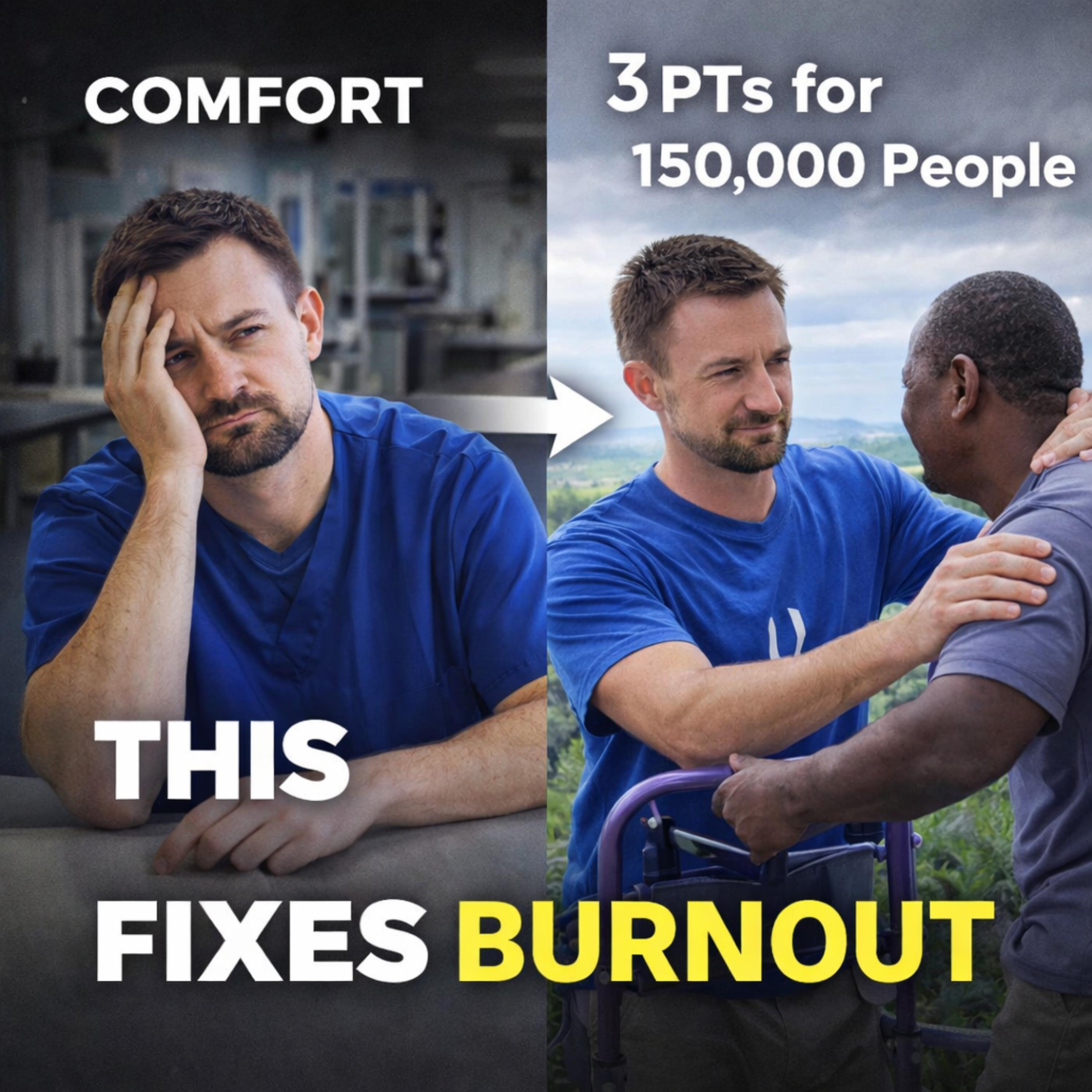
• Burnout in PT is often caused by lack of ownership, not patient volume
• Hiring for passion creates niche growth (runners, wrestlers, women’s health)
• Early-stage clinics should prioritize community presence over social media polish
• Cash-based care raises expectations — and improves outcomes
• Different populations (like pediatrics) may require hybrid models
What This Means for PT Owners:
If your clinic feels stuck, the issue may not be marketing or volume — it may be structure. Ownership, autonomy, and clear positioning create better clinicians and better businesses.
Guest Links:
Website: theempoweru.com
Instagram: @EmpowerU_SD
Sponsors:
SaRA Health — Remote patient engagement that drives revenue
EMPOWER EMR — Documentation built for PT workflows
U.S. Physical Therapy — Growth without losing clinic identity
Subscribe & Follow:
Apple Podcasts
https://podcasts.apple.com/us/podcast/pt-pintcast-physical-therapy/id1000443325
Spotify
https://open.spotify.com/show/3LmMUT64yrUc2iGo9Emafc
YouTube
https://www.youtube.com/@PTPintcast
https://www.linkedin.com/in/jimmy-mckay-pt-dpt-a4207659/
https://www.instagram.com/ptpintcast
<p>This episode is part of the <a href="/physical-therapy-business-podcast">Physical Therapy Business Podcast</a>, where physical therapists and clinic owners learn how to get more patients, improve operations, and grow their clinic without relying only on referrals.</p>
<p>Looking for more episodes? Explore the full <a href="/physical-therapy-business-podcast">Physical Therapy Business Podcast</a> for real-world strategies on physical therapy marketing, patient acquisition, and clinic growth.</p>
0:02 All right, first things first, we got to pay for things. If you run a physical therapy clinic, you already know the front desk can get overwhelmed fast. Missed calls, scheduling changes, patient questions, and it doesn't stop. And that's a good thing unless you can't handle those things. That's where Sarah Health comes in. Sarah helps PT clinics automate patient communication, things like appointment reminders, follow-ups, common patient questions, so your staff can focus on people instead of phones. Less administrative chaos, better patient experience, and get paid for that communication between office visits.
0:45 Check them out at sarahhealth.com, that's S-A-R-A health.com, to see how clinics are simplifying their operations. Today's guest, well, the traditional path in physical therapy used to be pretty predictable. Graduate, find a job, climb that ladder, maybe become a clinic director one day. But over the last, I don't know, five to ten years, something interesting is starting to happen in this profession. More PTs are asking a different question. What if I built something instead? Now, not twenty years into a career, but right now, the old advice was wait, wait, wait, then do it. Now it's why not now?
1:25 And today's guest didn't follow that safe path. During the pandemic, after losing his job, he started a PT business with less than four thousand dollars in the bank. I love stories like this. The first clinic he built wasn't a clinic. It was a basement. We'll get into that. Then a hot yoga studio, then a space inside a local gyms. Fast forward a few years and that small experiment has turned into a multistate performance therapy company, a pediatric care brand, a clinical education platform. and a growing team of clinicians building practices inside the model. Today, we're talking about cash-based PT, why more clinicians are starting businesses earlier, and why ownership might be the missing ingredient behind burnout.
2:12 Let's welcome today's guest, Nathan Lemaster. Nathan, welcome to the show. Hey, I appreciate you having me on, Jimmy. A little hype intro there, but I like being that. That's sort of the point of the show, which is like sort of the hype machine. So take us back during the moment, as I mentioned in the intro, during the pandemic, when the world, I mean, it feels both five minutes ago and thirty five years ago. But when everything changed, you lose your job. You're looking at less than five grand in the bank and you decide to push all the chips in the middle, go all in, start a clinic in your basement. What was going through your mind? Oh man, there's a, there's a lot going through my mind.
2:54 I mean, uh, at my home, uh, I was kind of the breadwinner being a physical therapist. My wife, she owns her own photography practice as well. So it was something that during COVID, not a lot of people wanted photos done. Sure. And I thought, you know, this is as stable as it gets. And then all of a sudden COVID hits and then we start to see people being furloughed and then only, um, post-op clients are able to come in and different things from there. Where myself, I'm very passionate about like direct access clients. So it was May twenty eight kind of preface the situation. I just had my second child two months prior to that. So Liam was born at that point. And so as people are thinking, like, how's this guy have less than five grand in his account?
3:35 Well, you know, we had a unexpected C-section. And so with that, we have medical bills coming in and we're like, hey, you know what? You pay them all up front. You get a little bit of a discount on that. I think this is going to be better later on. So I ended up doing that. And then sure enough, May twenty eighth ended up being let go from my job. And the fun part about being let go from your job is if you lose it at the end of the month, as of the thirty first of that month, I actually lost our family's health insurance as well. And so we were we were in a pretty tough spot. And so I would definitely say that was the time that was for sure the scariest moment of my life and definitely made everything a lot more vivid and you still feel some of those things moving forward. But it honestly kind of helps you figure out your why in the process when looking to build your practice and what you wanted to do.
4:20 Wow. So the perfect storm, the imperfect storm. It wasn't just one thing. And it wasn't like it also wasn't just happening to you. It's not like you can reach out when everybody else is going through a pandemic. Everybody's looking at each other going, yeah, me too. I'm losing this or I'm stuck or I don't know what's going to be on. There's uncertainty everywhere. But you're the one who's being looked at, right? And then you lose one, two, three things and you've got to figure some things out. So what was your next step? What was the thought process? Is it like, listen, Shawshank Redemption, we either get busy living or get busy dying.
5:01 No one's coming to help. You decided to build something instead of sort of wallow, it looks like. Yeah, and it was one of those things that if a lot of students that come out of school, right, it's always student loan debt and crippling student debt. And at this point, I was five years into the ten years of student loan forgiveness. So I was kind of like pinpoint in the middle. I was just like, all right, so do I go work for another nonprofit here that's not out? Exactly. and so that was kind of like one of the scariest moments of it but with my wife being an entrepreneur and her family being an entrepreneur honestly they kind of pressed me on that it's like hey you need to consider this so at that that point i actually had read uh the book insurance from danny mata and i'm sure people have talked to i mean he's Brilliant the way that he does things.
5:44 And I have read that probably about seven, eight times. Put a little bit of a Midwestern spin on it. And I was like, you know what? I think that I can do this. So we actually took a small sabbatical from Sioux Falls at that point. I had gone out West River with my wife. That's where she's from, Belle Fourche, Spearfish area. and just kind of more so getting our head right. It was kind of down in the dumps at that point, but then one of the wins that came through that is I got my letter that said that I passed my SCS while we were out there. So I was like, okay, I got the credentials. It shows that I might be smart enough in order to be able to do something like this. And then while we were out there, I was like, you know what? I think that I need to give this a go. So I actually called up one of the local yoga CrossFit gyms out there, and I was like, hey, Do you mind if I come in?
6:29 I'll teach a course for you guys, charge you absolutely nothing. My only hope is that you give me half a day at the gym just to do treatments after that. And so I had no idea what I was doing. I had an LLC that was initially established just to be a content company, just to kind of reach out to individuals and blogs and different things from there so I could run the business through there. Had a massage table that I got off of Amazon. And then I was like, all right, here we go. So set it up in the CrossFit gym after doing the course, sparked enough interest. And a couple of people were interested. And I just remember the very first treatment that I did, I was charging a hundred bucks for the treatment. And I spent about fifty nine minutes and thirty six seconds doing the treatment. And then the remainder, twenty four seconds trying to make the pitch on like, that'll be one hundred dollars.
7:11 Hope that they pay me. Right. I mean, this is the definition of understanding that with your degree, it's the thing between your ears and what you can do with that with your hands or your mind and how you can... This is all customer relations. I mean, this does not work unless you make someone feel something in both the literal and the figurative use of the word feel. Everything was sort of riding on you. So what happened next? what you you were in a crossfit gym you were you were essentially you were a guest like you kept showing up to other people's organizations and saying how can i be helpful which if you listen to someone like danny which i'm going to his mastermind in just a couple weeks actually um when you listen to someone like that it's how can i be helpful like lead with lead with a give and that seemed to work how'd that progress So the progression was, okay, it panned out.
8:05 I ended up having four or five clients. And so I made more money in an afternoon than I had made in quite some time. So then after we finally got it all together, moved back to Sioux Falls, I'd been teaching at a hot yoga studio, doing some fitness strength classes and different things from there. So I had worked out something with the studio owner and I was just like, Hey, is there any way that I can rent this back room from you? And I will, I will teach here and I will keep doing the things and give you as much value as possible. But through that, I will also keep your members healthy. I'll keep your members healthy because as we know with any gym membership, one of the highest rates that people end up canceling is because they're hurt. And then they're like, yeah, no, I'm good. I'm going to move on to the next thing or go from there because this is the thing that, yes, it gave me joy and the endorphin release and the mental space.
8:53 But then when they get hurt and they lose that, they want to go to the next thing to prevent that from happening again. So that was essentially the value that I was trying to offer there. And so Uh, ended up working something out. So then I was able to kind of work out of this back room and progress from there. And I'd love to say that I had the business brains behind us all, but we went to school for physical therapy. We didn't have a lot of background. So I actually brought on two small investors in order to begin with where they bought in for five percent, gifted them three percent. And it was just like, I want them to actively be involved in the company and teach me all of the things that they know about business. Because the number one thing that I've realized, if you're going to be an entrepreneur, And something new, you have to be coachable.
9:34 That's like the number one non-negotiable. Sure. Yeah. You just look like you, it sounds like in both of those situations, you said, I know what I know, and I can plug into this gym. I know what I know. And what I don't know, and I can plug into this hot yoga studio. I know what I know and I know it's more and I can go learn it myself or the ultimate cheat code, man. The story of my career and a lot of people's career, the ultimate cheat code is people and bring them in. And then that last part too, don't just listen to them. And this is from a guy who hosts a podcast. The listening is, is a ten percent of it. You got to go do it. You got to go do it. Listening is nice. Doing is infinitely better. A hundred percent. So essentially it took a lot of their advice and everything that I could started to implement that.
10:18 And I, again, I didn't know enough about business. So it was like everything that I had made, it just stayed in the business because the fear of failure is essentially the first field to run on as an entrepreneur, as I'm sure you know that. And kind of you telling me the story of you starting up the podcast and the media side of things, it's just like, Fear of failure. It's a really, really powerful tool. And it is something that heightens your capacity and lets you shows you that you can do a lot more than what you actually think that you can. So from there, it was just like, hey, let's keep this money in the bank. Let's keep it growing. And I was lucky enough to look at my past salary and then where I was at at that point. I was like, I just need to see thirteen, fourteen clients per week.
11:00 And at that point I can call it breakeven. And then eventually I started to kind of progress past that. And then I was like, I think this might actually be a scalable model. So it was originally thought that cash-based physical therapy wasn't going to be that. And so prior to me being let go from my past position, I actually had, I did a clinical down in Kansas City and I had met my now business partner, Tyler, and he actually slid into my DMs and he was trying to get back into the Sioux Falls area. And I actually called him up after I was let go. I was like, hey, I got a job for you. This place that I was at, they, I mean, you can go work there. They're looking for your same credentials, your SCS and all the fancy stuff. And I'm sure you'd be a great fit.
11:41 And he was like, I'm not sure that I want to do that. And so kind of went radio silent until this point in the business. And I called him back up. I was like, guy, I got a crazy idea. I want you to come work for me. I'm going to pay you terribly. But this is the vision that we're going to believe in. And there's potential for ownership if this decides to take off. So he actually ended up I started technically June twenty eight. Twenty twenty was when I saw my first client. Ended up hiring him September first of that same year. And yeah. And so the reason that he was okay working for me is I told him, hey, I'm going to pay you forty five grand a year. And as most PTs know, that's about half of what they typically will make, especially where he was at in this position.
12:24 And I was like, but if this takes off, I'm January first, you hit X, Y, and Z, then here comes the ownership side of things. And sure enough, we kind of went from there. So with me not paying myself and committing to him and showing how much I believed in him, then he's like, all right, let's do this. Wow. So a couple of things, too, I didn't want to skip. I took notes. Right. Number one, there's a psychological concept called the sunk cost fallacy. Are you that one? No, no. That's like, you know, let's say you're halfway done going through law school, but you know, you hate it. It's like, well, I've already paid for half law school. I might as well just keep going because... So that's the concept. You know you hate it.
13:04 You were halfway through loan forgiveness, that tenure period, right? And this wasn't by choice, losing your job halfway through. But you could have gone back and said, well, I've already put five years in. There's this other thing I sort of like and it feels better. Again, those jobs that are secure, using air quotes, aren't necessarily so secure, right? I mean, Jim Carrey is famous for saying that his dad was funnier than him. But because he had kids, he said, I'm going to go take an office job because it's safer. And then his dad wound up getting fired. So Jim Carrey's famous line is, do the thing you love because you could get fired from the job you hate anyway.
13:45 So the whole sunk cost fallacy stops a lot of people. Cause they're like, well, the safe thing. I mean, Danny Matei, you brought him up. He was a military PT. I mean, he could have just stayed right there. Secure job and military guy, right? You're, you're secured employment, man. Military is not coming out of business anytime soon, but he knew in his heart, he was like, he tells the story. I didn't like it. And I wanted to change. And Hey man, we go around this thing a couple of times and then we're dirt. So you might as well be doing the thing that you wanted to do. All right, so Tyler comes on board. What happens next to where you are now? I mean, I feel like there's a lot of, I feel like the hockey stick on the chart goes up. When does that happen?
14:26 So then it came down to the very non-traditional way of treating him. As you said, like the, hey, we like something, but we don't love it. And that's kind of how I felt in the last system. It was just like I was being pigeonholed to see post-op after post-op, and I just wasn't passionate about it. I was passionate about the individual that was coming in with aches and pains or something to prevent a surgery or medication intake or anything from there. And I felt like with the skills that I had between the hands on manual therapy training I had and then you throw into that the ongoing increased research and dry needling and the success that we've seen with that. And then the time of retention, I was just like, I think that there's more that we can do here. So we brought him down and his training process.
15:07 Actually, he brought over his sister in law at the time. And him and I, we had a bottle of Jefferson Ocean, and I taught him every single skill that I knew under the sun. And from there, it was just like sink or swim. At that point, I had no experience managing people, being a leader, or even really education. So then at that point, it was just like, hey, this is what you have to do. Now it's the relational side of things. I had two to three gyms that I was working with at that point. I was like, these gyms are off limits to you because that is just compounding what we're already doing. But what I want is I want expansion. And so I want you to go find two to three other gyms because what we're going to notice is more cash based practices are coming. And I want to be able to put a chokehold on the roots.
15:50 Exactly. The more gyms that we're in and the more that we can find our active avatar and going from there, the better chance that we have at success. So he went out there, he had to hunt for three gyms himself. He had average like two evals per week. He had average, I think like twelve to fifteen client visits per week by December thirty first. And then at that point he was able to buy in for ten percent ownership in which he was able to do. Wow. Okay. So now let's do this. Let's do that trick in the movies where you jump. Now we're going to just fast forward to now. What do things look like now as we record in March of twenty twenty six? Now things have definitely exploded probably within the last year and a half to two years.
16:34 So right now we're based out of Sioux Falls. That's where our central hub is at. We have twenty three full time employees and three part time individuals. We're currently sitting in a forty seven hundred square foot building that honestly looks like a boutique gym. We don't have any STEM units. We don't have any ultrasounds units. We don't have any traction tables. We literally have turf. We have squat racks, treadmills. and then some insanely skilled therapists. From there, we have another office down in Omaha, Nebraska, where we have two physical therapists. And then we have one down in Austin, Texas, where she just started just over a year ago and she's absolutely crushing it. So shout out to Mary on that. And then we've also have a sister brand called Move U that does pediatric occupational therapy, physical therapy, and and speech that actually just started as sensory based occupational therapy, because we noticed that that was a very underutilized area, especially in the Sioux Falls area.
17:31 And they've been crushing it over there. We got an insanely talented team. It's based around our OT there, whose name is Kristen. Wow. See a need, fill it, and then people will embrace you and tell their friends, hopefully, and they'll show up. the answer had to be people right from you to you plus one to you to now twenty plus in under six years the answer has to be people. I mean, obviously leadership, but leadership is people. What were some of the key culture decisions? These things do not happen by accident. You don't accident yourself to where you are. You don't, right? You just don't. So what were some of the intentional culture people decisions that you made that allowed that kind of growth in such a short time?
18:18 So the key for hiring Tyler was Tyler was as close and similar to myself as possible. Being able to have somebody in case I went down, got injured or something like that, that my clients could automatically be close to and just kind of slide over and be able to have somebody that they trust and go from there. Our hire after that was Mary, who's now in Austin, Texas, but she started here in Sioux Falls. We wanted somebody that was completely opposite of us. I'm about six foot four. She's about five foot three. She's a runner. I am not notoriously a runner by any means. She had passionate in the CrossFit world and women's health. And so we wanted to find something to then expand even further not just expand to the next gym but also the services and the type of avatar that people could connect with and honestly that's something that we chase moving forward is finding individuals that are passionate about a certain area it's not doesn't have to be a specific area that we're hunting for just be passionate about it we've got a guy on our team that loves treating wrestlers he was a college wrestler and we saw almost no wrestlers prior to him coming here and now his schedule is probably about sixty seventy percent wrestlers we got Uh, one of the arguably, one of the best run I've ever seen and what we've noticed with all these individuals is they're all high achievers.
19:30 They're insanely coachable and they're bought it. They understand what we're trying to do and move forward, but they also understand that we provide harmony. So we always say that we don't believe in balance balance is bullshit because. there there's no even keel there it's always hey sometimes life is going to need more sometimes the business is going to need more and so we try to get ahead of that by making sure like all of our pts maximum they're seeing is between Thirty three clients to thirty five clients per week. And then on top of that, we provide them with your traditional days off that you have for holidays and all those things. But we also provide their birthdays off spouses, birthday, kids, birthdays, anniversary.
20:12 And those are things that are just built in the package. And then we also say thank you. One more step by paying for one hundred percent health insurance for. Sounds like you reverse engineered what you were looking for. Yeah, all the frustrations that I had. And it's kind of funny that you said that because I designed this document of different frustrations of my past job that I wanted to implement to help their company out. And I just kept getting slapped on the wrist and told to be quiet. And then next thing you know, I'm using that as my business startup document. that's your North star. I mean, that's what you're doing, right? Like we get, again, we get one go around, man. And if you're saying, I wish, I wish, I wish, but you literally, like some people would say, it's just, you know, think about what you want and create it.
20:54 You quite literally wrote it down. Yes. Did that help when it made it, when you wrote it down? Did it, what did it do? Honestly, it highlighted how much in a big system, things like you can tell one person, but then it's like the telephone game. They have to tell the next person. Where you start something small, I can make a change immediately. And then all of a sudden, that ripple effect is felt right then and there. And so I also just wanted to make that feel like no matter how big that we get in certain locations, I always want that small feel because I want that experience. I want individuals to know that they can Shoot us a text if something's going wrong. Give us a call if they need an emergency visit on a weekend.
21:36 But at the same time, be able to make connections like this on a much larger scale than what we're used to just to be able to connect and just kind of show like this is still a part of who we are, the DNA of what we're trying to create. Yeah. It sounds like instead of becoming a giant aircraft carrier, you became a group of speedboats. But when you're together, because each of them has autonomy, each of them has the area that they like and have. Well, you want to treat wrestlers, man, help me find the wrestlers and you could treat a hundred percent wrestlers, but show me how to do that. We can work together instead of I demand this and then you have to work. It's you're meeting them more than in the middle. Absolutely. And everything's a conversation. And I think that's something that's really good is between the coaching either my team gets with myself or with Tyler or anything and putting in the right people in the right seats.
22:23 We run our business through what's called Traction by Gina Wickman. Fantastic book. And honestly, first time I read it starting up my business, all of it was completely over my head. But our investors at that time was like, this is the way that you need to do it. And even now to this date where both of those investors are bought out and gone it's also one of those things that's just like that was so valuable what they gave us is telling us like have the hard conversations have systems in place have the right people in the right seat that have the uh get it want a capacity to do it and then from there the business will take care of itself yeah do the small things and the biz the big things magic magically happen right it sounds like you knocked over the small dominoes first and then when you knock over the small ones the bigger ones will follow You said something interesting too.
23:09 Burnout isn't always about volume. Sometimes it's about ownership, personal business. I mean, ownership can have a lot of words. Help me understand. Burnout isn't always about volume. Sometimes it's about ownership. Yeah. So, uh, I'll even talk to, uh, about kind of my own personal path and just like at the previous jobs, like I was not passionate about treating post-ops and like, doesn't mean I wasn't good at it. Doesn't mean that I wasn't capable of doing it, but it was one of those things that's just like another total knee, another total hip. And it was. kind of the ongoing repetition and it was just like, okay, so the surgery goes well and the PT goes well, all of a sudden the MD gets a shout out. But if PT starts going off track, then it's time for them to find another PT or the client would come in and think that this surgery was going to automatically turn up their lifestyle and their activity level.
24:01 And it wasn't always the case. And just like seeing that up and downs of disappointment and going from there. And so I tried to get so much continued education to pigeonhole that I would just be seeing sports and performance and going from there. But then I realized it was just a ladder game and I needed to wait until the next year or two years or that person retires or this person's gone in order to move up from there. And then even in terms of other burnout, it's just like sometimes it was just like, how many units can you charge during this time? How many individuals can you bring in and pump out at the same time while still creating decent care? And a lot of times when that would show up, a lot of these individuals would just say, you know what, I'm not passionate about this, but I'm here for my eight to five paycheck.
24:45 And then after that, I'm done. And there was no harmony to that. The balance was the start and end of the job. versus allowing for listening to clients that might need a treatment on a weekend or a weeknight or something like that in order to work with them. But then you don't mind it because it's somebody that you want to treat, that you're passionate about, that you become friends with over time, but still able to remain the professional in the room to keep them carrying on. And I've noticed that when you have the autonomy, whether the ownership in a company that you truly care in every single session especially in the cash based world has to be a hundred percent dialed in because these people are coming in to pay their cold hard cash so the experience has to be spot on the treatment has to be spot on and the value has to be there but then to take that a step further being employed within a cash based company is giving them the autonomy to see who they want and empowering them with that that next level and that next ability to say all right you want that i will lay out the path for you you chase it create the job that you want Yeah.
25:42 Yeah. You've got it. If this is what you want, I can help you build it. But we sounds like you're creating a group of builders. Absolutely. Absolutely. I'm always into hiring the right person, even if it happens to be the wrong time. Very gut instinct. My business partner, Tyler, he's way more analytical on that. I'm way more gut instinct. This is who I think we need to hire next. They're fantastic. Let's stock them until they want to come on board. You got a good person. We'll figure out where to put them. Don't worry about it. The hard part is the diamond. We'll figure out what to do with the diamond if you've got one sitting in front of you. I want to say thanks to our friends at Empower, keeping the show on the air. Documentation shouldn't be the hardest part of your day. And if it is... You can change it.
26:23 It sucks changing an EMR, but I'm telling you the juice is typically worth a squeeze. Empower EMR was built specifically for rehab therapy practices designed to match how PTs actually work. Simple workflows, clean documentation, and tools that make it easier to stay compliant without slowing you down. It's always frustrating. So if you're evaluating EMRs or just fighting with your current system, take a look. at Empower EMR. I know the change can be hectic. I understand that. But otherwise, you're going to use it every day. It's like it's sand in your bathing suits, my friend. So just take a look. Built for PTs, not accountants. Learn more at EmpowerEMR.com. That is Empower EMR.
27:06 Cash-based physical therapy still feels intimidating for a lot of clinicians. Again, I mentioned I'm going down to one of Danny Maté's masterminds. Essentially, it's just a group of people who are somewhere in the process with him and his group of doing it. What misconceptions? Most of the time when people think something is hard or scary or impossible, it's a misconception and the funny part is once you get past that you turn around you look at it you're like that's what was holding me back that's what i was afraid of so what misconceptions do you see most often when people are like oh i could never do that or that wouldn't work here you're in south dakota man Price tag and demographics. For sure the price tag.
27:46 So every time that I go to Briarcliff University or University of South Dakota and I teach a little portion of the business side, one of the first questions I ask is, how much do you think it costs for me to start up my own practice? And you get wild numbers. I think the highest I've ever heard was over a million. And some people are seven hundred fifty thousand, three hundred thousand, two hundred thousand. When I told them that I started up this whole business for less than four grand, they're like, are you serious? I was like, yeah, the cheaper materials in terms of a massage table, you need to be really highly skilled. Hopefully you have that prior to going into it. But then on top of that, dry needles was probably my highest cost. I mean, I almost didn't start the company because of two hundred dollars worth of foam rollers.
28:28 And it was just like it's just like where you're at at that point in time and realizing it doesn't take that much. What it does take is the sweat equity. The sweat equity and the grit that goes with it, quite frankly, for the first two years of starting a company, you got to be a yes man. You're a yes woman. And you got to say yes to all these different things going on because you need that brand exposure. You got to let people know that you're there where these other companies can pay the money to put it up on the billboard that I can't afford. But you know what? I'm right here. I'm in your face. And I'm willing to have that conversation and provide as much value with you as possible. Yeah. It's funny. You get... real crafty. And then later on, when you do have the forty thousand square foot facility, you sort of hopefully you regain that you retain that sort of gritty mentality.
29:16 I'll give you an example. The radio station that I want to finish in my career with started off as sort of like the third stepchild in the market. There were four radio stations in one building, but then, you know, there's fifteen other radio stations in the market. And nobody's going to put money into the third best rock station in an area. So my boss and I looked at me, I'm like, he's like, I'm like, well, we need billboards and we need you guys. I don't care what we need. We're getting it. So he taught me to look at what do we got? He's like, well, we've got a van with a big logo on it. They'll give us as much gas as we want. We've got a gas card. And then we've got a Xerox machine.
29:56 We've got a copier and as much paper as we want. So we drove around and we'd make funny posters, almost like band posters. These were memes before memes were memes. And we would drive around and we'd go to TGI Fridays and we'd just put them under windshield wipers. And there's no way to measure that ROI properly. at all especially in radio especially back then but you just you you you i think it was eisenhower said you don't go to war with what you need you go to war with what you have so amen i got two hands and i got a table all right like what can i do with this and the funny part is i still act like that Which is, well, now we have some more resources.
30:38 I go, yeah, yeah, yeah. But are we just using it because we have it? Or is it the best option? Is the best option to be a little MacGyver-y or be a little, you're dropped on a desert island, figure it out-y. And you get some really interesting, that's how you differentiate because you get some really different solutions that most people don't see. A hundred percent. And taking that from, and I think that's why this company is just like so special is because it does have that grassroots mentality. And there was plenty of times like weekends and different things that you're saying yes to that typically you wouldn't. There's several times that I'd show up to people's houses for a home call at seven thirty p.m. at night. And it was like cutting in. But at the same time, it was the best exposure that I had. And a few of those things is and one of the things that I coach on now is just like, hey, what is your what is your current small bubble that you're just comfortable in and how do you push that capacity to get more?
31:29 Because quite frankly, like I hate being on social media. But at the time, especially during COVID, it was one of those things that a lot of people were like, hey, yeah, I'm stuck at home. Let's check out what's going on. So putting up workouts, putting up social media posts, then putting yourself out there. And some people absolutely loved it. Other people didn't like it, but we've realized that we're not for everybody. Then once you start to get okay with that feeling that you're not for everybody or that the worst that somebody can actually tell you is no, then you just move on to the next one and you provide values to the ones that want it. That's what's pretty cool about the whole process. Yeah. If I could hack someone's brain, it would be that sort of fear of... It's not even fear of failure. It's fear of the embarrassment from the failure.
32:12 You failing... And this is a buddy of mine who's a psychologist. He's like, the difference between shame and guilt is... uh shame is you feel like you've done a bad thing and guilt is you feel like you are a bad person and i was like oh wow i used to use those words interchangeably so there's a parallel there which is like someone saying no isn't saying anything about you it's saying they don't need that you're not bad right so i think that that probably held uh holds a lot of people back myself included which is what if they say no what does that say about me we're not talking about you this isn't about you they didn't say no to you they said no to the thing you were offering for whatever reason ask fifty more i mean there's a great uh professor i think he's at duke or unc um his whole class is about failure where he teaches you a hundred ways to fail but the thing is a hundred along that way you understand how to be successful i mean i had jobs back in the day where i had to make phone calls for a university and uh the guy in charge gave us a deal he said if you get ten no's in a row you can take an hour break How fast do you think we made those ten calls?
33:21 But he goes, if you get one yes, if the ninth call is a yes, your counter goes back to zero. But it put it in a different mindset, which what if I'm trying to get the, what if it's just like, now it's a game. All right, let's have some fun with this. And it changes your attitude, and that's sort of the point. Absolutely. And that that fear of failure and kind of going through that process, man, it's I actually had to go through my own business coaching because I realized that I was going through and I was creating stories in my head. And it was just like this person said no, because maybe they had a bad experience. And then now they're these other people are coming in because they talk to those other people. And then I realized that it was just like I was self catastrophizing. And how much headspace was I actually wasting where I could have been putting it towards something more productive?
34:06 Yep. We are the cause of, but solution to our own problems. We have to be, right? A hundred percent. Failure is the best thing that could have happened to us. Like you strike out one, two, three times, but then it makes you look at the next pitch just a little bit different. And you start to think, okay, I made the decision here. How can I make the small corrective action to go forward? Because it's not about a good decision or a bad decision. It's about, hey, I made the decision. Now what's the next thing that I can do to correct it the way that I want or keep it accelerating at the rate that we're going? Yeah. Yeah. What's the next best thing? So move you is very different than empower you. What have you learned about their different businesses?
34:47 They might seem similar, but eventually they're going to teach you different things. What are some things that you've learned about those different models that have taught you or guided the other? Like one thing, if you're learning, it's teaching you on both ends, but what are some of the things that you didn't expect? I love similarities and differences. That's why I love this too. Sadly, it took us like up until just last year, like this business is about three, three and a half years old, but it wasn't until a year ago that we realized that we couldn't just treat cash based physical therapy the same as cash based occupational therapy, because that's what it was at the time of the genesis. And for so long, it was like, hey, yeah, we can do this. We just implemented and empower you. Now we're going to do the same thing and move you. But then we started that noticing like a lot of these kiddos actually needed care longer than what we could originally offer.
35:31 And then those price tags add up and that's just definitely something you have to consider. So it wasn't until Q three for sure, where we started having more discussions about like, how do we help more of these kiddos for a longer period of time? Because cash base, we have the Google reviews, we have the experience, we have the rock climbing wall, the trampoline, the rainbow room, we have all this stuff to make it an incredible experience where it doesn't even feel like treatment for these kiddos, but it's more felt by the parents. So then we started thinking that Empower You is going to be more your, hey, yeah, you can feel it in one session. And then that's our buy in our pre and our post test. But over at Move You, it's much more of an emotional brand. So we had to put ourselves in the shoes of these parents and my kids have gone there as well.
36:15 and seeing like, okay, maybe it doesn't need to be a hundred percent cash base. So it started as a hundred percent cash base and it wasn't until Q one of this year did we actually move it to a hybrid? So it's a cash led hybrid where we're only taking one insurance provider and we went from seeing like Forty to forty five visits treatment week between two OTs, one speech therapist and one PT. Now we're cooking at like ninety plus per week because now more people are coming in that are talking more about the brand and all the individuals that are coming in aren't just insurance based. They're just talking about the experience and the success that they're seeing in their kiddos with what move you can offer. And then now they're starting to tell other people and more people are starting to gravitate towards it.
36:58 That's a big, sometimes hard lesson to learn, which is sometimes you have to look at yourself and go, what do I need to change? I mean, you can wish, you could yell at the tide all day. It's still gonna come in tomorrow. If you can go get a broom, it's just gonna come in. But yeah, sometimes there's that thing is why don't people get this? Um, people are stupid. Their attention spans are short. They don't see value. And you have to stop and be like, how am I showing it? In what ways? How do I improve it? Cause, cause wanting them to change or that doesn't, that doesn't cause the change. You are the thing that you can control, focus on the things that you can control.
37:39 And then magically success follows just after that. Absolutely. So Q four of last year was when we started to have to make like a lot of hard decisions hard decision is being at first like yeah we're never taking insurance but then leaning into the fact like yeah this is actually just better for the clientele that's over there it's better for the families and this is how we help more individuals then we're essentially making no profit q three and q four to actually turning a profit now now we can reinvest back into our team and then we start to get better raises we can start to improve the facility a little bit more and we've actually started talking about what does move you look like in another community Yeah, now you can look downfield. You're being pro and not just reactive.
38:20 Now you're mentoring clinicians who want to start practices themselves in many ways, shapes, and forms. What mistakes do you see young PT entrepreneurs or OT entrepreneurs or speech therapist entrepreneurs, what kind of mistakes do you see them making early? And this isn't to call them out. This is pattern recognition, right? If you can spot the common mistakes we can educate to alleviate this. So what are some of the common mistakes you seeing entrepreneurs making? I would definitely say that a lot of these individuals, they ride the high highs, but then they hit the oh shit button way too soon. And a lot of that is because when you're a solopreneur, especially in the cash-based world, and definitely starting out, it's like, hey, new evaluation, new client comes in, and then all of a sudden you see a spike in revenue.
39:06 But then most of the time, whether they're not selling a package plan or anything like that, then they're kind of ups and down all over the place. And then during their downs, they're like, oh man, I'm not feeling good. I don't know what to do. Well, most of the times, because they didn't leave the money setting into their company to reinvest into it or to make it through those kind of thinner months, especially starting out. And I'd probably say that was that is one of the biggest mistakes. And then secondly, is not being involved enough in the community. Too many times they'll start off what they're doing and think that their Instagram or their Facebook should pop off based on the support. But honestly, the people that are yelling from the nickel bleachers at first are people that are actually just your friends and family, and they're not actually willing to come in to see you.
39:48 They're the ones, yeah, cheering you on, but they're not the ideal clientele. So at first it feels like this big hype. Congratulations. Moving from there. And then all of a sudden you get crickets on the back end. But those crickets are going to keep going unless you go out there and you start to get involved in the community. You start to put yourself out there, get outside of your comfort zone and show them like, hey, this is the value that I can offer. And quite frankly, do it for free, do it for cheap so that people can understand who you are and go from there. Yeah. Show, don't tell. Listen, views and likes, they are a beauty pageant metric, right? It feels... Listen, it is what it is. It's a dopamine hit. Can it lead to things? Absolutely. But people connect with who they connect with, right?
40:30 So is it all one thing or don't do any meat? No. The answer is probably a little bit of both. And the funny part is when you show up to connect... that's uh it's a high commitment low cost right like I was I was talking with someone every day who was like we started a running group and I said how many people did you start with and they said two it was it was my it was my uncle me and my uncle and I said what'd you do and they said we we shot a bunch of pictures and talked about how cool it was and the next week there was one extra person I was like I gotta be honest man uh that's a thirty three percent increase that's pretty good What are you going to do about next week? How do you get one next week? Everybody wants to start on third base. I get it. Everybody wants to start off with forty thousand square feet and turf and a rock climbing wall.
41:12 All right. You can take out the loan, but you still now you don't have the experience and how to fill it. Yes. Right. Everybody wants to start, you know, born on third base, thought I hit a triple. Earn it like be gritty, be MacGyver. Like, you know, do you have to be the best teacher is uncomfortableness and failure. Yeah. Man, I love that third base analogy. I think that is a great, great just like gut check. And especially as people are going out because, I mean, you got to see the pitches coming in. You got to be able to get there, whether it's going to be a bump, whether it's going to be a single. You got to take each win as each win. You got to know like, hey, yeah, these are things that working. And you know what? Sometimes what don't work, it's still an experience that you're gaining and something that you can use moving forward to continue to move your business forward.
41:55 Yep, yep. You learn something and that's a whole idea around stoicism, which is like, instead of why is this happening to me, what is this teaching me? And trust me, man, when you just got your ass kicked by life, you don't want someone leaning in your ear going, what did you learn from this? You don't want that. And that's why I usually give a twenty four hour grace period. I can bitch about something for twenty four hours and then I what is it out? Are you done? What are we going to do about it? Life doesn't care. It does not care. So we need to fix it. All right, let's play a quick game. Startup reality check. Three fast scenarios. Just answer whatever it is. I hand you two thousand dollars in the treatment table tomorrow.
42:36 Where are you going? What's what's what's in your first day? What are you doing? Where are you going to? You got two grand on a treatment table. What do you do? Two grand. Honestly, I'm probably holding on to the two grand in order to make it through the days. And I've taken my treatment table and I'm probably going to two to three different gyms in that day. And I'm going to the top person in that gym, whether it's the owner, whether it is one of their top trainers. And I'm demonstrating to that person in a free session what it is I can do. I'm using that two grand to elongate my business as much as possible until people realize the value that I have for them. Yep. Yeah. Money is a tool. You don't always have to use it, though. You can hold that, right? Until you find something, right? Until you're like, okay, this is something to invest in. Scenario two.
43:18 What's one thing new clinic owners obsess about that actually doesn't matter early? A thing that they obsess about that doesn't actually matter early? I think that we kind of hit it earlier is social media, like social media. They want it to look all just like perfect and pretty and all that other stuff. But people relate to grit like that. What does your day look like in different things like that? What are the struggles that you're going through? It doesn't have to look perfect by putting the different things out there. Just put content up, relate to people and people will find you as long as you're out in the community and then be able to relate to you that much more. Be real. Third scenario, one decision that matters way more than people think when building a practice.
44:01 I feel like I could answer for you, but I want to hear your answer. So a decision that matters way more than people think when building a practice. Honestly, finding a good coach, finding a good coach, because that is something that it can take away a lot of the bumps and bruises that you're going to feel along the way. And then the second side of that is if you're going to choose to have a business partner, you got to date him for a long time. You got to make sure that they are the right person because divorces are ugly. And this is somebody that you're into a business marriage with. And quite frankly, it can be just as hard as a real life divorce sometimes. I'll throw in an answer for you, which is don't always rely on analytics when you're judging a person, right? Love that. Yes. I mean, I was more of a fit person than a, well, that person's resume is.
44:46 And I'm like, I don't know, man, I got to hang out with this person. And I feel like that person gets it right now. Give me the personality with a little mental agility and that's going to go a long way. And we'll teach if you can be coachable. I mean, that's a skill, right? Being coachable. All right. Parting shot. This is The Parting Shot. One last mic drop moment. No pressure. Just your legacy on the line. A quick thank you to U.S. Physical Therapy for supporting the show. USPH partners with clinic owners and leaders across the country to help practices grow while maintaining strong clinic culture and operational support. They've built one of the largest networks of outpatient physical therapy clinics in the U.S., and most of the time you don't even know because the brands stay their own brands.
45:29 It's really kind of wild. So if you're a clinic owner thinking about the future of your practice, growth, partnership, or success, learn more at USPH.com. That is USPH.com. All right, so if a PT listening right now feels stuck in what we'll call a traditional job, nothing wrong with that, but if they have an idea for something different, what would you want them to know before they take that leap? What's Nathan whispering in the ear? I would say clarity usually follows courage. Most of the things that changed my life didn't start with certainty. They started with a decision. just being able to pull the trigger on that decision and then you just see what life throws at you at that point clarity follows courage and motion uh creates emotion like you got to move first guys listen this is coming from a guy who hosts a podcast it's great to listen but go do you got to do listen all right you could do that or even better hey man podcasts are portable listen while you do listen take us in the in your in your headphones and listen while you do hey if somebody wants to connect where do you want to send them what's the website Go check out TheEmpowerU.com.
46:36 You can check us out at EmpowerU underscore SD on Instagram or check us out at TheEmpowerU on Facebook. We'd love to connect. Biggest ask, but just let's have a conversation. Perfect. Appreciate the time. Thanks for telling the story. Thanks for doing what you do. And I don't know, man, I feel like we check in in a year or two. We're going to have a lot more to talk about. I would very much welcome that opportunity. I appreciate you having me on the podcast. Love the podcast. Love everything that you're doing, Jimmy. Thanks, man. That's it for this one, but we're just getting warmed up. Smash follow, send it to a friend, or crank up the next episode. Want to go deeper? Hit us at pgpinecast.com or find us on YouTube and socials at pgpinecast.
47:19 And legally, none of this was advice. It's for entertainment purposes only. See, Keith? We read the script. Happy now?