Why Physical Therapists Are Burnt Out (And What Actually Fixes It)
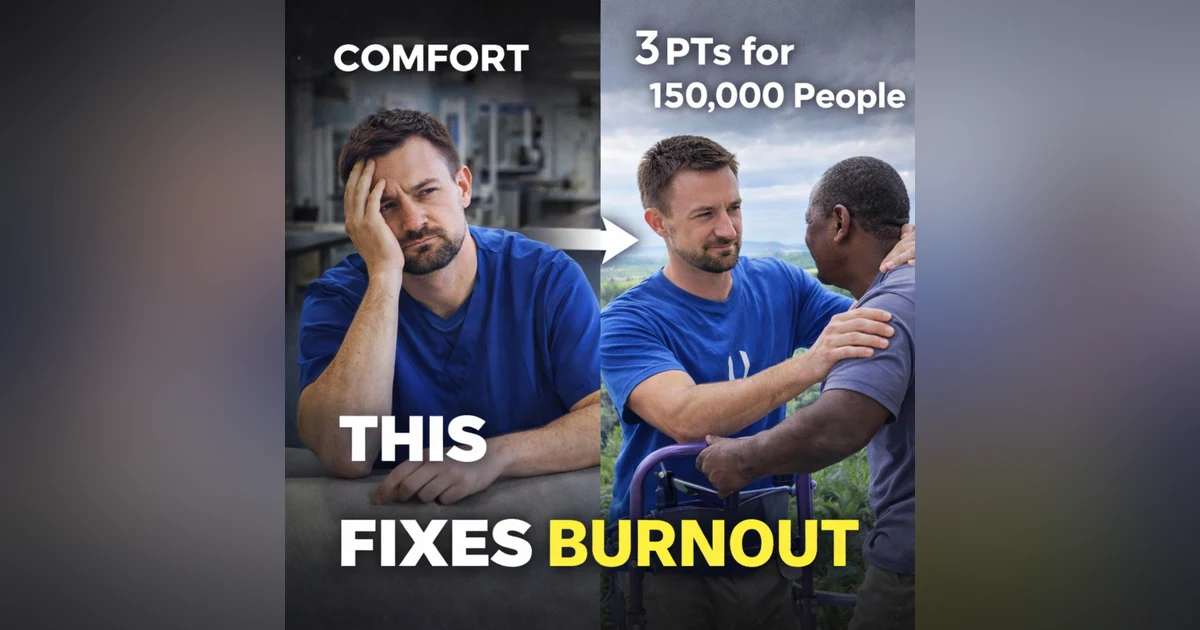
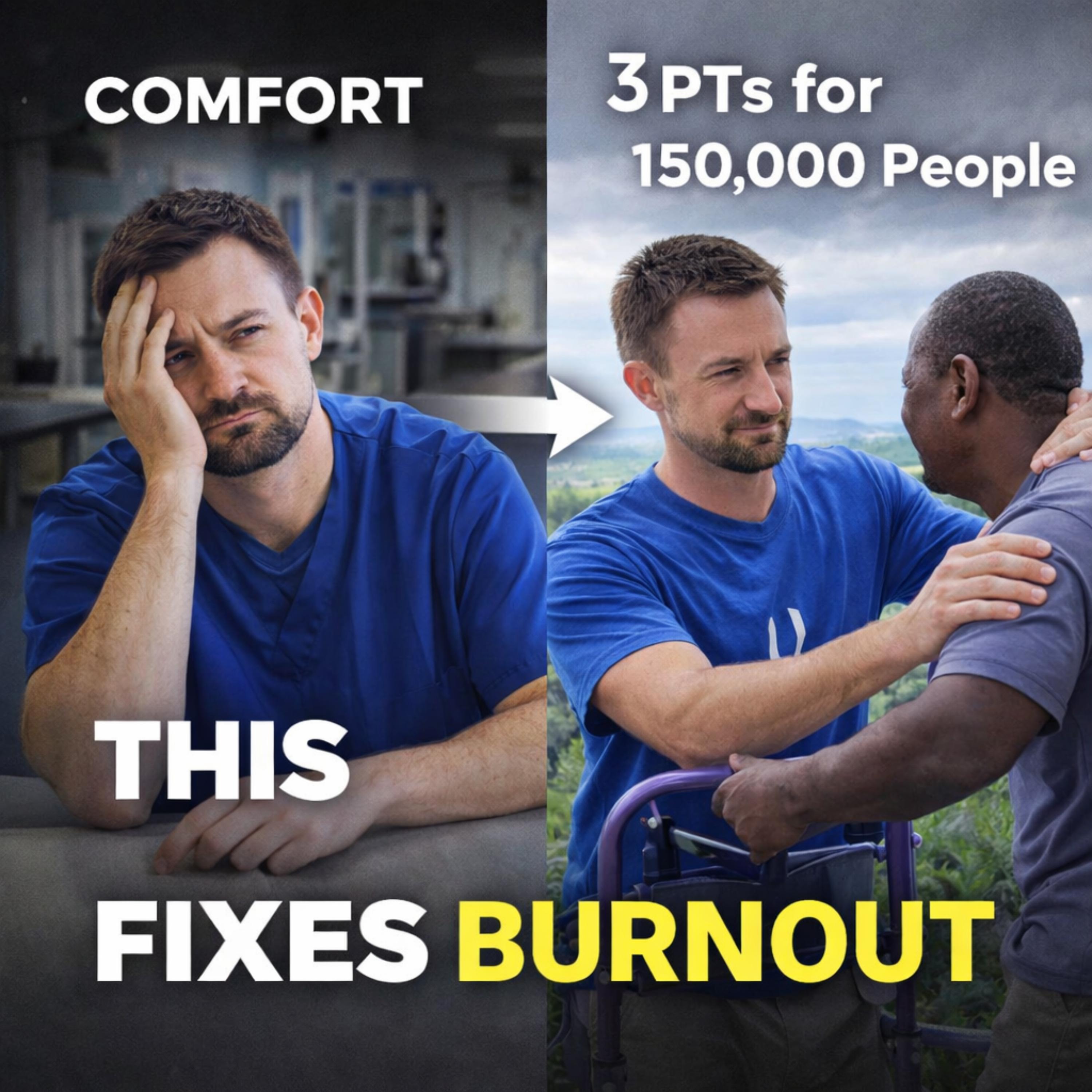


Physical therapy feels harder than ever for many clinicians—burnout, declining reimbursement, and career uncertainty are constant conversations.
But what if the problem isn’t the profession… it’s perspective?
In this episode, Derek Landis shares what happens when you step outside the U.S. system and practice in a place where access to care is limited and every PT skill matters.
Key Takeaways:
- Why PT burnout is often tied to perceived value, not actual impact
- What changes when patients finally get access to care
- The hidden skills PTs undervalue (like transfer training and education)
- How serving underserved populations can improve clinician satisfaction
- Why clinic owners should create opportunities for purpose-driven work
Why This Matters for Clinic Owners:
If your team feels disengaged, this episode highlights a lever most clinics ignore—creating meaning through impact. Supporting outreach, pro bono work, or mission-driven care can improve morale without changing compensation models.
Guest Links:
Website: https://landis-family-jamaica.epistle.org/
Friends of the Redeemer: https://friendsoftheredeemer.org
Sponsors:
SaRA Health – Helping clinics generate revenue between visits
EMPOWER EMR – Built for faster, cleaner PT workflows
U.S. Physical Therapy – Supporting clinician growth and clinic partnerships
<p>This episode is part of the <a href="/physical-therapy-business-podcast">Physical Therapy Business Podcast</a>, where physical therapists and clinic owners learn how to get more patients, improve operations, and grow their clinic without relying only on referrals.</p>
<p>Looking for more episodes? Explore the full <a href="/physical-therapy-business-podcast">Physical Therapy Business Podcast</a> for real-world strategies on physical therapy marketing, patient acquisition, and clinic growth.</p>
0:00 You're listening to the PT Pinecast, where smart people in healthcare come to make noise. Here's your host, Jimmy McKay. All right. I do want to say thanks to Sarah Health, helping physical therapy clinics automate patient communication and reduce front desk workload so clinicians can focus on care. Patients get care between visits and clinics get revenue for that so they can provide, wait for it, more care. So make sure you reach out to Sarah Health to find out exactly how you can get paid for the care that you provide between visits. That's SarahHealth.com. That's SarahHealth, S-A-R-A-Health.com.
0:40 Let's talk about today's guest. There's a lot of conversations happening in our profession right now about burnout. Words come up a lot. productivity expectations? How about reimbursement pressure? How about whether the profession is even worth staying in right now? But if you zoom out for enough, the conversation then changes. Because in many parts of the world, physical therapy isn't a stressed profession. It's a missing one. There are communities where access to rehab care is almost non-existent, where a stroke survivor might never see a therapist, where a child with CP might never receive basic mobility training.
1:22 Today's guest believes that the solution to frustration in our profession isn't always found in policy debates or reimbursement reform. Sometimes it's found in perspective. He left a strong career in the U.S., packed up his family, and moved to St. Elizabeth, Jamaica to direct a PT clinic serving a community with limited access to rehab services. Fresh off a Category Five hurricane, he's back helping rebuild both roofs and access to care. Today, we're talking about purpose, perspective, and why physical therapists may be sitting on one of the most globally valuable skill sets in all of healthcare.
2:05 Today, let's welcome in Derek Landis. Derek, welcome to the show, man. Hey, thanks for having me, Jimmy. Excited to chat a little bit and talk about therapy around the world. Love it. All right. So let's start here. After that intro, you had a stable career here in the U S as a physical therapist, and then made that choice to move yourself and your family to Jamaica. What was the moment where you just, where that decision really became tangible and real for you? What was that like? Yeah, it was exciting and really scary. I think at the same time, you know, when, when, uh, They reached out to clinic down in Jamaica we're familiar with.
2:51 My wife and I are both grads of Arcadia, and they have a strong relationship. The executive director of the nonprofit down here in Jamaica is an Arcadia grad. She's been running the clinic for over twenty years. And so Arcadia students get a chance to come down and help a couple of times a year. They try and have camps at the clinic where they bring in Patients that have had stroke mostly and do like a week or a week and a half long intensive camp therapy all day, every day, which is awesome. You see amazing gains in some of these folks.
3:32 But that's how we got to know it. We came as students in twenty ten and we came back again as clinicians in twenty thirteen. So so we knew them. But in the summer of twenty four, they reached out. and said, Hey, you know, we need some help down here. Would you come? Uh, and so we thought a lot about it, prayed a lot about that. Um, I came down and visited again, you know, since, you know, we had in the meantime, we had had two, two girls, um, eight years old and three years old. So we wanted to come and visit and see what it's like. Um, but yeah, then we decided, yeah, let's do it. We feel like this is where God is leading us. We want to come down and help and use our skills.
4:13 Um, and it was just immense excitement and, and some terror, I think in there too, because, you know, we were leaving, you know, our stable, good jobs in the U S and traveling to, you know, where we're not going to be making a lot of money, not having a lot of resources. So there was fundraising and some other things that went along with that, that were pretty daunting, but, but I would say, yeah, mostly excitement as we, as we packed up and came and, you know, look to, to be able to serve in a place that yeah, has very limited, very limited access to rehab. Now for people listening for PTs who've only practiced in the US, what's simple to you might not be simple to them.
4:54 So help us understand the difference in access to care in the US versus where you are in Jamaica. So yeah, the biggest problem in Jamaica, there's a huge need, but there's just not a lot of places that offer therapy. You know, across the whole island, my wife had done some research, Stephanie, she's a therapist as well. Um, and then working with me in the clinic, you know, she had done some, some crazy statistics about how they're, you know, in our parish of St. Elizabeth parishes is kind of like a state, uh, back home, you know, there's a hundred and fifty thousand ish, you know, people there's like three licensed therapists.
5:35 Um, and then, you know, the, the clinics that there are mostly little, outpatient ortho think type deals. Not a lot of places that have any resource to handle, you know, someone who's post CBA that can't stand or can't walk. You know, so the clinic really tries to work with people. You know, we try to go and pick people up and just gain access because it's so tough here for the folks. There's not a lot of clinics and transportation and getting around isn't easy. either. A lot of folks don't have cars. You know, the taxi man's not exactly going to throw you in the back if you're a dependent transfer.
6:19 So families are trying to get people to therapy. We're trying to get access, but it's just really hard. You know, back home, it's funny. You drive down the road. You know, if you're on a busy main road, you're probably going to pass a few PT clinics, you know, every couple of miles or so because back home, no one's willing to go more than a couple of miles from their home. So we've got tons, but here there's just not many at all. And there's still a lot of people that need it. So yeah, it's just a lot different. The amount of access they have, the ability to access services is just so much more limited here than back home. So you mentioned a few of the conditions that show up most often.
7:01 Help me understand what changes when PT does become available. If you've got people who have limited resources, if they are able to actually get to those, what changes for some of those people in your parish in their daily lives because you're there? So the coolest ones are, I mean, the stroke patients are kind of nearest and dearest to my heart. You know, that's neurogeriatrics was my specialty back home. And so that's the stuff that I love the most. You know, I'm brushing up on my ortho because, you know, it's a farming community. It's a rural farming community where we live. So we deal with a lot of tough people that are dealing with. you know, shoulder pain, back pain, just from labor intensive type work.
7:44 Um, so I enjoy those patients, you know, seeing someone get back to work is, is fun, but man, seeing someone get back to, you know, standing up and transferring, that's just been in bed for, for the last year because no one even really thought, you know, Oh, you had a stroke and you left the hospital and that's it. We're going to put you in bed and feed you and clean you. And, And it's just not an understanding. There's so much education just for folks right off the bat. Like, no, listen, we can try. We're going to get you up in a harness. We're going to do all this work. Because if we do, you might be able to start standing and moving around again.
8:25 And sometimes it's just the education of, yes, it could be possible. It's not a definite. We can't work miracles. know the the education to people that you might be able to get up and do it again you might not walk or maybe you can but maybe we can get you transferring and just opening up possibilities to people that just were sort of written off as you know, now we just have to, to leave you there. So that's the funnest, biggest difference. Um, but I also have a bunch of people that I'm working on basically on return to work. Um, it's not as, you know, official or regulated as it is back home, uh, with work comp and all that nonsense.
9:07 But down here it's, it's, you're, you're hurt. You can't work. Um, So we're going to work on these things. Yeah. If we can get you back to work. So that's fun too, but I think it's the neuro folks, the stroke folks that, that are the most fun. Yeah. A lot of therapists here in the U S are questioning whether the profession is worth it. I'm using air quotes there for worth it. You've seen our profession of physical therapy through a very different lens. What perspective do you wish more therapists had? So, yeah, I know there's a lot of talk about the things you mentioned, you know, salaries and reimbursements declining for the last twenty years.
9:51 Crazy statistic that is awful for our profession. you know all those things and those are valid conversations valid points i'm sure we'll be back into it you know when we're back in the states um but here you just remember here how valuable our skill is and how much it helps people um so back home i i hope people anyone listening will just remember like you have a an awesome skill that people really need um And is really helpful to people. So if, yeah, if you're in a place where you don't feel that, I would challenge you to look around because there's places still, even, you know, back home in a lot of clinics where you can still really help people.
10:37 And yeah, that might be helping them with their golf swing. And it's not maybe as dramatic and life-changing, but that's still important. And it's still an important thing to remember and focus on that. that we're hoping people live better, live stronger. My fox might be coming through a little bit, but it's true. And I think we want people to remember that, that we are really helping people. And I know it's frustrating that reimbursement's gone down and you're only making whatever, eighty, eighty-five thousand dollars a year. And we want to be making more because we have all the debt and all the work. And those are good things to think about and lobby for. But I would challenge people to remember Yeah, what this is all about, how much this really helps people.
11:22 Sure. So the clinic that you work at has been serving the community, and you mentioned before, for over two decades. That's not a short amount of time. What does long-term impact actually look like? This isn't you coming to town, doing some things for a week or a month or even a year. This is two decades. So what does long-term impact look like in a community like that with a clinic who's been there for that long? So the, the impact becomes more missional than like we're known and respected in the community. Um, you know, the property that the clinic is on is actually, uh, it was previously a residential deaf school.
12:02 Um, so there's a lot of facilities here. There's a lot, you know, we were able to come down and live like right across from the clinic, um, where the kids used to live. Um, that went to the deaf school, the deaf school closed down and. Twenty eighteen. And they were able to move their clinic up from where it was previously. But what that means is that they're known in the community. They have resources and space now to house people. So they're able to do a lot more for the community than just therapy. They're able to reach out. You know, we host work groups. After the hurricane, you know, the clinic was banged up a little bit. We had to shut that down. But we got that repaired.
12:43 And we said, you know what, we really want to reach out, take some time to help others rebuild with the resources we have. So we partnered with some disaster relief organizations. God's Pit Crew was one of them and Hope Force International was another one. And we were kind of like a home base, you know, a place for them to stay. We went out with them to do some of the work, a lot of debris cleanup and roof repairs. I was reminded that physical therapy is definitely my skill set, trying to tarp and repair roofs. I was a little bit of a fish out of water, but it was a special thing to be able to, in that time, you know, in that devastation, be able to go out, um, you know, with people who didn't know what they were doing, uh, to help, help rebuild.
13:32 And that is what you can really do. I think when you've been in the community a long time, you know, the needs you know, these outside groups that are coming in, that's what they need. They need a local partner who knows the area and who knows where the needs really are that can point them and their resources in the right direction. So yeah, the long-term impact is great for therapy and helping people move better and you know, being a resource for the doctors in the area that they can send patients. But I think it just becomes more of a greater, bigger picture impact where you can really help and support a community and bring in resources and point them in the right direction.
14:14 You've said therapists should zoom out, think bigger about how they use their skills. Help me understand, what does that look like practically? What do you wish, what do you hope to see in the future? Yeah, I mean, I know everyone's not going to pick up and move to another country, right? That's a tough thing, and not everyone's in the position to do that. We were fortunate, you know, that we had that connection from school and some volunteer work, you know, a decade ago, and we were invited to come down, and yeah, not everyone's going to have that. So, you know, even just in your own communities, you know, I had to really, you know, even being down here, I challenged myself.
14:54 I'm like, man, I'm doing this, but, you know, for the past, ten years before we came down here i wasn't doing anything either um even though in pittsburgh you know my wife and i live you know in the suburbs north of pittsburgh like there are pro bono clinics that you could look up you know in downtown pittsburgh there's a catholic the catholic charities have a clinic um downtown i was emailing back and forth with them a little bit just because i was curious you know they have they have hours all during the week um And they're just open when therapists actually come and volunteer. So I think for most folks, right, the key is look around. There are pro bono clinics.
15:37 There are places you can go and serve, you know, for people who are underinsured or who don't have insurance. People who, you know, there's definitely places where there isn't a clinic every couple of miles. Um, and people have a terrible time accessing care. And I think there is where you can really find people who really want it, who really benefit from it and who, whose lives are really going to be impacted, you know, even just from an evaluation and even just from education, pointing them in the right direction, you know, try, try these exercises or yes, there are walkers that, you know, have extensions and can hold you upright and this and that, and, and just showing people what is possible and what's out there.
16:23 Um, so yeah, I hope practically that that's one listening can, can start to be curious what's already around me, where can I are, you know, where can I lend a hand and, and, you know, clinic practice directors and owners, you know, how can our organization support some of these things? You know, how can we gather our staff and support efforts that are already going on or who can we support that's gone. There's lots of other organizations around traveling to different countries with rehab focuses. Yeah. Yeah. Remote area medical is one of them that my former professor, Sky Donovan, volunteers for a lot.
17:05 And they go to rural America and they say the need is great. A few hours or maybe even not a few hours, just outside a lot of major U.S. cities that you maybe wouldn't know. Yeah. Let's play a quick rapid fire. I'll give you three scenarios. And then I just want your first reaction. This is really all around perspective check. So Derek, you can give one physical therapy student a plane ticket to anywhere in the world for a clinical experience. Where would you send them? Well, I gotta be a little selfish here. We need help in Jamaica. So I'm going to give them a plane ticket to Jamaica.
17:47 I want to show them our clinic and what you can do here. We could, we could have a full case of it for you, uh, at no time. Um, and you would learn a ton here too. We have a very diverse, like I said, we got shoulder pain, back pain, you know, A lot of the young guys riding bikes around here, motorbikes, accidents, surgeries, stroke prevalence is pretty high. You know, our director sees pediatrics, developmental disorders. So, yeah, I'm going to be. I know of some others, you know, back from our Arcadia days, Hearts in Motion was going down to Guatemala and things like that.
18:28 But I got to be a little selfish and take them down here to me. How about one physical therapy skill that becomes unbelievably valuable in a resource limited environment? What's something that we're sleeping on that we don't realize how powerful it is. Oh man, it's gotta be transfer training. Like it's such a basic PT one-on-one thing, right? Like sit pivot, stand pivot transfers is something you almost forget about because of how simple it is in our education and our profession. Um, But man, you get down here and you see, you know, sons and daughters, you know, picking mom up out of the car And like trying to carry her over to the wheelchair, ten feet away and put her down in it so they can wheel her in to the clinic is heartbreaking, right?
19:22 But that's one of the most important skills is just showing people, no, there's a much better way where you're not going to hurt her or you or anybody else. So it's, I think it's those really simple things, especially for the neuro folks. That's one of those skills that don't forget about. Don't forget about educating. Don't take for granted that caregivers know how to do it because it's not all that intuitive. I think we forget about that. Yeah, we overlook what is common to us. We often undervalue and what is uncommon to us, we overvalue. So maybe don't undervalue what we actually know. It's pretty valuable. Third scenario. If every physical therapist had to volunteer one week a year somewhere underserved, what would happen to the profession in your opinion?
20:12 I think we're always talking about morale, at least in previous employers. That's the key to morale, I think. I mean, yes, more money would be good. And yes, more time off and flexibility, all those things. Good, good, good. We see a lot of therapists go in different directions to try and find those things. But I think more fulfillment in the profession, more satisfaction with your job is, is going to come from more satisfaction with your choice of profession as a whole. And I think you can do that by finding people that, that really need it. Cause that's a different patient population.
20:54 That's a different experience, you know, both for you and as well as the patient. But I think doing that, finding the clinic that's around, they're everywhere. You know, if they're not, certainly think about starting one. But look around. There's going to be a clinic nearby that you can get involved in, really help people, really gain that satisfaction with your profession. And I think that overflows into your regular full-time job and the amount of satisfaction you have just in general with what you're doing. Love it. If people wanted to find out more about the clinic, is there a website? Can they learn more? Is there a place that you'd send them online?
21:35 yeah the website for the nonprofit is friendsoftheredeemer.org that's the name of the nonprofit that's sort of the umbrella over the clinic and some of the other ministries that are happening here so yeah that would be the best place to look online see what's going on my wife is managing the social media you know facebook friends of the redeemer united on facebook you can follow along And my wife and I have an Epistle website that we put updates on more personally about our experience and our journey. I can certainly send that as well.
22:16 Yeah. Yeah, love it. All right. Every episode we do wraps up with the parting shot. I'll toss you a question for this parting shot. If a physical therapist listening today feels burnt out or discouraged, what would you want them to remember about why this profession matters? What's something you can give to them to hang on to? I think stop worrying about your salary. I know that's important, but try and find somewhere where you can really go and help people. Um, I think you're going to be surprised to find what that does, not just for your job satisfaction or your profession satisfaction, but I think what it does for you as a person in your life, um, try and find, yeah, somewhere you might not get, you're not going to get paid for it.
23:03 You're not going to booze. It's not a side hustle. Um, all of those things that we're, we're constantly looking for ways to be more satisfied, to be more fulfilled. I think a lot of us are looking in the wrong places for that. I think if you can go and serve and help people, you'll really find it. Derek Landis, along with his wife, doing some great things down in Jamaica. I appreciate you sharing this and thanks for doing what you do and letting know so others can learn from it and hopefully following your footsteps. Yeah, thank you very much, Jimmy, for having me on. That's it for this one, but we're just getting warmed up. Smash follow, send it to a friend, or crank up the next episode.
23:46 Want to go deeper? Hit us at pgpiecast.com or find us on YouTube and socials at pgpiecast. And legally, none of this was advice. It's for entertainment purposes only. See you. Bullshit. See, Keith? We read the script. Happy now?