What Wendy’s Can Teach Physical Therapists About Growth

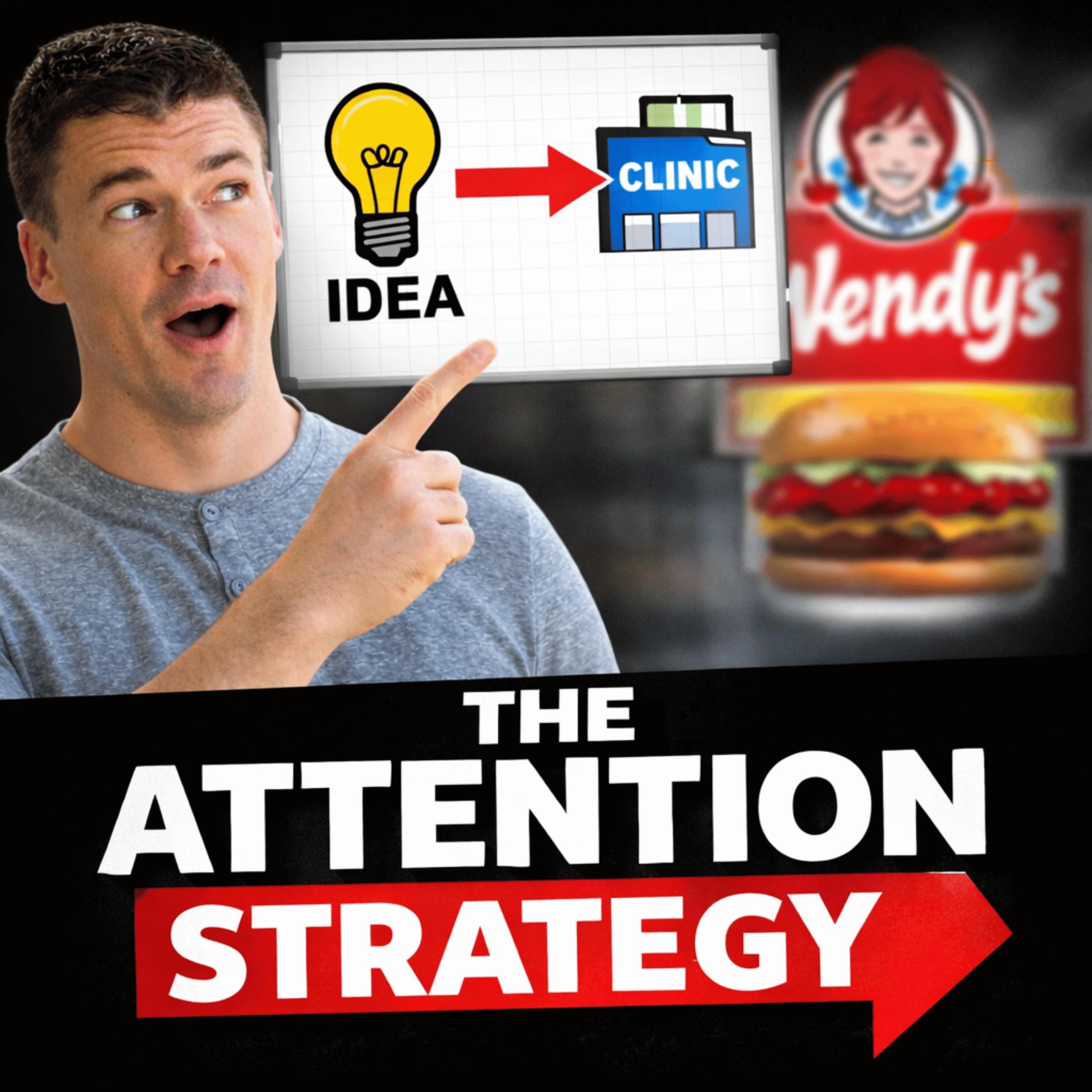


Physical therapy clinics don’t struggle because they lack skill. They struggle because they lack attention.
In this episode of PT Breakfast Club, Jimmy McKay and Tony Maritato explore how PT clinic owners can rethink marketing using lessons from unexpected places — viral videos, restaurant chains, and real-world business strategy.
Instead of chasing trends or expensive advertising, the conversation focuses on creating authentic attention through simple ideas, repeatable content, and engaging storytelling.
They also dig into leadership inside PT clinics — including how to hire the right people, how culture impacts performance, and why insecure leadership can quietly destroy organizations.
The result is a practical conversation about how clinics can grow without complicated marketing systems.
Key Topics Discussed
- Why one-star reviews can actually help credibility
- The marketing strategy behind Wendy’s viral campaigns
- Why authenticity beats polished marketing
- How small clinics can win attention faster than large companies
- Turning patients and staff into authentic content creators
- The “content hackathon” strategy for clinics
- Why most physical therapists misunderstand marketing
- Hiring people who take initiative
- The hidden cost of insecure leadership
Guest Links & Resources
Tony Maritato
YouTube: Total Therapy Solutions
Dave Kittle
Website: ConciergePainRelief.com
YouTube: The Dave Kittle Show
Sponsors
Support for PT Pintcast comes from:
SaRA Health – AI-powered patient engagement for rehab practices
EMPOWER EMR – Built for modern rehab clinics
U.S. Physical Therapy
<p>This episode is part of the <a href="/physical-therapy-business-podcast">Physical Therapy Business Podcast</a>, where physical therapists and clinic owners learn how to get more patients, improve operations, and grow their clinic without relying only on referrals.</p>
<p>Looking for more episodes? Explore the full <a href="/physical-therapy-business-podcast">Physical Therapy Business Podcast</a> for real-world strategies on physical therapy marketing, patient acquisition, and clinic growth.</p>
0:03 Broadcasting way too early from three separate Wi-Fi connections. It's PT Breakfast Club with Tony Meritato, Dave Kittle, and Jimmy McKay. All right, good morning to you. This is PT Breakfast Club, the only show that mixes espresso with TheraBand. We are plus one Tony and minus one Dave, I guess. all averages out it all balances it all balances tony how you doing this morning i am doing amazing i am about three hundred miles outside of uh niagara falls we're taking an early road trip my thirteen year old son and i so i got nothing but time nice um all right so what do you want to talk about first dave was talking about a few different things one I think he wanted your input, but he's not here.
1:01 So do we wait for it in terms of like, hey, how great is this that I got a one-star review? I've got the video and everything queued up. We sort of touched on it a little bit, and I think it's pretty obvious how great it is, but maybe it isn't obvious to people who don't make this sort of things. Let's tease it for Tuesday. We'll push it to Tuesday. Okay. For reference, I got a one-star review. It happens to all of us. It's definitely something we're talking about when we're all together. Totally. If you look on Apple Podcasts, my podcast has one one-star review.
1:44 It is simply not just the star, also the explanation that goes with it. I had a guest on And her aunt got so excited because she shared it on the socials. And this woman's aunt listened. And I guess her stereo was broken. So one of her speakers was not working. So she was yelling at me because she could only hear it out of one speaker. And I was like, you know what? I'm not even going to refute that. That's too funny. I like it. I want to keep it. Yes, you got to love. How do these individuals function in society? I don't know. I ask myself that constantly.
2:25 I'm like, how does this person function? I don't know. I don't know. But here's my question. to people or my statement and question to you is, if I'm gonna go buy a new set of headphones or if I'm gonna buy anything online now or a restaurant or anything, if I see something that's too clean, it feels, I don't know, like there's something in my radar that goes off. If you've got, a thousand reviews and seven hundred of them are five star and three fifty seven. Sorry. Two hundred of them are four star. And then there's a smattering of threes and twos and ones.
3:05 I'm OK with that. Yeah. Like I've seen I've seen restaurants take their one star review and make a T-shirt out of it. Like there was somebody who left a bad review on like a rib place and they were like, no vegetarian options. And they were like, thanks, Karen. And they put it on a t-shirt. Like they embraced it. They leaned into like, listen, if you want vegetables, like maybe the meat shack in, you know, New Orleans isn't the place for you to go. That's what we're about. So, you know, just in terms of like, Uh, it's called like knowledge sent. So when people go sniffing around, if I see something that's too clean, I might move on because I'm like, I don't know.
3:47 This feels rigged. What do you think? I totally agree. And we've seen that trend to where you want some of those lower reviews just to balance it, to make it more authentic. I still think reviews are a complete waste of time. I don't think any reviews are authentic or real. I think it's uh there was a moment in history where there was value to it yeah that's completely gone i don't put any effort any stock anything into trying to grow reviews i don't think it helps seo i don't think it helps clients choose i don't think it means anything what about testimonials that's a different type of review that's show me not tell me Same thing.
4:32 No, it's just as bad. I think any kind of solicited testimonial, anything recorded by the company, the only thing I will say is an unsolicited, somebody on social media just talks about you. Yeah. Maybe there's a little value if that person has an audience that trusts them. Right. But generally speaking, everything is contrived and everything is curated. I do not think our consumer, a reasonably educated, intelligent, professional audience, somebody who's going to come to physical therapy services, I don't think they put any value in that stuff.
5:14 Okay. Especially not the hostage testimonials. Okay, yeah, those are creepy. Okay, so let's change subject but not topic. Recently, the McDonald's CEO... I don't even know his name, which is probably good. I mean, how often do you know the McDonald's CEO? Yeah. You know, had the creepy... half human bite of the new sandwich although here's the thing i now know the sand the new new sorry the new product at mcdonald's it's called the big arch although in my brain i say with college athletics name uh name image and likeness why wouldn't you go get arch manning for for a cup of hundy right like i'm sure arch manning wouldn't wouldn't mind the scratch and hey here comes the big arch but that's not me or we could put the ceo in front of a camera which clearly was like a cell phone camera in an office taking awkward bites.
6:08 But of course I want, this is what I want. This is becoming my North star and more of the purpose of this show, which is I want you to see sort of our thought process. And then I want you to steal it. That's why I have that segment called steal the strategy, right? So this is, this is like a mini stealer strategy. Anytime that when we were, when I was in radio many moons ago, Anything that happened on a Tuesday, guess what we were talking about on a Wednesday. We would go into my office and we would put that thing like Janet Jackson and Justin Timberlake at the Superbowl, you know, wardrobe malfunction. We literally would put a picture of that in the middle of my whiteboard and go, And then around it, we go, what are we doing?
6:54 Well, we have our regular CD giveaway. How do we draw a straight line between the thing that has everybody's attention right now and what we want? I know this from geometry. I'm not a math wizard, Tony, and you know this about me, but there's a straight line between any two points. Now, the distance, like sometimes it's too far of a leap, but if you start thinking that way, how do I take the thing that has everybody's attention in the world, because now we're all attached by social media, how do I take that attention and how do I use it for four tenths of a second? Because that's how fast we're going these days. So in the middle of the universe is creepy McDonald's CEO taking the bite.
7:41 Burger King jumps in. They go a straight play. They do the same thing where they start taking shots at each other. Tony, do you know who the CEO of Wendy's is? No. Wendy. No. I have no idea. But no one does. But... The voice of Wendy's is a sassy redhead. They've adopted this. If you go to their Twitter, it's legendary. So did you see this? Did you hear us talking about it or did you see this? Wendy's sort of clapped back or they're like sort of â it wasn't even as direct. But it's this. They opened a job on their website, and the title of the job is Wendy's Chief Tasting Officer.
8:29 Oh, I love it. So a second ago, we were talking about authenticity. It just isn't there. So any attempt at it turns people off. Well... course wendy's is like hold my beer they're like we're gonna quadruple down on this and we're gonna have a legit job interview so the title is chief tasting officer for wendy's and they put in parentheses yes that wendy's pay one hundred thousand dollars job type dream location remote travel light mostly to your local wendy's and or the couch So it sounds like they saw a CEO from their competitor being inauthentic and they said, you know who knows how to eat stuff?
9:15 They could have done what Burger King did. This is like a masterclass. McDonald's, super square. McDonald's is PC, super square. It's Microsoft. It gets the job done. Everybody knows it. Nobody gets fired for picking McDonald's, right? Burger King is the little brother of McDonald's, always in the shadow. A little bit cooler though, at least their images. And they're like, we're going to poke fun at you. You just, you just embarrassed yourself. We're going to point that out. Wendy's quadruples down. Wendy's is like the youngest sister that goes, I'm going to, I'm going to dunk on both of you. And because you guys are fighting with each other, I'm going to go talk to the audience.
9:57 So I'm going to go offer up a hundred grand for someone to become our chief tasting officer and their job is Goes on, it says, do you hate your job? Are you too iconic to be opening PDFs for your boss? Yeah, keep going. Ever been told you're a personality hire? That's me. Do you care more about bacon than bottom lines? Okay. Basically, you get paid to eat Wendy's, beach show, and make some content. They're hiring for their version of Jared from Subway. But they're doing it at the right moment. They're doing it at exactly the moment they should be doing it. This is a masterclass in putting the thing that has everybody's attention for the next fifteen minutes, because that's how fast attention goes, put that at the center of a whiteboard and go, what do we do?
10:47 And the straight line between the creepy bite from McDonald's CEO to this job the short straight line is we interact with our customer that they know that they're strong at this so they say we put this at the middle of our dry erase board and we go okay so tony this is why i was trying to be subversive and ask questions on social once i saw this i said hey listen Because the question is, how many eyeballs, likes, reshares will this person have to generate in a year to make themself worth one hundred thousand dollars?
11:32 Now, understanding that Wendy's is on a different scale than a clinic, but maybe not a chain of clinics, maybe not a multistate clinic. Why wouldn't a Fox Rehab hire someone every year over the age of sixty-five to be their face. I pitched that idea. We never did it. Just FYI. Steal it again, please, Fox. I think that would be brilliant. But why wouldn't an orthopedic practice pick their chief exercise officer and make it someone who like sort of likes exercise because they're realistic. So I saw Wendy's again and they'll be teaching. Wendy's will be its own marketing class if it's not already because they just understand.
12:16 And it's so funny to watch brands that are quote bigger and have more money just get dunked on by Wendy's continually. It's not an accident. These guys know what they're doing. It's a playbook and they run it well. I think this is the biggest advantage we have as smaller businesses. Yes. We have the agility. We have the benefit of hindsight. We can look, read, react instead of like following the plan. And, you know, Wendy's is a great example of that. Carl's Jr. Everybody came out of the woodwork with this. What I thought was hilarious is. if you go back mcdonald's ceo has done these exact tastings oh really i didn't know that a bunch of times this was nothing new this was nothing like oh let's get this crazy idea he had been doing it he's just as awkward just as goofy um this for whatever reason the algorithm gods just said hey we're gonna put this one out but it's it's a normal thing for him to do something like this really yeah yeah it's timing it's i mean there's six quite right who what where when why how it might have just been a slow news day or to pivot and talk about a different type of restaurant chain when that when that woman ordered that triple cheese whatever at chili's and blew up their fourth quarter revenue because her
13:48 you know, twenty eight second video went viral. It's a win and you can't time that you can try. This this goes back to what we're talking about a few weeks during the Super Bowl. If you handed me a budget and said, Jimmy, here's money to spend on the Super Bowl, I'd go, I'll take that budget. I'll spend that in April, May, June when everybody else has shot their wad. Then I'm the only guy with a megaphone in a room full of people who have no bullets. I'll take that math. So you can't time that. You can try, but timing is... I mean, what do you think the shares of Ocean Spray cranberry juice did when that guy was...
14:32 Did you see that? Remember the selfie video of the dude? He was skateboarding. It's a random video. Like you could not script this, not with a billion dollars, right? Some dude, I think it was in California, somewhere out West. He just looked chill and he's like skateboarding, just cruising. Drinking a full bottle, like the one you buy in the grocery store, not like the one you buy at the convenience store. Just sip it on ocean spray, cranberry juice, listen to Fleetwood Mac. And it goes viral because everybody was just like, look at this man. He's the chillest guy. How can I be so chill? Yeah. And this guy pops off and now he's got like a mini influencer career. Yeah. But Ocean Spray, with all the money and all the marketers and all the rooms, would never have come up with that.
15:16 It doesn't make any sense, which goes back to the idea of what we're talking about. That dude is authentically chill. People could tell, right? If he was like, Hey everybody, I'm chill. Drink more ocean spray. People would go and they'd mock him. Like, so there is such a fine line between, I mean, we call it in video games or sports, like a try hard, like the kid who tries too hard in practice, but the coach is saying practice like you play. But like some people are just like, Hey bro, like dial it back. You're trying a little too hard here. So I think the question now is, does the McDonald's CEO double down, triple down on this, you know, this new thing that he created, or does he try to back off and act tough and take a big bite and do, do the things that they're making fun of him for not doing?
16:06 I think obviously you double down. You're like, look, I didn't, I didn't get this physique by, you know, doing whatever, like you make fun of yourself. You're, I think that's the best possible thing they could do. I think it is also the best possible thing that they should do. I think they won't because I think their track record is they will not do it. This is the one I'm talking about. You never saw this video. This was everywhere for a hot second. Twenty three seconds long. This guy is just living. People saw this and like the look on his face is like, I am just living my best life. And people were just like, like, they didn't say I want to go skateboarding.
16:49 They didn't say I want to drink cranberry juice. They were saying, like, how do I get the feeling that this guy has? Because this guy has no care in the world. This twenty three second video goes viral. He didn't do it on purpose, but he product places the logo like six times perfectly. Chef's kiss. He's rocking out to Fleetwood Mac. Like, nothing makes sense about this video, and yet everything makes sense about this video. This is like, what's his name? Dogface. four twenty dog face two oh eight like if even the even the account name is random and it like it adds to its authenticity if he was like cranberry fan one twenty three people would have sniffed that out from ten miles away so to go back to the chief tasting officer from uh from wendy's let's jump in their shoes now okay you've you've now You've now got four hundred thousand people.
17:49 Plus, I'm going to put a submission in. I promised I would. I'll submit for this job. What are the odds I get? I'll go do something dumb outside my backyard, maybe land a hundred grand. Tony, we've found our person. This is three. This is three weeks from now. And my suggestion to Wendy's is you better do it quick because people are going to forget about this soon. But that's OK, because my guess is this chief tasting officer is not going to go head to head with the McDonald's CEO. The purpose is the long play. what would you what would your instructions be like you're going to give them a handler like someone from wendy's is going to meet with this person once a day once a week once every couple of days what would you tell this person to do oh man i don't know um what's on your mind what are you thinking yeah so i would take that strategy that we just talked about let's we have to give this person a name uh this kid's name is uh keith johnson keith johnson's from iowa keith johnson you're our guy i'd put keith johnson in the middle of the dry erase board and then i'd fly to wherever keith johnson lived and i would go hang out with him i'd be like keith johnson man what do you do what's your what's your thing would you have a job do you go to school like what kind of car do you own who are your friends now this is also stealing i mean wendy's is ninety eight percent of the way there they don't need my help But there is a coffee shop in New York City that now has several hundred thousand followers on Instagram and now has tourists coming into New York to go
19:21 to this random Brooklyn coffee shop. Now I need to talk to some people who haven't visited New York City before. Brooklyn is part of New York City, but getting from Manhattan, which is what everybody considers New York City, there are other parts, getting to Brooklyn for coffee is not a simple task. It's not easy. It's New York, man. Going anywhere. Going fifty feet is hard. They have captured so much attention that when people now travel to New York, they're like it is on. It's like Empire State Building, you know, nine eleven memorial this that South Street Seaport, this random coffee shop. And they did not do it with the budget. They did it with intention.
20:03 They turned it into sort of a soap opera. So they turned all their baristas into caricatures and And that's what you have to do to Keith from Iowa. If he's the chief tasting officer, turn him into a not even just a character, a caricature. What I mean is if he's tall, play on how tall he is. He's lanky now. If he's quiet, maybe he never speaks. Maybe he's mute. Like the whole thing is he never says anything, but he speaks with his eyes or facial expression. whatever he is or she is, is the mostest, right? And then you base, you put, then you have to take the character and you have to put them in uncomfortable situations or common situations with a twist.
20:47 This is Seinfeld, right? Or this is a sitcom. This is a movie. This is the hero's journey. You've got the character, but now we need to put them in, it can't be sit down and eat the new product from Wendy's in three months when it comes out. It can't be that, right? That would be what McDonald's would do. And that's why they would lose. But Wendy's will not do that. If they follow through with this, which I think they will because they usually follow through, they will create a character out of this person a la... Jared from Subway. I said that they were down social media and then someone quickly corrected me and was like, didn't end up so well for for Jared from Subway. Like, right. The beginning part of that was brilliant, though.
21:28 Right. Create a character from the audience. Watch his journey. I think that's I think that's what Wendy's will do is this person soon, once they get the right person, will start to show up and be for a short time the face of Wendy's from the audience. So taking that to your original question was, could a private practice do this? Could I afford to invest a hundred thousand dollars in hiring the exercise person? I mean, I think you could, and I think the return on the investment would be there, but it always, and this is the problem with marketing slash advertising slash branding, what if it doesn't?
22:12 You know, are we only seeing the one-offs that blow up and go crazy, and we're not seeing the nine million other ones that are just a completely waste of money because they don't go anywhere, they don't do anything. Yep. Yeah. Survivorship bias, right? I'm talking about Jared with Subway Worked. I'm sure other brands tried it immediately and crashed and burned. So then if I changed, what if we changed some of the parameters, Tony? What if you knew, what if you had somebody, you have these people coming back to your clinic over and over and over again? Do you have a couple of those people in mind? You don't have to say them, but you have several of those, right?
22:53 Many, many. What is one of those people worth in revenue to your clinic? Just one, like a super fan, ballpark. Yeah, I mean, realistically, like we talked about this, if you're looking at the Medicare financial... Gosh, I'm blanking out. Financial threshold, you know, at three thousand a year. Right. It's absolutely reasonable that a Medicare beneficiary with moderate complexities is going to generate three hundred three thousand a year in revenue. They're going to be around five to seven years at least.
23:34 You're looking at, you know, let's just say thirty five thousand dollars. Okay, so my twist and my reason for asking for that is playing within all the Medicare rules, saying if this is a Medicare patient, could you offer this person instead of a hundred thousand dollars? Do you want to keep coming? Yes. You're going to be my immediate face. Everything past your benefits that we would normally charge you cash is zero dollars. Like you could easily do that because if this person is a super fan to them, it's worth unlimited access for the thing that I want. So I selfishly was asking, how much marketing ROI would you need to justify a one hundred thousand dollar spend?
24:20 And people were like coming after me like, are you saying that we should be spending all our profit? No, I was doing some math and you guys got all mad at me. What I'm saying is going back to a premise we've been talking about for months, if not years, is the attention of what we do or can do worth the effort putting into it so that it generates results, patience, attention on the backend. Wendy's is proving this. I understand I'm comparing apples and frosties, but I still think the premise holds true. And you can look at any of my channels. You see Don, you see Dale, you see the same characters over and over again.
25:05 Ironically, they love it. We just had a situation where Don, one of my clients for over a decade, he's got a two and a half, two point eight million view clip on Instagram. He had one of his other videos clip that somebody put into an ad and a third patient came in and they're like, I just saw your patient on my Facebook feed in an ad for a product that you guys don't even have anything to do with. And, you know. So these guys have actually built their own little audiences.
25:46 Yes. And they've been with me forever, and they love it. They get a lot out of it. I don't have to pay them, like you said. I do actually still charge them a monthly membership, but that's beside the point. Right. But it's absolutely doable. Yeah, juice is worth the squeeze there, in my opinion. It's probably better that it's not a hired person. Correct. There's that authenticity, right? Because there's no expectation for performance. Right. Correct. Yeah. I think if the goal in this world is authenticity, that's very hard to... Like, think about this sentence. We need to manufacture the authenticity.
26:28 Well, that's an oxymoron. Just by saying that, we have to manufacture the authenticity. Those two things are in opposition. Right. All right, so here's the thing. I'm eagerly awaiting to see how Wendy's plays this, because if you think... marketers don't steal and borrow and twist ideas from each other, you're not paying attention. And if you feel icky for doing that, then you need to reinvent the wheel every single day and I feel bad for you. I didn't need to re-record Nirvana's Smells Like Teen Spirit. We just played the crap out of it. And then we looked for new music and we looked for stuff to do between the songs. I mean, there's a lather rinse repeat to this.
27:10 I don't know. So let me pitch this idea to you. A little bit of a pivot. But I have a... sort of like an office hours thing I do every other week. Every other Wednesday, I sort of have a happy hour where I'm like, come in. It's sort of an ask me anything. It's like, hey, if you're looking for help in marketing, just come in and talk about it. You want to learn how to podcast? I don't care. Throw it at me. If I can answer it, great. If other people in the room, they answer it better, even better. Here's the thing. I'm listening and transcribing the conversation, because I want to hear what problems practice owners are actually having, going, huh, didn't think that was a problem.
27:52 But in the last six weeks, that got mentioned thirty six times. So here's my solution to this. Midsize practice, let's say they have three locations. They don't have a formal marketing director because I don't think you're big enough at that point to have a marketing director at three locations, maybe a couple more locations and you have to hire someone full time. But your understanding, I don't need to convince you that creating content organically and then putting some dollars behind the well-performing organic content for paid content is a good idea. I don't need to convince that. The person's like, I get it. I just don't know how to do it. I don't have time to do it.
28:32 Now, from what I've heard, a lot of these size practices, three locations or so, it's funny what pops up. A tech, a front desk person, a PT sort of likes it and sort of just starts doing it. They're just like, hey, do you mind if I log into the Instagram? And they're good at it. They're like, hey, that was cool. We normally get three hundred likes or views or whatever. And this one got ten thousand. How do you how do you do that? And they're like, well, you know, sort of creative, right? So that person now makes it sort of part of their job. It's formally informal. It's like, do whatever. I'm not paying you for it.
29:13 So here's my sort of solution to that. It needs to be cost-effective, time-effective, results-effective. It needs to be those three things. I want to come in and do a one-day hackathon. The first, I don't know, half hour, forty minutes, we'll go over communications one-on-one. After that, I want a big giant whiteboard and I want to learn everything about your clinic. What makes you tick? What makes you different? What makes you special? And then while they're telling me all these things, because the funny part is the answer is already in the room. I'm just going to pull it out of them. Like, what do you got? We wanted to treat more athletes, but you don't have any room for it. You don't have anybody on your staff to treat the athletes.
29:54 Athletes are out. Can we agree? Hey, but look at this. You guys are positioned right here down the street from high school. Why wouldn't you focus on that? Anyway, so essentially the next part is a whiteboard dry erase board session to generate a billion ideas. Knowing that we can't do a billion ideas. but we're gonna start to cross off from the billion ideas and we're gonna narrow it down to ten. These are your ten content topics. If it's not from this list of ten, don't do it. Just rotate, do one, two, just go through it and then go back to one. And then now, we need a format.
30:36 What does that mean? Well, we got to run your idea through a process. Is it going to be text? Is it photo? Is it video? What is it? We'll figure out three formats for you to do ten times. And I'm not a math person, but when you multiply ten ideas through three formats, you can twist those ten ideas a hundred different ways, a thousand different ways. But I don't want you to have to reinvent the wheel. What I also don't want is, well, this is the new trend on Instagram. The new trend right now, I think it's fine. It's reactive, right? The new trend now is, hey, what were you like in the nineties?
31:18 Someone shows a picture of himself, a photo of himself, still photo. It's a video, but it's still photo. And the same trending audio plays, hey, what were you like in the nineties? And then the music changes and then picture from that person when they were younger. That's great. I call that, that's the hashtag trend. Cool. That's not what I'm talking about here because those are going to pop up and you can figure out how to recreate that just by watching one. My idea is let's find three formats that you like, that you have the tools, the people, the time to recreate, and then the end of the day is now we're going to make fifty of them.
31:59 Right now, in the room, we're going to laugh at each other because it's awkward, and I'm going to show you how to do it with equipment that all costs less than a hundred dollars. I'll walk in and go, who's got the best newest iPhone? Got it. That's the phone we're using right now. Let me show you how my twenty eight dollar tripod makes this possible. Let me show you how this simple wireless microphone makes it from a C minus to a B plus. And let's make twenty of these. Let's make fifty of these. So when by the time I leave at five o'clock that day, I want you to have fifty pieces of content featuring you, not me, made. And three or four people on your team know how to actually use it.
32:44 Know all the little tips and tricks and how to operate all the tools. It's not foreign. It's not complicated. It's repetition. So I want to offer this to clinics and go, I fly in. We do this whole thing for you guys. By the time I leave, you have content tangibly to share tomorrow. And I've taught your team how to fish. I'm out of here. Yeah. Yeah. I mean, I love things like that because it's closed in scope. You know how much you're investing. Correct. Even if you're going in thinking this is a complete waste of time and money, it's a limited waste of time and money. Correct. Correct. So it's like, I know my downside risk is capped.
33:25 I know my upside potential is unlimited. Correct. I know what I'm getting into. I know I need to do it. And again, it's that person who buys a pair of running shoes because they want to run. They know they should run, but they're probably not going to run. You're like, all right, I can drop one hundred and twenty bucks, even if it's a waste and I get out of the closet. This is a lottery ticket. And then I would add one extra thing. Let's say you buy the lottery ticket. Jimmy McKay comes in. We do have a dry erase board session. Everybody has a good time. And then I leave. You're leaving. I'm not letting I'm not leaving unless we have fifty pieces of content made. So at worst, you got one thing a week to try out for the next year.
34:07 It's also a cultural exercise. And that's why I said it needs to be a big enough organization that when we get everybody from the org in the room, it feels like something. So this, I would say, dude, do it in place of a con ed session. Instead of just bringing in another course to learn another thing, what if the thing you were learning is how to connect with the people you seek to serve? I'm going to show you how to do it because I think the distance between you and your next patient is the thickness of the glass on my iPhone there. Are there any marketing courses approved in any states for Con Ed credit?
34:54 That is a great question. And you know me, I'll Google that, but that's hard to Google. I'll just go, I'll email Chad Madden. Because if there is one, it would be him, right? It would be Chad Madden or Rehab CEOs or someone. I feel like Will Boyd would know the answer to this. I don't know. I don't know. That's a great question. The CEU market should be flooded with business courses, marketing courses, social media courses. Let's make one. So before AI, when I had started my Medicare billing course, I was like, oh, I'll get the CEU credits. And it's ridiculous how much paperwork, how many hoops to jump through, how much money for each state you would have to pay.
35:42 Now with AI, I think it could be a lot more manageable to just go through the process, let an agent and your favorite AI chat help you through it. But, yeah, we should definitely do that, even if we just pick one or two big states and just say, hey, Con Ed credit. But, I mean, Con Ed credits are worthless anymore anyway. Right. you know like who what's the value in that right so the reason i like this is um six weeks ago i started my first cohort of like healthcare podcast launch pad and i had five students and it was fine but like i felt like i was just talking at people on a screen too much which is ironic because that's what i do most of the time is talk but i don't i talk with people on a screen but because i had five students And they're different.
36:47 I had to sort of teach to the room and not to the individual. And I was like, I don't love this. I felt awkward. I constantly was asking them for feedback. They were telling me, maybe they were being nice. They were like, this is great. This is what we expected. I'm getting a lot out of this. But me looking at their faces on the screen, the faces were a lot like this. but they're listening. It was their listening face. I get it. That was, that's when I started like going on a little rampage where I was like, dude, teaching respect to teachers. Like that stuff is hard. Like telling people stuff is easy. Teaching people is hard. Anyway, towards the end of the course, I was like, okay, your week, your homework next week is due. Do what I just told you. Go fail, go mess up, go record, go and then bring me back what you've created.
37:31 Right. And now we've got into the execution part. That's when I really started to light up and was like excited about, okay, let's talk about real problems that you ran into, like technical problems, like structure problems. how do I plan this problems? I'm like, okay, like real world, like more art class than art history. Like, okay, how do you make the clay in a pot? Blah, blah, blah, blah. Not break on the handle when you make a coffee mug. I don't know. Let's try it. That got more interesting. So then I said, it would be even more interesting for me to be in person, but like, I'm not going to fly to Michigan and Tennessee and California.
38:11 That doesn't make any sense. But that's why I said it needs to be the right size clinic who already, I don't need to convince them of the pain. They feel the pain. They want the success. And they're like, I'd pay for that. I could see even if we got ten percent of the ROI, that'd be worth it. Yeah. It's funny you say that because to me that sounds like patient care. Patient comes in, they're like, my shoulder hurts. You know, in school you learn the upper quarter screen and these neuro tests and special tests and all this garbage. I'm like, No. Okay. Your shoulder hurts. Let's see you do something that makes your shoulder hurt. Let's figure out how we can stop your shoulder from hurting and still achieve the functional thing that you were doing.
38:53 You know, like let's get in the real world and address these things as they come up. Yeah. I've done something like this before. I've been brought in by pretty big, you know, twenty plus clinic organizations. And this freaks some people out. I don't think it would freak you out. I was given two problems. One was, it was like retaining top talent and one was like hiring new talent. So there's both like a retention and a hiring. I was given two prompts and I was given six hours. So I spent three hours on each problem.
39:35 And I just brought a few formats. I just brought a few lenses. I think I used, remember that book, The Love Languages? I was like, okay, we're going to walk through your current employee situation. How do you show love? And everybody was like, in the beginning, it was like, I don't understand this. This is weird. By the end, people are yelling over each other. And what about this? And what about this? And that's when, as a good facilitator, you know your job is to shut up. get out of the way but because that's what the name of the position is facilitator not star not host i talk a lot in the beginning i set the stage i i tell you what the rules are and then my job is to sort of like pull a homer simpson and just like fade into the bush but they got a lot i think that the ops officer told me he's like we got sixty two ideas like like actionable ideas and no, we can't do sixty two.
40:26 But he's like, some of those were really good. Like a couple of these. He's like, now you put the good ideas in the hands of an operator, a COO. And you just watch his, like I was watching this guy's face. Funny enough, I thought he was annoyed during the thing. Turns out over dinner, he was like, no, that's like sort of my thinking. My wife tells me all the time, it's my thinking face. I'm like, God, you weren't pissed. You were engaged, but your job was to sit. Because I was like, I can't take notes and facilitate. And this is pre-AI and note-taking. I was like, we can record it, but who's going to listen to that? So he's like, no, I'll take on that role of like recorder. And that is a great important role because he has to sift the good, the bad, the boring, the useful.
41:11 And he was like, I was writing down everything, but I sort of came up with my own like circle one that I think has promise. And then if it really has promise, then put a star and a circle. And I go, great. Like, let me know how those ideas play out over the next year or two. So the level two of this is, okay, what is the practice? Why are they doing it? Are they doing it for more patients? Are they doing it for therapist retention? Are they doing it, like for me, and I've said this multiple times, I'm not doing it with the intent of generating more patient revenue.
41:53 I'm doing it with the intent of generating media revenue, finding brand deals, increasing my awareness so that I can sell products, not because I want to sell more physical therapy. right i think most of them are not on that level that you're doing most of them are saying two things how do i keep number one how do i keep my staff engaged i say make them the star and again even if even if they just get exposure and it's a great branding campaign and your people are engaged the cost is time like once i come in and teach you i hope i never come back again or i hope you tap out And you're like, we want more.
42:35 Bring us to level two. And I have to sit there and think and go, wow, how do I level up this organization who actually is good at this? I think the bonus is there's revenue because people now know, like, and trust you. They have to know you. You're an attention engine now. I mean, look at that coffee shop in Brooklyn. It doesn't make any sense for them to spend â pay for a videographer â I think it's just somebody who worked there who's also I mean, that's like the cliche in Brooklyn, right? Every every barista in Brooklyn is an actor who's going to be on Broadway in six months. But that's the truth. But like an actor who's a barista is looking at the world so differently.
43:17 And they're saying, God, this place has so many interesting characters every day. If we captured one tenth of that, it'd be so funny. And then they just started doing it. And that's all this one day hackathon would be is like, let me just like make this a little clear. Although I don't know if like the person who's excited to grab the camera, they know this already. It's almost like I'm giving them permission from their boss in public. Like, hey, you know when she's screwing around in the corner over there with the TheraBands and making funny videos? Like she's sort of not, like she is screwing off, but like there is a purpose to the madness. There's a purpose to the process. And what could that net?
43:58 But yeah, a lot of it is you're guessing if the juice is going to be worth the squeeze. Yeah. I love it. I think it's awesome. Real quick, closing that loop. You know, when we were, I'm going to go back to like, two thousand five, maybe two thousand four, two thousand five. We had two clinics opening a third and we paid like a thousand bucks or something for somebody to come in. The deal was we pay a thousand dollars. This person is going to fly in. They're going to spend the day with us. We're going to go through all of the financials. Then they're going to put together a summary with a plan that, of course, upsold to a twelve thousand dollar bigger project to kind of clean up the financials.
44:51 I don't know if this is what Will Boyd does or it kind of in that world. But this was, you know, twenty years ago. I mean, it was absolutely worth it. We were drowning in money, but we had no idea where all the money was, what we were doing with it. So to bring in a specialist like that, I think it had a great impact on the company. So step one is figure out what problem you're actually solving. Like Will Boyd or whoever that person was doesn't solve a financial problem. They solve a clarity problem. And it sounds like I'm splitting hairs here, but I'm not.
45:32 Because your problem wasn't making money. Your problem was like next step, which is like any idiot can make a million dollars, but not any idiot can keep the million dollars. It doesn't sound like it's a problem, but it is once you get there. But make sure you understand the problem you're trying to solve, the person has to have the money to solve it. Financial services is pretty smart because you're going in knowing the person either has money or is willing to spend money to make money. Bo from Colorado saying, Tony's a master multitasker driving and being a genius at the same time. It's not easy. It's not easy doing either of those things. All right, we've got about ten minutes left, fifteen minutes left. The last thing that we sort of talked about briefly before we went live was something Dave was talking about, where Dave is right now.
46:20 We didn't even mention that. Dave is, he's out doing an eval, he's out observing an eval with his new employee, Dr. Wolfhammer. It's not his name, but it's just easier. Wolfhammer is a better character name. I'm never going to, I think it's something with Wolf. Wolfhammer sounds good. Sounds like a character from Game of Thrones. um dave's talked about processes recording evaluations recording initial calls and then being able to actionably do something about it i mean we've been able to record evaluations for years the software now makes it applicable like you can do something with the information you can transcribe it you can now ask it questions and you can review but let's take that out we've talked about the technology why we do that having someone that gets it which is another one of those things.
47:05 How do you know if someone's going to get it or not on an interview or even a week one or year one? That does some things. I've said it before. You can't teach give a crap to people. And when you've got it, as a manager, I learned my job wasn't to manage that. My job was to make sure they had the tools to take whatever it is they wanted to give a crap about and sort of direct it towards the mission of the organization. My mission of the organization was radio, but... This is â we're a people business. Larry Benz wrote an article yesterday about EBITDA. I didn't think somebody could make an article about EBITDA exciting because he explained it simply.
47:46 But I think the best line of the whole article was the biggest assets of a physical therapy organization wear shoes. it's not your equipment, it's not your footprint, it's not your real estate. The biggest asset of a PT organization, they wear shoes, they go home at night, they're your people, your job is to serve them. His point in the article with EBITDA was, When the measure becomes a target, it stops measuring. If I teach to the test, am I turning out smart humans or am I turning out good test takers? And we could go round and around, you know, in terms of like chicken or the egg, which is good. But I think the premise is, how do you find good people?
48:29 And how did you spot them, Tony? Did you ask them questions? What did you do? Um, you know, it was always a combination of like, and I might have shared this story before. I remember one particular hire. She wasn't a therapist. I was taking her on like a little tour of the clinic. A stepstool was sitting out in the middle of the room. I didn't say anything. She went over. She picked it up. She put it on the side, got it out of the way. I was like, you're hired. I will pay you whatever you want to come work with us. And this is the thing, you know, like, again, our advantage on a small practice size is we don't need fifty employees.
49:17 We don't need ten employees. We need one or two, you know, and so. If I can hire a person that is genuinely happy, not a complainer, not a bitcher, not a moaner, not a victim. If I can hire a person that can identify a simple problem and generate a simple solution, that's all I want. Because that person is going to fit the culture. And I've hired plenty of the wrong people. I fired all of them. It wasn't, you know, I don't know that there is a criteria or an interview process or some formula you can follow. There are some telltale signs.
49:58 But generally speaking, and I know the modern clinicians going to hate this, but I hire people that are like me. i hire people that i like that's the bottom line because we're gonna spend forty hours fifty hours together we're gonna be in the trenches i need to know you have my back and i have your back and if we don't have that level of trust in such a small organization it's never gonna work but if i had fifty a hundred employees can't do that i don't care i'm just hiring a number right you know uh did you ever watch the show the bear It's on Hulu.
50:40 No, tell me about it. It's about like a restaurant. You know, it's a story about people. Jeremy Allen White from â oh, God, I'm going to blank on the show. they turn a restaurant from like a sandwich shop into like a five-star. He's trying to be like a five-star Michelin chef. But anyway, everybody in the show is sort of progressing and like taking their lives and their roles more seriously. And this one guy who was sort of like the maitre d' now, who was sort of a screw-up and sort of like didn't really care, is now interviewing someone. Now they're in this restaurant they've created, super nice, and he's sitting down with their HR person. They don't have an HR person. And this person, you're watching the interview, And they're conversing. This person looks perfect.
51:20 She's got all the credentials. She gets up and leaves. The HR person turns to him and goes, she's great. He goes, no. She's like, why? Like, literally, she checks every box and he's like, they're sitting at the table. He said, this table is perfectly set and that fork is ninety degrees off from where it should be. And she didn't touch it. Same as your stool. It's like you let that happen. Like I need someone. Now, there's some people that will say like, all right, on an interview, they don't want to overstep. And yeah, I get that. But like you didn't put that there on purpose. It wasn't a test. But the idea is we're looking for, you can't tell me you take initiative when I watch you overlook an opportunity to take initiative.
52:05 Shameless, I don't know why I forgot. Jeremy Allen White from Shameless. If you've never seen Shameless, that's a show. Yeah, it's, you know, in our organization, I need anyone who's working, me included, to be willing to take out the trash, to be willing to clean the toilet, to be willing to do whatever. And truthfully, like I was thinking about Larry Benz the other day. I listen to the modern community of PTs and OTs on TikTok. A lot of them are calling themselves advocates and trying to get into, you know, positions of influence within the profession.
52:47 And I'm like, seriously, I know I'm an old whatever now. But I'm like, none of these people have ever run a successful business. None of these people have ever made a hiring and firing decision. No budget decisions. And this is potentially where the future of the profession, PT, OT, SLP is going. And then you got somebody like Larry. who he could have sat back he could have relaxed he made his money he built his empire he he made it to the top of the mountain and he's still fighting to make things better oh yeah He left PT mostly.
53:31 He's got a foot in it, obviously. There's a heart in it. But he's working as a CEO of a dental care MSO with like four hundred plus clinics. He's using his business principles like this is why it's like, why would you ever hire a Larry Benz in the world of dental? he's not a dentist. That might be the reason. He's two degrees away going, why does everybody do that? And like, well, in dental, we all do that. And he's like, well, then stop doing that. He can see that, right? But he's also not someone who's never run a clinic or a business or a people organization, right? I'm sure Larry Benz would turn and say, The biggest asset of a dentist's organization is not the chair, the drill, the whatever, the x-ray machine.
54:14 They wear shoes. I mean, who is telling us about the long lunch in dentistry where they have to hire front desk people so often because the job is so miserable in dentistry? So the average... You either stay twenty years or you stay like... thirty two hours like you stay like three and a half days because people just like on their fourth day like people will watch them they'll go I'm going to go out to lunch and they just don't come back because it's so miserable it's like hey what's that cost you how do you make the job less sucky maybe that's the thing to invest in and not a new x-ray machine I don't know if you can ever make the job less sucky.
54:54 Okay, I'm going to preface that. You hire somebody that makes the job less sucky. Yeah, or they like that stuff. If you hire me to run the front desk at a dental practice, I'm going to be so pumped. I'm going to be into it. I'm going to be improving the systems and finding efficiencies and saying how we can do things so much better that the job is not going to suck. Now, of course, what really happens is The person above me sees me as a threat. When I come in at the bottom level, they make the job miserable. It's not that the job is miserable. It's that there's a cancer within the organization that hasn't been removed.
55:37 And I mean, across all professions, we've seen it thousands of times. It's that middle manager who fiercely protects his or her position by making everybody fail below them. And it just holds the whole company back. But for the owner of the company, they're so deep in there that it's easier to suffer and let them stay than it is to fire them and let the company prosper. I lucked out. I had this. When I got promoted from the number two to the number one guy at my radio station, the only reason I got promoted was my boss left to take a better opportunity. He promoted himself out.
56:19 And my boss turned to me on his way out and was like, do you want this job? And I was like, well, he's like, Jimmy, say it out loud. I've been working with you for three years. You've done nothing but pay attention to everything I've said. You contribute. It's like, you want that? I was like, yes, I do. He goes, good. Now you have to go get it. And you have a three-month job interview. You're going to run the job in the interim. But I found those people. There were people internally in the organization. I found out later, oh, he's not. He's way immature. He can't handle it. I lucked out that I had a general manager who looked at me and was like, oh, I see what's going on. He read the room and was like, yeah, you don't want him to take the job because he's going to kick ass at it.
57:00 And he might expose your laziness. I wasn't cool with that. I mean, that happened at a large organization that I work at. I'll say it was a hospital system, a very large New York mountain logoed hospital system. It wasn't the people I was working with. Real quick before we exit, Tony's got three hundred seventy two miles to Niagara. I was in a very small rehab department within a thirty thousand, forty thousand, fifty thousand person hospital system. I knew I was never going to get any attention from the main social media people in the hospital, the people that were in charge of the one hundred and fifty thousand subscriber accounts unless.
57:47 I offered to work for them for free for one month. I was like, hey, here's this idea. And I'm not just bringing you an idea. I will do it on my own time. I will execute on it on my own time. So what I offered was thirty live streams. This is five years ago when live streaming was like sort of a new toy. Like, I guess we should do this. I said, I'll do one live stream a day. You tell me what doctor you want me to interview. This is not self-serving. I'm going to work for you. You give me a doctor. I'll come up with six questions. Everything you need to know about alopecia, everything you need to know about gallstones, every six things you need to know about this. And they were like, okay, so we did it. If you go to that hospital's website or their YouTube channel right now, right now, and go to their live streams and click popular, out of their top twenty live streams, I'm like seventeen of them and I haven't worked there in five years.
58:42 Nice. But as soon as the month was done, I was like, hey, is this going to be a thing? Can this be a thing? And they were like, oh, no, we didn't like your background. Your background was way off. Like it was very busy. And I was like, OK, we can we can change the background like I'm doing it in my house. Like I can I can move the camera. I didn't think that was an issue, but OK. And then that's really not a priority for us. And I had a guy. come to my house and I am seventy miles away from where the hospital is located. He was like, I'm driving by. Can we meet for lunch? No problem. Guy drove to my house and he goes, do you know why they didn't like your live streaming thing? And I was like, well, the background, it's this. He goes, no, man, you were a threat.
59:22 You were a threat to the people three levels above you because you just did something and you put points on the board that cost us nothing and they're not able to do that without a ten K spend. And I was like, that can't be it. And this is a guy who's been in that business for a while. He goes, my man, that is it. You were doing great. He's like, I think you should go do great somewhere else because you're never going to move up here. And I was like, he's right. Got it. So I think you're deadly right. You're deadly right. Unfortunately. All right, parting shots as Tony is on the road. I am. All right. You know, I think the biggest threat to any company is insecurity, whether it's the insecurity of the owner or the insecurity of the employees.
1:00:06 You have to identify that insecurity and root it out. Get rid of it. Cut it out like a cancer. Yeah. Creative ideas to get attention are everywhere. They're everywhere. Like they're in plain sight. It's obvious. Just put that idea in the center of a dry erase board and then draw lines to all the things that you're good at or you're already doing. Pick one and then figure out how can I execute on that? And now you have become creative. You have earned attention. Do that fifty two times once a week. I think you'll see a difference in your bottom line. Tony, safe trip, man. Have fun there up to up in Rochester. Good time. We'll send some photos for made up made of the mist made of the mist.
1:00:48 All right. We're back on. We're back on Tuesday. Enjoy the weekend, everybody. That's it. We're out. Boys, what the hell are you doing? Follow Tony Maritano on YouTube at TotalTherapySolution. Find Dave Kittle at ConciergePainRelief.com and on YouTube at The Dave Kittle Show. And follow Jimmy McKay at PT Podcast on YouTube, the socials, and wherever you binge podcasts you pretend are for CEUs. And hey, just a reminder, none of this was for advice. This was for entertainment only. Our lawyers say that counts. Thanks, Keith.