What Burnout Taught Dr. Janet Bezner About PT Leadership

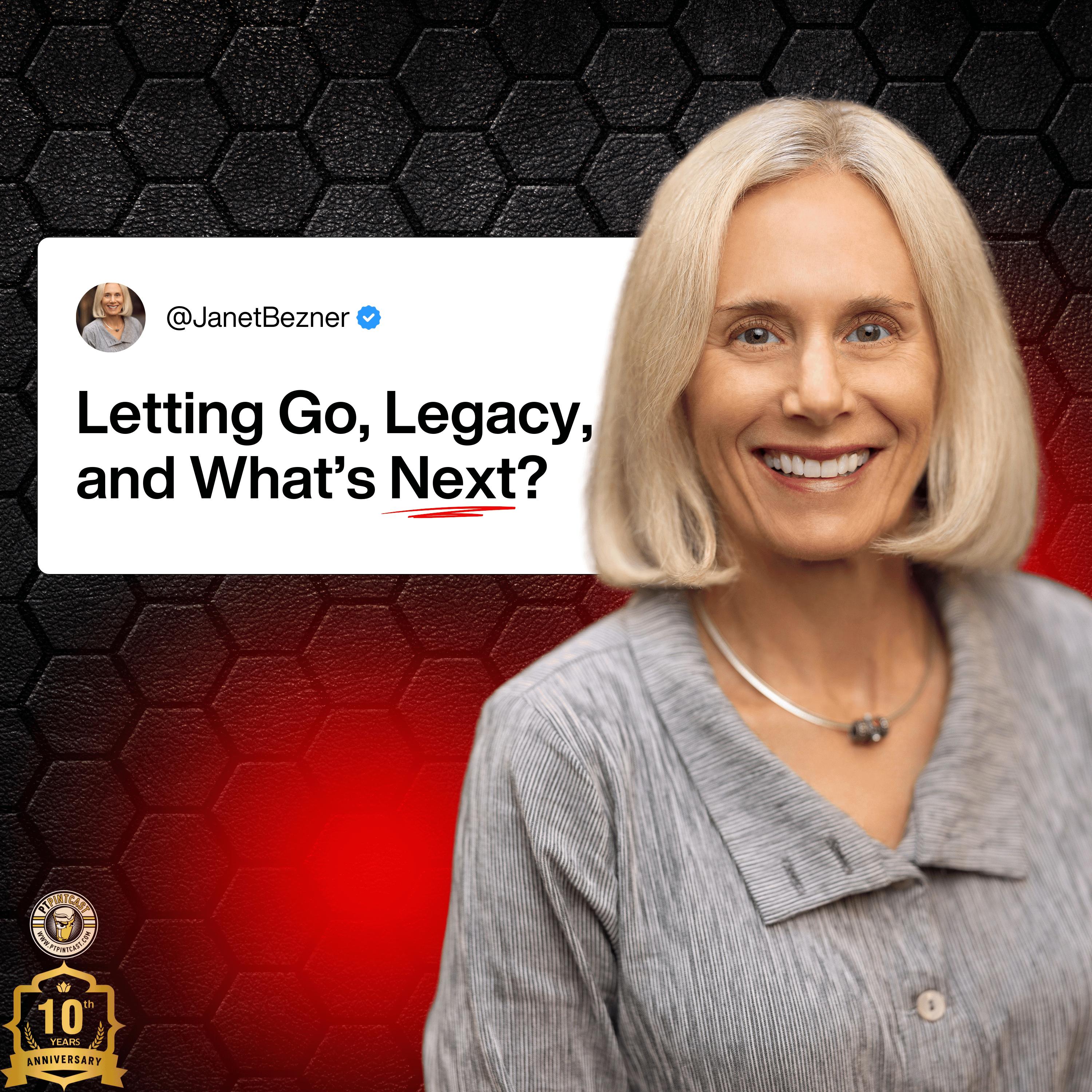


Why would a respected PT leader step back from the national stage?
Dr. Janet Bezner — former CAPTE chair, academic powerhouse, and leadership voice in PT — joins Jimmy to unpack career evolution, mentorship fatigue, and how identity shifts in the next chapter.
Whether you’re a new grad, seasoned faculty, or clinic owner facing “what’s next,” Janet offers insight into navigating transitions with purpose (and pastries ????).
<p>This episode is part of the <a href="/physical-therapy-business-podcast">Physical Therapy Business Podcast</a>, where physical therapists and clinic owners learn how to get more patients, improve operations, and grow their clinic without relying only on referrals.</p>
<p>Looking for more episodes? Explore the full <a href="/physical-therapy-business-podcast">Physical Therapy Business Podcast</a> for real-world strategies on physical therapy marketing, patient acquisition, and clinic growth.</p>
0:00 You're listening to the PT Pinecast, where smart people in healthcare come to make noise. Here's your host, Jimmy McKay. This is a fun one. After forty five years in physical therapy across clinical care, national advocacy, education, administration, today's guest is not leaving. I like this. You're stepping into something different, going towards not away from towards retirement. And we're going to find out what is in there. I'm going to guess a little bit of Peloton is in there. That's just my guess. What she's really stepping into is the next version of herself. Aren't we always? We did that in elementary school. You were a third grader, then what'd you do? Became a fourth grader.
0:41 So it's looking to step into something. I think this is awesome. Throughout those four to five years, she's been a champion of health promotion, national board certification, mentor to hundreds of PTs. And she believes great PTs aren't defined by tools or techniques, but by the version of themselves that they... Step into. You see what this is? It's a perfect setup. She was born in the backseat of a car. We got to get into that. I love the little weird side things that we find out about people that maybe you never knew. And she's been in motion ever since. See what I did there? Born in the back of a car. Been in motion. Got it. All right. Well, congratulations to Dr. Janet Besner. Uh-oh. Thank you.
1:22 There. There we go. There's a great intro. Janet, first of all, congratulations. Thank you. This is a pretty big deal. I think it was on LinkedIn. People were announcing, you were announcing your retirement and all those different things. So it's hard to ask a first question there, but I thought hard about the first one. You've had a I like to ask past and present questions. What did you think would matter most at the start and what actually ended up mattering the most in your career? You know, when I started, I was really focused on being the best clinician that I could be.
2:10 That was in nineteen eighty one back in the day where whatever you did, you got paid for. I have heard about those ideas like bedtime stories, like once upon a time. So, yeah, I think I just wanted to become the best PT I could. So that meant to me reps, learning, variety. I wasn't really sure, I don't think at that time, what I really wanted to do. And what I think really now looking back, what has mattered most, I think, are the relationships that I've had. and made and hopefully will continue to have. Yeah.
2:50 And that's a... the input determines the output, right? So if you're aiming to be a clinician, then your job would be read, learn classes, continuing education. And if you do that, then you're gonna get this. But the funny part is if the thing that was actually most important was relationships, you approach that differently. At what point did you start approaching like, hey, I get more out of all of this, whatever this crazy thing is, a life or career, based on who I connect with and what I get and give to them, did you start then changing your inputs to match that output? And if so, how?
3:32 I think I realized this maybe about fifteen years into my career when I realized that every job that I had had was because of a relationship. Is that crazy? Yeah. And it is still true to this day. Every opportunity, every job, every significant encounter or activity or something has been because of relationships. So I would say, yeah, definitely. I mean, my dad taught me never to burn bridges. He worked at the same employer for thirty five years.
4:13 um, and retired and is in the hall of fame for his profession. And, um, so I knew that. Uh, but then I think when I realized how important relationships were to my future, then I really thought, okay, I have to nourish. I have to, you know, put into this and not, not burn bridges. Yeah. Well, there's also, there, there's a different mindset though. Like not burning a bridge is one thing, but understanding that the time effort, um, and energy into building a bridge is worth the bridge and then some yeah yeah yeah i think there's some overlap there the things that you do not to burn bridges are also some of the things you do to nurse the relationship but but yeah and you know pt is so wonderful because it's a manageable size even today i mean it was a lot smaller when i came in but you know um I have a lot of really close relationships.
5:08 You know, we are paths have crossed multiple times. And, you know, when I see you and when we talk, it's like no time has expired. Right, right, right, right. It's so great. You've said leadership skills, not actual PT skills, are what let you create value and impact though. So what should PTs be doing now to develop these? And then I'll have a bonus question, which is good luck trying to convince a motivated new grad PT to lean on these relationship things, which are like so soft and subjective and I can't measure them. And I can't, how do I do like, so it's almost like you have to do some, you need to teach a kid to go to first, second, third, twelfth college PT school and be measured against these things that you learn.
5:55 And then, Hey, you're out. Scrap most of that. You learned it. Good. Now I want you to focus on all this stuff that we didn't teach you. Like that's, there's some unlearning. Like you said, it took you How would you convince someone who's walking into PT school now that it's actually the people we met along the way? Well, I think people get into PT, a lot of them, because they love people, right? So they're already relationship-focused. They just don't look at PT that way. So I don't think it's a huge right turn or anything. I think having that conversation with PT students... which you know i do uh or did in in my my program but yeah i don't think it's a huge shift and i think it's just um the way that you think about it and and realizing that um relationships are going to be the key to your success and so you should nurture those skills and and they're the same skills that make you a good pt to a patient i think you know um Leadership is a different situation.
7:01 I don't think PTs see themselves as leaders, maybe more now that we're at the DPT degree, but man, I mean, I'm so grateful for the opportunities I had to become a leader in all these different settings and then to realize, oh, there's a real set of skills here. And I'm working as a consultant and one of my clients um wants me to build a leadership curriculum for for a project they're doing so i'm very excited about that and it'll be available to pts ot speech therapists um i think it's going to be hard to convince them to pay pay to take it but um that's always a challenge but i think you know i think we have to figure out um how to leverage those skills because that's what the profession needs to get what we want Agreed.
7:55 What, what, what leadership skill did you resist early in your career that now maybe you swear by? Was there something that you were like, no, no. Isn't that funny? Like the thing we've like say never winds up, winds up. Yeah. Always. I can't think of anything, you know, like I, I'm one of those people that always puts their foot in their mouth. So I have a lot of courage. I don't really care when I make a mistake, as long as I don't kill anybody. I just do it again or learn or whatever. So I was one of those people that was comfortable putting myself out there. And so I don't think I ever resisted. I mean, there are several things that I really, um, it took me a long time to get better at.
8:40 One of those things is when, when somebody is not accountable. So if somebody is not doing their job, um, The way you approach that and the way you help them to see that they need to do it, it was a one eighty for me. The way I started, I would I would sort of, you know, throw it in their face and say, you know, you didn't do this. Come on, do it. And that just never works. And so the way I approach people really has has evolved. I would say I never really resisted it. My dad set the tone for me. My dad was a New York City fireman and I wasn't a fireman.
9:21 But when I took over my first radio station, half the radio station staff was older than me and had been a broadcaster longer. And the other half, even if they were younger than me, had been at that station longer than me. So I was like sort of the new guy. And my dad would just say, he gave me like this great advice, which was, your job is to, you work for them. Yeah. And you only have to be the boss if they don't do what they're, if they know that they've been doing this longer. Your job is to allow them to do that. If they don't do that, then they're making you be the boss, the prototypical. And that changed everything where like normally I was like, well, you've got to be the loudest and the smartest and the first to whatever.
10:05 And I'm going to bring the hammer down. And I was like, but I hated working for people who did that. And my dad was essentially telling me, you don't have to. yeah no that's great advice he's right yeah the job was create a really great environment yes yes that was another thing i learned later was um the importance of culture um and i'll have to say this last um i don't know uh five years of being at texas state i i really feel like i was able to build this culture uh where the students can can thrive and Every kind of student, you know, students come in, we have a class of forty six and students come in at all different places.
10:49 Oh, yeah. In terms of their preparation. And we were able to create a culture where every one of those students can can thrive. And I'm so very proud of that and so grateful for that. And I, I, I wish I'd learned that earlier in my career. Picasso said good artists borrow, great artists steal. would you borrow or steal from other people? Were there like tools? I like stealing ideas from outside the profession. I forget the guy's name, but he was the guy who founded that Zappos, the online shoe. And he realized that he was the bottleneck at some point, that there were decisions not being made.
11:31 So he made a rule. If it's going to cost you less than a thousand dollars to solve it, I trust you go solve it. You're going to have to explain it eventually, but solve it, solve it, solve it, solve it. And they saw their level of complaints go from like X to like almost zero. They were like, everything was less than a hundred bucks or like close to it. So is there anything that you like learned from maybe outside of profession that you like sort of stole and reeled in and brought it towards us? Well, I would say the whole area of health promotion and wellness for sure. Like I was one of the very first PTs to even dive into that. And Um, for me that happened in the early nineties when I was doing my PhD and. You know, that whole body of work opened up a whole area for me that I knew nothing about.
12:18 And I spent the last thirty years trying to figure out how to get that integrated PT and, and then others came along and, and have done a lot towards that as well. But, um, yeah, the whole notion of prevention, I think PTs, we kind of knew it, but. you know, we were paid to fix, you know, things not to prevent them. So we weren't emphasizing it. So that that's, I think, a great example of that. But then all I mean, I'm like you, I read and explore lots of different things and different topics. And i'm sure i grab ideas from all kinds of other places i've done seven or eight different videos um about the company that makes the bike behind you like i look at peloton and people were i'm like look what they're doing like Look what they're really doing.
13:12 Yeah. They made you and me pay a couple grand for a bike. That happens. But then a lot of times people, it becomes a laundry rack, right? Right. Exactly. They're able now through technology, they can track who uses it, how often, how long. If you look at the updates, we're recording this in early twenty twenty six. it's now you like, it always had really great data, but I gotta be honest. I was just like the data I would look at how many times in the last thirty days compared to the previous thirty days did I get on it? Right. Now it's able to crunch the data and be like, Hey, listen, your average watt per watt per ride is up. That's great. And I'm like, Oh, and then it's suggesting, you know, it will be great if you, if you threw in a couple of strings.
13:57 I look at what they're doing is they're not, it's a bike company, but really it's a health sort of motivation, promotion, integration. They're making their, their, their make and gamification. Have you, have you tried lane break? Yeah, I have tried it a couple of times. It's really good. I like it. It's goofy and dumb. It's a video game. Yeah. But my guess is they're tracking how many people are using all these different features. Oh, yeah. And the ones that get a little pop, maybe they move that to the home screen. Yeah, yeah, yeah. I asked this question. I'm actually going to do my podcast live at APTA New Jersey's Student Conclave this weekend. All right. Sure. And before I start the show, I try to like, this is when you know you've made it.
14:41 I'm my own opening act. I don't rank well enough to have an opening act. And the question I ask, because a lot of the students have no idea who I am. That's great. I will ask, how many of you are preparing to enter show business? And none of them raise their hand, which is on purpose. And then I say, so you're just going to tell people how to do exercise. You'll never show them. You'll never create a story that shows them what if they listen to you for twelve weeks, what they'll become. And that's when people start to get antsy in their seat and be like, well, I guess I am. and then that sort of goes back to like you're promoting health it's hard to track when you prevent something yes but that's what the smart research people are for that's what they're for they're saying hey if we do this a hundred times this only happens twelve not twenty nine right right and that that's a challenge right because the payoff for all that stuff is down the road way in our future where we're not even focused.
15:44 And so if we could figure out how to, how to really capitalize on the day to day payoff, which is there, people underestimate it. That, that, that's, that, that would be money in our pockets. Well, congratulations. Now that you've retired, I would like to nominate you for being, you, you, you get to try to solve that. Okay. Thank you. It's interesting, you know, already. So I retired December thirty first, but, the last day of work, official work was the twenty third. So I've had, you know, what, a week and a half or so. And already my mind is more open. It's so cool. Yes. Like I usually spend, I think I was spending a fair amount of time thinking about what's on my plate this week and how am I going to solve this problem?
16:29 You know, my job was just I had the ultimate middleman job. So department chair, I was an associate Dean, you know, there's stuff coming from up here, stuff coming from down here. And it's like, Oh my God, what do I pay attention to today? And so I can already feel the space in my brain. And I hope that I can spend some time really being thoughtful. In fact, that's my word for twenty twenty six thoughtful about things that matter that need to be thought about. So I'm looking forward to that. I love that. All right. So you're big on the idea of showing up as your best self, but what is that? I've heard that phrase before. What does that actually look like?
17:10 How do you develop and how do you know when you did, how do you know when you do it? Oh, that's such a great question. So I think it's very individualistic, obviously. It's figuring out Okay, let me say this. It's knowing what you're naturally very good at, which most of us can do in our sleep. And when we're at our absolute worst, we can do that. But we're not all good at everything, right? So there's a lot of the things that were required in my most recent job that I was not natural at, that I had to work at. So in order to deliver on those things, when I needed to, which most of the time was not, didn't warn me, hey, you're gonna have to do this tomorrow, it just showed up.
17:58 I had to figure out what allows me to have the most energy around that. So for me, it's very simple things, getting a good night's sleep, regularly exercising, eating things that nourish me, not that drain me, having connection with people, having, you know, meaningful, intimate connection with people, things like that. Some alone time. I'm an extrovert, but I still need a little alone time. So things like that. And so I think you know it when you can do the things that you don't like and that you don't look forward to and you notice yourself going, oh, you know, I'm not so, I'm not so anxious about that.
18:39 I think I got that. Have you ever, have you ever read the book or heard the, the, the, the paradigm, the six types of working genius? I don't know that one. So this one essentially breaks what you're saying. They sound similar. It doesn't list what tasks they are. It lists what types of tasks. Okay, got it. I worked for a boss years ago who was like, Jimmy, if you ever want to rise and rank in this company, we're going to need you to get better at spreadsheets. He's like, you're terrible. And I'm like, yep, I don't disagree. And then I asked a question back to this guy who'd been there for twenty five years and was sort of like the resident, one of the resident experts.
19:21 And I said, hey, the people here at this organization who are good at spreadsheets, are you telling them to get better at communicating verbally? And he's like, no. And I'm like, then why don't I just do more of the thing I'm already good at? And then we get one of those spreadsheet people who could do that in their sleep and we have that do it. And here's why. I'm going to spend this much effort getting good at spreadsheets and I'm going to get this much better. Or we let me do the things you hired me for. And I know this is going to shock you. He did not like my response. Be well-rounded. I'm like, but I, I'm not here for spreadsheets. That doesn't give me energy.
20:02 In fact, I would, I would see spreadsheet day on the calendar and I would dread it for the month preceding that. Yeah, yeah, for sure. You know, and it's interesting, the strengths-based evidence and approach. Have you heard about the strengths-based approach? Maybe. Does that ring a bell? Maybe. A typical annual evaluation with my boss was, here's what you do really well. Here's what you don't do well. Let's work on that. You need to really focus on what you don't do well. And the strengths-based approach says, you know, just do what you're good at.
20:42 Well, it's awesome in theory if you have the ability to carve out a job where you're only relying on your strengths. I have never had that job and I've always been in a sort of an executive position, a leadership role where, you know, you have to be good at everything. You have to be good at the spreadsheet. You have to be good at the people. You have to be good at the policies. You have to be good at budget. And so for me, I need to bring my best self so that I can do a good job. at those things that I'm not natural at or else it just sucks the life out of me. And, you know, I'm one of those people. I've loved every job I've had.
21:22 I've loved every position I've been in. I've loved almost every day of work. I mean, work never felt like work to me because I love my profession. I love what I was doing. And I have some, you know, some desire and some motivation to do a good job. So, yeah, so for me, I never had the luxury of only doing my strengths, but some people can. And if you can, I support that. So, so working genius was less about, it was, it was, it was, it was more about the type of work and did it give you energy? Did it suck energy or was it neutral? So essentially, essentially I wasn't planning on going here, but this is what it looks like on the screen.
22:07 I'm going to pop up there. So essentially it just says there's six types of, I see. Wonder. And of course, it magically spells the word widget, which if you're going to write a book, make it spell a word. Gotcha. Wonder, invention, discernment, galvanizing, enablement, and tenacity. And it goes into what those things are and yada, yada, yada. But what it says is, all of us of course if you're also if you're gonna have a paradigm make it work a hundred percent of the time because that people will buy your book it's that all of us have it looks like a stoplight green yellow red it's like all of us just naturally are have green as two of them yellow and they're all different and red is two and by right it's like you'll if you only did this task all day you're gonna go home feeling like you got hit by a truck and you're never you're gonna want to crawl in your bed and pull your blanket over your head Now you might have to do some of it, but as long as the greens outweigh the reds and then like me being an accountant, like I'd rather just cash everything in and just go live.
23:09 Couldn't do it. I bet people who are good at accounting would be like, speak in front of people and do whatever on the, on the fly. Not a chance. Now I want to have that accountant, like let's send you to public speaking and let's triple down. You're going to lead our podcast. That person might hate it, might hate it and be bad at it. Or do we just let the person who's good at it and wants to do it? Now, if there are parts of your job that you need to get done, it's saying you can plow through one of those red activities, but it shouldn't be ninety percent of what you're doing or you're going to hate the environment. Yeah. Yeah. Yeah. No, I think that's there's a lot of wisdom there. I mean, I see people, good faculty, good researchers being put into administrative roles all the time.
23:53 And there's no there's no they should not be. be put there um and the principle have you ever heard of the yeah yes yes yes yes for the audience it's uh you know you're good at yeah you're good at digging ditches and then you get promoted now you're in charge of everybody digging ditches and maybe you're okay at that and now you're in charge of the thing above that and you're not good at that So we don't promote you anymore, but we also leave you there. So the idea is the line that sticks with me is we rise to the level of our incompetence. And then you have an entire organization where people are actually one step above where they should be. And that is a travesty for them and everybody around them and the entire organization.
24:35 Yeah. Yeah. No, I think it's right. I mean, we should be moving into organizations and positions that really fit, um, fit our skill set. And, um, that's, that's another good piece of advice for, for the young therapist, you know, um, think about that. Talking to the young therapist, you've worked with PT students for decades. What's something or some things that they wind up worrying about too much and what's something they don't worry about enough or, or, or at least think about enough? Yeah. Um, That's, that's, I think that's a very, my answer is very generationally influenced.
25:23 Like this young, this, this generation now that's in our classrooms, they're really concerned about money, like more so than any generation I've seen since mine. And I, and my generation wasn't, and I don't, I'm not saying that disparagingly. Um, they, um, I think they're over-focused on money. And I don't know where that's going to lead them. I'm interested to see. I'm afraid it might lead them to too much job hopping. And I think they should be more focused on getting in a position where they can learn and grow, whether that's through mentoring or support or colleagues or whatever.
26:08 So that's the current generation. That's the advice that I would have. Yeah. Yeah. Don't chase the money. Chase the mentor. Yeah. That's a great way to say it. Yeah. Yeah. And also, and through mentoring, you build your skills. So think, you know, prioritize building your skills. Yeah. And that might mean that money has to take a second or third seat. You've heard a lot. I mean, I've heard a lot of people who wind up with money say, it wasn't the thing I was aiming for. And then magically it showed up. Yeah. Yeah. Absolutely. If you chase this thing, it winds up being the most elusive thing.
26:48 But if you chase a great story, if you chase a great meaning, magically the money shows up. And I know that's easy to say and hard to do. Yeah. No, I think it happens a lot. I mean, I would say it happened in my case. I'm doing a lot of money examination right now because I don't have a paycheck now. making sure I can support myself for the rest of my life. And I've done great. And, you know, I've been a PT clinician and an educator and, you know, now I don't have children. So there's not a lot of, there's not a lot of stress there, but I've done really well. And I never, never chased the money. That was never my priority.
27:29 And, and I didn't, I would say I didn't really worry about it. I was a good steward. I think I'm an example perhaps of that. Profession-wide, zooming out all the way, what do you hope the PT profession risks more in the next ten years? Where should we push our chips in that maybe we're not? What should we be bold on? What should we be bullish on? Articulating our value without a doubt. Boasting about what, what, what we do and what we give people.
28:11 Um, because, uh, the powers that be really don't care. Tell a story that explains shows, shows them, right? Yeah. We've got to, we've got to be more, um, we've got to have more ego or else we're going to be left, uh, on the sideline. We have, we have to put ourselves out there and, You know, I think by nature, PTs aren't comfortable doing that. And I think in part, that's why we're where we are. We got to figure out how to do that and do it in a way that feels okay to us. Okay. So let's go super zoom it into you.
28:52 Now you're in day, I'm not good at math, we're in week two of retirement. What's two things? What's something you're proud to carry with you? And what's something you're glad to leave behind? Hmm. Okay. I'm going to do the later first. Glad to leave behind not waking up at five thirty and not driving on I-thirty-five. Okay, good. That's our freeway. Now wake up at five thirty and hit the Peloton right behind you. No, how about seven? There you go. Even better. So I'm really glad to leave behind the grind of getting up, getting to work, being in the office every day, um, That was weighing on me.
29:35 And what I'll take with me is all those great relationships I built. Yeah. It's been so wonderful to hear from people as I've been putting out on social media that I'm retired. And I've heard some from students I haven't heard from in twenty years. So I hope just to keep connecting with people and I'll take that with me. I mean, the people that you wind up mentoring, dozens, hundreds, whatever, they've probably, I'm imagining, gotten into some really interesting, weird corners and levels. They've climbed ranks and gone places that are almost like that Dr. Seuss book, right? All the places you'll go. Right, exactly.
30:16 That's got to be pretty cool if you look back and look at yourself as, I guess we're always a branch on someone else's tree, but you're also the roots of your own tree. Yeah, no, I love hearing their stories and learning about what they're doing and how they got there. I think that's really, really cool. So, yeah. I got to be honest, I'm not pitching here, but a great idea for a podcast would be one interview with someone you've met along the way per year you were in the profession and you got yourself something episodes, right? Yeah, yeah, exactly. No, you're right. That's cool. I like that idea. All right. Last thing we do every episode, we call it the parting shot.
30:59 This is the parting shot. One last mic drop moment. No pressure. Just your legacy on the line. All right. No pressure. As the guy said, just your legacy on the line. Now, what's the thing you'd want to leave the audience as we wrap up? But by the way, just because you're retired doesn't mean you can't come back on the podcast. We don't discriminate against people. I would love to. What's the last thing you want to leave with the audience today? I would say, you know, invest in the soft skills, invest in developing your soft skills, your ability to listen, your ability to be empathic, your ability to connect with people.
31:41 That really makes life rich. I've done it. I did it at a small conference and I think I talked to somebody else about doing it at CSM potentially next year. I already have the title. Why are these soft skills so damn hard? Yeah, that's great. We should teach them, number one, identify the problem and then give people a handful of skills to then go out and solve. Hey, I'd say congratulations. That feels final though, but I'd say well done. And I'm sort of excited which direction you're going to go with this next. Now that your head isn't moving linearly, you're going in all directions with your thought process. That's great. Yeah, yeah. One thing, I'm going to learn how to make pastries. like really good pastry all the pastries i want to learn all the different doughs and i want to i want to just do your basic croissant and i want to want to do like the savory pastry so i'm gonna take a class i might take a boot camp i found a boot camp in june one week of class boot camp and i'm just gonna make pastries for my friends and hopefully they'll give me feedback until i perfect it New podcast idea.
32:45 In person, we record, and you make six different pastries, and then we try the pastry, and I get to ask you one question. Okay, deal. Janet Bezner, hey, congratulations, and thanks for sharing some wisdom. It's been fun, Jimmy. Thank you. That's it for this one, but we're just getting warmed up. Smash follow, send it to a friend, or crank up the next episode. Want to go deeper? Hit us at pgpinecast.com or find us on YouTube and socials at pgpinecast. And legally, none of this was advice. It's for entertainment purposes only. Bullshit! See, Keith? We read the script.
33:25 Happy now?