What 15 Trips Taught Me About Global Health


Guest: Jason Craig
Organization: Global Community Health Volunteers
Jason shares his 15-year journey running interdisciplinary global health trips for physical therapy, pre-med, and nursing students. From the first trip to Costa Rica shot on a camcorder, to this year's 26-student PT cohort in Guatemala, this episode is about impact, storytelling, and what it really means to serve communities abroad — and why students (and donors) keep coming back.
Topics Covered:
- The birth of Global Community Health Volunteers
- How service trips are structured and funded
- Advice for students who want to go
- Fundraising lessons learned (ditch the bake sales)
- Why content matters — and how to tell stories that stick
Support the Mission:
→ Follow Jason Craig for updates and stories
→ Reach out if your organization wants to get involved
Subscribe to PT Pintcast:
<p>This episode is part of the <a href="/physical-therapy-business-podcast">Physical Therapy Business Podcast</a>, where physical therapists and clinic owners learn how to get more patients, improve operations, and grow their clinic without relying only on referrals.</p>
<p>Looking for more episodes? Explore the full <a href="/physical-therapy-business-podcast">Physical Therapy Business Podcast</a> for real-world strategies on physical therapy marketing, patient acquisition, and clinic growth.</p>
0:00 turn my phone off so it doesn't ring in the middle of it all right jason craig is here jason welcome to the podcast hey jim i'll introduce you to the audience they have some contact jason you were one of my professors in pt school you were one of the very first people who when i pitched the idea of a podcast you were like yep yeah and then do you remember what i at what i said to you and sky donovan i was like well i want to interview you and you said no do you remember why and it was a very smart idea of why i shouldn't interview you That's like ten years ago. It was ten years ago. You said, I will do it if you get to like a hundred. And I was at like six. And you said, and it's so smart, you were like, if you just keep interviewing your professors, people will look at you like it's just a kid running around his school.
0:46 Right. So you're like, I will. I'm not saying no. It's a good idea. But you were like, go out. Yeah. Oh, wow. Yeah. But then if you're still doing it, if you had the fort, you know, like if you're just, if you want to stick with it, I'll do it. But, and I was so smart because that would, it's sort of subtly, it would have subtly said that. Yeah. Yeah. I mean, I remember whenever you started this and it was that, the idea behind it was great, but, but the, for me, it wasn't, you know, if, if the first few things that people ever see is always just us and, then I kind of wondered whether people would think we put you up to it. You know, hey, here's this kid who came with a radio background, and so we're going to leverage that for our benefit and our self-promotion.
1:33 And so I was like, no, you go out there and, you know, you do what you, live the dream, do what you want to do. And it actually took me forever to get on the podcast. Well, I think Sky Donovan said the same thing, because I think you guys said it right in front of me. And I was like, well, I'll make you a deal. You got to, you know, Sky was episode like one hundred. right and i was like cool but after you have ninety nine conversations you're like i sort of know what this is now like i've i've done it around so anyway and then you taught me research you taught the research class that year amongst other things and still to this day i remember i was in the back and again second career guy i'm in a room full of kids because they were ten years younger than me i just felt like the old guy but i also felt like the guy was far behind and i'm like I think one of the assignments was like, read this paper and then...
2:16 And I was overthinking it. And you literally... And plus you have an accent too, which makes everything sound smart. And you were like, Jimmy, just like, what? So what? Now what? And I was like, oh, I don't need... the data analysis and what is it saying, what they do. So what does it matter now? What, what does this change anything going forward? And I was like, you're like, that's research. I know it looks fancy and we can make it fancier than that, but it's not. Right. And that's what we've been living by for, you know, past ten plus years. Everything that we do, particularly with our global ed stuff, that's our motto is, you know, what, so what, now what?
2:56 And, you know, trying to instill that in our students is just, it just helps focus everything. You know, one of the things, yeah, it just, it narrows things down. It keeps it nice. And you can always just fall back to that really quickly. So when things get complicated and there's so much happening, it's like, what am I doing? Right. So that I thought was a really great prelude into what we're going to do. And this is going to be a snapshot sort of look at something that you've done before, like you've been ongoing. Is this a formalization of what you've done? So for context, in your third year at Marymount University where Jason works and where I went to PT school, and we talk about it for three years, like students are like looking forward, you go on a service learning trip.
3:47 And I have to say the cliche, you will get out of it more than you put in. Right. And it's cliche. And I knew that. But it's true. And you and you'll hear me say that. And you'll be like, oh, OK, that's cute. And you won't understand it unless you do a trip like that. But it will change how you see things. It'll change you and it'll stick with you. And that's true. We can get into that story later. but what what are we looking at because you've done that through the university is this an extension of or a continuation of or is this a formalization of what is this so so one of the partners that we've worked with oh gosh probably for the last um seven or eight years um so as jimmy said we do a global ad trip we've been in central america we're actually coming up on our fifteenth trip it's our sixteenth year but fifteenth trip coming up um and we we try and work with local organizations as much as possible.
4:38 We don't want to be the Americans helicoptering in with all the ideas. We want to elevate and lift up any local organizations that are there and really support them. So Global Community Health Volunteers, it's a mom and pop shop that was started by Pavel and Yvette, two of our Nicaraguan friends. And basically it was to try and help American universities bring teams of health professionals, pre-med, pre-nurse, PT, dental, whatever, into Central America to serve on one week or two week sort of medical mission type events, which is what we were doing.
5:19 So we'd already been doing it for a number of years. We've moved them from Costa Rica up into Nicaragua. We met Pavel and Yvette, and they had great ideas and great passion, but they were really struggling because they didn't have anything that was U.S. based. And so we partnered with them to help them establish a U.S. base so that it gives them a little bit of legitimacy for U.S. universities trying to work with an organization, not to solely be dealing with a Nicaraguan address and that sort of stuff. And so that's where Global Community sort of came from. And part of that is it's grown. As we've just done Teams, then, you know, Pavel started to put together a website.
6:01 And to try and create almost a window into what we were doing, but other groups were doing as well. The University of South Carolina had been sending nurses with Global for a long time. And so it was really a window into what was available and then an opportunity for other institutions and universities to find this group. and maybe connect with them, maybe send their students down. Okay. So I saw you posted on LinkedIn last week. Actually, I was in Guatemala last week setting up for our next trip. I saw you post on LinkedIn about having this kind of, you know, sort of review from the outside. Because when you're on the inside, everything looks fine.
6:42 If I reviewed my own website, it doesn't work. You can't therapy yourself. I wish we could, but we can't. So before we bring the website up, these are snapshots, and these are to improve. And again, you can't really do this for yourself. You can, but it's hard. What do you provide, though? Let me ask you this. So who are you talking to? This is a window into it, but who do you really want to see this? Is this universities to show that you're a conduit to working in Guatemala with people? All right. No, don't yell at me. That's okay. It could be more than one audience. There's probably really two audiences. There's got to be the one audience, which is the institutions. And there's certain information that they are looking for, the schools, the universities.
7:23 Got it. But we also, there needs to be, the other audience is the actual practitioners, the students who are going to come. At our university, we organize a trip. So it's very much a university sort of developed and driven activity. Other institutions, though, it's not so much the university, but there's like a club or an association where a student will see, hey, there's this opportunity to go and serve. And the club that they are a part of or lead or are members of, they kind of pitch the idea and then other students just join in. So it's not as much a university sanctioned opportunity like we do, but it's more of a student driven, student led.
8:09 So there's a little bit of both where. I actually think primarily our audience is probably the students because when we attract them, they're the ones who will go back to their institution and say, hey, can we work with this agency? And then, you know, but then there has to be when the agency or when the universities look at the agency, it has to be all the right information. Right. Got it. So you're looking to go, you're looking to say this is a resource for individuals who are sort of seeking this thing out. And then your social channels and how you tell stories might catch their eyes. You might just accidentally get in front of them and like, oh, this is cool. They follow along for a little while, then they hit the website. Right. And then also for universities who are like, this is our turnkey.
8:51 We want this, but they don't have a Jason who's done it before, made mistakes, figured out how to solve them. Yes. Okay. So do you guys have a tagline? You don't have to, but what's your one sentence explainer? I don't think that there is a tagline currently. It's okay. Um, but I, I, I was, when I was reviewing the website, and sort of looking for today, you know, I think that there are some sort of lines that we could pull out, that we could kind of, you know, make it about the student, about transforming, you know, a potential healthcare student or healthcare professional, and, you know, changing and challenging their viewpoint.
9:35 So there are, there is some text on I think the about us page that I was like, Hmm, that could be trimmed. Yep. Okay. Let's take a look a little bit. So, so here's your website. First of all, we want to make sure people can find it. So it's global community health volunteers.org. Yes. My first impression is I see faces and I cannot tell you how many times I review a website where I have to hunt for a human face. We are big, dumb animals. These things in front of me and the brain and my skull are wired to look for faces. Jason, we even find faces and things that don't have faces. Yes, that's true. Like when we always look at pictures of the surface of Mars, we're like, that's a face. That's a mountain. I know you think you see a face.
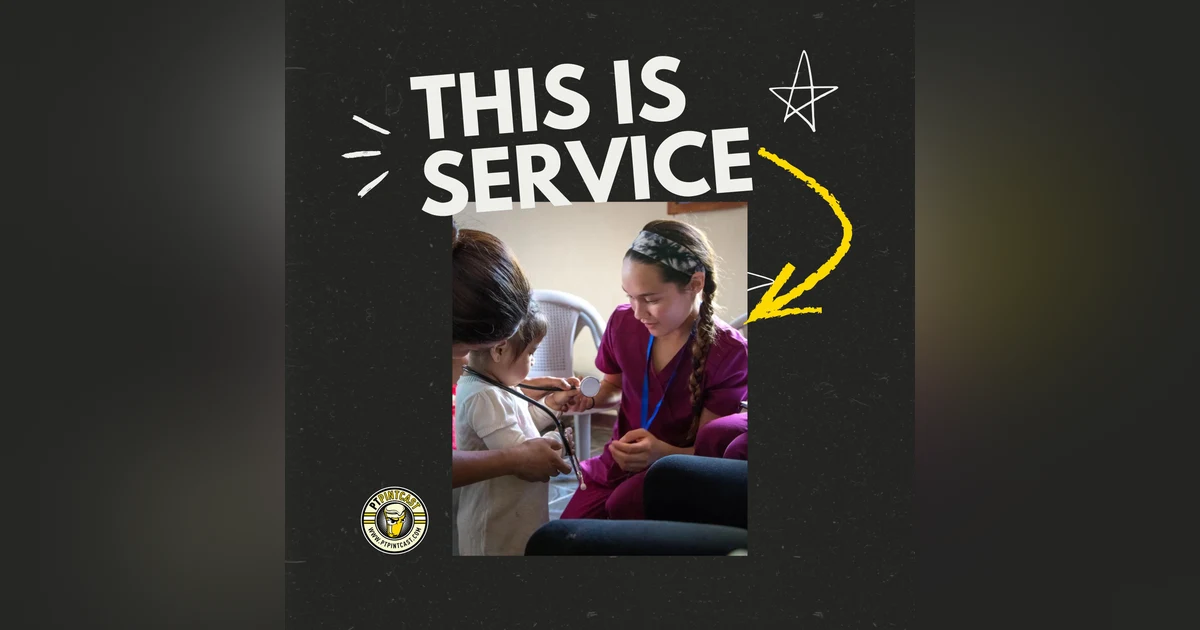
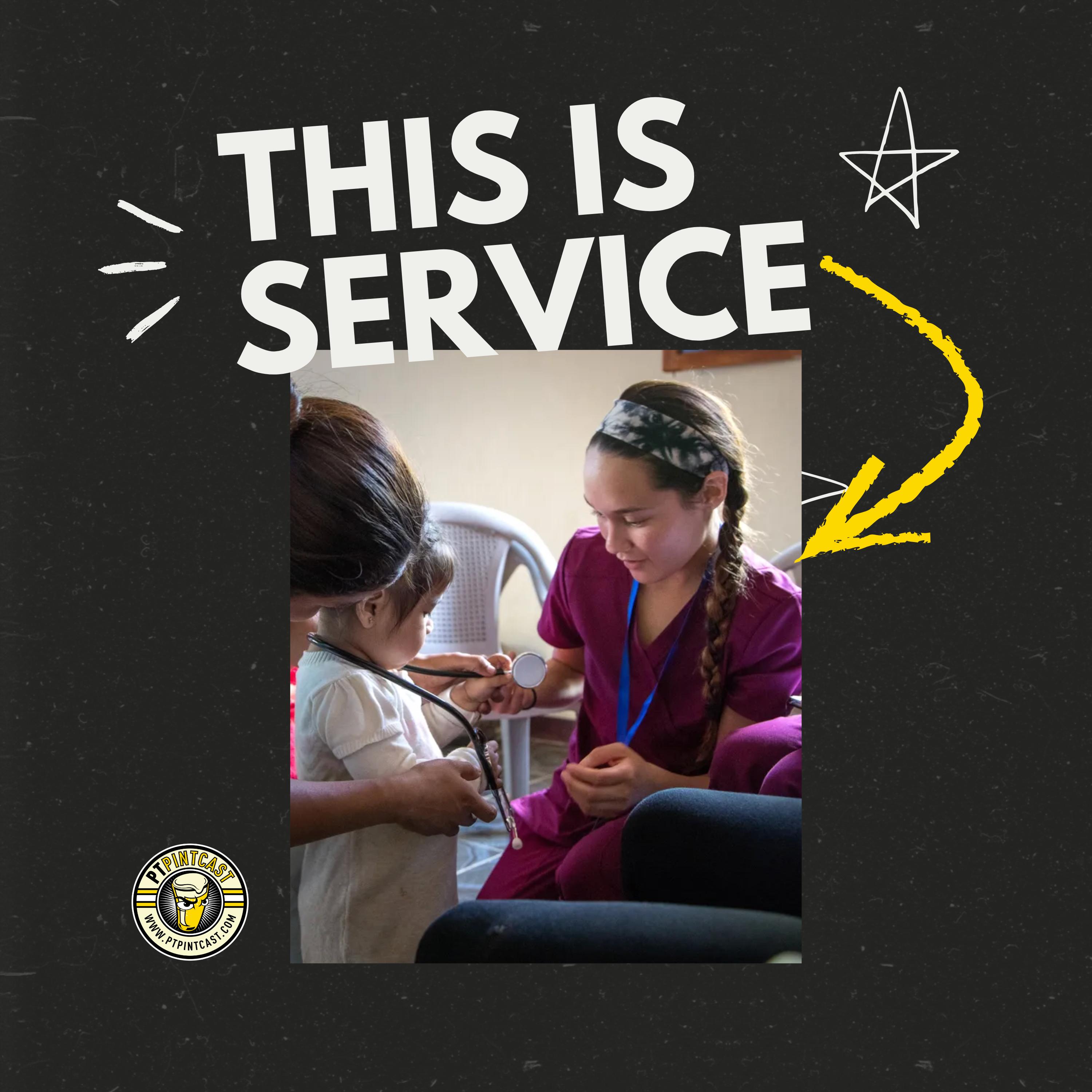
10:17 And there's a phenomenon. There's a name to that. I can't remember what it is. But the fact that you have faces and these people are doing something, the woman that I can really see and the girl she's working with, The woman is in scrubs. She's got a stethoscope on it. This sounds basic, but it's not. You're essentially, you're in the right stratosphere. You're like, okay, I begin to understand what this is for. This is simple, but a lot of people will trip up on step number one, in my opinion. Right. And then the name global health, uh, global community health volunteers. This is good. I like that. You and I both know there needs to be some punch below it though.
10:57 Right now you'd understand like, that's cool. That's who you are, but what are you? So some things that we can run through that are probably buried on your about page, which is fine. Let's bring them up. And most of the time I do want to put into context. Most of the time, this is like, um, sculpting. You have every, you've got the block of marble here. The hard part is chopping away, not adding things or reshuffling the deck. So like serve globally, grow professionally, where service becomes skill, ethical service, real impact are three things that we sort of design. Whatever one you feel like you want to repeat and gives people the best snapshot is good. Right. Yep.
11:38 Yeah. As we go across the top, you have an about me section. Good. A lot of people will trip on that. We don't have to go into it yet, but the fact that it exists again, low hanging fruit and some people will skip it. Right. So the only thing I would say, or the first thing I would say across the top is a lot of good information. It's not overload on your top menu. It's clear. I know where to find it. Um, You show me about us, where we serve. Programs and projects is about you. Volunteer. This is your, I call them, it's called doors. So you have two doors, the individual and the university. Yeah. If you are a individual looking to serve, click here.
12:19 That's one page. They're going to have different needs. If you are a university looking to have a different page, different needs, you already have that information. Probably it's just a reshuffling of the deck. Right. So those those are the only things I might add or just reshuffle. Like you could leave that thing there because I'm guessing volunteering. Like why volunteer voices apply. Good. Before I apply, because that might be like asking me to get married, I need first date first. Just like research, we talked about what, so what, now what. What do you do? How does it make my life better? Then what do I need to do to get it?
13:01 Don't skip to the ring and the altar just yet. I can see that. That's the snapshot there. I don't even go below the fold because most people, number one, don't. Number two... I can't because I'm on a laptop, but I would look at this on mobile. Yeah. And say, and I can, I can just do like the, so this is, this is what it looks like on mobile mirror. Much of the same, even, even less information being shared on mobile though, even less information. So you have to make sure you door face. I don't care what they look like. Right.
13:43 There we go. I don't care what they look like above the fold, right? But show me â and then that tagline. Just am I in the right spot? Good. This is â I want to feel like I've landed on the right spot. That's it. That's all I'm looking at for your website, like thoughts, feelings, emotions. You knew this already though. Yeah, well, just looking at this. So it says home about us, where we serve, programs, projects, and then volunteers. Volunteers is like the fifth thing along. Should that be stepped up? I mean, do people really care about the programs and projects or is programs, projects and where we serve the same? Well, let me ask you this.
14:26 Can you condense? Because what's the difference between upcoming trips and where we serve? Unless where we serve is not what actually you're like, you want to show them what we've done. Is this what we've done, or is this an option of where I can also volunteer? Yeah. Yeah, we're working on that. How much does that cost? Because I have always wanted to scuba dive the Great Blue Hole, which is on the screen right now. So how much? All right, you might have a customer. What do I need to do to go to Belize? How do I get to Belize? Yeah. Well, the where we serve part is really geographical, and then the programs and projects is really professional.
15:10 So it's more the geography or locations that we go to or have served in versus then the type. So nursing, PT. So that's the differentiation between those two tabs. I just wonder. This is a who. Programs and projects doesn't really show it. Yeah, that's the wrong title. Who we serve or who we, well, you serve the people there, but you also serve the people on the trips. So it could be who, where, if you wanted to just be consistent, where we serve, who we serve, um, how you serve. Yeah. And these are your doors, the volunteers of the doors. I also think they should be quite literally to below this picture. This image should stay there, but like below or make, you know, somehow figure out how to get the two pathways.
15:57 Like who is this for individual group? Okay. Yeah. That, that, that sounds good. Um, yeah. I mean, when I, when I was looking at this, I thought, okay, we have some more images down below the fold there, but, There's a lot of text, a lot of stuff. And I think we have the information that people are looking for are already in those in that top menu. And so rather than filling up the front page with that, it might be more beneficial where that front page is to kind of some punchy stuff, some, you know, some testimonial things, and then go off to shoot people to the next page. Correct. Yeah. You want to, you want to make it intuitive.
16:38 So like you're here, this is who we are, what we do. Got it. And there's an image that supports that this picture matches those words. Got it. But who am I now? This website is about you, but really it's about me. Cause now if I'm coming here, I'm like, hang on a second. I can serve in Belize. Yeah. You have my interest. Where do I go? And then essentially click here. And I go through that. I would go through the individual person's door. Cause I'm not affiliated with a school, but if you're looking to bring, ten or whatever. Yeah. We are the turnkey salute. Like, I almost think these next two pages, your two doors need to also have taglines for me where your turnkey solution for what do you what is the what is the correct what is the correct term?
17:20 Is this service learning? Is this like we're the turnkey solution now? OK. Yep. I hear that. And then, and then for the individual, you click here where you're, this isn't the final version where your travel agent, that's not the right word, but where your route for you to go on this trip and you don't have to plan it. We're your turn key solution for a one-off or a two-off. But if you want the whole program, we're your turn key solution for a university. And you don't have to have a whole you, Dr. Venskis, Diana Venskis, and you were the ones who started this trip. We don't have those people. You don't need them. We're here. We now serve you independent of your university. Okay, that's good. That's good. I mean, yeah, there's a lot of this stuff that I kind of have seen, but then it's when you have somebody else kind of reinforce it, somebody else come and say it.
18:07 you know, cause you, you read through this stuff and you try and be critical. You try and be sort of really challenging and try and look at it with fresh eyes. Right. And then, you know, but then you tend to talk yourself out of it. You're like, well, you know, yeah, you're just being hard on yourself. But when you get somebody who's, who's doesn't know what isn't there, didn't write it. That's the superpower. Yeah. You know what? Here's what I see. Like, I don't, I don't have the, we call it the curse of knowledge. Because if you started talking about this in front of students tomorrow at Marymount, you'd skip past the basics because you're like, I talk about that all day. And you understand this, right? And the audience would nod, but they don't. And then you lose them. You lose the basics.
18:48 That's where the magic is. So for Facebook, we're looking at their Facebook now, that big image, Ponderosa. I think we had a stakeout. That's okay. That header on Facebook, great opportunity for a montage of pictures. Pictures are worth a thousand words, but it doesn't burn. I don't have to burn enough calories. I don't have to burn many calories to consume those words. This is show. My favorite day of third grade is show and tell. But we were really there to show something. We brought an item to talk about. Show me your people. Show me faces. Yeah, I get that. Yeah, that I I don't have access to our to the Facebook page, but yeah, we need to change.
19:33 Definitely change that one. Good. And then. These words should also match your website, so when you change it, it's just an iteration of that and everything's it's good here. I also do a quick snapshot. I just want to see the last couple of things that you had shared, this is the twenty first. So it's not you know, you're posting pretty recently. You know, what are you posting? Looks like a video here, but it's an image. It's a video of an image, good. This is like, you know, this is a flyer. Don't get into flyer jail. Video with motion, like good, great. Someone talking, not awful. It's got captions on it, good.
20:16 Is this speaking to one of those two doors? And it doesn't, and what I don't want people to do is like, we are this and we do this. What the video for you on any of this content is, you're speaking to the person and their problems. or their desires. What do you want to become? Are you looking for a way to serve internationally and you're in medical school? Yes. Okay. I call it the eyebrow test. Yes, my eyebrow. Oh, you're talking to me. And I would suggest batch this content. You doing this every day for five minutes for thirty days, it's not going to happen. No. Sit down for two hours, you know, batch the content, record it, whatever process you use to put the captions on there.
20:58 Great. Does not need to be the slickest thing ever. In fact, we don't want it to be. I don't want a Marvel movie. I want real gritty. I want to look like it's from South Central America because that's what you're serving. Yeah. I like looking at the like the photos, like just clicking, see all photos or see all videos. And your percentage of people versus words or flyers is some of the highest I've seen. A lot of organizations are like, well, it looks professional, and it's a Canva template. That's cool. Not the only format you should do. Show me, show me, show me. Stop telling me. Show me, show me, show me. So I see a lot of faces. I see a lot of people in photos. Good.
21:38 That wins my attention. Jason's got a kid on his lap. Good. And then the text. should tell the story, right? If I zoom in, what's happening here? That's what then I look at the text. That's an old photograph. The beard's looking a little black in that photograph. I don't think those scrubs fit anymore. Instagram, right? Now you're going to switch to a lot of visuals or a lot of video. And that's what I'm seeing. A couple of different flyers and words, but a lot of visuals. I watched this video just the other day. uh this one was i guess i have to log in but this one was um students who were going on a trip from a long time it was and they were talking and and they were like i'm holding up signs saying i am insert here that's great because that's your audience yeah that's your end you know your end user that's not the person you're going to help and serve but it is it's the person you're going to help do the serving so showing them I mean, that's great.
22:45 Do that. And look, it even reflects. This one got eight likes. This one got three, five, boom, forty-one. You talk to the potential audience and they were like, yes. People want to hear your words coming out of their mouth. They want to see themselves, not you, in the grander sense. So show me. I use this example all the time. Freshman and sophomore year of college, Jimmy got a lot of first dates, not a lot of second dates. And I couldn't figure out why, Jason. Because on the first date, I would tell the girl all about me and how smart I was and how good my grades were. And I was captain of the hockey team. And I was the vice president. And then no second dates. And you laugh at that. It's funny. And then I go, now show me your whatever.
23:26 And they go, oh, it doesn't talk about us. And I'm like, that's a problem. So junior and senior year, I figured it out. I asked questions. I reiterated. I did motivational interviewing and the dates. And then, hey, a lot more second dates. Not a lot, a lot more. My batting average is high. But that's it, right? Simple, not easy. Simple, not easy. TikTok looks like you guys do something there. That's fine. You'll do more. It's just a little. I don't think it's a big TikTok sort of thing. Same on it. That's fine. Let's look at â so YouTube is something I wanted to look at because I peeked at this. Boom. Land on YouTube. Oh, I'm not sharing my screen. Do we even have? Yeah, it looks like it. Yeah. Wow. OK. I'm seeing people.
24:07 I'm seeing videos. Right. We won't have to dive into what each are. But this first one that came up in the for you suggested page. So this one's curated for me. Guatemala video spring break twenty twenty two. It might not be the most SEO optimized title, but when I come here and I'm a student and I'm like, wait a minute, Guatemala, spring break, those two things don't normally go together. Usually it's Mexico or Fort Lauderdale. Hang on a second. So whatever that content is, it feels like it's for the audience because it looks like it was shot by the audience. Okay. So I like this. I'm seeing faces. I'm seeing people talking to the screen in your shorts feed.
24:48 So here's a question for you with. So that was twenty twenty two on the YouTube channel. I don't know. We've probably shot more stuff more recently and that's been posted on Instagram. Should should some of that content from Instagram be. I mean, does YouTube almost become like a backup or a repository and Instagram is the immediate? Yeah. You know what I mean? So it's like, no, this is a common question. So, so how I answer this is number one, when people are launching socials, cause I have to have them, I always say launch the ones that you already consume.
25:30 Okay. And it doesn't have to just be like, it should be more than just you creating content for this organization, but it shouldn't just be the youngest person. Cause they. Right. But if I, I don't, if I'm not on Tik TOK, Did I lose you? There we go. I don't play around on TikTok, so I'm not on it because I don't work in the physics. Right. I'm on LinkedIn Talk. I like all those things. Yeah. Is my camera going out? Well, I don't know whether it's your weather or my weather.
26:10 Your question is, is YouTube... Yeah. Oh, all right. The question is, is YouTube the repository? Just understand how it works. Like YouTube was long form video only. And then they understood to get people to long form, create little, create movie trailers to get people to watch movies. So if it fits, like for me, reels and shorts are pretty identical. although sometimes i'll share the same content in both and one i'll get twenty thousand views and the other i get two hundred and why uh the interwebs i don't know but then you post the same thing two days later and it gets twenty thousand another one gets two hundred and then you just throw then you just throw you know your hands up in the air and you say uh people are gonna people and sometimes you're lucky but it's consistency it's the same in rehab right Why did I get results?
26:56 Consistency. And then you start to figure out what resonates. I shared a reel earlier that I'll share with you when we're done. It essentially says, what I want to figure out after this call is what are your three types of reels? Formats. Remember when iMovie came out? Essentially, you could make a fun movie trailer, like drag and drop, like Bowling with guardrails, like just do a medium shot for three seconds. You drop a medium shot for three seconds. And then when you're done, you're like, this thing looks awesome. We actually made a movie trailer for our Halloween party first year in PT school. And it still gets, it's just all of our friends, but it's a movie trailer, like a horror movie. And it still gets a gajillion views on YouTube.
27:38 Why? Because it tells a story. Even if you don't know the people, it's still an interesting story. right we'll figure out your three formats which things to do and then what needs to go in the format that's not removing the creativity i tell people if you want to think outside the box and i know you you're a think outside the box kind of guy you can only think outside the box when there's a box yes so i'm going to put you in three boxes and then do whatever you want to get out of the box go over around in between underneath we'll figure that out and that adds an ability to be consistent Right? It's like, if I go in the gym, what do you do? I can do anything. It's like, okay, well, I do. Uh, twenty minutes of cardio. Is that running?
28:18 Is that biking? Don't care. Is it jumping jacks? Don't care. Make your heart rate above one forty. Got it. And then after we do strength, what is it? Well, is it leg day back? So I'm going to put you in a box and then you're going to repeat this because the best message is the one that shared. right you got a million dollar movie on your laptop and you never share it doesn't matter tree falls in the woods no one hears yep so we'll figure that out that's true okay i still think i'm gonna put on record as we record and go live november twenty-fifth we figure out a way your best movie is a camera crew comes with jason and jimmy to belize to please i'll go to guatemala but no i'm being serious which is now like tell the long form movie decide beforehand who are the characters we're going to tell the story of overshoot get someone who knows that don't jason should not edit this same reason it's hard for you to edit your own website right because it's not it's not easy to do it's a big thing but the cameraman comes through jason's a character these other two or three people are characters and when you show it you now have a long-form thing to send potential donors to do you want to be part of this story because we need donations to keep these things going and then you can cut that up into the content we just talked about and that's how you get a lot from a a lot from one yeah Yeah, I can see that.
29:45 Let's get some donor who is like, yeah, I'll write a check, but you're going to be a producer of a movie. Right. And the movie is going to act. How great would it be if you said to them, this movie changes lives? It's like Red Cross did a great T-shirt. This shirt saves lives. I gave ten bucks. I can now say it saves lives. I'm cute. But that's what people want is to show up in a good way. Give them a chance. Yeah. That's exactly right. That's what people are looking for. You know what it is. You know the story of Tom's Shoes, right? Oh, yeah. Buy a pair, they give a pair. Yep. Yep. That's, yeah. Yeah.
30:25 I mean, that has been something for us. It is one of those things where we put so much effort and work into making sure that all the logistics are taken care of for the students so that the people can be served. and not only our students, but also then the people that we work with and the communities that we go into, that it's just too much to try and film and document. I mean, I was just there this past week and was trying to just shoot some little Instagram stuff. And, you know. Were you doing, was that your video that was like three seconds out the car window, three seconds at a sunset, three seconds?
31:06 It was one of the students did that last year. That was a good video. Yeah. That was a good video. So we tasked, so last year we tasked the students with, we had put them in the groups of four and said, okay, shoot us a one minute promo of our trip. That's brilliant. That's what you did with more people. All the good ones, all the good videos you saw last week on Instagram were the students ones. And all the ones of me speaking were basically me with a tripod and a camera, just trying to bring in some, you know, again, trying to hit that difference between how do I communicate the reality of the need versus how do I just attract you to a visual sort of display right yeah there is this math there is this math on instagram or these social platforms where it's like well if i do a funny dance or do something provocative i have views and that's awesome and you can make it you know a nickel for every ten thousand view that's cool but like that's not the game you're in no you want to have i'd rather you have a hundred views Forty of them are your right audience.
32:11 Ten take action and come on a trip instead of ten thousand views. Now, you might strike lightning because your story is powerful and it would resonate even with someone who won't come on the trip or would never or they're not in health care. It's still a great story. It's just it's simple to tell. It just doesn't mean it's easy. Yeah. Yeah. So here's the quickest audit that I ask like companies or associations. I go. If this doesn't get done in thirty days, who gets in trouble? And people, well, it's not it's a group effort. It's they start looking around the room. And as Julie Reese would would say, another professor at Marymount, they start saying rhubarb, which is a rhubarb. And I'm like, then it's not going to get done.
32:53 And it's not to say you want to get someone in trouble, but it's like, hey, who gets to own this? Who's responsible in a good way? Because if it's not in my responsibility, it doesn't get done. That's why when communications is like, well, hey, while you're there, if you could also shoot a video, that's a great supplement, but it can't be your only stuff. Right. Yeah. When is your next trip, by the way? We head out on February twenty eighth. How many are you doing a year? Walk us through what it looks like now. Right now, for global community, actually the next global community trip is in Costa Rica. It's the third of January to the tenth of January, I believe.
33:33 Is that Sunday to Sunday? Whatever. In around those dates. Third to the tenth of January, and that's going to be a pre-nursing, pre-med trip of twelve students, I believe, that are coming down. Going to be working with some physicians down there, do some health screens and basically serve that community for that week. Then February twenty eighth, Marymount University's physical therapy program is sending twenty six students down to Guatemala. We'll be working with a couple of local communities there. We just connected with one of the local mayors who is like, hey, come, we need to help, come serve.
34:15 So he has eighteen different sort of townships in his jurisdiction. And so we're going to serve in three or four of those. The second week of that trip, we're going to be joined by nurses from pre-nursing, pre-med, pre-dental. It's an organization based in University of South Carolina. So they're bringing thirty two, thirty three students down. And then there's a pre-physicians assistance program that's bringing in sixteen down the same week. So we're going to have an interdisciplinary team, pre-med, pre-nursing, pre-PA, DPT students, all serving in the community with local Guatemalan and Nicaraguan physicians who are there to really try and impact these communities that we have been granted access to by the mayor.
35:09 Um, you know, within a, uh, it's a short timeframe within, you know, sort of a week to two weeks, but yeah. What's the cost if, uh, what's the cost of adding one extra student? Cause getting a professional videographer to come is going to charge you. Yeah. But students want a student. I was an intern. I hustled, but a real project is better than a fake project. You know where I'm going with this, which is like Marymount has digital arts or whatever you guys would call communications or journalism. so the the reality of it would be you know to be honest it would just be a flight um hotel room and meals for the time that they were there so it's uh you know i mean because everything else is covered you know transportation adding another person into the bus we've already got a couple of sites that are free so the reality of the expense would be that you know it would be the flight the hotel meals um And then just that person traveling with us, being with us.
36:11 Is there a way for if a company wanted to give you money, can they underwrite? Can they sponsor a student? Can people sponsor a student? Oh, yeah. Well, I mean, for Marymount's trips, our students are actually fundraising their own way right now. So we have a donation website that we've been using. That's posted up on all my socials. I can send you the links for that through the organization Zephy.com. Basically, it's kind of like GoFundMe, but Zephy, they actually allow you to put zero dollars into the fees. So you can actually select zero fees, which means that all the money you give goes directly to support students.
36:55 And the platform that they use allows us to set up like a general fund. but each student has their own donation page. So if you wanna donate to Jason Craig, you click on my name and your donation goes straight into my account, even though it's centrally sort of collated and collected. And the other nice thing about that platform is that they write a check every week. So you're not waiting ninety days. So I did a lot of time looking around to find. So yeah, every Monday they cut us a check of what was donated the week before So the money's in our account and not in their account for any length of time. So we have that ability. I mean, I can make it to anybody that is interested in making a donation to support the work that we're doing.
37:43 Or if we did have an opportunity to bring a student out with us, even for a week, even if we flew them in for a few days and all they did was film for three, four days, then we can probably make that happen. It would be interesting to do something like that this year because this is our fifteenth year. Um, this is literally our fifteenth trip at Marymount, um, since, which seems like forever, but, uh, you know, that there, there's a lot of story to tell. Yeah. Um, there's a lot of, of backstory. I just was looking at some of our old videos and old, and that's where the, the, the one, the I am video that, I mean, that was shot on a camcorder was twelve years ago. I don't even think, you know, in fact, our cell phones didn't work in Costa Rica when we went.
38:27 We actually had in-country flip phones that we had to buy the SIM cards for because our cell phones didn't work. So, you know, you look at the quality of the images on that and it's so blurry and it's horrible. But, you know, I'm like, I just I love that video. The music was a friend of mine from back in Belfast that recorded that. And so I just we put that compilation together, you know, like literally it was twenty twenty. Um, but even the graininess of the video tells part of the story. It's good. You're like, this is old, right? Like we've been doing this for a while.
39:09 Like, so that story every once in a while that shows that shows legitimacy and authority. It's like, we've been doing this for a while. If you want a trip that, you know, you're going to leave your house, have a great time, come home safe, all the right paperwork. We do this. This is what we do. Yeah. So, So yeah, it's been an exciting journey so far. Long may it continue. globalcommunityhealthvolunteers.org if someone wants to take a look at what we were doing. Let me know how I can help because I'm an alum. So I would love to buy a t-shirt or whatever. Give me a student who's hustling but needs a donation or two.
39:50 Give me somebody good. I can do that. But yeah, let's tell the stories. Let's figure out how to do that. The only advice I would give because I've seen students do this. I was one myself. They tell what the student tells what they are getting out of it. Talk more about the impact of what someone else gets. Okay. And the other thing was, remember, we did a T-shirt sale or whatever to fundraise. And I literally said, I like what you're doing. But we're that's internal. That's like we're selling to ourselves. I'd rather just give the twenty bucks because I know I'm losing twelve out of the twenty to buy the shirt that I'm going to wear six times.
40:31 I love the idea. But if you're going to sell shirts, sell them to other people like this shirt saves lives like that. Other people in on the team. And then we did, you know, the the the the magic thing that my class or a couple of classes around mine did was that five K. Now, it's a lot of work. for a big payoff instead of a little bit of work in selling shirts or a bake sale. None of these are good or bad. It's just, I'd rather do a lot of work for one boom than hawking t-shirts to college students who have no money anyway. Yes. They want every t-shirt for ten bucks. It costs you twelve to put in color. Correct. I'm not going to pay twelve bucks for that. It's like, dude, it cost me twelve. I'm losing thirty-eight cents by selling you this shirt for ten bucks.
41:12 Like, I don't, what do you want me to do? i'd rather take ten bucks get away from me or whatever yeah so again and fundraising is simple not easy it's just get the money from their pocket to yours yeah that's simple it's of course not easy it is worth it to do well yeah and it's about story i mean that's what that's what when people see the story and people buy into the story you know i mean we've had three hundred people donate to our students already this year So we've raised about thirty thousand dollars already so far in the past two months. That's great. But there's still more to be raised and there's still more story to tell. So, you know, now we'll shoot out some more stuff.
41:55 Giving Tuesdays coming up next week, that sort of thing. End of year giving. I forgot about that. We actually found out last year that there are there are businesses and organizations. So if your company has a matching donation, There are a lot of dollars that go unused that way. Uh-huh. A group called Benevity, I believe it is, that your HR company or your HR group may know about. Understood. I didn't know that. You make a donation, and then the business gives us money as well. It's like, sweet. That's free money. I found that out after I did a Leukemia and Lymphoma Society event that somebody's dad worked. I would have just given him five hundred bucks, and they would have given. I was like, ah, that hurts.
42:36 That hurts. Yeah, that's a good point. So yeah, we're always looking around. And then trying to get people to hear the story and then understand what we do so that they're invested. Because that's a critical thing. It's not just about one-offs for us. It's always been about sustainability. So how do we do that with everybody else? There's a reason they put the New York City Marathon on TV every year. Number one, you can sell commercials and it's something to look at. I watched it every year from when I was eight until I ran the damn thing. It gives you something to aspire to. There's a reason Rolex puts ads in Wimbledon. They're trying to sell status, and when you can eventually afford it, we'll be here.
43:18 So this is what content really is, which is I'm going to tell you this. I'm going to create a story in your life, and I pop up here and there. But eventually, if I'm the right thing and I'm in the back of your brain, I'm the one you think of first. Yeah. Yeah. Great. Jason, thanks for doing what you do. Hey, no problem. Community health volunteers is a fantastic organization. I'm glad you're doing that still. That's good. Thank you. Thank you. All right. We'll talk again soon. I appreciate the time of the live stream. Yep. Talk to you later. Bye now.