Volume vs Value: The Future of PT Clinics

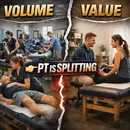


In this episode of PT Pintcast, we unpack a major shift happening inside the physical therapy profession: the growing divide between high-volume clinics and high-value, premium care models.
From hiring struggles to reimbursement pressure, from patient behavior to AI disruption—this conversation challenges how PTs think about care delivery and business sustainability.
If you're a clinic owner, this episode is less about theory and more about survival.
Key Takeaways
- Patients prioritize access and convenience more than clinical nuance
- Referral-driven patients behave differently than direct-access patients
- High-volume care isn’t inherently lower quality—it depends on execution
- PT careers may be shortening due to financial pressure and burnout
- Corporate clinics rely heavily on new grads due to reimbursement limits
- AI could reshape delivery—but not replace human trust
- The future likely includes BOTH scalable care AND premium care
Why This Matters
If you're running a clinic today, you're making decisions about:
- Staffing models
- Pricing strategy
- Patient acquisition
- Long-term positioning
This episode helps you understand where the profession is heading—so you don’t get caught building something that won’t last.
Sponsors
SaRA Health
Automate patient follow-ups, improve outcomes, and generate RTM revenue—without adding staff.
EMPOWER EMR
Faster documentation, cleaner workflows, and an EMR built for how PTs actually operate.
U.S. Physical Therapy (USPH)
A national network focused on clinician development, mentorship, and long-term career growth.
???? https://usph.com
<p>This episode is part of the <a href="/physical-therapy-business-podcast">Physical Therapy Business Podcast</a>, where physical therapists and clinic owners learn how to get more patients, improve operations, and grow their clinic without relying only on referrals.</p>
<p>Looking for more episodes? Explore the full <a href="/physical-therapy-business-podcast">Physical Therapy Business Podcast</a> for real-world strategies on physical therapy marketing, patient acquisition, and clinic growth.</p>
0:01 And we are live. Welcome back, Dave Kittle. How's your day going? Good morning. Good morning. I'm feeling great. I mean, let's go. Nothing bad happens before eight thirty a.m. I'm going to do the best I can. We've got some crummy weather and crummy Internet conditions. So, all right. Jimmy McKay is out for the day. He is South Carolina. Is that where he is? I didn't catch it. He's with Danny Mata or Mate. I forget how you say it, but I'm looking forward to hearing how things go when he comes back.
0:43 Uh, you shared something kind of interesting. Let's talk about the deal where you had a client that found you starting with a Google search. Yes. Um, So this is a sister of a prospective client in Manhattan. So sometimes, you know how sometimes it happens where there's like a family member that's searching for healthcare providers. I don't know if it's common near you, but for us it's like, I don't know if the, if the person is like a busy professional and maybe they're not taking their health seriously, then sometimes like a family member steps in. So this family member found us on Google for in-home physical therapy in Manhattan for their brother.
1:23 And, I always, before I call, because if it's me calling, I'll usually call from my personal cell phone number, not even like the go high level number. Because when I text them first, I want them to make sure that the phone gets answered. And if it's iMessage, then it's a blue text message, not a green text message. So a little bit of logistics up front. So I'll text, you know, hi, so-and-so, this is Dr. Kittle, Concierge Pain Relief PT. You called in regards to, and I'll call you back personally in a few minutes. How did you hear about us? Were you referred by? a physician, Google, or best of NYC list. And this person wrote, truly started with a Google search and went from there.
2:05 After finding your website, I went on to look at reviews on other sites, comma, your Instagram, et cetera, and thought that you and your team could be a great fit, exclamation point. I'm like, there's some emotion here. They saw our Instagram. Now, what's amazing is, i pitched you know five fifty a visit for weekends three fifty visit monday through friday or normal self-pay rates and they didn't balk at all they were they they were like totally warmed up and so i want to stop and say thank you to tony maritato thank you to jimmy mckay for nudging me and uh urging me to build up my instagram for concierge pain relief because This is just validation.
2:50 This person has not followed my account. They haven't looked at our stories. They haven't liked anything or commented. It's like they're invisible and they're completely in the ether until you get some type of feedback like this. Either they follow your account or they mention it like this. And I had to dig for it. They didn't voluntarily say it up front. So thank you, first of all. And any feedback, any response to that? Yeah, that's an interesting situation because I used to say that it was horrible to ask how you found out about us. How did you hear of us? Before you built a relationship, you just said it's the first thing you say before you even talk to the person.
3:34 Yes, because once you get into the relationship, Tony, people forget. They're like, oh, I don't know. One of the websites online or somebody mentioned. People forget, at least in my experience. People don't recall. So I want to ask it before there's any relationship. That is literally typically the first question. Usually if someone calls in, the answering service is answering our phones right now. They're supposed to ask it. They don't always do because I'm paying a thousand dollars a month for an answering service. So it's kind of like they're humans. They read through a script, but they don't always ask every aspect of the script or the questions of the of the script. So, you know, they're good enough until the AI bots take over.
4:14 So we ask that up front because I've learned that if I ask it later, people forget they have they don't recall. I want to for information. is it chat gpt is it google is is it a friend is it a physician because if it's a physician if it's a friend word of mouth i say to them well can you was it tony or jimmy or who was it on a podcast that mentioned you know because we like to send a handwritten thank you note to whoever referred you to us so i want to ask it right away when it's fresh in their memory Right. Makes sense. I mean, it makes total sense. And the reality is we are getting most of our referrals through physician referrals. So it doesn't even, you know, it's not as relevant for us.
4:57 But typically, you know, my standard advice would be Don't come out with guns blazing, trying to figure out how you're going to get your next patient from this patient, chill out first day, give them a little space, let them breathe, like get to know them a little bit. And then two, three sessions in and be like, Hey, you know, I meant to ask you, how did you find out about us? Like, You know, especially when we'll usually ask, like, have you been to therapy somewhere else? I always say, what did you like about it when you went there? What did you not like? I had an interesting call the other day, younger female patient. calling, looking for self-pay rates.
5:38 And this person was like, basically had been in a car accident and had some back pain. I don't know how the conversation came this way, but I said, oh, so they were like, well, I was going to this other therapy clinic, but it was too expensive. Looking to see what else is in the area. And I was like, oh, okay, well, what'd they do that you liked? What'd they do that you didn't like? Did they do any manual therapy? Because we're We are so conditioned to think everybody wants to be touched. Oh, no, I hate manual therapy. I've got fibromyalgia. I don't want anybody to touch me. I just I did best when we did core exercises. I was like, holy ass.
6:19 This is my kind of person. Let's go bring it in here. We can take good care of you. So. Interesting, interesting story. I found a website. I saw this. We're going to switch topics just a little bit, but I want to get your take on it. A guy came in actually yesterday. He was an investor in a new startup. It is a neuro rehab, but he is not a physical therapist. They do have a physical therapist on site, but it is not physical therapy. It's designed for individuals who have Parkinson's, stroke, Traumatic brain injury. It is not insurance-based.
6:59 It's self-pay. They have basically games and equipment that you get on with virtual reality and the goggles and all the stuff that we've heard about. They're brand new to the area. I think they have five other locations around the United States. They're trying to build a footprint. And the guy was nice enough. He said, we got to talking and he was in sales for other things, got into this. I'm like, who's handling your social media? He was like, you're looking at him. We started talking about it a little bit, but immediately after he left, an ad popped up on Facebook. Tell me they're not listening.
7:41 for something very similar. So I'm going to pull it up on the screen. For those of you listening, it's called stroke.fitness. This particular one, it's different from the guy who came in yesterday, but there's some similarities. This is down in Tampa, Florida. And basically what this is, it's self pay. It's not therapy. It's for individuals who have had a stroke who want to get into fitness. They have a series of machines. I'll see they have a bunch of video testimonials. I'll see if I can find some of the pictures of the equipment they have. Pricing plans, one hundred and seventy nine dollars a month for remote membership, which, you know, that doesn't seem like it'd be effective, but three hundred and seventy nine a month.
8:29 For on-site membership. For context, we charge a hundred a month for patients to come in and just kind of work out thirty to forty minutes, usually twice a week. So, you know, they're they're almost four times the price. But I don't understand why a great neurotherapist wouldn't do something like this. Any thoughts on your end? I love it. Struck out fitness. um, neuro, this could be, you just use the equipment by yourself or is it like you have a coach trainer person or is it group?
9:09 There's a coach on site. Uh, there's guided, you know, workouts. They don't have a great website. I've seen actually on their Facebook. Let me see if I can pull up their Facebook. Um, some videos of, of their, of their clients, um, Yeah, they have videos and testimonials, but really like as somebody looking into this, I want to see what they're doing. OK, so here you should be able to see that, you know, here's the video of somebody walking into the facility. These are the machines they have. I think we're going to see a lot more of this happening.
9:52 where physical therapists, occupational therapists, we're not satisfying the need. We're not providing access. We're not getting to enough people. And you're going to see entrepreneurial, business-minded, non-clinicians say, hey, there is a gap in the market. We could do it cheaper. We could probably do it better. We could do it with more accessibility to more people. And this is what's going to make up the difference for Fewer therapists going into school, fewer therapists paying the money to get, which we'll talk about the longevity of a career in a minute. I think this is going to be what happens.
10:34 And just last thing before you go, before you talk, I went into chat GPT and I was like, how many licensed therapists are in the United States right now? And it was like almost three hundred thousand. How many licensed physical therapist assistants are in the United States right now? And it was under one hundred thousand, which I was surprised. I thought it would be more. And then I said, if you took all of these licensed therapists, assume they work forty hours a week, assume they see one patient an hour. How many total with the capacity, how many total visits could be delivered? And then I said, are there any objective numbers out there for how many people in the United States actually need or would benefit from physical therapy?
11:19 And Chachi PT was like, conservatively, a hundred million people would benefit from PT. PTs right now, if everybody was working, everybody did one an hour, you'd be looking at something like it was like a one fifth. We can handle one fifth of the capacity of what actually needs to be served. Well, I mean, there's a lot there because there's always going to be some patients and clients out there that don't want treatment. I mean, there's patients and clients out there that don't want to go to their primary or haven't seen their primary in ten or twenty years, right? So I think there's similar numbers, you included.
12:00 There's similar numbers for I think any of the health care providers out there. So, of course, we're not going to be able to serve everyone. And then there's the combination of like cost or travel to an office or If it's home visits, it's more convenient, but that's through their insurance maybe. Or if it's self-paced, that might price out certain people, right? Even in New York City, there's some people that don't want to pay out of pocket for the convenience or for like a different experience. There's some people that just don't want to do the effort that would be required for this type of stroke fitness or stroke rehab or whatever the treatment might be.
12:40 Let me ask you a question in terms of the licensed health care providers for like physical therapists that can help folks with stroke or any other movement issues. What would be the ideal number? Like, should we have one to one from should we should we have one hundred million physical therapists? Should we have PTs and OTs or anyone that can help with stroke or movement issues or even if it's back pain or everything? Should it be one to two? What's the number? You're saying one to five? I don't know. I don't know if there's any research on even that. Is that good enough? Does that supply the demand based off of what the market yearns for, desires, wants, is already utilizing?
13:25 That's kind of like a big question that maybe has never been answered or maybe can't be answered. Yeah. Yeah, well, this is what I've been thinking about so much. I'm like, I've been vocally kind of saying PT is probably not going to exist in another decade, right? The physical therapy profession, physical therapist. So I'm like, well, why? What are the threats to the profession? What's going on? When I research it, it says enrollment is up. That's not my impression based on what I see within my echo chamber, right? So we know that PTs are complaining about not getting paid enough. We know that PTs are complaining about treating too many patients.
14:07 Everywhere I look, most of the PTs, OTs and SLPs are all saying the same thing. I mean, I just listened to this. This woman on TikTok drives me crazy, but I can't stop listening because it's so stupid and absurd. But then the algorithm thinks that I like it. So it gives me more of it. And this person wants to be an advocate for the OT profession. And I'm like, she has no knowledge or no understanding of all the other stuff that goes into the business of OT. Not just, yeah, you can be an amazing OT, but like you need a foundation and understanding the rest of it anyway. There are so many, I think, existential threats to the professions.
14:50 One of which is, yes, we are beneficial to the population. Yes, we help a lot of people. We reduce healthcare costs. We can change, fundamentally change a patient's life. We can keep them in the home longer. We can do so many amazing things. But if we don't get the numbers up, if we don't increase access, we become so small. When I talk to docs and the doc is like, yeah, I would refer to PT, but they can't get in for six weeks. I'm not going to bother. Right. We become irrelevant. Because we can't serve enough people. It's just like a family restaurant that's local in the community. The line is out the door.
15:30 It doesn't matter how many more people want to come to them. They can't serve more food. There's a limit. There's a bottleneck there. I think that's what's going to really, in the end, that's what's going to destroy the profession is the therapists who are existing right now don't want to see more patients. They don't take pride in seeing more patients. They're not excited to see more patients. They want to see fewer patients. which is fine. But at some point you become irrelevant because if you can't help more people, you eventually can't help anybody. And the people sending patients to us won't send to us anymore. They will send other places. They will find other solutions. So that's what got me thinking about this originally.
16:12 Let me double click on that. I heard something from Ben Boggy on a video recently. So he owns Prokinetics. He does a clinical marketer with Jordan Mather. So Ben said something like, uh, he'll listen to calls, uh, from, for his practice. And someone will say like, Oh, like I called these other in network offices and it's like, it takes four to six weeks to like get in. And you're saying you can get me in like this week. Like, are you guys like not great? Like, are you not, cause you're not busy or like they were kind of, it was almost like the ability to get in sooner was almost like a drawback or like, why is that? How come you guys have availability, but these other places don't. So, Ben's team member or whoever is kind of like, well, those other places, they're so busy because they accept every insurance under the sun.
17:01 And they have historically, not always, but historically had to have their therapist treat fifteen to twenty five or thirty or whatever patient a day when they may not want to. And it's resulted in apparently some of these therapists across the country in general, like there's a little bit of a trend, maybe you can push back on it, of therapists not wanting to be in those models anymore, right? Not wanting to be treating twenty or thirty patients a day. So they'll leave some of those bigger in network corporate companies. And so now when they leave, they're not those companies are not always able to hire the next physical therapist to supply the inflow demand of new in network insurance patients.
17:43 And so therefore that also creates a waiting list. So there's, there's a waiting list because they accept all insurances. So it's just volume as you know, but then also therapists are not wanting to go there, work there, stay there longer because of more patients, more notes, the quote unquote burnout type stuff. When he said that, I was like, Oh, actually that makes sense. So like Ben and his team member on the phone is basically saying like, we have, you know, eight or nine therapists here that are full time. But we do all one-on-one visits. And so we are able to hire more therapists. The places that you just called have one or two or three therapists only because they take your insurance and because the therapists have to see fifteen or thirty or whatever patients a day and they're not able to retain physical therapists.
18:31 Any thoughts on that? I mean, I heard, I was like, wow, that was like a light bulb moment. I was like, that makes sense. Of course, that makes some sense. Now, of course, that's not going to be every, that's not every in-network office across the country. We don't have to name all the corporates or the big, you know, the big team, the big companies that are like that. However, I think there is some truth to that, that would result in them having more waiting lists because of the lower reimbursement, which results in having to see more volume, which results in therapists not wanting to stay in that model in general. Some will, but some don't like it. Any pushback on that? Is there any truth in that? Is it like half truth, half assumption? I don't know. What do you think? Yeah, I think about that a lot. So yesterday I was on the phone with a couple of new patients who were calling to get scheduled.
19:16 And every single time I answer the phone and it's a new patient wanting to schedule, I'm like, I can get you in today. How about you come in this afternoon? How about you come in tomorrow morning? And in the back of my mind, I am thinking, this person should be thinking, why can you get me in so quick when the hospital has a six-week wait list? Now, very, very, very infrequently, you might hit a consumer who's that knowledgeable and understands and is thinking that. Most consumers are like, okay, let's go. We'll get it going. I don't think it's because they're overworked and underpaid and a lot of the typical stuff you hear about PTs working at hospital.
20:00 Hospitals are notorious for just one-on-one Around here, hospitals are not pushing production. Hospitals are not getting like thirty patients a day. Hospitals are like, no, we just need PTs. We're going to lose money anyway. You can see one an hour. You can see him as long as you want. I just, I remember, and this goes back, maybe it's just me. I know there is a competitive streak in you. I remember like, I want to do more. I want to produce more. How many more can I see? I handled twenty. Can I handle twenty five? I handle twenty five. Can I handle twenty seven? Like that was innate in my culture growing up.
20:41 That was innate in me. Now I always want to outperform. I don't see that in today's market. Hence, I don't hire any physical therapists. I don't hire any new clinicians. I can't afford to pay them what they want. I'm not comfortable with the production that they want to produce. It's a culture that doesn't mix. So I just say I'm not going to do it. Um, but I don't know, I don't know if that comes out of the school, out of the, the educational process, you know, I don't know where that happens, but like, if you're in sports, you want to score points. If you're doing something you want to overachieve, why does it all of a sudden change when we look at patient care?
21:23 Like, no, I don't want to sacrifice outcomes. But to me, the better therapist can get better outcomes and higher volume. It's not a one or the other. But we've talked everybody into like, no, if you see more than one an hour, you're going to get bad outcomes. I get good outcomes. I get great outcomes. And I see more than one an hour. And it makes me feel fulfilled to know that I can help more people, to know that I can get people in within an hour sometimes. So I understand what Ben's saying. Totally get it. I don't think it really applies broadly because I don't think the consumer is thinking about it that much.
22:06 In general, the consumer, the patient is like, my doctor told me to go to therapy. What do I do? And they're just playing a very passive role. So I get them in within twenty four hours. That's our objective. Minute you call, I want you in the clinic within twenty four hours. I want the evaluation done and I want follow up scheduled the same week, the same day, you know. But that's always been our metric. I don't think the consumer is going to be like, oh, this place must suck. Nobody wants to go here and they have openings, you know. Yeah, I mean, the consumer wants access. They want typically to use their insurance. They want to get scheduled.
22:47 They don't want a big waiting list typically. They want to get it done. That's it. I just had a person in here last night. I generated an eight team visit plan of care. I didn't realize the person wanted to get four visits and go get an MRI. You know, so like that's why the person was here. They were here to get their four visits and go get their MRI. They were not here to get better, even though they were getting better. They were doing amazing. I was blown away by how well this person had responded to therapeutic exercise. Didn't matter. I'm here for four visits. I'm going to get my MRI. I'll tell you what the doctor says.
23:28 I was like, okay, that's fine. You know, your coinsurance is blank. We collect cash or credit and we let them go. I always have biases. I think we all do. Is it possible? Cause I want to, I want to, I want to mention that I have biases first, but now I'm going to say, Tony, you might have a bias. Let me push back on it. Right. So, okay. Is it possible? Because for us, we, we get some physician referrals, but like we're mostly word of mouth or, or Google. So either Google organic listing or Google ads. Right. So at any given time, I'm spending a lot of money on Google ads. And sometimes I turn everything down to a dollar a day budget. So it's like, Zero, basically.
24:09 So most of our patients are either from word of mouth or Google. And some physician referrals, but not that many compared to you, compared to historically how you build up your practice. So my pushback would be the people that are finding us on Google or word of mouth, they are maybe putting in more effort or it's a different approach because they're seeking in-home physical therapy or one-on-one therapy in our brick and mortar office. They want it. And or just like the thing I mentioned at the top of the show, if the family members calling in, we have to ask, Hey, I know you're calling in for so and so are they motivated to do this? Or are they going to be pushing back? And are we going to have, you know, some issues here?
24:51 Our clientele typically is seeking a solution, they want to walk better, they want to decrease their back pain, their neck pain, they want to get back to sports or walking in Central Park or whatever. So they want what we have to offer and they, not always, but they're typically ready to focus on that and put in the effort and follow a treatment plan. Whereas what you're talking about is their physician told them to go to physical therapy. Is it possible that that's your bias because that's where a lot of your patients come from as opposed to half of your patients saying that they found you on Google and they're seeking it out because they want to do it?
25:32 Yeah, a hundred percent. You and I are fundamentally different businesses. I hate that you and I are even called physical therapy because we are such a different business, such a different business model. It goes back to Rory Sutherland. You know, I was listening to the clip last night again, where he talks about McDonald's versus a Michelin star restaurant. The thing with McDonald's is it's never going to be as good as a Michelin star restaurant, but you're never going to get sick. You're going to get consistent results. You know exactly what's happening. You are satisfying the hunger problem. You are not delivering a food dining experience.
26:13 You go to a five-star Michelin restaurant. I can go to, not saying you, but I can go to an amazing physical therapist who most of the time can deliver an amazing experience. but there are gonna be times where they don't. There are gonna be times where the patient has a negative outcome. The therapist did too much. Like I get the stories of the therapist did dry needling, the therapist did this, the therapist did that, and the patient now in their own mind, it's all fabricated, but they're disabled and they've got, you know, twenty years of dysfunction because of something that a therapist did that they were trying to use to help them get better.
26:55 So you're going to have amazing results a lot of the times, but you're going to get a few that are going to go south really quick, really badly. On my side, you're never going to get an amazing result, right? You're going to get what you get. You're going to feel better. You're going to leave feeling better than you come in. You're going to get a little stronger. You're going to get a little healthier, maybe. But you're never going to get worse. You're never going to get a negative outcome. I am never going to take a chance on an intervention that has a chance to make you incredibly better, but also has a chance to make you worse. Like that is that is not what we do. So, yes, the people who come to us largely, they don't want to get worse. They don't want a negative experience. And I will deliver that.
27:37 The people who find you, they want improvement. They're willing to do what needs to be done and take that risk of having a better than expected outcome, knowing that there could possibly be a negative experience in there too. How do we wrap that? How do we, or put a pin in it until Jimmy comes back? It's not an easy scenario. It's two different, like you said, it's two different businesses. Maybe we can have Jimmy on another time when he comes back and we can joke around about what should your business be called? What should my business be called? Because it is different. It's different populations, different clientele, different mindsets of folks.
28:20 So there's a lot there. He shared a post that showed like a technician compared to a, I forget what the other word. I didn't like the other comparison. I like the idea of the technician and the expert. This comes from E-Myth Revisited. I'm the technician still. I'm out there doing the stuff. I'm making the pies. You know, like that's what I do best. You come in, I'll rub your back. I'll exercise you. You'll leave feeling better than you started. That's it. You, I would say, is more on the expert side. deep diagnosis, looking at the case history, like diving into all of these details. You establish yourself as the expert. People are coming to you already sold on your expertise, knowing that I can't get something this good without paying for it.
29:07 So that's where I think we'll bring Jimmy in and we'll take a look at that comparison of, you know, I'm fine being the builder. You're more the architect. Like I'm fine being the line cook. You're more the head chef. It's just we understand our role. McDonald's doesn't try to be a five-star Michelin restaurant. They're happy being McDonald's and they make billions of dollars doing it. They are happy being transactional. So... Up on the screen right now, this was, you shared it and then I also saw it. Matt Gregory, I don't think I have any connection to him, but he posted that he came across an interesting stat.
29:49 Seems the average length of a career in physical therapy is only about seven years. He couldn't believe it. He researched it. Turns out that he believes it to be true. This could mean that careers would obviously be less than that. So like some people are getting in for a year, some people are getting in for a couple of months. Then he said, who's going to school all those years and running up huge debt for a career of a couple of years, looking at medical doctor career and it's thirty to thirty five years. So, you know, that's another good example. And that's that's been around forever. I was in school in the mid two thousands and that was a stat that was still there.
30:31 When I get a student, when I get somebody who is like, hey, I need ten observation hours. One of the things we talk about is like, look. If you're female and you want to have kids, is it worth putting all this money in for a couple of years and then getting out and starting your family? If you're a male and you want to own a practice, is it worth putting all this money in when you want to get out of patient care anyway? Yes, there is the archetype of I can afford it. I want to do this. I'm not I don't care about the money. I don't care if this earns me a living.
31:13 This is what I want to do, you know, and I think that's the ideal candidate. But what are your thoughts on seven years as the average? I mean, that sounds crazy to me. I can't even I can't even hear that before. I don't think so. I don't think so. I can't, I can't even fathom. It doesn't even register. Now, of course, and I went off and I did the initial, the tech app and then came back and you know, that, that failed and then open up a practice. It doesn't even make sense to me. I don't get it. Like, I think there candidly, there are some people that like I've heard of or knew of through school or other schools where, their family had money and they didn't have to take out any student loan debt and they bounced around to different colleges and different programs.
32:05 And they, they might've gotten different degrees and then they come out and they, I joked about this on the show before, like they never got punched in the face by life before. Like they never had any real adversity. And so they eventually maybe have some adversity, like a challenging patient and they're treating patients a day and they have to do notes a day. And they had, they had some challenging patients that, didn't like them or whatever. And they're just like, they get jaded over time. I don't know. Like for me, like you said, uh, already I liked I'm competitive. I like to do more. I like to strive, uh, for more. So whether it's better patient results or back when I was in, in network, there were times where I had multiple pay, multiple, multiple patients at the same time that I was treating.
32:50 And they all seem to have gotten what they wanted and like that experience and all that. So this, I don't know. I think I got to bounce the ball back to you because it doesn't even, It doesn't even make sense because I don't think maybe part of it is they're seventeen and eighteen and maybe they made the wrong decision. Right. When they when they made the decision. I don't know. I've never heard anyone discuss this, but I searched a couple months ago the gender distribution in PT-OTSLP. I'll just read it from my side of the screen, but basically, and these are AI numbers, so I can't guarantee accuracy. It said, uh, sixty-five percent of the PT population is female.
33:33 Eighty nine percent. Eighty nine percent of the OT population is female and ninety five percent of speech language pathologists are female. Compare that. Wow. Yeah, it's massive. Compare that to physicians. Thirty nine percent. Mostly male. Mostly male. You know, and I bet if you go into like orthopedics or you go into specialties, it's even a higher percentage of males. Now, again, I go back to, I don't know if this is sexist or not. I don't understand that stuff these days, but the bottom line is I'm not having a baby. I'm not coming out of the profession to have a baby to raise my kids. Yes, I spent time with my kids.
34:14 I want them to be there when they were young and I was fortunate enough to, but But if I'm the person who's birthing the human, I'm not working during that time. Right. And it's really hard to go back after you had that child. We're in it. I told you, I get it. I get it. I think that is a huge, huge aspect of this. You've got a huge population of females within the profession. They're getting pulled out to start families, which is amazing. I wish more would, but, And a lot of them either aren't going back at all or going back in some capacity, going back part-time, going back to do something. So I think the numbers are a bit skewed just because the gender distribution is so different.
34:59 It's not a fifty-fifty deal. But that being said, you still have to be reasonable and say, hey, they're not charging women less than they're charging men going into PT school, right? The degree costs just as much. The degree cost takes just as much time. The women are getting paid the same salaries as the men. So I think this is one of those deals where probably these other factors are contributing to it. But if you're making that decision, you want to be a PT. Back in my day, I paid like five thousand dollars a year to be a PT. You can do that and throw it away. You can't pay two hundred thousand dollars and just throw it away.
35:42 Now, the seven years makes a lot more sense. That makes a lot more sense in terms of the timeline of my friends and folks that I've known. between leaving school and then getting married or starting a family, that timeline based off the gender percentages in the therapies, that makes a ton of sense. Yeah. Yeah. So we're coming to the close. Anything that's been on your radar lately, anything that's interesting from a business perspective that you've been looking at or thinking about? there might've been something that I recently shared. I'm trying to remember screenshots. We covered that big one about therapists leaving the profession.
36:23 I want to go back. I want to go back. I got, I got something. I want to go back to what you said earlier. I think you are completely wrong about the physical therapy world basically being non-existent in ten years. Yeah. These big companies that have fifty or more locations, you think they're You think they're just going to dry up? You just think they're going to start closing locations and all that? There's no way. Will they have to figure out a way to pay and keep up with cost of inflation and all that? Well, I know some insider baseball here in New York City. There's a big corporate that I know therapists that used to work there, and they describe these â corporates as places where all they do it's kind of churning nowadays they're kind of churning through new grads like every office has like a clinic director or a regional director that's seven or ten or whatever years of experience but all the treating therapists are new grads and so i'm not saying that's great i you know if if the the new grads are getting patients better and the patients like the experience and all that then that's fine that's that's fine but the Because of the cap of payment reimbursement across all the payers, these places can't, they can't increase salaries every year by three or five or ten percent every year for therapists that stay in the practice for ten, fifteen, twenty years.
37:47 So they just continually hire new grads and then the new grads stay there for one to three to five years and then they leave, they move on. That in itself is not great. That's why we're different, why we can pay therapists way higher. But even with that, I can't imagine how the physical therapy profession is going to be way different or non-existent in ten years. I think you'll still have new grads coming out of school. They signed up for the DPT. They went through the boards. They don't fully understand the financial decision or the environment of capped reimbursement, basically capped salaries, and what they're signing up for.
38:32 And these DPT programs also have been historically making a ton of money. having you know going from bachelors to masters and from back masters to doctorate and you know if they could if they could add a double doctorate tony they would do it they would hey you want to you want a double d you want a double d dpt like if they can do it they would they would absolutely you want to you want a double big mac with that dpt like they would they would upsell you oh you want some fries with that dpt let's let's like you want a dbt plus a plus an ot or something you know like if they could do that they would and they're You know this, I know you understand this, which is like wherever the financial incentives lie, that's where you're going to find a lot of the behavior. So I can't imagine these big corporates are going to change much in ten years other than their compensation is going to be a little bit more compressed, their margins are going to be a little bit more compressed unless they figure out some self-pay stuff.
39:23 But I don't really care because we're going to operate in a busy market where we can charge a premium rate and I can pay therapists hundred, you know, hundred and twenty six thousand dollars, one hundred and seventy thousand dollars over time, you know, base pay plus performance pay. And I'm going to start advertising this selfishly. I'm going to I'm going to stand on the soapbox right now and say I'm going to start advertising this on social media and saying that we pay therapists the most. I got to figure out the wording, but we're going to be the only show in town, one of the only shows in town that can do that because of our model. and we'll see how that goes but i threw a lot at you i i do think that that profession is going to be basically the same as right now in ten years i think i think it's gonna be the same the network is compressed out of network self-pay is gonna get more and more popular with online video and more discretionary income and every everything else is increasing in price and more consumers are just gonna be like all right i guess i gotta i guess i gotta be a wise consumer and find a PT or a chiro or someone to go see and they charge out of pocket, it's going to continue to become more and more normal and appropriate to pay out of pocket for physical therapy and health and wellness services more every single year, which benefits us.
40:41 So I don't know. What do you think? I intentionally said ten years to try and overshoot the expectation that I actually have. You think it's five? This is what I see. I see hinge and sword. I see these two companies coming out and blazing a path to how do we get one therapist to manage a thousand patients as opposed to one therapist managing eight patients. I think what you're going to see and you're going to see pressures from multiple areas, you're going to see these two companies make all the mistakes, but then figure out the solutions and take AI to a place where one human therapist can manage a thousand or more patients.
41:27 I think you're going to see, you said DPT programs are profitable. I don't know. But on a university level, when you look at where the university makes its money, I don't think they're profitable on the university-like ecosystem. So I think it's just a nuisance. They're so small. There's so few students. Who really cares? I just heard about one of the bigger public universities cutting a whole huge department off. of linguistics. And I'm like, okay, why wouldn't they cut all these all little tiny departments of PTO, TSOP, all this stuff that really doesn't make, it doesn't move the needle for them.
42:11 So I see departments cutting programs. I see fewer students deciding to take on the financial obligation. I see it easier to get the education, the information. Like, I really think my kid, my thirteen year old asked me the other day, Dad, do you think I could do everything a physical therapist could do? How long do you think it would take me to learn that stuff? I said, you know what? Really? Other than the evaluation. You could do it all in a month. You could learn how to count to ten in a month. You could learn how to pull that handle thirty times like you could do that stuff pretty quick.
42:55 What's going to take you time is learning how to differentiate when it's a. You know, rotator cuff tear versus some other, you know, issue with the shoulder, the diagnostics, the case history, learning how to build trust, learning how to relate to your patients like that. That takes some time. Years, years. But there isn't a single person, an adult today who can't get on AI and probably learn all that stuff right now without the college degree. You know, we're still in a situation where the college degree, those three letters, sometimes two after your name gives you the license to bill insurance. That's hardly worth it anymore.
43:36 There's no money in that anymore. So why am I going to spend seven years and two hundred thousand dollars so I can bill insurance to get paid fifteen bucks to get paid a dollar a minute? I don't need that. You know, so so I think we're going to see all these things. We're going to see schools dropping the programs because they're not making enough money generally to support it. We're going to see therapists with AI treating thousands of patients a day because they can do it. They have the capacity now to do it. They're going to replace me. They're not going to replace you. That's an important aspect here. Agreed. We're going to see fewer people interested in taking on the debt to become a therapist, but learning all the information on their own.
44:21 And effectively, I mean, you're going to have at some point in AI that better and more knowledgeable than any physical therapist on the world to answer your questions. They can't rub your butt, but they can answer your questions. They can tell you what's wrong. They can help you go through a twenty question game and figure out what your diagnosis is. Probably better than the human who might not have had their coffee, who might have woken up on the wrong side of the bed. I mean, I listen to them on TikTok. You know, they break up with their boyfriend or their girlfriend and they're a mental wreck. Like we have licensed professionals going on TikTok today that are screaming because they're upset about something.
45:02 I've never screamed in my life because I'm upset about something. That's not a stable human. That is the profession as it shows to the consumer right now across social media. I don't see it happening ten years from now. But your service will still be needed ten years from now. It just won't be physical therapy. It won't have the name. It won't have the title. You threw a lot at me. Two things. One, when we can share multiple universities dropping the DPT programs on an article online, show me that.
45:45 show me a trend of that show me multiple schools dropping a dpt program then what then i'll say i was wrong tony i believe you jimmy you're refereeing again put put your jimmy's in the middle we're on either side and we can duke it out if i see universities dropping dpt programs which i haven't heard of it if it if it happens please let us know in the comments comment on yeah on the youtube or wherever on facebook wherever let us know if that if that starts happening then absolutely then of course you're right and then also if sword health or hinge health gets acquired by usph or select medical or those are the two select medical i think went private recently larry ben said but yeah us usph is public if if one of the big conglomerates that own or or not concentra um what's the one that larry used to be a part of confluent if confluent or one of these big groups acquire or invest in Sword Health or Hinch Health, then I will also come on here and say Tony was right, I was wrong, and that they are the only way that they can get out of the in-network squeeze of having all these brick and mortar offices across the country would be acquiring or partnering with Sword Health or Hinch Health so that they can go from one therapist to eight patients to what you said, one therapist to a thousand patients or whatever.
47:12 This stuff might happen. But I believe in every in every, not just every city, but in every, not even metro, in every zip code, there will still be a demand for the one on one out of pocket physical therapist who's going to charge one or two hundred dollars plus per visit in podunk little towns that have populations of ten, twenty, fifty thousand people. and you can get your dpt degree you're going to know all your differential diagnosis you're going to know when to refer people out you're going to know you plus you can use some of the ai and other stuff to keep up with research and your techniques and all that So that's two things.
47:54 And then the other thing I want to push back on is how come personal trainers are not already using Claude, ChatGPT, Gemini, all that to replace us? How come they're not using these technologies? They've been around long enough. Or even just basic Google that's been around for the last fifteen or twenty years or whatever. How come personal trainers are not already doing what you're saying, which is Getting smarter, using technology to understand differential diagnosis based off of where the pain is and where the pain travels. They could be doing all this already, Tony. They could be saying, oh, you have pain that travels this way. So that's, that's okay. Let me see. That's a long, this dermatome. Let's pull up this script. A personal trainer could be doing that right now. They're not.
48:35 I would disagree. I would say they've been doing it for years. There's been corrective exercise certifications for years. You go on ACE or NASM or any of the personal training certification websites, you're going to see personal trainers with certifications for carpal tunnel, for shoulder pain, for all of these things that historically physical therapists used to own the market on. We don't. We can't protect the letters. We can't protect licensure. We can't even get lifetime to stop using DPT, which in every state should be protected under the State Practice Act.
49:16 We lose that lawsuit every single time. The Hinge Health, I just went online. It's a three billion dollar market cap. USPH is a one billion dollar market cap. But we're talking about atoms. We're talking about atoms and bits, you know, like if anything ever happened, Hinge would say, I'm going to acquire ATI. I'm going to acquire USPH. But then they're going to look at themselves and be like, why would we ever do that? We have software that's scalable to infinity. We have virtually zero labor cost. Why would we go pay for humans? Why would we get into the world of atoms when there's nothing good that comes out of it?
50:00 And these other companies have been suffering and floundering for years. I really think... agree with you i'd be interested to see when the universities start making those cuts um but i i really do think that they are going to perfect the technology that's going to increase access that's going to wipe out the commoditized service i deliver a commoditized service we will be removed from the equation because we bring the cost of care down to virtually zero when we do that for insurance companies i would imagine uhc would buy hinge like that's that's the acquisition that i would see um or build their own in-house but yeah it'll be exciting times bottom bottom line is if you understand how to talk to humans if people like you If you're generally a happy person, you're going to be successful the rest of your life.
50:57 It doesn't matter whether you call it physical therapy or you just say, hey, I just help you feel better. You know, come hang out for an hour twice a week. I will help you feel better. You'll live longer. You'll move better. You'll get off the chair without grunting like an old person. Like that's what I sell. And it's not called physical therapy. That was my parting shot. What you got? Yeah, well, I'll say my parting shot is, well, you also have the cheers effect, right, in your office. So it's not, you say that you are transactional and you're the lowest cost and, you know, the whatever, the lowest denominator. But no, you have people paying out of pocket for the gym access.
51:41 They have access to you. People want that. I think even with all this technology stuff and AI and all this, there's still going to be people that want the, the specialist, the expert, the person that they can ask. And they know, like there's going to be some different style of trust where they're going to continue to trust you, Tony, because they know that you've seen a ton of people in person for years and you've had to kind of navigate like the pros and cons of that and successes. And then some where it treatments didn't work or something had like a bad response or whatever. Um, And it's that human connection that I think people will always want. I think they'll always want what you have.
52:21 They like that it's lower cost that you take a lot of the insurances and that you take their Medicare. So they like that, but then they'll also pay out of pocket for the gym experience or the next thing that you might offer, whatever that might be. The commoditized practices that are strictly transactional, like the McDonald's version and it's eight patients per one therapist. Yeah, I think those are gonna get swallowed up and have to close and their margins are gonna be continually tight. Anyway, so that's it for me. That's my parting shot. All right, guys, come back and follow us, join us, hang out with us Tuesday, Thursday mornings, eight thirty Eastern a.m.
53:02 Jimmy will be back next week and I'm sure we'll get lots of stories about the event he's at right now. Dave, you enjoy your weekend. Spend some time with your little boy. Thank you.