The Systems That Burn Out Physical Therapists

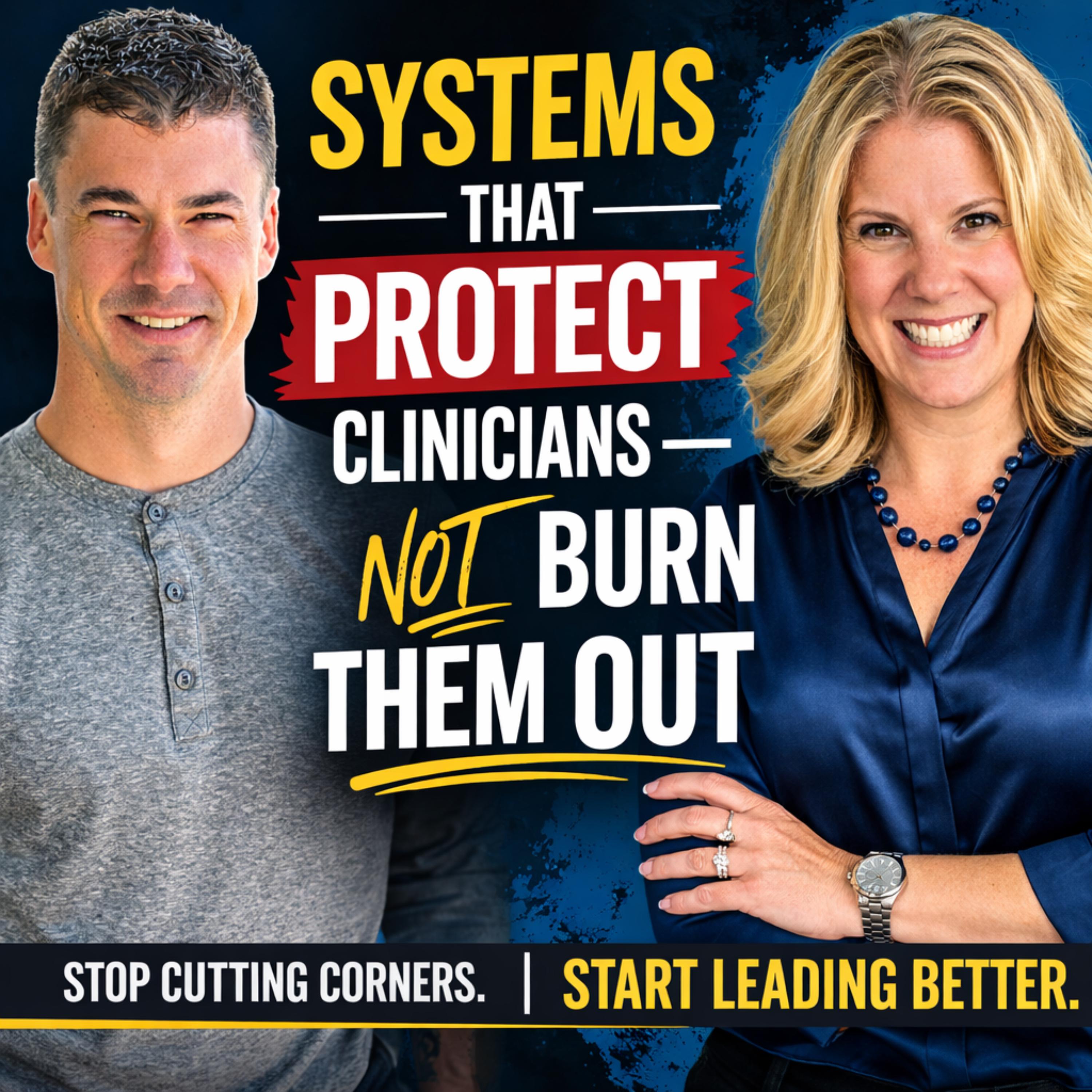


Most physical therapists feel stuck between productivity expectations, documentation requirements, and changing reimbursement models.
But what if the problem isn’t clinicians — it’s the systems around them?
In this episode, Jimmy talks with Katie Holterman about how healthcare systems, documentation processes, and compliance frameworks can either burn clinicians out or support them.
Katie explains why efficiency and quality are not enemies, why most documentation is unnecessarily complex, and how clinics can design systems that protect clinicians while improving outcomes.
The conversation also dives into the future of value-based care, the role of outcomes in physical therapy reimbursement, and why most continuing education fails to deliver practical clinical value.
If you’re a physical therapist, clinic owner, or healthcare leader, this episode offers practical insight into building systems that actually work for clinicians.
Key Takeaways
- Why documentation is often more complicated than necessary
- The three questions that simplify compliant documentation
- Why productivity isn’t the enemy of good patient care
- How clinic systems should protect clinicians instead of burning them out
- Why most continuing education fails clinicians
- How outcomes will shape the future of physical therapy reimbursement
- Why understanding the “why” behind metrics changes everything
Guest
<p>This episode is part of the <a href="/physical-therapy-business-podcast">Physical Therapy Business Podcast</a>, where physical therapists and clinic owners learn how to get more patients, improve operations, and grow their clinic without relying only on referrals.</p>
<p>Looking for more episodes? Explore the full <a href="/physical-therapy-business-podcast">Physical Therapy Business Podcast</a> for real-world strategies on physical therapy marketing, patient acquisition, and clinic growth.</p>
0:00 You're listening to the PT Pinecast, where smart people in healthcare come to make noise. Here's your host, Jimmy McKay. All right. Some people in physical therapy chase efficiency. Others chase compliance. And most clinics are stuck somewhere in the middle, just going around in circles, chasing something, trying to treat patients well while surviving productivity expectations, documentation pressure, and reimbursement changes that seem to shift every year or every, I don't know, What if the systems inside healthcare actually protected the clinicians instead of burning them out?
0:48 What if compliance wasn't something therapists feared, but something that gave them confidence What if business strategy didn't dilute clinical care at all, but actually strengthened it? Today's guest has built a career right at that intersection that I just described. She's helped organizations translate clinical excellence into systems that work. turning compliance into clarity, education into something people actually use. Who would have thought? And how about turning strategy into tools that help therapists survive modern healthcare? She believes it's something simple but powerful. Clinical decisions should guide financial decisions, not the other way around.
1:33 And if you do what's right for the patient, the money will follow. Let's bring in Katie Holterman. How'd we do on the intro, Katie? I think pretty good. I think pretty good. I like to wear a lot of hats. So as you can see, they kind of go on and off and depending on the lens that I'm looking at and things like that. But that's good, right? Because I don't think I talked about silos more in my life until I became a physical therapy student and then graduated. I don't know that there were silos in my previous life, but I definitely recognize them. And you're talking about... being able to sit atop the silos and see what's going on in each and saying, Hey, you're over here trying to fix this, but you're doing it this way.
2:14 If you just changed it, it would solve your problem in this problem. And that feels like actual efficiency. Exactly. Exactly. And being able to kind of look at through different lens lenses and jump around without jumping in, but jumping around and, and pulling what is needed out of each bucket, so to speak. Yeah. Right now, it might feel like in healthcare and probably warranted that clinicians are where the rubber meets the road. I mean, we have to be, right? We are a service. We provide a service, right? That is what we do in healthcare. We provide care. Care is a service. And it often feels like where the rubber meets the road or where the brake pads are, right?
2:56 That's where the most friction is. Unfortunately, that's where our our humans are who want to give the most. So you talk a lot about building systems that actually protect clinicians instead of burning them out. What does that look like or what could that look like in reality in a clinic? How can you give me examples of situations where we're actually able to protect those people instead of using them as the thing that we stop the car with? Exactly. Well, I think the first thing that you said was really important is that we have a service right but it's our product correct clinicians don't want to think that they have a product clinicians are touchy-feely and loving and want to do the great thing and a product is stingy and tangible and not um not something that people want to grab onto but when you start to realize that your service is a product That's kind of the first system that you put into place is that understanding piece.
3:57 That in and itself is a system that works, just having that clarity of everything. That to me is strategy number one. Then when we go forward and say, okay, now what systems can we put into place to protect the clinician as far as from a compliance perspective, making sure that we are doing something that is compliant and doing it well without having to jump through seventeen hoops to do it. That's a slam dunk if we can do that, where we just put something in place and have checks and balances that are already in the workflow for the clinician.
4:39 Why don't we do this? Let's start with there. I'll give an example. I bought a bike off eBay because one day I was going to be a triathlete and I was riding on that bike. That was my bike. And eventually after two or three years, someone looked at me riding that bike. It was one of those bikes where you sort of like lay down like you're super fast, you know, the hands in front of you. And someone said, hey, why do you sort of curl your wrists in? And I'm like, well, the handlebars are this long and my arms are longer. And they go, you know, there's a screw right there. You loosen that, those things telescope out. You could have them go longer. I adapted to the bike instead of, because I didn't know, I didn't know any better. I could have the bike adapt to me and I wouldn't have cocked my wrists for two and a half years. Now that's the only way I can ride, by the way. So let's start with why doesn't that happen?
5:23 Like, why do we build systems that actually we ask the clinician to adapt to instead of... making more sense the other way around? I think there's a number of reasons. I think our EMR systems are failing us, but it's not the system itself. It's how we exactly what you're saying, how we aren't using the tools within the EMR systems to help them adapt to what we need. Now, I'll put the EMR companies aside because there's so many of them. They all have their limitations. They all have their benefits. One is not better than the other.
6:04 I take that back. There are some that are better than the other. But I guess they're different tools and some of them are better in this situation versus that. Exactly. Exactly. I mean, here's an example. So I my I'm an SLP by trade. I just play a really good PT on TV. So that's, you know, but that being said, so many of the EMR systems are built for PT and OT. So being an SLP in that world where you're, you know, if you're an SLP in a rehab clinic or something like that, you have to fit your exactly a circle into a square anyway on daily life because clinics are set up for PT.
6:48 Clinics are just that's, you know, SLP is the odd man out anyway. Then you have a documentation system that's either built for PT or built for skilled nursing or built for, you know, this place. And so you're already two or three steps behind in trying to make your documentation effective, efficient, compliant, you're working against that. So the more that you can work with the EMR systems to make sure that, you know, if there is any flexibility in what you can do to not have clinicians working against that day after day and minute after minute, that's going to be key.
7:32 And then the other piece is sometimes, you know, clinicians get into their patterns of treatment that are great clinically, but then make it ten times harder for them to document or for them to audit their own documentation rather than, again, like you were saying, adapt to the bike or have the bike adapt to you. Sometimes you need to kind of give a little to get a little. Understood. And it seems like, because we should follow the money, and you said, make it good and the money will follow. It seems like, and I don't have a number to this, but if my day felt better or easier, or if I wanted to, if I was spending more time doing the thing, being the SLP or the PT or the OT, the clinic, the hospital, anything would probably have happier, more productive therapists who stuck around longer.
8:26 And we know those things cost money. Absolutely. The money for hiring and rehiring and training, it is bananas. It is so expensive. It's an entire industrial complex. Yes, completely. And the problem is, if you look at just a general evaluation that you have to write, There are sometimes seventeen steps, clicks, buttons, boxes that you need to fill in. And if you click this and then you make an error, you have to go back three times.
9:08 If we can save clinicians three steps, five steps, that's a huge difference, too. But clinicians sometimes don't like to think outside the box. And so if we can use education to help them problem solve in the moment, that's going to help them in the long run anyway. And again, to your point, save the burnout, save the frustration that they're feeling and keep the clinician and keep them happy. A lot of therapists might hear the word efficiency and immediately think it means cutting corners or I'm sure a lot of things and emotions jump into someone's head when they hear efficiency.
9:48 How can clinics become more efficient without compromising clinical standards, without cutting those corners, without putting the team in? So how can they do that? I think a couple of different ways. It's not a bad word. And people do think I always say the word productivity. Oh my gosh, you say that word in front of a bunch of clinicians and you think that I just had the mouth of a sailor, which I do, but I don't use it on a daily basis at work. But it has become this terrible word. I think taking that terribleness out of it is step one.
10:29 Before you even put into practice any tips or tricks or things like that, you need to to get on the same page with a clinician and understand why efficiency, productivity, whatever word you want to use, isn't a terrible thing. It is a thing that the rest of the world uses as they measure success. It may not be called productivity, but yeah, there's a hundred words for it. Right. Exactly. It's, it's your, your product, your service, your, your efficiency, your, your success. I mean, some industries just call it your measure of success. That is what it is.
11:10 So I think that's number one is kind of having laying that groundwork for, for clinicians to say, you know, this is the expectation. It's not all bad. Let's get on the same page on how we can make that work. It's not cutting corners. And here's why it's not cutting corners because you, If you are doing a session and making the patient at the center of it, if you are consistently talking to them about their goals, consistently talking to them about what's going to work the best, consistently asking their feedback, that is going to make the session run more efficiently already.
11:52 because you're already putting the patient at the center of it and you're not putting a lot of fluff in that you feel as a clinician is better than what the patient feels. So I think by starting with the patient's ears, that's the first step in becoming an efficient clinician. I have observed tens of thousands of sessions, maybe an exaggeration, but a lot of sessions where I've watched clinicians go. Talk, do, put patients doing X, Y, Z. Not once asking the patient, does this work for you? How is this going to help you in your daily life?
12:33 And if they would have started with those questions from the get-go, their sessions would have been ten times more efficient. efficiency and quality are not enemies. That is something that I took away from a lot of things that I read that you, that you had said that those things are not enemies. And if you understand that and we can adapt the system to work towards that, everybody sort of wins. The clinician has a better, has a better feeling when they walk out at five o'clock or whatever time they're leaving and the patient has a better experience and they want to come back and Efficiency and quality, they're not enemies. You've also said something that might surprise people. Compliance is also not the enemy. I mean, geez, if you see a meeting with compliance department on your schedule pop up, I'm sure heart rates generally rise.
13:17 But why do so many clinicians see it that way, that compliance might be the enemy? And what are they getting wrong? I think that the word compliance stirs up scary images out of compliance. I mean, you can hear you're in compliance, but most of the time... Yeah, no one calls a meeting to tell you you're in compliance. You're in compliance, exactly. No one will say to you... A perfect example, I just had this this morning. I'm never going to tell my son, you're making your bed correctly. Right. I'm going to yell at him that he's making his bed incorrectly because he's throwing the sheets on and it's driving me crazy and he's got...
13:59 We never say you're in compliance, you're doing a great job. We say you're out of compliance and here's why. We say that to help, but people hear I'm out of compliance and this is a scary thing. Now, it is a scary thing because if you're out of compliance, it costs money. And we don't want that. But I think that if people understood that compliance is a support system, that we can, you know, by... a compliance department or making sure that you're in compliance, again, it's making your job a little bit easier in the end because you don't have to do any rework.
14:40 That's a supportive nature that every compliance department wants to hold true. Yeah. It's a tool that protects you and the clinics and the care. Use it as such. I used to have a meeting once a week in radio with my boss where we literally mean this this went down like nails, which was we listened to a tape of me. Fast forward and play, and we'd sit there in silence and listen to me. And I'm a pretty extroverted guy, but I started sweating. And that was a knot in your stomach until my boss eventually, I think, saw me squirming in the seat and said, hey, just so you know, this is to work on, not penalize. And the minute I started looking at it like that, I actually looked forward to it and it's probably where I got the best ROI in terms of improvement, but it needs to be framed that way.
15:30 Or myself included, if you see compliance, your heart rate goes up and now you're automatically playing defense, I guess is what I'm getting at. Yes, exactly. And the thing is that you do have to kind of play defense all the time to be in compliance Because you have to be thinking defensively. Sure. Understanding what game you're playing. Exactly. And it doesn't have to be that you are. There's a difference between. Between kind of being on the defense and being in defense of what you're doing. Yeah. And I think that that's something that people need to to kind of.
16:12 recognize within themselves. I have everybody ask three questions of their documentation whenever they're trying to assess their documentation or when I'm trying to get them in practice as they're documenting. Three questions. Would I defend this in court? How easily? Would another clinician know exactly what to do next? Clarity. And then did I clearly connect treatment to function? And if people are going to answer those three questions, I always say, you don't have to worry about compliance. I mean, obviously from technical sides and things like that you do, but from a documentation perspective, you can answer those three questions you haven't made. And if you can simplify it like that, I think people feel like, okay, those are three questions.
16:56 I can do that. I can make sure that happens. Very, very rarely is the answer, make it more complicated, right? Exactly. So I think what you're saying there is, I need to see, can you answer these three? Let's simplify it. Now you can do that a hundred different ways. Right. I forget where the study was, but someone ran an analysis on thousands of treatment notes. And we'll say that insurance, I'm using air quotes here, insurance requires too much documentation. And the analysis showed that we actually over-documented. I could see that. Because we probably weren't focused on what the actual goal was. We hear documentation and some people, myself included, heard write down as much as you can.
17:39 And if you want to talk to a lawyer, the lawyer will tell you if you're ever on the stand, you answer the question asked, not a word more. More is not better. Better is better. And simpler is the goal. The goal should be those three. Do those three things again. Let me see if I can do it. Can you answer this? Would you feel comfortable answering this in court? Correct. If another therapist read your note cold, could they understand it is clear. Yeah. And then the third one, can you connect what you're doing to a goal? Exactly. Is there a purpose for this? Why the heck are you doing it? Because if you can't do that, then you shouldn't have done it. And I think that where people get into this doing too much or doing more than they need to or feeling like it's complicated is because we do state the phrase of, if you didn't document it, you didn't do it, which is true, but there's a way to document it to answer those three questions and be done.
18:37 Efficiently. Exactly. See, I came to PT again, a second career. Yes, I worked in radio. before that i had a degree in journalism and it was so weird going through undergrad because i took my journalism classes and i took my core classes english science whatever and there in those courses the general classes i had to write an eight-page paper the goal was length where in my journalism classes my goal was clarity and the best was can you get the most information transmitted through words or sounds in the fewest amount of words? So it was very funny to jump back and forth between those classes because in one, I was playing one game, which was answer the question in eight pages or more.
19:25 And the other was you have a thousand words, no more. You cannot use a thousand and one. So my brain did not brain very well. So I come to PT where when I'm learning documentation, I'm saying, well, I remember having a CI just walking by my computer, not reading, seeing physically how many words were there and being like, it needs more. And I'm like, why? And she's like, just, I can tell from here. And I'm like, but you don't know the words. What if I picked better words? What if they answered Katie's three, Katie's big three? I feel like I feel, and the answer was always, I feel I don't want to have this. Not when I hit submit, I feel like the more is better. And I understand that.
20:05 Yeah. Yeah. And then take it a step further. Right. Think about your settings. So I've started in acute care, acute care. You write and I'm old. So I started, you know, way back when, when we still had paper charts and all that. You wrote four sentences and that was it. I mean, your note was simple, but. You switch to a different setting. And if you're not writing a book, that wasn't acceptable in that setting. So to me, those three questions kind of came out of, I need to find that happy medium for myself as a documenter. Yeah. And then when I got into more of, you know, overseeing clinical services and making sure that the clinical product was good and it was compliant, then those three questions really helped serve in an educational framework when I'm educating clinicians.
20:59 It's just when you can simplify it there. I remember learning research, my professor. oversimplified it. He was like, Jimmy, just what? So what? Now what? I'm like, oh, I can do that. My brain can't brain holding ten different things while I'm reading something. But if it's like, what are we talking about? Can you explain? And when you're done reading this, can you explain what happened? Yeah. Can you explain why it mattered? So what? Yeah. Can you explain now what? Now where should we go? Okay. What are you going to do with this? Oh, yeah. Great. Do that. And then research became fun after that. A hundred percent. A hundred percent. You simplify it down and you think it's not that hard if I just think of the end goal. Yeah. Yeah.
21:40 Do you want to say thanks to U.S. Physical Therapy, USPH, a national network of clinics focused on developing clinicians? Not burning them out. They offer leadership tracks, mentorship, and the stability PTs need to build long careers in the profession while still practicing locally. USPH.com, that's USPH.com. And our friends at Empower EMR, built specifically for physical therapists who are tired of... doing everything we're talking about. Documentation, slowing them down. Empower focuses on speed, clean workflows, and documentation tools PTs actually ask for. Faster notes, smoother clinical operations, and support that doesn't disappear when you need help. Find them online at Empower, E-M-R. That is Empower, E-M-R.com.
22:20 Katie, your hot take is that most continuing education is a waste of time. I love hot takes. That's gonna make some people uncomfortable because going with this more is better. More continuation is better than less in continuation. So what's broken about continuation right now in your view? So continuing education to me, and I am a nerd that loves to have continuing education more and more and more. In American Speech and Hearing Association, we have something called the ACE Award, which is the achievement for continuing education. So it's clinicians who get X number of CEUs per year.
23:01 I have like eighteen of these things. Yeah, I love it. I love it. All of it's a waste of time because because at the end of the day, I'm going to say ninety five percent of the continuing education courses that you sit through, you sit through them, you think you learn something and you cannot apply it the next day. And if we're going to make true continuing education worthwhile for our clinicians, because every clinician discipline has a certain number that they need to adhere to, make it something that's going to be applicable the minute you walk out that door.
23:42 And I think ninety five percent of our CEU courses missed the mark on this. So how do you spot a good one before you plunk down money and give up a weekend? How do you, what do you, what's your big, you know, you've got a big three or a litmus test or a, you know, how do you spot those ones that the juice is going to be worth? Yeah. Yeah. Um, it's a great question and I wish I had the direct answer to it because I haven't figured that out. Let's put it this way. What besides like, you know, people love that phrase, right? Monday morning applicable. Can I use this? Um, don't have to name it you can but what's one that you took that you were like gosh this was great like for every minute i was in class i got value and then why like what about it was so great so i i don't know that i'm going to answer that question exactly just because of the way that i think it depends on what your interest is or what you're you know what you are doing on a day-to-day But I think the thing that gets me about the continuing ed pieces are each discipline has certain requirements for topics or certain hours or things like that.
24:53 And I don't even necessarily subscribe to the Monday morning applicable. I want it something that you're going to walk away and say, I got it. and it's going to stick with me. Maybe I won't use it Monday morning, but I can use it two weeks from now because I remember it so much. The problem is we have these instructors who either are talking research and aren't able to kind of apply this or we we have data that's not really telling a story or you're just not connecting with the audience so as an educator my my big thing is i need to to come with a presentation i need to come with a slide deck great but if my audience and i'm looking out and half of them are at a different spot in their career or a different wanting a different thing than i've originally had prepared I got to be ready to throw that PowerPoint out the window and say, let's just have a chat, you know?
25:54 And I think that's where most of these courses, because they are such strict guidelines on, you know, what, what the course has to meet and the objectives people are held to their PowerPoints. But at the end of the day, if you just have to have a conversation or pivot and tell a story, that's going to actually help the participant. Know your audience. Recognize. I've said this before. I could be the world's greatest third grade teacher. I could rip through a third grade syllabus in like three weeks. We'd be done. Move along. Now, the third graders would have no idea what I just said. And one percent of them would have learned any of it.
26:36 The goal isn't to have communicated. The goal is to have achieved understanding. And I always use a third grade analogy because it's so odd. Of course, you're going to get third graders and you get at thirty of them and they're going to be there for every topic. Some are going to be more or less knowledgeable or more or less excited about learning or, you know. And then when we have adults, we like, well, no, you're all adults. You need your you should all be exactly the same and you should. No, no, no, no. That's I'm sorry. That's not how it works. Exactly, exactly. And everyone's at different points in their career, different points in their interests. You know, some people are going to sit through an ethics class that's required by the discipline.
27:19 And you have maybe three who are actually factually interested in ethics. or have an ethical dilemma that they may have had that they can pull from the experience that the instructor is talking about and the others are sitting in the room going, I just need to get this continuing education credit. There's different reasons. Yeah. And so you need to be able to manage to the listener and change what you're talking about based on what they need in that moment. And I think a lot of that, the continuing ed is just, you know, unfortunately can be a waste of time if you're not able to pivot as an instructor. Well, you mentioned pivot. Healthcare used to reward volume.
28:00 I mean, a lot of places it still does. But things now are shifting towards value, which is good value. But if there's a theme that I think I've picked up from our conversation right now, it's understand what game you're playing. Understand what tools you have and what good is for this situation. So what does that actually mean for the way that therapists, PTs, OTs, we're all sort of cousins, practice day to day? This shift away from volume and towards value. A lot of conversations with this VBC coming up. Right. What will that change? Right. So how does that actually play out for for for everybody? Yeah. So I think the I think people need to understand that outcomes, which used to be just kind of like this word that we heard in the background.
28:50 Right. outcomes are going to be the driver. If they aren't already in your clinic, they are going to be your driver. It is how well did you see that patient? How well did you get that patient back to their goal? How quickly did you do it? How efficiently did you do it? And how did you do it at the end of the day? What worked? What didn't work? And I think that going back to what we were talking about originally, you know, listening to the patients, stopping everything and stopping what you think your what's the word, what you think your goal is going to be or your treatment plan or your idea in your head when you walk into that session put that aside listen to the patient and ask you know ask the questions that's going to help with value-based care but it is the outcomes are really what's going to drive it and clinicians need to understand that i don't think they do yeah it's it's it's playing a slightly different uh well playing the same game but now the scoreboard is a little bit it might be different yeah i had i had a great former sales director who would start like these meetings with clients or whatever and he would start the certain way i remember like after ten times hearing him just being like why are you saying that and he and he sat me down he said i want to understand what their version of good is Because if I'm playing ice hockey, but I'm being judged on figure skating,
30:21 I'm never going to win. I just scored nine goals, right? But you didn't do any triple lutzes. And so it's just speaking two different languages. So when I start with clients or companies, or even if someone just says, I want to pick your brain. And I'm, you know, what are we solving for here? Like, what does good look like? Yeah. And it makes them often, it makes them stop and think they don't have a clear answer right away. That's good. They know the answer, but they haven't maybe asked or they don't know how to put it in a sentence. That's step one. Right. What does good look like? And scale this for me. Is this a five hundred dollar problem, a fifty thousand dollar problem or a half a million dollar problem?
31:06 Cause I don't like asking like in what I do, I don't like asking what's your budget. That's an objective question. What I'll do is like, what, What changes for your organization if we fix this? If we fix this right? And I'm purpose and like, I haven't told you what we're going to fix because I don't know what the problem is yet. But if we do, what changes? And that shows me the level of intensity. Like, is this a one phone call and done? What do you think it is? I want you to fix our entire social media strategy in the next hour. My man, that's not going to happen. Let's get on. I was taught. Have you ever heard of the arc triangle? Yeah. Affinity, reality, communication, and then that's the goal.
31:47 You have to have those three things to achieve understanding, right? We are not in the same reality. If you think I'm going to overhaul an entire system in the next forty eight minutes, not going to happen. So let's get on the same page there. Right. But these types of conversations need to be had. A lot of times I feel like productivity or efficiency or standards are, this is the number you need to hit. Without telling clinicians, how do I affect that number? How do I do better? What are the runs or goals or triple let'ses? Well, and here's the thing. I think also it's not just the, you know, how do I do it? I always say, you know, teach the why before the what. Ask the why before the what.
32:29 Don't ask what the end result's going to be. Ask, you know, why are we doing it? Then you get to the how, then you get to the what. But if you don't have the why and the clinician doesn't understand the why, then you're losing before you've even started. You're creating mini MacGyvers though. Otherwise, it's just following SOP. If I understand the why and then I get something unusual, I can figure out a way to make this work because I understand where the... Just listen, tell me to get to Times Square. You don't have to tell me what route to take. But if the goal is get to Times Square by noon, I'll figure it out. Don't worry about it. But if it's follow these steps, as soon as I get to five and there's a traffic jam, I don't know what to do.
33:10 I'm not empowered... with a goal to know why, or I don't know what kind of tools I'm allowed to do. There's a story that's pretty famous. The Zappos.com, the online shoe retailer, the guy who launched it realized they kept being a bottleneck in customer service. And he realizes because every customer service problem went through him as the CEO. So finally, he just said, if the problem requires a solution that's a thousand dollars or less, whatever action you think is best take it up to a thousand dollars and just explain what i did this because this and this and then i'll look at it and go yeah you got it and if there's one that's like hey man that didn't let's let's review this case and their amount of complaints went down and their time to solve uh problems went down and their costs went down of course they did you understood the why the goal was to make happy people yep understood got it less than a thousand dollars most of the time it was probably like a twenty eight dollar fix Exactly.
34:10 And they were empowered. So they did it. They did it better. They did it more efficiently. Correct. And that's exactly how we have to treat our clinicians and ensure that our clinicians understand that, the empowerment, the why, and the simplicity of it all. Yeah, I agree. We'll bring you back for an episode that's really on a six-step playbook, right? So how about we'll tease, let's call it front tease, everybody. We'll bring you back for the six-step playbook. If a clinic owner or rehab director wanted to create systems that protect clinicians, we'll bring you back for a full episode on six because I feel like asking you that, it's two episodes in one.
34:50 So we'll separate that. So that'll be the second one. So we'll skip to the parting shot right now. This is the parting shot. One last mic drop moment. No pressure. Just your legacy on the line. All right, there's your parting shot brought to you by our friends at Sarah Health. They help clinics stay connected with patients between visits using automated text message check-ins. Text message that support RTM codes. Text message. That means there's no app or login or thing to forget or password to re-op every text messages. It's one of the easiest ways clinics can improve outcomes while unlocking new reimbursable care outside the clinic.
35:31 Visit sarahhealth.com, S-A-R-A health.com. So you have two choices. You can pick your own parting shot and just do it, or I can give you a prompt. Which one do you want? I'm feeling spicy today. Let's do a prompt because I... All right. So if therapists feel like efficiency always means cutting corners, you say that's wrong. What would you have them do? What's the first step, like an action that they should take? If a clinician's listening, like, okay, I agree with her. I'd love that to happen. But what do I do about it here in my clinic where Katie's not my boss? Hmm. And they're feeling like they have to cut corners.
36:13 Or they're just feeling like, here I have this metric that I'm measured to. What do I do? Do I talk to my boss and ask them to walk me through it? I feel like the answer is always people, right? Yes. I would say if they don't even know where to start, first step to do is... is ask the question. Ask, what is the main goal for me to meet? Is it more visits per week? Is it better use of my time? Is it better outcomes? Is it better documentation? What is it that's going to make me a next level clinician or make me able to meet that goal in a more efficient way?
36:59 Because you can do a lot of them, but I would say like, which lever has the most leverage? Right. I have twenty choices. I can't pull all twenty, but which one should I pull first or most often or sooner to get that number to move? And to what it just sounds like you're saying, understand what the North Star really means, what is good in this situation look like? A hundred percent because it could look a million different ways for different people, but every person has the first lever to try and then they may need to try different ones. Yeah. Or the first one works perfectly. Yeah. Katie, if someone was going to reach out to you, what's the best place?
37:41 Is it the old LinkedIn? LinkedIn is the best place to reach me. I get messages all the time and I'll be sure to respond. All right. We'll bring you back. Katie, appreciate the time. Thanks for talking with us. Thank you. That's it for this one. We're just getting warmed up. Smash follow, send it to a friend, or crank up the next episode. Want to go deeper? Hit us at pgpinecast.com. Or find us on YouTube and socials at pgpinecast. And legally, none of this was advice. It's for entertainment purposes only. Bullshit! See, Keith? We read the script. Happy now?