The Legislative Playbook Every PT Should Study



Most physical therapists assume healthcare policy is decided somewhere far away.
But Utah PTs just proved something different.
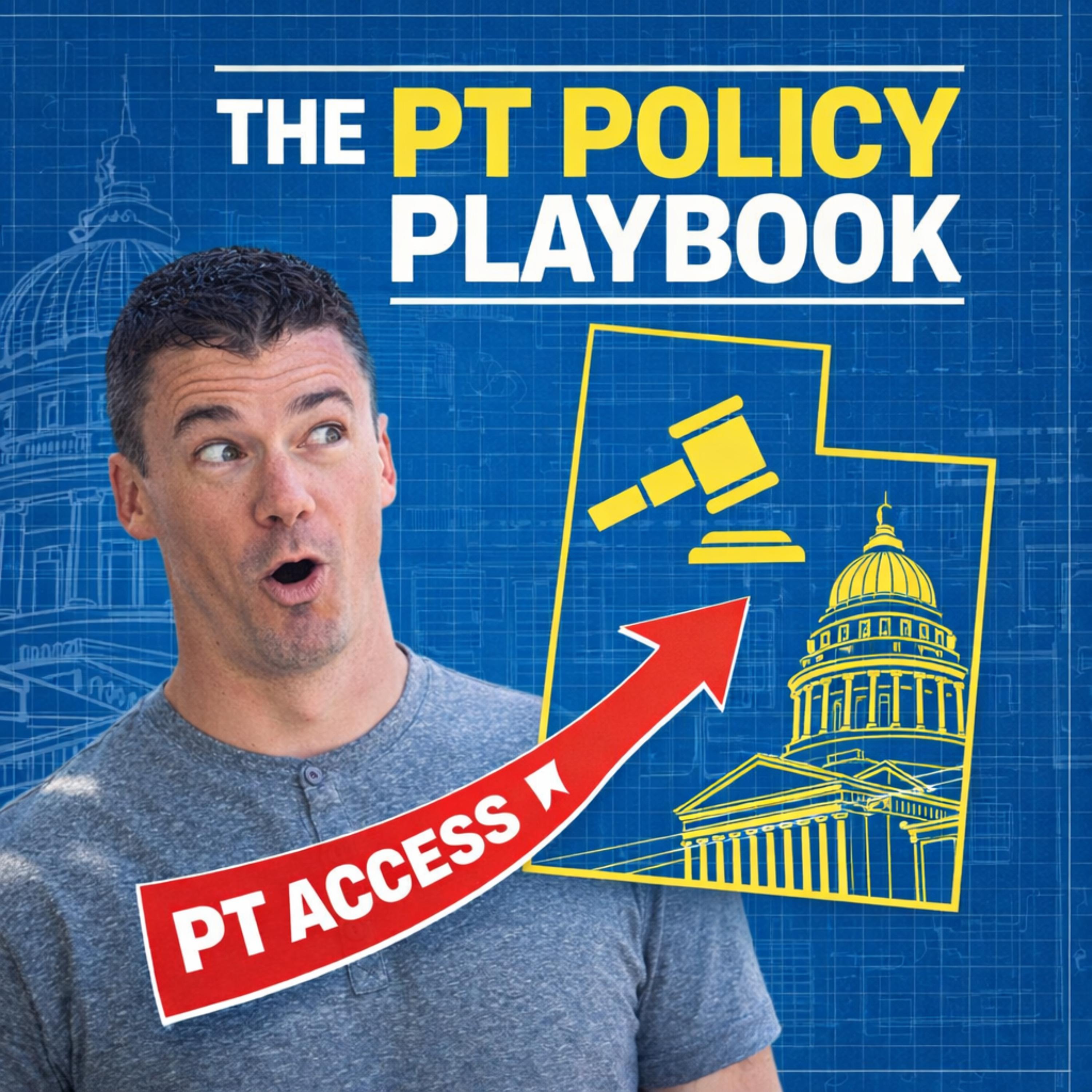
In this episode, Howard Quackenbush explains how competing physical therapy clinics united to pass legislation that recognizes PTs as primary care providers for co-pay purposes—reducing financial barriers and improving patient access.
Instead of waiting for national policy changes, this group of clinicians and clinic owners worked state-level relationships, coordinated fundraising, and built grassroots support that ultimately passed the bill.
For private practice owners and PT leaders, the lesson is clear: if you want change in reimbursement, access, or regulation, you may have to organize and lead it.
Topics discussed:
• Why high PT co-pays discourage patients from completing care
• How competing clinics collaborated instead of competing
• The legislative strategy that helped Utah PTs win
• Why grassroots advocacy matters for clinic owners
• The role of relationships in healthcare policy
• A practical blueprint other states can follow
Howard also shares the leadership philosophy that guided the effort—and why relationships ultimately determine whether policy moves forward.
Sponsors
SaRA Health
EMPOWER EMR
U.S. Physical Therapy
Learn more:
<p>This episode is part of the <a href="/physical-therapy-business-podcast">Physical Therapy Business Podcast</a>, where physical therapists and clinic owners learn how to get more patients, improve operations, and grow their clinic without relying only on referrals.</p>
<p>Looking for more episodes? Explore the full <a href="/physical-therapy-business-podcast">Physical Therapy Business Podcast</a> for real-world strategies on physical therapy marketing, patient acquisition, and clinic growth.</p>
0:00 You're listening to the PT Pinecast, where smart people in healthcare come to make noise. Here's your host, Jimmy McKay. All right. What happens when someone spends an entire career refusing to wait for someone else to fix the problem? It's probably a good thing. When reimbursement drops, when regulations pile up, when every year it feels like physical therapy is just asked to do more for less. Some clinicians complain about the system a lot. Others start working to change it, and it's not easy. But today's guest has spent more than three decades treating patients, building a private practice, raising a family, and quietly working behind the scenes to reshape how physical therapy is recognized and paid for.
0:44 From pushing for a primary care designation for PT to advancing fair copay legislation to expanding the Utah Practice Act. He's part of a group of clinicians who decided to do something radical. Stop waiting for change and start fixing the profession where they are. Oh, and when he's not doing any of that, he's probably bass fishing with the boys. Today on the show, we're joined by Howard Quackenbush. Howard, welcome to the show. Hey, thank you, Jimmy. It's a pleasure to be with you. excited you i like people uh who just say well if no one's gonna fix it i'm just gonna do it myself it's never glamorous it's never ever i can imagine easy uh it's never quick nothing good usually is but i would i would assume someone like you would say doing it is worth it well you know like you said um It's always a challenge.
1:38 You know, I've been doing this since nineteen ninety four when I graduated from Wash U and as an athletic trainer before and even as an athletic trainer, the student, you know, everybody is like, well, let's ponder this. Let's think about this. Let's see if the National Association is going to do. And then we got in, we have physical therapy and I've, you know, I built a practice and finally said I want to get involved. I got involved with the APTA Utah. and in some, you know, minor little roles. And then they put me in as chief delegate. And then once I got out there with National APTA, I realized that they're trying awful hard, but they're doing a lot of policy stuff. And it's like, this is not working for us. It's like, you know, we have a lot of concerns.
2:21 We want to say we want to mandate APTA to do this. APTA doesn't have the ability to do a lot of things. They're a policymaking position. They represent us. They're fabulous in that. But we got to do it ourselves. Right. They're good at what they're good at. But you can't be, I mean, I haven't figured it out yet, how to be good at all the things. Even if you just looked at how APTA is structured. And again, I don't work for APTA, but I'm a member of APTA. APTA is a national organization. It's also a local organization times fifty one state chapters. I want to make sure people from D.C. don't throw stones at me. I'm not from D.C. But if you want things changed because we live in this country where things are different, as soon as you cross sort of an imaginary line from one state to another, you have to understand what the differences are, where you live and where you practice.
3:11 And that's step one. Step two, if there's something you don't like about it, Howard would probably say this. I agree. Nobody's coming to look around. If nobody's working on that problem, guess what? You just nominated yourself to be part of the team to work on that problem. Quick little story, my Fillmore, Utah clinic, a physician and I own the building together. And so he has his physician's practice, it's Revere Health on one half, we have physical therapy on the other. One day his secretary came up to me just mad, said, you know, the cleaning person is not cleaning the toilets well enough. And I said, fine, go do it. If you don't like it, go fix it. Oh, she got mad.
3:51 She marched off to Dr. Groves and says, Howard, I told him the toilets were getting cleaned well enough. And Dr. Groves laughs. He says, I know exactly what he told you. He says, what did he tell me? He told you to go do it yourself. And she just got mad. She quit. She quit like three days later. But ultimately, that's what has to happen. If you don't like your situation personally, you do something else. If you don't like that the bass fish aren't biting a jerkbait, you go to a tube. You gotta change something. And if you wait for somebody else to do it, somebody probably will sooner or later. But if you really wanna do it, you gotta step up and do it yourself. And I'd say there's a problem with that too, which is if you wait for someone else to do it, they might not do it exactly how you think it should be done.
4:37 If it's somebody else from a different profession, they're never going to do it with as much enthusiasm, with as much inside knowledge, as fast as you probably think. I mean, I'm sorry to tell you, but if the bass aren't biting, you got to change the bait. You could scream at the bass all you want. Right? It's so true. Yeah. So you've been working on getting PT designated as primary care providers in Utah. When most PTs hear that phrase, they're probably not really sure what that means. So let's walk through it real slow and real clear. What does it mean? What does primary care providers mean? pts primary care providers mean and then what changes when that happens okay so before we get into what primary care really means we've got to you know clarify what direct access is okay good because i think sometimes we conflate those two things yeah I agree a hundred percent.
5:31 So again, back in my student days and I was in St. Louis out there at Wash U and this, the Missouri rule was I could not even talk to a person at the grocery store about physical therapy without having a doctor script in my hand telling me that I could do ultrasound massage and heat. You know, you couldn't even speak to someone about it. Couldn't you speak to them? No, it was illegal to even talk to them about physical therapy without a physician script. And so over the years, each state got some sort of considered direct access, which basically just said, yes, you're a physical therapist, you have a professional degree, you have a skill, yes, you can talk to them and they can come talk to you also.
6:15 And so everybody kind of termed that, oh, we have direct access to the patient and then the insurance company is going to pay us because they come and get there. But we all did the same song and dance of, yeah, you can come and see me directly, but check with your insurance to see if you need a physician's description. And so it may be termed direct access, but we have a barrier in place and it was insurers. Yeah, it was directly indirect. Yeah. Yeah, directly indirect is a great way to put it. And so as we pondered this, and now every state in the nation has some form of direct access, and a lot of people think, well, we've arrived, but then we're still not getting paid, we're still struggling with insurers, we have regulations, overburden, we're bitching and moaning about all this stuff, and we really gotta step up and say okay what do we do and so we did in utah um and it was fascinating because it was our executive director her name is katie manziel she's not a clinician but she is fabulous and she just said you know what what if we you know, got everybody together and brainstormed about this.
7:18 And so we called up the six biggest private practice groups in the state that are all competitors. They each were, you know, turf battling and everything else. We said, okay, guys, come to a meeting sponsored by APTA Utah. And let's talk about what we could do to try to promote physical therapy. We got everybody in the same room. And as you'd expect, it was pleasantly formal. You know, hey, how you doing? I'm going to sit on my side with my guy. You sit on the side with your guy. And we got talking. It became pretty clear pretty fast that we all had the same concerns. Why can't we get the patients to come and see us?
7:59 And why do we have this barrier with physical therapy? the insurance companies. And so we said, okay, what would it take for us to be considered primary care? And in Utah, we got digging around and we found that the primary care designation was not in practice acts, was not in the medical code. It was actually in the insurance code. And so we looked and said, okay, how's it termed? They said, primary care is considered physician, nurse practitioner, dentist, and DOs. And we said, what if we ran a legislation that says, and PT?
8:40 And so we said, let's try it. And we said, okay, if we do this, talk to our, every component and association has a lobbyist, talk to our lobbyist. And he said, it might take you three years to push something like that through. We said, well, let's try. So we called up all the lobbyists. private practices that, okay, ask each one of your people to donate one hour's worth of their pay to a lobbying thing. So whatever your salary is, whatever you make per hour, donate one hour. And we actually had a great response. We raised some basic funds. We said, I default this legislation. Next thing we said was, let's just see how it goes.
9:20 We put it out there and immediately the Utah Medical Association lost their minds and the insurers went, what are you all trying to do? We thought, let's keep trying. And so we started, we picked a senator to sponsor the bill for us and we floated it. And then, you know, we were learning as we went, it went to the Senate committee. So immediately we identified all the Senate committee members and we just reached out to, again, all the private practice people said, here's the list of the senators who are on this committee. Which one of you do you know? Who knows who? And it was amazing. Every single one of those senators had their PT, had their their guy or their gal.
10:05 And so we reached out and said, hey, reach out and, you know, and see how, you know, what their their aspect of how they feel and tell them physical therapy is. saves the system money. Direct, you know, direct access is a wonderful thing, but we have barriers that can increase patient access to care. And then we can get the patients better without opioids, without unnecessary diagnostics. If they do, we're trained in triage and screening. If they do have stuff that's not in the physical therapy scope of practice, we'll send them on to the appropriate person, just like any other primary care know provider does and that was their concerns they a lot of the concerns came back for well the medical association got up and said if they do this what if they miss cancer you know what if the person's having a stroke it's like we've had direct access we've been doing it forever and and we're we're perfectly trained and capable and most of us have you know look at our syllabus we've got that covered don't worry about that good we got it yeah we got it and so we got started going through and so they started the uh medical association sure started coming out hard but we went to the first committee meeting and uh in that committee meeting um they the senator proposed the bill um i uh my colleague chad tenney physical therapist, he got up there.
11:32 He did a beautiful job. He said, look, physical therapy is this bike lane on the highway of healthcare. We're staying in our bike lane. We don't want to be physicians. We are smart enough. We could be if we wanted to. We didn't want to do the on-call stuff in the hospital. He was great. He just said, we're going to stay here. We know what our role is, but we want to have patient access for that role. And they liked it. And they asked for public comments. So I got to speak and I kind of followed suit, you know, explaining the cost savings and the importance. And then the insurers and everybody else came through, you know, telling us why the sky will fall, cats will start living with dogs if, you know, this happens, you know.
12:12 Slippery slope. It's going to be awful. And the comments from the senators were amazing. They say, well, we understand this. And I have to ask this question because one of my donors is asking this. And then they'd all finish up with, but my physical therapist takes care of my family. And my physical therapist did. We passed that Senate committee with one hundred percent unanimous support. Wow. Went back to the Senate floor and got a hundred percent vote there also in the positive. So then it goes to the House and we did the same thing with the House committee. We had therapists for every House member and they had the exact same thing.
12:53 We passed the House committee at a hundred percent and then we didn't pass the House Senate with a hundred percent. We only had one nay vote because they were, you know, they were just being obstinate. And so, so then it'd be, so we came primary care. Then everybody said, who cares? You know, you have it, big deal. And that's, in some ways it's kind of true, but what it did was it started our ball rolling. So now we, with this past year, we are promoting the aspect that we're primary care. So now we can see the patient directly. We can become referral sources, Utah. And I got more, I got some news as of yesterday for you. It's hot off the press for you.
13:37 But we could do x-ray and MRI in Utah. We could do several other things. So now we can actually go to the x-ray facilities. You can accept our referrals because we're primary care. We can receive our patients because we're primary care. We can do this. So over the past year, Since we had the project, we said, what's the next step? And the next step, we decided to, well, we had two things going on. The Occupational Professional Licensure Review Board, it was our ten-year annual review. And so they were working on that last year. And they came up and said, well, we want to expand the practice act for physical therapy to give them all imaging abilities.
14:22 We want to clarify dry needling. We want to change the supervision requirements. They gave us this whole laundry list of stuff, offered laboratory tests. And all the stuff that would fit our primary care designation was good timing because we were primary care designated when the OPLA review came along. And so they said, oh, since you're primary care, you should be able to do these other services because you're trained in them in school. You have the education. Let's allow you to do that. As you'd imagine, then it goes back to the legislative process. So that's the first bill. The second bill we said, well, let's go after fair co-pays. If we're primary care, we should have a primary care co-pay.
15:03 In Utah, most of the commercial insurers co-pay is twenty five bucks right now. Physical therapy is ranging anywhere between fifty. I have one company that's ninety five bucks for a co-pay on a plan. Patients aren't going to complete them. First of all, they're not going to come. If they do, they're not going to complete their course of care. And if I had the choice of go to my doctor and get a pill or go to physical therapy, pay more and have to do exercise and do things and maybe get better. What's my first choice going to be? I'm going to get the pill. And we're sitting there whining about, you know, the opioid epidemic or medical complications from, you know, medication complications.
15:47 We have all those issues. So we said, let's run a fair co-pay spell. So we started doing that one and just the same thing. The Opler bill was done by the state and we expected that one to go through. The only thing we lost in that one was laboratory tests. And here's my pushback on our own profession. Most of the time, we're our own worst enemies. The senator that was sponsoring the Opler bill, Senator Evan Vickers, he's actually my senator from Cedar City, Utah, he went to several of his physical therapists in the area and said, here's Opler, here's what they're suggesting, what do you guys say?
16:29 And we had all, we had several therapists tell him, oh, we'd never need laboratory tests. but they're in the outpatient clinic. Well, what about our acute care? What about our nursing facilities? What about our primary care? If we really are gonna do Instacare physical therapy stuff, why wouldn't we wanna know if it's a UTI versus confusion versus dizziness? Why couldn't we? Anyway, so they ended up pulling it out because the therapist said, oh, we'd never use it without thinking. Pelvic health is a big issue, big area in physical therapy. I am never going to do that. I'm an old dude, I don't want to do that. But I'm not going to go tell the Senator, we don't need, we don't public health because I'm never going to do it.
17:10 You speak on behalf of the profession and one of our strengths and one of our weaknesses is we are wide. We do everywhere. There is a large spectrum. Yeah. Yeah. So anyway, so long story short, that one got pulled out. So we went on to the legislative thing. The Offler bill, you know, kind of went up and down, struggled through. They actually had more. They bumped us in with nurse practitioners, PAs, occupational therapy, athletic trainers. And so we were under the radar. Our stuff all went through. But the fair co-pays was a battle. I bet. The money comes out, the claws come out. Oh, and again, the medical association started out with â I got to be the point this time on the committees.
17:51 We did the same thing. We knew which committee we were going to be in. And fortunately, we were in this initial, the Senate committee, we were in the same one as we were last year with primary care. And so we already had the therapist, everybody identified. So we went into that one and the Utah Medical Association president got up and just got mad at me after I presented. And she said, you should know orthopedic surgeons are primary care and they do physical therapy in their offices all the time. And sadly, I was disrespectful. I laughed. I said, first of all, they're not going to want my little CPT code when they do a surgical code.
18:32 And no, they are not primary care. They're specialists. And thirdly, they don't do physical therapy in their offices. They may have some ancillary. There might be a couple that have some incident two stuff, but no, they don't do that. And so she got mad and she left. insurance companies came up and were like, oh, again, the sky will fall. It'll be awful. Everybody's costs will go up. And I just answered and said, when was the last time your annual premiums went down? No answer. No answer. And so we got through that one because we did it. So then we went to the Senate floor, and our Senator Mike McKell was fabulous.
19:15 He pushed it through the Senate floor for us. There were a few more nay votes because the insurance is the second largest lobby in Utah behind the utilities. And of course they spend an awful lot of time and effort in the summer for campaign donations and things to have influence. So it wasn't unexpected. We got through the summer, went to the house and we ended up, the insurance company got ahead of us, and so we were able to get in a different committee from the year before, and we were able to identify a lot of the, again, therapists for their representatives, and they all had the same response, like, oh, I love my therapist, they do this, and the best part was it was on a Friday afternoon, we only have, tomorrow's the last day of the legislative session, and this was last Friday, and it was Friday afternoon at five-thirty, they were done, they'd already had a heated battle about immigration and different things in the discussions, so they were tired, and the committee chairman was not having it.
20:19 He let us present, let me speak, and then he just kept going, okay, we're done, we're done, we're done. They voted, we got out of committee with a vote of six to one, which was favorable, and then we went to the House floor, but our lobbyists and our House sponsor the folks that don't make this committee a representation of what you think the house is gonna be. So you're in for a battle, because the insurance companies are not wanting to change this, because they think if you change physical therapy's co-pay to primary care, Every specialty is gonna wanna do it. And we said, we're not a specialty. We are primary care in Utah, and we are a first line of access.
21:02 Even though we have specialty training inside of physical therapy, the physical therapy umbrella coming out of school is really quite generalist. And so that argument worked really pretty well. We got to the main house and our people went to work. We had got the grassroots campaigns rolling and we passed sixty to nine on the House floor. And so as of yesterday morning, about ten o'clock, Utah now has primary care co-pays to go into effect January first to twenty seven. So there was a set. So we start with primary care. primary care co-pays, we have access, now we've reduced the barrier for patients to get to physical therapy.
21:46 And then insurance, in the back rooms, we were having discussions with the insurance companies in the back rooms anyway, and they all said, physical therapy saves us a ton of money. We know it's a great thing. They're just worried about, where it will go, what everybody else is going to do. It's the same thing. It's a business thing for them. It always is, right? It always is. And I don't fault them one bit for bad one. They should. That's what they should do. Yeah, sure. Yeah. but we're gonna save them money. And so it went through, that's our steps. And now we're looking, where's the next step? The next step is now gonna be, oh, part of the deal we made with the insurance companies to let this go through was they're gonna let us visit with the insurance plans purchasers about the importance of physical therapy and how we can save their company's money by getting physical therapy first.
22:34 And so it's this snowball. And so primary care, eh, it's a little bit better than direct access. Primary care plus co-pays, quite a bit better than that. Primary care plus co-pays plus access to insurance buyers. Then the buyers of the plans will say, no, I want better payment for physical therapy, so my people will go there. WCF, it used to be known as the Workers' Compensation Fund of Utah. They changed it to WCF because they now insure more than just workers' comp. Love this. They came to us earlier this year and said, bill us directly. You don't have to go through anybody, and we're going to pay a better rate because we're saving some of the administration.
23:17 Circular thing, going to the doctor, so rates are improving. This tide will lift all boats. And now the big goal, and I've mentioned this before, if we can get... Twenty-six states that have some sort of primary care, and then we're the fifth state for co-pays, fair co-pays. If we can get twenty-six of everybody where we're the majority, now APTA has a talking point with the feds of let's change the federal stuff. Because now you have more than half the country. Yeah, you got half the country and we're a republic. And so let's â we have the majority.
23:58 Let's go that way. Until then, it's just like, hey, give us more money. Like, oh, we can't. It's the budget. We've got to spend it here. We've got to spend it there. We can start changing fee schedules. This is not my area, policy. So I was trying to keep notes because you just told a story that started with an awkward meeting. of a bunch of people who were aligned against each other. Once they got in the room, they realized they pulled a page out of The Art of War, Sun Tzu. The enemy of my enemy is my friend. Like, well, hang on a second. We're actually not enemies here. We have a common enemy. It's the opposite of that. So being in the room with the five families, right, to go to the gangster meeting, let's get the five families together and figure out what are we actually, what is limiting us?
24:46 Is it each other or is it something else? This is also a masterstroke that I highlighted and wanted to say again. You didn't ask for a hundred dollars. You didn't ask for a thousand dollars. You didn't ask for a business to give ten thousand dollars. You put it... This is very subtle but very powerful. You asked for something... that everybody could picture, I would be willing to do that for this. If you had said, everybody should give a hundred dollars, I can picture a hundred dollars coming out of my pocket, that doesn't feel good. You didn't say that. You said, what if tomorrow, one of the eight hours you work tomorrow, you worked not for free, but you donated that hour of time To this cause, you don't have to do the work.
25:36 Your work is doing one hour and donating that money that you'd earned for the hour to this cause. I'm Howard. We got people. We're going to go do the work, but we need you. One hour, one hour, one hour, one hour. And an hour is different for everybody, but it evens us up. Now I feel like I'm, hey, listen, I don't make as much money as that guy over there, but I'm still having proportionately the same skin in the game. The person who makes more, I get it. But the rising tide, as you said, lifts all boats. You then highlighted, you paid attention to the people you were talking to, which as a communications person, you know your audience. Step one, know who you're talking to, know what they value, know where they live, what food they eat, what they like.
26:19 And you did one step further. You found out they all had a PT. Now we're not talking to an audience who doesn't know any. You all have your own. Can you picture what would happen if your PT... And that is not small. That is powerful. All these things are lining up. This is not an accident. You don't knock the big domino down unless you knock the small domino, the medium domino, the next big domino. And then you went small to big. You did exactly that. If you had gone for the grand slam, you're going to miss. But it sounds like you guys looked and you're like, how do we hit... How do we draw a walk today? How do we hit a double tomorrow? Could we hit three doubles?
27:00 Three doubles scores two runs. That's not bad. I'll take that. So it sounds like this is the blueprint, right? I mean, you said five states, right? We want to learn from each other. So is Howard, are you doing a road show now? What's Howard, are you traveling from state to state and going, I'll show you how to do it? Or what happens next? Well, the first thing is the idea of the dollar per hour. Brilliant idea. Was Brad Powell's idea, Foundation for Physical Therapy. Beautiful. And then- I've merged my Delta Fillmore Physical Therapy with Mountainlands Physical Therapy, and they have clinics in Idaho and Montana.
27:41 So our goal is we're going there. And guess who? Montana doesn't have a legislative session this year, but Idaho does. And guess who's introduced House Bill? I think it's a five forty seven is primary care access for physical therapists in Idaho. Here we go. And then I've known that Arizona is kind of looking at things. Colorado is pondering it. Maine is pondering it. When we go to the primary care SIG, I decided to go to that just for fun. And it was amazing because it's federal. The feds have had primary care forever. Just for the audience, explain what the primary care SIG and where it is. It's under the federal section of APTA? Yeah.
28:21 federal section of APTA, and it was new to me. But they've had primary care, so they kind of just had a little roadshow clinic. It'll be in Utah this coming fall in September. We've offered to do it here, so it's going to be here. Yeah, great bunch. And in pretty low key, but it was interesting that a lot of federal people are trying to give education on primary care issues or what you do and things. But once we were all in the same room, everybody's like, what are you doing? How did you do it? You're Utah. How did you pull this off? It wasn't the information. It quite literally is an information transmission problem.
29:05 It was like, hey, we figured it out. But unless you make it clear, consistent, and concise, someone who could benefit from that information in Maine might never know it exists. Yeah. And of course, every state's going to be a little different. Our primary care just happened to be in the assurance code and Idaho's is really similar. So that's going to be pretty easy for us to dovetail with that. Other states, it'll be a much heavier lift. They're all different. Right, right, right. But we just got to identify where is it? And once you know where it is, then you make a plan, you know, and, and what was fascinating going back to our first story, we pulled the five different clinics into the room. It was, Yesterday's, you know, texting list of all of us, you know, it was high five and all around.
29:47 All these competitors are like, you know, they're still working, but we realized, oh, there's so much more than our clinicians. There's more therapy than any of us can do. It brought us all together. And not only that, each clinician or each CEO or president or, you know, whatever their title is in each company brought a skillset. Mine just happens to be, I'm pretty good with legislative stuff. Brad Pals was pretty good at fundraising. Rick Libert was really good at bringing numbers of people to go after legislators. Everybody brought a skillset and it'd be tough to replicate, but I'm sure everybody can. You just gotta look. And once we brought those skillsets together, I just happened to go along for the ride and it was a hoot.
30:30 I mean, the answer is always people. We started this by saying, if you're waiting for someone else to solve your problem, you're going to wait a long time, and the solution might not... That toilet might not be cleaned as well as you want. So it's solved, but it's not solved as well as I want. The answer is always people. And... The goal is to find the right people who can bring their natural skill and help. In isolation, one of you wouldn't have gotten this done because you would have not had... It's like the A-team, right? You needed somebody with a little bit of this, a little bit of that, a little bit of this. It's Ocean's Eleven. You needed this kind of person who's good at that or else everything else doesn't work. It's very simple to say.
31:10 It's not easy, but as Hannibal used to say, I love it when a plan comes together. So what advice would you give to another chapter who's sitting there listening going, whew, sounded like a long walk there. What's their first tactical thing that you'd have? If someone's sitting there listening in APTA, Kentucky or New York or New Hampshire or Idaho or North Dakota, what's step one? Because if we give them fifty steps, it's too much overload. Right. It's why we give patients like two or three exercises. What's step one? What would you have them do? My first step, and I've neglected to probably give a big shout out to Justin Carrier, who's our president of APTA Utah right now, because he's an educator in the physical therapy assistant program at Slick.
32:02 Somebody had to say, let's just do this. Someone just has to have the idea. And then people will coalesce around that. It was the private practice people that really pushed it. When we tried to pull bigger hospital system therapy groups, they didn't want to because they have legislative challenges. So the first step I really think is for the state associations to say, we want to do this. Now, in Utah, we're pretty good. We've got a fairly high percentage of members. A lot of states, they struggle with membership. Idaho really struggles with membership. But the first thing is, you've got to have something that people want to go to.
32:44 And if the association says, we're going to be the voice, and we're going to represent all therapists, whether you're a member of the association or not, and we're going to go do this, come jump on my energy bus, come get with me. Um, they're going to do that. So it's really going to have to be the, the association just saying, we want to do this. This is the target. Yep. And as soon as you have a goal, um, so I don't know if you've seen this or not, uh, for the fans out there, there's a YouTube video from years ago called the Sasquatch music festival dancing guy. I will be Googling that soon, but keep going. It is awesome. So this, you know, this is Hillside and there's open music festival.
33:26 Oh, yes. I know this one. Yes. And then one person joins him and two people join him. The next thing else, everybody's going, you know, that's what you got. You've got to not be scared as an association to be the dancing guy. To be the first dancing guy. To be the first dancing guy. And don't worry if everybody thinks you're stupid. And don't worry if everybody's making fun of you because it was fascinating to watch that music festival. There'd be a couple of girls that kind of on the side, I want to be part of this, but I'm not so sure. You know, then as soon as a couple got in, more people got in. And that's what we found. Last year with primary care, We were begging, please call your representative. You know, we've got these things. Everybody's got it. Please, please, please.
34:06 This year it was like, hey, so we did last year. We're going to knock this out. If we had more. Okay. And whatever we choose to do next year, we're hoping we'll have even more. Because you have social, you have public social proof. this is why on Amazon there's a star system that shows you how many times it's been bought in the last month we are big dumb animals in a good way we're sort of predictable I know we're all individual snowflakes we're all different but there's an operating system that says I don't want to be an outcast from the group that guy's doing something weird but if I watch three people do it I want to do it and next thing you know fifty people are doing it and it's a movement it starts I mean as Linkin Park would say it starts with one And, you know, so we thought maybe if Utah did this, you know, we're going to dance it.
34:54 And we got, it was so funny. We went out to House of Delegates. I'm the chief delegate for Utah. And we got, what are you all doing? Oh, I was more than happy to stand in there and tell, you know, Speaker McGee. In Utah, we did this. In Utah. And finally, he got fed up with it. He goes, thank you for your shameless plug, Utah. Yeah. And then all of a sudden, people are like, well, how are you doing? So we've got Idaho trying, we've got others trying. And of course, with the Fair Copays, we're the fifth. We kind of did the same thing. Hey, Virginia, Dakotas, they did it.
35:35 How about, we can do that too. Well, it starts to become a reality, right? It's the Roger Bannister story. The four-minute mile was impossible to break. Roger Bannister breaks the four-minute mile. And I forget what the statistic was, but within a year of Roger Bannister breaking the four-minute mile, I don't know what it was, ten or fifteen other people broke it. Suddenly, it wasn't impossible. It's probable. Wow, I guess we can. Okay. There was one example I saw recently. it was a track and field competition and like crazy numbers of PRs and records were set and they couldn't figure out why it was. I think it was even an indoor match.
36:15 They're like, wind is out of the equation. The clock was wrong. They thought they were running slower due to this. The clock was telling them your split is slower. So everyone ran faster. Cause they're like, I'm behind what I normally am. And then when they did the math at the end, they were like, Oh no, you were crazy fast. Yeah. So it's sort of like when I want to make sure I'm on time, I set my clock ahead. So when you do it, you know, it doesn't work without knowing it worked. Yeah. So that's what we need. We need social proof. We're big, dumb animals. But if we know how our operating systems work. You have five dominoes that have fallen. Well, that's not fifty, but it's not zero.
36:57 And if three more happen in the next year, it's like now we're now we're eight and eight's pretty heavy and eight goes to twelve and twelve's half. You know, it's a quarter of the country now. I like how that feels now. I don't mind jumping in and being a Sasquatch and just dancing on the hillside. Yeah. My thought, too, is here next month, I'm going to go out to the day on the hill. I'm going to be there. I think I'm going to be there in April. Let's hang. All right. But because, yeah, the national stuff is a really heavy lift. We're getting it on the state side. But if we are priming this over here, once we get there, we might as well start trying to rock that domino while we're getting all the momentum coming.
37:43 Right. It's inertia. Yeah. So, you know, the states, you know, some of the state associations say we want to. I think the second step then is go after private practice. Why private practice? They have probably the most to gain, you know, from that. Biggest biggest win. You've probably got some more resources than the average single person. Right. But you're saying if we win this, you win this, too. So come along. Yeah. So go after the private practice because they have resources. They're willing to bet on them. They're usually risk takers because going to business, it's not just doing physical therapy to have a business. You got to run payroll. You got to do taxes.
38:24 You got to have attorneys. You kind of have learned the game. But you understand that to get an outcome, sometimes the answer is I have to spend something. But I'm going to monitor that spend. And here's the best part. If you're in... Idaho or New York or New Hampshire, you can be like, well, they spent X and they got Y in Utah. I wouldn't mind spending X because I'd love Y. So how do we spread that spend across our state? I think you're right. Just in my experience, too, when you work with a super large organization like a hospital system, you got to get fifty yeses. It'll take three years. They're aircraft carriers. It would be great to have one of their help.
39:06 Except those boats don't turn as quick. You need more of a destroyer. You need enough firepower. Fifty destroyers might be better than one aircraft carrier because they can turn on a dime and you can organize them, and there's more of them. Yeah, so get them going, and then they will know who the other players are. Correct. They'll be able to pull that key therapist from the hospital. They'll be able to pull that key therapist from the rehab bunch that has influence. They already know who people are. It's the same model as the movie Ocean's Eleven. The target is we're robbing this casino vault. Okay, that's the end. What do we need if we start going backwards?
39:47 Well, we need a guy who's good at this. We got to get a guy who's good at that. Okay, well, you start with what Stephen Covey said, right? You start with the end in mind and you work backwards. If you didn't have the person who knew how to fundraise, that was Elliot Gould's character. He was the bankroll, right? Mm-hmm. Without it, you don't have the toys for the explosives guy and the tech guy. And then everybody plays their part. Mm-hmm. Yeah. And that's where I would start. You know, those three steps, want to, get a good group behind you, and then let that group bring their skill set. Then you can do about anything you want to do. And, you know, some states will be a tough battle. Sure. And others will be a slam dunk.
40:29 But we've tipped that first snowflake on the top of that avalanche, and we got a snowball that's starting. You know, I think we got a great thing ahead of us. A lot of analogies today, and that's right in my world. I love that. And then you got to stand up on stage with a bunch of our colleagues at CSM just a couple of weeks ago, and you got to get handed an award. Talk to me about what that award really meant to you. What was it about? You know, it was certainly flattering. It was very kind. When I got the first email that says, hey, you're going to be receiving this reward, this award, I said, why? You know, what did I do, you know?
41:12 And then, of course, I walked right into it. One of my colleagues, Jamie Christensen, said, hey, I just got this. And I said, do you know about this? Oh, yeah, I wrote a really good letter. You're a dog, man. So that's the academic leadership and innovation, which I still think flies under the radar. Oh, because it's not clear. It's not ortho. That's pretty clear. It's not geriatrics. It's not education. I call it and they don't like this analogy, but I do. I call it it's sort of the junk drawer. that's not a negative term because if you think about it the junk drawer is the drawer you can't let anything go you're like no no that's very specialized i you cannot get rid of that weird shaped screwdriver because that's for eyeglasses or the random things it is this thing that it's you're not sure what fits there And once you start looking around, you're like, oh, damn, this has a lot of different.
42:09 But it's not clear. It's not one thing. It's many. That's probably their weakness. But their strength is it's not one thing. It's many. Yeah. And then the second thought I had with the award was that, you know, being flattered and surprised, it was like, it was not mine. You know, this was all a Utah. This was the Utah Association. This was all those private practices that stepped in. It's everyone that wrote a letter. You know, I just happened to, you know, receive the pretty thing. But it was certainly nice to be recognized because, again, we did something. Somebody else is, you know, great. you know, association said, Hey, that was cool. Right.
42:49 And now, now, you know, other people, other people are going to be able to see it and they'll say, Hey, maybe we can too. So I'm just hoping that it moves on, but I certainly flattered. It's so awesome. I was so grateful, you know, for the fun night we had and all the good people that were there and everything they're doing. But it, but it wasn't me that this was all our association and stuff. You, you just got to be George Clooney. You got to be Danny Ocean and you can't give the award, you know, you couldn't give the award to everybody. Maybe they weren't at CSM, but. You know, like Hannibal Smith, you know, it's just love it when a plan comes together and that was the embodiment of it. Well, that's fantastic. Well, congratulations to you, the rest of your team, the next state that does it. I want them to be proud of doing that. And if you're thinking about it, this is the, the, at least the first few steps, uh, Howard, we have a tradition on the show.
43:35 It's called the parting shot. This is The Parting Shot. One last mic drop moment. No pressure. Just your legacy on the line. No pressure. Just your legacy. I'm a lot. I do want to say thanks to our friends at Empower EMR. If you're sitting around and you feel like your EMR is just slow, slowing everything down, Empower EMR was built to do the opposite, which is, I'm not a math guy, but fast. Faster documentation, cleaner workflows, and support that actually responds when you need help. Learn more at empoweremr.com. That is empoweremr.com. Also want to say thanks to our friends at Sarah Health, helping clinics generate revenue between those visits with automated patient check-ins that support RTM billing and better outcomes.
44:22 And you don't need, this is just an aside, you don't need an app. They do it via text messaging. So no logins, no apps to forget or remember. Learn more at SarahHealth.com. It's S-A-R-A-Health.com. All right, Howard, parting shot. What's the idea, the sentiment, something, whatever you want to leave the audience with as we wrap up? My boys, I've got six kids, I've got seven grandkids, but I have two trailers. My two youngest, twelve years younger than their older siblings and stuff. One's a senior, one's a junior. My seniors, we are members of Church of Jesus Christ of Latter-day Saints. He's got a mission call to Belgium this summer, you know, and he's super excited.
45:04 But they get sick and tired of me teaching them the same thing. phrase all over the place. I tell them that everything in life is about relationships, your relationship with God, with your spouse, with your employer, with everybody, and that you will never have influence on anybody that you don't have a relationship with. And so I tell them to build relationships and guard those relationships because they're important. That's how things get done. And that's how you grow as a person because I learn from others. I take the best things from others. I put them in me. I try to emulate good qualities.
45:47 But the best thing we can do is develop and keep relationships. We're in a society of hyperbole. We like to be angry about everything. We like to scream and yell. We got to guard relationships because that's what's most important. That's the Quackenbush philosophy. I mean, if you could sum up a parting shot that goes exactly with the topic of today's discussion, the thing that you did is every little, every, nothing in that story happened without the relationships and how those relationships were interconnected. That's a perfect parting shot. Howard, appreciate your time. Thanks for doing this and congrats on the award again. Thanks, Jimmy. It's a pleasure to speak with you. This will be fun. I look forward to seeing you out in D.C.
46:27 Sounds great. That's it for this one, but we're just getting warmed up. Smash follow, send it to a friend, or crank up the next episode. Want to go deeper? Hit us at pgpintcast.com or find us on YouTube and socials at pgpintcast. And legally, none of this was advice. It's for entertainment purposes only. See, Keith? We read the script. Happy now?