The Invisible Wound: Moral Injury in Physical Therapy
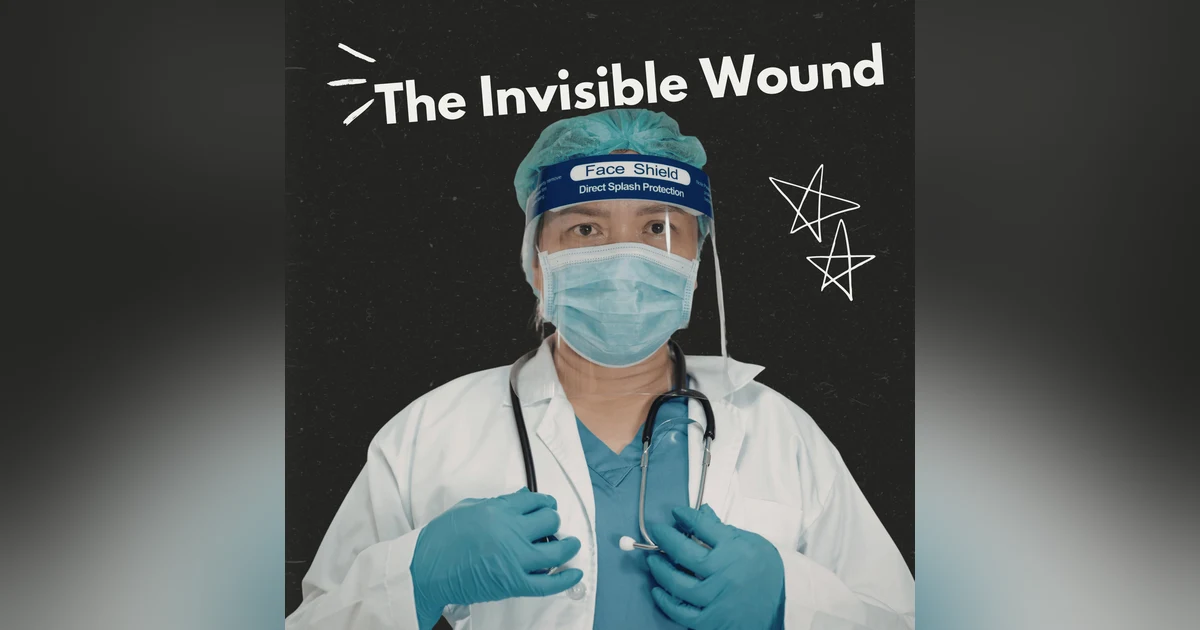


COVID changed everything — and for many PTs, it left emotional wounds that haven't healed. Kristin Walls and Lisa Kohler join us to unpack “moral injury” — how it’s different from burnout, how it showed up in outpatient and acute care settings, and why it matters for the future of physical therapy.
They preview their CSM talk, highlight new research on provider wellness, and share initiatives like the Wellness Committee and a national survey on professional sustainability.
In this episode:
- Defining moral injury for PTs
- CSM talk preview: The Invisible Wound
- Ethics vs. morals in clinical practice
- Post-traumatic growth and how to achieve it
- Why PT needs moral communities — now more than ever
Links:
- Kristin & Lisa’s CSM Talk: Thursday Feb 12 @ 8am
- LAMP Leadership Series (TED-style talks)
- Wellness Committee (OPTA)
- PT Pintcast on YouTube: https://youtube.com/@ptpintcast
- Website: https://ptpintcast.com
<p>This episode is part of the <a href="/physical-therapy-business-podcast">Physical Therapy Business Podcast</a>, where physical therapists and clinic owners learn how to get more patients, improve operations, and grow their clinic without relying only on referrals.</p>
<p>Looking for more episodes? Explore the full <a href="/physical-therapy-business-podcast">Physical Therapy Business Podcast</a> for real-world strategies on physical therapy marketing, patient acquisition, and clinic growth.</p>
0:01 You're listening to the PT Pinecast, where smart people in healthcare come to make noise. Here's your host, Jimmy McKay. Thanks, Radio Voice Guy. I do want to say thanks to Empower EMR. If you're looking to streamline workflows and how do you bring the AI safely into your clinic, everybody's wondering that right now. Save time, empower your clinicians. It's the app you're going to wind up touching forever. maybe even more than the text app on your phone if you're a clinician and you're using an EMR or you're a clinic owner. And I know... You're thinking, change EMRs. Man, people will white-knuckle one that they really know they don't like before switching because it's hard.
0:41 It's not easy. It's hard. I get it. Empower gets it too. Go kick the tires. They'll walk you through not only what they can do, but what a transition might look like. Understand that. EmpowerEMR.com. EmpowerEMR.com. We're doing more CSM pre-promote. This is the hype machine. I will give a public service announcement for everybody who's got a significant other. Plan what you're doing for your significant other for Valentine's Day now because CSM crosses Valentine's Day. I say this from personal previous experience. You don't want to rush that. So that's a public service announcement. Lisa, Kristen, welcome to my public service announcement.
1:25 Welcome to the show. Thank you. All right. I put the word out. If you got something going on at CSM, I describe CSM for first timers or fifty timers. It is a circus with eighteen circuses going on at the same time. It's a big top with a bunch of big tops all at the same time. I do find it ironic that we call it combined sections meeting. We come together and then we split up. But I digress. But you don't have to. So I said, if you're talking at CSM, let's do a movie trailer. So good on you guys. How many times have you guys been on the stage, on a big stage at CSM for you guys?
2:06 What's your CSM experience? This will be my first time talking at CSM. I have talked multiple times for the Ohio Physical Therapy Association. But yeah, this will be my first time for CSM. Love it. Love it. Good for you. Kristen? I have previously presented once, but I actually have three presentations this year. So I'm going to be busy running around. I don't know how many times I presented at CSM, but I do know this statistic. I have written zero proposals. I'm the guy that always gets brought in. I'm like, I will show up. I will do my thing. But writing the proposal like nine months ahead of time, Jimmy's brain don't brain like that. So good on you guys for actually taking the initiative and follow through.
2:47 And just really quickly for context for the audience, Lisa, Kristen, what's your sort of superhero origin stories? What do you get to do in this pretty cool profession of ours? So my origin story is I've actually been a physical therapist. I'm not going to say how long. But I pretty much worked in every single setting except PEDS. But as the OPTA, one of the OPTA directors, I actually â have the SIG for peds. So I'm learning about peds as I go too. So it's kind of funny how that all works out. I currently work as a regional director of clinical services for common spirit health.
3:29 It is, um, they have hospitals, they have the skilled nursing facilities. Um, I'm in the home health and hospice arena. So I help, um, home health and hospices with their clinical and quality. Good for you. Thank you for doing that work. And Kristen, how about you? Yeah, so I'm also in Ohio. My story is I went through PT school, did sports residency, worked in athletic departments for about ten years, so I popped out to outpatient ortho. Volunteer wise, I also am a director with Lisa for the Ohio Physical Therapy Association, and I work with the Academy of Leadership and Innovation. I am their education chair and also LAMP leadership.
4:12 And in addition to that, I'm actually delegate for the Academy of Sports. So busy touching a lot of different things. I guess kind of the genesis of this talk really came from a little bit of LAMP, but also what we experienced and what we're really interested in exploring within the state of Ohio is moral injury. All right. So this is really we understand in twenty, thirty minutes, whatever, how much we talk. We can't give you all of it. Just not possible, right? Can't put ten pounds of awesome in a five-pound bag. This is meant to give people enough tease and some tactical information to go, hey, if I'm going to be on site, again, eighteen circuses inside a circus, picking what to do each sort of time slot is simple but not easy.
5:00 And more than a few times not to knock any speaker. I've walked into a thing thinking something from the description and being like, oh, this isn't it. where we if we can give people sort of that uncomfortable we always love when you're in the middle of a presentation someone opens the door in the back and you're like what we want to be able to give people to be able to peek around the corner a little bit at you know what is this going to be how will it make their life or education or career better and then of course where when they can see it so you know this is your movie trailer what i i think i even said in text messages like i don't even know what moral injury is like and then what is this so let's start there what is it and why does it deserve some time on the big stage Sure. I guess I will start with what we're exploring is the invisible wound.
5:45 So moral injury is something that you can't visibly see. Right. And it is also not a mental health condition. It is an ethical burden that we've experienced. And we're looking at it specific to health care providers in COVID. and how we responded and or recovered from that. So Lisa comes from a very ethical side. So Lisa, do you want to explain kind of the difference between ethics and morals and how this is an ethical burden in the various realms? Yeah. So, you know, moral, you know, moral, the moral part of it is actually, you know, kind of your center, your base, you know, what is what is right and wrong.
6:27 And then and that can be influenced by, you know, how you grew up. You know, there's many different things on what what morality looks like. But then you have the ethics piece where you're looking at. the different realms of how does it impact a person as an individual, how does it impact the organization, and then society as a whole. And, you know, we saw that with COVID. You know, we've heard stories, and that's one of the things that we're going to do within CSM, too, is to be a conversation. And we did this at Ohio Spring Conference last year, And it led to some really good conversations about how it impacted people individually.
7:07 Also, what their organization was doing. And I could share stories about, you know, we had to furlough patients. We had to furlough, you know, employees in home health. And what did that look like? And then also the society implications. You know, there was implications related to not having PPE and everything. just the different laws and regulations and the different things that came out of it and how we had to all adapt very quickly. And I know Kristen and I talk, I always say I'm a stuffer. I don't share my emotions usually very much. And so a lot of people stuffed their emotions and just moved and went through the experience of the pandemic and never really reflected on it and how it had impacted them.
7:55 Just you saying PPE, I didn't really, I mean, I remember it, but also I was like, oh yeah, we were like, where do I get masks and hoarding masks? And how do we, what's the different grades of masks? Everybody, they went from being a Supreme Court Senate expert to being a PPE expert to being an infectious disease expert. Everybody got, a lot of people got PhDs in twenty twenty. In topics they did no education in. Thinking back on that, that was a wild time. That was only six years ago. Yeah. And I don't think we have fully processed what we went through as healthcare providers. We literally, once we got the green light, it was focused on productivity and making up the money the organizations lost during that period of time.
8:42 So healthcare providers have never really... talked about the trauma they've gone through or grieved the process that they've been through. I gave the same similar talk out in the state of Washington in October. And Washington was the state with the first kind of noted person with a positive COVID test. And they also received all the passengers on the cruise ship that was left out on the coast. So their experience was very different than what we experienced in Ohio. and talking about the scarcity of resources that early and how do they triage and figure out what's going on with their materials, with their staff, the fear that the staff had that they're going to make themselves sick and bring that home and make perhaps their children, their family, their older adults sick as well.
9:30 I mean, it was just a time where healthcare providers were kind of shoved into this hero status and It's just like, what just happened? Can we really even process this and unpack this? Because I do think this is a part of what this burnout, what we're experiencing in the provider shortage. This is definitely a part of it that we haven't really fully examined. Yeah. So you guys don't know, there's no question list, right? So I'm gonna go off the cuff. I'm gonna ask you like an unfair, unprepared question. What if someone's like, it sounds like you're talking about just feelings and touchy feely things and how this feel like you're talking about, you know, all these things. why does that matter hey man i'm here to do this this feels like you're talking about stuff that you know moral injury like okay move on suck it up if someone's saying that what would you say to them how does this translate so i'll say in a different way too my uh professor in pt school gave me the greatest paradigm to think about research or anything what so what now what right so the what we can talk about but like so what it sucks it's unfair but now so how would you like push back or say to someone who's like I'm scrolling through I don't need this why why do they and they might not know it or not see it clearly One of the big things, we're going to talk about the history of it.
10:50 We're going to have some of that conversation. But a lot of it is also going to be interventions and what people can do, the post-traumatic growth and the different strategies that there are to help you as you work through these things. And one of the big... reasons that we're doing it is for sustainability of the profession, because I can tell you one of the examples is we had, I had at least two PTAs that left home health. One went to, she also owned a bar. So she went to be the bartender and just worked that. And then we had another one that went to be the church secretary because they just couldn't handle the strain of it.
11:32 And that's not to say that running a bar or running a church isn't stressful. And I'm an amateur. But it feels like the juice versus squeeze ratio is... was more clear. May or may not be better, but when I can clearly understand it, if I do these five things, I get this, versus if I do this, I don't know what I'm getting, or I keep doing more of this and getting the same or less of this, that makes me feel... burnout cheated. I'm not going to take it. I'm out. Right. So you just get just told two examples of like, yes, I'm a smart person.
12:12 I'm doing the math. I keep doing this and feeling like this. I'm going to do not this anymore. I will do anything else, but you'll make less money, but it's a better juice versus squeeze ratio. Even if I'm getting less juice, I'm giving less squeeze. And the problem is the human is the thing getting squeezed. Exactly. And I would think to push back to somebody that feels this way, this term actually has its roots in the military. Which term? Moral injury? Moral injury. Oh, okay. The biggest, baddest dudes on the planet, they suffer from this, right? So to say that people in healthcare, I mean, more recently, the terminology has been moved to be more inclusive of people in public service.
12:56 but my goodness, I would think you need a reality check if you're pushing back that hard on it and not willing to explore what has been going on. And it's, it's, it's involving. So, you know, you look at the works of, you know, you had Janet Bessner on earlier and then Nancy Kirsch. Like we, we talk about moral injury in terms of productivity and what it's doing to folks and the administrative burden and You know, it's been all over the place. We look at kind of even the sociopolitical moral injury that people have been enduring as well. So this term, while it feels touchy, I mean, you really got to dig deep and get to that root cause of maybe why you're feeling the way you're feeling.
13:38 A lot of people can't put a term to, like, I just feel, you know, like there's no joy left in what it is that I do. And I have shame around some of the decisions and I feel betrayed or I witness things I'm not okay with. that's what moral injury really is. Now I feel like you could do something like say, all right, well, how does this affect the clinician? Will they leave or they stay and they hate it? Yeah. And then how does that affect them at home? Right. So that's one thing they stay and they hate it. What does that do to everybody around them? What does that do to their patients? What is their leaving due to their patients? What is their leaving or staying due to the profession or the business or What is due to patients short term, long term?
14:22 Like this is big, tall, short, long term all around. So there's your now what? What? So what? There's your now what? It's not one thing. It's not just what happened to the clinician. These things are not in isolation. No, no. And these are rare. Like moral injury is technically a rare event. We just... We got hit again and again and again and again, and we never recovered and stood back up fully. We're still half activated and going this fight or flight. So yeah, it's time to talk about it, I think.
15:02 I heard someone explain this to me in twenty twenty who was a Ph.D. researcher and they said this so calmly and I remember like it took me a minute to process. They said, you do realize that someone will do their entire career in research on this event like this going forward. They will now this is what they will be studying their whole life. and a small part of it likely, right? Like this person will study this for a long time. And I remember being like, no, this will be done in a few months. And then it took me a half a beat to be like, oh, this will not be done in a long, long time. You can look at something like, I grew up in New York. My dad was a New York City fireman. So, nine-eleven is obviously different to me than it was to my dad, than it was to my neighbor, than it was to someone in Texas or Washington or Japan.
15:49 It still affects everybody, but what are the million different ways? It's a little more clear, I won't say easier, but more clear to see that and a little less clear to see what you're talking about there, but it's still there when you look. Oh, yeah. And it hits people in a different... Levels like those of us in the outpatient world, we did not have the same experience of people in acute or in the ICU. I mean, we even had in our course in Ohio, there was a girl that was like, I can't even go buy this room anymore. Like PTSD, I had patients dying there. I had people who didn't have family members and I had to be in there with them and with masks and I'm dehumanized.
16:32 I've, you know, my entire identity is hidden. and we've lost that little touch of humanity. I mean, think about how that breaks the soul of the provider. So we actually use a lot of clips. Lisa found these awesome clips from The Pit, if you guys have watched that. And it's those flashbacks that some people have experienced in these really intense traumatic moments. So we will be giving some clips in the presentation as well at CSM. So you're going full multimedia, Lisa. Maybe you don't have to give the clips away, but what about the clips made you say, yes, this illustrates my point really well? So one is of Noah Wiley.
17:13 Actually, his mentor actually died during COVID. In the show? You mean I haven't seen the show? Yes, in the show. Yes. And so he actually has flashbacks to that. And being in the room, when he's with a different patient and he's in the room and how that impacts him and just... watching his emotional reaction and him having to step out and what that looks like, it just shows, as Kristen said earlier, that invisible wound, and he's still trying to hide it from people. And so just seeing that impact. And then there's another clip about a whole conversation related to masks.
17:55 you know, and wearing masks and, you know, and how, you know, how that impacted too, you know, because you had a lot of variable variation and, you know, people that wanted to wear masks and not wear masks and, you know, and always thinking about how I always, as a leader talked about, it was called a novel coronavirus for a reason, because it was new. It was new to all of us. And we were learning, we were learning as we went. on how to deal with it. We're building a plane in the air. Absolutely, yeah. And then you have these new grads who are coming out and they're like, am I going to get a job?
18:38 Do I really want to do this? Sure, which is a valid question to ask. Yeah, are they going to finish their clinicals in time? You know, will CAPTI adjust their requirements? You have educators who are saying... you know, I'm sending my students out into the field, but I don't wanna go out there. And then you have folks who feel that tug of, you know, I am a PT, I can treat, but I'm safe at home doing Zoom classes. And then there's just the human component, because we're juggling more than just our professional identity, right? So just, I mean, it touched everybody at a very different level. We have to regroup. We have to strengthen ourselves and recover.
19:19 And this is for people who maybe haven't been to CSM before or maybe just didn't understand the structure. I mentioned being it's combined sections meeting, right? People just call it CSM and I call it CSM without actually knowing what the heck the C, the S, the M meant. This falls under the Academy of Leadership and Innovation, which you do work with. Maybe give them a little nod because they can't green light a thousand presentations. They have to. hear the pitches and then select a few just because of time and space uh so give or not explain to people what the academy of leadership and innovation is the academy of orthopedics it's pretty straightforward geriatrics pediatrics got it got it got it ali is a little different uh what how do you describe it um so i mean that's a really great question we are kind of the group where the topics are bigger than just PT in general.
20:18 So we've got global health. We've got population health. We have PT Proud. We have environmental catalyst groups. We have tech SIGs. We have leadership, disability justice and anti-ableism, PT and mental health, which obviously this is a part of that as well. I'll throw something out. The label might not sound good, but we all have one and we never ordered one. It's the junk drawer. Yeah. Well, we don't want to call it that. No, no, no. But what I mean is it's funny we call it that, except that's the stuff we're like, oh, I can't let that go. That's valuable. Ironically, we call it a junk drawer, but it's a treasure chest because you can't let it go.
21:02 But you're like, I don't know where to put this, so I put it in this drawer. Yes. yes junk drawer is not a great tag but it's a great it's a great emotion because it's where all it's the island of misfit toys and that sounds bad too except if you watch the claymation movie that's where all the that's where all the heroes were yeah this is where the magic happens that's where the magic happens right it doesn't make sense until it makes sense yeah these are the change makers these are the people that kind of push into initiatives and see them through to the end and You know, even this week I had someone from India reach out and wanted to collaborate with the environmental PT group. So, I mean, the span is quite large, but we're still a smaller, lesser known academy.
21:46 But yes, our topics are bigger than just patient care and PT. That's your superpower. Lisa, what do you got? I, just to expand on that, I think just from, as Kristen said, I'm into the ethics piece of it, just from an ethics lens, it's looking at it from a societal view. So as opposed to just a clinician or an organizational level, a lot of those parts of it are looking at society and how we can impact society. And I think that's a big part of, with the moral injury we're talking about too is, You know, there is we're going to talk about what you can do as an individual, how you can help yourself health as an individual.
22:26 But also we're going to talk about, you know, moral communities and how you can develop those. And so you can help yourself, you know, get an organization or a group of people that are like minded and and share ideas and solutions and then. Hopefully that will translate into communities, into society, and being able to make bigger changes from the physical therapy profession at large. I'll just do some housekeeping. This talk, we're talking about the invisible wound, the unspoken consequences of moral injury on healthcare professionals following COVID-Nineteen. Thursday, the twelfth, eight a.m., coming and hopping.
23:07 If you're going east coast to west coast, you're still sleeping in, so that's good. I know it sounds like early, but you're not, okay? I have a crazy idea that was not on the docket before we hit record. What you got? So let me work backwards. Somewhere in our profession, well, sorry, let me go bigger first. I don't think many people now, maybe ten years ago, but not many people now, disagree with that we need to learn how to communicate better Because communication is power. I come to that because I have a degree in communications, so I have a hammer. The world is full of nails. I understand I have bias. I think if someone said, if there was going to be a special interest group about communications, not marketing, in my mind, marketing fits under communications, people would, their gut reaction would say, that's for PPS.
23:56 And I would say, no. No. Every conversation is a negotiation for information. That's from a great book I read. I would say a special interest group focused on how to make people improve their communication skills would fit best in the Academy of Leadership Innovation. Probably not its own academy, but it would definitely be a special interest group. And how do you define a special interest group? For me, it's a bunch of people who are like, I have this problem. I either have the problem or the solution. I am someone who knows how to do this and does it a lot, or I am the opposite of that. And I think you do a good job. Leadership shouldn't fit anywhere.
24:36 It should fit everywhere. Like LAMP, the program that Academy of Leadership and Innovation has, is not a vertical. It's a horizontal. Would you be a better... Do we need leaders in pediatrics? Well, yeah. Do we need leaders in aquatics? Yes. Do we need... Yeah. Okay. So that's not a vertical anymore. It's a horizontal. I think communications is the same thing. How do I pitch a SIG? I don't even know how that works. Oh, there's a form on the... I'm already out. Send me a voice memo of what you want. I'll do it for you. Can I make a video that's ninety seconds or less? Okay.
25:16 Yeah, let's try it. Wait, wait, wait. Wouldn't that be innovative? communication and innovative. No, no, no. A video to pitch the SIG. But yeah, what I'll do is I'll make the video. I'll take the transcription of the video. I'll make AI write the form. Yeah. So I can do it. Nevermind. I can do the form. I won't do the form. Jarvis will do the form. I can do the form. Got it. Okay. I love that. That was a side piece because listen, I've said this before. You guys are going to be on the big stage. Lisa's first time. Chris is coming back. I think being on stage at CSM is important. The part that breaks my heart is, and I don't know when during the year, I can't remember when this happens, but when they start releasing who got a spot at CSM and who didn't, it's like soccer tryout day.
25:59 And if people find out who was on the team and who didn't, I always push, push back with a communication lens that says, how many people do you think we're going to be in the room? A hundred, five hundred. That's a big room. Five hundred, a thousand. Right. That's a bigger presentation. I still think the most of the time people will take to social media and say, oh, you know, little sour. I didn't get in or hey, I'm disappointed. Didn't get in the thing that you're complaining on. you can reach more people with it than you could have in the room with CSM. So is it impact and reach or ego? It's okay if it's a mix of all of them. Yeah. I applied for things and not got it and been like, ah, man.
26:41 Yeah. I will say you could still reach more people over longer amounts of time if you did your presentation on YouTube. Very true. That's the way I look at it. I get it. Being in the room is fun. I like being in the room, but that's not the only way. That would be my first lesson in my special interest group in the Academy of Leadership Innovation, the special interest group of communications. I love that. I can't wait for you to pitch it. All right. Give me a future state. Someone walks out of the room at your presentation after this. What have they become? What have they learned more? What are they able to do? I love this question. Lisa, do you want to talk about our current initiatives?
27:21 I'll let you start and then I will tag in because I know she is like the engine for this. So she is on it. She just keeps us moving. So I'll let her start and I'll add in. OK. So when Lisa and I gave this talk, this created so much buzz. We actually created a special interest group or a committee, actually. It's a committee, not even a SIG. Within the OPTA, so it is the Wellness Committee. And we have been working diligently. We actually completed our IRB submission yesterday for we're looking at provider wellness and professional sustainability.
28:02 So we are exploring a national survey. So look for that. That will actually also be in our presentation in a little QR to go and take that. But we're exploring this. We're doing research. Our group is growing. We're going to have wellness Wednesdays. We're going to have a wellness summit. And I'm actually today putting together for a catalyst group in the Academy of Leadership and Innovation, a provider wellness and professional sustainability application to create a catalyst group to keep this going nationally so we can keep going. We have people from all across the US who are doing these things in silos. and we need to bring ourselves together. So Lisa Flexner has a company, you know, on the west coast that works at corporate trying to put more professional wellness stuff into their business structure to keep their employees happy and healthy.
28:57 You have individuals like my home who trained, she's doing an individual consultation for providers who have burnout and trying to help restore their wellness. We have so many pockets of people across the US doing this, we need to combine forces and just push. They need to be able to connect. Yes. Give them a home. They'll come. They need to be able to communicate over distance and time. Lisa, what would you add? So I think the big thing is looking at that moral community piece and being able to grow that and have under that, well, I see the wellness committee as a huge umbrella. And then under that, you have all these other communities where people that are struggling with productivity standards within their organizations, different organizations, and how does that look?
29:46 People that do need to talk about burnout or the people that want those wellness, areas. And so I feel like the, you know, the wellness is going to be a huge umbrella where we can then go down into all the different, like, you know, financial loans, how that's impacting students and how do we keep people in the profession and, you know, looking at physical, mental, spiritual, financial, all those dimensions of wellness. Yeah. Digital rest, Demi. Yes. Yes. Mm-hmm. Yeah, you got to check out of this thing once in a while. Yeah. Yeah. And it's just, I mean, we have never as a profession, all of our literature really focuses on the patient.
30:32 Not much have we ever turned the lens inward and focused on ourselves. It's time. It's time. People have been laying the groundwork for a while, but we really need to do it now. Okay. Anything I didn't ask that you wanted to be able to talk about? Anything I didn't open the door for you to walk through? We're just excited to educate people on this. I think it's so critical. Agreed. All right. And I think, yeah, I think that's a big thing is we want to start the momentum that hopefully we can get, you know, this, cause I know like the, from a board perspective, only Ohio and I believe it's Illinois have like the safe Haven program.
31:14 And so, you know, being able to help all the other state associations and just the APTA in general, you know, put a focus on this and to help it grow. Love it. All right. Well, we have a rule. Every time we do an episode, it's called the parting shot. This is the parting shot. One last mic drop moment. No pressure. Just your legacy on the line. All right. Parting shot brought to you by U.S. Physical Therapy, a nationwide network of clinics focused on developing clinicians and not burning them out. Look at this. It's an alignment. Leadership tracks, mentorship, career growth, and the stability to build your future NPT.
31:58 If you want a place that supports how you want to practice, that's U.S. Physical Therapy. Visit usph.com. That is usph.com. Who would like to take their parting shot first? Go Lisa. Oh, so I would just say, join us. I know it's bright and early first thing on Thursday morning, the first session of CSM, but we will keep you awake. We will have great conversations and hopefully give you many different interventions for yourself and your organization to thrive in the future. All right, Kristen, no pressure.
32:40 Okay. I would say we really need to meet each other on the human level and really care for ourselves and those around us. We get lost behind our identity as a physical therapist or a physical therapist assistant or a student, but you are a person first and you deserve to be well and show up well to your workplace and enjoy your life. I'll put it in the show notes as well. But this talk is on the twelfth at eight a.m. Invisible wound. Kristen, you mentioned two other talks. You've got that. I cannot skip over the fact that you, I think, nailed the name. You're giving a presentation on Friday, February thirteenth, Friday the thirteenth.
33:23 Good luck with that. Eight a.m. What's the deal with pickleball, the bread and butter of America's fastest growing sport? I hope people understand that. Bread and butter is a type of pickle, so it's not like you... Yeah, that's my favorite type of pickle. I spotted that. And your other talk is going to be on Thursday, the twelfth, two o'clock. And this is LAMP Leadership TED Style TED Talks. Shared lessons on leading within and leading others. That's another event being put on by APTA, Academy of Leadership Innovation. That's several people speaking during that ninety minute session. Again, TED style talks. And you can find this all at APTA's app. You can find that at their website under programming.
34:03 You can search by academy, you can search by speaker, or you can just start looking for keywords. There's three types of people in the world. People who already know what they're going to at CSM a month before, as we're recording this in January. People who figure it out on the plane. Or people who are like, oh, there's a session? Let me walk down this hallway. Doesn't matter who you are, but CSM roulette, Can't be a gamble. Ladies, thanks for doing what you do. We'll see you in LA. And thanks for coming on the show. Thank you. That's it for this one, but we're just getting warmed up. Smash follow, send it to a friend, or crank up the next episode.
34:45 Want to go deeper? Hit us at pgpinecast.com. Or find us on YouTube and socials at pgpinecast. And legally, none of this was advice. It's for entertainment purposes only. See, Keith? We read the script. Happy now?