The Career Move Most PTs Ignore (And Pay For Later)
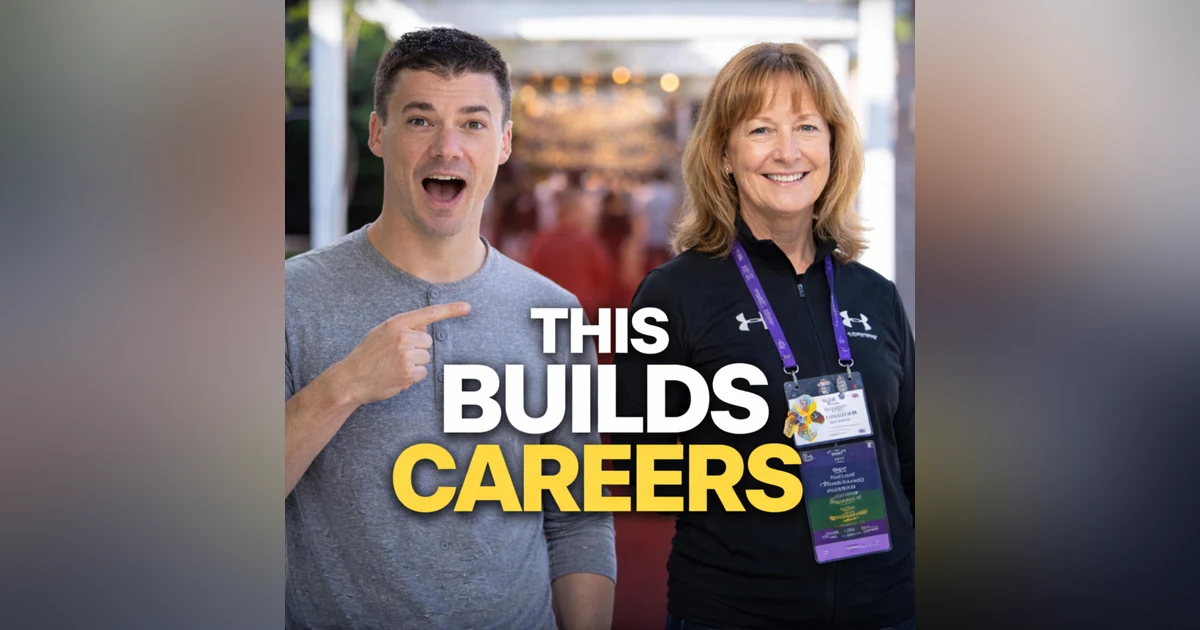


Most PTs focus on getting better clinically. The ones who build lasting careers do something different—they get involved.
In this episode, Edie Benner shares how engagement in associations, events, and community directly impacts your career, your clinic, and your long-term satisfaction in the profession.
If you’re feeling stuck, isolated, or b
urned out, this episode gives you a practical path forward.
OPTA Gala Event: https://www.ohiopt.org/event/OPTA75Gala
Key Takeaways
- Networking isn’t optional—it’s how opportunities happen
- Associations provide mentorship, referrals, and business insight
- Clinic growth often starts outside the clinic
- The shift from “expert” to “coach” is critical for modern PTs
- Burnout decreases when you reconnect with purpose and people
Why This Matters
For clinic owners:
Better connections = better ideas, referrals, and strategy
For staff PTs:
Involvement = faster growth, more opportunity, less burnout
Guest Links
Website: www.arhs.us
Instagram: @adverehabhealthspec
Instagram: @edieknowlton
Sponsors
SaRA Health — Helps clinics generate revenue between visits
EMPOWER EMR — Faster workflows, better clinic operations
U.S. Physical Therapy — Growth, mentorship, and career paths
Subscribe & Follow
Apple Podcasts: https://podcasts.apple.com/us/podcast/pt-pintcast-physical-therapy/id1000443325
Spotify: https://open.spotify.com/show/3LmMUT64yrUc2iGo9Emafc
YouTube: https://www.youtube.com/@PTPintcast
LinkedIn: https://www.linkedin.com/in/jimmy-mckay-pt-dpt-a4207659/
Instagram: https://www.instagram.com/ptpintcast
X / Twitter: https://x.com/PTPintcast
Website: https://www.ptpintcast.com/
<p>This episode is part of the <a href="/physical-therapy-business-podcast">Physical Therapy Business Podcast</a>, where physical therapists and clinic owners learn how to get more patients, improve operations, and grow their clinic without relying only on referrals.</p>
<p>Looking for more episodes? Explore the full <a href="/physical-therapy-business-podcast">Physical Therapy Business Podcast</a> for real-world strategies on physical therapy marketing, patient acquisition, and clinic growth.</p>
0:00 You're listening to the PT Podcast, where smart people in healthcare come to make noise. Here's your host, Jimmy McKay. All right, cheers. Let's get into this episode. It's brought to you by Sarah Health. If your front desk still sounds like it's juggling phones all day, you're not alone. Missed calls mean missed visits, and that adds up. Sarah Health, helping you keep connected with those patients who might be calling between those visits. um uh letting you making sure you can get reimbursed for remote therapeutic monitoring and those codes that are already being used right now by some of your colleagues and making it simple which means they do it via text messages and not in an app which means no login no forgot whatever uh reaching out and connecting so find them all on sarahhealth.com that is sarah s-a-r-a health Now, most physical therapists focus on getting better at treating patients, but the ones who build lasting careers in businesses usually do something else entirely.
1:05 They plug into something bigger than just themselves. They go out and find mentors, they build networks, and they stay involved in shaping their profession. And in turn, the profession winds up shaping them. Today's guest has spent decades doing just that, while building a private practice, teaching the next generation, and helping lead one of the most active physical therapist and physical therapist assistant communities in the country. And now she's helping bring that entire community together in one spot IRL, in real life, in person, to celebrate where the profession's been, dot, dot, dot, and where it's going. Let's bring in Edie Benner to the show.
1:46 Edie, welcome to the program. Thank you so much, Jimmy. It's great to be on the show. How was that intro? Was that pretty, was I close to, you know? Nailed it. All right, good. You're on target. We are ready to have some fun this year. And thanks to just all the years of being able to connect with friends and colleagues and mentors and students. It's just great to be a part of your show and carry on some excitement for our events here in Ohio, too, that many other states are getting ready to celebrate various types of exciting events and occurrences and anniversaries and birthdays and their leaders.
2:27 And it's just great. Yeah, big milestones. Let's start with you. You've worn a lot of hats, clinic owner, educator, association leader. What made you get involved and stay involved in the profession beyond treating patients like you did? It started back in school. I went to the University of Miami back in the heyday, and I think we went to our district meetings. We went up to Orlando to the state association. meetings and then when I got to be a clinician right away I was in a large facility and all the therapists were engaged they were mentors to me they were my peers they weren't only just clinic mentors we went to the local district meetings that was back in the day when you went to district meetings every month and then you stopped for a beer afterwards and everybody connected and guess what those friends are still friends now and I hope many of them are continuing to uh be a part of the association.
3:27 Yeah. So it sounds like you tried it a little bit and you found something or some things there when you were in person that you said, Ooh, I didn't expect this to be here or didn't know about this. And that led to the answer is always people that led to people, which led to more things, which leads to more people. And it just builds a, a network. You know, some people will point to, well, how many connections do you have on LinkedIn? And that's nice. But to me, that's a beauty pageant metric. The real connections are someone you know well enough that you can call or text or when you see, you understand, number one, how you get to help them. And then the funny part is eventually it sort of does come back. It does. It goes full circle and it just continues to create like a whirling cyclone effect because those friends from years ago in this case are still friends.
4:18 And the friends that I met, even students today when I was up at Cleveland State teaching, those students are already starting to become friends and they're just so excited about the profession. And there's still so many of us who've been doing this for a few years that are still excited to be a part of the profession and celebrate so many milestones, whether it's in our district level, within our facilities, our state level, our national level, or even shoot with the whole world. It's so much happening with physical therapy and so much exciting in the healthcare world that we just need to keep it moving forward and keep those connections growing so that we have more to just more to our physical therapy life.
5:00 I almost call it like our family. It's our friends and our family and they're all connected. So it's our physical therapy family and they're just going to be there for us forever. Well, the world changes from time to time to time. So a lot of times PTs or PTAs, we'll see associations as extra, right? You said back in the day, you used to go to district meetings and things in the world move in pendulums. A couple of years ago, everything we did was online and then building a connection in real life was harder. So what have associations given you that you couldn't have gotten otherwise without showing up and meeting those people you mentioned?
5:44 Boy, I think all of us who went into the physical therapy profession, we love the interaction. We love the energy and the vibe we get out of our interactions with our patients and our clients. And then from there, you can build that excitement with your friends and develop the network of, hey, I've got this patient and I just really don't know what to do with them. And so you can give somebody a call because their expertise is related to whatever that diagnosis might be. Plus, I think as PTs, we kind of like to have some fun. So these district meetings, they're also a lot of fun, whether it's the old fashioned way where we met in a hotel reception ballroom and had just didactic meetings to Now, where we have more of our pub crawls and some events like that, or we meet at Topgolf, or we go to some of the local baseball games as a group to just gather.
6:40 I think we're people people. And so it's so important for us to not really add that to our life, just make it part of your professional life. Sure. Now, let me let me let me force you to change a hat now. From a clinic owner perspective, how does being plugged into a community like OPTA or any state chapter similar to that, how does being plugged into that community actually impact your business? You mentioned how it sort of impacted your clinical life, your friends, but how about business? Oh, from a business perspective, I would be lost without the association mentorship and guidance and everything from the networking at the PPS meetings to even at the APTA meetings.
7:30 It's just so important to read and understand and be able to bounce ideas off. I think I was listening to one of your podcasts about metrics and just with Katie and talking about how important it is to figure out what metrics are important for you and your clinic and then making them meaningful and then being able to put some action to them so that it helps to build that collegial relationship and that understanding amongst your staff and your peers so that they can understand why you need to take a look at these KPIs or these benchmarks, or just look at the business side of things. Because if we can't follow the business part of the profession, we won't be here in our communities to be a part of our community and be here to serve your community and provide the awesome things we do besides just physical therapy.
8:24 Yeah. I feel like it's a deeper way to be connected to people who are doing things that are close, similar, or completely different to what you're doing and then figuring out Wow, would that work for me? Or what did they learn from that? What can I take from that? What is this teaching me? And you can get some of that online. I'm a guy that lives a lot online. But online is not the only way. And sometimes it's not the best way for everything. It's not. No, I think just that personal human connection is so important for everything we do, just not only for how we interact with our patients, but shoot, how we deal with our chambers of commerce and being a part of your community, because then those people, you talk about marketing and connection, that's where you get your patients.
9:12 When you're out in the community and you're a part of the chamber of commerce or the rotary, or you put on a race and you have a five K race, walk, hike, scavenger hunt, Easter egg hunt, and they come to your clinic and then you go outside and they see that you're excited about life and you're excited about your profession. And so they want to come to see you when they have something that is impacting their life, whether they can't participate at the level of a run or a walk or pick up their grandkids for that, that reason. So it's just crucial. Yeah. All right. Quick pause because you're a clinic owner. This part matters. Documentation, billing, workflows, all lives inside your EMR. And if your system is clunky, the whole clinic feels it.
9:54 It doesn't feel good. That's where Empower EMR comes in. But specifically for PT, Empower is designed to simplify your workflow, not slow it down. Faster documentation, better reporting, and tools that actually help you run your business because your EMR shouldn't be something you fight every day. That would be frustrating. Check them out online at empoweremr.com. That's empoweremr.com. Edie, we got to pay the bills. We got to do the live. I know the feeling. Thank you. And thank you to Empower. Yeah, there you go. So you've mentioned before the shift from an expert to more of a coaching model. Correct. How have you seen that play out in real clinics? How is sort of shifting that changed things?
10:37 Well, I think it builds that therapeutic alliance, that relationship with your patient or client, depending on Whether you're taking it more as a lifestyle medicine, health coaching perspective versus the old fashioned expert approach where you as the leader or the expert come in and tell a patient what they need to do. and they just sit there with their big eyes like in a headlight, deer in a headlight look, and they go, oh, okay. They go home. They don't remember a darn thing you said. You haven't built any rapport. You haven't built any of the goals that they have in their life, and so they get home. They don't understand what it is to do, and they don't follow through, so we get into the health coaching model.
11:21 It's a collaborative relationship. It's open-ended questions. You're motivational interviewing techniques where you're really trying to make sure that the goals and the connection are achievable and they're realistic. And then you're using some SMART goals to help come up with some timely and achievable needed type of goals that they're excited about and they can feel their accomplishments. They understand you're helping to minimize the barriers. You're really trying to help them just get back to whatever it is they want to do in life. So if you don't build that, there's just that challenge ahead of you is that expert advice doesn't really work in this day and age.
12:04 Especially now with artificial intelligence, if you're selling just expertise and an answer to a question, I would be nervous if that's the thing that you offer. If that's the service you provide, I'd get nervous. And you show where it's more like Yoda and guidance and seeing that person, right? Oprah said people want to be seen, heard, and understood. Making sure that you shift from that expert model to more of a coaching or more of a, I'm in this with you. That's sustainable. Now, how about this though? For younger PTs or even burned out clinicians anywhere in their career, it doesn't matter. Um, they might feel like they're doing so much, right? You got out of school and all of a sudden this thing hits you.
12:46 Now you've got to do this thing every day. They've been working towards. What is getting involved actually look like in a practical way, in a way where it's not one other thing? Because a lot of people are saying, what's the return on investment? That's everybody's favorite KPI right now. What's the ROI of me joining a thing or showing up and spending my time and paying attention, right? Because time and money and attention are all commodities. They're all things we have. They're finite. For the younger PTs, for anybody, what does getting involved actually look like in a practical way? And well, I'll stop right there and then I'll have a follow up. So what does it actually look like in a practical way to get involved? Well, I think the practical way that young, old, burned out, not burned out, we as PTs, we as PTAs, we as humans, The way to attack it is that we really just want to be a part of something bigger than ourselves.
13:42 We want to be able to understand that there's other people out there and that they help to re-energize us. They help to re-excite us. They help to re-engage us to carry on so that we can remember what it was, why we went to PT school. And we can maybe share and have fun because, you know, when your endorphins are excited and you're having a great time, that burden of that thought of being burned out or being stressed, that's sort of minimized. And the research shows that, that if you have that life-work balance, that it helps to contribute to a more positive working relationship and job satisfaction.
14:24 It's not all about just the paycheck. It's really... that you're able to connect with other people that have like-minded goals, like-minded activities. So something about that is like, that's why the Ohio Physical Therapy Association and our East Central, well, and our district levels throughout the country and APTA, that just really helps all of us in the therapy world to engage, feel like you're part of the entire health community, that we can really make a difference, that advocacy piece, that we really can jump on board and change the world, so to speak. I think when we all went to PT, PTA school, we're going to change the world.
15:06 And then sometimes you get into the real world and you're stuck with kind of that silo and you feel like you're not being appreciated. when you can get out and be a part of your association and activities and your peers and have fun, I think it's just really what helps you continue to be excited. I've been doing this for a long time and I'm still excited. Two, three years, two, three years. Plus about a whole bunch. Well, then let's talk about this, this physical embodiment of pretty much everybody, everything we've been talking about for the last, you know, know you know the the association in ohio decided that you were going to do a physical celebration for everything that sort of came before to sort of mark some time and then also ask the questions because you're going to have someone like drew contreras from apta who's a pretty forward-thinking guy looking to be on the horizon So you want to look at what's coming down the line for the profession.
16:07 You're celebrating seventy-five years of an organization of people. It's not an association. It's not about a building. It's not about a logo. It's about all the people in the last seventy-five years now and coming. I bet you I could ask this question to anybody on the committees that are helping you in Ohio throw this and get different answers, which is good. But what are you trying to create beyond just a conference? To celebrate seventy five years. What is the thing beyond the thing for you? Well, the thing beyond the thing is that it is going to be like a wedding on steroids. It's going to be a night that you are going to remember. It's going to be fun. And guess what?
16:47 you're going to be there. And so one and only Jimmy McKay is going to be there to kind of tie it all together and bring the excitement. We're going to even have a red carpet when you walk in. So yeah, yeah, yeah. I'm going to be asking like a, like a reporter, what are we wearing tonight? And you know, what's on the horizon and all those things. Well, we're going to yuck it up. But what do you hope people walk away thinking and feeling beyond the fun, beyond a couple of vodka sodas and Chardonnays? What do we hope people are motivated to now go and do? What's a win for you three years from now from the event in Ohio next month? Okay, I'm at the golf outing with some physical therapy friends in a couple years and they go, you know, back in twenty twenty six on April eleventh in Columbus, man, you guys put on the best event.
17:36 That gala for seventy five years was so exciting. We got to talk to a number of our friends and we got to talk to some students. They were all re-energized and energized to springboard the profession forward. We wore our fancy duds. We had our dancing shoes on. The food was tremendous. The venue was great. Met some new friends. Got to meet Jimmy McKay. So what more could they want? Well, I look at that kind of room and I say, let's fast forward to three years of your golf tournament. Maybe three years might be too soon, but six or seven years, quite likely a student in attendance is now APTA Ohio's president, right?
18:19 Yeah. That's the thing to think of. And the funny thing is when you talk to people who are now leaders, some of them said, this is very intentional. I want to do this. I want to lead. And some people are so serendipitous and accidental. They were like, somebody gave me a free ticket to a party and I showed up. And then six years later, I'm the president because it was awesome. And I met so many great people. So I look at an event like... what you're doing next month in Ohio and say, it's sort of like a lottery ticket. You show up looking for future versions or opportunities of yourself. If you look for it as a direct ROI, what am I going to get? I think you walk away with little to nothing.
19:00 I think if you walk into it like, what can I learn? What could I give back? You wind up... It sounds so corny, but you wind up walking away with a lot more. For sure. I think that the work that the committee's been putting into it, it's really exciting because we all still need to appreciate the history of the seventy five years that have come before us. So there's been a lot of effort to dig up some of the old pictures and some of the history and timeline. So hopefully the newbies, the young grads, early professionals can stand there and go, wow, I wonder what this will look like in seventy five years. And how do I shape that?
19:41 And that's up to us because, wow, I'll still be around hopefully. They will, I won't, but they will be hopefully around in seventy five years. I wouldn't mind, but I'd be pretty old by then. But I've been around Ohio and then Florida before that. And I can see some of the leaders from forty three years ago when I joined the Physical Therapy Association, some of those leaders have really shaped the future. They had me present my research at APTA early on that first year out of school. And it just built the excitement. I talked to Florence Kendall. She critiqued my research. And so hopefully somebody will have that same aha moment and go, oh my gosh, that was Jimmy McKay.
20:28 I talked to him or, oh, I got to meet Tyson Gentry or talk to Dr. Drew Contreras. And he's forward thinking. And now it's been, six years since the event. And look at what some of those things have gotten to do. I got to do a residency and I got to meet so-and-so. And so I can really see that this profession is exciting and that OPTA is like the I think we want to say we're like the heart of the profession. You know, we're trying to think where we're at as an association. And I think APTA, OPTA, your different state associations, and then your special interest groups and your other SIGs and district groups, we're the heart of the profession because If your heart isn't pumping and thriving and working hard and doing everything it can, then the rest of your musculoskeletal system and neurological system and everything else can't work optimally.
21:27 So I think your association is the heart of it all. Do you have that analogy? You just pulled that out like you're ready to go. The heart analogy. That was perfect. Tied it up with a bow. Sounds good. I just pulled it out of my heart, Jimmy. Pulled it out of your heart. Edie, we have a tradition on the show. It is called the parting shot. This is the parting shot. One last mic drop moment. No pressure. Just your legacy on the line. All right, Parting Shot is brought to you by U.S. Physical Therapy. If you're a practice owner who's thinking about growth or even just trying to figure out what the next phase might look like for you, you don't have to do it alone. U.S. Physical Therapy partners with clinic owners to help them scale, strengthen operations and build long-term value while still maintaining clinical autonomy.
22:14 So whether you're looking to grow, partner or plan your exit, It's worth having the conversation. Learn more at usph.com. That is usph.com. So Edie, you're parting shot. I'll give you a question to play off of. If you could challenge every physical therapist assistant and every physical therapist listening to do one thing to build a better career, not just a better clinician, but a better career, what would it be? What would you challenge them to be? Well, I think it comes back to a larger voice is a stronger voice. And if one hundred percent of physical therapists and physical therapist assistants in the country or members of the associations, we would have.
23:03 huge voice from an advocacy perspective, as well as we would have a really great time if all of them would show up at our gala on April eleventh in Columbus, Ohio, to celebrate our seventy fifth year. And so I think that the hundred percent membership and so that they hopefully don't look at it as a an add on, but just part of the heart and soul of your professional fun and your professional responsibilities. Great. Excellent. All right. I'm going to put some information about the conference and the gala, which are going back to back in just under a month. So we'll see you there, Ohio.
23:43 But also, I wanted to make sure people from neighboring states in Pittsburgh is not that far. I mean, it doesn't have you. You can come to the party. You can come to the event and not necessarily be an APTA Ohio member or a member of that state chapter. Correct. Correct. It's great. We have friends from all over the country and we welcome new friends to come and check us out and just be a part of our fun evening and become our future friends. Excellent. Edie, appreciate the time and thanks for doing what you do. And I'll see you in a couple of weeks. Can't wait. Looking forward to it. Thank you very much. That's it for this one, but we're just getting warmed up. Smash follow, send it to a friend, or crank up the next episode.
24:25 Want to go deeper? Hit us at pgpinecast.com or find us on YouTube and socials at pgpinecast. And legally, none of this was advice. It's for entertainment purposes only. Bullshit! See, Keith? We read the script. Happy now?