Stop Pricing Physical Therapy Like Billing Codes

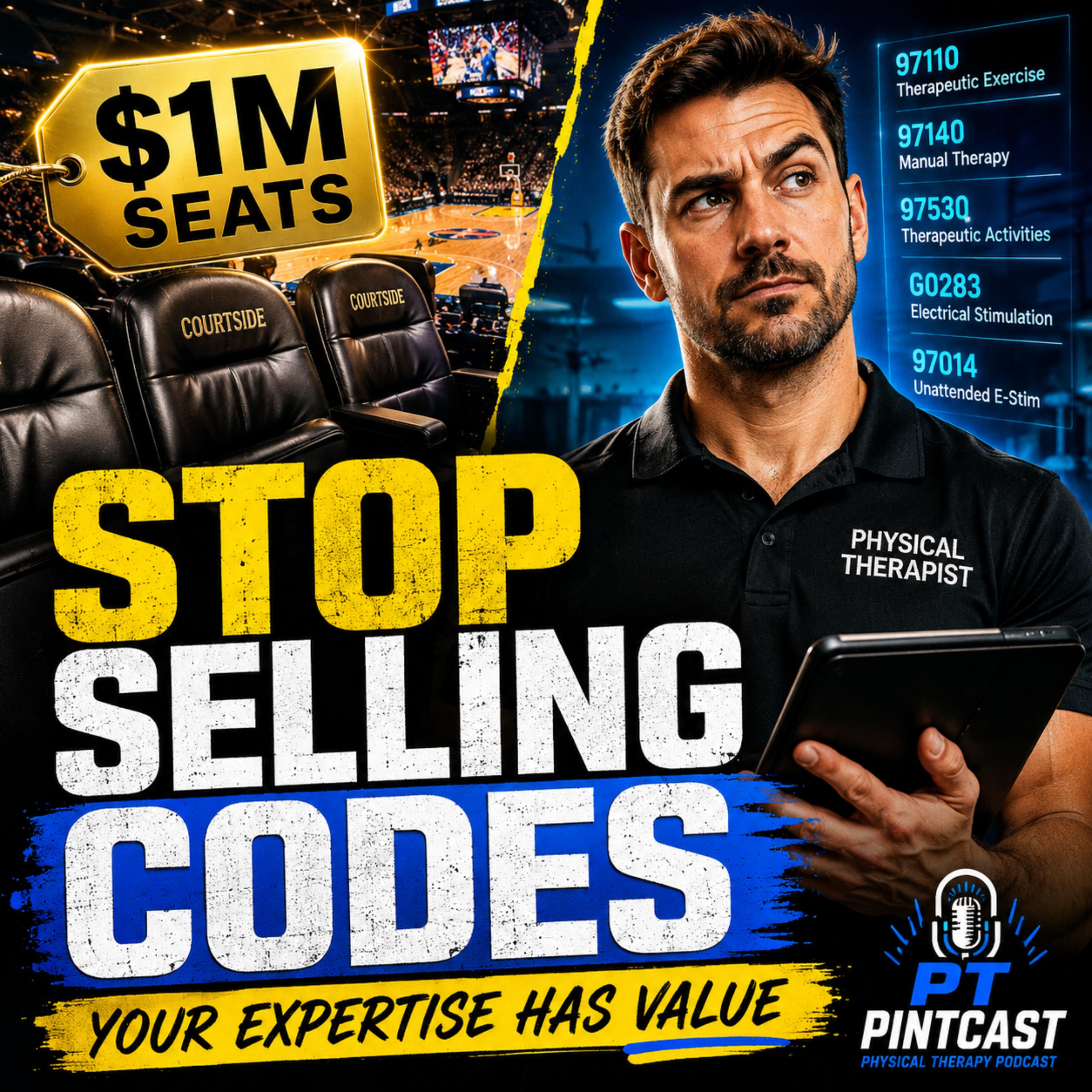


This episode of PT Breakfast Club is a practical conversation about value, access, content, and revenue in physical therapy. Jimmy McKay, Tony Maritato, and Dave Kittle start with a wild sports pricing example, then bring the conversation back to the clinic: why do PTs struggle to charge for expertise when other industries clearly understand premium access?
The group digs into insurance reimbursement, cash-pay models, YouTube memberships, creator burnout, and why patient education content may become a serious business asset for PTs and clinic owners.
Key Insights
• People pay for access, status, trust, and simplicity. PTs need to understand which of those they are actually offering.
• Billing codes can train clinicians to think in units instead of outcomes, expertise, and value.
• Premium PT care and broad access are not opposites. A clinician can charge more for high-touch care while also creating lower-cost education through content, memberships, and video libraries.
• YouTube memberships may be a practical way for PTs to build education-based revenue without building a custom app.
• The biggest content barrier for many PTs is not editing, gear, or planning. It is confidence, consistency, and fear of being judged.
• A shared rehab creator network or launchpad could help PTs, OTs, and SLPs build audiences faster than working alone.
• Corporate content often fails when it feels like an ad too early. Trust has to come before the close.
Why This Matters For PTs And Clinic Owners
Clinic owners are under pressure from reimbursement, staffing, burnout, and rising patient expectations. This episode pushes the profession to think beyond the visit-based model and ask: what else can expert clinicians build with their knowledge?
For individual PTs, the message is simple: your expertise can create value outside the treatment room, but only if you are willing to publish, test, learn, and keep going.
Hosts / Guests
Jimmy McKay
PT Pintcast
Tony Maritato
Total Therapy Solution - Physical Therapy
https://www.youtube.com/c/TotalTherapySolution
Dave Kittle
The Dave Kittle Show
https://www.youtube.com/@thedavekittleshow
Sponsors
SaRA Health
https://sarahealth.com
EMPOWER EMR
https://empoweremr.com
U.S. Physical Therapy
https://usph.com
Subscribe & Follow
Apple Podcasts
https://podcasts.apple.com/us/podcast/pt-pintcast-physical-therapy/id1000443325
Spotify
https://open.spotify.com/show/3LmMUT64yrUc2iGo9Emafc
YouTube
https://www.youtube.com/@PTPintcast
https://www.linkedin.com/in/jimmy-mckay-pt-dpt-a4207659/
https://www.instagram.com/ptpintcast
X / Twitter
https://x.com/PTPintcast
Website
https://www.ptpintcast.com/
<p>This episode is part of the <a href="/physical-therapy-business-podcast">Physical Therapy Business Podcast</a>, where physical therapists and clinic owners learn how to get more patients, improve operations, and grow their clinic without relying only on referrals.</p>
<p>Looking for more episodes? Explore the full <a href="/physical-therapy-business-podcast">Physical Therapy Business Podcast</a> for real-world strategies on physical therapy marketing, patient acquisition, and clinic growth.</p>
0:02 Broadcasting way too early from three separate Wi-Fi connections. It's PT Breakfast Club with Tony Maritato, Dave Kittle, and Jimmy McKay. All right. Good morning, Tony Maritato. We got a lot of things we can talk about. Which one do you want to do first? Let's talk about exchanging money and value. Let's talk about the NBA game last night. Yeah, I the Knicks lost, right? Yeah, I fell asleep before the game ended. That's I'm I fell asleep before the game ended old now. I'm not a betting man, which is a total lie because I love betting.
0:45 It can be a highly addictive behavior for me. Who in the world would not make the bet that the Knicks were going to lose? I was thinking about this. I'm like, you cannot tell me how much money is generated per game. It's a seven game best of seven. Who thinks that they're not going to get these guys to seven games? I mean, that is absurd. I would have bet everything that the Spurs were going to win last night simply because they already won two or Knicks already won two. And this is hundreds of millions of dollars. They're not going to let this not go to seven games.
1:27 Right. So ESPN does like those little stories, little vignettes, like the game behind the game, the story behind the story. And they were talking about who's even allowed to sit on Celebrity Row. And I never knew this was a thing. I just thought celebrities bought courtside seats. But apparently there's areas where you got to be somebody and have money to get in. There's a Knicks alumni section behind one of the baskets. I didn't realize this. I'm not... a big enough basketball fan to know this which is me staying up too late to watch try to watch the game but um but apparently there was what there was bidding going on someone was trying they were they were roughly uh auctioning off a couple of seats so you're buying status so where does the story start I mean, it just, you know, I think there are lots of professional sports teams where you can't even begin to purchase good seats unless you've been purchasing good seats.
2:29 You have to buy even Ferrari, like Ferrari, the car brand, you have to buy lower end Ferraris before they even let you consider buying a higher end, more specialized Ferrari. this is the way business goes and it's got me thinking about health care if you want to pull up the graphic for the the two seats that were sold for a million dollars Like, I still don't understand this. I tried to talk to Dave about it a little bit, and I think we didn't go down the road that I was trying to go down. My question to you, and we'll bring this to physical therapy in a minute. My question to you is, if somebody is willing to pay a million dollars for a pair of seats courtside, those two seats are worth more than the million dollars they are willing to give up.
3:21 Have to be. i don't understand how the conversation and i don't need this to get too political but the conversation has seemed to shift to it's you know if everybody can't afford it then nobody should get it um we see this with the world um Is it the World Cup? The soccer? You know, it's like, hey, seats are too expensive. Housing. Housing is too expensive. It wouldn't be that expensive if people weren't buying it. These seats wouldn't have sold for a million dollars if somebody didn't value it more than the million dollars in their bank account. So... take this into healthcare, I go back to any great therapist who is spending time in the insurance system, who is spending time treating patients who don't need their expertise, is effectively wasting their time and their money.
4:14 Like, I don't understand why a great therapist, I am not considering myself a great therapist, wouldn't say, hey, I've invested this much in my education, I've invested this much in my experience, I've sacrificed this many years. I'm only going to see people who have real problems that require a higher level of expertise and knowledge and with that are willing to pay for the investment that I made in myself and my experience. You know, there should be that level of higher cost, higher skill, higher knowledge. But there seems to be a resistance to it.
4:56 Well, I think things like sports are in higher demand and more visible and they are wants, not needs. So we will pay higher for them. We just will. As an example of the thing on the screen in terms of paying one, was it one million dollars winning auction bid? So they were half a million dollars a seat. for game three right that's way more affordable it's very affordable right because you're getting two seats right and then who are you sit who's on your left and who's on your right you're actually you're rubbing elbows um football has done this with it are you familiar with the psls no so it how much does uh you live in ohio right how much does it cost for season tickets for the browns We're paying the list, but yeah, I don't know.
5:41 First, you have to buy a PSL, a professional seat license, which is what you're talking about. Essentially, you have to say, here's my down payment, and now I'll pay for the seat. You're paying for permission, then you pay for the seat. And it's just the next logical step. I mean, PSLs have been around for years. I look at them because to me, I like sports. I don't know that I love sports anymore, that it's, you know, prime driver. I would go to a game. But my first question is how much? Because if I'm going to enjoy the game, you know, a consumer electronic purchase for, you know, a seventy five inch TV is less than parking now, probably for for two games. Right. And I'd rather be like, I can have any food I want.
6:24 I can order whatever I want. I don't have to drive. Cool. I'll watch it on my big screen. So you have to ask yourself what you're valuing. When I lived in New York City, though, it was more doing things because you were there. That was the thing. You were there. Everything was accessible. You could get to Madison Square Garden with two subway stops. you're buying access, right? I mean, what were the cheapest seats in Madison Square Garden? Let's say they were five thousand dollars or something like that inflated value. You're still in the room. Oh, you're telling me you wanted to be close. Not only close, can't get closer.
7:04 Jay-Z famously says in one of his songs, I could trip a referee, meaning his feet are on the court. And then you're getting on TV. And you get to say that you bought it. So I think it's a status thing for basketball or football or baseball. I think you're trying to sell a simplicity thing or an access thing for healthcare or for medicine. And I think some people do value that. And in my mind, I feel like that's the way it's going. It would be hard pressed to not see that. Why don't more, at least in our world, PTs, OTs, SLPs, why are they not embracing this with open arms?
7:47 Why are they not acknowledging, hey, I, the professional, have invested all of this extra time, money, effort, expense. I should be and will be requiring more compensation. But in exchange, I'm not going to waste air quotes, waste it on easy things like let the easy conditions, let the easy stuff go to digital health, go to other platforms, which we'll talk about YouTube here in a minute. And you just focus on the stuff that really requires your level of knowledge and expertise. Why wouldn't someone do it? What is the resistance?
8:28 Number one, for you to bring up the Peace Corps, the Peace Corps gene where I have to let everybody in and then Tony would counter. And I would agree, which is so charge a PSL, a professional seat license for your clinic for let's say you've got. ten slots a day times you've got fifty slots fifty hours of working hours right that's what you're gonna do you decided to work ten see ten patients a day five days a week that's fifty give a sell thirty of them give away twenty but you sell the you sell the thirty for enough i heard a great line from this guy jamie brindle he's like a coach to freelancers they say how much how much do you charge for a job and he says i charge enough that i can subcontract out all the work and live on the margin.
9:17 Wait, what? Wait, what? So he realizes if he's got to build a website and create graphics and build an email campaign, because that's the sort of thing he does, he charges enough, walk through this, to say, well, I know a really good email person, a really good web person, a really good graphics person. It's going to cost five thousand dollars. I'm going to charge the five thousand dollars it costs plus whatever I need to live. I am the margin. And I think that's a brilliant way to look at it. We won't, or I shouldn't say we won't. People do, but it'll be slower because we have been trained and it is ingrained that we are worth codes. So we are worth time codes, not actual value.
10:01 Maybe the greatest trick the devil ever pulled in healthcare was sort of playing like a casino, right? where instead of betting money, which would feel scary if I'm holding money, I'm holding chips. And the chips are, I don't know, they're just different colors. So we're not exchanging time for money. We're doing our duty for time codes. So I have to be a good little soldier and get as many codes as I can. And hopefully if I build this many codes, by the time the money comes up, it's at least this much money to pay for myself. We won't, not fast enough. And it's because of our own, it's our own fault.
10:43 The answer is always ourselves. I just shared an image. If you grab it from the chat and put it on the screen, you hit on a topic. I remember, you know, thinking when I first saw my local hospital's patient fees, I was like, oh, my gosh, these are like airport prices back in the eighties. Like, how could somebody charge this much is so crazy. but you know when we look at smaller private practices and this could be down to a single owner operator it could be a multi-location still we consider a small business the pricing up on the screen right now is two thousand twenty six pricing for self-pay if you don't have insurance for my local hospital and it's it's small but basically A couple of the ones that I always highlight are a minimum complexity, twenty minute evaluation code nine seven one six one.
11:38 My hospital is charging five hundred and eighty one dollars. If you look at therapeutic exercise, my hospital charges, two hundred and ten dollars. The best one, non wound care E-Stim, right? Slap those pads and turn electricity into money. Six hundred and twenty six dollars. Now, I guarantee because I've talked to them, I guarantee the clinicians working in this hospital outpatient clinic have no idea what the charges are. These are outpatient charges. Your dad, my grandma could go see their orthopedic, have a little shoulder pain, get a referral for therapy, not know where to go, go to the hospital because that's the safe bet, and end up with a two thousand dollar bill for an evaluation, some E-STEM, some manual therapy if they're lucky, therapeutic exercise and some activity, right?
12:33 Absolutely within the world of possibility. Now, the people watching this are gonna say, oh, but Tony, of course, you know, they're not gonna get paid that much, these are inflated prices, this is what everybody does. There's two arguments to that. One, if I go to the legal department for this hospital and say, guys, come on, are you seriously? This is this is inflated, right? You're clearly playing. They're going to say, no, this is what it costs because we have to pay the bills. We have to pay the staff. We have to cover indigent care and all of the stuff that we're not going to get paid for. This is what the actual cost of a unit of service is. The other side of that, which goes to what you were saying earlier, is if i want to deliver a patient visit out there right now my average reimbursement from medicare typical four unit follow-up is going to be eighty five dollars right what does it cost me to deliver that therapy i have to pay the therapist let's say on average the therapist is making forty fifty bucks an hour i have to pay an administrative person It's going to be another forty five to fifty thousand a year.
13:41 I have to pay a billing person. I have to pay somebody to just manage the space, vacuum, clean, clean the toilet, empty the garbage. I have to pay somebody to manage payroll. I have to pay somebody to do the marketing. I have to pay somebody to do the accounting and the legal and compliance. Those are eight positions. None of them are working for under fifty thousand a year. The only reason why I can operate this clinic for a hundred, eighty to a hundred dollars an hour per visit is because I am willing to do all of those things. But if you divided a hundred visits a week across eight salaries, How much, a physical therapy visit would easily be a thousand dollars a visit, right?
14:29 So it's like, okay, we're willing to sacrifice, I don't know for how long. We're willing to take money out of our bank account, food out of our kids' mouths, deliver the level of service that we deliver for the pennies that we receive. simply because of, as you mentioned, the Peace Corps gene or our desire to help society and help these individuals maintain their independence? The jump... That would be required to change prices from what most physical therapists charge, not what they're worth, what they charge, to this, what's on the screen, is so massively huge.
15:11 And it's not a math problem. It's an emotion problem. Right. Like you wouldn't be able to do it. We've talked before. We've had examples on this show and off where people have said, They've had notices they print out on their door. They put them a door of their clinic. Just so you know, in eight months, we are going to increase our prices. Nine percent. And you're just like, at that point, increase in thirty percent because you're going to make people mad. So when you look at a price list like this. The initial the initial thought is twofold. No one's going to come. Just like Adam Sandler would say, they're all going to laugh at you. They're all going to laugh at you.
15:52 Well, not everybody. And if you actually provide something that is better emotionally and tangibly that the person next door, they're just going to stay with you because I wanted to go with the person that I know. I can't see it happening. I hope it would. I don't think anybody's going to jump to this tomorrow. But is there a logical reason that they shouldn't? Yeah, because no one else is doing it. The ceiling is where the ceiling is in our profession because the floor will not move or the floor will move at less than inflation. So this will remain. So this is where therapists are amazing at finding alternative paths to achieve the goal, right?
16:38 My patient wants a locomotive across the room. Okay, they don't have any legs. I'm going to figure out a way for them to do it, right? This is where the assistive device comes in. This is where the alternative methods come in. And so this is where, before we went live, you and I were talking about the prehab guys. Amazing. I mean, the size that they've grown to, what they've achieved, everything that they do, I just, I'm astounded. And they were doing this, you know better than me, before they were therapists, right? Like when they were in school. Yeah, I think they started their channel, their Instagram channel, the same year I started my podcast, which was in the year of my podcast.
17:23 Yeah, and look at where they are, where they've come. So I look at them as a role model, even though I could be their dad, literally. And I'm like, okay, how can I monetize my time, my experience, my expertise? How can I get to the rates that I need on an hourly basis without necessarily extracting it from insurance? Because even if insurance doubled reimbursement tomorrow, it makes no difference. It makes no difference. It's not going to get me to where I need to be. So the rehab guys put out their exercise library, their app. And I was like, that's cool.
18:03 I like the idea of that, but nobody wants another app. Nobody wants to log into something. You and I have talked about their numbers. I want to say at one point on their website, they had either said eleven thousand or twenty seven thousand. I remember those in my head of, you know, people using it. And I'm like, what could I do? So, of course, I go to right now I'm using Gemini more than ChatGPT for this. I'm like, hey, here are my social media analytics, TikTok, Facebook, YouTube, Instagram. What can I do with this? And I'm looking at the prehab guys. What do you know about their business model? Tell me how I can put this all together.
18:43 And one of the things that I mentioned was creating this service, an exercise library specific to total knee replacement, since that's my audience. And I said, okay. if i create an app like they created versus leveraging tools that already exist What are the options like? Don't create the app. That's thousands of dollars, months of work. It's not your jam. Yeah, hiring developers and all that stuff. I'm like, well, what about the YouTube membership option? And for those who don't know, so if you're monetized on YouTube, you can create a membership. YouTube takes thirty percent, which most therapists would go crazy about.
19:27 uh implying that they think it's too expensive youtube takes thirty percent the creator gets seventy percent it's a private membership area right you set pricing you can set pricing tiers you can determine what kind of access the members have uh what kind of services they can receive And I'm like, what are realistic numbers based on case studies that have already been performed from other professional service providers? And YouTube basically said, you know, you're going to look at about one to three percent conversion rate recommended. I set pricing at five dollars a month for the low tier, nineteen dollars, twenty dollars a month for the middle tier.
20:13 And so that's what I've been working on this morning. So let's talk about it because there are some aspects to this I don't think viewers are thinking about yet. The thing that comes up a lot for me is people don't want another app. They don't want another thing, which is where you have the Googles or the Microsoft and healthcare of the world, the prompts of the world, which is like, we're not, and I never understood this term until I'm like, oh yeah, that's what you call it. We're not a point solution. You don't want to have to get an EMR and then an RTM and then a billing, and then you figure out how to put them all together. People understand what... There's an engineering term for that.
20:54 It's called points of failure. Every time you go from one thing to another, well, it's got an API and it works. It works most of the time. And when it doesn't work... You're it. There's no ID department anymore, right? There's a helpline or a chat bot that's going to help you. So number one, it either needs to be embedded in the thing I'm already using or an app I'm already using. Years ago, I'll give you an example. The idea was... microsoft and i can't remember the name of the app they had their own like oh they had their own like internal social network they're like let's look at the rise of these social platforms let's get colleagues to do this internally and my first gut reaction was you want people to download another app to do the thing that another app already does.
21:47 And they're like, we're going to make them do it. And spoiler alert, it did not work. So you are going outside of the EMR that people already use, but you're doing it on an app that they already use and they don't have to re-understand it. So for that reason, I think you've got a chance. That would be my first... red flag, but I don't think it is. Because if you're truly going to do this on YouTube, I do not think that's... I think that's staying inbounds. No one's going to download it. I'm not going to have to learn it. Quite literally, I'm not going to have to remember another login and password to do this. Therefore, I will do it.
22:27 Yeah, yeah. The big things, the selling points for me, you know, so my channel right now has about eighty eight thousand subscribers. Doesn't mean anything. It's averaging about. What is it? I'm trying to think of how many views per month. Let me pull it up real quick just so I can give real numbers, because these are the numbers that I put into Gemini. We are doing one point seven million views per month, eleven thousand watch hours, adding about a thousand one point six thousand subscribers and doing about a thousand a month in ad revenue.
23:11 So I put that in, it said, you know, one to three percent conversion, looking at the five dollar tier and the twenty dollar tier and put all this this these numbers together. And it really said conservatively, it should be generating three to five thousand a month. Which, you know, you look at that and you're like, well, that's not bad. Especially when I consider I've already got a couple thousand videos. I'm making videos every single day. This is nothing new for me to do. That was after the thirty percent goes to YouTube or Google in this case.
23:52 And I'm like, why wouldn't I? And it increases access, which goes back to the earlier conversation of if I raise my rates to what it really should be, but I still want to have that opportunity to help people that can't afford the rates at the actual, I can't buy a million dollar seats at the Knicks game, right? But I can watch it on TV and it's free. And I'm going to enjoy it just as much with my beer and my popcorn and my food in the fridge. So this gives me a chance to scratch that itch of I want everybody to have access, even people who can't afford several hundred dollars a session.
24:35 Yeah, I think the answer is the simplicity. I also look at the... And this will go into the actual... I'm using air quotes here. The quality of the video. I think people overthink it. You see a lot of the Alex Hormozis of the world who are saying, it's frequency. It's frequency. Okay. I can see that. You have no idea what the world is going to want or react to. Or... what the algorithm is going to share. So the goal is instead of creating two videos a week and holding your breath that one of them hits, you create a hundred. But the other flip side is we need a studio and we need this and we need scripting and it's all going to be perfect.
25:20 And I would push back and say, go back to the prehab guys in twenty fifteen, twenty sixteen. And they were just sort of running and gunning. Like they would say, they'd go into the lab after class with a list of like thirty exercises and they'd treat it like, you know, breaking rocks, you know, down at the quarry and they'd say, we need these thirty videos and they'd put them up And they do it again the next day. And the real magic there is the fact that when you do that day in and day out, next time you look up and you realize you have a thousand videos. But it wasn't doing a thousand videos perfect. It was getting a thousand videos. This is why I liked radio better than TV. TV was... They were so... They were so...
26:01 dead set on getting things perfect that I was like, I'd rather have a thousand B pluses than one of your A pluses because your A pluses, no one notices the difference. The juice ain't worth the squeeze. So I think doing this on YouTube and you can figure out if this succeeds and fails way faster. You're going to do this for three months and be like, dude, the needle hasn't moved at all. We've made one hundred and twelve dollars. What are we doing here? I'll give it another month and maybe it'll pop. But like I think the feedback loop, the cycle is a lot shorter. Plus the thing, so my people are already on YouTube. They're already consuming the content on YouTube. They click a button and pay the monthly rate.
26:42 They can cancel any time. The platform is already there. I went through the process this morning. I grabbed screenshots just to chronicle what was it like creating the membership area. It took me less than two minutes. Now it goes through a review, twenty-four hours it says on average you'll get the approval and then you can start uploading videos. Where this gets really exciting to me, you've got the three to five thousand theoretical income I would get from the membership. But what about building the Peloton version of this? So I can do private live streaming within the membership platforms. If I'm going to do that, I can start interviewing other therapists who want to build their YouTube channel.
27:27 So there's value to them. Michael Derry down in Jacksonville, he's got a book, the sciatica relief book. I want to help him grow his audience. Tons of people who have had an ear replacement also develop sciatica symptoms. I bring him on. I do an interview. We plug his book. We see what kind of impact immediately it has. We share the Amazon link right there. The community has access to him. I do interviews with orthopedics. You know, I've done an orthopedic in Texas. I've done local orthopedics. Go get what you need. Again, like this brings instant access.
28:08 It also establishes me as the expert because I'm bringing in other experts. But then we go to the next level and we say, OK, there's a couple up and coming clinicians who are focused on knee replacement, trying to build their audience, sell their course. We do lives online. It could be a twenty minute meditation live video. It could be a twenty minute improve your flexion. It could be a twenty minute improve your extension. It could literally get to the point where people are paying me to come on for access to my audience, the clinician, the product company, you know, all of these other revenue sources, not to mention the product endorsements.
28:54 Paul always writes in thoughtful questions and Paul Fath just wrote in, what do you think is the biggest friction for PTs to make content? Planning, actually making it, editing it, and then he follows up. And then what do you create to reduce the friction? I want to know Tony's answer to this question because I wrote my answer down and I want to see if we're on the same wavelength. So what do you think the biggest friction is for PTs to make content? I don't think it's on the list. While we answer, I want to know Paul's answer because Paul is growing. His TikTok is doing awesome. His social media is doing awesome. He's got his connection with Amazon.
29:34 Like Paul is the person who's trying to manage the friction. Paul, Paul's forty percent ahead of who he's asking about. Do you know what I mean? He's asking about the person who's going, well, I guess I've been hearing about this for a while. Paul's Paul has answered this question already. In my opinion. So I want to hear Paul's answer as well. But what do you think is the biggest friction for PTs to make content? I'm almost reading this as beginning to make content. I have none and I'm saying it. What do you think it is? Well, I'll tell you what sucks me back into the hole every single day. there's people not yet but they're on their way who are coming to my clinic who are expecting me be to be their therapist and i'm gonna sacrifice the upside potential of continuous revenue for a video that i could record and publish Because I'm going to spend an hour of my life that I'm never going to get back for an eighty dollar compensation.
30:31 I think we get sucked into the patient care. That is the biggest friction point for me. If I'm treating a patient, other than sneaking a couple quick videos, I don't have time to do higher opportunity things. That's mine. Twenty years ago, fifteen years ago, my biggest friction point was insecurity i'm gonna get judged people are gonna look at what i'm doing and they're gonna criticize me the is it the no like you talked about this guy who who's the guy on instagram no bs or no oh yeah no bs physio or whatever yep yeah like he just rips people apart now it's so extreme that it's hilarious it's not even like insulting i don't think anybody would be insulted by him saying what he says about them But I think in the mind of the therapist, that's what they expect everybody to say about their content.
31:25 What do you think? Themselves? Yeah. You are the only limiting factor. You could right now use AI or not even just Google. What camera do I buy? How do I set it up? What lighting? And you could have AI generate you fifty different topic ideas and now it could script them. You could give input like I want it to sound like this person but this. I want to be the Seth Godin of whatever. You could give it all these different things and you could be creating these things by the time this live stream is over. You were worried about What if I put all this energy in and nothing happens? They're all going to laugh at you. Someone's going to judge you.
32:06 I'm going to make all this stuff and no one's going to watch it anyway, which I would say, then who cares? Because if no one watches it anyway, but the answer is yourself. Luck favors the bold. Luck favors the person who actually showed up and did the thing. So I think our biggest limiting factor is ourselves. When companies come to me and they're like, we're thinking about doing this thing and they're on the teeter-totter and I think they respect me enough that I can push a little bit, I go, in six months, if someone comes along and steals this idea, who does this exact thing? How pissed would you be if they did it first? And that usually pushes them over, right? Because this is a great idea.
32:48 So why aren't you acting on it? I'm not good enough. I mean, ask the people who are like, do you know, ask Dr. Joe. Do you know who I'm talking about on YouTube? Yeah, of course. Yeah. I don't know her. I think if you sat her down and said, are you the smartest PT on the planet? She would go, absolutely not. Absolutely not. She's not. Is she competent? Yes. Is she good? Yes. Is she worth being around? Is she engaging? Yes. But the biggest reason she's successful is... She hit record and she did it again and again. And then she looked at, oh, I liked that.
33:28 The best is when what you like as a person creating something and the audience like the same thing. Not I'm creating for them. It's I'm creating something that has value. I like talking about this. Who's the guy in the Facebook group who does the Parkinson's disease channel now? Michael... Hyland? Yes. Hyland. You can tell... that he really cares about educating people who are going through Parkinson's disease. You need to spend twelve seconds watching anything or reading anything he makes. It is a layup. It's a layup. And that is gold. I got really nervous when I was going into radio that I'd get a job at a radio station that I didn't like the music.
34:10 Wouldn't be able to do it. Couldn't do it. Lucked out that every time I played a song, I was like, I am excited for this. It's hard to fake it. Here's the best part. You don't have to. because you don't have to go after the largest audience possible. That is not just if you're like, wow, low back pain is covered. I don't really care about that. Great. Don't do that. Go after the thing. But the biggest limiting factor, in my opinion, Paul, is yourself. Can you read it? Yeah. I've dipped a toe into content and social media. Paul saying he lost the momentum, but working to get it back on the horse. Like this is common, right? So I would say if I were like having a therapy or a media session with Paul, I'd say, awesome, man.
34:54 Like, what did that look like? And what was too much for you? Was it like I was doing it every single day and I couldn't? Great. I would say, awesome. What's three videos a week? And what if you did them only on Tuesday between nine and eleven a.m.? Could you do that? And if the answer was yes, I'd go, great. Do that for six months. Because as soon as you burn out, you've got to unplug. You can't just dial it back. Trust me, I haven't done a podcast interview outside of the live streams in a couple weeks. Why? Dude, I got fried. I was on that pace to do three hundred and sixty five episodes in three hundred sixty five days. Actually, I still might be on that pace because I was doing like... three a day at some point.
35:35 I got fried. The biggest limiting factor was I got fried and I was looking at results going, I don't know if any of this stuff is helping anybody. I don't know if I'm picking the right topics. I don't know if I care anymore, right? So. Take that idea into patient care. How many of the best therapists get fried, burn out, not because they're doing too much, but because they are doing so much for people who really have no capacity to improve. You know, or the improvement is going to be so slight on the scale. Like I can go treat a patient and get eighty five bucks. That's not going to move the needle for me that the magnitude of change. I need thousands of dollars to really make it worth the effort in the time.
36:18 And at some point you do, you burn out, you get tired. And I've told Paul this before. Like, I am peaks and troughs all year long. I drop a hundred videos on YouTube and then I don't do anything for three or four months because I burn out creating those hundred videos. Now, there are people, my wife, who are going to be slow and steady. They're not going to burn out. They're going to continuously work and they're going to find the pace that works for them. You and I tend to be more up high and down low. But that's just the way it is, you know, and that's why it's so hard for somebody to give advice because your personality might not match. There's a couple of things where we got a lot to go into here.
36:59 So, again, this is why I went to radio, not TV. TV required me to like spend hours and hours and hours and hours and hours for one ninety second video story. And I just that was too much for me. It was so much. squeeze for so little juice where i preferred being on the radio for five hours a day and doing a lighter lift but for longer periods of time and interacting right so you and i do go through these we go like crazy and then we're like but where's the roi and here's the funny part Paul's asking, does each person need to be on their own island?
37:40 Because right now, if I have a channel, I'm my own island. And Tony's on his own island, right? If I have a podcast, you have a podcast. This is where I went back to like, I was never on my own radio station. I was always playing off of what someone else did. And we as a whole, this is where like having a TV channel or a network like ESPN, what the SportsCenter guys do helps the rest of the network and vice versa, right? So, Paul, what do you mean by that? He says, I always go back to Jimmy's PT agents like sports agents. You know, they've done this before, like creator houses. Have you heard about these things? You know, you rent a house on the beach, whatever, and everybody gets a room and then there's a bunch of little media stalls.
38:24 Essentially, we're going to pool all the resources together. media, production, lighting, space, overhead's a giant part of it. And now also you have what's called bumpability. Where if I bring in a great guest and I do a segment with them, well, why don't you just stop in down the hallway? The radio station I worked for used to do that. It's actually how I met one of my ex-girlfriends, was the local TV news person who's promoting a thing would come on my radio station. But while you're there, there's like two doors down. There's another thing. Why don't you jump on there for fifteen minutes? But also you have things like billing or contract negotiation. Instead of having to take twenty percent of twenty deals, you can take three percent of one hundred deals.
39:06 right so i think that's what paul's talking about like in in terms of agents and sports you are aimed at different audiences but i don't think you're competition i think you're more comrades than you are competition you're more you're more on the same team So this is, you know, we've talked about the barstool sports of physical therapy. There should be a centralized channel, a centralized YouTube, centralized Facebook. I would imagine the APTA would be the- I'm dumbfounded. I'm still dumbfounded. And that's the only reason I haven't done anything because I'm like, why hasn't anybody done it? I have tried in the past to say, hey guys, create videos.
39:46 I'll share them to my community. I had one person create a video that I did share to my community. Nobody else has done it. You would think that you could, someone could, one could create a YouTube channel dedicated to physical therapy and create silos within that channel of you know neuro and ortho and knee replacement and rotator cuff and you have your specialist they still have their own individual channels but everybody pulls the resources into this one to get it to a million followers to get the the views up and then it distributes traffic out right you have to have that way for traffic to pay off though Yeah.
40:32 That's why it's like... And I've been thinking about this a lot where it's only going to get harder. I mean, there's a couple of models on how to make money with content, right? Like Tony does it where he's like a lot of views or less views and I'll take a little bit of money times a million views and I've got myself a few nickels. With podcasting, I go the other route, which is like, I'm going to sign a sponsor for no less than seven hundred fifty bucks, a thousand bucks a month. But I'm going to tell you I'm dropping three episodes a week and you're going to spend this much time with them. And I know exactly who that person is because your neighbor who's an auto mechanic is not listening to his PT related podcast. And if you want to sell CEUs or a residency or staffing to a PT, I'm one of your guys.
41:18 So I look at what you just said in terms of like APTA would be perfectly leveraged. They have the brand, they have access, they have the facilities, they have the staffing. I think the next available organization that might be able to pull that off is an EMR. Because there's a payoff on the back end. The EMR company or a staffing company. The EMR company or a staffing company can look at that and go, if I put fifty grand in and I land four clients, or if I'm a staffing company, I put fifty grand in and I land...
41:59 Ten travel contracts. I've paid for that self. And also, we've talked about this before, content compounds. So the stuff that I paid for in January, I can dust that off and reshare that. And the audience compounds. I was saying that APTA is probably the one organization that could pull that off, but they haven't. I don't know why. They would have to be internal profession in my mind. They are not business to public. So then I wonder if that's an opportunity for a new person to come in. It's obviously a need. It's obviously somebody that has the chops, somebody that has done it before, can grow a channel, can produce it.
42:44 And it's a full time commitment. It's okay, we're going to do this. I'm sure the money is in it. But who would front that money? That's what I would say next is after APTA, the A- tier would be either a staffing company, like a travel staffing company, or an EMR. because they're the ones that can say for every client, for every one sale, you're not going to make money selling t-shirts on this. It would be very difficult to make money on views on this to start anyway, right? Because you're asking for a commitment of effort. And if people can't see the ROI quickly, I show up and treat a patient and then two weeks later, a check drops into my bank account.
43:28 That's a fast enough loop. If someone came to me ten years ago and said, you're going to start a podcast and you're going to have a significant amount of your income be based on that, I'd go, you're insane. I did it because it was this new little toy and I liked it and I was curious. It paid in the end. But I get why people are like, I don't know. I can't be the Tony. I think sometimes the things that you share, Tony, actually scare people out of starting. Because they're like, yeah, he's so much further than me. Like he's look, look, look, he look, he just he said, I accidentally shared this video from three years that I shot three years ago and I forgot to share it. It got a million views. Oh, my God. I look at that and I go, I just scripted ten things out and it got bupkis that that jacks with my confidence.
44:16 Will saying the breakfast club might be the closest thing we've got to that hub. Maybe. But even look at this. This gets okay views. Okay. And we've been doing this for three years, two years. Here's the thing. I don't know if we want to say the name of the group, but there is an EMR that out there that is trying to do this, had tried to do this. I haven't been in touch with them for a while. I'm looking at the YouTube channel right now. Four hundred and forty eight subscribers went nowhere. they're, but I mean, they have the money behind them. They have high production value. They do an amazing job. They get a ton of guests. They've brought in, uh, you know, creators that people know and, and tried to build that sports, you know, can, can I show, can I share, we want to say the name, but this is an EMR company.
45:09 That tried to do exactly what we just said. Tried to. Can I tell you why I think it didn't work? Please. They tried to sell way too early. You can smell it. Yeah. Everything drips with use us. Everything's an ad. Just look at the topics, right? Everything's a close. I've written about it on LinkedIn, about LinkedIn posts. If you start with this cool content that I'm looking at, I'm like, yeah, I'm nodding along. And then halfway through the little LinkedIn diatribe I'm on, and that's why we here at Callahan Auto Parts only use the finest auto parts. Oh, the whole thing's an ad. People reject it. It drips and smells of corporate.
45:52 Look at the videos that Barstool creates. They're created on phones, dude. They're created... in the offices with a bunch of twenty thirty somethings goofing off watching sports that's why it's real that doesn't look real to me that drips of fake I'm going to disagree. I'm looking at it right now. I just think it was too small of an audience. And, you know, I've got that audience, like I've got my Learn Medicare billing channel. The audience is PT, OT, SLP. It's kind of business. This audience and you and I have had this conversation. This audience is too small of an audience to really. get out there and go viral i think if we look at some of the big um general physical therapy channels bob and brad ask dr joe i always forget his name athlean x the guy he's a physical therapist like these are in the tens of millions of of subscribers they have huge channels huge reach I think if we took the profession of physical therapy, created the silos, supported individual content creators on a central location, I think we can hit tens of millions of followers.
47:07 I don't disagree. Yeah, hundreds of millions of views. And you said, who's going to fund it? I don't really think it needs funding. That's the thing. I can start my YouTube membership for zero cost. If nobody signs, I don't lose any money. I'm spending the time anyway. I've always gone back to there are so many creators out there who are creating and nobody is watching. Let's bring them into this ecosystem with a little bit of education and say, hey, this is why nobody's watching your hook, your story. Like, let's clean those parts up. Let's clip all this stuff out that doesn't need to be in there.
47:50 i do think it's still a big opportunity for somebody who wanted to take it yeah i think if this were to ever go anywhere the answer would be like occam's razor it would be the simplest solution like whenever you're starting talking about anything that a seven-year-old couldn't understand that's when it would fail so The only thing is it's not zero dollars because it's people's time. And even more expensive, it's their ego. And I don't blame them. Do you know what I mean? I get it. I had a fifteen-year head start. I used to get commended. Oh, as a PT student, you stepped out of your comfort zone and started interviewing people as a student.
48:33 I was like, I stepped into my comfort zone. I got to play stupid but sound smart because I asked it as a question in an interview. That was a life hack, right? So I do think it's, you have to get someone to say, I am the Parkinson's disease PT and I'm going to plant my flag and I'm smart enough. Because as soon as I say something and five colleagues come in the comment section, Your ego is shot, and I don't disagree. That is the dumbest part of human nature, but it is the biggest limiting factor. I mean, this is sort of the crux of how I started the damn podcast. I was sitting in a presentation room with a thousand PTs at a state conference, and I was like, do you understand?
49:15 This is ten, eleven years ago. I was like, wow, how much information is just stored in the brains of all these people sitting in this room, and it'll never leave. Even the presentation we were watching wasn't being recorded. I was like, wow, this thing's going to be said. It was prepared. Effort was done. It was prepared. It was executed. Most people will nod and forget. Eighty six percent of it before they leave the room. And I was like, that is a crying shame. And now we're twenty light years past that where we record and share like crazy. And the good stuff I still think is the good stuff is still out there. I'm going to grab a screenshot and I'll share it of the last three hundred and sixty five days revenue from individual videos, because now, you know, I've noticed this trend in my life.
50:08 I'm fifty one years old now. There's been a thirty year analysis, but something that I've seen, I get an idea. I get excited, I get pumped up, I put a bunch of resources behind it and then I burn out and it dies and it just sits there and it doesn't do anything. And then I start to get excited about it again and I start to rethink it again and technology has changed, culture has changed, other things have changed. And a lot of these ideas, the first time I throw them out, they don't go anywhere and then the second time they get a little bit of traction and sometimes it takes three or four efforts But usually, you know, at some point something clicks and it takes root.
50:52 Yeah. It's more me than we. Yeah. So if you can grab that screenshot, this takes me back. So people want to get monetized. They want their YouTube channel monetized. You know, even a dollar, you and I have said this multiple times, a dollar puts fuel in the tank of our motivation. It's validation. Yeah. Proof of concept, market fit. So going back to this global idea, There are, you know, on my YouTube channel, there are individual videos. YouTube gives us revenue. I know one video, if you can share it, generated four hundred and sixty six dollars over the last three hundred and sixty five days.
51:36 I just took this screenshot. So this is the most up to date ever. Another video still struggling after your knee replacement, three hundred and eighty dollars. So even something like that to say, rebuild the channel i've got the choose pt first youtube channel i could change the name i could rebrand it it's already got i don't know twelve hundred or something subscribers i've done this before and you make it a profession you know specific channel geared to the consumer. We looked at the APTA's YouTube channel, Facing the Consumer. They haven't published in three years and it was one video and then it was five years ago.
52:21 We do that. We invite small creators who don't have an audience we get the channel monetized more quickly than they could get their individual channel monetized. And we could even do a revenue share because these are objective numbers. You know, if they have a video that goes viral on our platform, we could do a revenue share based on the actual analytics. And then when they get their own individual channel monetized, they get all that additional revenue. It's like an incubator. where we're investing time and effort and so are they, but they're at least saying someone's been there and done that.
53:02 So at least it's safer. But they own the IP when they're done, right? I don't want it. I don't want their videos, right? I would call it a launchpad more than an incubator, same concept. Our return on the investment is we get to leverage hundreds of creators to accelerate the growth of one channel that will then potentially distribute and promote individual channels from there. That channel is obviously going to have value, generate monetary income. And, yeah, we would be essentially the people funding the project with our time, our knowledge, our history of thousands of failures before we built anything that generated traffic and revenue.
53:53 Yeah. Got to get people to commit to do this. That goes back to this. I need you to invest. I need you to step out there. I need you to trust in yourself. I need to believe in the idea. I don't know. I've always been the person who's like, I'll just try it. What's the downside? I remember my professor asked me, if you start a... What's this thing called again? A podcast? If you start this podcast, what do you lose if it goes nowhere? And I was like, well, the microphone's, you know, and hosting is, you know, and she's like, Feels like a low barrier. Now, it was also my time, but I was also curious about that stuff anyway, where I was like, I don't know, I kind of want to know this stuff.
54:37 So even if I got zero listens, I learned stuff. So cheat code wise, it was still worth it for me. See, I get all pumped up. I know. I'm already thinking like, what do we name it? I wouldn't make it PT specific because I would want to be able to include OT and speech. I would want to look at what else is already out there, you know, and already thinking about like what are the legal agreements look like so that if a video does go viral I mean can does the creator have the right to take the video down or once it's up there is it kind of locked in if I create a course on a platform that course is locked in I can stop selling it to new people but most of the platforms won't let you take it down because other people have already bought that course So it's all of this stuff.
55:35 That's the exciting stuff. This is the dopamine rush that comes in and like takes you away from the commitments you already made to other projects This is probably why I don't end up really taking anything to, you know, tens of millions of dollars because I, soon as I get a little success, the dopamine declines. And then I started looking at the next thing, you know, I've got a little success already. I've got things that are working. Why would I even consider moving into something new? Because I'm addicted to the dopamine and the excitement more than I'm addicted to the revenue and the actual business.
56:18 Yeah, you and I are probably similar in that there's this the six types of working genius. It's like one of those like personality slash work tests. And one of them is the is the genius of tenacity, which is like the finisher. And I get yelled at all the time because I start fifteen projects, get nine of them to the halfway mark, get three of them to the three quarter mark, and then I'm starting six more. That's the idea. Yeah. Yeah. All right. We're, we're at the top of the show. What are you thinking for parting shot? Parting shots is we flirted with ideas like this. I would love to try, like it's almost summer. Is that a slower time at the clinic for you or busier?
57:00 Uh, inconsequential busy from a family perspective, you know, family vacations and kids are available. And I would say we play with the ideas we've talked about and launch them in the fall. That gives us some runway. Yeah. Yeah. And then, and then, and then publish the results. Would you be against if we could get a large organization who saw this or heard this or got pinged from enough people that go, we want to buy in, we want to invest. I feel like that would add fuel to the fire. It would, it would account. It would add accountability. You know, understanding where or what would happen with that investment would be important.
57:43 Yeah. All right. My parting shot. I'll go first. My parting shot. You are the biggest limiting factor to your own success. I say this from... beyond more enough personal experience, you are the biggest limiting factor to your own success. If you can get past that, if you try to fail and succeed, which have you done? Like if you were like, I'm just going to do this, I'm going to do it. It's not going to work, but on purpose, I'm going to try to make it blow up as big as I can. And then what if it doesn't? So that's my parting shot. All right, my parting shot. One of the things I wanted to talk to, we didn't talk about, Amazon Prime Day, which is actually Amazon Prime multiple days is coming up, about two weeks away.
58:26 Product companies are desperate for video and content and anybody who's willing to do it. I've got my scripts in Gemini. So as the emails come to me, I'm like, yeah, no problem. Three hundred and fifty five hundred dollars finished video. Sixty seconds is what I offer. This is the deliverable. If you want it, I'll do it. I say no to a lot of these companies like there's power wheelchairs and stuff that I'm not going to say yes to. But. If you're in that world at all, understand that this is a big push for these product companies and they're more than happy to pay a couple hundred dollars for sixty seconds of your finished time.
59:08 Because what they really need is authority and access. They understand they're at the one yard line of making money. But that golden mile, as they used to call it in delivery, that last step, you can't buy or fake that. You can try. You can try. We just talked about a company that tried to do it, and there's something wrong with that. All right. We'll talk about this some more. It needs a cool name, though. I do like Launchpad. That feels like there's some height to it. All right. We'll be back on Thursday. We'll see you guys soon. That's it. We're out. Boys, what the hell are you doing? Follow Tony Meritato on YouTube at Total Therapy Solution. Find Dave Kittle at conciergepainrelief.com and on YouTube at The Dave Kittle Show.
59:53 And follow Jimmy McKay at PT Podcasts on YouTube, the socials, and wherever you binge podcasts you pretend are for CEUs. And hey, just a reminder, none of this was for advice. This was for entertainment only. Our lawyers say that counts. Thanks, Keith.