Physical Therapists Need to Stop Selling Visits
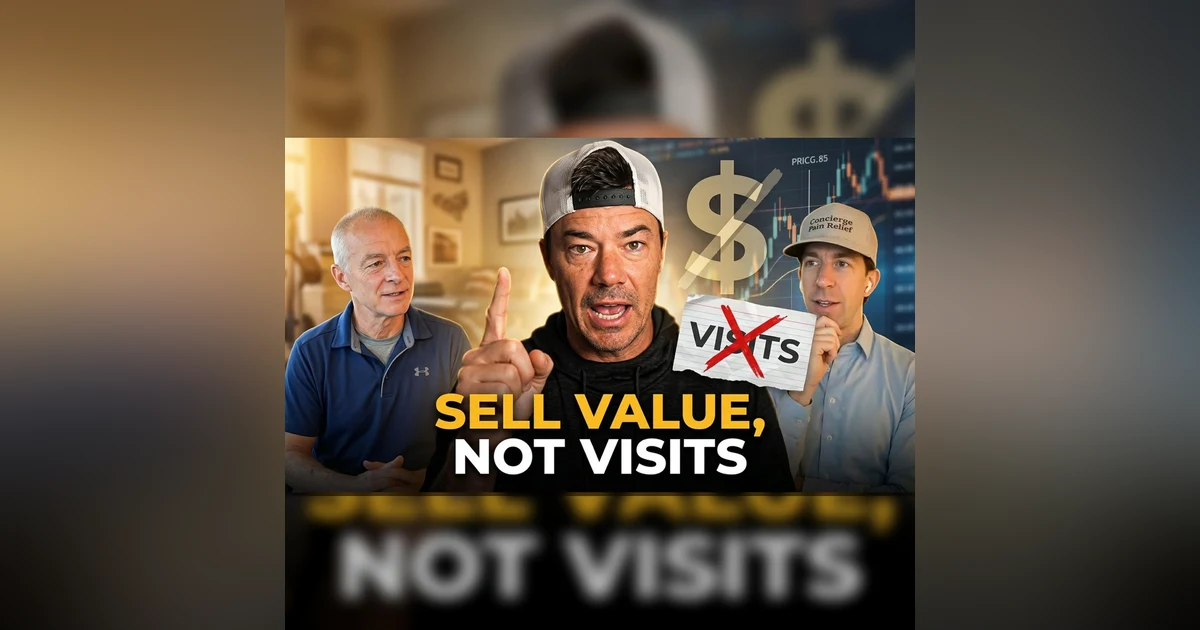



Physical therapists keep saying they provide value — but then many clinics hand patients a confusing menu of visits, rates, packages, discounts, weekday pricing, weekend pricing, and “per visit” math.
That confusion may be costing you patients.
In this episode of PT Breakfast Club, Tony Meritato, Dave Kittle, and Jimmy McKay break down a real cash pay physical therapy pricing problem and ask a bigger question:
Are physical therapists selling the wrong thing?
Patients are not really buying “visits.”
They are buying relief, confidence, access, trust, and a clear plan to get back to the life they want.
This conversation covers cash based physical therapy, private practice pricing, price anchoring, simplifying your offer, patient decision-making, and why “confuse me, lose me” might be one of the most important marketing lessons for any physical therapy business.
We also talk about AI coaching, business coaching, babysitter economics, roof replacement psychology, pharma advertising, digital physical therapy platforms, and why PTs need to stop talking themselves out of money.
In this episode:
00:00 PT Breakfast Club opens
00:30 Tony’s accidental weight-loss strategy
03:00 Using AI for running, fitness, and accountability
07:30 AI vs human coaching
12:45 Dave’s cash pay PT pricing card
14:30 Why too many numbers confuse patients
17:40 If price is the biggest thing, you compete on price
18:40 Price anchoring and why it works
21:15 Should PTs sell visits, appointments, or outcomes?
24:30 The simple buying journey: call, evaluation, plan of care
29:30 What cash pay physical therapists are charging
36:15 Babysitter pricing as a value lesson
44:30 Buying back time and unlocking value
47:00 What PT can learn from pharma and insurance ads
49:30 Selling hope instead of visits
58:00 Sword, Kaia, and where PT investment is going
01:00:15 Parting shots
Hosts:
Tony Maritato
Dave Kittle
Jimmy McKay
<p>This episode is part of the <a href="/physical-therapy-business-podcast">Physical Therapy Business Podcast</a>, where physical therapists and clinic owners learn how to get more patients, improve operations, and grow their clinic without relying only on referrals.</p>
<p>Looking for more episodes? Explore the full <a href="/physical-therapy-business-podcast">Physical Therapy Business Podcast</a> for real-world strategies on physical therapy marketing, patient acquisition, and clinic growth.</p>
0:02 Okay. Broadcasting way too early from three separate Wi-Fi connections. It's PT Breakfast Club with Tony Meritato, Dave Kittle, and Jimmy McKay. Unfortunately for everybody, I'm the only person on camera, so you have to look at me. I'm Jimmy McKay. That's Tony Meritato, the disembodied voice, and Dave Kittle will be here in a minute. Tony, how's it going, man? Good. I've got a funny story to share. Last week, you and I were talking about weight loss and using AI and doing all this stuff and I said, you know, like when i was in my forties late thirties i i understood the math you move five uh two hundred and fifty calories a day more you eat two hundred and fifty calories a day less you lose a pound of fat a week and i said now in my fifties it doesn't work but i found something that does what is what is that What do you think?
1:04 I'll give you one guess and it's not AI. Dave would be proud. There's no technology involved. In fact, it's the opposite of technology. Did you get sick? Yes. Biology is the opposite of technology, but that'll do the trick. Here's the deal. I'm at home. I've got four boys. We have a dual air fryer and they're constantly using it. I find a raw hamburger patty. We have frozen hamburger patties. So I find a raw hamburger patty sitting in the air fryer. I'm like, oh shit, I can't let this go to waste. It was probably from the night before, but I have no idea.
1:44 It didn't smell rancid. So I cooked it and then I ate it. And then for like a week going on to a week and a half, I just cannot like eat well, normal. My stomach is upset after like two bites of just about anything. I'm down ten pounds. It was miserable, but it's not like food. Ten pounds, but it's not like food poisoning because I never threw up. I wanted to throw up, but I didn't throw up. It was just weird. It was weird. Now, I had the GI stuff, but not the like vomiting. And so, of course, I put it in the chat GPT and I'm like, hey, you know.
2:26 I haven't run for a week. I need to get back to running. What do I do about it? And it's like, well, do this, do this, do this. Okay. I've lost nearly ten pounds in about ten days. And it's like, well, it's probably just water weight and low glycogen storage. And I'm like, you bitch. Tell me I'm losing fat with all the suffering. That ain't how it works, man. You got to suffer for longer than that, a week, but I mean, that does show you, like, so the reason we're talking about this, if you missed the last episode, is, and we can talk briefly about how we use it, because I used AI does not tell the whole story.
3:09 Like, there's some skill to it. There's some tricks to it. There's some other stuff to it. Yeah. When I started using AI, I was like, I want to get fit and lose weight. And I went up four pounds for the first week. And only yesterday did I actually go down a pound from my original weight. And then, of course, I was like, it's always giving me like this, not toxic positivity, but a little for me, a little too much. I'm a silver lining guy, but I'm more of my realist or an optimist, pessimist, realist. I'm more of a realist. I'm like, give it to me straight. You're not doing it well enough, so I'll do it better.
3:54 So I just dropped one pound in the last week and a half, two weeks of on purpose doing what I'm doing. And we can talk about how we're doing it as well. How are you using it? Did you create just a chat and how did you start it? Like get to the nitty gritty because it might seem boring, but this is a differentiator. For which part? For the AI, how did you start it? Are you just having a conversation with ChatGPT? Did you start off with goals? Did you start off with a weight and body mass index? Or how in-depth did you go with it? So for reference, just so we're talking about the same thing, the weight loss was pure stupidity. No AI involved. You're using AI after running.
4:35 The running, yeah. So yeah, I started a chat. And like I do with all projects like this, and I do the same on Gemini. It's not just ChatGPT. I started chat. I feed the chat the information. So I went into my running app because I had been running prior, grab all the analytics out of my running app, upload the running analytics, distance, time, frequency, intensity. Then I put in my blood pressure. I put in my body weight. I put in kind of a little emotional like, hey, this is what I've been feeling. This is after every run, yeah, this is, you know, what, uh, what it felt like, was it hard? Was it easy rate of perceived exertion kind of stuff?
5:17 Um, And then we just, every single day I take new screenshots of the new, new analytics. I put it in there. I do this with my social media stuff. I do this when I want to grow a garden. I do this with any, any related thing that I'm going to use AI to help me track and monitor. And each one's a separate chat. And then once the chat gets a little too long, what? Each one's a separate chat? No, no, like the running is a chat. The gardening is a chat. The food, yeah. Once the chat gets too long, AI starts to degrade. So then either I get a summary, a synopsis of what we've done and then start a new chat or reintegrate, put new analytics, like update everything and say, here's the new starting point.
6:07 Let's go from here. I just had to do that with my social media stuff. It was starting to lose the analytics. I started a new chat, put in fresh analytics from the weekend, uh, thirty days back and I said, okay, now this is where we're starting. These are the goals. These are the objectives. Yeah, I do a couple of things like same thing. We'll just stay with health. It's I started here. I am. Here's my goals. I was going to list all the pieces of athletic equipment that I had. Then I want to just taking pictures and I'm like, I don't know, inventory this bang, bang, bang, bang, bang. I like doing this. I don't like doing this. And then it started by saying, every morning I want your starting weight.
6:47 And it's like the third day of me going up three pounds. It was like, okay, let's only review the actual weight every two or three days because it really isn't about short term. It's about long term. It's being a little bit of toxic positivity. it gives me some breakdowns and i keep it simple too when i get off the peloton i'm not sitting there telling it i'm not writing down how many kilojoules i did i'm just taking a picture here's my analytics here's how i did i verbally you know just here's what i ate here's what i did got it got it make some sense out of that and it gives me a plan for the next couple of days let's get dave in it in on it are you using are you using sort of that sort of chat feature at all in in health or you just no Is this a different feature in ChatGPT or Gemini?
7:33 No, no. Just using it. Saying, hey, you're now my health and fitness coach or I just need another set of ears for this. Here's where I am. Here's what I did. If I want this goal, what would you recommend or things like that? You know, I'd be curious from Dave. Dave uses a business coach, a personal coach. Do you also use any AI as that business personal coach? And what's the difference between the two? Like, what does Sturdy bring to the table that an AI can't? I mean, as much AI can pull from other... areas of knowledge bases and all that, like sturdy had six locations. He had a big team, fifty or something employees or more sold it.
8:18 Right. Charge out of pocket in a major city in San Francisco, similar to what I'm trying to do in New York City. So he's already been there and done it. And I mean, OK, the one the one thing that I think is really easy is if I have to do some takeaway thing like homework or, you know, hey, work on this, you know, before it was like, No. make core values like what are the things that annoy you in your business uh and usually like the things that frustrate you and annoy you usually that's like you can pull your core values out of that because it's things that you like inherently like hate or don't want to exemplify in your business right so like i can put that in the chat gpt and i can say hey even you know remind me in a week or two but like there is there is no onus that is different than a human where i have to be accountable to another human this is why we talk about one-on-one like we talk about in person physical therapy versus digital stuff That's one thing.
9:10 I mean, AI can have access to unlimited information. But usually I have a Thursday call with Sturdy, three out of the four Thursdays of every month. So if I have to do something that we're going to discuss on the next call, I have way more... I have way more of accountability that I need to show up for that next call with the thing that I'm working on or already done or send questions or, hey, this is what I'm working on. What do you think so far? Or I send him agendas. I send him updates of wins and challenges. And here's how the week is going or here's how last week was going before between last call and this call.
9:54 Maybe you could do all of that in AI, but it's no different than like people like have it have a hundred apps on their phone and like no one takes any app seriously. People have the running apps and the diet apps and the food apps and all this type of stuff. And a lot of our country is still overweight and out of shape and unhealthy and unwell. Right. So I still use GPT and Gemini more for exercise. generating social media captions images sometimes uh we were talking about the the rates and the investment pricing that i'm working on the graphic that we we discussed over the weekend i wanted to get your guys input um more like more like that stuff maybe some i used it for sops i've used it for my my last couple full-time w-two hires like the actual like agreements and contracts like the master employment agreement that says no moonlighting and company property to return company property or any other like intellectual property or like not stealing patient records and all that type of stuff.
10:55 There was like five of those contracts or agreements that I use chat GPT and Gemini for to then have my therapist sign. But no, I'm not using it for health and wellness. I'm not. I have used it for creating a workout plan. But it's like then I had this knee that I messed up. I bumped. I slid on my knee. It was swollen. I had it drained. It swelled back up. It was bruised. Now it's it's ninety percent. I'm still running on it, working out on it, spring on it. But I'm not working out every day like I want to. Plus, I'm in baseball season. Right. So I have used it for. Hey, ChatGPT, here's my goals. I want to break a sweat every day. Here's the equipment I have access to in my home gym.
11:36 Here's the exercise that I like, squats, deadlifts, lunges, all that type of stuff. But no, I haven't used it for any other accountability or tracking anything else or giving it information like Tony was saying. Here's my RPE or here's how I felt or here, this and that. So I haven't used it to that extent. Maybe I will in the future. We'll see. don't know what the i don't know what the formula is but it's definitely some percentage of new information and some percentage confirmation of what you already sort of know like i'm asking it what to buy at the store and like eighty percent of it i'm like i knew that but twenty percent i'm like if you give me a couple things that i could eat that i like that aren't bad you know i'm using air quotes for bad then I would appreciate that.
12:23 And I sort of knew eighty percent of it already. Right. Lean chicken, lean, lean, lean. Right. But vegetables. This is a surprise to me. Right. I went and bought Greek yogurt and then told me I bought the wrong Greek yogurt because it's like that one's the fake. That's all the sugar. I got it. Got it. Got it. Got it. Do you want to talk about your the thing that you share with us, the graphic and the thing that Dave or Tony gave feedback on? Yeah, let's talk about that. And then if you get a chance, let's see if you can pull up the post on Facebook that shows other people's pricing from the uncaged clinician. Because I think it'd be good for people to see what people are saying they charge.
13:04 Yeah. And that's actually, it's so funny because that's what prompted me to, because over the, on Saturday, I had two like warm leads that called in for home visits in New York City. And that's, I texted like a paragraph like you know separated with white space in between and bulleted like here's how much we charge or whatever but I was like you know what I don't know why I just like this doesn't look professional like texting all these rates or whatever like it should be like a for better or for worse names like uh like a menu card something where it's like so that the person when they get it they're less likely to negotiate or haggle on it because they're like oh this is like a business already has this created like on a menu as opposed to, I'm texting you like, like when the contractor, you know, or the plumber or whatever, like writes out like on a piece of paper, like, you know, this is the, and this is, you know, and this is, and so, it looks, I think it could make it a little more formal.
14:04 So that was, that was the post, Tony, that actually, I think around Friday or Saturday that I saw that we saw the same post on, on cage clinician about the title of that post. So I can find it. Cause I'm seeing a lot. They were asking what cash-based therapists are charging. All right. I'll look for it. Yeah. In the meantime, do you have the screenshot of what Dave put up? Yeah. Yeah. So, I mean, just real quick, visually, from me looking at this immediately on the phone, the big thing that stands out, it's hard to read, the font itself. It's fancy, it's professional, but it's, you know, just kind of...
14:45 Like I have to do one of those, like tilt my head back, five hundred and fifty if Saturday, Sunday and a couple other things. And then, of course, a variety of stuff. And I do think me included. I love the feedback. Keep it coming. Me included. It's just, you know, we got to think about who the client is. am I putting the responsibility on the client of, I don't know, what do I choose? Do I do twenty four? Do I do twelve? Like, how do I know what to choose? As opposed to just saying, like, here, this is what it is. This is what we're going to do. Or I love what you said. Like, it needs a name.
15:26 Jimmy's golden rule. Like, everything needs a name. So just give me the Dave starter package. This is what everybody gets. Nobody gets to start with just one thing. You don't get to just buy and avow. start with the starter package or if you're the other route like the mechanic across the street okay seventy dollar diagnostic a hundred and fifty dollar whatever and that'll be applied to what we agree on after that or this is the minimum you know yeah two things this felt like a new york city uh parking sign which is you can park here on even days but not on odd days, except on the weekend, unless it's a holiday.
16:08 And I'm like, do I park here or not? Or not? Bro, bro, you know, it says what day of the week, you know, what day of the week. So if you listen, I, by the way, just, just, just if anyone is watching or listening, like I do this on purpose, I want to hear your actual role feedback. But look at the first line, five fifty. If Saturday or Sunday say weekend. Why use two words? Yeah. Well, it could be weekend. I just I want it to be just very clear. So, you know, which day. But yes, it could be weekend. But I wouldn't want to say week day because I feel like some people might not even like a weekday is Monday through Sunday. Some people might think, I don't know. So it could say weekend and then Monday through Friday.
16:49 And no point. Every weekend is Saturday, Sunday. But anyway, I would say that because likely the twenty four visit of a twelve visit needs some explaining, doing it in this format is too much. Like you want to look him in the eye and you've got to decide whether this person is even right, right for them. So I ran it and I sort of jotted down my notes and then vomited this thing into AI and said, I want you to explain it to me if I was, and I usually pick my sort of Mount Rushmore, which is like Rory Sutherland or Seth Godin, Gary Vee. Gary Vee just wants a graphic, right? Just of Dave punching pain in the face or whatever.
17:30 But yeah, a lot of it was like, we understand like, what are you solving for? Because the headline says rates, investment and pricing. but doesn't say what you're solving for. Even your name, even the name of the organization, Concierge Pain Relief, says more about what you're solving. So what are we solving for here? So if someone who didn't really understand what your business was, would they understand what we're... Because right now, everything, the largest font is price. So right now, you're competing on price. And that's not what you want to compete on. No, equally it says investment at the same font. And I want it to be investment as opposed to here's our menu. Here's how much it costs, right? So it could just say pricing.
18:10 It could just say rates and pricing. So I have investment in their own purpose to convey that you're investing in your health and wellness. No, it's not a title. It's not like, you know, whatever, like Tony said, like your starter package or whatever. Like it's not a formal title. But when people are like, well, how much does it cost? Like if you don't take insurance, how much is it? How much is it out of pocket? Yeah. Also, like this is probably just from AI, but it says five fifty, then five fifty again and fifty and three fifty again. Like really. Yeah. That is a little that is a little redundant. But by the way, if anyone doesn't know me or anything like we specifically say this. and show it or disclose it by saying five fifty for weekends as a price anchor right you drive you drive by a car dealership and it's like this car used to be five grand now it's now it's now it's one thousand nine hundred and ninety nine dollars right so now you're like oh that's like a that's like a deal like it you know i'm getting a deal like it was did you did you every every single price every single thing on amazon is like the retail price and it's like crossed out or in gray and then it's like the orange like here's exactly what you're actually paying it's there's price anchoring everywhere um so that's why we do it like and some people will say yeah some people will want to do weekends without a price anchor they'll be like yeah all right five fifty and it like that's but what are they buying there they're buying i can't take a day off of work and get this relief so i want i'll be buying more because i need it no They're buying speed, promptness.
19:38 There's a clip floating around the internet and it's the actor that plays Hank Schrader in Breaking Bad, but it's not that show. And it's two guys that are buddies and they're selling cars. And there's one guy who's clearly, clearly shady. And he's like getting into a car. He's like, I need a car right now. And the guy goes, oh, we just got this. He goes, how much is this car? He's sitting in it in front of the wheel going, how much is this car? I need to drive this car away today. And he's like, it's so new. We haven't even priced it yet. Hang on. And he yells across the lot to his co-founder. And he goes, hey, man, how much is this? And the guy goes, fifty two hundred. And the guy goes, what?
20:18 And he goes, fifty two hundred. And he goes, he said twenty two hundred. And the guy in the car clearly heard the guy say fifty two. And goes, he said, I can put you in this for twenty two. And he goes, wait a minute, if I give you twenty two hundred dollars right now and he goes, well, I don't know, make me an offer. And then he bang, he does it. And then you think the guy just got swindled and he walks away. He goes, I paid that hundred bucks for that car this morning. I just sold it for twenty two. I wanted it off the lot. But you felt like fifty two is the anchor. So you can't tell me price anchoring doesn't work because it works on me and I'm not a genius. But if I know the trick is happening and I still make it work, it still works.
21:02 Then the trick works. It does. The thing where we had to stop calling it a trick and started calling it, I don't know, magic, brain magic, math magic, something. So I think it's a good starting point. I think you have some mostly taking away here, less adding, more removing. The only thing I would add is it needs a name. And I actually played with, and Tony's frozen right now, but I actually came up with, or my question was, Doctor, you make it â when you want to go see a doctor, you make a â Appointment. Appointment, right? So, like, we sell, for some reason, like, sessions or visits.
21:45 I don't know. What's the word? I made a dentist appointment yesterday. Like you said, diagnostic or consult. Diagnostic. Diagnostic. But yeah, you'd go to a physical. You started like a rabbit hole because I was talking and driving now. I was like, this went around in a circle because I know Colorado, APTA Colorado was just going after this. We have physical in our name, but we don't really offer physicals. People offer evaluations or annual checkups or whatever. Dude, the word's in our name, and we're not even trying to own it, right? A physical. Where's your annual...
22:25 physical so i would say whatever you're gonna sell like i don't i don't think visits the right word um but you're getting close so i think whatever whatever i want to come see dave or someone from someone dave's office needs to have a name appointment could be anything doesn't need to be too fancy don't overthink it talk in their language whatever they would say Also, another thing to mention is that this menu card, whatever we're going to call it just for today's sake, this is not best practice, meaning it's not a great idea to talk about packages to someone before they've even made the decision to do the first thing. So the reason why it says five-fifty or three-fifty, the process is we speak to someone on one or two phone calls and we are selling the consult or the diagnostic or the evaluation.
23:15 We're selling just the one visit. And then at the end of the one visit, the evaluation, the treatment, the HEP, the therapist lays out the prognosis, the game plan, the treatment plan, managing expectations, making sure that they've understood the client's goals, where they want to get to, what have they done before that hasn't worked, all that stuff. At the end of that first visit, the therapist is then saying, here's how many visits and how many weeks this is going to take to fix or to get back to your main goal. Or if it's you chop it down into like, here's what we're going to do. It's going to be four weeks or six weeks to get to your first goal. If it's like a really catastrophic, like, chronic issue or whatever. Then at the end of the first visit, our therapists are then saying, here's how long it's going to be.
24:00 And how would you like to pay for that? Meaning like, are you going to, you want to go visit by visit or do you want to go with a treatment package? Now, moving forward, I want my therapist to say, maybe not today, but if they're watching or listening in the near future, we're going to coach, I'm going to coach you on this. We're going to go through all this, which is at the end of the evaluation, we're gonna tell the clients, hey, we don't go visit by visit. I wanna get out of visit by visit. So we're selling over the one or two phone calls, we're selling the evaluation and they're paying five-fifty if it's weekends or they're paying three-fifty if it's Monday through Friday. And then at the end of the visit, we're saying, hey, Here's the game plan to fix your entire issue or to accomplish goal number one of many goals if you have like really bad balance or chronic pain or all this type of stuff.
24:46 The therapist will lay out the treatment plan at the end of the evaluation. So it's almost like we would need like two menu cards. The first menu card would be five fifty, three fifty. And it really just depends on the day of the week. And we're selling just that. So I forget whose paradigm this is, but if you can't explain like how to buy your service in three steps or less, they're like no good. Like that's like the quality of like a good website. It should be do this, then this, maybe then this, or should we do this, then this, then this happens, right? So do you have that process? Like it's go to the website, book a call with Dave, right? So it's book a clarity call or book an evaluation to see if you're right for us.
25:31 If you are, a therapist comes to you, right? Is that the next step? So they have to reach out, right? So really, it's not listed on the website in terms of steps, but they have to either inquire through the website or call in. Obviously, calling in is more efficient and more direct. We speak with them for one phone call, sometimes two phone calls, usually one phone call to sell or to offer to take the next step which would be the first visit evaluation then after that it's like do you think that we're the right provider for you do you feel like the treatment plan is the right treatment plan for you is this within your budget uh are you within our area to do home visits or are you coming to our office right and then at that point then it's like the full plan of care so it's like phone call to a complimentary phone call to discuss like are you the right fit for our practice then it's do the evaluation and you understand the dollar amount.
26:29 I go with like, what, what do other businesses do? It's like, Hey man, the covers, ten bucks, ten bucks. Okay. And now I'm here. And it's like, you want a drink yeah all right well a round is fifty bucks it's like fifty bucks okay do you want to dance at your table i do want to dance at my table like well that's a hundred bucks it's like this is great that's five hundred dollars don't hit him with if you put five hundred dollars on the street no one comes in no one comes in what you put is cold drinks great steaks and great wings I was wondering about this.
27:09 Are strippers still charging a dollar? Like did inflation affect that? I haven't been in that environment for like many years. If I were marketing for a strip club. We're hitting all the topics today, folks, everything. I would do the same thing that they're doing now, which is pennies don't exist. Like pennies, everything's rounded. So like singles don't exist. That's what I wonder. I wonder if everything went to a five. At the door, Gino, the bouncer, will change all your singles into chips or fives. Like, you know what I mean? Like how come strip clubs don't do that? I'm not a strip club guy. But why wouldn't they do the same idea as a casino and make the money not money anymore?
27:53 So now it just feels like, hey, for two hundred dollars, you can get the bling pack and we'll give you one of those little guns that shoots, you know, our fake money and do whatever you want, bro. Like, I don't know. This feels like an opportunity. Chips would be brilliant in that environment. right i don't know if chips chips are harder to slip into well they would but like there are coin slots you just don't want coin slots there um yeah dave wants dave bullock wants to go i gotta be honest i'm not trying to like evade not a huge not a huge strip club fan here's why i've probably been five times in my life i want to have conversation like i'm fascinated with the story you asked for the real name Yeah, I can't get past in PT school when a professor would walk in for a practical like, hi, I'm Sally.
28:47 I'm like, no, you're not like I can't. I can't get past the fact that I know your name is not that. So, yeah, my name is Chastity. I'm like, no, it's not. I need to know what your name is. I need to know what your store. I'm fat. How did you get here? Needs to happen. All right. I sent you the link to the original post, but just to hit some of the numbers that were shared for people watching, like, what are cash PTs charging? Every time this question comes up, it's always worth looking at. I'll hit some big numbers. So one person saying two hundred and fifty dollars for the evaluation, two twenty five for follow ups, another two hundred and fifty for the thirty minute eval.
29:29 So basically five hundred an hour, one twenty five for a fifteen minute follow up. I love Emma. Emma Green. She's in a bunch of my groups. Yeah, you know, she established herself as the tennis elbow queen. She is like going full tilt on tennis elbow. And because of that, she's got premium pricing. A fifteen minute, people are going to be like, what could you do in fifteen minutes? I could answer your most urgent question in fifteen minutes and then you can take that information and go turn it into a full plan of care. Go ahead, Jimmy, you can keep looking at it. You got it up. I have to show screenshots because if I share my screen, my computer slows down.
30:09 So that's what I'm doing there. But yeah, I mean, I read this discussion and there were several points where there were people like Lauren, a couple scrolls down says, oh my gosh, I'm undercharging, still take some insurance after five years of my own practice. I'm planning to drop insurance. Any other neuro PTs out there? Like this post catches fire and gets discussion, sometimes anonymous, sometimes not. It's better when it's not. When people like, but I could never because I'm in a rural area and people can't afford it. And you are making, could you imagine if you were making decisions for me based on what I could or could not afford based on where I live?
30:52 Like that's discriminatory, isn't it? That's discriminatory. You're like, they're just country bumpkins. They don't have any money. I'll just charge nothing and be able to provide nothing because I'll never be able to get a second therapist. That part of the conversation usually comes. Farmers don't make any money. Really? Really? I live in an area where there's a bunch of farmers. Trust me. When people know what they're doing, they have money. That's sort of how it happens. And they do well. Do not assume because someone's job makes them dirty. You know how many electricians and plumbers? Yes. On the job. Timberlands, right? And they look dirty. Why would you wear nice clothes to a thing you're going to get dirty in?
31:33 But when they leave, trust me, there's green stuff in the pocket, probably direct deposit in the bank account. All right. Hitting a couple others then since you don't have it. In Phoenix, mobile pelvic PT and a ninety minute evaluation, two hundred and sixty dollars. We've got a therapist doing one hundred and eighty for seventy five minute eval. Three hundred dollars for a ninety minute eval. You know, you're seeing some consistency. Three hundred dollars a visit. Uh, sixty minutes for a hundred and eighty, two hundred and fifty for the eval, two hundred for the eval. A lot of people differentiating between an evaluation and follow-up care.
32:14 So they're charging less for follow-up. Right. Uh, five hundred for an eval plus one month of remote rehab coaching. That's three hundred dollars a month after that. This was in there. What's a visceral therapist? Is that someone moving your guts around? Yeah. Is that a thing? Visceral manipulation, yeah. There was a guy in my area, I won't say who, but he would be like, and maybe I skipped that week in PT school, but he was like, I help women get pregnant. He's like, I do all sorts of visceral manipulation to help your eggs flow better. And I'm like, what are we doing here? Here's the thing.
32:55 College is expensive. Cars are expensive. And houses are crazy. Because when my dad bought a house, it cost X. And then when he asked me, thirty years later, when I was looking to buy a house, what houses cost? And he's like, houses cost that? I can't believe it. Dad, you bought a house and stopped looking at housing prices. And prices kept marching on. Not a lot. A little bit. A little bit. Then a pandemic happens. And I was like... But because your ears and eyes were closed to it, all of a sudden you're shocked. Do we think that's something similar happening in this thread where people are like, you're charging more than a hundred dollars unless you've pulled your head up and asked this question.
33:37 Your brain is stuck on my hours worth a hundred dollars. People keep coming, which means they can afford it, which means it's a good price. But they've never asked or tried to press. So therefore, when they see someone tripling or five X-ing what they're doing, it's ridiculous. It's not worth that. Yeah, it's a conversation I just had with my kids yesterday. I'm like, guys, everything is expensive. They don't have a point of reference yet. I've got a point of reference. My wife still talks about getting paid two dollars an hour when she was babysitting as a kid. That's her point of reference. i understand because of what you and dave and i always talk about i understand that everything i buy today will be painfully expensive that doesn't mean it's not worth it it just means it's going to hurt to buy it but i'm still going to buy it and that's why houses no matter how expensive they get people continue to buy them it is not an affordability crisis it is unaffordable to me my family my parents left new york in the eighties because they didn't want to pay the taxes and they didn't want to pay you know the prices they moved to florida i left i left florida in my thirties because i didn't want to pay the insurance rates for for coverage and prices were too expensive i came to ohio my kids are going to leave ohio at some point like that's just the way money moves and so with something like this the one last post that i'll mention on this thread William, I think the last name is pronounced Shope,
35:07 S-C-H-O-P-P. I like this. What's that? I liked his comment. Yeah. So I'm going to round up. Twenty five hundred dollars for eight sessions, thirty five hundred for twelve, forty five hundred for eighteen. He said, quote, if it's less than thirty three percent, I'm looking for ways to clean up our funnel, meaning conversion. My rule is if my lead to package is greater than thirty three percent, I'm raising my rates. So he kind of has a formula to say, look, if I'm selling more than I expect, I'm charging too little. I got to charge more. You know, it's basic free market. Like, why should the person creating the value penalize themselves because somebody somewhere can't afford it when there are plenty of people who can?
35:56 I would like to offer a chance to do a social experiment. I want to go into the group that you run, the... Medicare group? Yeah, let's go into that one. And here's what I want to say. I want each one of those people who wants to play along to copy and paste a post on their own personal page because that'll be in their community. And I'm using air quotes in their own geographic community, in their own family community. And I'll craft the post. But what I want to do is I want to say, hey, trying to figure out what to pay a babysitter in your area. What's a babysitter per hour rate? Because this is a This is a need and a want.
36:40 This is a need and a want. It's something you want to leave your house. You want to leave your house and you don't have a sister, an uncle that you can drop your. Great. So you need to purchase this. But it's it's uncredentialed. Uncredentialed. There's probably some you want to high trust. You want to go, hey, who is this kid? Listen. If the house catches fire, are they going to make sure the kids get out, right? I'm not expecting this kid to do surgery, right? But like knowing CPR, I want to know what the going rate for babysitters is in the country. It'd be amazing if we could get like a thousand data points. We won't. But if we get a thousand, this is where AI could come in, right? It's twenty five bucks an hour.
37:20 We got one. Where? In New York City. in New York City. I'd love to see what the fluctuation is and then say the therapists who are like, that's too much money and go, that's too much money. It's not. Whatever you're charging. But I want people to see what, because that should be the floor, right? This person is a non-employee that you need. It's not a nice to have, it's a need to have. And what are people willing to pay? Because a kid, if you offer the kid twelve in New York City, are they showing up, Dave? Uh, no, no, you're going to go. What are you getting for, for context?
38:01 Like when our kids were small enough, we needed a babysitter. We always had a niece or a nephew around to do it. We could never spend a night out and I'm not saying the night I'm saying like a four hour block of time. We couldn't go out for a four hour block for less than a hundred bucks. Usually it'd be a hundred and twenty hundred and thirty. What are you getting for that? Because like, I'm guessing again, I'm comparing back to what my wife said. She would like feed them. She'd clean up. She'd wash the dishes when she was the babysitter. She would get them in bed. She'd do the jammy routine. Like mom or dad would come home and the kids were completely finished for the night. And that was two dollars an hour.
38:42 And that's what stuck in her head. What's included in the twenty five an hour? I'm just curious. All of that, including engagement, no tablets, no TV. In this day and age, kind of unheard of, right? So we got lucky. Our babysitter just graduated college and she was the valedictorian. She had a four point GPA. Apparently she is going to be a mathematician. So in terms of babysitting, I think she's like probably undercharging us. I hope she's not listening. Don't raise your hands on us. She's amazing. So we get someone who's competent, someone who we trust to take him to different parks nearby, which safety is obviously really huge and really important to us.
39:27 But just the day to day, like playful things, toys, games, activities, things that are like like dynamic and stimulating, as opposed to sitting in front of a phone, a tablet or a TV. We could just do that for free and not have a babysitter. Right. Yeah. It begs to... I like this activity because it takes people's identities out of it. It puts them in their own position and not their identity. We could go into... This would be a different episode. The thread, Tony, that you started where... What's the difference between the greatest personal trainer and a crappy PT? And people can't... I love rolling into those threads because I poke all day.
40:10 I just go down the line and I go... Let's pretend you had a friend who sat with you in PT school. They did not pay tuition. They just snuck into every class and sat in the back and just no one noticed. Because every time someone says, we spend hundreds of hours. Great. My friend Ted spent hundreds of hours next to me in PT school. He learned everything that I did. We had the same exposure. Jimmy got the license. Ted did not. The only difference is I took a test and Ted didn't. That's their identity. So I like this question about the babysitter because it makes them think about what they're actually paying for. Like your valedictorian should charge more, not the next person should charge less.
40:56 Do you know what I mean? There's a base. Decide what it is. Decide what problem you solve. I don't do all that extra stuff. I am here to dial nine one one because your kid's not old enough. If they're choking, I could probably fake a Heimlich maneuver based on watching TV. I'm here so you don't get legally in trouble if the cops roll in and you're out of a date. But yeah, by all means, stay charging two dollars from when thirty years ago when you started or update your rates because the dollar moved on. But no one taught that lesson in PT school. So I think the take home with twenty five in Colorado, we did find a teenager for fifteen.
41:39 I'd love to hear the question. Here's the question of Bo. And, you know, no, I'm not saying this in a negative light because this this is the same kind of thing. So. does ten dollars make that much of a difference what does ten dollars mean like are you looking at this as oh i can't pay twenty five but i can pay fifteen or are you looking at this as well i'm saving ten you know these are the questions from me thinking about the consumer and you and i the three of us in the physical therapy world we're like well somebody who's going to pay a hundred are they not going to pay one twenty five Where does it break to say, well, they'll pay one twenty five, but they won't pay one ninety nine.
42:21 Like, where does that happen? In my experience, now we're going to the other end of the market. There are people who will pay ten. They will pay fifteen. They're not going to pay twenty five. There's a definitive break in who will say yes and who will say no between fifteen and twenty five. And that could be a copay coinsurance. That could be whatever, you know. And so I have identified that break. So it doesn't help me as a business owner to go to ten because the tens will pay fifteen. It does make a difference for me to go stay at fifteen and not go to twenty five because there is a definitive break there. Totally get it. I understand.
43:02 Here's how I look at it. I actually don't think it matters for me. It doesn't matter if it's fifteen, twenty five, thirty, thirty five an hour or whatever, because in the time that the babysitter is here, My wife and I, so I'm not even really, I'm not even treating patients, but if I were treating patients, then my wife and I would be able to either go do the things we want to do, like we have to work out, she's got to do yoga, she goes to Orange Theory, she goes out where she treats patients. So if we were treating patients, she is and I'm not, we would be unlocking hundreds of dollars, at least top line revenue, hundreds of dollars an hour in gross income in that time that we're paying the twenty five dollars an hour. But I'm also right now onboarding and coaching my therapist.
43:44 So to be unlocking thousands of dollars or tens of thousands or hopefully hundreds of thousands of dollars in value for therapists that then stay with us for the long term. So for me, I don't look at it as like, oh, should we have said twenty instead of twenty five or should we have said twenty three dollars and fifty cents an hour or whatever? when you look at it from the big picture of what you're going to be replacing, like you're buying back, I'm buying back my time. Like that's what I'm trying to do. Right. So it doesn't matter if it's fifteen an hour, twenty five, thirty five, forty five dollars an hour. Like if I can replace it with two fifty or three fifty per hour top line with with enough volume or the activities of growing and hiring more therapists and and onboarding, recruiting more therapists, onboarding more therapists, making them successful, then that's that's the thing that.
44:34 Yeah. It doesn't matter if we're paying a babysitter fifty dollars an hour. Correct. Yeah. I'm going to need my friend needs a new roof. So he was walking me through the thought process. And if you were just going like, well, how many hours does it take? I'm like, it's not the way to look at it. I would need a lot of hours to figure out how to do it. Then I would need to want to do that sort of hard work. And then when I was done, I'd have to wonder, did I do that right? Because I only learned about it three days ago, then I did it. And now when it rains, I'll be nervous. So you're deciding like, what do I get out of it? I feel like this went full circle because You want to know what you get out of it, not just what it costs.
45:14 The cost should be last. Tell me what this is going to cost. What do you do? How does it make my life better? And then what would I need to do to get it? What would I need to give up to get it? But first, talk to me about what this alleviates because I ain't getting on my roof at forty six because I got no experience with that. Well, this is something wrong. This is the challenging part with what we do. And Tony and I talked about this before in the show where the outcome of someone being pain-free and being able to go on a cruise or walk with their spouse on a beach or whatever, it's hard to put a dollar amount to it. That's why Tony said before, it's easier for him to sell the Medicare, uh, uh, zero to zero to build or zero to pay the Medicare course.
45:56 Cause he knows if someone buys his five hundred dollar course, they should absolutely make five grand. I mean, they should make fifty. They should make they should make five hundred thousand dollars if they if they had some team through the what they learned from Tony's five hundred dollar course. It's easier to see a before and after with an objective number. It's harder to say, hey, even for our ideal client, like, hey, millionaire, multimillionaire, you're going to invest five or ten K, but we're going to be able to get you back to all the things you want to do, like raising money and growing your business and all that. And that could be millions of dollars in value that we're helping you unlock or get back to or focus on so that your headaches and back pain or whatever are not a distraction that get in the way of all the things that you need to do to grow your business and all that.
46:44 So maybe there's some examples, maybe there's some ways we could talk about it on future episodes but it's harder to have like a dollar amount or like a return on investment like objectively for like patient client outcomes it might be and this is a longer conversation because i just looked up who are the largest television advertising categories by spend and ad impressions and i just looked at them quick and what do you think they are any guesses pharmaceuticals for tv commercials one of the five uh political Political will be seasonal, so we can talk about that. No, but that will be on the list, but only every couple of years. Cars?
47:25 Automotive. Automotive, pharmaceuticals, yep. Pharmaceuticals has to be number one. Retail, entertainment, and insurance. So what you're saying is true, except... All of those sort of sell subjective things, right? Because I don't buy the car because it's the objectively best car. I buy it because first it's the subjectively thing and it fits my personality. Then I go down to brass. This is an amazing, great point from Jimmy. Yes, you're right. All of the ad spend. I think, by the way, I think three quarters of the ad spend on TV is pharmaceuticals. Check me if I'm wrong. I believe it's seventy something percent.
48:05 Three quarters of ad spend on TV is pharmaceuticals. But you're right. You're right. They are selling the person smiling, like the before and after, like the eczema, they're all upset. And then the before and after, they're like playing with their kids in a park. Yeah. They are selling a non-objective result or outcome that is hard to peg to some dollar amount. Yes, I agree. According to Media Radar, and this is back, this information is from ten years ago, so I'll find some more updated. Technology was number one. Media and entertainment was number two, which is ironic because media and entertainment, your job is reaching people. Even if they have a channel, they're still spending other places.
48:48 So attention is their economy. And then number three was pharma. And this is, again, twenty eighteen, six point six billion for pharmaceuticals. if it didn't work they wouldn't do it now they have higher tickets so they've got the budget to spend but they wouldn't be doing it long term if it didn't work again this is from almost ten years ago so i would say tv would be probably the second location they would spend. First would be social, is my guess, is where their dollars, not just their ad spend, their organic effort as well. You didn't have organic. Your organic was a sign outside your store.
49:31 It was organic or it was word of mouth. There was no, well, we created some content, right? Pharmaceuticals sell hope products. And that's higher on the value pyramid. That's what we should be selling and what we do kind of sell, but we don't describe it well enough or we don't tell the consumer. The biggest reason we as a profession or individually as a clinic or a chain of clinics don't consistently sell hope well is we change the messaging too often. We try something. It doesn't work right away. We leave. But look at Allstate. Is it Allstate? The one where mayhem?
50:12 Look, I don't even remember what it is, but I know it's mayhem. When I see it, I know what it is. They sell fear, lack of fear. Listen, you can have this or you could have not this. You decide. They literally do that trick where they go, a woman was found murdered yesterday by the river. Her boyfriend was the last person who saw her. How are you? I didn't say he did it. I just put two facts next to each other. And when you draw the line between them, that's the whole point of the movie Inception. When it's your idea, it's gold. When I tell you, trust me, it's worth it, it feels icky and I'm not buying that used car.
50:56 But when you do it, I cannot undo your idea. And people... people who see physical therapists it'd be great to do the most boring ad campaign no graphics no color black and white people who see physical therapists live better lives the happiest people on the planet see pts and then just shut up i think the challenge though what's ben saying ben says why do i always expect the cheers theme song playing in tony's office It's playing in the background. I just mute it. The challenge with both of those, though, is people coming to us have to do stuff.
51:40 I can buy a pill and I don't have to do anything. I can buy insurance and hope I never have to use it. People coming to us have to actually do stuff. And I think most of us here, the ones who are the most successful are the true believers to the level of delusion that they're like, yes, I can cure your problem. I want to deliver the outcome. I manually can do it, whatever. The rest of us are more realistic. Like, look, I can't reverse fifty years of sedentary lifestyle and bad choices. Really enjoy the discussion today. Thanks, Will, for showing up, as you always do.
52:23 So I don't know. I don't know. The only thing I can say is we need to position ourselves like a Spartan race, like a CrossFit, like, you know, come to us for the pain and the challenge. What about the people that sell this? And you don't even have to be watching the live stream. You'll know what I'm talking about. You know what I'm talking about? The people who lay down and do the weird hand movements and they're doing the noises with their hands and they're relieving the raking. I've sent you guys videos. Yes, yes, yes. The one physician on Instagram, he's like a radiologist, just tears apart all those videos and all the chiropractic videos.
53:10 Because he plays along with it. He's like doing commentary. But here's the thing. You got to give him credit. They believe what Tony just said. They must believe to the level of the delusion Of what they're selling. They believe one hundred percent and ninety nine people might walk by them at a flea market. But if one out of every hundred pays two hundred and fifty bucks, that's a that's a pretty good living, I guess. I don't know. I mean, depending on how much it costs you to get a degree and. That checks all the boxes for the modern economy. It looks good on social media. It generates views. It generates comments and interactions and positive or negative.
53:51 Somebody said something about negative press or negative something. And Jimmy came on and said, there is no negative press. You know, it's just comments, man. Just more comments. Do you remember what it was, Dave? I don't remember. Last week I commented on the video you posted of the chiropractor who manipulates the lady's shoulder. And she was like screaming. And he's like, we got to get rid of these adhesions now with this like, you know, massage gun or whatever thing. even if only one percent of the people believe in that now they actually will more strongly defend it because ninety nine people are yelling they are wrong not it's wrong they they hear you're wrong and they triple quadruple six tuple down and they go no and now I'm going to go book an appointment for this guy Yeah.
54:37 And Tony commented on that â of that video and said that he was surprised, like, the people actually â like, why would you ever post that video to try to, like, attract patients? Because they understand what kind of crazy they're fishing for. Fish with the right bait. They're looking for crazy â they post crazy shit. That math maths. I mean, truthfully though, I think it's crazy to post dry needling videos. I think it's crazy that a therapist is gonna stick dry needles into human flesh, hook up an electrical charge to it and shock the muscle and think that the consumer is gonna see that and be like, oh yeah, that's what I need.
55:23 I need some of that. But like, obviously I don't do it. I understand what you do. I understand the people who do it. I'm just saying from an outside observer looking in, That is going to repel the ninety eight percent of people who are in pain and think, yeah, you know what I need for a solution to pain? Needles and electricity. That's going to make my pain better. Like, it's just not. But it doesn't matter because it's a two percent who are going to be like, yes, that is what I need. And that's what you're looking for, right? You're not trying to convince the ninety eight. You're trying to root out. Look for the. Yeah, that's what we'll saying crazy pain. I mean, go full Forrest Gump.
56:04 Crazy is as crazy does, but that's who shows up. Real quick. Since Will's here, I've been loving the Will posts where he talks about business owners that are basically doing millions in revenue and not pulling a profit. Um, You know, I read those posts. I like those posts when I see them. And I think it speaks to a virtually infinite number of individuals who are out there who have these businesses that are like, I'm bringing in all this money. Why is it not in my bank account? What is will sell from this chart? I don't know from that chart, but I know that it resonates with business owners like me, who is like, yeah, where is all this money going?
56:48 When we were at five locations, I didn't make any more take home than I make today with one location. We'll go from bottom to top real quick. Simplifies, makes money because he knows there's money in there. He starts with, I met a guy in blank industry doing this much in annual revenue, but the bank accounts weren't banking. And everybody so far is like, yeah, I know a dollar in doesn't mean a dollar out. In fact, it's less. There is reduces anxiety. There has to be. There's organization. There's reduces cost, avoid hassles and quality. That's what he sells, right?
57:30 And then you're like, take my money. If I'm going to give you a dollar and you're going to help me find the dollars I'm missing, and when you're done, my machine runs better, that's what it is, right? He's like, I'm going to go in and figure out why your engine, your financial engine is broken, and I'm going to get rid of the bad parts, and it's just going to run smoother, and you don't have to touch the engine anymore. Be different if he was selling a course on how to do it yourself. You're like, if I'm still gonna have to do it myself, I'll just pay you more to do it for me. I mean, how often does that happen? real quick as we're closing the show i shared a screenshot uh kaya which i think we kind of talked about a long time ago it's a virtual physical therapy platform they were acquired by sword you know hinge hinge health has like the headlines sword is the avis in the digital health space digital physical therapy space So Kaya got acquired for two hundred eighty eighty five million dollars in January of this year.
58:31 Bring soared one hundred million people worldwide. Like, where is the money in physical therapy going? That's why I'm sharing this. It ain't going to opening private clinics. It ain't going to, you know, one on one care. It's not going to paying physical therapists more. It's in the technology side of the profession, and it's going into resources that can access tens of millions of people, not one person an hour. Correct. Correct. So when you buy something like this, where does your head go? I mean, this is probably a longer discussion, but when you buy Kaya, you're buying access to potential customers. That's what you're buying. Yeah, that was the main part of the roll up.
59:13 Yeah. Yeah. Kids Rolodex was like a paper contacts app on your phone, but on your desk. that's what you're doing you're buying a a digital rolodex of people that you can contact and then you know you have workflows or you know email sequences to touch those people and sell them the thing that you're busy selling they didn't change their business model they just bought their competition That's it. All right. Thursday. And this is my parting shot. Dave is going to talk to us about private equity, about investors. We had talked last time, Dave and I, about, you know, once you bring an investor in, your profit's gone. You're basically done. Like you're working for the investor now. You're not working for yourself.
59:55 I wanted to talk about that today, but we didn't get around to it. Let's do it Thursday. because i i am very interested in that kind of funding behind a business and dave's been in that world before all right parting shots what do you got dave oh man um for me the recap of keeping the Menu card or keeping your offer simple. The example that I showed or we showed at the top of the episode is too many numbers. And that's why I wanted to get your guys' feedback on. And then we're asking, you know, ask the audience, phoning a friend for some feedback as well. So for us, just like simplifying the steps, the offer, like phone call, selling the first visit, then selling the plan of care.
1:00:39 Very simple process. you know, stepping stones along like the process of how to work with us, as opposed to like too many numbers and too many decisions all at once, which will create confused consumers. And if someone's confused, they're not going to do business with us or you. Confuse me, lose me. What do you got, Tony? Don't talk yourself out of money. If you're valuable and you provide a value, if you honestly believe you provide, that's the difference between snake oil, right? They know that they're selling crap. But if you honestly believe you're selling something good and sometimes crazy, people honestly believe that and they're delusional and good for them. I wish I lived in that world too. I wish unicorns were real. But if you honestly believe a thing that you provide is valuable and you're not charging for it, I would say you're doing yourself, your coworkers, your employees, and your patients a disservice because you could do more with that money to help more people, including yourself.
1:01:29 Don't talk yourself out of money. All right, guys, Tuesday, Thursday morning, eight thirty Eastern. We'll see you on Thursday. That's it. We're out. Boys, what the hell are you doing? Follow Tony Maritano on YouTube at Total Therapy Solution. Find Dave Kittle at ConciergePainRelief.com and on YouTube at The Dave Kittle Show. And follow Jimmy McKay at PT Podcast on YouTube, the socials and wherever you binge podcasts you pretend are for CEU. And hey, just a reminder, none of this was for advice. This was for entertainment only. Our lawyers say that counts. Thanks, Keegan.