Stop Being the Nice PT
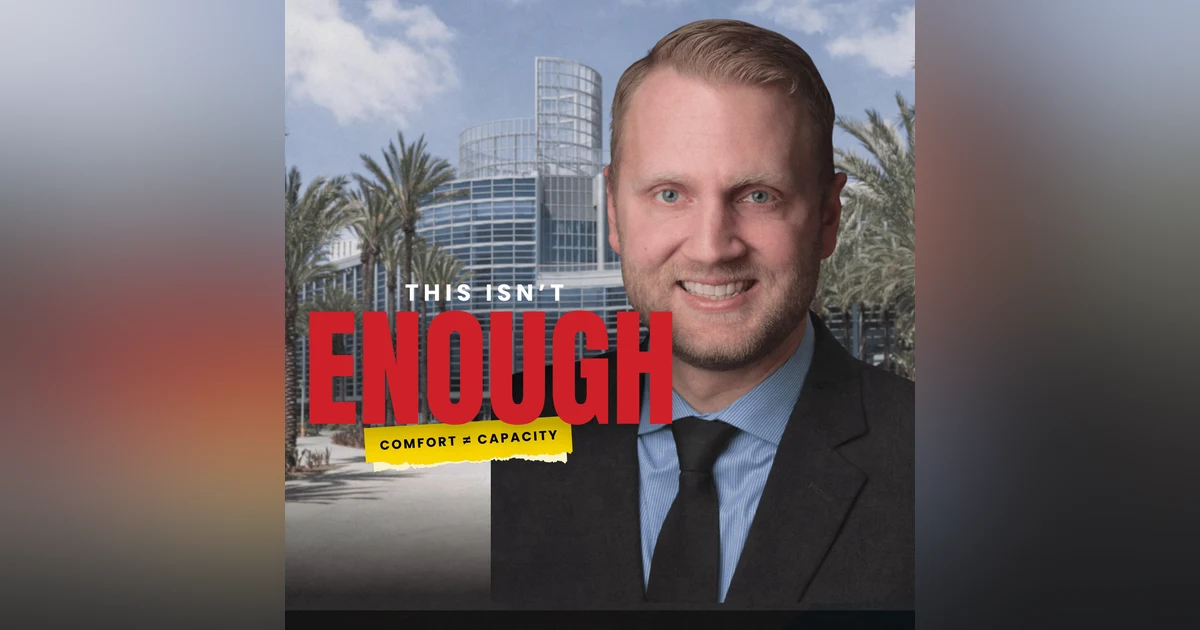


Stop Being the “Nice PT”
Live from CSM in Anaheim, Eric Bellm joins PT Pintcast to challenge one of the most uncomfortable truths in physical therapy:
Are we too focused on being liked?
This episode tackles:
- The difference between support and accountability
- When to have the “coming to Jesus” conversation with a patient
- Why labeling someone “noncompliant” is often lazy
- How to introduce accountability from the first eval
- Why educators must model humility
- How PTs should approach AI and healthcare change
- The importance of professional pride
Key Takeaways
- “Help me understand” changes conversations.
- Accountability starts at evaluation.
- Treat the human, not just the diagnosis.
- Have an accountability buddy at work.
- Don’t fight change. Evolve with it.
Guest
Eric Bellm, PT, DPT, OCS
Assistant Professor – Saint Louis University
<p>This episode is part of the <a href="/physical-therapy-business-podcast">Physical Therapy Business Podcast</a>, where physical therapists and clinic owners learn how to get more patients, improve operations, and grow their clinic without relying only on referrals.</p>
<p>Looking for more episodes? Explore the full <a href="/physical-therapy-business-podcast">Physical Therapy Business Podcast</a> for real-world strategies on physical therapy marketing, patient acquisition, and clinic growth.</p>
0:00 John, I'll text you in a little bit. Where are you staying? All right, I'll text you. All right, live from Anaheim, let's kick this off. Episode brought to you by Empower EMR. If your clinic is stuck in an EMR that slows you down, look, there are logos on the screen. That is a choice. Empower gives you speed, clean workflows, and features PTs actually asked for. Better notes, faster documentation, and smooth operations. All wrapped up in customer support that doesn't ghost you. Upgrade your clinic's brain with Empower EMR. Find them online at EmpowerEMR.com. Accountability sounds simple until you realize how uncomfortable it can be.
0:43 Our next guest works in the intersection of education, high-level athletics, and clinical decision-making, and he's not afraid to challenge how we hold ourselves and our patients to high standards. Live from Anaheim at CSM, Eric Bellum. Welcome back to the show, man. Hello. Thanks to you. Thanks for having me. So you're from St. Louis, the Billikens. Correct. What league is the Billikens in now? What conference are they? They are in the Atlantic Ten. Right. And that was new-ish. I mean, it's been a while, but I went to St. Bonaventure. Oh, you're a Bonnie. I apologize for that. I remember when St. Louis joined. Of course. I mean, I feel like I knew all the Atlantic Ten teams. I was going to school there for four years. You know who your rivals are. You know who their mascots are. I remember just being like, a Billiken?
1:24 What? Yeah, and they're not in the Atlantic either. They're in the Midwest. Right. Correct. It's the Atlantic Ten. And I'm like, I'm checking where the Atlantic is. So how do you always get this? I get asked, what the hell's a Bonnie? What's a Billiken? I think it's cool. It's also a dope logo. Yeah, it is. Well, now it used to be a very like cartoonish looking logo. So it has changed since, well, since I graduated and then rejoined. So the Billiken ironically is a Buddhist good luck symbol at a Catholic Jesuit university. Of course. And it stands for the way things ought to be. So it's kind of this guiding principle for us at SLU that we work towards the way things ought to be with our patients, with our classes, with our students, with our community.
2:08 So we're always working towards that kind of ideal. I like that. Once I did the research, I was like, all right, I'll allow it. But it's a cool looking gargoyle. Yeah, yeah, yeah. They named it after we used to have a football team, apparently. And our coach looked like a Billiken. So a short, stumpy guy with pointy ears. And that's how back in the nineteen tens. Yeah. Don't quote me on that. That's how we became the Billikens. St. Bonaventure is so small. We haven't had a football team since the nineteen tens. And I sort of got in trouble at school because I would I was an entrepreneur. We figured there was a shop in town that would make T-shirts for us. And I made unofficial official merch that said like St. Bonaventure football undefeated since nineteen twelve. Yeah, we have the same thing from people.
2:48 But I did not have permission to use the logo, so I got brought to an office and was told, just stop doing that. Yeah, just don't use the logo. Just don't use the logo. I'm like, oh, okay, cool. Yeah, we just say St. Louis undefeated in football. So it's not a university. You can't stop us from doing that. St. Louis doesn't have a pro football team now either. Oh, yeah, you guys got rubbed into that too. Yeah, we're not going to talk about that. All right, so where do PTs confuse being supportive with avoiding accountability? Yeah, so that I think is one of the challenging things that we talk about within our classroom is how do we get you to be a supportive physical therapist but yet hold your patients accountable? Like when you go to a physician's office, if you don't take your medicine, they're like, what are you doing here?
3:30 As a PT, we should ask, hey, you're not doing your home exercises. What's going on? And I think we've been too much of the nice guy for both of our patients in the health care system. In this world of evolution where we have to think about our reimbursement rates, we gotta start thinking about how do we create accountability for ourselves, for our patients, so that we can make the best out of the time we have with them. So what are steps to do that? Because the opposite of being the nice guy is being like the jerk. I'm sure we don't wanna do that. Correct. So how do you do it well? Yeah. So I call it a coming to Jesus moment where it's like we have a sit down and I'm just like, OK, so help me understand here. Your time's worth something. My time's worth something.
4:11 If we're not going to put the effort in. Yeah. Do you think this is worth it? Right. And you might not like that answer. And that's the part that I had to like stomach. But. it kind of brings that like, OK, where are we going with this? And you have to be willing to answer that question to yourself. Correct. Because, you know, while there's not a ton of like literature behind this, but it makes us have to know the literature, because if you're just going through step by step cookbooking, everybody like well what are you doing there why are you creating a positive experience for this patient so i like to just start it off with even like first day eval i'm like hey i'm gonna be honest with you you be honest with me uh and we're gonna get through this together like it is this is a team effort i'm not telling you what to do you're gonna help me figure out this as well uh and we're gonna just push forward i like the the first three words you said which is help me understand yeah which It's just a life hack.
5:06 It's not accusatory. It's like, hey, I'm here to think about what it actually says. I'm here to understand. What am I missing? Hey, man, lost my job. Oh, got it. Hey, now we have a different thing in the equation. Now that I understand that, how can I be helpful? Correct. But just assuming, and what's the label? Patient is noncompliant. That's lazy on our part, right? Yeah, exactly. Did you need due diligence or research to figure out why? No, just didn't do it. Yeah, we're all humans, right? We have to understand where they're coming from as well because I think it's part of a problem when we say, hey, you've got to come three times a week. Do they have the capacity to do that? Do they have the funds to do that? Do you have child care for that? Do you have a ride for that? Do you have the money for that? And is it actually best practice?
5:47 I would probably argue no. So where are we going as a profession? between this crossroads of like, okay, we're coming out with more student debt, we're getting less reimbursed. I think it's time now to reflect and say, hey, how do we change this profession moving forward? Yeah, I think it's a good time. we love milestones, right? The profession turned a hundred just a few years ago. It's like, well, if we're doing the same thing or something similar that we did a hundred years ago, some things are good to stick around, not all things. So what do we do to evolve and do those things? Those are good reflection moments. Yeah. And it's, I mean, hopefully we're not being the same. We were five years ago. Right. So that's, That's a big component of figuring out where we want to be as a profession. So going internal, what do you think is one standard physical therapist should raise for themselves first?
6:33 Where do we start? If you're like, okay, how do I do this? If it's not in the workflow, I'm never going to do it. Yeah, so I think one standard is thinking about each patient as a human. Like, I think sometimes we get caught up and we got fifteen patients. The schedule. Yeah, we got this. You know, I got to get this done. I got to get this done. But then asking the question, what does this patient actually need from me today? Because there are times we've had those patients that walk in and they just look drowned. Like you're like, man, what's going on? And they're like, hey. like got broken up with and you're like, Ooh, that's a, that's a different plan changed. Correct. Like should, should anyway. Right. Yeah. Yeah. That's that internal load that I can't affect. Right. I can affect an external load to them, but I can't affect their internal load.
7:16 So I think the easiest step is one, just stepping back and realizing that we're not the only ones in their world. It's very easy within our clinic, within our busy schedule to think that and think, why aren't you, why aren't you doing what I'm telling you? Right. Like start thinking what else is going on in their world. Yeah. That's that's easy. Step one. Step two is I like to think about having an accountability buddy at work. Right. Like, hey, have you looked at this article? Have you thought about this? Have you gone to this conference? Are you thinking about what you're doing? Because there's times that I again, you everybody gets in the motion and to have somebody be like, what was that for? And if you don't have an answer, like as a clinician, having students is great because you on your keeps you in check.
7:57 Yeah, yeah, it makes you know your shit, right? Yeah. Yeah, like, what are you doing that for? And you're like, uh, because it looks cool. Like, you've got to have those answers. Because I couldn't think of anything better, and I did that. Yeah, yeah, yeah. So let me pause and think of something better to do. Yeah, so I think those are, like, the two easiest things, like, you can do tomorrow, right? Like, look at your patients and be like, okay, what am I missing with this human? Because the missing thing might be they're just not bought in. Yeah. Like, so is it worth it to them? Yeah. And then having an accountability buddy. that you can check yourself and be like, what's really going on here? Correct. What's something educators need to model better for students?
8:38 Educate. I think it's the humility in itself. Not being the sage on stage all the time and right all the time. Yeah. I laugh because I walked into class this past week and I was like, guys, what day is today? It's Tuesday? Yeah. My kids didn't sleep like I'm up here struggling to like you're going to raise your hand when I start losing you and we're going to work through this together. Wow. So like I like to not think of myself as the sage on stage. Right. Like I tell them, like, I'm here to help you. You're here to help me. So if things aren't making sense, I need you to raise it up. Yeah. So it's I think that's and I would say most.
9:19 teachers don't go into it wanting to be the sage but again they get busy too there's a lot of things going in academia that students don't know yeah that it's just easier so like again it's having that same check of like teaching's a skill i'm teaching my first how to podcast course for healthcare providers now i got fifteen years in radio ten as a podcaster i'm not a mathematician that's twenty five years doing this sort of thing yeah and when i'm teaching i'm still like Are they with me? Am I doing this right? Am I talking too much? Am I talking not at all? Should I be asking them more questions? Should I be asking them less questions? It's not easy. No. And they're humans too, right? Correct. I mean, we both went to PT school, right? We know that feeling of like you sit in the back of the class and you're like, oh, yeah, okay.
10:02 Like nobody's going to be perfect every day. Right. So teaching is challenging. I mean, at SLU we have classes of like ninety students. So to teach across that spectrum. You have ninety students? Yeah. In one class? Yeah. In one cohort? Yeah, one cohort. Wait a minute. You have a ninety student cohort? Yeah. We have ninety to about a hundred depending on... how they fall that's bananas yeah it's it sounds crazy i went through it and i've taught at other schools that have smaller ones there's pluses and minuses to both with that many kids there's that many other experiences there's that many chances to not get caught in a click there's not like we have resources because we're so large wow like so it don't be wrong it's a Yeah, that's a tough part.
10:54 Hey, here's the thing. Whatever color shirt you wore on the first day, you're wearing that. You're a blue shirt guy. I'm going to remember you as a blue shirt guy. Yeah, I always tell people, if I don't know you by the end of the... The kids I know in the end of the first semester are the ones that... Ask questions. Yes, they ask questions or I don't want to know your name. It's both ends of the spectrum. But we try by putting them into groups and making them switch. So I have to learn that group and just kind of chipping away with it each time. Ninety. Dude, how does accountability matter more as healthcare keeps changing? I think that's a great question. I think the fact that we have to know we're changing and that we have to keep evolving and, again, that humility of, like, okay, we've been a profession for a hundred years.
11:40 Like, what's the next thing that's coming out? We're going to talk about AI here. A lot. A lot. Should be. Right? Like... Why do, like, let's not be grumpy old people and be like, ah, AI is trying to take our job. Maybe AI is trying to help us, right? Maybe this is how we work on productivity. Like, I don't have that answer, but, like, we have to not get caught back. and grumpy and ignore it correct dude like i remember watching metallica on stage when napster was a thing and they're like you can't do this i'm like my man kids in basements are downloading music it's happening yeah and then you got a guy like dave girl from the foo fighters who was just like what am i gonna do about it he's like play more live shows like you can't download a live you know you can't download an experience so be more experienced teach you know give more that evolve yeah it's it's a that's i think is we have to be accountable to our ability to evolve to the patient that's in front of us because we all can appreciate the next generation that's coming up has different things that we have to deal with i was saying this earlier today it's a rubik's cube on a rubik's cube yeah students are a different part of life but they're also from a different generation raised on different things they're experiencing different parts of this life like you like I grew up and didn't know what a cell phone was, and then one day I did.
12:58 There are kids who just never knew not. Well, and it's interesting because we're getting a lot more of our first generation students. Yeah. Oh, yeah, yeah. It's great to see all the different components. Again, so back to ninety kids, when I have kids from all walks of life, and I ask a question, you see some of that like, oh, I never thought of it that way because now they have a student that grew up in Mexico, grew up in Africa, grew up in Japan or South Korea. That to me, when I learn that about my students and I encourage them to explain that experience, only makes us richer as healthcare clinicians and people. That's cool. All right, we have a tradition on the show. It's called The Parting Show.
13:41 This is The Parting Shot. One last mic drop moment. No pressure. Just your legacy on the line. Parting Shot brought to you by U.S. Physical Therapy, a nationwide network of clinics focused on developing clinicians. We're at their booth right now. Leadership tracks, mentorship, career growth, and long-term stability. U.S. Physical Therapy supports PTs who want to build real futures in this profession of physical therapy. USPH.com, that is USPH.com. Eric, Parting Shot, what do you want to leave with the audience to wrap up? An idea, concept, quote, whatever you want to do. Yeah, I think at this point, it's just continue to grow, right? Like continue to help yourself grow, continue to help people that are coming up behind you grow.
14:21 Like we're not meant to be this one island human that pulls everybody along, right? I think as healthcare providers, we're there to push, right? I want to push my students. I want to push my colleagues. I want to push the patients that walk through my door. Sometimes I want to push my kids. Like I think that component of like don't, leave the hungriness at home. Ooh, I like that. That's hard to do on some days. We can all appreciate that. But I have on my computer rotating messages. It's like, just because you're struggling doesn't mean you're failing. So just keep pushing as much as you can. Eric, appreciate you coming on the show. Yes. Go Billikens.
15:01 Thank you. I will talk to you again soon, man.