One Eeyore Can Kill Everything!

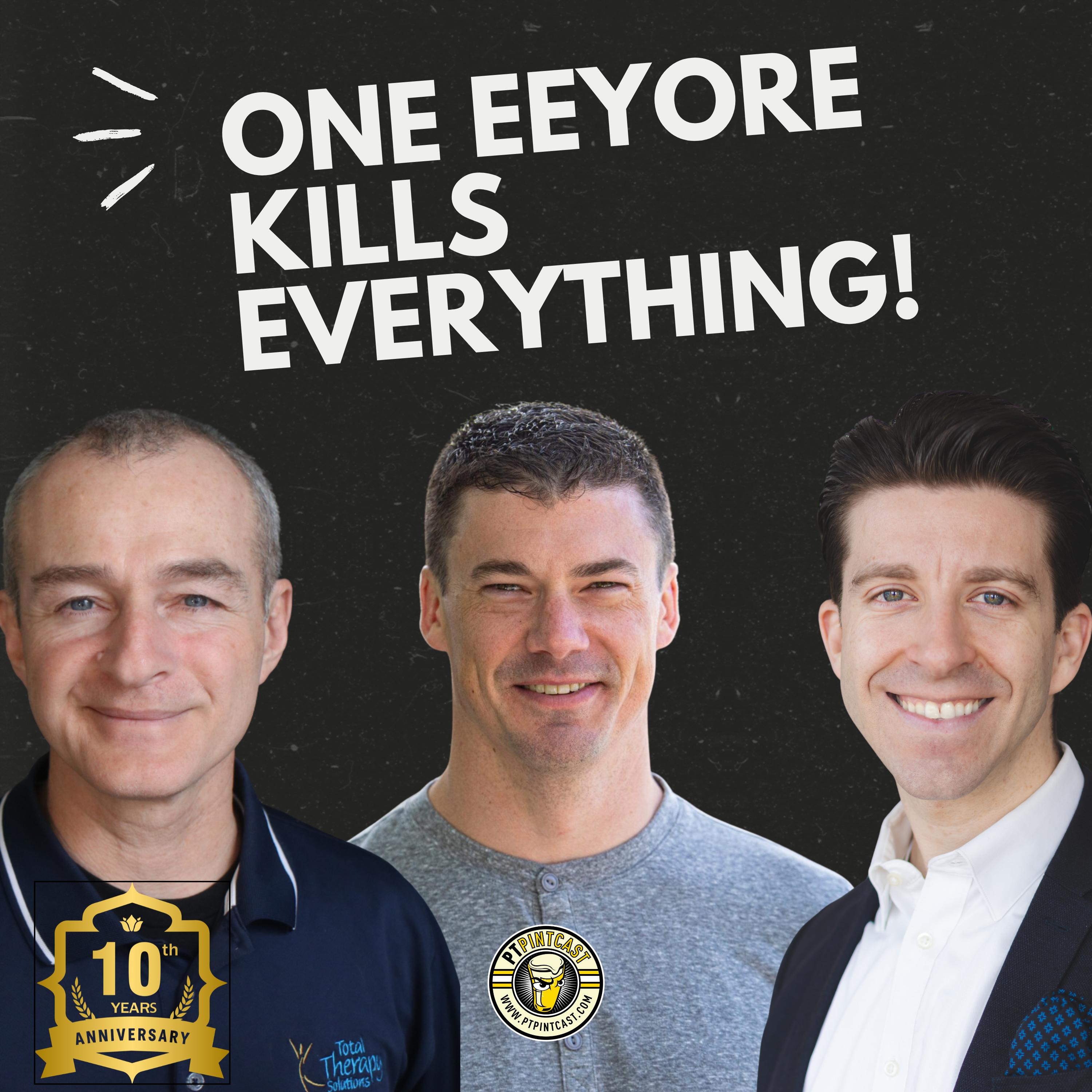


A real-world clinic-owner problem: a therapist who wants the upside (patients “dropped in their lap”) but won’t do the minimum (timely notes, accountability). Dave and Jimmy walk through the practical HR/documentation approach, how one low-effort teammate drags culture and outcomes, and the retention strategies that keep high-value patients loyal to the practice even when staff changes.
What you’ll learn
- How to build a paper trail that makes HR decisions clean and defensible
- Why resignation is often simpler than termination (and how to handle it)
- How “moonlighting” becomes a performance and loyalty issue
- The “Eeyore employee” effect: one person can kill momentum
- Brand-first retention ideas: meaningful check-ins + “surprise & delight” that actually fits care
- How RTM/digital support can create loyalty between visits
People & brands mentioned
- Dave Kittle, Jimmy McKay, Ben (caller)
- Tonal, Hyperice, Mirror
- RTM / digital care touchpoints
<p>This episode is part of the <a href="/physical-therapy-business-podcast">Physical Therapy Business Podcast</a>, where physical therapists and clinic owners learn how to get more patients, improve operations, and grow their clinic without relying only on referrals.</p>
<p>Looking for more episodes? Explore the full <a href="/physical-therapy-business-podcast">Physical Therapy Business Podcast</a> for real-world strategies on physical therapy marketing, patient acquisition, and clinic growth.</p>
0:00 Down like an old friend. Broadcasting way too early from three separate Wi-Fi connections. It's PT Breakfast Club with Tony Meritato, Dave Kittle, and Jimmy McKay. All right, welcome to PT Breakfast Club. I'm Jimmy. That's Dave. Tony is missing in action. We'll find him somewhere. He's probably reading a systematic review. You know that guy loves research. Loves it. Dave is here, but he's going to help us track trends before they're cool. That's what we're trying to do perpetually in life. That's what these social apps do, right? What's cool now? What's going to be cool? Twenty minutes from now, what is out?
0:40 What's over? In twenty twenty six, we're looking at like a peptide rush. This is all the rage now. It's not. This is the same thing, but different. It's a different flavor. Why brands are being told to go live. Gee, I wonder who saw that trend three years ago and why people are spending fifty grand on events just to post a recap video that gets three hundred and twelve views, three comments all from. We want to talk about that, too. The trust economy is shifting. Gary V wrote a book about it several years ago. Seth Godin has talked about it. almost ad nauseum consumers don't wait for permission. They don't automatically trust credentials and they definitely don't watch recap videos. I see, especially with CSM, all the recap videos because there's CapCut.
1:22 It's so easy. Just take a bunch of pictures and make a recap video. No one cares about your recap. They want to learn something unless it's funny. So the question is, are PTs adapting or defending? We'll get into it. But today we've got a new, we've got a new sponsor to kick things off. It's just in line. with our topics today. Let's welcome to the show Authority Crunch. Oh, more cereals. Let's go. You got to start your day off with Authority Crunch. Authority Crunch now with forty percent more credentials per serving. only breakfast cereal fortified with advanced degrees framed certificates and mild professional insecurity each spoonful contains twelve continuing education credits and just a hint just a hint of superiority side effects may include correcting strangers at dinner parties and starting sentences with will actually authority crunch because if they don't trust you at least they'll know you're certified i know a lot of people in this profession are eating two bowls of authority crunch before they get going in the morning All right, so let's talk about this peptide.
2:24 Was this you or Tony? I sent that over. I also want to float a couple hooks for today or for future episodes because there's some other episode. There's some other topics I forgot to send over. So things that hit home to me, things I sent are kind of like national or things that we could talk about in terms of like live video and private practices, getting more local attention or regional attention. Is that cool? Yeah. All right, so. On my show, I did a solo episode recently. I had this, I'm not going to, I won't say the therapist's name, but like I've talked about it a little bit online or whatever, but one of our staff physical therapists two weeks ago resigned because they did not want to sign a corrective action plan.
3:08 So basically like we want to have like a, there was a chronic history of late documentation. There were emails from me, texts from me about, Hey, you saw this person, what what's going on here so so i didn't have leverage in terms of better or more physical therapists at the time last year to replace this physical therapist so i had i kept this therapist on board i didn't fire them right so had to at the time so for multiple reasons they just didn't want to sign the corrective action plan the reason as an hr example the the hr corrective action plan is like had them sign that because then they re agree on every little thing like documentation done within twenty four hours and then every other role and responsibility they sign off on every little thing or whatever.
4:04 So that's one thing to maybe tease and talk about with that. One of my my new full time physical therapist created a video jogging in Central Park He created a digital asset for the practice. It was never in his job description. I did not ask him to do it. We never even talked about it. He just sent it over. So I was blown away with that. I posted that last week. That was incredible. That was awesome. He did voiceover. He's training for a half marathon coming up, I think, in April or something. Is this on camera? This is Wolf Wolfhanger. Yeah. So he he was doing some intervals. He was he was running in Central Park and it was beautiful, like the skyline and the snow on the ground.
4:47 And, you know, obviously anyone like me or him, anyone that's running like you're huffing and puffing. So he recorded it. He voiced he did a voiceover later and then sent me the video. with also he sent a chat gbt caption description and the hashtag it was literally like done for me there you go and then like let me just hit the publish button so i i go from like and this is every practice owner watching or listening it's like every six hours or every day or every you know week by week day by day there's like these challenges and like these lows then these highs it's just like it's um this is the life of of a business owner With that as another hook, I was thinking, so this therapist might be the therapist that's leaving, had some good relationships with some of our clients.
5:37 And we're trying to navigate the transition. The therapist had left abruptly without the normal two weeks notice, without what I've done. And even the therapist that came on board with us recently, he gave four weeks notice elsewhere and then came over to us. the therapist that left that did not want to sign the corrective action plan gave no notice effective immediately effective, you know, today, which was, I think it was like February eleventh. So it was like two weeks ago or something, two, three weeks ago. So another thing for us to talk about, maybe when Tony's here is, or we can do it today or some other time. How can I and HQ or the practice or whatever do things to keep the relationship with our patients?
6:21 It doesn't matter if you're brick and mortar or if you are mobile in terms of whether it's check-ins, it's some admin or the practice owner or the CEO or whoever are calling in almost like the quality assurance type calls. And not just like a text or an email, but like calling our patients and clients saying like, hey, Jimmy, how's it going with Dr. Tom or whoever? Like, how's it going? Is there anything that we can help you with? Oh, you need some, I don't know, bands from Amazon? We'll send those over. Whatever. The things we've done in the past, like, oh, it's your birthday and we have a chocolate cake coming your way with your name on it in icing and a card written by the team or whatever, something like that.
7:04 So I use chat GBT. That's another thing where you can go into kind of like anywhere from like a fifty dollar twenty five to fifty dollar budget up to like fifteen hundred dollar two thousand dollar budget, you know, paintings, engravings, memories, golf trips, like all these things that now I'm thinking of is how do I implement this moving forward so that. Not if when a therapist leaves, but when a therapist leaves, How do we maintain continuity of care and attempt to try to keep that patient and client within our ecosystem instead of them leaving or having the therapist treat that patient directly, right?
7:47 And now we have contractually that our therapists are not going to be, they're agreeing to not treat patients that they meet through us. for X amount of years, whatever, like a, like a non-solicitation type of thing. So I know I throw, I threw a lot at you. I also sent you last night or today, a bunch of topics and everything that I just said was, I give you no heads up on the topics, but this is why this is the, this is the beauty of being live. So we have to stay with this. We have to stay with this because this is emotionally charged and it's right. It's right now. So yeah, You were going through this corrective action plan, right? So first of all, you saw something that was going a way you didn't want it to go. For months. For months. Six months.
8:29 And you're like, hey, listen. And you're probably sitting there because I know you well enough to be like, okay. How can this be a win for not just the business? You got to make it a win for them too. Essentially, hey, what's up? I see this thing. It's not happening. What's up? That's a great first start, right? So when you try to reach out to be like, what's up? what was sort of the response? Like, was there a response? Like, Hey, you're doing, you're not, you're not holding up your end of the bargain. This isn't like you're pulling the rug out or you invented a new thing to be a jerk. You're like, you're not getting your stuff done. That is quite literally the bare minimum of the job. What ha what happened when like that sort of what's up thing? Unfortunately, there was no, eventually there was like a little bit of accountability.
9:13 There was like twenty five to fifty percent of accountability on the set therapist part. I approach these things through what sturdy McKee calls like the three questions. So what you just said, Hey, what happened? Like, Hey, I noticed that you have a bunch of notes that are not completed. What's what happened or what's going on? What do you need from me? And how can we make sure this doesn't happen again? Those, those approximate three questions. Um, but exactly, exactly. So, uh, I approached it that way. So over text, over email, there was a documentation, paper trail of all this, not just phone calls that it was basically like, oh yeah, like I'm dealing with this, that, whatever.
10:01 Like it was just excuses. Like, even if it's, I mean, listen, even if it's family stuff, this is still your job roles and responsibilities. Like are you, you're, you're booking clients. you are leaving your apartment you're going to see those patients and clients either in our office or home visit so you're traveling to them and then at some point you come home or during the day and you dictate or you quickly write and we use an emr that's one of the easiest ones on the market in terms of ease of use um so there's no excuse in terms of like why It's why they're, why they're undone. It just, it just, it just not, it's just not someone that's our, I thought it was, but it's not our ideal team member.
10:45 Someone who is fully understood, fully understands and takes accountability with all the roles and responsibilities. But this one is documentation is like, you have to do this at any job at anywhere in the country. So it's not even unique to us. So what's up? That was the first question. What was the second question? I know the third one was, how can I help? What do you need from me? Yeah, you just said it. So what happened or, hey, what's going on? When you were on What's Up, because this is where being a good human and being a good business owner cross. Being a good human is like, is everything okay? Because that person might come back to you and be like, my spouse is sick, or I'm sick, or my mom died.
11:27 And that explains quite literally everything. Maybe they don't want to talk about it. Maybe they're like, I can power through. Maybe they're scared. This is my job. But the last part of their day... is falling off. You don't know. That's the lesson. You don't know. So step one, brilliant for Sturdy, brilliant for you doing this. It's like, what's going on? I see this. Am I seeing this right? Maybe it's a computer issue. They're hitting... I'm making this up. They're hitting submit. It's not going through. And you're like, oh, dude, my bad. I thought I was doing the thing. And you're like, got it. Problem solved. Now we're still cool. Because you're treading on emotional social capital at this point. Because they're like, is Dave a dick? And you're like, hey, man, I'm trying on a business that you're... getting paid out of.
12:08 So if this ship goes down, you're getting wet too, my friend. So like that's step one. So you got like twenty five percent ownership. Like essentially it was like a brush off. Like they didn't want to talk about it or they were like, you spotted me. I was now I'm sort of my hands in the cookie jar, my hands, you know, not doing the notes. So then what was so step two is like, what do you need from me? Like, do you need to like, you know, like like logistics? Like, do you need to learn how to use the AI better? Because this is we're now in twenty twenty six and this should be four and a half minutes per session or something. Right. Exactly. Exactly. In terms of how they would answer what happened or what's going on. uh there was it was kind of like a little wishy-washy there wasn't like even oh i forgot or my bad or like it was just it wasn't like confronted directly but then on the second question of like what do you need from me is a is a great especially for this scenario it's a great question because you jimmy you and everyone else watching and listening like we know this no one is going to help you with your documentation why is that jimmy Because it's your job.
13:17 Because it's your documentation. Now, if there's an issue, like how can I help? The thing doesn't, right. That's something someone else could help with. But like you jumping in the pilot seat and powering through, that's what the money's for. Right. So there was no, obviously there was no acceptance of my help. Well, there was no acceptance of the second answer of what do you need from me? Because they were smart enough to realize it's almost not that it's a trap question, but it's like, you know that I can't help you because you did the visits. You met the patients. You treated them. I don't know what's in your head. So I literally can't help you co-pilot your documentation.
13:58 I can't help you write it. We talked about using ChatGPT without patients' names, and you can do a dictated brain dump of the visit and then say, write this up for me in a formal soap note, and ChatGPT does it in thirty seconds or whatever. So it's very, very easy. There is no excuse. Then you can copy and paste the ChatGPT soap note into the four sections of the s-o-a-p inside of the medical record very easy very simple did you even get to question three which is how do we have this like it it's not like how do we stop this from happening again you didn't even know if it was in from where you were looking it's just going to keep happening there was no acceptance of the problem like there was no acceptance there was no there was no firm accountability of this is what i'm going to do moving forward i'm going to make sure that everything every note is done within a lot of businesses, I don't know how it was when you were at Fox rehab, but this is what most businesses have.
14:59 People have therapists and team members sign in terms of, Acknowledging your roles. No, just initially when you join a company, like here's your roles and responsibilities, right? That is step one in communications, which is like, make sure we're both on the same page. Because if you think I'm supposed to do one, two, three, and I think I'm supposed to do one, two, I'm not going to do three because it's not expected. But you're like, hey, man, like Fox. And this is the only organization I worked in long term. They had an entire department for quality assurance. Like they had these things you're talking about, like quadruple redundancy program because they were like, this is the product. So they had teams of people and procedures for these things, as I'm sure other organizations do as well.
15:41 Yeah. So in terms of what do you need from me, it's a good question. But in this case, it's not like if there was a challenging patient or client that I don't know, said something offensive to a therapist, that's when the therapist does need me or someone on my team to kind of be there to help support them through it. Maybe we need to fire the patient or client. Like we've done that before. They're not professional. Maybe they have some mental health component where they're just not able to participate fully in our style of in-home physical therapy, whatever it is. So in those situations, we're there for you.
16:22 This is a topic with individual documentation. Hey, what do you need for me? I went through the three-question process on purpose because it's just good for me to do reps on it. But there's no owner that... We have the easiest EMR basically on the market for so-called... You have all your visits being recorded. You, you have all your, well, that this, the, the business being recorded was only since January or like mid January. So that's new. What I mean is like, do you have an audio version of it to like make it to help you get your notes done? Like you are quite literally handing them all the tools. You're not handing them axes, you're handing them chainsaws. And you're like, I want you to get your job done.
17:03 I want you to feel, I want you to not be bogged down by this. So you can be you with a great personality. Cause that's the service. And they were still not okay. It was still not okay. Were they just mentally checked out and this was them quiet quitting? The thing that it could be, the thing that doesn't make sense is throughout this was throughout twenty twenty five, by the way, this was like mid this was like this was this was this was like summer of twenty twenty five. So this is way this is way overdue during summer twenty twenty five there. And I did I think I did an episode just on my own on my show about showing like a screen share of a spreadsheet that I used with the staff therapist.
17:51 I, Oh, I did the episode with Dr. Ben Boggy on the Dave Kittle show. And I had a spreadsheet and it was just like on the left, on the left column, it was the, let me go this way on the left column. It was the patient's names, which obviously when I did the episode with Ben Boggy, those were redacted, but it was the patient's names. And then on the right column, it was how many visits that they had done. Right. So if it was like eight visits or or four or whatever. And in the beginning of twenty twenty five, this therapist was like, all green. Like it was like eight, ten, fifteen, like twenty, like full plans of care. People were achieving the results and the outcomes that they wanted to initially. And then throughout like either late spring or into the summer of twenty twenty five, it was like one visit, three visit, two visits, one visit, four visits, six visits, one visit, two visits.
18:40 It was like they're batting. People were dropping off. So then on the spreadsheet it was like red. And then it was like, you know, it's awesome. Like amazing. And then two visits. It was just, so it was like a lot of red. It wasn't a hundred percent red, but it was a lot of red in terms of people not completing their plans of care. At that point, the therapist was, and this is very easy for many practice owners to fall into the trap. The therapist was saying, I need more new patients. Right. So let's give it more. And I'm looking at it and I'm looking at the spreadsheet. I'm like, This is a leaky bucket. You are the leaky bucket. So if I put more new patients into the leaky bucket, what happens?
19:22 Based off of the percentages of the spreadsheet that I'm looking at. More misses. Right. So there were documentation issues happening around this time when they had a little bit more gaps in their schedule because patients were dropping off. That's the crazy thing, which is they had extra time. to do the documentation then. So there is literally no explanation. We'll go full baseball because you're a baseball guy. This is somebody who had a great average and was getting on base, and then all of a sudden something happened, and we don't know what. It could be personal. Yeah, we don't know. It could just be whatever.
20:03 And then their average dipped, and then their answer was, I need more bats. And you're like, yes, but I need to know what's going on. I need you in the cage, or I need you to talk to me in the dugout first. I need to know why you're not hitting. Are you injured? Is that what it is? It's like, I want to be on this team. If there's a bad hitch in the swing, you're rolling over. You're hitting little ground balls in the third baseman. You're rolling over, and everything that you hit is a ground ball. You're out. That's like saying, I need to go into the cage and keep swinging this way. like without making corrections about making changes. I just want to go into the cage. I need more reps in the cage and I'm going to just keep rolling over, rolling over, hitting little, little dinky ground balls.
20:46 You don't need more reps doing it the wrong way. That's not what we need. Tell me what's wrong. Do you need more? Do you need, we have a hitting coach. Are you using them? No. Oh, okay. So you just need more at bats. No, those are my at bats. You earn those. You earn at bats. Huh? All right. And then for now, all right. Well, you know, so then what happened? Exactly. Okay. So now, uh, there was some other things where I took an existing patient from that therapist calendar census, whatever, because the previous five or six weeks, the, when I, when I covered this patient in December for him, he was away.
21:27 I covered this patient and I treated the patient Monday, Wednesday, Friday for three weeks in December. This therapist comes back right around Christmas when we left town. So then they come back. And so between the time of December twenty four, December twenty fifth. Until when I took this patient away from him, it was about five weeks and there were no weeks where he treated this patient three times a week. Now that the patient wanted this amount of time three times a week, they clinically need it. The family is OK paying for it. the home health aid welcomes it. There, there was no resistance. Like this person needed it, wanted it. They're paying out of pocket for it.
22:08 And he's not doing what I was just covering and what the plan was initially. Right. So the, the, what's the, what's the plan from the evaluation or the recent progress notice? This person needs, you know, this, this type of, this level of treatment, this level of accountability and help. They're welcoming it. They're not resistant at all. There is literally no reason why. And, uh, So we're looking and I go, so a lot of these weeks you saw this patient like once or twice. And I said, even last week. So this was, I was like last week it was, uh, the time it was, uh, January, it was February. No, it was January. So January, I think was a Wednesday. And I'm like, what about last week? You only saw this patient one time on Wednesday.
22:50 Like what happened on Monday and Friday? he was working a part-time job somewhere else. And he said, I can't even believe, I know I can't even, I can't even believe that he admitted this Jimmy. He goes, he goes, I, he goes, I, I was, I was covering, I was covering, I was, I was working at my other job and I was covering other physical therapists there. And I'm like, but yeah. And I'm like, so I take this patient, The new therapist actually lives two blocks away from this patient. He lives fifty three minutes away from this patient via the subway. So I go, OK, this new patient, I'm now moving this client of ours that's existing that. They're moving over to this other new physical therapist calendar effective today, tomorrow, whatever, like effective immediately, he's going to take them over.
23:43 What was this meme? What was this from? SNL? This is from Parks and Rec. Oh, Parks. Parks and Rec is underrated. This is jail. Immediately to jail. Also jail. Jail. Go to jail. You go to jail. No, you're off. This is where you get... This is where, if you were a baseball coach, if you only had nine players and you're like, but I need to keep the guy on, you start batting with eight people and you take an out in three innings. Sorry. You put... This is when you put two outfielders in left center and right center and you play two outfielders. You make the second baseman play a little child. So this is... This is sending a signal to everybody who's on your team. Although, I mean, it still is. I mean, I don't know if the rest of your team can see this because you are like concierge and you're not huddling every day, right?
24:29 These people, the rest of the team might not know this. Right? Some of them know it. Gotta go. I mean, you did, and it's easy for me to say because it's like, whatever. But like, man. Jail. Immediately to jail. Right to jail. Now, of course, California is one of the most restrictive, protective states for employees. And New York is, I don't know, probably right after that, maybe in the top five or so. So he was a W-II, although was then going from... Still a W-II, but was working full-time with us. Then was part-time because I'm like, oh, yeah, you're working for this other place.
25:12 Why? Because... they had extra time in their schedule. They, so they were W two, but they were paid like per visit, if that makes sense. So when they were the leaky bucket and they were having drop offs, now they had, they have open spots on their calendar. So now they're making less money. No. And then they sought more work elsewhere. That was like a little bit of a steady hourly or part-time salary, whatever compensation at some other place. No, you're here. Now you want to go be shitty at someone else's job. Good. Go be shitty full time there. Right, right. So now I have, you know, fast forward now to like January into February. So now I have leverage, right?
25:53 So I have the full-time physical therapist. He's, you know, has a complete full schedule. I also had a new physical therapist moving forward. Him, the newer one and moving forward are basically like contractually obligated. Like the ones that have like the base salary plus the upside performance pay, they sign a, non moonlighting agreement or contract meaning there's a bait there's a base salary for you plus the upside of performance pay and so therefore you can't do luna or you can't do any side gigs you can't go work part-time or you can't work somewhere else you can't have sometimes patients like hey can i just pay you directly like because this is kind of expensive can i just pay you directly like right that's another thing with the recording right so So they know that they're not able to do that moving forward.
26:45 The therapist that we're talking about that had the issues, I did not have that in place. So, you know, it's a learning point. But anyway, we're learning as we go. So this person is gone. This person has been separated. Yeah, so I think it was like February eleventh or so was the resignation. I emailed back immediately. I accept your resignation because it just for, for business owners, especially W two, I, of course, like if they, if they are justified in being terminated, then we should terminate them. But it's so much easier for someone to not have it be in court or lawyers or whatever.
27:28 It's so much easier to have the W-II resign on their own terms instead of us terminate them. So here's the thing. So I had all the paper trail of the documentation of the email saying, hey, this person's late. You saw this person ten, fifteen times. There's two notes done. What's going on? What happened? Whatever. So the next step via my HR person, the next step in that was get them to sign this corrective action plan. And now the plan is we're going to review this every two to four weeks or whatever, and we're going to look at your documentation. And if you don't do this in a certain timeline, I forget whatever the future... timeline would have been like the next month or whatever the next month or two can't be more than thirty sixty ninety days and if the documentation is not timely at that point then i would absolutely i would have way i would have all the all the calls in the world to terminate them they know that they they understood why i was having them sign the game they understood why i was having them sign the corrective action plan and so they didn't sign it they they would you i i know that i i have certain words around this but how would you describe that like someone who knew knew what's going on yeah and they they didn't want to sign it how would you how would you frame that or describe that cop it out like i don't know you know what's coming and you're like hey well i'm i'm just gonna i'm gonna be a three-year-old and lay an aisle i'm just gonna lay down on the floor and you're gonna have to drag me i'm not gonna walk i'll buy an extra week i don't know i'll get paid an extra week ben ben is always Has nothing to say,
28:58 he told me when I asked him if he wanted to be a guest co-host. And then he drops novels like this. Ben says, it's bigger than patience. This is business one-on-one for businesses that rely on LTV and multi-year value. Lifetime value. It's better off to focus on customer success and account management, farming, getting patients the right way, word of mouth, than it is to consistently spend time and energy and cost to bring in new contracts and let current contracts not reach max potential or worse churn. Yes. All of those things. Yes. Correct. Yeah. Correct. I mean, we could guess, but if you don't want to be on the team, I don't want you here.
29:41 That's good. I agree with you. I'm not fighting you. I can't motivate you to want to do this. You either like doing this or you don't. That's on you. Yeah. I mean, I can't remember exactly what my business coach Sturdy McKee had said, but it's kind of like there's just some folks out there that what's the saying i always say it in i think a lot of people say it improperly the saying about like you want to have your cake and eat it too what's the there's like a certain way to say it i don't know if that's the saying yes so it's like some some people want you to which i would always say why do i have cake then but keep going yeah what's the saying The saying is you can't have your cake and eat it too.
30:25 An idiom meaning you can't simultaneously possess and consume at the same time. It signifies that one cannot enjoy two incompatible desirable outcomes at once. You must make a choice. Once the cake is eaten, it is gone and you cannot keep it. I understand that idiom less now than I did four seconds ago. sorry for making you look it up i have to don't give me cake if i can't eat i want to look at it so the easy way to describe it is like for this physical therapist they they wanted to get paid a premium and get visits dropped into their into their lap which is the bit like this is the that's what they sign up for to like we do the marketing and we do the onboarding and all that But then they didn't want to do everything that's required.
31:13 They didn't want to do the notes. They just didn't want to do the notes. Say the minimum. Doing notes, no offense, is the minimum. John is saying, I would definitely need a fat stack of cheese. I love how he's just dropping idioms. I like where his idiom day. To sign some exclusivity contract of employment. I would definitely want... So I sort of agree. John, you're... My question is, if Gary Vee ran this, he would say, if you want to work at night, go work somewhere else. As long as you're crushing this. Because at some point, if you're like, I like my own version better, I want you to leave. Gary Vee's approach is more in line with what John's saying. I'm not saying neither is right or wrong. But I agree.
31:54 If I'm doing everything right, if I'm crushing my job... At the radio station, the rule was you just can't work at a radio station in this market. You have to drive ninety miles that way. But my pushback always was I'm doing the maximum and I'm getting no raise over time. We need to have an agreement here. I watched an Alex Hormozy video the other day. He does almost like what stand-up comedians do. He has the business in-person thing where people stand up and they give their biggest question. Yeah, his workshop. It's a great content for him. And the guy was like, I don't know how to keep people. He was in pest spraying on houses or whatever. He's like, we get great people.
32:36 We promote them, and then they leave. And the guy was like, put more rungs on... And Alex was like, put more rungs on the ladder. So every position you have, have a junior, normal, senior, and make sure they get paid for it. Otherwise, they're right to leave. You're not giving them opportunities. This isn't that. This is... They're not... they weren't doing the minimum of the job. And then they were like, instead of doing one good job, they're like, if I half-ass two jobs, that's one job. I got to be honest, that's more work, right? Now I got to do two different email addresses and I got to re- No, just do one job really well. But this person, for some reason, did not want to be there, didn't like it or something. And if they don't like your setup, leave.
33:19 You wouldn't want them there at all. I wouldn't. I agree. but then you also let's go back to the flip side you got one dude who you just hired who's making videos you didn't ask him to and being like hey look what they're doing in my opinion is they're like is this good if I do this does this help me does this help us I don't know that second employee sounds like they understand that they're in the boat and if the boat goes faster we all go faster and I like people like that I would take those people. This was a previous episode. I think Tony and I did, which is like, I'll take B minus skill and A effort over A plus skill, but C effort.
34:07 I'd rather be in a room, in an escape room or whatever with a bunch of people who are just going to hustle That are like, you know, they're pretty good at this stuff rather than a genius who's a dick in the corner being like, well, I hope I feel like it. Like, I don't need you. I want you're gone. I'll I'll play a man. I play in, you know, adult, forty year old dude hockey games. I would rather play with one less guy on the ice. We do better on a penalty kill when we have people who really want to be there. We score more with less people when we have one shitty person less. How about that? I look around, I'm like, how'd that just work? I'm like, because we're all paying attention. Instead of like, one Eeyore can kill your power play. One Eeyore can kill everything.
34:50 To Nate, the producer, to remake this for the Dave Kittle show, that might be the thumbnail or the episode title. Do you want the story that goes with this? There's four radio stations in a building. Okay. That's like how radio got consolidated. So this is where we share a receptionist and share HR. So there were four radio stations in the building. I got to run one of them at like twenty five years old. So I'm running the rock station. Rock, pop, adult contemporary country. But we're owned by this big, huge company, Cumulus Broadcasting. And it comes down one day, my boss calls me in his office. He goes, hey, Jimmy. I'm like, what's up, man? He's like, you have to go home tonight and come back and tell me which person on your team to fire. And I was like, what happened?
35:31 He's like, nothing. It's just you have the largest staff. It's just the chopping block is yours today. In eight months, it's going to be someone else's. So I'm like, this is stupid. He's like, it's not my thing. It came from up top. Okay, so I go home. have a couple of Chardonnays. And I'm like, this is, I'm like arguing with myself. You know, I'm arguing with the, you know, with clouds. I'm like, this is dumb. This is a dumb situation. Nobody on my team did anything wrong and they're getting fired tomorrow and I have to pick who it is. This sucks for me. This sucks for them. I'm going to ruin someone's life tomorrow. And then I had an idea. So I walk into my boss's office, a little hungover, and I go, Bill, got a crazy idea. And he's accustomed to me saying that, obviously, because I have a lot of crazy ideas. And he goes, Jimmy, it's not time for crazy ideas. I need a name. Just a name.
36:12 Don't be creative. Just be logical now. And I was like, close the door. We closed the door. The guy who had his office next to me ran the country station. And nice guy, Eeyore. He had the same job as me, made the same money as me, which is more than my people. And it was an Eeyore. And I was like, that guy's running that station. It is going nowhere for the last three years. Fire him. I'll do his job. My people are safe. And now you get a guy who gives a shit running two radio stations. And he goes, but you don't know anything about country radio stations. I go, I don't know anything. I could name three country artists at that time. Still can't. I go, you have a staff full of people who know country music.
36:52 I know people and I know creativity and I know hustle. So now you're going to fire that dude. You're going to give me a raise and I fire nobody. And so all of a sudden, by five o'clock that day, that guy got fired and I have no problem saying it out loud. I got him fired because I protected my people because they did nothing wrong and he was fired. And he was, and he was bringing all of us down because collectively all four radio stations are individual. We're all part of the company. I was like, that guy's dragging us down. I'll play two positions. If I have to, I'll play first base and second base. That guy sucks. You can't trust him. And the guy was out and nobody. So your team was pulling their weight and he wasn't correct.
37:34 And so moral of the story is what? Don't fuck with Jimmy. No. No, the moral of the story was, again, me, him, him not pulling his weight was my opinion. But when I brought it up to my boss, what did he do? His boss. And they looked at the numbers and they were like, he's right. sorry dude have a better attitude like hustle fail lots like that's one thing you get with me i will fail a lot and i'll be like oh man i thought that was going to succeed on to the next thing here we go let's do it again no one cares keep going but that's how i got my second radio station and i ran two radio stations at the same time for six years But I said to those new people, hi, I'm Jimmy. I'm running a radio station. I can't name three country artists. It's not my job. My job is to help you do your job.
38:15 And they were like, this is your radio station now. I just have the name on the door, which means I get all of the blame and I give you all of the credit if we succeed. All the blame if we fail, all the credit if we succeed. Like a quarterback. I take all the blame. And then if we succeed, it's because my receivers and my line and my running back. Right. But that guy was in New York. You lost dead weight. It's just messy in the wait period. Three weeks from now, you're going to be like, oh, man, this ship is lighter and faster. It's going to balance out. It is, in my opinion. Here's another. So here, let me play Sturdy for a second. I don't know if I can do Sturdy.
38:56 Sturdy's like way too calm. I can't fake that. He's very chill. He chills me out, man. We do three calls a month and it's like business therapy for me. I would love to just have, whenever you're on a call with Sturdy, just have his heart rate be visible because it's like twelve. Anyway, he's very chill, which is good, right? So let me play my inner Sturdy. Dave, so you've gone through this experience. It's a good one. Learning. How do you screen for this type of person before you hire them again? This is where I get stuck.
39:40 Maybe we can riffle on some stuff. I think it might be tough to identify someone who would lack in documentation. Because even if I said... This isn't a documentation issue. Yeah. Yeah. I'm not sure. I don't know if I have complete clarity yet on how to identify it because... With everything else, they said all the right things. They came from another country, but they had a busy metro area that was similar to Manhattan. They understood the high net worth individual. Clinically, they treated me.
40:20 They put their hands on me at the evaluation. They passed a lot of the other checkpoints. These are new details. They said they were used to this. They said it. You had no other reason. You're like, all right, I'm believing you. How am I supposed to confirm that? You can't. You have to take so many leaps of faith. You could get all the data you want, but it's not going to be perfect. There's going to be some gaps in it. You can do this. There's no way to do that. Sorry, I won't say that. There are probably ways to do it. they're none of them are perfect. None of them, right. But I mean, I learned this question from Jamie Schreier, which was a power move to on the interview.
41:03 Hey, if you were to leave in three years, what do you think the reason would be? I love that question. That's a good question because it puts them in a future state. It's not what's your greatest weakness. It's like, oh, I'd really want to run a borough or something. And you're like, oh, we don't have that structure. But if I built that, that would be great or something. They're going to tip their hand and show you what they value. If you said, what do you value? They're going to give you a bullshit answer because that's a bullshit question. But if you were to leave... Or, hey, in ten years, if we were to sell this, what do you think this practice might look like? And they're like, I don't know. And that might be too big of a question. That's too future state. John thinks I pulled a Machiavelli move.
41:46 I'm going to go Google Machiavelli to see if that's a compliment or not. I think he was like a thinker or something. I think I read a book with him. Didn't you say? Who's got a casting couch? You. When you're interviewing these people, are you casting couching? don't google kids don't google casting couch it's not good no no we didn't come into this forty two minutes ago thinking we had like nine other things I'm better it's better because this is real and if you're facing this chances are four thousand other practice owners have already faced it some are facing it right now and some will be facing this like this is not uncommon let's, let's finish up with the time that we have.
42:30 So my game plan now, because this therapist was with me for close to two years, at least a year and a half, um, and build a lot of relationships with certain patients. Now, some patients like aren't going to continue. They didn't need more therapy. Some of them were transitioning them over to other therapists, but some, some of the patients I could hear, like, they were like, Oh, I really liked him. It's that, Oh man. So, um, the thing that i'm now working on is how can we do not just the boring monotonous like this is like a quality assurance call from concierge family hq but sturdy framed it this way hey dave when you go to a restaurant and this and the chef comes out of the kitchen and comes over to your table and says hey I'm chef John or whatever.
43:21 Like, how is everything this evening? Now, when the manager does it, it's like, yeah, that's a nice thing. When the chef does it, Jimmy, do you feel any different? I do. Yeah. Because like the chef, he's stopping what he's doing to come to me. And like, this is the guy making it. And I'm sort of like, I don't know. I feel different. They're wearing white. Feels official. Right. Now, Jimmy, imagine that the chef comes over to your table and says, hey, Jimmy and your and Jimmy's family and friends. How was everything tonight? Like, what if he knew your name? That's different. So the point that's how sturdy framed it with me, which is we should be making intermittent calls, but not like, like, like corporate quality assurance, like go check-ins and, and maybe some little gifts and like, it doesn't take much money, but like things to send them and go one step further.
44:14 If the chef didn't say, so how, how was everything is like, normal how was that steak was that okay because we tried something different tonight i want to make sure you like it that's different that gets them on a particular path that that's a different question was there anything because like no one's gonna unless something is horrible who's gonna look at the chef in the eye and be like your mashed potatoes dude they sucked like unless right right right like My dad is a typical cliche New York City fireman. He'll bitch to me, steak sucks, steak sucks. Chef comes out, everything's great, everything's great.
44:55 My dad is not an afraid person, but he doesn't seek to harm. What you're looking to do is get real feedback, and that's simple, not easy. I would steal... How do things outside of healthcare or restaurants do it? Because the chef standing in front of you is different than a random number. First of all, you're gonna get a human being to pick up a phone from a number they don't know in twenty twenty six. That's hard. Sending a survey is sterile. I don't know the answer, but this could be great to farm out if anybody has a great way to do it, which is how do you get good feedback in a scenario like this? Because it's not in a clinic. Like your front desk saying, how was everything?
45:37 That's just part of the procedure. Here's the total. Swipe your card. Here's the receipt. How was everything? It now loses its pop because now it's part of the script. I understand scripting things, but if it doesn't feel real, that's simple, not easy. I'm sure there's some academic... There's always literature on this and how to do it. I just like to steal who's doing... When do I feel comfortable giving good, real feedback? Like even like when you buy something on Facebook marketplace, it's like, how is the seller? I'm like, I don't know. Great. Unless it's fricking terrible. I felt like I was going to ax murder me. I sort of just go like five stars, five stars, five stars. Like, I don't know. I don't want to piss the guy off. I don't know.
46:17 Now, another way for us to, I think it's fairly objective that like, which, and I'll kick it back to you. With people that end up spending a lot of time and money with us, meaning they stay for, they initially come to us for like a little episodic thing, but if they stay for months or years where they end up spending thousands or tens of thousands of dollars, would you agree that that's kind of like an objective measure that they love the service? They might love the therapist only, but they might like the service in terms of like the quality and the promptness and Those are the most subjective ones. Time and money. Show me something more personal. Okay. So one example, I can't mention the name, obviously, but we have a client and this, I've said this a little bit before, but like it almost like I know that most people won't believe this and that's totally fine.
47:08 But we have a client that started in July of twenty twenty four. So now we're in twenty twenty six. So this July would be two full years. We're not even we're not even at two full years. And this guy has spent, and this is going to sound like a humble brag. Maybe it is. This guy has spent over seventy three thousand dollars with us. Right. Thirty grand. Thirty and change. Wow. Right. How many times a week is someone going there? Well, initially it was a lot more. Initially it was four or five days a week. Now it's like two or three.
47:48 the reason why I'm bringing it up is because I spoke to this client that I initially evaluated, but then the therapist that we were having problems with that therapist and this client built rapport and relationship. And when I called this client to let them know what was occurring, what happened, I didn't have any, you know, there was no notice and this therapist is leaving abruptly. The, the, client was like, Oh, I really liked them. And you know, blah, blah, blah. And I can hear the tonality. And I already knew this because when I covered for this therapist, when I, when I treated this client in December to cover for this therapist, when the therapist was away, that same client was like, when is so-and-so coming back?
48:31 What is it Monday? Are they going to be ready for that this upcoming Monday at nine AM? Are they going to be coming in? Are they coming back from their trip? How was their trip going? Um, how are they doing? And I'm like, wow, it's a lot. Like, I'm like, they, the therapist kind of built such a relationship with this client. I'm using chat GPT now to say, how can I avoid, like, I want, I want, I want a legit relationship to be built between my clients and my therapist. But at the same time, I want, I have a plan to do things externally that tries to keep, obviously for just for, it's good for goodwill. It's good for, you know, financial consistency that if we capture that patient and client, they love us.
49:15 They want to continue with us. We want the relationship to also be with the brand and the, and the practice, not just with the therapist, because I said to Serti McKee, I was like, I was like, so if my therapist leave and he's like, when your therapist leave, like, just like you said, Jamie Schreier, like therapists will leave for different reasons, uh, for a lot of different reasons. They might move. They, they have their spouses in the military. Like things just happen. Like people have to leave and move. So what can we do behind the scenes? And this is what I'm working on right now, which is what can we do behind the scenes to maintain a relationship with the client that's separate from the in-person treatment relationship? So it's surprise and delight things that shock and all it's, sending them unique um maybe it's little figurines or sculptures like let's just say let's just say like this thing's a globe and let's just say like someone's like a world traveler and it's got their name engraved on it or or whatever something that's unique and memorable or or it's like or it's a or golf around a golf for someone who's going from it was going from a lot of pain to getting back into golf or whatever it is so whether it's whether it's unique items Or special experiences.
50:27 And when I called this one particular client that has spent over seventy three thousand dollars with us, when I first called them, I said, hey, by the way. We're going to talk about this therapist situation, but. Your eightieth birthday is October twenty ninth. And I already told this therapist that we were going to do, we were going to plan a luncheon for you. We're going to hit all the logistics. We're going to do a little, you know, little birthday party two or three weeks before or after your eightieth birthday. So he's seventy nine years old. And I'm talking about something that now this is like genuine. I mentioned this to the therapist and all this. Before the therapist left, before it got soiled and all that, so we're like, we are like, we are actually going to do this.
51:12 Like nothing big, like a luncheon somewhere nearby, somewhere nearby the client's place. Like, so it's not like a burden to them, but we'll, you know, we'll get whatever cake and balloons and we'll make like a little birthday luncheon or whatever for this client, because it's good to do. Maybe we'll get word of mouth referrals from it. It's going to make the client feel good. And like, they're working with the right practice. And it's a memorable, memorable experience. Like how many, respectfully, how many clients at Fox Rehab are getting full-on lunches or parties for a seventy or eighty or ninety-year-old milestone? Maybe Fox does it here and there, but probably not that often.
51:55 They'll do something. Usually it's clinician-driven. The clinician will be like, I see you. And the clinician has a budget or something from the company? I can't remember. Usually if they ask and they have a good thing, Fox is like, do it. Like Fox was like, if you give me half of a night, like if got it, do it. Like almost like the guy from Zappos was like, this problem, this problem is less than five hundred dollars. Just do it. Do it. Yeah. So I know I don't have a lot of time left, but I was just saying these are the things I'm working on right now to make sure that we keep a relationship with our clients. That's that's tied to, but not necessarily connected to.
52:35 our staff physical therapist, whether they're there or not. Go ahead. What do you got? Here's my next question. Dave, Ben wants you to call him. You can call in, dude. I don't think I've been his number. Do you have his number from when he last called? Did you save his contact? Phone is plugged in, I believe. Can you give Jimmy a ring real quick? Numbers on the screen. It's my actual number. Don't be spamming me at three in the morning. Oh, I took it off. My question would be, how do you Do things like the lunch for the guy who dropped seventy grand. How do you identify clients who have spent ten grand to make them become seventy grand? This is not easy.
53:17 This might this is like, oh, that's how do we spot those? Right. I don't know the answer, but that is why we do it with seven minutes left in the show, because that's how we get you to come back. We should talk about that's what we should do in the group chat. You have to put it in the group chat because in four minutes, I will forget about this. I know how my brain works. I will never think of this idea again. But Ben, if you want to call it and talk to Dave now, you can do so. So without that. Also, Ben, I'll send you a DM on LinkedIn. I know that's where we connected. And I probably have your email somewhere, but. Okay. All right. Well, since Ben's not calling, I feel lonely. Do you want to do parting shots?
53:58 Sure. I know we had other topics lined up. This is the beauty of live. And I threw a bunch at you. Obviously, Jimmy's an absolute pro and handled like the curveball scenario and stories perfectly. But yeah, for me, it's just the more we I have these challenges in the business, the better I can tweak and make sure that they either don't happen or they happen in a different fashion or like you learn from them and you have an action plan moving forward, whether it's identifying a better or more ideal teammate, team member, staff member, or how to find and retain your ideal patient or client.
54:44 It just takes, sometimes there's like, for me, it's like, I don't, I can't always learn or improve Unless I feel the pain in the scar tissue of like what happens when things go wrong. The only way when I was training broadcasters, we could put them in a studio, a production studio did not go on the air and you could play fake radio. They didn't learn anything because there was no, there was no way to fail. You can't have a kid learn how to ride a bike unless there's a chance of falling. I, I'm sure there's people out there who study research or sorry, study learning. There are, there's a lot of them and that's it. Unless there are stakes, we don't learn. Oh, hang on. Ben's calling.
55:26 Let's go along. PT Breakfast Club, you're on the air. Am I live on the air? Live on the air. Can you hear him okay, Dave? Good. All right. What do you got for us, Ben? This is a little outside the box, especially for what he's doing, but it's not outside the box for the industry. This is where RTM, for lack of a better word, but digital health backup, creates that connection between appointments to the brand and less so to the therapists themselves. So in theory, like let's say this high value patients are spending a ton of money and he gets them a tonal or I mean something nice to get a really nice experience of in-between session management. And that's connected to some internal staff he has that's not the specific therapist.
56:09 You'd think that maybe that would tie the patient back to like a real... Yeah. like really to the brand and not so much just the PC coming to their house. That was my idea. Yeah. I love it. I love it, Ben. Can you hear me? Yep. That was awesome. Yeah, make them fall in love with the coffee shop. So if your favorite barista leaves... Not the barista. Exactly. Yeah, I mean, you may still like the barista and she's pretty and she went somewhere else and maybe you go there once in a while, but you've got this nice equipment in your house that was sent to you. Again, I mean, tonal is expensive, but maybe something. Something that is a... It ties them to someone who checks in on them daily between the appointments. Yep.
56:49 They're getting some feedback, some nice Computer vision, I don't know. Something where you spend a little money to get the brand tie in, more so than a trinket, but something that ties it back to, I'm your physical therapy provider, and that's just the human that's coming to you. We like the human. You should love the human. The human's great, but the brand is great. We brought you the human. I love it. We brought you the humans, too, that are great, too. You love us. We bring you the humans. And even if that human leaves, the central hub knows what's going on with you, and there's not going to be a drop-off. Yep. Is, is anyone doing that in physical therapy, Ben, or any, or, or something like that?
57:33 Yeah. I mean, like, like a genie, that's what, I mean, that's most hybrid programs lead with digital first and the human part of like, Hey, we're doing all this stuff every day with you digitally. And then you need to come in the clinic for two visits. Cause I heard you have this kink in your neck. We need to get out. But it's, but like those visits and clinics almost become arbitrary of who you're going to see. versus your care coordinator, manager, overlord, therapist group who's dealing with you on a day-to-day basis. Yep. Yeah. I'm going to get my oil changed in a couple of hours. And the last place I was going, I had my guy and he knew, hey man, you're going to need tires. And I knew he was only telling me when I needed tires, when I needed tires.
58:13 He wasn't trying to sell me tires. And I would call sometimes and be like, I'm going to get you in when we have no openings. But if you show up here, I got a couple of guys that can sneak you in. But I had the affiliation with the brand. And they had my guy. If the guy left, I'd be like, oh, it sucks. I don't know. Yeah, and it's tough. You're building a concierge brand which is going to rely on that therapist being a great seller. You talked about how you have scripts. I get it. This is a really tough... If you were Quora, this isn't a tough sell. It's because you are specifically creating a brand to specifically create a real selling therapist, it becomes tough.
58:55 It becomes what? You said it becomes what? much tougher to get brand loyalty when your brand is all about personal loyalty. It's tough. Right. Because you're selling one thing but asking for another. You're saying, come for the people, but love the static thing. This is why Tim Cook has more followers than Apple. We follow people. So you're trying to reverse engineer that, which is, but I, if Tim Cook left and started making phones, I'd probably stick with Apple because you're like, I get it. Tim Cook is a representative of Apple. Does that make sense? Or am I talking in circles? It makes sense. It can make sense. And that's not an easy answer.
59:38 So I can see Dave tomorrow. Free totals if you spend twenty grand. Well, I was just looking up because I know you and Tony were talking about the price recently. So it's like four grand for a tonal. Is it? Yeah. Right? Now, of course, they can be cheaper if they're refurbished. But so I think this is a great idea because I was thinking, and Ben knows this because he's done home care and home visits on that. There are certain, like in New York City, there's a company called Pravadas. They do in-home nurse, CNA, home health aid type of service. There's someone who is delivering the core service. however many hours. But then there's also like a, there's like a rotating nurse or like nurse case manager or whatever they call them.
1:00:20 And they come in like every month, but just like for a brief visit, which that still would be, if I were to do something like that, that still is time and money to have a team member do that. Whether it was me or someone else that was like checking in, but like trying to build like a side relationship. And Ben's idea might actually be the same price, maybe even cheaper to deliver them something like a tonal that also helps them with movement, helps them stay, you know, keep their progress, their gains, all that. But without the cost of an ongoing human visiting them for check ins and like a like a progress report.
1:01:05 Does that make sense, Ben? It does. And these are people who are probably mobile and they travel. And then you also have the ability to do telehealth. You have the ability to engage them wherever they are. Right. All right. Ben? Real quick, other than Tonal, are there other things like that? Or is Tonal the best one with the technology? No, let's go with them. Personalize it. I don't know that you need to go Tonal, but there's stuff like it. There's Mirror. There's stuff like it, but one step down would be something with computer vision, like a Chemtide product, where it's a pretty nice experience. HyperX. Yeah, I mean, there's stuff.
1:01:46 I don't think you have to go as high as Total. No, you could do... I mean, Hyperice, I'm working with them. They gave me one of everything they owned because they were just like, test it out. Tell us what to do. And I was like, okay. And I liked their stuff before, but now that it's in my living room, I'm like, this is cool. Like I put those stupid boots on for like two hours and I'm just like, do, do, do, this is great. I'm recovering. And they are, they are awesome. But yeah, yeah, make it personal to them. Like you said, if they're a golfer, it'd be great. If they're not a golfer, this is like, yeah, okay, cool. Like, but like, so make it personal. Listen, I think that's the answer. Yeah, but I think this applies to the plan of care. So it's not just like a trinket of a bobblehead. Agreed. Agreed. Yes. Yeah. But if they're a runner and then like you get them some dope running stuff, that's like double word score because it's like, oh, it's dope and it's related and it's related pointed at me.
1:02:35 But if I'm not a golfer, it's like, cool. I guess I'll give this to my buddy. But yes, agreed. This is why there's a whole industry where you can spend... Alright, Ben. Appreciate it, man. Thank you, Ben. There's a whole industry where it was like employee gifts. Because giving me a gift doesn't land. So there's a thing where you can spend a thousand dollars and then the employee gets a magazine where everything in the magazine is under their plan. Do you know what I mean? So now it's like, I don't really know this guy well enough. I know he's great at accounting, but like... Now let him pick. All right. You already did your parting shot? Yeah. Yeah, go ahead. My parting shot would be don't be an Eeyore. No one likes an Eeyore. You might not be an Eeyore, but if you're here and you don't like it here, you're an Eeyore here.
1:03:17 Go somewhere else where you could be a Tigger or a Poe, right? Go somewhere else, but don't be an Eeyore. No one likes the Eeyores at all. We're back on Thursday. Dave's going to remind me what we're supposed to talk about next because surprisingly, I've already forgot. That's it. We're out. Boys, what the hell are you doing? Follow Tony Maritano on YouTube at Total Therapy Solution. Find Dave Kittle at ConciergePainRelief.com and on YouTube at The Dave Kittle Show. And follow Jimmy McKay at PT Podcasts on YouTube, the socials, and wherever you binge podcasts you pretend are for CEUs. And hey, just a reminder, none of this was for advice. This was for entertainment only.
1:03:58 Our lawyers say that counts. Thanks, Keith.