OK Boomer, Meet Gen Z: The Future of PT Culture
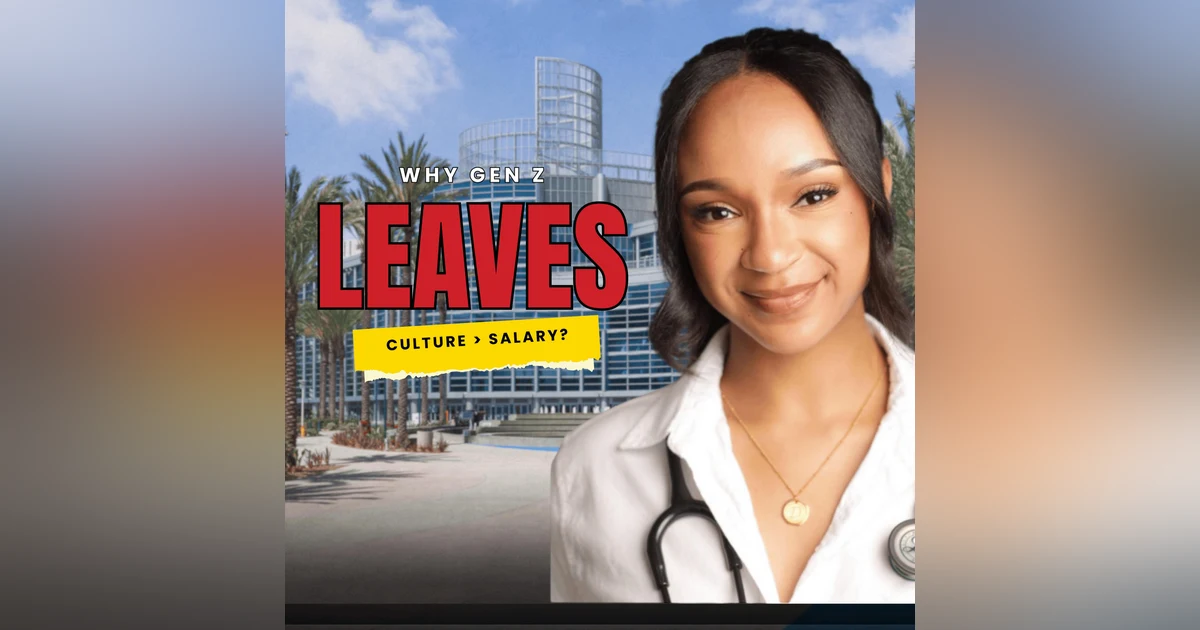


At CSM 2026, Jimmy sits down with Devon Morris to discuss generational differences in physical therapy — and why clinic culture may matter more than compensation for retaining Gen Z clinicians.
Key themes include:
- The impact of growing up in a “phone-based world”
- The Zoom communication shift
- Why stereotypes about “kids today” miss the point
- Burnout and student debt realities
- Why some therapists leave higher pay for better culture
- How intentional leadership improves retention
If you're a clinic owner struggling with retention — or a PT navigating your early career — this episode delivers practical insight.
00:00 – CSM 2026 Live
02:15 – Gen Z Explained
04:20 – The Zoom Effect
06:05 – Culture Over Salary
07:30 – Retention Crisis
08:40 – Parting Shot
<p>This episode is part of the <a href="/physical-therapy-business-podcast">Physical Therapy Business Podcast</a>, where physical therapists and clinic owners learn how to get more patients, improve operations, and grow their clinic without relying only on referrals.</p>
<p>Looking for more episodes? Explore the full <a href="/physical-therapy-business-podcast">Physical Therapy Business Podcast</a> for real-world strategies on physical therapy marketing, patient acquisition, and clinic growth.</p>
0:01 You're listening to the P.T. Pinecast, where smart people in healthcare come to make noise. Here's your host, Jimmy McKay. Thanks, voice guy. Live from CSM twenty twenty six. Devin Morris stopping by the booth here at U.S. Physical Therapy. Devin, first of all, what were we reading on the plane? I saw because this is how the world works. We can see what other people are doing at any time. And you're reading a book. And I, of course, like what book is that? So what book was it? And what'd you learn on the flight? Yeah, so I was reading The Anxious Generation and it was a little bit of prep work for the discussion, the panel discussion we had this morning with my team. So The Anxious Generation talks about how Gen Z, which I'm a proud part of as a ninety sevener, how we grew up in a phone based world instead of a play based world.
0:54 You didn't know. Yeah. Like, I can't I can't understand that. I can't because I graduated high school in nineteen ninety seven. So that made me feel great. A couple of seconds ago. So so what's a lesson or two you learned from the book about what that was like? And nobody who didn't live it can't can't understand it. So would you learn there? What was the talk about? The biggest thing I learned from the book when I started reading it was that We, as a generation, have a different lens than any other generation before that's unique. We essentially grew up on Mars, and then that was further enhanced by the COVID-Pandemic. Yeah, that didn't help.
1:34 So what I took from that, going into our conversation this morning, so the title was OK Boomer, Meet Gen Z, Bridging the Gap. Here we are. Bridging the Gap in Healthcare Workplaces. So the talk was really powerful because we had a multi-generationally diverse panel from Gen X, Millennial, and then a couple of Gen Zers. And we were talking about things that really make each generation's heart sing because we're talking about life stages. So we're challenging the stereotypes that come with just talking about generations in themselves, because every generation says the same thing about the generation younger. These kids today, yeah, they don't want to work.
2:15 We don't want to work. When in reality, it's just what life stage is this person at and what needs do they have? It's like two different Rubik's cubes, right? So it's not just where are you in life? It's also what's the world look like where you are in life and what did you grow up thinking seeing and understanding life when you grow up and now how do you see this stage of life and what the world is like right now those things are never the same i forget what philosopher said it but you never you never walk through the same stream twice it's because the stream is changing but so are you but the world like we're never going to go back to how it was. And that's all people wanted to talk about during COVID. But once we get back to normal, and I remember just listening to smart people being like, it's never, there's no, it's just going to be a new normal.
3:01 This is our new normal. Right. So anything that, that surprised you raised an eyebrow during the talk and the panel like that you walked away with that you were like, yeah, that felt good. Well, there were a lot of fun conversations that we had. And I think one thing, too, that ties into our new normal that I thought was something that we don't really think about is that now that we have so much of our interactions on Zoom and we've got the Gen Z stare. Which is, I've seen it. When I do calls or lessons, if I talk to a group of students, it is hard for me as a Gen Xer who grew up like in your face, live, whatever, in person to get a blank stare.
3:44 And I've also got a woo personality. So when I'm getting nothing, I'm like, oh my God, they hate me. Meanwhile, they're just absorbed. They're doing what you're asking them to do. They're listening to you. Yeah. Have you ever caught yourself like on a Zoom or whatever, what your own face looks like? And then you're like, oh gosh, that's what I look like. Right. But that's a good point. Literally kids in middle school are practicing being on Zoom and taking courses that way and taking classes that way. And we have a built-in pause because one, we're waiting for, you know, is their Wi-Fi buffering? Are they going to say something? Would they have to mute and unmute? And that's like a whole like three seconds that we've then built into human interaction that we didn't even realize was happening. Like that's part of our new normal.
4:24 But if you're not paying attention to that and trying to understand it, then you would say these kids today, they can't do this. They only do that. The funny part was I won't say where I was yesterday because that's not the point. But I remember, you know, ten years ago and laptops and phones were everything. These kids today, they bury their face in a phone. I was in a room where I was the youngest person by fifteen years. We were in a meeting. We were flown to Anaheim, California from around the country, whatever that costs for meeting. And we were looking at slides on our own computers around a table. And I'm like, this is hysterical. All these people are fifty years plus and we're all doing the thing we say these kids today don't do.
5:04 Why do they do it? You're doing it. Yeah, yeah. So I would say, you know, circling back to the, you know, big picture discussions that we have this morning, it's make sure you're getting to know the individual that you're working with. Because even if they're a part of a certain generation with the stereotypes that you know, That doesn't mean that that's where their priorities lie. And I gave a personal example of why I decided to make a recent job shift. And it was because at my prior place, I was working with a lot of senior therapists. a lot of seasoned therapists. And so I wasn't able to relate to a level with my colleagues like I wanted to.
5:48 It was really workplace culture oriented, even though I made a lot of good money there. But I made the shift because now I might not make as much money, but I get to laugh every day with my colleagues. And I feel I have a lot of fun. I get to go hang out with my friends all day and help people feel better. And that's the dream. That's all I wanted to do. I feel like if a clinic owner or a clinician understands this better, they'll be happier. You're an example of that. Um, I feel like an owner would be, would have a better culture in their clinic. And that usually relates to something better, keeping people longer, which hits your bottom line or patients just like the vibe, which leads to more people having good interactions there.
6:29 So I feel like understanding this, someone might look at it and just say it's nuance or like, it's nice to have, but it sounds like it's need to understand and not, not, not just nice to understand. Yeah. I think a lot of employers, and this was feedback, a lot of employers think that money is everything that every generation wants. Just throw more money at it. Solve it. And mind you, there's a whole issue in that in itself with the DPT being incredibly expensive and new grad clinicians coming out making significantly less than what their degree is worth. And so there's that imbalance where you do have the new generation entering the workforce expecting higher pay and then reaching burnout to a point where they're overworked, underpaid and leaving.
7:12 And the biggest issue we have is that we have therapists leaving the profession. We have really good clinicians who are going to make more money in leadership roles, doing managerial stuff and non-clinical roles. And now we're losing great therapists and our profession and our patients are suffering because of it. Yeah. And so how do we then create workplaces that really incentivize and just feel like home for clinicians to want to stay so that we can continue to grow as a profession? I'm going to guess those aren't built by accident. Yeah, it's intentional, right? It's intentional and paying attention to the people and what they value. Sounds really simple because it is. It's just not necessarily easy. Right. So there's a lot of systemic stuff that we have to that we have to sort through.
7:54 You know, we can't necessarily make the changes that we want overnight. Uh, well, we definitely can't make the change we want overnight, but, um, as long as we're talking about it and the next generation, so my generation, uh, starts to create the change that we need instead of just talking about the issues, then I think we'll be moving in the right direction. Yeah. All right. Uh, every episode we do, we have a tradition called the parting. This is the parting shot. One last mic drop moment. No pressure. Just your legacy on the line. Pressure, just your entire legacy on the line here from CSM. We're hanging out with US Physical Therapy. You can see them, their logo right here on the screen. And we're at their booth.
8:35 Find them online at USPH.com if you are a clinician looking for a great environment. USPH has clinics all across the country. All right, what's your parting shot, Devin? What are you gonna leave us with today? My parting shot. Get to know the person that's in front of you for who they are. Check your own biases. and try to make the world a little bit better than it was yesterday. Yeah, leave it a little better than you found it. Devin Morris, doing this thing the first time we're ever live at CSM. Thanks, Devin. Thanks for having me.