Most PTs Are Failing Runners — Here’s How to Fix It
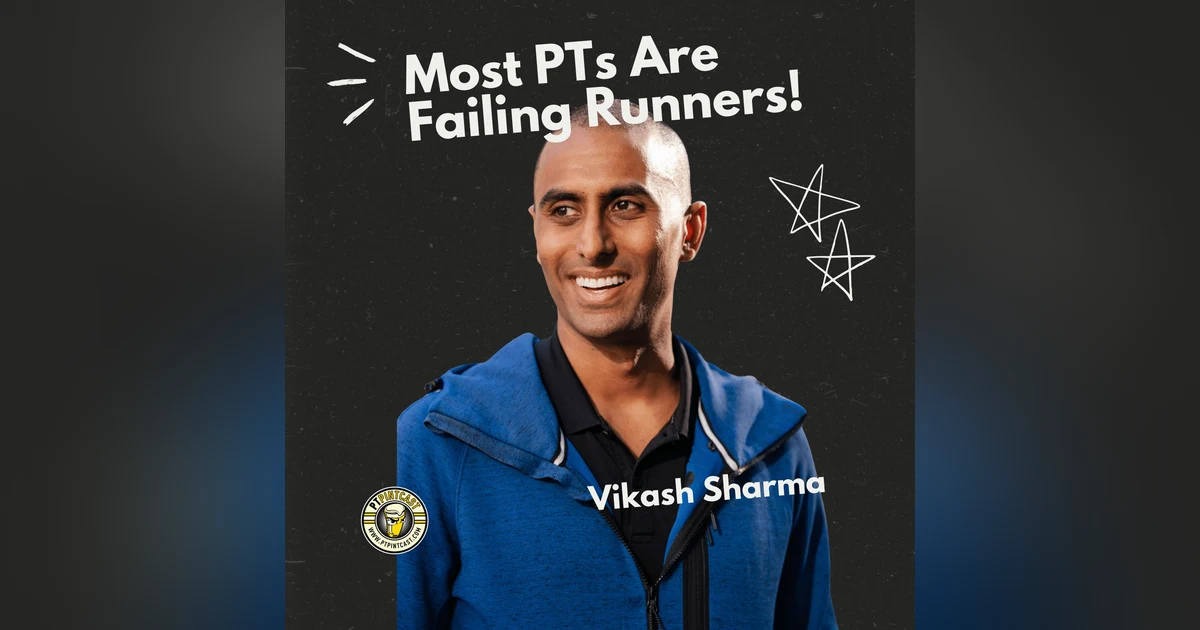


This episode will challenge how you think about rehab, performance, and your role as a PT.
Vikash Sharma — founder of Perfect Stride Physical Therapy and Running for Life — lays out a powerful argument: PTs are perfectly positioned to lead the health ecosystem, but most are playing way too small. He explains why strength training is non-negotiable for runners (and humans), how to treat beyond the injury, and the mindset shift new grads need.
???? Hot topics:
- Rehab = Performance
- Why runners must lift (and how PTs are failing them)
- How to build client trust through adaptability
- The “hospitality” lens of patient care
- His go-to book recs for mindset + communication
???? Mentioned:
- Unreasonable Hospitality by Will Guidara
- A New Earth by Eckhart Tolle
???? SPONSORS
???? PRE-ROLL: Brooks IHL – world-class residencies & fellowships → https://brooksihl.org
????️ MID-ROLL: EMPOWER EMR – fast, flexible, PT-designed software → https://empoweremr.com
????️ END-ROLL: U.S. Physical Therapy – build your PT career → https://usph.com
<p>This episode is part of the <a href="/physical-therapy-business-podcast">Physical Therapy Business Podcast</a>, where physical therapists and clinic owners learn how to get more patients, improve operations, and grow their clinic without relying only on referrals.</p>
<p>Looking for more episodes? Explore the full <a href="/physical-therapy-business-podcast">Physical Therapy Business Podcast</a> for real-world strategies on physical therapy marketing, patient acquisition, and clinic growth.</p>
0:00 You're listening to the PG Pinecast, where smart people in healthcare come to make noise. Here's your host, Jimmy McKay. All right, so let's say thanks to Empower EMR, the EMR built by PTs for PTs, simplifying documentation, all the things you scream at your laptop. You're like, why can't this do this? They listen to that, and then they do that. So go kick the tires and light the fires, as they say. Take a test drive if you're just maybe even mildly perturbed. You don't even have to get to full-on frustrated to be annoyed that maybe you want to change your EMR. And I know even someone saying, change your EMR, you're like, what? Do you understand how hard that is? Yes. They try to make that transfer over as smoothly as possible.
0:41 If you're like, yeah, this feels better. So kick the tires. Let them walk you through the workflow. Because this is the piece of software that you fortunately, unfortunately, will be interacting with more than probably the text message app on your phone. And all the clinicians are going, yeah, it's kind of true. EmpowerEMR.com. That is EmpowerEMR.com. So thanks for supporting the show, Sharif and the team over at Empower. Our guest today has built a clinic in the heart of New York City that runners call home. Yes, runners run New York. And he's not just treating injuries. He's reshaping how PTs think about performance and long-term health, from founding a running-focused education company to building a brand trusted by clinicians and athletes alike.
1:23 He's teaching PTs to think bigger and train smarter in, am I supposed to be unbiased? The greatest city in the world. I said it. You can agree with me or not. I'm a New Yorker. Fight me in the comments. Vikash Sharma, welcome to the show, my man. I appreciate you having me, Jimmy. Gotham City, man. That's a great... I mean, good for you. I've known people who've had clinics in New York City. Simple because, hey, there's lots of people. Just not easy because, dude, New York has its own gravity. It's got its own physics. So whatever you think New York is about, go live there for a little while and all of a sudden you start to see the world. It's just different. It's different, right? Yeah. Many, many different levels to New York City for sure. Right. I think even for me now, I've been here for fifteen years.
2:04 Good for you. Once you think you have something figured out. Right. Like the landscape of the city just shifts even pre post-COVID. Right. There's just been a huge change in the landscape of the city and even how we do business. You've kind of had to change the process a little bit, too. Where are you in the city? Just to give people some context, like, you know, the city's not a small city. Where in the city are you? Yeah. So we're right in the heart of Union Square, thirty two Union Square East. Right. Like right in like pretty much, you know, like right in the center of it. All the train lines come into us. The buses all funnel into us. So very, very convenient for people to get to us where we are. I've had lunch in that park in Union Square Park. It's very nice there. So you say rehab is performance. I love when people make bold statements.
2:44 I love it. What do most people get wrong about separating those two ideas when you say they are they should be tied? They should be together. Help me understand that. No, a hundred percent. You know, I think kind of, you know, I think the past few years, there's been a big push with that too, right? I think there's, I'm sure obviously with you talking to people, getting a pulse of the industry too, you see this a little bit more, right? People are starting to bridge that gap. When I first started, you know, when I first started PTing back in like, two thousand eleven, twelve, like once again, landscape was so different, right? Like somebody would just get out of pain and it would be like a little pat on the butt out the clinic, like, all right, we're done here, you know? And then you'd see them a couple of weeks later because they were like, well, you know, I started to try to do this thing.
3:26 I went back in the gym, I started running again. So we were never really equipping them to meet the demands of, you know, life, of what they were trying to do. So I think, you know, as time has gone by, the profession has gotten better. And I think the other thing too was before as well, right? The profession, did a really poor job. I mean, it still does, I think of marketing itself. And also as like thinking from a business standpoint, you know, we were probably one of the few industries where you had raving fans that like loved what you did, were coming in consistently to see you and you were not giving them any options to work with you further. Yes. You know, you worked yourself out of a job, which is cool. Well, you've worked yourself out of a problem.
4:09 The next question should be, do you have any other problems? Tell me all of your problems. And oh, look at that. I can help with this one and that one. Let me now turn you over here. So yes, agreed. Agreed on that one. Right. So, yeah, I think that was like a huge problem. And I think, you know, people getting a little bit more business savvy, starting to realize like, you know, hey, as a PT, I am perfectly positioned to help you, especially now that I've like worked with you for so long. I know every little nook and cranny of, you know, your body, how you move, what you're like, you know, preferences are, what your dislikes are, your personality. I've developed rapport with you. I was going to say, and they know you. Yeah. And they like you might like you enough to want to spend more time with you if you can.
4:50 So I was so jealous of it's going to sound like I'm telling a parallel story or I am telling a parallel story, but I was so jealous of my cousin when he bought his house. He had this guy down the street that was like a handyman and they had such a great relationship. He hired him to put a door in. And the handyman was smart enough to be like, what's up with that step? It's sort of like it's loose. And he's like, I can fix that. My cousin was like, dude, I don't know how to fix that. So he just became his super. If you're in New York, super is the guy who fixes everything. Super comes with the building. But that added value. And you can change my cousin's house to your goals, your body being the house, which supposedly we're still going to get one of these, right? And then I love the fact that you highlight the fact that somewhere along the lines, I don't know where it happened, but we became more savvy that we can solve more than one problem.
5:38 We're more than just a cog in a process. Yeah, no, a hundred percent. Right. So I think, you know, the industry is definitely starting to shift in that direction. You're hearing more people kind of like, you know, starting to catch on and talk about that, you know? So I think now, even knowing to know before it was kind of like, you know, you would see your performance physical therapy clinics would be the ones that would be kind of the only ones where you'd be able to do this. You're starting to see like a lot of your know cookie cutter franchise high volume clinics also starting to realize this and kind of get on the bandwagon a little bit more but you know i think it's something where it just makes so much sense and it really kind of like starts to help bridge that gap in health care where you know like there is a big disconnect a lot of times between mds and pts a lot of times there's a big disconnect between pts and personal training performance as well so i think you know either pts getting on board a little bit more and understanding a little bit more about kind of like performance or also just, you know, developing the right relationships and making sure that that patient is continuing on and kind of getting the right course of care to meet their goals is really important.
6:39 And, you know, I think there's this more of a landscape shift at Perfect Stride, even like, you know, like all of our clinicians here, we always talk to people about you know, your health ecosystem. Right. It's just the simplest thing that you can talk to people about. Just ask a few questions like how many hours of the night do you sleep? Right. Like zero to ten nutrition score, zero to ten stress score. It's just those super low hanging fruits that can just make such a big difference when we're thinking about rehab overall performance and providing more value to the client and also working with them on a more long-term capacity. What are your goals, tens, twenty, thirty, forty years from now? Yeah. Why do you think so many people in our profession are missing the mark or they could be doing something more impactful long-term with people's health?
7:27 Is it necessity is the mother of invention? You're in New York. Somebody once famous said, if you can make it there, you can make it anywhere. But the people who make it there typically get real creative and real crafty because there's no one to come and rescue you, especially in the timeframe. There's not a lot of breathing room in New York, which is part of the appeal, but also part of the part that makes it. So why do you think so many PTs are maybe missing the mark or could be doing better impacting long-term health? Yeah, I mean, I think it's a great question. I think a lot of it kind of just goes back to our education, right? You go back to PT school and I think, you know, every PT always talks about this too, right?
8:07 Like how much do you actually get educated on like the business of PT? Right. I mean, I think I know we had like a little mini-mester for the month of December. You have to have like X amount of minutes or whatever. How would they measure that for accreditation? But Not a lot. I mean, I would also say like, where are you going to put it? Right. I want to get the hell out of here. Where is it going to go? But yes, it is important to know. You got to know it. Even if you're not going to run a business, you're going to be in one no matter where you go. Got to know this. Got to know the physics. No, a hundred percent. And I think the other part of it comes down to like, you know, being able to provide continued value. Right. I think from PT school, we're kind of taught like, yeah, you're, you know, you are a physical therapist. You help people overcome injuries, period.
8:50 And I think when you're starting to think a little bit more now from the standpoint of just providing more value, thinking about things a little bit more from the standpoint of a business, thinking a little bit more of a standpoint from how can I maximally benefit this individual that's in front of me? I think that's where the disconnect is. Like people kind of just have that like hard stop at rehab and they don't realize the value. Either they don't have the skill set or they don't realize they can continue to keep providing value beyond just like kind of like the concern or the injury that somebody is coming in for. I agree with you, though. I think the. And the mindset, the mean, median mode, I can't remember which, the middle of our profession is now starting to say, oh, yeah, we can do this.
9:32 And why aren't we? I think more people are asking, hey, I'm not doing this. Why aren't I? What's a good reason for me not to doing it? And I think a lot of people don't have a good reason. So they start doing it. And that's a great way to grow. What foundational knowledge are clinicians lacking right now? Let's give it, we have to give it context. What foundational knowledge are, PT is coming out of school, lacking when it comes to treating runners. There's only so much and PT school is variable because you might have a professor who specializes in spinal cord injury. So you're going to get a little more spinal cord and you're going to get something deeper. So maybe they've gotten the surface superficial level of running and treating a runner.
10:13 Where are they lacking and how do they improve that lack? How do they get more? Yeah, I mean, that's a great question. That's literally why I launched Running for Life, our continuing education course, right? It's trying to help clinicians better bridge that gap a little bit more because that's what I just saw so much of is that perfect stride. We would see so many clients coming to us from you know from other other facilities where you know it would be that same scenario of like you know my pain was gone um and i would try to get back to training but the individual i was working with doesn't really fully understand the demands of training so i think that's really where the biggest gap is with a lot of uh new grads are actually you know more specifically i think pts that just don't maybe run themselves as well right there's just a whole complex you know, series of things that you have to think about.
11:03 And this is with any sport too, right? Like if you're going to go see, if you're like a, you know, a baseball player, like you're going to be better off seeing somebody who understands the demands of that sport a little bit better. So I think with PTs, that big gap is kind of understanding you know, the training demands of a runner, right? Like understanding how does footwear impact that? How do I return somebody safely back to running? And like understanding that sixty, seventy, eighty, a hundred plus miles a week isn't crazy. That's normal for the people who have consistently been doing that for the years and earn the right to be there and do that as well, too. And then understanding how to program that, right? Like how do different paces of runs influence physiology? How do they influence performance?
11:45 How do they influence tissue demands? So I think there's just a lot of nuances to that that just don't really get considered. And that's where there was a big lacking in the knowledge. I went to a friend whose kids do dance, not just dance, a very specific kind of dance. And I never knew there were forty nine different kinds. There's a million kinds of dance. Right. And I remember she was I was going to go to a dance competition with her and the kids. And the idea there was she was like bracing me for this is a little crazy. It's a little weird. There's, you know, it's dance and there's judges and there's coaches, there's dance parents. And and then we went there and I am a runner. And we got there and I was like, yeah, the outfits are different.
12:26 This is a race. This is a race. This is a triathlon. It's all the same kind of weird. There's a different language. There's a different expectation. Like a kid dancing for Irish step dance. them dancing X number of hours a week, what they were doing. They're like, I know it's probably crazy. I was like, have you seen runners? Have you seen cyclists? Have you seen swimmers? Have you seen tennis players? Everybody thinks they're this own little weird niche and they are. It's just, it's a different kind of weird. It's choose your heart. It's, it's these things and not knowing the language, not knowing the intricacies of you're missing that mark. You've skipped one of the very first parts of being, in my opinion, a good clinician.
13:09 You have to achieve understanding. Can you be a great running PT and not be a runner? I think you probably could, but you still got to know a lot. You don't have to actually do the thing. I don't know. What do you think? You're the expert. Am I wrong? No, I think I'm a hundred percent. There's plenty of great coaches out there, you know, that, that don't, don't run themselves. It's just like, you know, they, they do what they do and they do it really well. Right. They've like dedicated a large majority of time to understanding this, perfecting their craft, understanding the nuances of it. So I don't think you necessarily have to be, I think sometimes it can help a little bit, even a lot of my clinicians here, right? Like they don't, they, they're not necessarily runners, but I'll tell them, Hey, you know what? Like what I'd love for you to do is just get the experience, like go train for one half marathon, just go through the experience, understand the little like demands of it, understand like, you know, the things that you find difficult, understand just like the little things about like lining up in the corrals on race day, like, you know, the feeling of that, like, right.
14:06 Yeah. So I think just kind of having that, like, you know, a couple of little experiences, you don't have to be a runner. And I think the more you're just dedicated to understanding that and, you know, educating yourself, that's like where, you know, that's where it really comes down to. I think step one, and I think I told this to a student just this past weekend at an APTA New Jersey event was, if you want to build rapport, step one is, Make sure the other person can feel that you're interested. And step one in interested is, are you asking questions? Yes. Are they the right questions? They would say there's no stupid questions. That's fine. I think there are, but keep going. There are the wrong questions. I always appreciated when a good coach or a good fellow PT, after I had a race, they would, in my opinion, it's all opinions, all subjective.
14:54 one of the right questions after a race is, how'd you feel? Instead of what was your time or where'd you place? Those are down the line. You can ask those things. How'd you feel? Like to me, it's so open-ended and gets the person talking about whatever they think is most important. So how'd you feel? And then shut up. They're going to tell you where either the bads or the goods were from that race or that experience. And I love when I hear people answer that question. How'd you feel? And they're like, oh, No, that's spot on. I love that. Yeah. Always, uh, like always kind of have like, I love that quote too, right? Two ears, one mouth. Yeah. Use it proportionally. Yep. Yeah. A hundred percent. Right. The more you just sit there, like the more you kind of just find those right questions to ask, like everything you need to know will be kind of, we'll come to you, you know?
15:40 magically the right information shows up that was always so amazed when I was in like a student and I'd watch maybe it wasn't always my CI but it was other clinicians in the room and you're watching whose style and you're like oh all these people are PTs that's the same thing they're all doing it so differently and then watching some PTs who would I don't like barely talk They'd just be so efficient with their words, not because they didn't want to talk, but they understood using six words instead of sixty six words was their version of better. And I was like, huh, that's interesting. They're all doing the same thing that you're doing it so differently. It was cool. There's no right. There was just right for you kind of idea.
16:21 Yeah. Right. And I think then part of it, too, comes down to something I always like mentioned, especially to a lot of like my newer grads is right. Like as a PT, our role is to like be that chameleon, right? Like each and every individual that's in front of us is going to have a different story, a different learning style. And you just have to be a chameleon and be able to understand that individual and then being able to adapt to those things that are best suited for that individual, too. Yeah. Yeah. People want to be opposite. People want to be seen, heard and understood. So that's the idea there. let's talk strength when i started running uh i didn't have to take a test i just bought shoes and i literally just went outside i was like i don't know uh i ran in gym class didn't really know what i was doing but i decided somewhere along the lines i was gonna be a runner i'm using air quotes and then i just like ran for a while and then i was like i feel like i'm done and along my running journey um this is way before i was ever looking at pt i didn't i looked at like so if i want to be better at running i should do more running And strength now, looking back, is like, well, I was a little stronger.
17:23 Running might have been different, right? Yeah. Why is resistance training so often overlooked for people like me or people even not like me who do that? And what can PTs do better? So first of all, why do people like me who are just like, I don't know, I just bought sneakers. Now I'm a runner. I've just decided. Why do we often overlook that for runners? And how can PTs, to use your phrase before, bridge that gap? Yeah, I mean, I think a lot of it does go back to, you know, just the industry and education itself. I think previously there wasn't really much of an emphasis placed on it. Like, you know, the research wasn't necessarily there kind of like, you know, to kind of support that claim a little bit more. But I think in the past decade, fifteen years, there's been more and more research coming out, more and more like systematic reviews, meta analysis that are kind of supporting those claims about strength training, helping reduce injury risk, helping improve running economy.
18:18 So I think now more and more people are getting behind that, too, as well. So I think that was first kind of where that's where people were missing the mark a little bit. um and then you know now it's just kind of i think that the tough part for a lot of runners also is is like you know hey i i'm a average joe i'm not a professional runner that does this for you know for income i have a job so i'm working x amount of hours i have you know like whatever it might be i have a significant other i have a social network I have children and then I'm trying to run a marathon and you're telling me I need to run four to five times a week maybe. And now you're telling me I need to also strength train as well, right? So I think that's part of where also it's just like, you know, that part of it makes it tough for people where it's like another layer and complexity to the puzzle of having to figure out where do I put this into the mix as well.
19:09 So I think that kind of was also like a very big limiting factor for people on top of that too. And usually that's the first thing that falls, you know? So that's something I think, we really work strategically with that perfect stride with a lot of our runners is understanding that like hey there might be ideal this is what the research says right like yeah and we we understand that and that's an ideal scenario but let's get realistic and understand like where you are what time do you have to offer what are your life demands And then how do we work with you? Right. So like maybe as the demands of training for running go up a little bit, we have to find those nuances of like, hey, we understand that if we drop down like the frequency of your strength training, you'll still maintain the gains that you made earlier. Maybe we understand that as you're getting into the gym, little nuances of like maybe we can pull the lever on doing less single leg work and doing more double limb work.
19:55 So that way you're spending less time in the gym on top of that as well. Maybe we can kind of start to reduce the number of exercises that you're doing, excuse me, and then that we can still maintain the gains that we've made as well too. So we really try to kind of like work with people to kind of like find those barriers to entry for strength training and make sure that they're kind of still able to keep up with what they've been doing. So I think that's a really, really important part of it. Yeah. What's the best exercise to do? Well, the one you're probably going to do. And before that, the one you understand why doing this will get you that. I need you to draw a straight line. This will help you go faster, make you more resilient, prevent injury, like make sure you understand why the juice is worth the squeeze.
20:36 So you got to squeeze and you get juice, but make sure I understand why the juice is worth the squeeze. And now the other big part of it too, right? I think is like strength training in general too, right? Like we know starting the third decade of life, you naturally just start to lose power, strength, muscle mass, all things which are really, really, really important predictors of how well you'll be moving, feeling, living later in life as well too. So I always tell people strength training is one of those non-negotiables as a human because it's going to build a better whatever, right? Insert X into the mix. If you are doing fundamental sound strength training, you will be better baseball throw you will be a better runner you will be a better you know parent you will be a better human because you are building that capacity to be able to engage with your environment and you know handle your day-to-day tasks and whatever life throws at you better as well yeah uh so you run a clinic and an education company and treat patients How do you do that?
21:38 My original question when I wrote it down was going to be, how do you do that without burning out? But maybe I answered my question. Is the mix of the different things that are similar but not the same, is that something that helps you stay energized and avoid this thing we don't like to call burnout, but we do call burnout? Yeah, I think that you hit the nail on the head there. It's really important. I think that diversity helps a lot, being able to get on your different hats and think a little bit differently and have different challenges that you're working to. So there's not just the monotony of just the same thing over and over again. I think that's a really, really big part of it, but then I think another really big part of it is I love what I do. That helps, man.
22:19 It's often overlooked, but I really like this, which makes me like this. Weird, but it does work. It's weird how that works. So it doesn't feel like work. I think that's the rule. I think as long as it doesn't feel like work to me, I'm totally fine putting my head down and grinding. And it doesn't mean that it's not difficult. The weight is still the weight, but if you like lifting that way, it's why I say what somebody told this to me and I'm just requesting, what's the best exercise to do? Well, the one you like to do would be good. If I said to someone, start running and they don't like running, that's a horrible suggestion. So the question should be, what exercise should I do? What do you like? I can figure out how to make that difficult or modify.
22:59 That's the superpower of one of the superpowers of PTs. It's like painting ceilings. Got it. We're going to make the brush heavy. We're going to figure it out, but the activity should be person dependent. People visit New York. And then all of a sudden, because I lived there, was born there, moved away, lived there for a number of years. I was on the Upper West Side. And then whenever people would visit, it's like if you have a pickup truck and then you find out someone's moving, they call you. When you live in New York and people are visiting, they're like, okay, where do I eat? Where do I visit? Let's take that out. You can throw in food if you want. But if a runner is going to come to New York...
23:40 Runners are weird. I can say that because I am one, but we want to run and we want to run here. What do I want to do here? I want to run here. I'm going to do the other stuff too. Where are some cool spots to run in New York that maybe are overlooked? Where is a place that's maybe you're like, yay, this is a secret. This is where only insiders know. Where are some good spots to run in New York in case someone's going to go from your perspective? So my perspective, so you have your like, you know, you have your known spots, you have your Central Park, you have your Prospect Park, you have your West Side Highway, right? I think those are kind of like the bread and butter of like your new workers. Google that, you got that. I want the non, don't make the list. So I think some of my favorites are, you know, I love I think the bridges are really fun to kind of run a Brooklyn Bridge.
24:24 I think, you know, it's kind of like Times Square. You avoid it because it's just there's a lot of tourists there. But the Manhattan Bridge out of all my the bridges is my favorite because it's the least trafficked and you get great views of the city. I love kind of doing a little loop that brings you through Brooklyn out towards like Red Hook a little bit more as well. You kind of see like different parts of the city going out that way. So that's always a fun one for me as well. There's some routes kind of bringing you down through like Long Island City and Astoria, which you got to get down on the river, which I think are really, really fun routes to be going through. When I used to live on the Upper East Side, I used to go out to Randall's Island as well. I enjoyed kind of getting out there a little bit more. But for me, you know, like where I am right now, I'd say probably like Ninety percent of my runs are on the West Side Highway just out of convenience.
25:09 But yeah, I'll kind of hop on the Manhattan Bridge. I'll get out. I'll go out towards Red Hook. Sometimes I'll hop on the train and I will get up to Central Park again or I will try to get up to like Randall's Island just because I like the idea of just being a little bit more secluded and not having like, you know, throngs of people even this past weekend it was warm here right so there's times on the west side highway where there's just so many tourists there's so many people just doing their casual walks where as a runner you have yeah exactly right then you're coming up behind them and you're having to stop walk until you can kind of like you know circumnavigate them and then you can start running again Yeah. So many nooks and crannies. I know that Central Park is always going to be up there, right? By all means, go. The cool things I liked about Central Park and now with people creating websites and whatever, there's so many weird, hidden things in Central Park.
25:57 Like little like there's, you know, concrete animals that are put there and then there's a story behind it. So like, by all means, go do a couple laps in Central Park, take the selfie, you know, go to the boathouse, whatever. Do weird stuff. There's weird like and it's not that's the thing about it. It's like this little hidden thing like this park in the middle of the city. There's hidden things in it. Go walk around after you're done with the run. Great place. But yeah, that is probably your Times Square. Times Square, horrible place to run, right? I mean, you're not going to run. You're just going to walk and be annoyed by people. But yeah, walk through there, but go run somewhere else. Randall's Island's a good one. Yeah, Times Square, I remember the one time that I actively sought out Times Square was in the middle of COVID.
26:39 That was cool then, right? Very weird, right? Because it felt like a post-apocalyptic movie where you're like, I shouldn't be able to stand here with no one within a hundred yards. It was creepy. It was very bizarre, but I would actually actively seek that out because I was like, this is probably the only time in my life where this is going to be like, all right. I was like running in the middle of the streets through Times Square. Yeah, you and I were probably there on the same day, but we were probably the only people. That's funny. Only people. We're going to play a game. You ready to play a quick game? I didn't preface this. You got to think on your feet, but a running PT is ready to do that. You ready to play a game? Let's do it. We're going to play a game called Stride Right. I'm going to hit you with a rapid fire round.
27:19 Short answers only. Find out how you stride right. This is all personal preference. Treadmill or trail? Which would you prefer, treadmill or trail? Trail. preference trail, um, utility being in nature. I love that part of it, but in reality here in New York, that's probably true. You know, it's treadmill, but trail would be where you're living. That'd be great. You know? Yeah. I'm up the Hudson, uh, best underrated strength move for runners, best underrated strength moves. A lot of, you know, moves that people know about what's what's under the radar. I tell all my runners that if you had one muscle group to train as a runner, uh, it would be your plantar flexors, right?
28:04 Like your calves. The calf complex is gold when it comes to running economy. And that's where people need to be training that and they need to be training at high intensities. Okay, I'm gonna start doing heel lifts right now as I do the rest of this interview. Worst thing a PT can say to a runner. What's the worst thing a PT can say to a runner? think the worst thing that you can tell i think honestly like athletes and runners in general is like you're having to shut it down right that's probably gonna be the worst thing that you can say i think that the way to flip the script is this is what you can still be doing right like there you always have to find what you can still be doing because why is the answer absolute rest why is shut it down so wrong i have my opinions but like i think we're probably aligned from how you're talking why is hey shut it down why is that such a bad idea I mean, I think A, just from like a physiological standpoint, right?
28:51 Like you want to maintain as much as you can through this process of rehab to keep that person at the highest level possible. So that way, when they are ready to get back to what they need to do, it's not like they've had this huge decline in capacity that they have to build back up again. And then from the psychological standpoint of it too, right? Like, lot of runners this is their identity right they've built this identity whether it's performance social whatever identity they have yeah exactly right so and if you're taking that away from them you're taking a piece of that individual away from them and from you know from a psychology standpoint that's not so great so i think re having to rephrase that is really really important to have them understand that we're still doing things we're still going to be like you know working towards these goals and staying very very active But this is how we're going to do it.
29:35 And then also being very clear about we're going to get you back to what you were doing at one hundred and ten percent as well. Plus, they're probably not going to listen to it. They're going to just do it anyway. So you might as well give them something to do. Say do nothing is not good because now I don't know what to do with myself. Give them something less than to do. So, yeah, saying that probably one of the worst things. One book every PT should read is there. It doesn't have to be clinical either. But is there a book, a biography, anything? What's a book that you think every PT should read? Look, every PT should read that. So that's, I might throw a couple up there. Um, I would say one that I love a lot. I grew up, uh, I grew up in like the hospitality industry, you know, my parents were immigrants. They opened an Indian restaurant.
30:16 I was like serving tables when I was like eight years old. Um, So I've always thought about things from the standpoint of being in the hospitality industry. And I think physical therapy is in the hospitality industry. You are working one on one with an individual in front of you. You're meeting their needs. You're kind of working to cater towards what they need and get them better and work towards kind of like an outcome. So I think that's the book, Unreasonable Hospitality, which has gotten, you know, I think really famous in the past few years. I love that makes you think a little bit more differently about how we operate as PTs, the business of PT a little bit more too, right? Going from that like typical PT clinic stale environment to kind of thinking about how you can be a little bit better from the standpoint of just like how you're providing the service as well.
30:59 So I think that's a really great book. um and then the book my most book read in life my most read book in life yeah there we go that came out right that way is uh eckhart tolle a new earth um he's a guy that did the power of now so it's just a different book that he has a new earth and i think it's just really good for everybody it kind of thinks it really breaks down the ego the many different levels of the ego how it manifests so many different ways And just like from day to day interactions, you know, just kind of thinking about how staying present can kind of really just help you manage so many different situations. And I think even as a PT, it's helped me be so much better as well. Love it. New York food spot. Every out of towner should hit.
31:39 This is where you got to do the food rec. Oh, you're killing me on this one, man. There's just so many. It's just never ending. Fire away. Fire away. Fire away. Fire away. Fire away. Fire away. Fire away. Fire away. Fire away. Fire away. Fire away. Fire away. Fire away. Fire away. Fire away. Fire away. Fire away. Fire away. Fire away. Fire away. Fire away. Fire away. Fire away. Fire away. Fire away. Fire away. Fire away. Fire away. Fire away. Fire away. Fire away. Fire away. Fire away. Fire away. Fire away. Fire away. Fire away. Fire away. Fire away. Fire away. Fire away. Fire away. So I think, you know, I like Apollo Bagels is up there for me. I love that a lot. And then I'm kind of in lower Manhattan, too. So they opened one down here. And then there's also a place that's like been here for a while called Leo's Bagels that I like a lot, too.
32:21 Yeah, but your parents owned an Indian restaurant. So where's your Indian restaurant in New York? You've got like your standards are through the roof. So what's an Indian restaurant in New York? Yeah, so I think my favorite, just more traditional, like especially our usual takeout spot in the neighborhood is there's a place over called Banaras, which I like on Murray Street. That's our kind of like local spot. But then right now, I think Indian food is having its like moment in the country where it's really coming on. It's really kind of up and up right now. You're seeing a lot more of it popping up all over a lot more. fusion modern indian so it's been fun just in new york city because we're at the epicenter of it just being able to go out and like try these like newer places that are kind of experimenting with the cuisine a little bit too so that that's been really fun love it all right you're off the hot seat that uh was stride right uh last thing we do on the show is called the parting shot this is the parting shot one last mic drop moment no pressure just your legacy on the line Definitely want to thank our friends at US Physical Therapy, nationwide network of clinics focused on developing clinicians, not burning them out.
33:24 Leadership tracks, mentorship, career growth, and stability. Build your future in PT. If you want a place that supports how you practice, that's USPH, USPH.com. It's USPH.com. All right. Floor is completely yours. Or the track, the track, the trail. It's completely yours. Last thing you want to leave with the audience of fellow PTs, what would you want to leave as your parting shot? Ooh, leave is my parting shot. I think something, just for thinking about new grads, I think something that's really important to understand is as a new grad, I see it all the time with our students that come in, you are underprepared for being in the clinic, right? Just get used to it. I mean, it is what it is. You're not going to be ready for the real world. And I think a lot of students that we see really struggle with that, thinking that they're not quite there.
34:07 Why am I not doing what I'm supposed to be doing at this point? Most the key here is that you need to stay motivated, you need to stay hungry and you need to understand that ninety something percent of your learning is going to happen after you graduate and it's going to stay. It's going to come from you asking questions and still just kind of like having that passion to continue learning is where you're going to become the best PT. So just understand from the get go that you're going to be in a place where you're not you're not going to be great. From a clinical standpoint, you're going to be at a place where you have a lot of growth. I think just being able to develop great rapport with your clients is going to bring you levels above other people.
34:48 And then just staying kind of inquisitive and just making sure you're learning, taking courses, having mentors is going to be that thing that's really going to bring you to that place where you feel better equipped. I've been doing it for fifteen years. I still feel like I have so much more to learn. And I think that's just from that desire to continue to just keep being better as well. Yeah. Love that. If people want to get in touch, we'll put it in the show notes, but just, you know, is there a website or people are like, Hey, I'm in New York alone. I want to grab a bagel, go for a run. Where's the website for the clinic that you want to send them? Yeah, no, a hundred percent. You can go to perfectstridept.com. Instagram is perfectstridept. My personal professional is vakashsharma dpt.
35:29 And then our continuing education course is runningforlife.education is the handle for that one. If you wanted to upgrade, this is just a communications guy. You could change this, keep your running course, but also like a post-apocalyptic zombie breakout running for your life. You know what I mean? That's one of the rules in the zombie movie. I appreciate the insight. Thanks for doing what you do and learned a lot. And I'm going to hit some of those running trails in New York. Appreciate it, man. All right. Appreciate it, Jimmy. Awesome talking to you. If you're in the city, let's grab a run together, man. I'm down. Don't threaten me with a good time, but slow down for me. That's it for this one, but we're just getting warmed up.
36:09 Smash follow, send it to a friend, or crank up the next episode. Want to go deeper? Hit us at pgpinecast.com. Or find us on YouTube and socials at pgpinecast. And legally, none of this was advice. It's for entertainment purposes only. See, Keith? We read the script. Happy now?