Marketing Doesn’t Work — Unless You Do THIS!
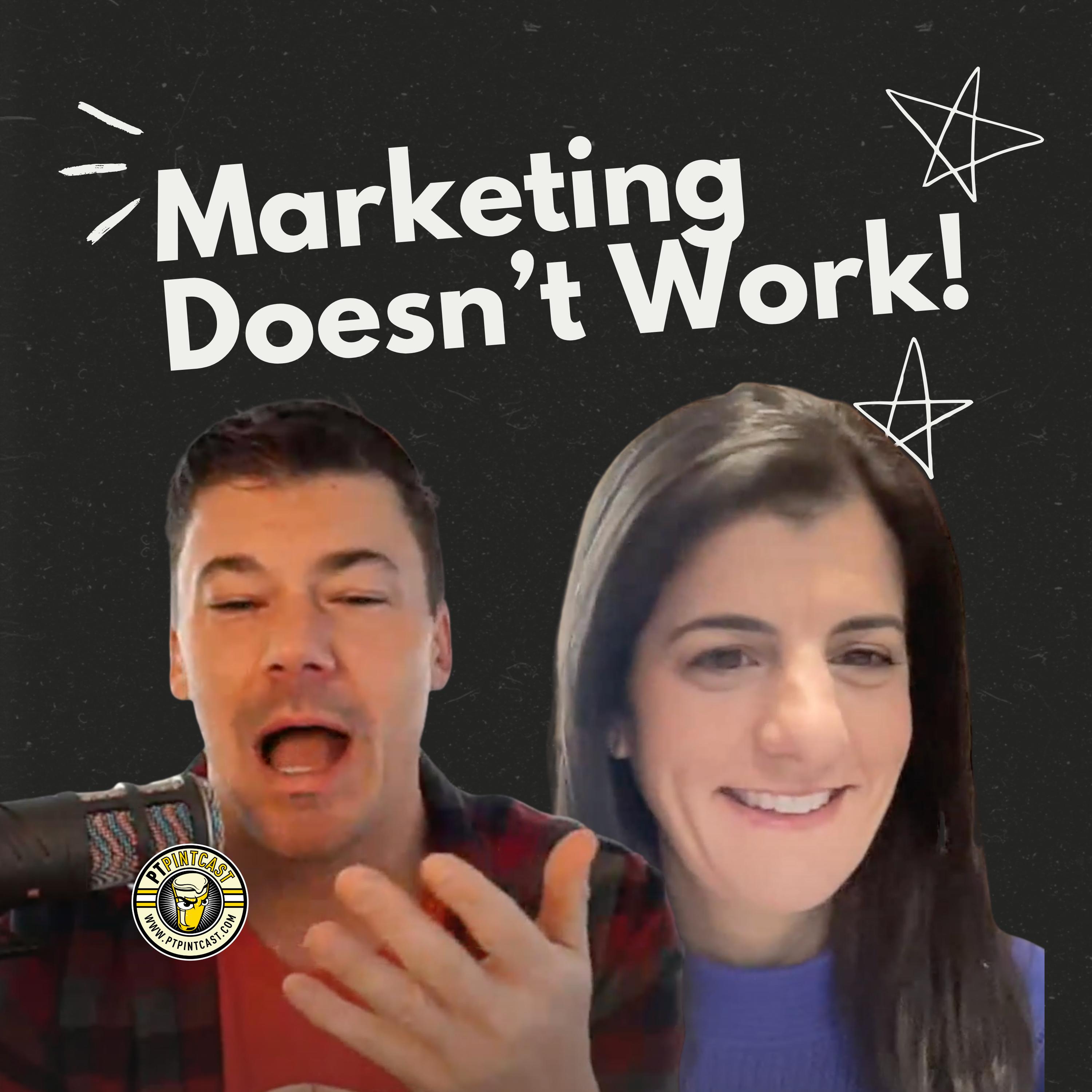


Episode Title: Marketing Doesn’t Work! (Until You Understand the Customer Journey)
Series: PT Pintcast
Guest: Andrea Tager, Fractional Marketing Leader | LinkedIn: linkedin.com/in/andreatagercheney
Host: Jimmy McKay | ptpintcast.com
What You’ll Learn:
- Why marketing fails when it doesn’t match real buyer behavior
- The problem with “patchwork” branding
- Why Apple’s marketing works and yours doesn’t (yet)
- How to fix mushy positioning statements
- The power of speaking directly to your ideal audience
- Why motion ≠ progress
[00:00:00] Why “Marketing Doesn’t Work” (and who this is for)
[00:04:12] Sales process vs. the real customer journey
[00:08:33] Invisible decision-making: Reddit, Yelp, and 3am Google
[00:12:10] Random acts of marketing = random results
[00:16:40] Tactics vs. Strategy: The content trap
[00:23:18] What branding really means (and what it doesn’t)
[00:29:10] Patchwork marketing gets patchwork results
[00:36:05] Apple’s Mac vs. PC ads: A lesson in clarity
[00:42:55] Messaging mistakes clinics make
[00:49:00] Game time: Mushy or Mighty (live feedback)
[00:54:00] Andrea’s parting advice for clinic owners
[00:57:00] What’s next on PT Pintcast
Notable Quotes:
“You’re not Apple. Yet.”
“Marketing without strategy is just expensive noise.”
“You’re not pizza — you don’t need to please everyone.”
“Motion without direction is just a monkey humping a football.”
<p>This episode is part of the <a href="/physical-therapy-business-podcast">Physical Therapy Business Podcast</a>, where physical therapists and clinic owners learn how to get more patients, improve operations, and grow their clinic without relying only on referrals.</p>
<p>Looking for more episodes? Explore the full <a href="/physical-therapy-business-podcast">Physical Therapy Business Podcast</a> for real-world strategies on physical therapy marketing, patient acquisition, and clinic growth.</p>
0:01 You're listening to the P.T. Pinecast, where smart people in healthcare come to make noise. Here's your host, Jimmy McKay. You're listening to the P.T. Pinecast, where smart people in healthcare come to make noise. Here's your host, Jimmy McKay. I am the host, Drew McKay, and I had it on loop. So I played the intro twice, but that's twice as good, Andrea. We know in marketing, once is awesome. Two times, twice is awesome. And you were making sure everyone was awake. It's Monday morning. Yeah. I'm going to do the live reads first. We have sponsors, Andrea. This episode is brought to you by Get the Message Out. That's my company. I'm sponsoring my own show. Very meta.
0:42 Helping healthcare providers craft unforgettable stories that actually connect because marketing isn't just about more content. It's about content that matters. We'll get a live read for you. We'll do that eventually. Maybe we'll workshop it. Also want to thank Brooks Institute of Higher Learning, building strong, adaptive leaders in physical therapy with mentorship, real-world training, and business skills that make an impact from day one. They've got residencies and fellowships down there in Jacksonville, Florida. Brooksihl.org. That's Brooksihl.org. One more time, because three times is when you're supposed to read the website in an ad. That's when people stick. Brooksihl.org. Andrea, welcome to your show. We're going to do a show together. Awesome. Thank you so much for having me. We have to give a good intro.
1:23 Now, we call this in radio, this is the re-rack. This is the context, because someone's been watching for a minute and they've heard me screw up the intro twice and read sponsors. Not a whole lot of value there yet. But today, the co-host has scaled urgent cares across the Northeast, built marketing systems from stealth to series A, and rebuilt the HSA sales story at Fidelity. She doesn't believe in random acts of marketing. Good. She believes strategy that compounds. I like that. We'll figure out what that means. Today, we're talking about the difference between what you see in your sales process and what your customers actually experience. Spoiler, they're probably not the same thing. It's a gap most clinic owners, and I would venture to say if we zoomed out, business owners, don't even realize that they have.
2:08 Marketing strategist and growth operator, welcome to the show, Andrea Tager Chaney. Do you hyphenate in real life? I don't legally. My last name is Chaney, but I've kept the professional maiden name for a while now. And the reason I ask, I'm like, as I was writing the intro, I was like, I've known her for two years. I'm like, I don't know what last name to use. My legal last name is Chaney. Okay. So how was the intro? Was it accurate? Did I leave anything major out? No, it was great. Please like follow me around and tell people that that is my intro. Thank you so much. All right. So you posted recently, and I've literally commented on LinkedIn. You should follow Andrea on LinkedIn for a lot of these things we're going to talk about, about founders mistaking their sales process for customer journey.
2:54 And we'll define terms in your own words first. But why does that disconnect matter so much in healthcare marketing? So let's start with what is a sales process? It doesn't have to be official funk and waggon. Yeah. Doesn't need to be the dictionary definition. No one has encyclopedias anymore. What is a sales process for the amateur? And what is a customer journey for the amateur? Then we'll get into why they matter. Definitely. So on the healthcare side, I've been on B to B, I've been on B to C, we'll talk, we will sort of talk generally speaking. So sales process is internal process, your customers or prospects never know what your sales, they shouldn't know what your sales process is.
3:36 And that's internally what you are doing to, you know, sort of from the point of marketing, excuse me, is doing their thing to get some attention to maybe to get some leads in the door. And then sales process goes, you know, what do we do from here? And I think internally, we sort of talk about the sales process and the marketing process as a funnel. I do not talk about it as a funnel because people operate in a funnel. So, you know, if you hear like the classic marketer or the salesperson, like top of funnel, middle funnel, bottom of funnel, we can talk about that internally. All we want to sort of identify the type of content we're sharing, when we're sharing it, where we're sharing it. But that is an internal process. And I think sometimes what happens is people get caught up with that process and apply it externally.
4:18 A customer journey. is completely external. And so what you're doing with a customer journey, whether it's B to C B to B and Jimmy, you know, this, um, is you are getting into the mind and understanding the behavior of your customers or your prospective customers. So, um, What are their needs? What are their pain points? How are they living their lives? Where are they? You know, it feels like a million years ago, HubSpot came up with this concept of inbound marketing. And you probably saw this recently on LinkedIn is I was all in on inbound marketing because it's human marketing. It's essentially meeting people where they are, right? And like getting in front of them when they need you.
4:59 So you are... needing to understand where people are, what their problem is and what they need. And then you're, you're solving for that. So your sales process goes, oh, they have a need and let's give them this piece of content and then let's call them this many times. And then let's do this prescriptive thing. Humans are very messy that, you know, it's sort of marketing is behavior, right? It's psychology. And so that's what we're thinking about when we think about the customer journey. All right, so now that we know what sales process and customer journey are, internal, external, what you want, they don't care because they're doing, I always say like on calls, most of our phone calls should be podcasts. That's when I was like, we need to have at least an episode. I always say humans are human-y.
5:41 And every time you think that your message exists in a site, like I read people's everythings. I talk a lot, but I read a lot as I think a lot of good marketers do. And you read, I read a lot of things and say, dude, you wrote that thinking that the person would be sat down in a room like they have at a police station where it's just a mirror and one table. And then we will now show you our message. And that ain't how anybody, that's how your CEO absorbs your new commercial rollout. No one else is doing that. So why does that disconnect matter so much? We'll stay in sort of our world in healthcare marketing. Why does that disconnect happen? Why does it matter so much? And then we'll get to what the hell we do about it.
6:23 Well, it happens, I think, because internally, we are in this little vacuum, right? Internally, we're going, we have our product. Let's figure out how to get in front of people who need our product, right? And so we design these very beautiful strategies. And these are, like I said, our sales process. And we're going, when someone first realizes they have a problem, what content should we give them? And I'm not saying that's wrong. What I'm saying is not everyone follows this perfect flow, right? And at the same time, so I've worked in healthcare organizations where the sales cycle is two years. And so you are essentially nurturing or courting someone for two years and not all organizations are created equally. So within those two years, you're not treating everyone the same.
7:05 And maybe it's six months for some. on the b to c side if we're talking about pt i've been in retail health you know i've been in b to c organizations um it may be immediately i i know i have a need i need to go find a solution it may be my doctor tells me i have a problem and then i'm like where do i turn and maybe i'm asking friends maybe i'm posting on facebook maybe i'm in my next door app like asking my neighbors right so my journey may look very different so i think you know to answer your question around like why does this happen i think internally we're very much thinking about our product and how to push it out there and i think externally people we're not on people's radar right like brand awareness is very important and this is why it's important but we don't know exactly when someone is going to need us we don't know the trigger like humans are behaving as humans sort of as you said humans are That's a better term.
7:55 We can put humans or human-y on a t-shirt and sell it at a marketing convention. You are right. Human behavior does not directly parallel our sales process. It's not very t-shirt friendly. That's why you're the wow, right? Theoretical name for the show is Wow and How. If there were a Venn diagram... Andrea and I are both probably marketers, right? And I think sixty percent of what we would do if given the same problem would be similar. Probably not the same, but similar. And then forty percent will be different. I think that's a good thing. I think if you hire ten contractors to redo your bathroom, you will get sixty percent of run the pipes, do the electrical, do it in this order.
8:36 But then you would also get vision, vision, vision. I'm probably a little more off the wall. If you've listened to this podcast, I'm like, I've always said, I work really well with how people, Andrea is a how person, like she's going to have vision and creativity, but then she's going to look like, Jimmy, I need you to, I need you to sit it down, explain how we do half of the stuff that you just said to which Jimmy would reply. I don't remember half the stuff. I don't remember. So we're at the end of the show. I'm glad we're recording it, but I think that's what people need to understand is marketing is super simple. It's just not easy. Yes, exactly. Super simple, just not easy. And I think, you know, and we'll get to this as sort of the ideal is marrying, right, like your internal process with your external process. And there are some ways to do that.
9:18 How do you explain, because you just brought up, in my opinion, a disconnect. You said, I think, because I'm good at a hundred miles an hour. You said from B to B, you might be courting another business. So let's say you sell software as a service. This would be an easy play, an EMR. Let's say you sell an EMR and you want clinics. So that is business to business. You just said, was I right? That you might be having to court that organization you're trying to sell to for two years. But Andrea, how can that be right? Because a lot of sales cycles or sales quotas are ninety days. I'm not a mathematician, but ninety days and two years, those numbers feel vastly different.
10:01 Let's also look at marketing leadership turnover being a year or eighteen months. You know, the numbers add up or they don't, I guess. So, no, that's just it. I've sold into health plans, carriers. I've sold into large self-insured employers. I've sold into health systems, you know, hospitals. It's a long process. process, right? And you're right. So sales quotas are shorter. How did you do this quarter? How are our numbers this quarter? And I think- You might have done great. You're on the third date, and we know what happens on the third date. Knowing that an average organization might take two years to make decisions before the stars align, it feels like there's a disconnect in communications sometimes.
10:49 I don't like to point fingers, but I do like to point fingers. Somebody has to own this, or a bunch of us have to own this, because you can't eat the food that you planted Yesterday or two months ago or ninety days ago, if it's a if it's a quarterly quota that math don't math. But why are we so resistant to understanding that? We're so resistant because two years feels like a long time, and it is. I think the organizations that I've worked with, the smart organizations that get it right, are looking at what we have done from two years to close, right? And we can look at quarterly quotas, but we're looking at that based on what we did eighteen months or two years ago.
11:30 And so what I look at when I'm working with organizations that have a two year sales cycle, I'm looking at engagement. Right. We have lag and lead indicators. And I you know, we get into all these terms and marketing and some are good and some are. But we're looking at are these prospects engaging now? Do we you know, can we consider them a lead? Right. We're not. If the sales cycle is two years, we can't consider we can't even assume that they're going to be closed in any. You know, so I think the smart organizations are looking at the right metrics and are looking at the right actions. And we shouldn't be holding people to quarterly quotas for leads that just entered the pipeline a short time ago. God, if I never hear the term pipeline again. Yeah.
12:13 It was so nauseating. Again, my background was broadcasting. So I had two different, I was B to C and I was B to B. And again, for the non-marketing people who are trying to catch up, these should be, if we're ever using terms that sound too confusing, hold us accountable to that, either live or recorded, right? So business to business or business to consumer. So I think radio is a great example because people can sort of visualize it. I had to make the radio station. I ran cool, whatever that meant to the listener. My product was free. Like I just gave it away and hope people stuck around. And we had a few metrics. We measured, um, QM, total number of people listening how many people are in your bar right bunch of people time spent listening how long are those people in your bar because the longer quote the better but understanding that different formats will play for those things top forty radio is gonna play the top forty songs and then when they get to the fortieth song they play the first song again so they understand that they're they want lots of people in their bar for not a lot amount of time exactly Where I was was rock.
13:20 I wanted as many people as possible, but I knew I didn't have top forties hip beats that were new every ten minutes, right? So I wanted to put heavy towards time spent listening. Now, you might be thinking, like, how is radio parallel? It does because you're just understanding what the audience is and what your goal is and how to match your goal to your audience's goal. Now, I also did B to B. I didn't sell anything to the person listening. I shouldn't say I didn't charge them anything. That's where we get a little bit of a twist. Music was not my product in radio. The audience who I got to listen was my product because then I could take, hey, we have X number of people listening for this many hours every week. I could then turn to a car dealership or a restaurant chain or an insurance company locally and say, you want these people's attention for what we know.
14:09 These are their demographics. Age, sex, buying cabinets, amount of money, where they live, because radio was, it used to be this thing where you had to be time and space listening at that time in a radius of the radio station. And psychographic, they think this is cool, right? They're into this. So if you sell pickup trucks in Northeast Pennsylvania, my radio station had a bunch of dudes. You'd want to be on my radio station. And I think your post, which I will bring up on the screen second, highlighted you needed to do what that said. Put yourself in that audience. And I think a lot of people don't do that, where I think either you said or someone said the CEO will chime in.
14:51 Well, I'm our ideal customer. And everybody's like, you are not. You are not. And your, you know, your seventeen year old nephew who told us to be on, you know, TikTok or something isn't. And it's funny because that's the you can read across LinkedIn, right? Marketers are always like, oh, the seventeen year old nephew said to be on TikTok. And it's like, well, is that our prospect for our SaaS product or whatever the product is, right? Or service. Maybe, but not just because they said it. Like, hold on, right? So let's bring up the post that sort of started it all, right? We don't need a customer journey. This is a quote that you're saying. We don't need a customer journey, man. We know how our customers buy. You said you've heard this a time or two.
15:31 Then you ask, walk me through it. And they describe their sales process, what we just talked about. Well, they usually find us through a referral or Google and they book a call. We do a demo, send a proposal, follow up, close. That's not what the customer journey is. Because the customer was doing getting the kids to school and then watching Netflix and going to work for eight hours. So it's saying, here's what you're missing. Before they found you, questions to ask. How long were they dealing with the problem before they decided to solve it? What actually triggered them to start looking? Now, where did they go first? I mean, the answer was Google for the last decade or two.
16:11 And now it's are we I mean, I just I just put a pork butt in the in the crock pot through chat GPT. Right. Because I didn't want to if I searched a how to cook a pork butt, what I would have gotten was some vloggers life story and then a recipe at the bottom of a blog for SEO optimization. So now are we you know, is it is it AI optimization and where they search for your category, their problem? How did they get there? You're not thinking about those things. And now it's like Jimmy and Andrea aren't talking about marketing. You're talking about getting, for healthcare providers, getting the right people in your clinic at the right time. You go deep.
16:52 They're evaluating. While they're evaluating you, who else is chiming in? Who's the decision maker? What objections are they hearing? What criteria are they using? You went really deep in this post, and I'll share it in the show notes. Thank you. Yeah. And I think, you know, the while you're, you know, while they're evaluating or what happened before, I mean, there's so many things. And right as marketers, there are things that we just don't know what we don't know. And we certainly can't measure it. But we do know that there are things happening behind the scenes. Right. And so we can't just assume that when someone sees our LinkedIn post or our Facebook post or something like that, they clicked and that's how they found us or when they Googled us or whatever it may be. You know, a good example is when I was in the retail health space.
17:34 So I worked for an organization that was in Connecticut, Westchester, New York, and then moved into the Boston area. It was an urgent care. um and so we uh you know it was an amazing organization and we had really smart marketing but i had sort of an aha moment one day when i was looking at our google ads um data and you know i sort of said you know people aren't aren't waking up and then googling us right like this is the mom one you know we had we had personas and one of our main personas was the busy mom who has sick kids The mom in the middle of the night is is doing research to understand why her child just woke up with a fever. Right. So whether that's Google or on some forum or whatever it is, ideally, you know, reaching out to their their doctor or nurse line or something.
18:20 But, you know, things are happening and we don't know that they're happening. And so I think we couldn't have necessarily accounted for that in a beautifully designed customer journey. But it certainly was like an aha moment for me. Reddit wasn't a place to be if you were in marketing five, I mean, three years ago. And now people are like, because Reddit is the town square now, because maybe we're seeing shifts, right? Twitter sort of lost a lot of users and people had to go to something to discuss and find things out and go deeper. When I'm analyzing, there's this new, I think it's a year old and it's like a coffee table.
19:01 It's almost like a big iPad and it'll play board games on it. So it's like a mashup of old and new. Do you know what I'm talking about? Yeah, I think so. Put pieces on it. It'll play like Scrabble, whatever. And I'm like, oh, this is cool. I want to get this right. And then I'm like, hang on a second. I've had that hot stove touch burned before. You bought the thousand dollar thing thinking it's going to feel like ten thousand dollars. And then you're like, I'm like, well, let's go to Reddit and see who's trashing it or not trashing it. And that's where people are. Wait, that's the tipping point of decisions. You have to understand that at least that doesn't have to just be run to Reddit. Where are people? When are people? How are people making these decisions? Are you there or not?
19:42 You're exactly right. And Reddit is a great example. I mean, that has become a significant part of a lot of organizations' social strategy. B to B and B to C. B to B decision makers are looking on Reddit. You know, you think of... Wait, wait, wait. Business to business is doing that too? They are. Really? Yeah. So B to B and B to C. And because, you know, and I don't know the numbers off the top of my head, like the traffic and the engagement within Reddit. But I mean, there are organizations that dedicate. There are people who are full time moderating conversations on Reddit about their brand. It's wild. Wait, wait, wait, wait, wait, wait. If I'm a CEO, Andrea is my VP of marketing. Andrea, we're going to pay some millennials or younger. I don't even know what's after millennials.
20:23 We're going to pay some kid to sit at home and just like essentially troll Reddit. And Andrew's going to go, yep. And we want a really good one because they know what they're looking, essentially looking for needles in a giant digital haystack. But what is one of those, some of that insight worth on a monthly basis? And what is beginning or jumping in on a conversation worth? It could be a lot. I mean, it's the same person that's monitoring and moderating as in Facebook groups who are on the Nextdoor app, who are looking at Yelp, who are looking at Google reviews. I mean, this is all online reputation. And I say this to every person. client that i work with is you know that's your online reputation and people are getting the word out there positive negative you know you need to be in the conversation or if they're just asking a question you want to be the first one to respond versus someone who's going to go oh no i tried this other thing and name your competitor what are those people called what's that job called oh it's it could be i mean it falls within digital strategy or social strategy for that on like upwork to find someone Um, it's a good question.
21:28 I mean, on Upwork, I don't know if you've seen some of those titles on Upwork, but it could be a social, I mean, it could be a social media coordinator. It could be a social team. Yeah. And I mean, maybe there's someone who has like a specific title that's like Reddit or, you know, whatever. Yeah. Essentially, the way I would pitch it if I were a marketing person, if I was like, what would your underling be? If I worked for you, what would Jimmy's title be? Like director of something? Because I would never be a VP of anything, nor should I. I mean, you could be a director, manager, whoever the person is. But I would say, is it important for us to watch what the weather looks like in Iowa if we're in New York? And it's like, well, if you want to prepare people for a blizzard two days from now, the answer is yes.
22:08 That is what this person is doing is they're watching the weather station and it's like firemen. Firemen are lazy. Most of the time they just sit around the firehouse and just watch TV. Yes, but when the bell rings, they get their stuff together and you need them ready right then and there with the right skill, the right tools, the right training, the right time. And it feels like this is not a want. This might be a need if you're a large enough organization where those decisions are being made. You just hit it. It's if you, if you're a large enough organization. Um, but I think even smaller organizations like figure out need to figure out how to get that done. That does need to be someone's job, even if that's like off the side of their desk job, because it's not a nice to have. Yeah. It's exhausting because people will open.
22:48 I'm talking directly like to PT clinic owners. And they're like, well, my job is to be a PT and then manage other PTs and then make sure the bills get paid. And I'll hire someone to do billing. And you're like, yes, but now you have all these other problems. From your viewpoint, standing at the treatment table with people constantly coming in, if you were just a treating clinician, and there's nothing wrong with being a clinician, but if you're like, now I want to make the jump to owner, it is not just an owner with a little bit of a different title. You now have different problems from a different vantage point. Different problems. And it's one of those, you don't know what you don't know. And I think, you know, marketing is a great example. That is a function that needs to be a dedicated function.
23:30 And you need to sort of trust the experts that you bring in because there are things, you know, if you ask a PT clinician who made the jump, do they know they need to be paying attention to Reddit, for example? I don't know that they would know that. Yeah. When you hit a certain... Well, that's where we talk about personas. We go back to understanding your audience. And a lot of times you'll do it by number of clinicians or number of locations. I think clinicians is probably a more accurate way of looking at it because who knows how big a clinic would be in your world or revenue. Someone doing a million to three or a million to five million dollars a year annually has different problems than someone doing six to ten or ten to twenty. Like, you know, more money, more problems.
24:11 But I think it's more money, different problems. Exactly, Jimmy. That's exactly it. It's different problems. Yeah. I mean, I've heard, I think, do you know Marcus Limonis, the prophet on MSNBC? You don't know Marcus Limonis, the prophet? You and Marcus Limonis would be best friends. Your brains are, you have some homework to do. Watch episodes. He's great. So Marcus comes in and he's like, he's a dude with money and knows stuff. And someone just like Bar Rescue comes in and is like, Marcus, we have a key lime pie company in Florida Keys. And we don't know what's going on, but we're running out of business. Marcus goes down. And of course, it's a reality show. But it's cool because you see a thought process.
24:54 And he goes through everything. This is where I get a lot of my paradigms from Marcus Limonis. People, product, process. And he's like, it's one or two of those. Three of them can't be broken. You wouldn't be in business long enough to write me an email. One of them is probably broken. If it's two, we have red alert. So he breaks everything down with which one of those things is it? With the key lime pie business, it's like... does it take you too long to make a pie? Are your, are your ingredients too expensive? That's a process problem. Or like, how are you getting them shipped? Well, people have to call us and then wait for Debbie to answer, to order a pie. It's like, whoop, whoop, whoop. Why can't they online order? It's twenty, twenty five. Like he would break that down or people.
25:34 Do you just make crappy pies? Like, like are the people wrong? Your recipes, right? But the people wrong. And then product would be like, okay, you got great people, great recipe, but it's the product. Just nobody wants it like product market fit. So he breaks things down to those, to those three, um, those three sort of buckets. And usually you figure it out pretty quick. But just like therapy, you can't really analyze yourself. Like you can't therapy yourself. That's the magic. So where do companies go wrong with the post we were talking about? The customer journey and the sales journey. So I think where they go wrong is, you know, getting back to when we said they're trying to look at it from their perspective. And I think what needs to happen is they need to align the two.
26:16 You really need to start by understanding who your customers are. So before you get to the journey, you sort of need to know who you're talking to. When we're on the B to B side, you know, my process I sort of go through is who's your ICP? Who do you think, you know, is and then, you know, what is do what ICP is for people? It's an ideal customer profile. You're you're in radio. We called it Keith, right? Keith was twenty eight years old, lived in northeast Pennsylvania. Like we literally had a name for this dude. Right. And so I think on the B to C side, we go straight to personas, which which is fine and good. And so Keith is our persona on the B to C side. I think when we're talking on the B to B side and, you know, like I said, you know, going across health care, there's you know, I've been on the B to B.
26:59 I've been on the B to C. We need to understand if we're selling a SAS product, for example, who are we selling into? Right. I'm selling into health insurers, carriers, right? That is one of my ICPs. But within that ICP, I'm understanding their annual revenue, how many employees they have. There's some things across that we're going to say, this is the ideal segment that we're looking at. Within that, who are the personas? So if it's on the B to B side, am I targeting the CFO? Am I targeting the Um, medical officer, who are my decision makers, who are my influencers on the B to C side? You know, is it Keith? Who is Keith? Am I targeting moms? Am I targeting, you know, people, sixty five plus?
27:40 What does that look like? So I think we need to understand who we are talking to, what their problem is. And then how we can solve that for them. And then we can go, OK, based on who they are, let's come up with some messaging to figure out how to solve it. Right. So many you look across everyone, you know, so many websites and it's like they're revolutionizing something or they're transforming. That doesn't mean anything. It doesn't mean anything to anyone, I don't think. But so I think we're solving for it. Do you want to know why it doesn't land? Because you're talking about you if you're saying that, right? Like if you talk about me, it's the sexiest thing. It's the sexiest sound I'll hear all day. People are like, oh, no, stop here. Compliment, compliment. Like, no, it's not. Keep going. Keep going.
28:21 But that you're revolutionizing blah, blah, blah, blah, blah. If Uber said we're revolutionizing taxis, people would have been like, cool story, bro. Tell it again. But how about, you know, never have to wait for a ride to somewhere you want to go again? It'd be like, whoa, whoa, whoa. What? I have that problem. Tell me, tell me a little bit more. I haven't, I'm not sold yet. That's, that's not just add by, but I'll get a little bit closer. So I think step one is stop talking about yourself. So, you know, and I'll go back to urgent care. And I also, when I was in the PT space did this too, but I remember one campaign in the urgent care space. I, you know, I came up with no summer sick days. That was our messaging. No summer sick days. Yeah.
29:01 you're getting back to and all of the visuals all of the words were around like getting back to watching your kids play sports going to the beach whatever it may be it wasn't about we fix a broken arm you know we can do an x-ray we can do whatever it may be you know come in for a cough um but i think that's it so it's stop talking about yourself understand who you are trying to sell to speak their language and then You need to be where they are. And that's really what it comes down to. And it's simple, but not easy, as you said. healthcare loves to say, meet your patient where they are. And then they'll immediately start talking about themselves. And I'm like, do you think Yoda ever had to sell himself to Luke?
29:44 Like he was just like, tell me about you. What do you want to become? And show me this, show me that, show me, show me, show me you, you, you. And then he spoke, he spoke Luke's words back to him. And he was like, I will follow you master Yoda, even though you're small, um, giant ears. Um, so yeah, Where do we go from here with this post? I think this post again, and I'll share it in the show notes so they can, because you gave three big sets of question. Before they found you, a bunch of questions. While they're evaluating you, a bunch of questions. After they buy or don't, a bunch of questions. to me this should be turned into a pdf checklist and you should run this question through every product service and audience if you have one product and one audience you only have to do this once if you have one product and multiple audiences again multiple times multiple products one audience still multiple times you understand what i'm saying here like you and you can do this Apple's not a computer company.
30:42 They're a creating things or connecting things company, but they have different campaigns for different products. They also have multiple audiences. Right. And the, you know, and the output from this is like, where do we go from here? The output when you've answered those questions and more is you have on paper customer journeys and you have them for each of your types of customers. And there's still a little asterisk that goes, not all humans are going to behave this way, but here's some direction. Right. And I think that's, you know, the. What we want to get to is how can we understand how most of the humans are maybe behaving? And you're going to have multiple journeys. We're not going to it's not going to get us to one hundred percent. Correct. I want to say thanks to Empower EMR, talking about SaaS, software as a service for the cool kids.
31:28 The EMR designed by and for physical therapists. Faster documentation, simpler billing, and more time to do what you do best. Be a physical therapist. Who would have thought? Find them online at empoweremr.com. It's empoweremr.com. They know that switching over is stressful. You can do a full test drive online. No pressure, like kick the tires, light the fires, see if you want to do it or don't. I do also like to do PSAs. This is one for an organization I've been involved with since PT school. Let's shine a light on Go Baby Go. You would love this idea. This idea is fantastic. They support kids with mobility challenges through safe, modified ride-on cars because every kid deserves to enjoy a movement, even if they roll a little differently.
32:11 They essentially go into, like, they'll take the battery-powered ride-on cars... then go to home depot to get pool noodles or pvc pot like anything you need to do to rewire the car for the kid not the kid for the car and then they just give these plans away and then people do like hackathons in their own communities for kids you can't mass produce custom stuff those two things do not make sense um but you can customize stuff at scale And if you do a hackathon, so these things are just like go to Go Baby Go or just Google Go Baby Go. You'll find out where your local chapter is. I got exposed to it in PT school and my school is at Marymount University is a super site, which means they do X number of builds per year and make the X number of cars. It's pretty dope.
32:53 You said marketing compounds. That sounds like a financial term. So what does marketing compounds actually mean? Like how can a one million dollar clinic start thinking that way? Because a lot of people would say in my world, I posted three times last week and it didn't work. Or I ran Facebook ads for a month and it didn't work. So I have other thoughts, but I want to hear what your idea, what you meant when you said marketing compounds. Yep, so what I think in that instance, in that post, what I meant and what I think generally I mean is if you're doing the right marketing, you're doing smart marketing, you're doing strategic marketing to the people where they are and solving problems for them, your marketing is going to continue to compound and grow for you.
33:42 If you're just doing patchwork marketing or throwing things at the wall and doing three posts, wonderful, what were those posts? What else did you do? What were you saying in those posts? you know you're you're not going to see that growth um but really that's what i'm i was talking about i had a post every day we're talking a lot about posts right i knew my audience my audience typically is physical therapists and now i'm getting more into the owners or people who want to become owners of their own destiny and clinic and i said so i started the post by saying doesn't it frustrate you as a physical therapist when now i already win I earned three seconds more. If you saw that, I stopped your skull for three seconds.
34:24 So I essentially said, doesn't it frustrate you as a physical therapist when people say, tried PT doesn't work. Now I've got them. they're going to read another twenty seconds because they go, yes, that is a biggest annoyance. And what I was getting at is the next your snapshot reaction now is to say, but maybe it was bad PT or what they do, or maybe you were inconsistent or maybe this or maybe that defending the entire profession. while knowing very little about the situation. And that's good. Those are great questions to ask. Those are good motivational interviewing questions to ask if that person were in front of you or at Thanksgiving or holiday dinner, right? Oh, you're a PT? Tried that, didn't work. Your reaction would be like, PT's great.
35:04 You had a crappy one. Better would be, help me understand what that looked like because what I think is good and what that, right. All right, so that was the gist of the post. And then I flipped it. But what if I said to the same PT who had that visceral reaction to PT doesn't work, those people a lot of times will say content doesn't work. Marketing doesn't work. I tried it six months ago. We put a thousand dollars into it and it didn't do anything. Do you see the parallel? Well, what'd you do? Did you, did you go to your parking lot and light a hundred dollars on fire and record it and put it online? Yeah. That wouldn't work either.
35:45 What'd you do? Did you understand your Simon Sinek loves to say, start with why dude is multi bestselling author, whatever Ted, one of the most why, but I'm going to go against Simon Sinek. Not really, but hold you start with who? Yes. We've talked about this. You start with, you start with who we'll do a whole episode on this. That's next week. You have to start with who, then you go to what, what are their problems, their hopes, their dreams, their bads and goods. Then no, hold on. Then you go to your thing, but what can you do about those hopes and dreams and problems? And where like a Venn diagram, which is my favorite Venn diagram. Wherever there are hopes and dreams and problems and your solutions and strengths cross, that is your shared why.
36:30 That's how you get GE brings good things to life. That's how you can just do it. That's how you get think different. It is a stupid process that starts with who, crosses what, and then you can say, you can transfer that what in video, audio, text, a mime standing in front. You can do that if it makes sense. But I tried marketing. I tried content. It didn't work to the PT who says, well, maybe you had crappy PT. Like to me, it's a great, you cannot have, you cannot have both without speaking outside both sides of your mouth. Yep. Yeah, I couldn't agree more. I think the start with why is an interesting one, too.
37:13 You have to start with who. And I think, you know, when I've talked to people who have said marketing doesn't work or I've tried a bunch of agencies or I went through a bunch of marketing leaders. well, help me understand what you were doing. You know, what, what did they do for you? What was the strategy? And that's a frustrating thing as a marketing leader, sort of going and going marketing hasn't worked or, you know, it's no secret. And I shared at the beginning, marketing has the shortest tenure in the C-suite and for a few reasons, but it's very misunderstood. And I think if you're not getting immediate results, you're out the door because marketing is tied to pipeline and revenue and, you know, for better or worse. And I think it's, you know, like understand what you're doing and understand also how long it's going to take before you get rid of your marketing team.
38:00 But you know, why did you have so many marketers? Did you give them strategy? Did you help them understand what the strategy is so they could do what they're doing? Because yeah, if you go hire someone and go make me some posts, they're just going to make you some posts, right? You're hiring a junior level social media person. They're going to make you posts. What does that mean? What is that going to do? I did some stuff. Andrea, look, I did mark. I did marketing. Was it good? Was it good? I marketed. What'd you do today? Marketed. And you know, we won't, we won't get into hiring people and then telling them what to do and then wondering why it didn't work. Right. So that's another, I mean, I've, yeah, a lot of war stories. Of course. Do you know who Chris Doe is?
38:40 I don't. Man, I'm dropping a lot. You got more homework. Chris Doe is like a graphic designer. But now he sort of helps people understand how to build a brand, talking a lot to freelancers a lot of the times or brands, whatever. And he, I think it was him, had a price guide. I'll find it. And essentially it was like, I do everything, five thousand dollars. I do everything, but you tell me how to do it. Ten thousand dollars. I'm going to charge you more. And then eventually he gets down to, I sit there and watch while you do everything. Fifty thousand dollars. Why did you hire me? Why did you hire me? Dude, I bought the house I'm sitting in right now three years ago, four years ago. And I renovated my kitchen because I was like, I don't have a lot of money.
39:22 How hard could it be? Spoiler alert. Really, really, really hard. It's really hard. I don't know what I'm doing. I don't have any of the tools. I owned a hammer and a screwdriver. So when someone says your kitchen is going to cost forty grand, you're like, that's ridiculous. I could do it better, cheaper and then do it. I will never renovate a kitchen again. It's not awful. I had friends help me, but still I get it now. The problem is I think with sometimes when in marketing or kitchen renovations, if you sell, well, I'm going to demo your kitchen that costs three thousand dollars. I'm going to I'm going to haul all the garbage away from your old kitchen. That's fifteen hundred. What would it what do you want it to feel like when you wake up in the morning and you turn your coffee pot on?
40:07 Clean, new, fresh. You sell clean, new, fresh. Don't sell demo, sheetrock, electrical, plumbing. If you sell those things, you'll be selling those things forever. But I sell one dream. You tell me what the dream is, I'll draw it up. And then you want it or you don't, that's my prescription. So there's a lot of words I'm using like prescription or sell that sounds like they're healthcare or marketing. They're both. Yep. Humans. Yep. All right, so we figured out what marketing compounds. What does patchwork marketing look like in the wild? You just mentioned one of the things. I'll give you your first answer, which is post a bunch of things.
40:51 Post a bunch of things. What are the purposes? Where are you posting them? What do they look like? Words, pictures, videos? So that's patchwork marketing, right? I mean, what does it look like? it's throwing things at the wall essentially. Right. So people like activity, activity feels productive. Right. So I'm posting, I'm doing the things I'm creating branded tchotchkes. I'm, you know, like we, we did an ad we're featured in this magazine. Um, so patchwork marketing is, um, exactly what it sounds like. You're putting a bunch of things together. You don't have a strategy behind it.
41:32 You don't know why you're doing it. You don't know if they're the right things. You know, it's sort of the extreme of just doing one thing because you think that one thing works, right? So I think in marketing, you need to be in multiple places, but you also need to understand what those places are and why you're there. Ideally, it's where your customers or prospective customers are. can I put it back to physical therapy specifically? I had a great CI and I'd be working with a patient. She, she gave me a lot of leash when she figured out she could trust me. And then every once in a while she'd come up and she goes, why are they doing that? And I got real nervous in the beginning. Like, She's asking me why I'm having the patient do that exercise. So I got real nervous.
42:12 I was like, well, you know, and I started like doing like biomechanical and rolling glide. And she was just like, no, I don't know anything about the patient. I look at the charts, wanted to see why you're having them do that. I was like, oh, okay. And she would do this periodically. Why are they doing that? And I thought it was at first like an audit, but really she was just like, Just always be thinking I'm going to ask you why you're doing that. And you just need to have a simple answer. She needs really the outside of her glutes that are really weak. So I'm doing everything I can and I'm trying to make it fun to strengthen those glutes. And she was like, keep it up. Why are you doing that post? Because it says on the thing that at eleven o'clock we post on LinkedIn. And I'm like, why?
42:53 Why? Why? Why? I think there is a place for patchwork marketing and it's in the marketing office. That's the place you throw a bunch of things against the wall, but then it doesn't leave that room until you go, you act like, and I have this gif queued up at all times. This is what you're supposed to look like in the office in marketing. You're supposed to look like Charlie in Always Sunny with the red lines and you're doing the thing and you're connecting the dots. That's what goes on in Jimmy's brain. What should come out is something that is digestible, clear, concise, consistent. But patchwork marketing gets patchwork results. I'll talk now to associations.
43:34 Volunteer efforts get volunteer results. So patchwork marketing, patchwork results, volunteer, amateur efforts get amateur results. It's math, maths. The math, math, you know, it's also called random acts of marketing. And I think what happens, I've seen it. So I've seen it in PT. I've seen it in other other types of organizations across health care is an organization starts at zero. They're homegrown. It's a mom and pop. Right. Let's talk about PT one clinic. They do some marketing themselves. They start to grow. They grow word of mouth. There are other ways they grow. They hit a point, right? And so this is why I market myself as working with business founders who are in the three million to thirty five million revenue range.
44:20 And from three to thirty five, they have very different needs and it looks very different. But I've been across all of those. At some point, you start you need to start getting very strategic and you need to start putting a strategy in place as to how you're going to maintain the patients you have and then also grow beyond that and scale. Because what got you here isn't going to get you there. And I think random acts of marketing, you know, by by luck certainly helps some people get to a certain point. It's not going to help you get to that next level. Yeah. And I have a new idea for the show name. Marketing doesn't work with Andrea. You know what I mean? Like stay the anti thing. Like we're, we're workshopping this. We had a bunch of ideas. We went to chat GPT. We got cool. Like the shift marketing, whatever.
45:02 And I'm like, you know what? Marketing doesn't work. And then we're going to talk about all the ways that it actually does work if you do it right. So I want to draw people that goes, yeah, it does. Those are the people I want to talk to. The people that already agree with us. I kind of don't want to talk to you. I want you to go do. Marketing doesn't work. Great. Come, come enjoy, except I'm going to prove you wrong by showing you how it actually, what it, what it does, what it looks like when it's done well. Jimmy, it's almost like, you know, the prospect, it's almost like, you know, the audience and you're speaking to them. Right. Does it feel good though? Like, and I know we use extreme examples and sometimes that's good. And sometimes that's bad. Like talking about Apple, like it's like, In PT, it's like if you get a high school football player and they're like, I want to be Patrick Mahomes.
45:46 So I'm going to do all the exercises that Patrick Mahomes is doing. And the problem in rehab with that is like you're not there yet. You don't have to do those exercises. You need to do the exercises Patrick Mahomes did when he was fifteen. Exactly. Those exercises. Right. And like, again, why are you doing that exercise? Patrick Mahomes does that. Patrick Mahomes is a freak of nature. And he also did a bunch of the basics really well. So I'm going to have you do that instead. I want to do the same thing, but marketing. So it's like, but Apple does two lines and I'm going to go cool, but they've got thirty, forty, I don't know how many years, decades worth of brand. And I like to talk about branding from where the term came from.
46:27 There were some cow pokes out on the range who didn't know whose cow was who. So they heated up some iron and put their logo on things. So people look and think branding is a logo. Branding's warming it up, people. Branding's making it hot. So when it touches you, it burns itself in. You're looking at the logo. I'm looking at the verb. I want you to verb, not noun. Ooh, look at that. I just made that up. I'm not even sure if that's grammatically correct. But people will be like, well, I'm just going to do what Apple does. And I'm like, you're not there yet. You're not there. And that's why you have to build a, you know, there's, I, I, it's a, a foundation. You need to do this stuff before you can, before you can get to here. And branding is, we have to talk, we have, we'll probably have an entire episode on that.
47:07 Branding is near and dear. You can't have growth without brand, but brand alone is not going to get you growth. Right. Brand's not your name. Like Google is a dumb name. It's a dumb name. That's not really what you know. Google is now the thing you have. You now have it. Like if I said Google has a cologne, you'd maybe almost be able to figure out what it was. It's like, you know, kind of like geeky. Right. Like if Google was a dude like, all right, let's go right back to this. Here's a perfect personification ad campaign. That is awesome. chef's kiss. And the timing is right to bring this back for anybody who has balls enough to, to, to take it back over. Do you remember Mac versus PC? Absolutely.
47:48 Mac versus PC. We'll talk about it in the next episode. Maybe we'll show a clip was two actors, white background, nothing, nothingness. Right. And it was the actor, Justin long, who sort of like dressed like me, like just t-shirt and like unbuttoned flannel. And he's like, cool, but he was not the coolest kid in high school. He was, everybody knew him and sort of liked him, right? That's how Justin Long walks on the screen, whether you know him or not. And then this other guy walks on with like a sweater vest with a suit jacket and glasses and hair that's glued down. And they're just like, and they're just talking to each other and they just, Hey, Hey Mac, Hey PC. And, And then instead of having to talk about megabytes or processing speed or anything, Justin is doing something on his phone.
48:31 And PC's like, what are you doing? He's like, I'm editing a video. On your phone? Yeah. How much did that app cost? Oh, no. You just get all the apps when you buy an iPhone. And is it hard to use? Because I spent six months learning how to use Pro Tools. And he's like, no, I'm pretty all right with it. But it took me like twelve minutes. That is framing... They may, they knew who they're not with another audience and their problems and their hopes and their dreams. They knew the villain and Microsoft spreadsheets and Microsoft word. And they're like, you know what we are? Not that chef's kiss. No notes. It's a good one. Oh, so good. I wanted to bring that back and we still might. If Patrick is listening, I'm going to send him this episode.
49:12 I'm going to say Patrick at forty nine minutes in. So they make vestibular goggles. I showed you this once, right? Did, yes. They make goggles that essentially to really figure out what's wrong with someone's brain if they have a vestibular issue. If they have something wrong, if it's a vestibular issue, and if it is, where, is very difficult. The problem is, Andrea, you need to be able to look at the person's eyes. Is it spinning? Is it torquing? Is it nystagmasing? In what direction? when you have a light coming into the eyes that those movements are dampened, it's a natural human. It's a good thing for the brain, right? So you just need to see someone's eyes in the dark, which is hard. So they were like, okay, I see your eyes in the dark.
49:52 And what we'll do is we'll just put them in like, almost like an Oculus. But night vision cameras, so you can look on your laptop as the clinician and go, oh, I can see your eyes in the dark. The patient sees nothingness. The eyes are like, oh, I can do the thing that I'm supposed to give away my secret of where the problem is. I said do Mac versus PC. And here's the personifications. Their vestibular first goggles are Mac. And PC are Frenzel lenses. And Frenzel lenses are like giant Coke bottle lenses that would make the person's eyes look like this. That was the solution like fifty years ago. But here's the thing. Clinics still use Frenzel lenses. They still use them. All it does is make the eye bigger. You still need light, which ruins the whole gag, right?
50:33 So I was like, Patrick, Mac versus PC. Like, I don't even care. And he was like, great, you're Mac. I'm like, oh, crap. I just talked myself into a role. I don't even have a SAG card. But like, that's marketing, man. And here's the thing, though. vestibular first not new they've been around they've got street cred you can go into reddit people are if you say i need vestibular they're like people people that don't know patrick and helena jump in and go this link buy them do not question it have a nice day no no end of story they are now here trying to get here now it is appropriate to do that here no well no maybe i don't know i don't know that's a quick way equity They already have the brand equity.
51:16 They might have been able to pull it off here. I think it would pop here because all their raving fans would go, yes, yes, that is it. You put my words. I hear my words coming out of your mouth is the sexiest thing on the planet. No summer sick days. is what moms are thinking. That's their problem now. It wasn't their problem seven years ago. Their problem seven years ago was where do we go on spring break? Their problem now is summer sick days. Why? Because something happened on spring break and now we got summer sick days. Their problem then was no spring break sick days, right? Yes. Now they're trying to get...
51:57 But that could be a campaign for urgent care because you're talking to the mom that seven years ago, she was at Daytona Beach... right swipe right on uber uh so swipe right on tinder yeah but you could say those things if you're positioned right um all right we've got eight minutes left we're gonna do this i don't know weekly You were hesitant to do this at all because you're like, I'm not a podcast person. And I'm like, Andrea, every one of our phone calls where I randomly call you and I'm like, what do you think about that? That's a podcast. This is a podcast. That's a podcast. I will ask last question. Well, I have other questions. No, you know what? Let's jump to the game. I'm going to save this question. We're going to do a game and I think I have a stinger for it.
52:41 Hang on. Hang on. Yeah, I'm just going to play this thing. Game time. It's called Mushy or Mighty. Okay. Mushy or mighty. If your clinic's marketing feels like a bunch of disconnected tactics, we can help you turn them around in a game called mushy or mighty. I'm going to read a few positioning statements. You say if it's mushy and then why, like, why is it mushy? Just a line or two. And then, or like, yeah, no, I like when you're not prepped for this. And then just tweak in one sentence. So here it is. We provide top tier rehabilitation services for all ages. Is that mushy? Why? I don't know what top tier rehabilitation services are.
53:21 What does that mean? I mean, all ages, great. I know that I can take my child or my parent or whomever, but I don't know what that means. And you see, we are excellent evidence-based clinicians all over the place in job postings, in position statements on websites. We don't know what that means. We're the only PT clinic in Manhattan focused exclusively on runners returning from ACL surgery. Love it. Mighty. Why? I know exactly what they do. You speak to me. I am a runner returning from ACL surgery. Right. But I'm a fifteen year old wannabe football player. You're like, I doesn't feel like me. That sounds like.
54:02 But I want everybody. You might want lots of people, but you don't want everybody. Exactly. I was told you're not pizza and you're not. Well, something else that's a little. So you can't make everybody not pizza. You're not ice cream. You can't make everybody happy except for the lactose intolerant. We use cutting edge technology to personalize care. Mushy. Mushy, right? It's close, but like you're missing things. You're missing things. I mean, you know, I think I was hesitant because I've been in health care for so long. I've heard so many versions of that. And in B to B, I think, you know, other B to B buyers might go, oh, that sounds cool. But also, I don't know what you're doing. This is also â we use cutting-edge technology to personalize care.
54:42 Care for who? This feels like â I took a technical writing class in high school with Mr. Mooney, and I took it because I just didn't want to have an extra study hall. And you would do exercises like â he'd be like, hey, the exercise today, write down the instructions on how to make a peanut butter and jelly sandwich. Did you ever do this before? No. Great exercise. So you're like, well, I'm going to be done. And he's like, when you're done and it's perfect, you can leave and go roam the halls. I don't care. He knew damn well no one was going to do it perfect. So step one was like, take the jar of peanut butter and open it. And he was like, okay. And he took the jar and left the room. And you were like, what just happened? Mr. Mooney just left. He was like, you said take the jar. Yeah. Well, I left. Take the jar and wear, dumbass.
55:23 And you were like, oh, he's going to do everything literally. And then level eight was like, teach me how to tie my shoes and text only. And you were like, take the lace. Oh, don't take the lace. Nobody's going to do it. Take the laces. And then you start going the other way, which is like... Grasp the left lace in your first, second, and third digit. And now when you're writing, you're like, this is insane. It's like there's a happy medium. There is a happy medium. Last one. Trusted by physicians across the region. It's mushy because I still don't know what they're trusted for. I like the endorsement that they're trusted by physicians, but that's not what I'm leading with. I don't know who you're talking to or how you can help me.
56:05 I call this like, this is like an idea part. It's like when I'm like, I got twenty percent of something. And when I find the other half, it's going to be great. So let me I put this in a swipe file, like save this for what? I don't know. So you can this is four to five dentists agree. But if you're if you have to immediately preface it by saying our toothbrush or toothpaste. Exactly. Whatever. It's trusted by physicians across the region. Yep. All right. That was mushy or muddy. Maybe we'll bring that one back. Maybe we'll mix up the game. The last thing we do on the episode. Did I prep you for this? We have a thing called the parting shot. This is the parting shot. One last mic drop moment. No pressure. Just your legacy on the line.
56:46 No pressure, just your entire legacy on the line. Brought to you by Brooks IHL, helping PTs lead beyond the clinic through expert coaching, leadership training, and real world business skills. Brooks IHL, where future leaders are built. Find them online at brooksihl.org. That is brooksihl.org. So the only thing you have to do here is just, what's one idea or concept you would just leave with the audience? You can reiterate something, probably with what we're talking about, but like, Here's why I do this. Number one, it tells the guests that we're wrapping the episode up. So, hey, wrap it up. Also, great clippable clip for socials, right? Because you're going to like drop the mic here. I'm going to drop the mic. I mean, it's pretty simple. So I think my one piece of advice is know your audience, know who you're talking to, and then speak to them about them.
57:30 Sexiest thing they're going to hear all day. I forgot to mention something you said before. It does feel good to be busy. It feels good to do action. But make sure that action has direction, right? That's what a vector is. It's magnitude and direction. You have to have both of those things. I forget who said the first time, but it is stuck, which is make sure it doesn't look like a monkey humping a football. A lot of things happening, but nothing actually getting done, right? There's a lot of motion, which is, is it good? I don't know. The monkey's humping the football. Do we want that? Don't know. But look how much is happening. There's a lot of stuff going on. That doesn't mean it's good. I'm going to share the link in the show notes to find Andrea's post we talked about.
58:12 If you want to be able to peek in on the brain of someone who's done it with small, medium, large companies across a bunch of things, but a lot in healthcare, Andrea is someone you should just... She's giving away the free. It's the free on LinkedIn. And then you double click and you're like, Yeah, I should probably have someone like Andrea on my team. You can get her what's called fractionally, which is like all of Andrea for some of the time. And then you don't have to pay for all of Andrea's time. So that's what fraction was. Andrea, thanks for doing this. Right now, the leader in the clubhouse for the name of the recurring show is marketing doesn't work. I think that's the one. We'll do it again next Monday. Thank you. Thank you. That's it for this one, but we're just getting warmed up.
58:53 Smash follow, send it to a friend, or crank up the next episode. Want to go deeper? Hit us at pgpinecast.com or find us on YouTube and socials at pgpinecast. And legally, none of this was advice. It's for entertainment purposes only. Bullshit! See, Keith? We read the script. Happy now? That's it for this one, but we're just getting warmed up. Smash follow, send it to a friend, or crank up the next episode. Want to go deeper? Hit us at pgpinecast.com or find us on YouTube and socials at pgpinecast.
59:35 And legally, none of this was advice. It's for entertainment purposes only. Bullshit! See, Keith? We read the script. Happy now?