Is it really UPTA vs APTA? What's Broken & What’s Next in PT?

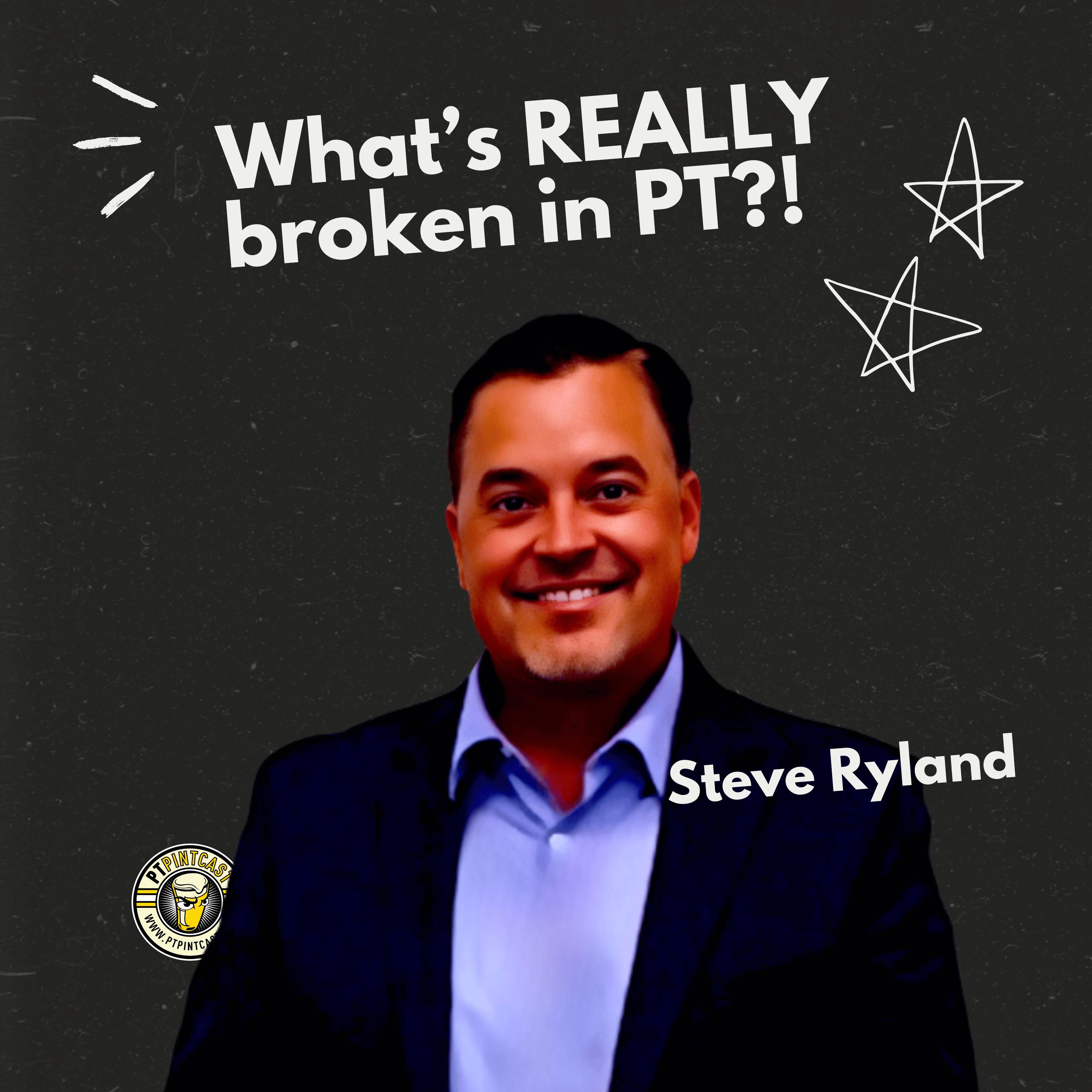


Dr. Steve Ryland joins Jimmy to unpack UPTA, how they're taking action to fight Medicare bureaucracy, and why burnout isn’t a personal failure — it’s a design flaw in the system.
In this episode:
- Suing CMS and calling out policy contradictions
- Compliance fatigue and how AI can help PTs reclaim time
- Building a national pilot proposal with real impact
- Responding to APTA critics and unifying PT voices
- Advice to disillusioned new grads: “Don’t wait to be rescued”
<p>This episode is part of the <a href="/physical-therapy-business-podcast">Physical Therapy Business Podcast</a>, where physical therapists and clinic owners learn how to get more patients, improve operations, and grow their clinic without relying only on referrals.</p>
<p>Looking for more episodes? Explore the full <a href="/physical-therapy-business-podcast">Physical Therapy Business Podcast</a> for real-world strategies on physical therapy marketing, patient acquisition, and clinic growth.</p>
0:02 You're listening to the P.T. Pinecast, where smart people in health care come to make noise. Here's your host, Jimmy McKay. You're listening to the P.T. Pinecast, where smart people in health care come to make noise. Here's your host, Jimmy McKay. Before we kick things off, big thanks to Empower EMR. If your clinic is stuck in an EMR that slows you down, Empower gives you speed, clean workflows, and features clinics actually asked for. Better notes, faster documentation, smoother operations, all wrapped in customer support that doesn't ghost you. Upgrade your clinic's brain with Empower EMR. That's empoweremr.com, empoweremr.com.
0:45 Today's conversation is live, unedited, and intentional. My guest is a clinic owner, outspoken advocate, and someone aligned with UPTA, a new organization entering the advocacy space in our profession of physical therapy. You may have seen some passionate threads online, comments, words. This episode is about slowing down, asking direct questions, and getting real clarity. What exactly is UPT building? How's it different? What's the tactical plan, not just the critique? Today isn't about, like, right. It's about making room for questions that deserve real answers. Let's bring in our guest, Dr. Steve Rowland. Steve, welcome to the show. Hey, Jimmy. Good morning. Thank you. I appreciate you having me on. And you are in the sunny state of Florida.
1:27 Do I have that right? The sunny state of Florida. You are smarter than me. I'm in upstate New York, so it's about freezing. Let's kick this off with looking back a little bit. When did you start feeling like something was missing from how PTs are represented professionally? Was there a moment? Was it just an era? When did you start to feel a shift that whatever it is now, it didn't feel like it used to be? Yeah. And I would say that was, you know, I hate using the word pre-COVID, but that would I would say pre-COVID, you know, because let's be honest, COVID really changed the trajectory of all health care. But, you know, even before then started seeing something, I think it was like back in the mid, you know, twenty fifteen timeframe when You know, that was when things were really changing and dynamics were changing.
2:13 And, you know, I mean, go all the way back to two thousand eleven with, you know, changing different things and policy with Medicare. And, you know. That's basically it. You know, it's been coming on for over a decade. So what was it? I graduated in twenty sixteen. So what what was it? Was it culture? Was it rules? It's probably never going to be one thing. Right. It's got to be a mix. Yeah. You know, it's you talk to any, you know, and I'll focus. I've been in pretty much private practice. I've run a inpatient rehab. I was the CEO of a sixty nine bed inpatient rehab facility. I was the CEO of one hundred and eighty bed facility. acute hospital. So, you know, I've done PT. I've done the other side. I've done a lot of admin. I've treated a lot of patients through the years.
2:54 And it really, it comes down to policy, you know, policy with these insurance carriers, the way that we're, you know, we're not allowed to dictate the care anymore. I feel like we've kind of lost connection with that. You know, a patient comes to our facility, we're being told, you know, you've got to get preauthorization. You've got to get the, I mean, we all know physical therapy. There's, there's no denying that physical therapy saves money. right why are we not getting the recognition that we deserve and and you know and i just want to make this perfectly clear i've been very vocal about the apta i support the apta not financially but again i i just want to give a shout out i know those guys they're in the grunt like we are every day they're fighting the good fight like we are uh do i feel like there's a whole yeah and that and that's you know nobody's perfect nobody's gonna hit it the nail right on the head but you know i think that's why the upta came to light was we felt the the private practice area you know we just felt like we weren't you know hey we're over here you know um things address this is my second time doing private practice so when i came back things were a lot different especially reimbursement policies reimbursement audits all-time hot We can talk about that.
4:09 Yeah, I don't know a single PT right now in the last two years that is either not in an audit or has gone through a TPE audit. So what was it that made you decide that UPTA was the vehicle for that change instead of working with APTA? Because starting a new association is not easy. There's work involved. This is effort. There's a lot of effort. So what made you decide UPTA is going to be the vehicle for that change instead of APTA? I felt like they had a bigger hold on what was going on. Because UPTA is mostly made up of private practice members. We're the guys that are in the grunt right now. We're the guys. dealing with the daily issues. We're the ones going through the TPA audits.
4:49 We're the ones training the Mac contractors, believe it or not. They call it TPE. For those of you out there who haven't been through a TPE, it's targeted probe and educate. Well, the last part of that is the educate. We're doing the educating. Unfortunately, the Macs still don't know what their own policy is. And that's sad. So, you know, that's why, you know, I started seeing Scott Gardner. He's our president. I started seeing some of his posts on social media. And, you know, I reached out to Scott because, you know, I went through an audit. And one of the things, you know, I believe it was an audio cast that Scott had put out for the UPTA. And on that audio cast, they had their company from out west who does compliance.
5:31 I'm sorry, I can't remember the acronyms right now, but I think it was BCMS. And, you know, during that conversation, Scott talked about, you know, being through all these audits. And I was like, holy moly, here's a guy who's been, you know, just beat up by his Mac contractor. So I reached out to him, you know, I got him and I had a phone call. And when we talked, we just felt like we had a lot of the same. And I said, hey, if you ever need, you know, it wasn't him reaching out to me. It was me reaching out to him. I said, you know, I'm going through an audit right now. And he helped me with that. I'm fortunate to say I came out of that audit without any findings, but it's not fun, especially through Christmas. It's like, I want to enjoy Christmas with my family, and I've got these Medicare auditors asking me for all these charts.
6:14 Yeah, that can be frustrating. So I see no disalignment there. I think people are pretty aligned. Many UPTA supporters, understandably, have frustrations with these processes and with APTA. Yes. Noticeably, a lot of energy online isn't spent talking about what UPTA is building. It's spent criticizing what APTA is doing or how it does it. My question to you as a member, don't you worry that that tone or constant comparison could actually underline the mission that you're on? Yeah, and I get it, though, because I'm one of them, so I understand. There's emotion, right? Yeah. And sometimes we say things online that...
6:55 I've always told my staff, if you have a problem, don't send it an email, don't send it a text message, because it's very hard to understand the tone of that. Come to me in person. Let's talk it out. Let's hash it out. So am I going to say we're not guilty? Absolutely not. I'm not going to say that. There's times where yesterday morning, and I think that's what triggered this. I saw something that the APTA posted and I made a very reactionary post. As you know, I deleted it. But you, of course, have seen it before I deleted it because you responded to it. But, you know, there's times where emotion gets the better of you. And I think that's just the state of private practice right now. And I want to say this, I believe it's more than, you know, because, again, I've been in this position where I've not just been in private practice.
7:40 I've been in other facilities and it's PT in general. And let's not discount occupational therapists and speech therapists as well. Absolutely. We're all in this together. And that's what I really want us to get out of this. So it can be seen and it can be portrayed as we're attacking the APTA, but I can honestly tell you behind the scenes now, there's communication between the UPTA and the APTA, and I think that's healthy. I think that's really good. And I think if we, and that's what we need. We need collaboration. Yeah, agreed. And I have to say, you know, honestly, you and I may not see eye to eye. There's been time, but I really appreciate you bringing me on this. And I really appreciate you being professional and having me on here.
8:21 And I've listened to your podcast. I like your podcast. I think you're doing a great thing. Thanks. And I think we need to do this more. Cool. I, I mean, listen, this is what I do. I'll do it more. Don't threaten me with fun. Um, you've said burnout isn't a personal failure. It's a system design problem. Can you remember a time in your career when that became clear? Like when you were like, Hey, as a person doing practicing when that happened. So it's, you know, I think that's a really bold statement. Burnout isn't personal. This is a result of a system problem that we're unfortunately all in. So do you remember when that became like kind of clear and you sort of became front, had that emotion?
9:02 Yeah, again, right, you know, going back to, you know, again, I'm going to go back to it. Audits are, we are a hanging fruit, you know. Mac auditors do not see us as a friend. They're going to say that and they're going to say, hey, these targeted probe and educate. We're here to help. Let's be honest. They're there to basically we're pickable right now. And they're picking on us because I can tell you from being through it now, I will say my back auditor here in Florida, we're first coast service options. She was highly professional. In fact, she called me. She goes, listen, I've been doing this for fifteen years. you're the first time and you know again i don't want to pat myself on the back but i found this to be quite intriguing she said you're the first person in fifteen years that i haven't get off had to get on the phone and say hey you forgot to send me the progress note for this date or hey you forgot to send me the the sign she said everything was organized everything was together and she said no findings congratulations you're free for a year okay great i'm free for a year so a year yeah i get to look forward to it again yay right the fact that you have to do it is still fresh emotionally taxing and taxing on your business Yeah.
10:10 And I kept her number. You know, I appreciated that she gave me her personal number and she said, you know, if we can work together, let's do it. But what I can tell you from a PT standpoint is, private practice that's not the case in all of these you know there's other therapists i talk to right now where they're they're going through in fact i got a friend right down the road who's going through up in st augustine about two hours north of me here um he reached out to me uh late last night and he's he just went through an audit but he had to tell his you know unfortunately let's go back to january first twenty twenty five when everybody said hey let you know We got this win. And don't get me wrong. I know the intentions were good on this. If you get a referral from a physician or an NPP and it's got the date, it's got the signature that's legible and it says PT or OT or speech or whatever you want to do for that patient.
11:01 And, you know, that's you now do the eval, you do your plan of care, you send that plan of care. Don't forget, that's the important part. You have to send that plan of care to that referring provider. They don't have to sign it. But you got to send it within thirty days. With that being said, a lot of the Macs still don't know that. Where's your sign point of care? That's that's a system problem. So these are the frustrations. I have a full time person sitting in this office. That's all they do is track down sign point. You pay that person and that's all they do. That's all they do. Well, not only that, I mean, we have a full compliance plan. You know, I've been down this road.
11:42 So my, and a shout out to Rick Wanda. Wouldn't want to do his job. Really would not want to do his job. Rick and I have not always seen eye to eye. I'm still a gold member of Rick. I still listen to Rick's stuff. He has a job, he serves a very important, but why should we even be in that arena? Why should we be having to fight, fight, fight? And that's where I feel. I feel like we're climbing up a rock hill with no support and one slip and we're gonna go. Don't disagree. So when all you have is a hammer, the world is full of nails. So Jimmy worked in radio for fifteen years. So I look at things.
12:23 I look at words. I gave this lesson a mini lesson. Not like I'm giving you a lesson, but I'll just say what I taught. I think a lot of disagreements that happen in the comments section happen because of something very basic. And this is like almost kindergarten level, which makes it simple, not easy. When someone is expressing frustrations, that's an emotion. Yes. And when someone else is coming back with something tangible or logic, both of those things can be true and you are now talking past each other. I love there's a GIF out there that shows a chain link fence and two Dobermans on one side barking at another dog, a golden retriever on the other side.
13:06 And all of a sudden the chain link, they're barking through the fence and all of a sudden the chain link fence slides out of the way. And then they both just sort of stare at each other. Yep. Neither is wrong, except people want to be seen, heard, and understood. Yep. So if I've been an APTA member for a long time, I hold them accountable every twelve months, as you should. I tell people all the time. I was at an APTA New Jersey student event this weekend and someone said, why should I be a member? And I said, you shouldn't. And then I paused and said, unless you understand what you are buying, membership is a how, not a what. Netflix isn't a membership organization.
13:47 Membership is how you get access to the content. Netflix is in the boredom reduction business. You're in the feeling business. So if someone goes into and pays money to APTA and says, I need to make sure I get my, and I think I did the math, it's X number of dollars to be an APTA national member and then a state member. And then if you want an academy or whatever, let's say it's five hundred bucks. if you're waiting to draw the direct line between pay five hundred bucks put five hundred dollars in the coke machine and get six hundred dollars worth of value out i need to understand what you value i do it because i'm a joiner that's in my dna i like going to the events i got buddies who were like couldn't wouldn't catch me there on my worst on my last day get it neither of us are wrong but if i keep barking at him because you got to join because it's your duty That's Newton's law, man.
14:40 You're pushing on the wrong pain point. I think I said it this morning. Someone asked me, Tony Meritato asked me, why do people go to CSM? And I said, great question. I said, I think I said a lot. It's more like a carnival. it's not just roller coasters or teacups. That's for the person who values... Carnivals are smart. They have teacups because they're like, well, if someone values teacups, we got those. If someone values fried foods, we got those. If someone values games, we got those. If you go into APTA because you're like, I'm going to get my five hundred, I'm going to pay five hundred bucks every year. I'm going to get this out. I need to understand what you think you're getting.
15:20 This is a misalignment. I thought I was going to get immediate relief from my billing. Well, I don't know if APTA, I don't work for APTA. I don't know if APTA ever said that. I'm pretty sure they didn't because this system sucks. I'll say it. It sucks. But so does gravity. And I can't change it. Right. So let me ask you this. This is an unfair question. I'm using air quotes. It's Unfair question. But if you had a magic wand, what is the first system redesign that you would make to actually relieve burnout and frustration at a practical level? You got a clean whiteboard. What would you do? Yes. I mean, first and foremost, I think, you know, let's not.
16:01 downplay who we are we are doctors of physical therapy right the thing that boggles my mind is why do we still need a referral why do we still need a signed plan of care that would that would be my my first thing is let's eliminate that because that's where a lot of us in private practice we spend a lot of our time tracking down planet cares doctors don't read them I haven't talked to a single doctor who said, Hey, I read your plan of care. I love it. You know, and you know, there's a, we have to track these plan of cares down to make sure that we get them signed within thirty days. Right. We walk into the office. We're like, Hey, it's day twenty nine. The little M.A. sitting at the desk.
16:41 She scribbles it. Here you go. What would that remove? A lot of burden. A lot of burden. Don't need a referral. And I've talked to. So I have a direct line. to HHS right now. So I got to tell you a little funny story. So seven, eight years ago, let's call it seven, eight years ago, a good friend of mine, he's a car dealer in town. Great guy. He invited my wife and I to a polo match. Well, at that polo match, Dr. Oz. Big fan of Dr. Oz. So I walk up to Dr. Oz like I normally do. I'm not shy. I'm like, hey, can we talk? And he was very polite. He sat down with me. He talked to me. We talked about wellness.
17:21 We talked about health care. We talked about all kinds of things. We hit it off. And we remembered that moment. And when he got appointed the head of CMS, what's the first thing I did? I reached out to him. He remembered. remember that conversation he's like oh man i remember that day so what does he do he puts me in charge with his he puts me in contact with his deputy director he's the guy that does policy this is the guy you got to talk to you have great ideas talk to this guy so we've been in communication like he gave me his email address he gave me his phone number he's like hey let's talk about these things so you know that that's one of those moments where you know okay Use those moments to your advantage, use the people that you've met through your years of contact, use that to your advantage.
18:08 But these guys, when you're talking to them, they have no idea what we do, none. And it's not, and again, I'm not putting blame on anybody, What happens is these guys get replaced. Right. So let's say we're doing advocacy and we're beating the bush and we're talking to Congress people. And, you know, my best friend is Mike Caradopolis. Shout out to Mike. Mike is really attacking health care right now. He said, Steve, give me a year. You know, Mike used to be the president of the Florida Senate. Mike's a good guy. Mike knows Mike gets stuff done. Mike Mike's very hard to beat. bought right so he's really pushing the he's pushing the envelope now on health care for me and he's he's working behind the scenes and I talked to Mike at least once a week and and his wife now is now you know she walked into a position she was a internal medicine doctor so she's now the head she's actually our acting Surgeon General of the United States so okay had dinner with them the other night you know she walked into that position it's not going to be a full-time position but again She's got to be careful because she works for HHS.
19:09 She's working directly at Kennedy Junior side, so she can't give me an unfair advantage. But these are things that I can do to meander the past. But what I've found over the last year since Mike's been in office, Nobody in Congress, nobody who's making these policy decisions really has a fair shake as to what we do. We're still, we're still looked at as an ancillary provider. We're still looked at, you know, and I hate to use this word, but I'm going to use it anyway. Two words, three words, glorified massage therapists. That's the way. Oh, you guys are the people that rub people, right? So how do we change that? Numbers. Numbers.
19:50 We all have to start. Numbers of what? People. Us. Therapists. We need to wake up. We need a what and a how. Yes. So writing your congresspeople. In those explanations, we need to include this is what we do. We're movement specials. We're not massage therapists. We're not this. And again, let's go back to your question that you asked me. If there's one thing I could do. So the Planet Cares, that's a simple fix, right? Got it. my and i can't talk too much about this because i'm in the early stages of developing this right now i've got ndas and all that stuff but we need to prove outcomes and not just prove outcomes because i can tell you our patients get better and we say but how can we extrapolate that to a dollar amount downstream cost savings oh photo right i mean there are ways to do that correct but it has to go one step further okay to what photo is great you know we can say patient went from this to this let's look at data let's look at real data if that patient was discharged and i don't i don't even like doing the word dish or i don't think patients should be discharged from physical therapy i think you go to your dentist every six months for cleaning you should go to your physical therapist for a checkup right let's check your balance let's look especially patients over sixty five high fall risk you know they've got diabetes they've got all the risk factors so hold on a second before we go too far down i want to make sure i understand if so i don't get lost sure we need Physical therapists in the wild, if they're associated with the group or not, we need a lot of people to do a specific thing.
21:21 Yes. Doesn't APTA do that? They have apps. They do something called a flash action strategy. They've been doing this. I can only speak to you. I've been in a PT for ten years. They've been doing that. But there's only one organization doing it. And I can't speak to it. So is it the number of organizations or the number of people? Because the second you said people. It's grassroots. That's that's the only thing we get done. And here's what I'm going to tell you about the APTA. So they may be fighting behind the scenes for us. They may be doing this. They may be. I don't know if they're fighting behind the scenes. They're they're pretty. Yeah. Well, you know what I mean? You know what I mean? We don't see everything they do when they're in D.C. Right. We don't see the conversations. We don't see what's being discussed at the table, et cetera, et cetera.
22:04 We as we cannot. So I'll tell you. So in two thousand and four. Right. Let's go back to two thousand and four. I just opened my private practices. So I had three private practices, opened them in two thousand wide, three private practices. We got hit back to back to back. In six weeks we had three hurricanes. All right. just devastated this whole area. I live on the Space Coast. We're right near Elon Musk and Jeff Bezos and all the rocket launch. There's a rocket launch that pretty much goes up every day now. We're so immune to it. We're like, oh, look, another rocket. But three hurricanes back to back to back. I remember watching the National Guard coming in here in trucks and truckloads, and people were walking around in a fog waiting for the government to show up to help them.
22:54 They tell, you know, you live in Florida, they tell you prepare, prepare, prepare, right? Get water, get batteries, get a generator, do this, do this. I was prepared, right? So I'm not walking around, I'm walking around, I'm driving around saying, you know, my therapist, we were out of work for almost three weeks. I told my therapist, hey, if you want to, if you want to work and get paid come in here i had the water guy zephyr hills i had him drop off big shout out to them they came and dropped off i don't know a hundred two hundred big five gallon jugs of water and i had my staff going around to our patients and delivering and all that stuff but the point of being is the amount of people that were walking around in a fog bank and that's where We used to be an apathy. I would say physical therapists, we were in a state of apathy five years ago, right?
23:38 I see anger and you see it in the posts, right? We're getting angry. That's a step up and that's where we need to be. I disagree, not to split hairs. Apathy is worse. If I'm actually angry, it shows I want to still engage. Apathy is worse. To me, that's what I'm saying. We were in apathy. We're in anger now. That's better. Oh, sorry, sorry, sorry. I agree with that. Yeah, my bad. Yeah, we need to get angry. We need to get angry. So you're showing me, and this is good, you're telling me and showing me a story of what happens when we don't do a thing and the result of. Yes, exactly. So what do we need to do? Because so far it's get PTs to have a voice.
24:19 So it's frequency, intensity, time, type, volume, and progression. These are exercise principles, but those are also communications principles. So frequency, how often you do it, intensity, the passion with which you do it, intensity, time, type, volume, and progression. APTA has been doing this. Why hasn't it worked from your point of view? If that's what we need to do. Yeah, without being inside the APTA, I can't tell you. But all I can say is, from my chair looking in, I don't see that anything has made that change. And the only thing I can put on that is you know, people in those spots change every two years, every four years, every time a new administration, so. You're saying on the receiving end of.
25:00 Yeah, so it's a constant, it's a constantly evolving process. The only constant is change. Correct. In terms of those people. You get new people, you get new people. So here's what I can tell you though, as patients go, Patients are waking up because what's the first thing a patient does? They call their doctor and they say, hey, skip the MRI, skip the x-ray, just send me to my therapist. Right. We've done a great job of waking up patients. Now we need to wake up the policymakers. Right. And how will you do that? by communicating with the policymakers, by getting the inside scoop. These people are, you know, it wasn't hard to find the deputy director of CMS.
25:41 I'm not saying that we need to bombard him. So my question is, so now you identify your audience. Yes. We go back to what I did, right? I know who I'm talking to. Yep. I have to deeply understand what bothers them, what their hopes and dreams are, and what their frustrations are in terms of the policymaker. Typically, and I don't have a lot of advocacy experience. I do have a lot of communication experience. I have to understand what makes you tick. And then I have to understand what I bring to the table. And where your goals and frustrations cross, if you look at a Venn diagram, and what I can bring to the table, that is our why. That's where Simon Sinek starts. He says, now that I have a why, when I walk in, now you hear your frustrations and goals coming out of my mouth.
26:25 That's when the other person starts nodding. So I guess I'm just like, would you do it more frequently, more intensely, more often? Yes. All of the above. Start with your local representatives. So it just sounds like you're saying I would just do it more and I would do it better. I don't understand how. Yeah. Emails, phone calls, getting involved. Hold on a second. So I'm a communications consultant. Email. Good. That's specific. what would you put in the email that is different than what APTA? Like I, like when a CI used to look over my shoulder and be like, why are you doing that exercise? I'm like, I don't know. It's on the protocol. Not a good answer.
27:05 So if I just said email, I'm like, not enough. I'm trying to see your, what I'm trying to do is have you show me your work, like show me your thought process. So email is great. APTA does that, but how would you do it differently? More often, all capital letters? No, not at all. Yeah. So good point. The first thing I would do is start asking them questions. So One of the things that I've done, very successful action. Let's talk about insurance companies. Let's talk about Blue Cross Blue Shield. I had a really hard time getting in network with Blue Cross Blue Shield. So what's the first thing I did? I picked up the phone. I said, hey, you're down the road for me. Can I come up there and talk to you? Who do you call at Blue Cross Blue Shield to do that? Like, what is that? I mean, you just you have it's a system. You got to go through the numbers.
27:45 yep and you can find out who your local rep is every insurance company has a local rep that's assigned to your area right so you get a hold of that person you drive to them you meet with them you here's what physical therapy does hey can i give you a demonstration can i look can i do an ergonomic assessment for your desk I'm here to help. Oh, my God. I never knew you guys did this. I told Mike that. I said, dude, I'm going to get on a plane. I'm going to come visit you and Stephanie. You're going to take me into these congressional offices, right? These guys that sit on ways and means, these guys that sit on energy and commerce. I'm going to do an ergonomic assessment for them. I'm going to sit down and talk to them. I just need fifteen minutes. Let me tell them what physical therapy does, because a lot of them don't think, you know, and Mike didn't even know.
28:28 He didn't know. He's like, damn, I didn't know you guys did all that. Yeah, that's what we do. So to summarize, your job is more face time with the people who make decisions. We really do. We really got to get, you know, we have to get more involved. We've done it a very good angle with patients. Let's now do it with the people who are writing policy. So that's your how is face to face and like, I like it. Show, don't tell. Ergonomic assessment is not a tell, it's a show. Love that. So you are increasing frequency and increasing the how. Yep. The question is, how often is APTA doing this right now and are they doing that? So that's my point. That's one of my points, which was we have people from outside the APTA complaining about what the APTA is doing and they don't know what they're doing.
29:16 Yep. Yeah, I mean, I'll give you that fair share. I'm not going to disagree with you there. But, you know, you call a complaint. I call it, you know, we really just want change of policy that when it comes down to it. I think everybody does. Right. Both sides agree. That's what we agree on. That's coming out. Yeah. And to be honest with you, I keep reaching out to these guys. You know, I put my contact at HHS. Yeah. And I did apply. So right now, for those of you out there, I believe the APTA put somebody forward. UPTA put me forward. They have not yet selected the HACC Committee, the Healthcare Advisory Committee. So Dr. Oz- HHS has not picked someone, you mean?
30:00 Correct. It's been delayed. It was supposed to be end of November, end of October, end of November. We want a seat at that table. So the APTA put a person forward. UPTA put me forward. You know, my communication with them is, hey, Steve, that position, that board has not yet been filled. We're getting to it. So, again, that's you know, you talk about action. These are the actions we need a seat at the table. Right. IHI Institute for Health. innovation does anybody know who the ihi is it's a big organization in boston they're the ones that write policy when medicare wants to change policy they call the ihi there's not a physical therapist on the ihi board why let's get a physical therapist on the ihi board if medicare is talking if cms and hhs is talking to ihi We need to go to IHI, right?
30:54 You don't want to invest in Tesla. You want to invest in the battery company that's making the batteries for Tesla, right? So let's circle that. Hold on a second. I don't disagree with you. Is this something you think You're going to do, UPTA is going to do, APTA should be doing, or we should be doing. I hate we because I don't know who that's talking to. Let's be honest. I'm not waiting for... I'm on the board of UPTA, but I'm not waiting for the UPTA to... come to my rescue. Now, I'm going to be part of that rescue plan, and the UPTA is really taking some very strong action right now. I'm also not going to wait on the APTA to solve my problems.
31:34 Because our problems are our problems. This is where we most wholeheartedly agree. Yep. I look at membership like I pay membership. Yeah. I close that tab, take a deep breath, and then I immediately continue to work on solving my own problems. This is what I'm talking about with logic and emotion, what I think I'm buying and what actually APTA is selling. If they're not aligned, I can see why people are frustrated. I understand that. So it sounds like you and I understand what the value or lack of value of membership is and we're okay with having it or not because it's a binary decision. But it sounds like you join something and then immediately start working on solving your own problems too, right?
32:19 Where I am confused is when people aren't a part of something, which is one thousand percent OK. And they complain about the lack of results from that thing, from that gym they don't belong to. And they stand outside and yell, I don't have abs. It's your fault. Which yelling, I don't have abs. It's your fault is OK. Right. But I'm allowed to hold up a mirror and say, this feels dumb. Right. And I agree with you. And you know what? And that was my, I probably didn't convey that, but my two thousand and four analogy with the hurricanes, that was it. You know, people are standing around going, hello, like, hello, you should have.
33:01 Hey, you should have prepped. You should have been ready. You should have known we were coming. Where's the Publix is up there, but Publix is the big grocery store down here. Publix isn't open. You know, they got back open when they had when they could, but. You know, don't wait for somebody to come and help you take action now. And that's what I'm saying is as a physical therapist, I don't care if you're in a skilled nursing facility. I don't care if you collect a paycheck because everybody should be asking right now. And I have this discussion with my therapist and I'm like, dude, I want to pay you more. I really do. You deserve so much more than you're making. But the policy right now does not allow that. Now we do have alternate, you know, Hey guys, if you want to start doing seminars or, you know, you want to work and do this and I'll split that with you.
33:46 You know, it sounds like you're saying, I will show you my math and, Yes. I will open my book. But if you can help me increase the left side of my equation, I will help you increase the right side of your equation. If you can help me increase the input, I will give you some of that output. That is the rising tide that lifts all ships. Yeah. And honestly, we just had this meeting last year. We do a staff meeting every year for compliance. We go over documentation and we follow Rick's. You got to have seven principles of a compliance plan. And that's the other thing I say to physical therapists out there. And I want to say to them, listen, Don't give the auditors, don't give the MAC contractors, don't give them fire. You know, don't give them oxygen to fuel their fire.
34:28 You know, make sure that you guys are staying on top of compliance. You know, have a compliance plan. Update your policy. I just posted this the other day on the physical therapy site. And I said, hey, guys, don't forget it's end of the year. Update your policies and procedures. Things have changed. So let me ask you this. We'll switch, but I'll sort of ask you the same question. You have described documentation as compliance theater, which is a great term. I mean, compliance theater. Even as a PT student, I was like, who am I writing this for? I use a different term, self-pleasuring. I was like, this feels like this is for me. It's not pleasurable for me and no one's reading it. It's pleasurable for me. So you've described documentation as compliance theater.
35:09 Great phrase. If you could rebuild clinical notes from scratch, what's the thing, what's the first thing you would change or first or second thing? What would you change? If you could rebuild compliance, if you could remove compliance theater, what would you make it be? Yeah. And well, I, the, the problem was there where, you know, we had to search for words. So, um, I'm going to tell everybody out there, listen, I understand private practice is struggling right now, but if you're not using AI technology, you really need to stay, you know, AI is not going away. It's not going anywhere. And we use AI. You know, I use prompt. I'll just be transparent. You know, I, I, I've done, webinars for prompt discussing prompt, you know, there's other great programs out there.
35:54 Don't, I don't think prompt is the only one out there. Sorry, prompt, but, um, you know, they do have an all inclusive tool where, you know, I, so I've gone in and here's the other thing too, is, um, I don't claim to be a compliance expert that that's Rick's smart enough to hire Rick and listen to him. Yes. Yeah. And I'll get, it's funny story. So you're probably not, uh, you haven't been in the profession long enough to know Steve Levin. Steve Levin was the Rick Gawanda before, you know, Rick was still around, but Steve was the, you know, and Steve reached out to me. Steve was from Florida and Steve reached out to me and actually I reached out to Steve. Let's backtrack.
36:34 So I called Steve and first thing Steve said when he picked up the phone, you know, his secretary got him on the phone. He goes, what letter did you get from Medicare? They already know. They know why you're calling. Yeah. I'm like, huh? I didn't get a letter. I said, I want you to come up for a couple of days and go through my practice and tell me what I'm doing wrong. So you were preempting the letter. You were like, how do I not get the letter? I don't know what I'm doing. I mean, we're going back to two thousand and five now. But, you know, and he drove up and he's like, man, I got to salute you. You're the first person I've ever called me, you know, before you received the letter. But, you know, he spent two days. He told me, you know, you're doing ninety five percent right. But, you know, do this, do this, do this with those five percent. Right. And he helped me in and we stayed in contact, unfortunately.
37:17 You know, he passed away tragically in a car accident in Costa Rica. But, you know, he was active with the APTA. If you talk to the APTA guys, they know who Steve was, you know, but now Rick is filling that spot. So I don't claim to know the compliance, but I know enough to make myself dangerous. But if a physical therapist reaches out to me and says, you know, how do I do this? How do we do this? I feel compelled to help that person because by helping them, it only helps me, right? I'm not doing the job for them, but I'm going to say, hey, if it's a compliance issue, call Rick, right? If it's something else, you know, hey, I can help you with that. You need, you know, hey, try this, like prompt.
37:58 I told him the other day. In and of itself, it's a vanilla shell, right? But if you go in and put the compliance feature, so there's a toggle in prompt that says you wanna do custom documentation. Well, as soon as they told me that, I'm like, hell yeah, it's game on. So I created templates for my therapists. So when they're doing their evals, they're doing their progress notes, they're doing their daily notes, they're doing their discharges. It's got all the, it's got all the Medicare stuff built into it that the word salads that they're looking for built into it so that the AI technology then puts it into the notes. So that's saying â it sounds like you're saying, hey, listen, make sure you're using a chainsaw because we used to have an ax, but now that there's a chainsaw, you're not using it.
38:42 That's on you, right? So that's how to go through this. That's what power tool to use to get the tree down now. But if you were able to completely rebuild clinical notes from scratch â What would you do? Japanese ideas are better. For some reason, Americans are like, what do we add to it? It's like, what do we take away? What does it mean to be there? So if you can even go further upstream to rebuild compliance theater, or I should say, change, remove, what would you do to compliance theater? What only needs to be there? OK, so we all agree that physical therapy saves money, right? There's no disagreement there.
39:22 Now, we can get in the argument of private practice versus chain clinics versus hospital based. And again, I'm not I'm not going to get into that discussion right now, but let's just talk as a whole, right? So we know that we save insurance companies money. Insurance companies know that we save them money, hopefully. But if I could change documentation, when I first got into this business, documentation was so that if I called out sick, the therapist who came in after me knew exactly what I was doing with that patient, right? It wasn't that I had to use the word educate or I had to use the word verbal cues or all this. It's like, oh my God, what do I gotta do?
40:04 It's very time consuming. Now, AI has helped with that because my therapist, when they walk out at the end of the day, their notes are done and I know those notes are compliance and I can run reports behind the scenes to see what they're billing, how they're billing. Are they under billing? Are they over billing? And I can have those conversations with them. But really, documentation, you know, the tenth visit progress note, let's go there. Really? Do we need a tenth visit progress note? I mean, I get it. So it sounds like everything you've said so far, correct me, make it lighter, simpler, make it more, like, what are we doing? Why are we doing this? I was very confused when I was a student. I'm like, who am I writing this for? And they're like, for the EMR. And I was like, no, no, that's not a who, that's a what.
40:44 What are we doing for? And then I was explained in not so many words. In case, right? I mean, this is literally what I was taught. Write as if you're going to read this in court. And I was like, what are we talking about? I'm going to write ten thousand notes in my career. Maybe two are read in court. I don't know what my batting average would be. That's what I'm doing all this. And that's where I think your phrase compliance theater hits the nail on the head. Oh, this is performance. So it sounds like. Faster is the outcome, but lighter and lighter is a good word. Simple. Like, what's the point? Understand what the point is for first. Who's the who is reading this? It sounds like it's for and you can make you can make one piece of content, right?
41:24 I mean, whoever called EMR or notes content, but it is. It should be for the next therapist. It should be for the continuing medical record for the patient. So in case that follows them, the next, next, next therapist knows what's going on. And tertiarily, it should be to defend what... I mean, really what it is, it's defending what we're doing. Not explaining it, right? Because when someone says, write this... as if you'd be okay with it being read in court, I feel like I'm immediately the defendant. So it's change it from defense to not offense, but explanation. Like a useful rule instead of a necessary compliance theater. Right. We should have... the ability to put our hands more on patients and educate our patients rather than sitting there burying our face.
42:09 Because I do consulting. I go around and I see, I don't do as much of it as I did previously, but I'll go into clinics and what's the therapist doing? They're buried in their computer. It's like, really? Unfortunately, it deters from what we're really trying to accomplish. Don't disagree. All right. That makes sense. You said fragmentation is hurting the profession. I don't disagree. But starting a new organization could be seen as adding to that. How do you reconcile that tension? I don't disagree with starting a new association. I'm just trying to... Yeah. And I think in the UPTA, we're not going away. You know, there's been things that, oh, you guys will be gone in a year. You'll be gone in two years.
42:50 Now with the board of the UPTA, you know, it's a constantly moving target. There'll be people that drop off and people that drop, drop, drop in. But our intentions are good. And, you know, when you put a group of people together who have the same goals, the same, they want the same outcome and they're working together. you know, we're not going anywhere. So the UPT, yes, does it, but you know, it's like the guy down the street that's going to, I always tell my therapist, I'm not going to make you sign a, you know, people come in and go, do you have a non-compete? No. You want to open a clinic? I'll help you open the clinic. Right. Right. Because competition is healthy. And if you're going to do it right, I'm going to show you how to do it right. And then we'll work together because that's only going to help me in the long run.
43:32 Initially, I may lose patients to that clinic down the road. But overall, and I've seen this happen, you know, when I first started this, you know, the building I'm sitting in, I started in two thousand and two. There's now four more PT clinics within three miles of me. I'm seeing more numbers today than I was back then. It's a good thing, right? People know physical therapy, right? If it wasn't needed, they wouldn't be able to open because they have to pay overhead and people. Yeah, right. So what are the goals... of UPTA. They seem similar to APTA, and even if they're the same, that's okay. How will they do them differently?
44:12 So when UPTA was formed, that is what I asked, and I was told it's coming. Yes. And I don't... And it might be somewhere that I haven't seen, but as Katie asks, does UPTA have a public-facing information that all PTs and PTAs can access without being a member about... What will you do? These three questions. What will you do? How will it make my life better? In what ways? And then what do I need to do to get it? I'm getting membership or whatever. But how? Vision without a plan is a dream, right? So help me understand how we go from frustrated to alleviated. And this might be an unfair question to ask you because you aren't an association. This is a thing.
44:53 But why do you belong? How do you see it as a road to what you want to get to? Yeah. So our biggest goal right now, you know, we have targets, but our main goal right now is policy. We want to we want to change policy. Right. So our first move that we did and kudos to Scott for doing this. But, you know, he found a law firm that deals in this. And, you know, we filed a we filed a federal lawsuit against CMS, you know, welcome. Hey, Scott. Kennedy Jr., welcome to your new position. Here's a lawsuit from... And I'm sure he's not reading them. It's some lawyer somewhere doing it or whatever, but... We don't have the ability to, you know, we can say, I don't want to take Medicare, but we can't technically opt out of Medicare.
45:38 Right. So that that holds us accountable to still being an ancillary provider. Right. So when the lawyers reviewed the policy language, they said two things. It violates the Commerce Act. Right. Free trade, the ability to see patients without restrictions. And number two, it violates the Fifth Amendment. And they said, this is kind of a no-brainer. Now, typically when these things happen with CMS, we're going to go to the table and there's going to be some type of mediation and we'll meet in the middle. But hey, if a doctor can opt out of Medicare and not take Medicare and then still charge what that doctor wants to reasonably and necessary, absolutely we should be able to do that.
46:19 So, you know, that was our first step. Okay. So let me ask you this. So you've done that. You've taken a very, very specific action. Yeah. Like no notes. My question is, in three years... If that lawsuit doesn't produce tangible results that your members can see, are you now in the same boat as APTA where you're standing there saying, we did stuff and the members are like, keep dropping one hundred and fifty bucks a year, but nothing happened. And then you have to say, don't hate the player, hate the game. No, that's the risk. You know, I'm a risk taker. My wife, we like to go to we like to go to Vegas. My wife's a gambler. Right. She'll sit at a blackjack table all night. Is that what you would say?
47:00 Hey, like, yes. No, I know. I would not say that. But, you know, again, then what would you say? we're not going to take, yeah, we're not going to take no for an answer. We're going to get an answer on this. The attorney's pretty, you know, it's, it's going to go to mediation. Something's going to happen. It's not like, no, it's nothing in life is guaranteed. We may lose the case. We may lose the case horribly and we fall flat on our face and try this. I'm down with it. Yeah. And we have other avenues behind the scenes on where we're going to evoke change. You know, we just submitted a, um, The CMMI, right? So Center for Medicare and Medicaid Innovation. So to my knowledge, somebody can correct me on this.
47:40 There's never been a innovation. Basically, I guess we could call it a test pilot where does physical therapy save money, right? So I'm laying there one night and I'm like, what I normally do. staring at the ceiling going, what can I do? You know, what can we work on? So I got up and I looked, and that's how I found the IHI, right? Because IHI works directly with CMMI. And I sat there most of the evening and typed up a CMMI where I want to do a pilot study with physical therapists, right? I want physical therapy, private practice, In the United States, take a pilot project.
48:23 Now, I don't know if this is going to get approved, but again, if first you don't succeed, try and try again. I'm not going to let it fall on deaf ears. I can keep resubmitting and resubmitting and resubmitting. So I ran it by the board and the board said, yeah, this is great. Let's do it. So we submitted it on behalf of the UPTA because we felt UPTA would be, you know, and we submitted it to the powers that be. And ta-da it got submitted to cmmi now i hope that goes through and then we can start looking for private practices because it's going to be very specific and they're going to track data and we're going to see does private practice versus something else you know what are the hospitalizations what are the opioid use what are you know falls etc but these are all the things that we're doing we're navigating do i know if the apt is doing it or not no i don't i don't know what they're doing they may have i know that they did put um somebody forward for that HHS hack board, which is good.
49:15 You know, these are all good things that we can do, but we have to keep chipping away. We cannot, we cannot be complacent. We cannot be complacent. All right. So let me ask a more fair question. A young PT comes to you and says, I'm disillusioned. What's the point? Why should they believe in UPTA and what would you tell them it offers that another organization doesn't? Essentially, what do you do? How does it make my life better? And then what do we need to do to get it? How would you explain their terms? Absolutely. I actually just had this happen. I take a lot of students, right? So I just had two students. My student just left in early December. She's going to be a great therapist, by the way, and hopefully she's watching this.
49:56 But I just had this conversation and I told her, do both. Join the APTA, join the UPTA. Join both. There's no harm in that, right? But again... And then do what, though? Why? That's not a normal response. I like that. Why do both? What should she do next, though? She's got to do something. Taste. Yes, and be active. I tell people what organization you're in, and then ask, what are the free resources I can do? Join every free committee, get every email, and then just taste, and then slowly unsubscribe to the ones that you're liking. Yeah. So, you know, she was at my side for twelve weeks. So she I taught her through tangible action.
50:37 Right. She was in on the meetings. I let her sit on some of the discussions that I had with my contact up at HHS. And she got to see and she's like, oh, my God, there's so much that goes on behind the scenes. But it was awakening for her because, you know, and nothing to the universities. I mean, I'm not against that, but she's like, you guys should teach a class on this. You guys should teach a class on, and how many students, I don't know, maybe you know this, Jimmy, how many PT students do we have in the country right now that are in school? I think there's ten grand, I think there's ten thousand graduating every year. Yeah, could you imagine if every one of those ten thousand were to, like, write a letter or get involved? And I know the APTA's working on doing that with the students and stuff like that. Right, right, right.
51:18 So this is where I get to step back in and say, that is very simple to ask, that is very difficult to do. Yeah. You've posted something on social media. anybody has getting even people to click like even if they agree with it so you saw it you agreed with it but you didn't do anything about it why because attention and time are finite so it is i do not disagree but i will say it is simple it's just not even if you have a hundred thousand do the math on this i let's say we have a hundred thousand paying apta members go to their youtube channel they don't have a hundred thousand subscribers last time i checked they don't have a hundred thousand anything because getting people to do one extra thing is simple just do this just do this one thing because it's never one thing it's do this one thing now and then another thing another thing and eventually it's not that easy No, I get it.
52:09 I've got thirteen physical therapists. Good luck trying to get them. Hey, guys, take time out of your day and hey, I need you to send this email. Right. So behind the scenes, that's what the UPT is doing. We create links. We make it easy. And, you know, an APTA does this, too. And by the way, when APTA sends out that link, I'm still filling out the APTA link as well. Yeah, because you said numbers. It kind of doesn't matter who they're, right. Yeah, agreed. Right, it's volume. That's what we need to do. We need volume. And we need, and again, yes, I agree with you. And I think both organizations serve a purpose. I just want to see more collaboration. That's my biggest thing is I just want to see us come together as a profession.
52:51 I want to see, you know, because here's what the policymakers want, you know, and the insurance companies want. They want us to be disagreeing, right? Because it causes weakness. And when you have weakness, they pretty much win, right? These insurance carriers, it's not getting easier. You know, I opted out of UHC and Optum and I actually know physical therapists right now that are getting audit. This is disgusting. And this is, you know, another thing not to get into a legal argument, but I got a therapist right now. She's in Southern Georgia and the poor thing, they're going back seven years. So she's been out of network since day one with UnitedHealthcare Optum. they want retroactive payment.
53:33 They haven't even seen the damn notes, but they're saying it wasn't medically necessary and we want all this money back. So she's like reaching out to me, what do I do? You gotta fight it. You gotta fight it because if they get what they want and I can tell her, hey, just stop taking UHC patients, but that's not a win. It's like that's on the patient, but that's where we need policy. That's where we need to fight back and say, and I told her, I said, you know, we need to band together and fight this. You know, there's basically what Optum is trying to do is, and I know this is coming for me too. I opted out of Optum UHC because I didn't want to accept the, the measly amount of money that they want to pay me for a visit because it's not worth my time, energy, or effort.
54:15 But I know now that, Those patients are still coming to me because they want a good quality service. And UHC Optum is now paying me twice what they would have paid me if they would have just come to the table and sat down and talked to me. At some point, they're going to audit me and they're going to want retroactive payment because that's their way to scare you away so that you just drop them because they don't want to pay that, right? Let's be honest. The insurance company's job is to keep the money in their bank account. That is right. Understanding the physics of the environment you're in is terribly important. And understanding what their goals are and what your goals and where they are aligned and where they are not aligned. We got about six minutes left.
54:56 I want to be respectful of time. Last question, then we'll do the parting shot. So last question is, what does success look like in five years? for you not just with upta but like what what would success look like in five years something like realistically right like this is no magic wand but like what when what would you sit down in five years and say yes we have succeed we have achieved success and i'm purposefully leaving that open-ended Yeah, I mean, honestly, I'm not stopping. I've got another clinic I'm opening next month, you know, February. Hopefully, you know, if the contractors can get the build out done, we're opening. So I'm not stopping. I'm not letting reimbursement. I'm not letting policy. I'm not letting audits. I'm not letting that get in my way.
55:37 I'm still doing what I'm doing and providing good service. And, you know, we just have to keep fighting a good fight. And, you know, my success for me is to not give in. You know, I left the profession. For a reason, I felt burned out. I was just like toast. I wanted to go do something else. I went and worked for a stem cell company. Then I ran an orthopedic company and then I went to work for a hospital system. And honestly, my true passion was like, there's still work to be done. So crazy me in twenty twenty two. Hey, let's scale three clinics in eight months. You're out of line. Right. Got it done. But but again, you know, success for me is. Taking care of the people. We have a family here, right? I've got therapists that worked for me twenty years ago that as soon as I popped my doors back up, they were like, I want to come work for you.
56:20 To me, that's success. I want to build an environment where physical therapists can come in and this they can treat autonomously. They can treat the way they were taught and we can continue. I mean, Nothing like the daughter who brings in her mom, who's ninety four years old, who's got her first case of vertigo. And she's like, the world is ending. And she walks out on visit number two and she comes in on visit three and she kisses you on the cheek and says, you saved me. I'm so much better. Thank you. You know, that that's why we do what we do. So to me, success is putting my hands on more patients, spending more time with the patients, less time documenting. You know, these are all changes. But, you know, really.
57:01 As a group, that's where we need to come together. We need to come together and say enough is enough. I'm not taking it anymore. And I see lots of posts on these different pages about we need to start a union. We need to start a union. So that's something else I'm working on. It's not a union. It's an independent practice association. And there's a few of them out there right now, but. we're in the process right now of building that independent practice association, but we have lawyers involved, which takes time, energy, and effort because we want to make sure, because we know as soon as we start that IPA, and it's been done in general physicians, it's been done with OBGYN, my good friend who's an OBGYN down the road, he said best thing he ever did was he joined that practice association. The main thing you got to be careful of with collective bargaining, you can't just go for higher reimbursement.
57:46 You got to do other things. You got to do compliance. That's where We bring in other people who, and we create a newsletter, whatever we do, but it's in the infancy stage now, but we're gonna run that through as a separate division of the UPTA so that we can give something tangible to the physical therapist and say, hey, belong to this IPA and we're gonna go to bat for you on reimbursement. But it's a big, as most people can tell you, that's a huge uphill battle to take on. So we wanna make sure that we have all the infrastructure in place first, that we have the attorney in place That is, you know, going to make sure because, you know, when you start going when you start hitting the insurance companies where it counts in their pocketbook, they're going to fight back. So we know that.
58:26 But that's kind of it in a nutshell is, you know, I'm not going to stop. I'm going to I'm going to keep working tirelessly. All right. This is the parting shot. One last mic drop moment. No pressure. Just your legacy on the line. All right, Parting Shop, powered by U.S. Physical Therapy, a nationwide network of clinics focused on developing clinicians, not burning them out. Leadership tracks, mentorship, career growth, and the stability to build your future in PT. If you want a place that supports how you want to practice, visit usph.com. That is usph.com. Also, I do want to thank our nonprofit of the episode, Team Gleason, a nonprofit founded by former NFL player Steve Gleason after his ALS diagnosis.
59:11 their mission to help people living with als stay independent connected and purposeful for as long as possible that means providing advanced communication devices mobility gear personalized tech and even life experiences designed to give people living with als more control over their lives until there's a cure there's team gleason no white flags learn more at team gleason.org all right uh parting shot your last trap uh chance for a mic drop moment soapbox statement whatever you want uh give it away Yeah, it's all about collaboration. It's all about, like I talked about, we need to join together. You're right. When we take jabs at something on social media, it's basically out of frustration. And it's really what we want to do is we want to evoke change.
59:54 We want to wake people up. You know, it's not that we, again, the APTA serves its purpose. The UPTA serves its purpose. We're all on the same path together. But that's the main thing. You know, dentists, doctors, I see I'm friends with all these people in the community. They collaborate. Yeah. The PTs down the road, they don't want to collaborate. Why do we not do that? There's plenty of business to go around. We really need to start. Every setting needs to come together. We all need to come together. We really need to just start waking up and saying, we're done. Real change is going to happen. As the Beatles once said, come together right now. As former APTA president Sharon Dunn said, we are better together.
1:00:34 Steve, appreciate the time. Thanks for the hour. I loved it. Thanks, Jimmy. Appreciate it. Let's do it again. All right. That's it for this one. We're just getting warmed up. Smash, follow, send it to a friend or crank up the next episode. Want to go deeper? It is at PG podcast.com or find us on YouTube and socials at PG podcast. And legally, none of this was advice. It's for entertainment purposes only. See Keith, we read the script. Happy now.