If the Brain Can Change, Pain Can Change | Dr. Rachel Zoffness

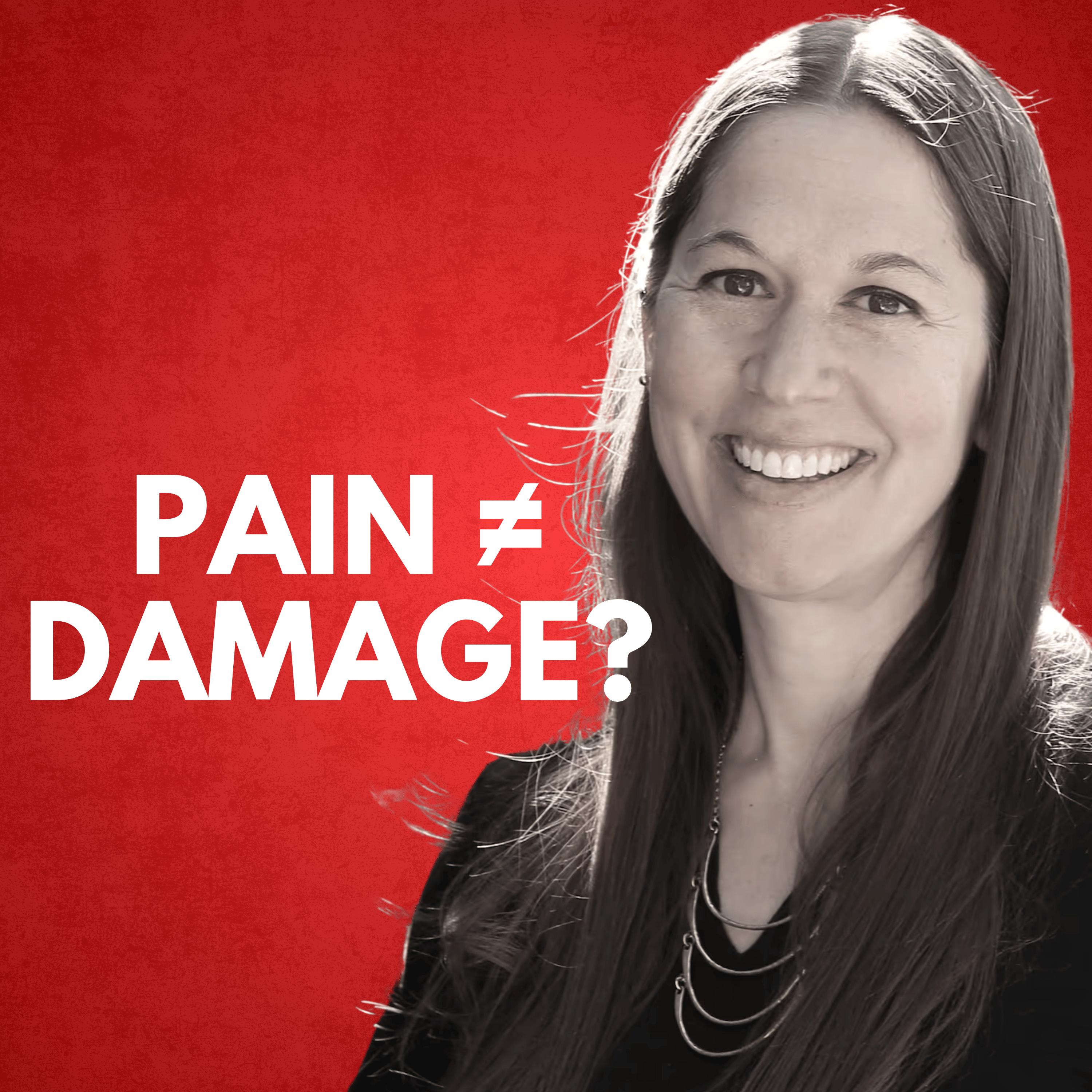


Guest: Dr. Rachel Zoffness – Pain Psychologist | UCSF + Stanford Faculty | Author of Tell Me Where It Hurts
Topic: Revolutionizing Pain Education and Treatment
What You’ll Learn in This Episode:
- Why the brain—not the body—is the control center for pain
- How chronic pain can be managed and treated (not just medicated)
- Real case study: “Sam” and the power of biopsychosocial care
- Why PTs, MDs, and psychologists must collaborate
- Why medical education fails to teach modern pain science
- How you can create your own “pain recipe” for better outcomes
- Behind the scenes of Rachel’s new book, publishing journey & outreach
Links + Resources
???? Website: zoffness.com
???? Book: Tell Me Where It Hurts — Order Now
???? Follow: @TheRealDocZoff, @drzoffness
???? Want Rachel to record your voicemail? Preorder and submit at zoffness.com
<p>This episode is part of the <a href="/physical-therapy-business-podcast">Physical Therapy Business Podcast</a>, where physical therapists and clinic owners learn how to get more patients, improve operations, and grow their clinic without relying only on referrals.</p>
<p>Looking for more episodes? Explore the full <a href="/physical-therapy-business-podcast">Physical Therapy Business Podcast</a> for real-world strategies on physical therapy marketing, patient acquisition, and clinic growth.</p>
0:00 You're listening to the P.T. Pinecast, where smart people in healthcare come to make noise. Here's your host, Jimmy McKay. Thanks, Voice Guy. She asks if I need a bio. We'll get to the guest. Do you want to say thanks to Sarah Health First, the remote care platform helping clinics boost revenue without adding staff? If you're going to be at CSM in Anaheim, look for Stephen Cohen. He's the guy behind Sarah Health. He always wears a tennis ball colored track suit to conferences. Ridiculous? Yes. Does it help him stand out? Also, yes. Sarah essentially automates daily patient check-ins via text, which means no app, no logins. God bless. Love it.
0:40 Just better outcomes. It's a simple way to meet RTM requirements that improves follow-through and actually gets reimbursed for care between visits. SarahHealth.com. That's Sarah without the H. I know a lot of Sarahs out there when they order their lattes, it's like Sarah without the H. But there is an H because it's also health. So SarahHealth.com. Now we'll get to the big fancy intro. She's been called a pain psychologist, a pain scientist, a pain educator. I'm sure a few other pains, but her real title might be Myth Slayer. What do you think about that? For decades, our health system has taught pain all wrong. And today our guest is back.
1:21 A return guest is back to here to flip that script. She's treated patients like a six year old kid whose life was swallowed by migraines and mixed diagnoses and then helped them reclaim their lives with science. empathy, and zero magic pills, which is good because magic pills are expensive. She's written bestselling books. We're going to talk about that. Taught at Stanford and UCSF. We're going to talk about that. And her work sparks more viral clips than your average TikTok doc. For a while there, she was on my Instagram feed every eleven minutes. She's on a mission to radically reeducate both patients and providers about the true nature of pain. And you're going to want to take notes or just read the transcript because I'll provide that. Welcome back to the show, Dr.
2:01 Rachel Zoffness. What an intro. That was awesome. Just as we're hitting record, she's like, do you need a bio for an intro? I'm like, yeah. Listen, I am not great at a lot of things, but reading intros is one of them, right? No, that was pretty... I am impressed. Also, I sort of miss all that fun podcasting, Instagram stuff that used to be happening, but I have been in a book writing hole for three effing years. Excuse my language. I will not do that again. That was brutal. I was literally going to ask. That was going to be one of my first questions. Where did you go? Where have you been? I walk around with my chest out when I have read a book.
2:44 I'm like, I don't want to brag, but I just read all these books. And it's not a picture book. It's a chapter book. And I do that and I am It's like the difference between climbing a mountain and building a mountain. I've climbed a hill, but I'm building a hill. So before we get to the insides of the book, why? How did it go? Three years? Did you want to quit? What does writing a book look and feel like? I still want to quit. Like, I'm supposed to be doing a book tour. I'm like, can I just lay on the floor for six months now? I'm so tired. OK, I know. What's the honest answer? The honest answer is like, as you know, I'm a nerd. I'm a real nerd.
3:25 And I always wanted to write a science book. So forever. Yeah. But so Oliver Sacks was sort of my hero in college. Do you know that guy, Oliver Sacks? is a neurologist he's no longer with us but he wrote a bazillion books one was called the man who mistook his wife oh i've seen that one yeah i know that one right and there's a movie called awakenings based on a book he wrote that you know starred robin williams you've seen it yeah yeah i loved the way that oliver sachs would take complicated science concepts and use patient stories and distill the science down and suddenly you were like wow i didn't realize i was interested in aphasia but now i am you know and and so this was sort of a passion of mine for forever like how do i take the science of pain you know i've been studying pain neuroscience and pain biology for the last thirty five years you know and for me i was like how do i take this and you know i mean you're down this pain rabbit hole you know how complex it is how do you take this incredible science like these sixty five years of neuroscience and and translate that yeah for like the lay public because in my mind Pain isn't just a thing that affects pain patients.
4:43 I'm using hard air quotes there. We are all pain patients. Pain is coming for every single one of us, whether it's back pain or childbirth or living in an aging body. So we should all understand how it works. So that's how the book originally was born. It took forever to get a literary agent, my dude. That is a non-casual undertaking. So do you... Do you pitch, I got an idea? Do you pitch, here's who I am, let's come up with an idea? How does that work? I've never done that. Right. So for anyone interested in writing a book, it is not a casual undertaking. You have to first query literary agents and you have to find the right literary agent. Because if you want to write a fiction book, it's a different set of people, right, than represent nonfiction books.
5:28 And you want like a badass nonfiction literary agent. And when I pitched literary agents originally, they were like, well, you seem smart and interesting, but you don't have a platform. And I was like, what is a platform? I'm seven hundred Instagram. Dude, at the time, I didn't know. I was like, I'm seven hundred years old. I wasn't using social media at the time. I was like, are you telling me I have to teach myself? So, yeah, I went and taught myself how to use like Twitter back when med Twitter was a thing and Instagram. We've we've all left. Right. I've I've left. Right. I'm just making sure. I'm not the person who just left the party and is still going. Yeah, I left. No, I mean, I know. I want to say this carefully because Twitter is still there. X is still there. But Med Twitter, where all the doctors were hanging out, migrated over to Blue Sky.
6:11 So I kind of followed the pack. I was like, I'm on this thing because I want medical education and pain science and all that stuff. So everybody left. Yeah. So I migrated too. So let's say you find Ballpark. How many literary agents did you pitch? Oh, gosh, I don't know. Fifteen to twenty, probably. And then are you like walking and you're pitching because they're the ones sort of in the driver's seat? Like, are you shark tanking? Yeah, you're pitching. You're pitching them. You're querying them. And then they say yes or no. And then ultimately, when all of the podcasts I was doing were for some crazy effing reason, we're all going viral. Don't ask me why. I still don't know why. I mean, there's so many.
6:51 And you distill things down. We already discussed this. Working on that. I'll say it so you don't have to because you're smart and you take this thing that touches not just pain patients and you help people understand it in a myriad of ways. That's why it goes off. So I'll say it. You don't have to brag. I will. Here's hoping. But it was when those things were going viral that finally agents started paying attention. So then I got a book deal. And so I've spent the last three years writing a book and it's called Tell Me Where It Hurts. And it comes out in March. And I'm so nervous for people to read it. I'm like disproportionately nervous. Good title. You like it? Tell me where it hurts. I mean, how many times, I mean, that's relatable to any medical provider, but also any person has heard that. You've either said that or heard, this book is for people who have heard or said, tell me where it hurts.
7:35 Like, ta-da, that's across the top. I'll take my nickel now per episode. So who is this book? Who do you hope reads this book? We'll get to other things inside the book. But when you were like three years old, Is not a short time. It is roughly. Nine hundred plus days. I'm not a math guy. When you were sitting there, who were you hoping this like was who was who? What does success look like when you hear back from someone after you've hit the New York Times bestseller list and people like this book did X? Who is it for and what do you hope it did for them? um when you write a book and when you pitch a book to the publishing houses you have to give them your main audiences so i'll give you my top three audiences good good good good that's a good exercise thank you so much and also i really i'm jealous you're drinking bourbon it's eleven thirty a.m here i sort of want to for folks listening jimmy and i had like a happy hour together during the pandemic the pandemic happy hour that was a fun thing i sort of wish we were doing that again Yeah, maybe we'll do that again.
8:39 We'll do that next pandemic, but who are your three audiences? Next pandemic. Three audiences. One is healthcare providers because there are healthcare providers across all disciplines who want to understand pain and who have had a dearth of pain education and they want it. I mean, I'm talking PT, OT, nursing, pharmacology. Physicians across all physician disciplines. Lord knows, you know, there's so many anesthesiology, cardiology. I mean, is there one domain of medicine that pain doesn't affect? Right. And then, of course, psychology. So all health care disciplines. Also, my second audience was patients. So people living with pain. And that's again, that's sort of all of us. And then my third audience is people who just love science.
9:21 Like we know right now there's a big wave in the healthcare world. Like people are listening to- That's right. Let's go. Yeah. And we're all interested in what's going on with the human body. So I really wanted people who were interested in science to think this book was interesting. How do you... do that because those are not like if your base of support here, if you were trying to like tow both lines, those are, those are why like talking to both of those audiences at the same or all three of those audiences at the same time, couldn't have been easy. Right. Well said. Um, the answer is for me when I'm writing and when I'm talking, um, I'm always trying to think about like the lowest common denominator.
10:02 And what I mean by that is like obviously not dumbing it down and not talking to people at all. Right. I just want to take the most important stuff and use easily digestible language because pain neuroscience is gnarly. It's just gnarly. And I know that like the level of understanding of science for a health care provider will probably be different than the level of understanding for like. Joe walking down the street with back pain. So I have to sort of find a happy medium where I'm using legitimate scientific terms, but I'm also explaining it in very approachable language. So just finding that. I'll reiterate, because I love science communication. It is not dumbing it down. I need to hone this down a little bit, but I tell people, if you've ever resized a picture on an app, if you sort of do it and you made it out of proportion, that's dumbing it down.
10:50 What you want to do is you want to keep it in proportion. You're like, I'm going to keep it as smart as I can but just bring it, make it more digestible. Like I love that word for some reason, digestible, which is simple, just not easy to do. Cause sometimes science is complicated. So it's like simple to do. It's just not easy to do. That's why when someone does it well, it typically lands. So now let's get into the book, right? Well, let's get into the concept. What do we typically get wrong about pain? And I'll frame it for you, for our audience in healthcare, And why does that matter? What do we get wrong in healthcare about pain? Why does it matter? Where do I start?
11:31 Wherever you want, you're in charge. I mean, what do we get wrong in healthcare? First of all, healthcare remains rooted in the antiquated biomedical model. And what do I mean by that? For forever, we have labored under this erroneous belief that pain is a purely biomedical problem, something to do just with bones and body parts, that requires a purely biomedical solution. We have known for literally sixty five years of neuroscience that pain is a biopsychosocial problem. And what that means is a whole person problem requires a whole person solution. And what we have seen in medicine is that our treatments aren't working like if they were working.
12:17 wouldn't they be working chronic pain isn't going down it is on the rise like rates of chronic pain today are higher than they've been ever before and we have this opioid epidemic that we're all sick and tired of hearing about you know we know the science on opioids like great for acute pain not so great for chronic pain i mean we we have known the science of this for so many years so I think there's a lot of problems in healthcare. And I think to me, one of the most glaring and egregious is the lack of pain education. So there have been a zillion papers published. My favorite one is from twenty eighteen, showing that ninety six percent of medical schools.
12:58 Good thing you're drinking bourbon for the statistic, by the way. Ninety six percent of medical schools in the U.S. and Canada have have zero dedicated compulsory pain education i'm going to say that again that's a lot six percent of our medical schools have zero dedicated compulsory pain education and yet the first person we go to obviously when we have pain is our doctor i'm not saying doctors aren't important doctors are very important but my physician colleagues are very frustrated because they haven't received adequate pain education and it's not their fault they want it And one of the first things that they hear when they're with a patient is, it hurts right here.
13:39 Or one of the first questions. Tell me where it hurts. Tell me where it hurts. See, you went upstream. You knew exactly. It's not a good title. It's a great title. I'm so glad. So you mentioned, and I agree, that statistics alone or lessons alone don't land. But in the book, you don't do that. You tell a story. Kid named Sam. What did his case teach you about the brain-body connection? Because stories are the driver. Like, I need all my colleagues to hear this. We know this. This is why we have fairy tales. It's a story with a lesson. Story, lesson, right? So let's talk about Sam. What did Sam's case teach you about the brain-body connection?
14:19 Rad. Okay. So let me practice telling the Sam story. I'm really rusty on the Sam story, but man. You're going to be on your book tour and I'm glad to kick it off. Yeah, I know. And I just want to say like Sam, that's obviously not his real name. I anonymized my patients. The stories in this book are anonymized amalgamations of multiple people by necessity. Like I would lose my license. The patients would lose their privacy. Right. So Sam, when I first met him, was seventeen years old. He had been in bed for four years. He had been on forty medications. He had seen fourteen health care providers. And I want to describe what he looked like to you.
15:02 I'll literally never forget when Sam walked into my office. He had like long, unwashed hair. He was pasty and pale. And he sat on my couch and he rocked himself back and forth with the pain. And I legit remember thinking to myself, if Stanford and UCSF couldn't heal this kid, like, who do I think I am? And I almost emailed his neurologist to be like, yeah, I can't do this. But like, I did not do that. He had been diagnosed with chronic migraine and diffuse amplified body pain of unknown etiology. So he had, you know, pain all over. No one really knew what was causing it. Now, By training, I have studied pain neuroscience, human biology, pain psychology for like a bazillion years.
15:46 But I actually think of myself as a pain detective and I like thinking of myself that way because really at the end of the day, My job is to try and figure out all the ingredients that are going into maintaining and amplifying my patient's pain. So I did an assessment of Sam. Here's what I learned. And this will get to your question of what did Sam teach me? I quickly learned that Sam had been living with debilitating social anxiety, depression, and suicidality. And like, P.S., suicidality is fifty percent higher in the chronic pain population. And that is not a coincidence. And I'm happy to come back to that.
16:27 Okay. I also learned that his emotional health had been discarded as unrelated to his pain. His body hurt. What did emotions have to do with it? Right. I also learned that Sam was on a white food diet. A lot of American kids are on this diet, the white food diet. You do know it. Ready? It's called I don't like fruits and vegetables. So I subsist on pizza, pasta, chips, ice cream, popcorn, bread. Yeah, dude. I mean, like he didn't like fruits and vegetables, so he wasn't eating them. Lots of things to unpack there. And he also, his sleep was a disaster. So he was staying up till four in the morning playing video games.
17:08 He was not going to school. He had no life. He had no friends. He was miserable. So I quickly realized if I was going to treat Sam, I had to treat all of the ingredients in his recipe that were hijacking pain volume and keeping pain high. Like he had been on forty meds. He was getting worse. He was not getting better. So had a come to Jesus talk with Sam and his parents, changed his nutrition plan, started getting him eating fruits and vegetables, taught him sleep hygiene. a million tools for improving sleep put him on a pacing plan wherein we're slowly and gradually getting him out of bed and back to life so like week one he's standing on the porch in the sun and texting just one friend week two he's walking to the corner mailbox and like meeting a friend for i don't know ice cream Week three, he is walking around the block with his dog and he is reconnecting with his soccer coach.
18:08 Week four, he hired a tutor. He mixed in like thirty minutes of jogging with his walk around the block. And like slowly but surely, as Sam's mood improved and stress and anxiety went down, pain started going down too, which is actually no surprise because pain is both physical and emotional. One hundred percent of the time, the parts of the brain that make emotions also make pain. They are intimately connected. And when Sam finally went back to high school, he got asked to prom not by one girl, but by two. And he said yes to both of them. And like, I love that detail so hard. I just love that. And when he finally graduated high school, He walked across the stage.
18:52 He invited me, which was amazing. He walked across the stage and he said to the audience, if you had told me four years ago that I would be graduating high school, I never would have believed you. I'm like, of course we all cried. And look, Sam is out in the world now and he still has flares, but he knows how to manage them and they will never lay him out ever again. And the message here is, is that pain need never be treated as a purely biomedical phenomenon while missing two-thirds of the pain problem. Like, it's biopsychosocial always, and we are failing our patients if we are only focusing on the bio. Woof.
19:32 That is a story. Yeah, I know. How does that make you feel to go? I want to go with you now because Sam's not here. I can't ask him any questions. But how does that make you feel going from why did you send this patient to me? Who the heck am I to graduation day? That's got to feel good for you, right? That patient changed my life. Like I mentioned, there's a couple in there, but I have one in mind when I tell that story. Like the one who got asked to prom by two girls said yes to both. Good problem to have. Listen, two prom days. Sticky, solve the problem before the problem, but good problem to have. But like, especially if you're a kid who's been stuck in bed inside for four years, I mean, look, that that that that particular patient changed my life.
20:12 Like I had this revelatory moment of this actually has nothing to do with me. It has everything to do with the science of pain, which has been known for sixty five years. It's not being taught. we are ignoring the rest of the human being. Like it's a whole person problem. We're treating our kids with forty pills and we're ignoring their emotional health. We're ignoring their social health. We're ignoring their environmental health and like adults too. So what it taught me was that this myth, this lie that people are sold that chronic pain is untreatable or it's only treatable with a pill or a procedure is a big fat lie.
20:53 It's not true. And as healthcare providers, we fail our patients if we believe it and we fail ourselves if we don't get educated in the full picture. Like if we don't start learning about the whole pain recipe, like all of the factors, all of the ingredients that go into making pain and amplifying it and also reducing it. Because as providers, there is so much we can do. We have so much power. We can provide so much hope and so much agency. And I want to do that all day. And that's why I'm here, even though I have public speaking anxiety. Do you really? Oh, it's crippling. Terrible. Is this public to you? Oh, yeah. There are people listening, right? If people are listening... Not right now, but later.
21:34 Right. Yes. It's private speaking and we're just recording it. No, no. Podcasts are really hard for me. Can I ask some things based on what I was hearing? Yeah. I just asked a question and didn't wait for your answer. I just went right to the question. When you were talking about his progression back to socialization, you were like, Hey, week one, we're going to make one text message. And week two, we're going to walk around the blocks. Yeah. a few things hit me one that sounded like james clear where he was like okay week one you're gonna go touch the doorknob on the gym seven times that's it you're not gonna go to the gym you're gonna go to the gym and then leave and then week two you're gonna go inside you're gonna hang out for five minutes and you're gonna leave and then week three you're gonna go five times and you're gonna do one exercise and leave and then week five because you're not building strength at first it's the goal is to build the habit that strength comes after the habit yes so by the way that is exactly what that is yeah that's I mean I was like oh look at that a book I told you I told you I walk around like I like I got with my chest when I read a book I read a book Rachel write a book but what like sort of makes me mad is um That would be hard.
22:52 Like myself included, I would probably jumped ahead way too. I would have been like, hey man, let's get you and ten buddies together. Like I think I would have jumped too many steps and I would have lost them. Do you know what I mean? I do. And I think... We do need to hear stories like this to say like, hey, listen, we needed to move. We needed to go to the gym and touch the doorknob and go home. No lifting occurred. But then nothing was done. It's like a lot was done. Five doorknob touches at the gym was done. And so I think what I think I'm getting at is sometimes we overthink it. It's like we needed a lot of little steps, not five big, huge steps. So well said.
23:34 So well said. And James Clear understands psychology and human behavior. And that's at the crux of all of this. If you want to help your patients get out of bed and back to life, we sure as shit need to understand human behavior, don't we? Because that's part of healing. Part of healing is like, what's my motivation and do I believe my healthcare provider and how am I gonna do this thing when I'm living with pain and I haven't been able to go to school? So our goals need to be small, they need to be measurable, they need to be achievable, achievable, like capital A achievable. So like I will ask my patients, Tell me a thing you miss and want to get back to for Sam.
24:15 And I left this out of the story because otherwise it gets too long. His goal was soccer, by the way. Like I want to reiterate again, that kid came into my office, pasty and pale, hadn't gotten his haircut in four years, was rocking himself back and forth and was like, I want to play soccer again. Oh my God. He did. He did. Right. But like, so I always, I'm, I'm, I'm getting somewhere with this. I promise we, I always ask, What's a thing pain has taken away from you that you want to get back? And I ask that question because who cares what my goal for my patient is? I want you to go to the gym. Who cares? If you don't want to go to the gym, you're not going to go. Yeah.
24:56 So I had a patient who wanted to get back to Irish dancing. I had a patient who wanted to get back to like making fudge in the kitchen with her grandkids. Like, what's your goal? So then we break down that big goal into tiny little goals a la James Clear. So what can I get? What is realistic for you week one? Week one, you are not okay. But I have to get you to do something that is achievable so you feel a sense of accomplishment and you feel optimistic and positive that change is possible. So if you can stand outside in the sun for one day, like just for a couple minutes, one day a week for one week, that's big because you did just one thing. If week two, you can walk to the corner mailbox, blessings.
25:39 If you have paralyzing social anxiety and you can text one friend, That's pretty big. Like when you're, when you're isolated, you haven't used that social muscle in a long time and now you're using it. That's big. So I actually think this, this is called a pacing protocol and a pacing protocol in my mind is at the center of treating chronic pain. A pacing protocol is like, if you wanted to run a marathon McKay, I would not say to you, Hey, go outside and run twenty six miles tomorrow. You would die. Actually, you're probably fit and you'd be fine. But like, I would die. Yeah. So, so if you want to pace for a marathon, you gradually increase your activity so that you can, you know, grow your capacity, your lung capacity, your muscle capacity.
26:25 Also your, your brain needs to get used to that activity too. Right. So it's small, gradual bits of increasing activity. And that's what pacing for pain is too. And I think it's fundamental. I'm pausing because I'm like, yeah, I'm like digesting everything. Yes, the answer is yes. You have said that pain treatment must be multidisciplinary. You sort of mentioned it a few seconds ago. You're like, it's not for anybody. This is everybody. Why? I agree with you. This is a set up question. Why? Why must it be multidisciplinary? Yeah, yeah. So if pain is a whole person problem that requires a whole person solution, I want everyone at the table together talking.
27:13 The next question is how to make that happen. But I want the physician and the PT and the OT and the psychologist. I want interdisciplinary coordinated care. Patient care coordination is very important. What I see with my patients, they come to my office, they have like, seventy-five health care providers. None of those health care providers are talking to each other. So oftentimes, I have patients who are being prescribed this thing for their emotional health, this thing for their physical health, and then, you know, other people are prescribing these activities, but no one's talking to each other. What are these things doing to each other? Right.
27:54 It leads to confusion. First of all, it leads to like people aren't adhering to the protocols because it's confusing and they have like sixteen different protocols. It's too much. Right. So so in my mind, in my mind, like one of the biggest problems in my mind in Western medicine is that we have this myth. I love that you called me a myth buster because I feel like I talk about myths all day. Like we have this myth in Western medicine that either your pain is physical you see a physician or your pain is emotional and you like need a therapist or whatever you know or you know drugs medications for your mental health and science tells us that pain is both physical and emotional one hundred percent of the time like the parts of your brain that make emotions your limbic system your amygdala also make pain and to say that better one hundred percent of the sensory messages from your body Filter through your brain's emotion machinery before they become the thing we call pain.
28:55 And we all know that. We know our bodies feel worse in times of stress and duress. We know that stress Fs with our musculoskeletal system and tenses our muscles and boosts cortisol and Fs with our immune system. I mean, there are a million ways that our emotional health affect our physical health, but we separate them out. And then we don't have everyone at the table talking. And that creates a lot of confusion and chaos. And what we're also seeing with most of our patients is that they're only going to the doctor. They're not even... Like with Sam, the emotional pain is completely ignored because it's, quote unquote, unrelated to their pain. So we're ignoring it as part of the pain recipe.
29:36 To throw myself under the bus, because I won't throw my colleagues under the bus, I might have said... Let's say Sam ever got to me in a clinic. I do think... before I listened to you and read James Clear and would have understand in the current model, I would have been like, we got to do twenty things to justify you coming here to check a box for an insurance company to make sure this visit was paid for. And that jumps over what Sam actually would have needed. Greatly. I might have been like, well, let's get on the treadmill, man. And you're like, whoa, whoa, whoa. This is day one. This is day zero. That's too much. But myself, I'm including, this is just me for me. I think I would have skipped ahead too fast, too far, too fast because of how the system is set up.
30:20 Yeah, that's fair. And I also want to say in fairness to my PT colleagues, like, I need you. I want you part of the team. I need you. Don't go anywhere. I always refer to PT. I feel like it's a critical part of the puzzle because when I get patients like Sam, and by the way, I did send them to a PT and an OT, and I left that out of my list. I need to remember that for future tellings of the story. He needed help getting out of bed. He needed support. He needed a structured plan. So I put him on a pacing plan, but I was also working with his PT. And we were together talking about what's the level of activity? How do we increase his strength and his endurance without taking it too far?
31:01 So for me, collaboration is really key. I'm not sitting here on some... thrown like I'm doing this all by myself no like multidisciplinary care is like I need my colleagues I want us all working together like PTs have skills and knowledge about the human body that I absolutely do not have how does what's bringing someone else then how does Usain Bolt prove that structure doesn't equal pain. Did I send you that story? Did you read that one? Okay. So to people who are listening, I'm going to tell the story because this fascinates me so hard, right? So we know those of us who have studied pain science, which is everybody listening because you listen to McKay.
31:47 We know that hurt, which is the subjective experience of pain, is not actually the same as harm or damage to the human body. And I like to talk about it that way. Hurt and harm are not the same, right? And, you know, this myth persists that they are the same, right? So, like, if you have back pain, you will... quite likely go to the doctor and get a scan of your back. And if there's an abnormality found on your back scan, you will be told that that is the cause of your pain. And the more abnormal the scan, you know, the more severe it is predicted your pain is or will be. Now I'm going to tell you a story and you already know the outcome of the story, but I'm going to tell your listeners the story anyway, because it's so great.
32:32 About thirty years ago, there was a little kid, and he loved to run. And he was living in Jamaica. And he was really fast. And as he grew, something really odd was happening to his spine. It was twisting into an S shape. And as he grew and grew, his spine started twisting more and more. And he was diagnosed with a very serious condition called scoliosis. However, it wasn't causing him significant pain. And so he continued to train and he trained and he trained until he was fast enough to qualify for the Olympics. And by the time he got to the Olympics, this kid His spine was so twisted and his body was so asymmetrical, and I'm using that word on purpose, that his right leg was a quarter inch shorter than his left.
33:31 And he did run in the Olympics, and that mofo won not just one gold medal, but eight. And his name was... Usain Bolt. His name was Usain Bolt. He is the fastest effing man alive. I'm a New Yorker. I'm so sorry about the like, but like, but like if that story, you know how I learned about that? He posted on Twitter, scoliosis couldn't stop me with a picture of his back. And if you Google scoliosis, if you google usain bolt you can see through the skin this s shape and like scientists have studied him and they have determined that his asymmetry which is the other thing that pain is always blamed on and it drives me crazy his asymmetry doesn't slow him down it in fact makes him go faster it makes him go faster now if hurt which is pain and harm or damage were the same thing then usain bolt should be debilitated in a hospital bed because he has so much damage to his spine he has so much asymmetry and instead he remains in the fastest man alive so like we are obviously getting something wrong about this relationship between abnormalities and asymmetries and tissue pathology and pain.
34:52 They are not the same. Hard stop. Mic drop. He's also like, there was other stuff that when you slow down how he runs, like it was great. I watched this video a while ago and these expert runners, these expert running analysis guys were like, Oh, that guy, he's that they were just shown like, uh, the, the scan, like the three D scan, you know, when they put the little dots all over you and they play and they're like, tell us who's fast then. Tell us who's fast and tell us who's injured or not injured. And they were like, this guy, no. And they were like, well, actually, that was Usain Bolt. But he's got the valgus angle. It's too much. And they go, here's the problem. He is the fastest person on the planet. So correlation causes your feelings don't come here.
35:36 Right. So he wasn't in pain. He wasn't debilitated. He was fast. Right. And like, by the way, we all know that hurt and harm are not the same. Like if you've ever taken a shower and discovered black and blue marks all over your body, that is evidence of damage to your body without the pain. You're like, how'd that even get there? Or like, if you're an athlete and I think you are, I'm not, I'm like a library mouse nerd, but like athletes will tell you that they will play a spectacular game of football. And it is only after the game is over that they discover they're covered in blood, right? Because we know biopsychosocial factors will keep pain at bay. Like you're distracted, you're having fun, you're enjoying yourself. You know, your adrenaline is high, you're bumping.
36:19 So we know that damage and pain can't possibly be the same thing. But for some reason, that's not trickling down into clinical practice. We still have this issue wherein if you have pain in a body part, if you have the hurt, we are told we should go looking for harm. And we do go look for harm, and then we blame the tissue abnormality. We say that that's the cause of pain. We're surprised when we find a thing that we're looking for. You're told there's a red herring, you go find it, and you're like, and now I have done my job. I've found the red herring. There it is. Right. And this is what I love about all these studies that are being done by doctors who are like, hmm, it does seem like hurt and harm are not the same.
37:01 I am going to scan the backs of healthy people. And lo and behold, I discover that like, eighty to ninety percent of us are walking around with spinal abnormalities and slipped discs and all the thing, you know, compressed discs and absolutely no pain, zero pain, right? So like, thank God I don't have back pain, but if you scanned my back right now, you will probably find abnormalities because our backs age just like our faces. Like, hey, I have wrinkles on my face and also on my back. Why aren't we talking about that more? Maybe you can tell me. No, you wrote, you spent three years writing, but the answer is we should be and we're not. It drives me batty. Thanks to Empower EMR. If your clinic is stuck in an EMR that slows you down, you need Usain Bolt.
37:45 Empower gives you speed, clean workflows, and features PTs actually ask for. Better notes, faster documentation, smoother operations, all wrapped in customer support that doesn't ghost you. Using a slow EMR is a choice, people. Don't do it. EmpowerEMR.com. Kick the tires and see if it's right for you. EmpowerEMR.com. uh i think it was the third day of pt school they taught us this pain scale zero to ten what's wrong with that and what should we not just what's wrong with it what should we be doing instead? So not just poo-poo, but also a better plan. What's wrong with it and what can we do instead instead of zero to ten? Right.
38:25 So I want to say I am glad we have a way to rate pain. Like it is useful for me to get to collect your subjective experience of pain. Like if you tell me your pain is an eight out of ten, that's good data. If you tell me it's two out of ten, that's good data. So I don't want to dismiss entirely the pain scale. I'm glad we have it. However, it is a subjective rating of a subjective experience. There is no such thing as an objective measure of pain. If you line up ten people with the exact same injury, the exact same injury, they will all give you different pain numbers.
39:06 Why? Because pain is a biopsychosocial experience. So those ten people all have different ingredients that are affecting their pain number in any given moment. Emotional health, social health, environmental health are all changing their pain experience in every given moment. So I think what the pain scale misses is that. Like pain is like an iceberg, right? There's like the subjective experience of pain or maybe like the tissue damage, the things you can see on the top. And then there's everything else you can't see under the surface. So in my mind, the pain scale, while useful, really misses the whole bulk of the iceberg, right? So what I want to do with my patients is as we talked about with Sam, is conduct a better assessment.
39:49 Like, what are the things I can't see? I can see you're rocking yourself back and forth with pain. You know, I can see the diagnoses that you've been given by all of your doctors. I've read your charts. What don't I know? What parts of the pain recipe am I missing? And I want to say clearly what I mean by pain recipe because it will answer your question. Just as there's a recipe for brownies, there is always a recipe for pain. Always. Now, I don't like to cook or bake at all. Do you? Not so much. No, but like there are people listening who do. And anyone who is listening knows that if you want, I don't know, let's stick with brownies. You have to have certain ingredients.
40:31 You have to add them in a particular order. You have to put them in a particular size pan. And then you have to bake them at a particular temperature for a particular amount of time. The ingredients matter. So does the environment. The same is true for pain. So if you ask me, What is your high pain recipe? I'm going to ask you this too, so I want you to think about it. Your high pain recipe is all the ingredients that go into making a bad pain day. So for me, a bad pain day means I'm sitting at my computer for too many hours without taking a break. I have high stress. I'm eating a crap diet. My sleep has been really poor.
41:12 I'm not getting enough sleep. I'm not saying no to incoming requests like that's happening to me now. Like my publishers are like, do this, do this, do this. And I'm not setting boundaries. So I have too much on my plate. So I know what's going to make my body hurt more. Do you know what your high pain recipe is? Yeah, I'd say a lot of those things close to it, right? If I don't move something in the day and I'm not a morning exerciser, but so if it hits like five o'clock, six o'clock and I haven't, I'm like, it's too late. What do I do? And that makes me feel like poo. Exactly. Right. So most of my patients can tell me at least a couple of things in their high pain recipe. And the cool thing about this recipe concept is that just as there's a high pain recipe, there is always a low pain recipe.
41:59 And it's really just the opposite. So if poor sleep is amplifying my pain, I know that I have to help my patient go on a sleep hygiene protocol. I need to give them some regimented, structured protocol for helping with their sleep. I know if eating a crap diet is making my body feel badly, and it usually does, like Sam's white food diet, I need to change their nutrition protocol. I know that if they're sitting for too many hours a day where they can't get out of bed, I need to put them on a pacing protocol, or I need to help them schedule time outside, time moving, social time so they're not isolated. So to go back to your question, The pain scale, it measures a very useful subjective measure of pain.
42:43 What is it missing? Sleep, nutrition, social health. Are you isolated? You know, how's your mental health? Are you getting outside? Are you getting out of bed? Like, you know, what are all the missing ingredients that are going into making and maintaining and amplifying your pain? So it's a good tip of the iceberg, but you got to dig deep. You got to say, okay, how do we get there? We have to go wider. I might have done everything right, but haven't slept in two days. And now everything sucks. Or I slept okay, but I've eaten poorly. So an eight could be an eight, but what's the reason for the eight? The eight is a good starting point, it sounds like you're saying, but it's not the whole picture. That's right. An eight is a good starting point, but why are you at an eight?
43:26 Are you at an eight in part because you haven't been sleeping, you haven't been eating well, you've been socially isolated, you're depressed and anxious and stressed, and your body is freaking out? What are all the other ingredients that are contributing to that eight? And that's very empowering for us as providers, and it's very empowering for our patients. Because as soon as we identify the high pain ingredients, I can help you identify and achieve those low pain ingredients and I can help you create a low pain day. And what a gift that is. Well, my next question was going to be, you hit us with that statistic of ninety six percent of med schools, you know, offering zero pain ed. So I guess the idea is I was going to say what needs to change about change about how we train health care providers.
44:10 I wouldn't I won't limit it to one discipline. I guess the answer is add pain education. Right. I mean, that has to be the answer. Right. Or yeah i mean look if i could have my way i want more pain education but i also want to shift away from biomedical pain education because the four percent of med schools that do offer pain education are offering pain education from a purely biomedical perspective so like Folks are learning about tissue pathology and surgery and medication and chemistry, but we are more than just body parts. Like we are a whole person. So like what I want is biopsychosocial pain education in like every healthcare, every healthcare training program across America.
44:56 That's what I want. So I'm not an academic. So there's probably terms for this. And I apologize for people who are listening who are in academics. But would you make this one class or is this a thing that needs to be salted? Is this a we salt bang into every this needs to be? Is this a horror? Is this a vertical like it's a class or does this need to be sort of everywhere? um gosh what's my answer so when i look like so i'm a clinician like at the end of the day what motivates me to do all this public speaking even though it terrifies me and i hate it is that i am sick and tired i am sick and tired of having seventeen-year-olds come into my office and they've only ever been on pills for pain and they've been in bed for four years i am tired like I treat adults too by the way but the kids just like get me they get me like you don't get you just don't get thirteen fourteen fifteen back you don't get that back you get that one time you know so they just kill me and I'm tired of it I am tired of it and it seems to me I was thinking to myself like originally years ago how do you make change in a very broken health care system What is the answer?
46:00 How do you shift the needle on a system that's been rooted in this biomedical profit-driven system for forever? Who do you target? Do you target the insurance companies because they're not reimbursing a lot of things? Everyone knows that. We could talk about Luigi Mangione all day. but I don't want to. Do we target universities? Do we target med schools? Am I targeting PT schools? Am I targeting people living with pain? Am I targeting the general lay public? Do we need to go to the government? Where do you start? Do you change policy? Where do you make change? So for a while, I sort of was trying to do everything.
46:42 I was like, okay, well, I'm going to start with my patients because that's where I have the most agency. You know, they're coming to me. They want the help. They're motivated. And I was seeing the fruits of that. And I was watching people get out of bed and go back to life. And I'm like, this is odd. I'm certainly not magic. Like what's going on here? There must be some science to this madness. So then I started writing workbooks like the pain management workbook, which is why I came on last time, you know, and then I started doing podcasts and, um, I also started pitching med schools to your question. Like I was like, okay, I am an academic nerd. I want to train the next generation of doctors.
47:23 So like I started teaching at UCSF, like, you know, their incoming med students, but also their residents. And then I pitched Stanford. Like, why not? I was like, hey, y'all need a little bit more pain education. So now I teach the addiction medicine fellows at Stanford because it turns out Lo and behold, addiction medicine and pain are now best friends. And isn't that great? What we have done to pain patients is just like mind blowing to me. How's that received from the students? I mean, maybe they don't know any different, right? Because they're just going through for the first time. So they're probably just like, okay, but how is that received maybe in a system where they might not have previously done that? For the most part, I have students at the end of the course.
48:06 So to answer your original question, sometimes I teach one standalone class. Sometimes I teach a whole course, like a whole series. And it just depends on what the school will let me do and what the department will let me do. What do I think we need? I think we need like, absolutely we need standalone pain science courses for sure. Like multi-discipline, like taught by, I want PTs in the room. You know, I want everybody in the room. Like this is not an exclusive thing. Um, but the response most of the time is, oh my God, why didn't I learn this sooner? Yeah. Like nine times out of ten. I have a student at the end of the class, like, especially when I teach the fellows. So the fellows are at the very end of their medical training and they're like, wait a minute. Yeah.
48:46 Yeah. Yeah. Where was this when I was in med school? This should have been like mandatory first year med school. Like I would say that this should be like undergrad, like pain science. I'm going to say this again. Every single one of us is going to have pain one day if we don't already. Like this is not just for med school. We all need to understand pain. Who doesn't deserve to understand the science of pain? Who doesn't deserve to be told how to figure out their pain recipe? I mean, it seems to me so important to spread the word. Your episodes tend to go pretty viral and pretty well. Why do you think this topic hits so hard? You explain it well, but why does the topic hit so hard for people?
49:29 Is it what you just said? We've all experienced it. Will have or treat people who are or will? So to correct that, they did go viral like four years ago back when I was doing a lot of them. I haven't done it in a really long time. But yeah, I don't, you know, people, I used to try and explain that and I don't actually have an explanation for that phenomenon. I have no idea why they went viral. I think if I had to guess, I would say there's something about this intersection of physical and emotional pain. Like I think we all, whoa, why, what are the balloons? What are the balloons? What was that? I don't know. Are you on like a Microsoft? When you say a certain word on like Teams or something, balloons go across. I'm not sure how that worked.
50:10 All right. So I'm not going to do that hand gesture again because it activated balloons. So I think there's something about the intersection between physical and emotional pain. I think all of us intuitively know that our emotional health affects our physical health always. And of course, the brain is connected to the body a hundred percent of the time. Of course, that's true. But for some reason, that intersection isn't really getting talked about enough. And I think the science of it is actually really compelling. So I don't know if that's what it is, but it strikes me that that is hitting a nerve with people, that this intersection between physical and emotional seems to be very resonant. But I actually don't know. I have no idea. Well, we're recording this in early February.
50:52 What's the deal? Wherever books are sold, let's make sure we... What is it? You know, sell me on like make sure people when they hear this and when do you want me to drop this like let's drop it like the day it's out I want to drop I don't like dropping these before because like when people are like yes I want them to be like click click got it like I don't want to tease them I want to give it to all right okay well so okay where are they getting the book So Tell Me Where It Hurts comes out March twenty fourth and it will be everywhere. I mean, it's a ready for preorder on Amazon right now, but whenever this comes out, perhaps it will. Yeah, no, it's already available. And I want to say quickly what the book does. I wanted to put out something that would help people.
51:34 know how to reduce pain volume, know how to increase functioning, know how to create their own pain recipe. And like, if you're a provider, help your patients get out of bed and get back to life. So part three is an entire pain protocol. Like if you came to my office, part three is what I would do with you. You know, parts one and two are sort of like, how do I prove to you as someone living with pain or as someone who likes science or as a healthcare provider that how do i prove to you this thing i'm saying that pain is biopsychosocial like you know there needs to be a lot of science and evidence behind that so how can i tell you patient stories and actually give you the data and the research to support it um so that's what that's what it is and yeah and it comes out in march And if you pre-order a copy, I got this information from your publisher, if you pre-order the copy, Rachel will record your voicemail greeting on your cell phone.
52:26 So she's offering that as a cameo, which is a good offer. Did you not know that? That was in the fine print. You said you will record any pre-order's voicemail greeting. So think up some funny voicemail greetings for all the providers. Yeah. Okay, I'll do that. I'll do that. Thank you so much. Yeah. All right. We have a tradition on the show. You did it last time you were here. We call this the parting shot. This is the parting shot. One last mic drop moment. No pressure. Just your legacy on the line. No pressure there. Parting Shot brought to you by U.S. Physical Therapy, a national network of clinics focusing on developing clinicians, not burning them out.
53:08 Leadership tracks, mentorship, career growth. It means stability to build your future in PT. If you want a place that supports you and how you want to practice, that's USPH. Visit them online at USPH.com. That's USPH.com. So what's the mic drop moment? What's the thing? I mean, what is it? All right. Here it is. You as a provider or as a patient may have been told or you will be told that chronic pain has no treatment or cure. That is a lie. And the way to change that starts with you and me. Like we are the change makers.
53:49 This is the revolution. The time is now. Like what we know is... Pain is constructed by the brain and the brain is always changing. And if the brain can change, pain can change. It even rhymes. It must be true. Things that rhyme are usually true. There we go. Thank you for doing this. Let's make sure it's not, you know, another three years before you come back on the show. You know what I mean? It's been a while. Yeah. We'll have you back before that. But you go do your book tour, sell a million copies, then we'll come back and we'll celebrate with bourbon, not at eleven o'clock in the morning where you are. If someone wants to contact you, where do you send them? Do you have a big fancy website? Where do you want them to go? Yeah, I have a website. It's just my last name. It's softness.com.
54:30 And I'm putting together communities. In my mind, change happens in community. So what I want to create, and you and I did this during the pandemic with our happy hour, but I'm trying to create communities for healthcare providers and also communities for patients. Because I think if change wants to happen, it's going to have to happen from the bottom up and not the top. Not in isolation. Yeah, it's usually not in isolation. It's going to have to be in isolation. Exactly. Exactly. All right. And the bottom right-hand corner of Rachel's website is where you can click, click, and then put that request in for to get her to record your own, your voicemail reading. And she'll do that for you. Dr. Rachel Zoffness, everybody. Thanks for coming on the show. Thank you, McKay. That's it for this one. We're just getting warmed up. Smash follow, send it to a friend, or crank up the next episode.
55:11 Want to go deeper? Hit us at pgpinecast.com. Or find us on YouTube and socials at pgpinecast. And legally, none of this was advice. It's for entertainment purposes only. Bulls**t! See, Keith? We read the script. Happy now?