Better Systems, Not Tougher People



Better Systems, Not Tougher People
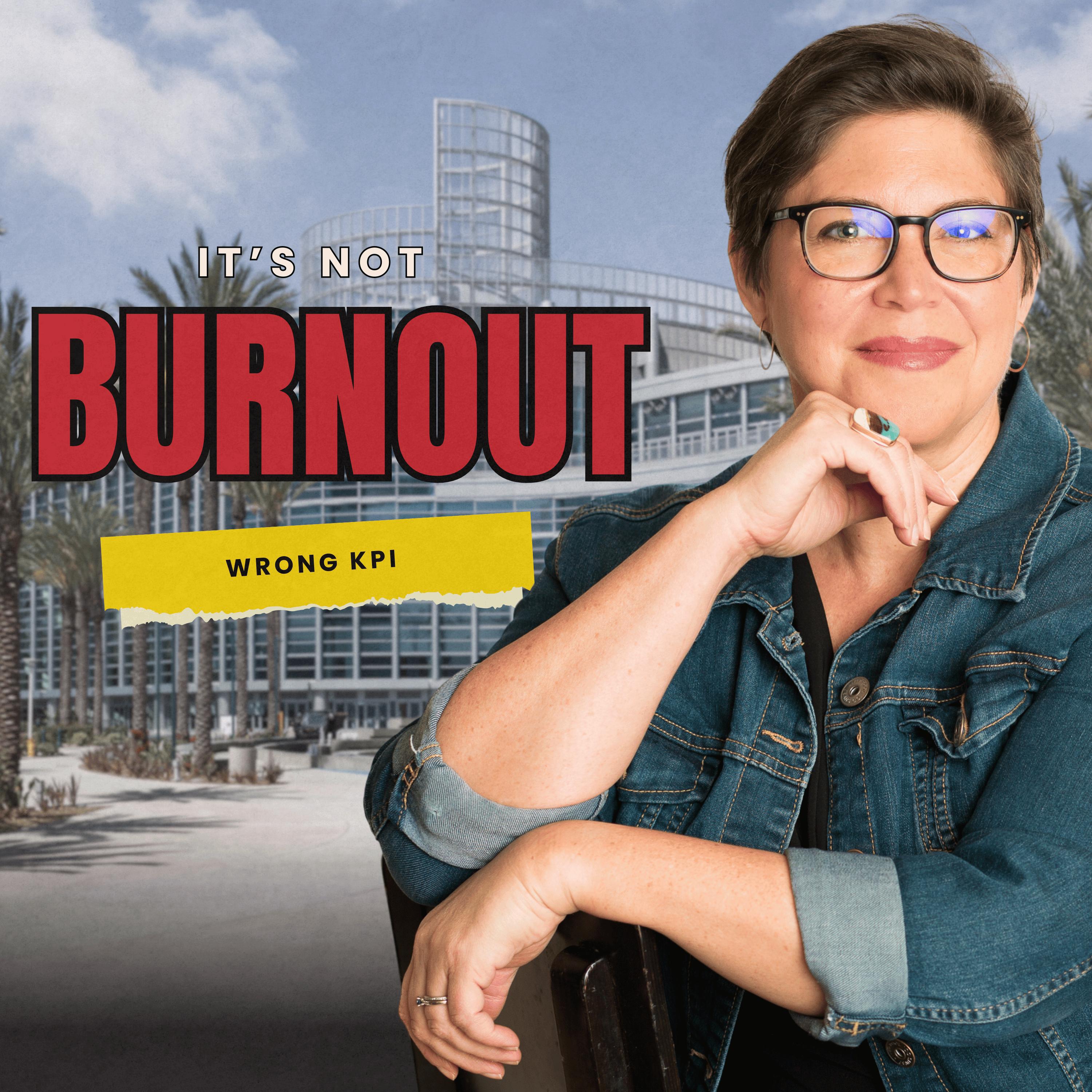
Burnout in healthcare isn’t a motivation problem. It’s a design problem.
Dr. Lisa Flexner joins PT Pintcast live from APTA CSM to break down why:
- Burnout is an individual response to system dysfunction
- Productivity is often the wrong performance metric
- Turnover costs far more than 1.5x salary
- Belonging is a foundational performance driver
- Pizza parties don’t fix structural problems
- Healthcare still operates inside outdated hierarchy models
If you're leading a clinic and wondering why retention is harder, morale feels fragile, or productivity pressure keeps increasing — this episode reframes the issue from something personal to something structural.
Key Takeaways
- Burnout shows up in individuals, but starts in systems
- Indirect turnover costs often double or triple salary impact
- Belonging and shared mission drive productivity more than pressure
- Measuring employee net promoter score (eNPS) may be more predictive than productivity
- Healthcare needs a “Flexner Report 2.0” to move toward collaborative practice
<p>This episode is part of the <a href="/physical-therapy-business-podcast">Physical Therapy Business Podcast</a>, where physical therapists and clinic owners learn how to get more patients, improve operations, and grow their clinic without relying only on referrals.</p>
<p>Looking for more episodes? Explore the full <a href="/physical-therapy-business-podcast">Physical Therapy Business Podcast</a> for real-world strategies on physical therapy marketing, patient acquisition, and clinic growth.</p>
0:02 It's the wooga wooga. Wooga wooga wooga wooga. Now we get all casual. Now we're like, all right, now relax. Lisa Flexner is back on the show live here at APTA CSM. How's your conference going is the question everybody asks. It has been amazing. I never know how to answer that question. How's your conference going? Chaotic? The conference has been chaotic and nonstop as it always is. And I love every second of it. I have a fancy intro for you. Can I do the big fancy intro? Oh, goodness. Most workplaces technically work, but aren't working for the people inside them. It's not good. Our next guest helps leaders fix systems instead of blaming burned out humans.
0:45 If you've ever thought, it shouldn't be this hard to do good work, this conversation is you. Lisa Flexner, live from Anaheim. How'd the intro go? The intro was fantastic. Thank you very much. So why are, we've had this conversation on LinkedIn or other discussions, but I don't think it's, we haven't solved it yet. But why are burnout problems really system problems? Burnout is always an individual response to a systems problem. It shows up in an individual's motivation. It shows up in an individual's emotional health. It shows up in their exhaustion, their cynicism. But it's actually a response to different levels. So you've got your individual, and yeah, there are individual things that are going to contribute to burnout.
1:29 But you've also got the interpersonal leadership skills, management skills, maybe a mismatch between how somebody likes to be managed and how their manager style is. You've got organizational issues that can be addressed that are contributing to burnout that, you know, we've got a lot of tech that is helping with this now, which is great. But a lot of some places are slow to adopt or can't afford to adopt. Or can I point out the other end of the spectrum? Are you familiar with Notion? Notion, yes. Notion AI? Yeah. But it's a database, right, super helpful. And I remember working for an organization, and I remember asking a human a question, and the answer was, it's in Notion. And I was like, all right. It wasn't very easy to find it. No. So I coined a little phrase, which is, Notion is in the ocean.
2:13 I'm sure it is, in fact, in there, but it's going to take me six months to find it. Or you could just explain it to me. Right. Or can you share with me? Exactly. tech a problem. This wasn't a giant problem until we teched it. That was the problem. Absolutely. And, you know, what do we do that makes workflows better or worse too, right? Whether it's, you know, it's just easier to ask you than to go and search Notion for five hours. Or are we creating workflows and systems between, say, our clinicians and our front desk that are actually creating more challenges and more disruption and less patient throughput. Yeah. Seeing things I would imagine from more than just your point of view.
2:55 Yes, my front desk, this is easier for them, but it just put a lot of annoyance or effort on the patient or vice versa. Right. And you have to look at it from multiple points of view. Why am I filling this out again? I just did. Isn't there a way to fill this out? Well, this system doesn't talk to this system. From the guy who now goes to a lot of doctor's appointments with his dad, I don't want to hear it. I just filled this out eleven times. I'm not filling it out a twelfth time. You do it. Write the information down. You copy. You transcribe that over. Exactly. Why do we have patients do a whole medical history and then walk in and be like, hey, so tell me about your medical history. What the hell did I write it down? Lawyers? I don't know. Why did I take that time? So think about that from within the organization now, not just the patient experience, but also the provider experience or the front desk experience.
3:41 And I'm not here to talk Jerry Durham's job. That's his gig. He'll fight you for it. Yeah, I know. He will. And he does an amazing job. But where I really come from in terms of burnout is that we have some basic fundamental human needs that we need to have met in our workplaces, in our family settings, where we are. And if the workplace is not looking at those basic fundamental human needs, then it's going to be not as fulfilling and more likely to promote burnout. And then, now, let's not stop there, because, hey man, suck it up, that's what I pay you for, but you'll probably lose people, which will cost you money.
4:24 You won't get the most out of those people that'll cost you money. Probably other things I'm not thinking about on the fly, but I know you might be thinking, it's a suck it up, it's a you problem. My man, that is gonna show up on your PML. It shows up on your bottom line, absolutely. So a lot of people look at the direct cost. They look at what's easy to measure. Like what the tech costs? Not just the tech. So they look at their direct costs in terms of like, oh, I've had turnover. It's going to cost me one and a half times that person's salary, except that the indirect costs to the organization, thinking about the issues of how the team works, the additional productivity demands that are put on the people that are left, the additional chaos that's created by not having that team environment, then your actual indirect costs plus direct costs, more like two to three times that person's salary.
5:16 Plus like, you know, collateral damage. I'm doing that person's job for a month or now I got to train up a new guy. I'm not assigned to train them up and I'm working with them. So I get how it works. I train them up now. Exactly. So you're really hemorrhaging money that you can't track in that regard. So one of the things that I do that I work a lot on is not just burnout prevention, but how do you create a workforce and a workplace that's really geared toward humans? Because we are humans working in the system, working with humans as coworkers and also with patients. OK, well, belonging, basic fundamental need. We all want to belong. and healthcare has a belonging problem.
5:57 We show up at, let's say our shift starts at seven. We might show up at six forty-five, maybe six fifty-five. We sit down, we get our stuff together, we start seeing patients, we work with patients, we work through our lunch charting, we work with patients, and we get out of there as soon as we can. We might be there two hours, but we're still charting, not talking to anybody. Or we're leaving at the second that we're done, running home, taking care of our kids, taking care of dinner, whatever, connecting with our partners, and then charting until the late nights. I wonder why people are looking for the door. Exactly, because there's no team. You're a bunch of co-working people, right? I didn't sign up to be a co-worker.
6:39 I didn't want to go to a co-working space. I'm not at WeWork. I want to go to my office where I have a team and where I can connect with people that I see every day. It's great to connect with patients, but those patients leave. In an outpatient setting, those patients leave on average eight to twelve weeks. So now you have to spend energy reconnecting with new people. It's great. It's fun. I'm an extrovert. I love it. But at the same time, I want those long-term connections. I was talking with somebody earlier today, Elizabeth Rogers out of the Seattle area. And she was talking about how she hung out this weekend before the conference started with all of her PT school friends and her first job friends.
7:21 We don't have time to make friends in the workplace very often. So that's a very easy thing that doesn't cost a lot that workplaces can do is how do we build the community of our colleagues so that we're not just coworkers. You can work anywhere. I'm going to have to work somewhere. Maybe you want to work here. When you're talking with the right company that you consult for, how do you sort of â How do you explain that investing in all the things you just talked about is actually going to bring them the thing which is what they want? Well, what we all need in health care right now is stronger margins, right?
8:01 Our reimbursement sucks. We're working on that. APTA has made that their number one priority now, which is fantastic. And so we're working on the reimbursement side. We're working on the systems that are at the higher level outside of our direct control. But what do we have direct control over? So looking at assessing where that organization is, making sure that it knows where are its leaks. not just financial, but also employee leaks, where is the emotional energy being drained, then aligning the organization, or assess, sorry, totally blanked, because I did three talks yesterday, and I have no brain left, so I'm still working on the coffee.
8:45 So getting in and assessing and then aligning the organization and then activating the organization. So you're assessing the organization to see where are those leaks, aligning on what do we do next, and then activating it, making it happen. You have to get several people probably in different departments to agree That this is a problem. Hello, I'm Jimmy and I have a problem. And we have to agree that this is a problem and that we are gonna invest in this solution. Yeah, absolutely. So what that comes down to is it's not like, oh wow, I really wanna be nicer to my people. Most people have that. Most of us go into this profession because we care about humans and we're altruistic. So we're going to go for that. Absolutely. And at the same time, it really comes down to how does this impact your business outcomes?
9:31 How does this impact your KPIs? Are you measuring the right things for your KPIs? I made a spicy statement in one of my talks yesterday. Ooh, spice it up. Yeah. And it got some reaction. I fundamentally believe that productivity is the wrong measure. What is? Okay, keep going. What is the right measure? You have to think about what drives productivity, right? Because measuring productivity, which is something that physical therapists, the clinicians themselves have really very little control over, measuring productivity doesn't really incentivize more work. What does incentivize more work is a shared goal, a shared mission, a sense of belonging, good communication.
10:15 And so measuring things like net promoter scores from your employees, so ENPS. Measuring quality of life at work, so using the Gallup Q-Twelve, Fred Gilbert from Gallup. movement x does checking in with your people to see what's going to work best what do they need more of um and finding low-cost ways to do that because it doesn't have to be expensive and it's not a pizza party you talked about this last week i made a i made a very successful video about six months ago where i did one of those where you're like you're playing two characters and It apparently resonated with people because apparently pizza is the go-to. Pizza is the go-to. Yeah, pizza's great. I'm from New York.
10:56 Listen, love me some pizza. That is not a, that's not a fan date. Yeah. I have a friend who's a clinician in a large hospital system. And their holiday party used to be this big fancy thing at a local, I live in Bend, Oregon. We have lots of resorts. So they would rent out this big local resort through this big bash and And then that was every year. And they felt really celebrated. They felt really valued. And the next year, one year, it suddenly changed to like lunch. And then the following year, it was pizza in the break room. And they were like, what happened? It's a cost-cutting measure. But what it did was it made everyone feel devalued and they hemorrhaged clinicians.
11:37 They lost two-thirds of their people in a single year after that pizza party. It wasn't the pizza party's fault, but it certainly did not help. Well, it manifested the pizza party. It's a symbol. And it probably showed up other places too. Yeah, absolutely. It's just the most visible was the party. Absolutely. So we're doing quick episodes. We could talk to you for a while, but we're going to do a parting shot now. You've already said a spicy statement, so you can't reuse that. What would your parting shot be now? I'm... Oh boy, I had, that was my parting shot. All right, so reiterate this. Yeah, so healthcare is a belonging problem and it also has a hierarchy problem. And we need to break the hierarchy of healthcare. And you know, my last name's Flexner. I don't know if you've heard about the Flexner Report.
12:19 if not the flexner report was what created medical education and our hierarchical healthcare system so great we need a flexner report two point oh i'm not writing it i know some people who should um but we need a flexner report two point oh that reframes healthcare as an interprofessional collaborative experience because right now the top down in acute health care You need that top-down, you need that chain of command, right? You need physicians to make quick decisions and everyone's on board following orders. Got it. We work in chronic issues. We don't work in that top-down environment. We have opportunity to support physicians in things like primary care physical therapy.
13:04 But because of the hierarchy, we're blocked from creating more health. So we have a hierarchy problem that we need to solve in healthcare. If someone wanted to get in touch with you, I'll put it in the show notes, but where would you send them? On LinkedIn, lisa-flexner-dpt or flexhealthconsulting.com. Those are the best ways to get a hold of me. Get yourself some relaxation. Get yourself some human time and enjoy the CSM. You too, man. Lisa Flexner, thanks for coming.