Authenticity Beats Hospital Marketing

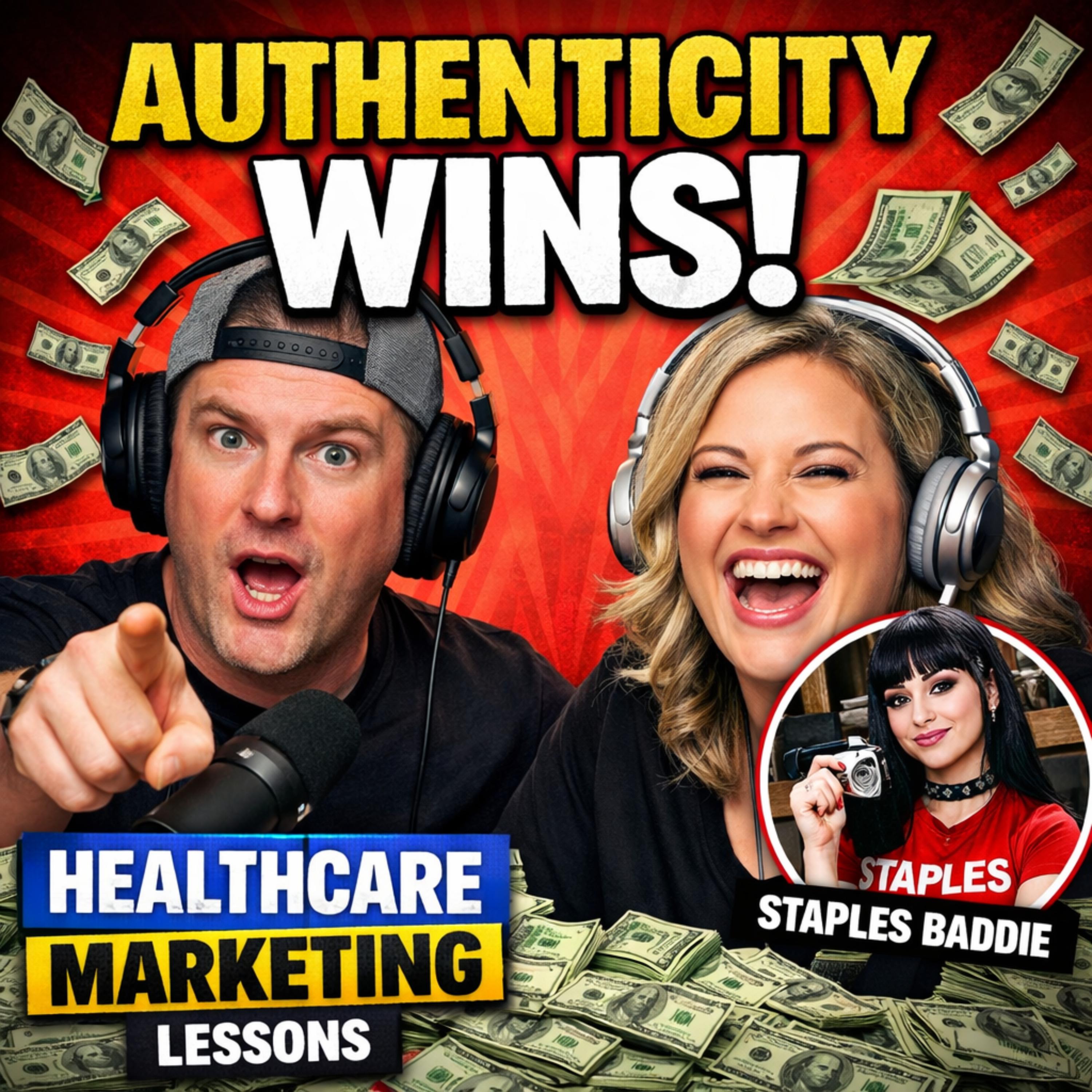


Healthcare organizations spend millions on marketing — yet patients often trust a clinician with a phone more than a polished hospital commercial.
In this episode, Jimmy and Andrea unpack why authenticity beats traditional healthcare marketing and how PT clinics can leverage clinician voices to build trust with patients.
They also dive into one uncomfortable truth:
Many clinics believe they have a marketing problem when the real issue is operations and patient experience.
From the “three T’s and three P’s” of clinician content to the role of authenticity in healthcare communication, this conversation gives clinic owners a practical lens for thinking about marketing, retention, and patient trust.
Key Takeaways
Authentic clinician content often outperforms corporate healthcare advertising.
Clinicians should be empowered to create educational content.
Most clinics underestimate the operational impact on patient retention.
The “three T’s” for clinician content:
Tools, Training, Time.
The “three P’s” for clinic marketing:
People, Process, Product.
Why This Matters for PT Clinics
If patients trust real clinicians more than traditional marketing, clinics should focus less on polished campaigns and more on empowering clinicians to communicate directly with patients.
The result can be stronger trust, better patient education, and more sustainable growth.
<p>This episode is part of the <a href="/physical-therapy-business-podcast">Physical Therapy Business Podcast</a>, where physical therapists and clinic owners learn how to get more patients, improve operations, and grow their clinic without relying only on referrals.</p>
<p>Looking for more episodes? Explore the full <a href="/physical-therapy-business-podcast">Physical Therapy Business Podcast</a> for real-world strategies on physical therapy marketing, patient acquisition, and clinic growth.</p>
0:00 You're listening to the PG Pinecast, where smart people in healthcare come to make noise. Here's your host, Jimmy McKay. Here's the best part. Eventually, I'll just make a new and actual intro for us. So it's not just the generic podcast intro. Well, the thing is, you don't want to just run into a show and create all the elements and then three weeks later, you're like, this isn't great. wait till you do it a bunch of times before you do that so uh good rainy monday morning to you welcome to healthcare uh marketing doesn't work welcome to the show we break down real marketing stories behind uh from healthcare and beyond and we just want to steal the good elements i want not theory not buzzwords or hashtags i feel like andrea also dislikes hashtag holidays just real things companies tried people companies are spending millions upon millions of dollars testing out what works and what doesn't.
0:54 Please, please recognize this for what it is. This is research that you can steal. Things from inside healthcare and outside healthcare to figure out what works and why it didn't. Because marketing doesn't work. until you understand why it does and doesn't. All right, so first story. We didn't talk about this, I don't think, but this was very difficult to miss if you were anywhere in marketing. McDonald's CEO. Two weeks ago, for a billion dollars, Andrea, could you have named the McDonald's CEO? No, I did not have. No, not have. Same. Chris Kempzinski posted the video promoting the, do you know what the sandwich is he was promoting?
1:38 Like a fish sandwich or something? I don't even know what the sandwich is. It's just a new burger. It's called the Big Arch sandwich. Big Arch, yes. Okay, that's right. I was going to see like, well, all right, after all this hoopla, did we at least get some sandwich, sorry, product name recognition? Because several times during a little video, the internet noticed he kept calling it the product. And he took tiny... awkward, non-regular human being eating things sized bites. It looked like a proof of life video almost. Exactly. Like blink three times. So naturally, it must have also been a slow news day or we're just tired of politics or whatever.
2:23 So the internet just grabbed it and was like, we're just going to drag you up and down. Memes exploded. of course other fast food brands jumped in and suddenly mcdonald's had a million dollars of free attention market watch estimating eighteen million dollars in earned media value So here's the question. Janet Jackson's nipple didn't accidentally pop out. I think we can, I think the statute of limitations, they had to know that this was something they had to know, right? There was this stage, like, where do you think this was? I don't think I've ever been in a large enough organization to see this happening, but like what happened here, Andrea, from your point of view?
3:05 So it's the jury's still out. If they knew if it happened, if it was like, was this intentional? I think there's one camp that says yes, one camp that says no. Someone may have listened to a junior or brilliant marketer or PR person, and I don't know how it got through all of the rounds unless the person at the top making these decisions is really cool and trust their team. Yeah. Yeah, because there's so many... You know how this is. Even at smaller brands, we know how many checks and balances there are.
3:49 And people be like, is this on brand? Should we do this? Does it deserve another edit? There's no way they put this guy in a live stream or something that looked like it was like, hey, everybody, this is just Chris. And I'm sitting in the McDonald's lab. Even the room he was sitting in from memory looked sterile. It did. And, you know, so I don't know their brand. Otherwise, I'm not a McDonald's consumer. If this was their brand, then cool. Let's put this guy out there and be awkward. But I don't think that's their brand. I don't think it is either. I think their brand is trying to be. I mean, if you've been in a McDonald's and I've been in less and less of them. in the last couple years, but I think their brand is good and clean.
4:34 We're not trying to be the Starbucks of burgers because that would cost too much and that's not really what we are. That's what someone else can be. We're trying to be the cheaper alternative. We're going to be everywhere. He's in a room with a glass wall, very clean cabinets, just not restaurant-y. Look, carpeted floor. Would you want to eat there? No. Eat on carpeted floors, right? Like how many restaurants have you been to where there's carpeted floors? Things get spilled where human beings eat. He's holding it like it's the new iPhone in a box. The fries are positioned. There's no way this is real in my in my opinion. No, you know, maybe they took it.
5:15 They took the advice of like overproduced doesn't work. Make it real and raw to the extreme without guidelines. So what this is. So why does awkward content spread faster than polished, slick Marvel quality movie stuff? Are you asking me? Yeah. So I think it's because commercials used to be polished and have to have a big budget and all of that. We're sort of in this time now where social media is not polished. It's real and it's raw, right? And that's where people are spending their time and what they're paying attention to. this i think was supposed to say authenticity like this is who we are look at us we have our ceo he's a normal guy and he's eating this burger so if he's awkward just make him present him as is you're never going to make that guy cool maybe that's not the point the point was just like here he is and then can we get again from market watch eighteen million dollars in earned media value if a hospital ceo did this would it work or be a disaster And so that's where I was going to go.
6:22 And I think that's where we're going, right? Is like, what can we take for healthcare? How many organizations have you worked in or worked with or observed that have done videos because someone was like, you need to do videos and they have their executives on screen and it's like clearly scripted. They're uncomfortable. It's like a weird setting. Um, and they're not happy to be doing the thing. And, but then that's like what ends up on the website. Or I've worked in organizations where they're like, all right, the decision has been made. We're going to make some more videos. And then I'm sitting in the room. Again, I've always been like a mid-level guy. I don't want to be the honcho. And they're like, well, we're going to do videos.
7:02 It's going to be the leadership. And I'm like, no one in this room should be on a video. I've said that. I'm like, none of you will pull this off. Well, yes, we will. I worked for a healthcare organization that spent millions of dollars on creating a commercial and then running commercials. And then halfway through, tell me if this was a power move or did this sign my death warrant? Halfway through, I was like, I would like to not be on this project anymore because I do not see the way we're doing it. It will succeed. So I'll go work on something else. And I did that. And then the TV commercials didn't work, using air quotes here, didn't work. And then you know what the verdict was? TV doesn't work. And I was like, no, you did ads bad.
7:43 So here's what it was. It was supposed to be this human healthcare brand. And it was a guy who looked like he was selling you... something, something mutual life insurance in a room with many leather-bound books that smelled of rich mahogany telling you why you should get your grandma or your mom to be cared by their clinicians. And I was like, Are the clinicians in the room? Now, this person was a healthcare practitioner, was a licensed healthcare provider. He was an executive. He or she was an executive. He was dripping with executives. And I was like, are you selling me a reverse mortgage on my home? Or are you trying to get me to have my mom work with your PTs?
8:24 I was like, where are the PT? There's no human element. But here's what it was. If we're going to spend millions of dollars, we're going to spend it on our C-suite because those are our leaders. And I was like, those were not the people you should have put on TV. Sorry. And depending on the audience, those aren't the people that your audience wants to hear from. So that's my, so I go, I guess if we were to compare apples to pears, at least closer to oranges, right? Healthcare to McDonald's, like who is the audience at McDonald's? Is the mom making the decision on the fly? I don't, who's there? Like, so I have to tell you, I haven't had fast food in twenty five years. My children have never had fast food. I'm not like, oh, look at me. I'm so anti like it's like, you know, lifestyle medicine.
9:06 I wouldn't touch that. Nothing. No other option. I think it's, I think it's, I think it's geographically socioeconomically driven. It's like, and, and then it's happenstance. It's like, you're right. And, and so it's, maybe it's the busy mom. And I think there's, there's not anything wrong with it. Right. Like, I think it's probably fine and it's probably much better than it was at some point or maybe worth some of the products, but it's young people. It's, socioeconomic, and you see this in some of their other commercials where you're clearly like, oh, I know who the audience is for this. It's like young people, they're active or they're doing whatever. Maybe it's moms. I don't know who the audience was supposed to be for this. I don't know. It's awkward, but we're talking about it. So hey, go try the big art.
9:48 I thought the layup could have been Peyton Manning, Eli Manning, their nephew is now a college football player. Pretty popular. Now there's NIL deals. You can essentially be paid for being a college athlete. His name is Arch Manning. The product was called the Big Arch. It feels like it was a missed opportunity. I felt like psychologically, the drivers... um authenticity we mentioned participation the internet just didn't watch the video they joined the joke yep i feel like that's why it quote worked or did not work uh second story i'll get the image up on a screen in a second but are you familiar with magnum chocolate it's like a premiere it's like a bougie chocolate brand like brown label i think with gold letters yes yes Yes.
10:43 They are launching a marketing stunt in London. And I like how they're doing it in a city. Why? More people. And let's just get some buzz about it because spending, I don't know, a couple, ten, fifteen thousand dollars in the subway, you're going to hit a lot of people. They pumped chocolate scent. They're not doing sound. They're not doing visuals. They are literally making the London tube, I guess we would call it. smell like chocolate and playing then also playing sounds of people biting into their ice cream because it's like like the hard shell with ice cream inside the goal they're a multi-sensory brand experience some commuters loved it others said it smelled like chocolate mixed with subway sweat If you've been in a subway, I haven't been to London, but I'm going to guess it smells a little like the New York City subway system, which I'm familiar with.
11:33 It's so much cleaner. I don't know. It felt cleaner to me. It's still an underground tube with a bunch of people walking around in it. It's not the best air circulation. Chocolate's hit or miss. First of all, chocolate for me, one of the top two things for me to eat in my life. But there are certain moments I don't want to eat it. I don't want to eat chocolate first thing in the morning. When do people commute? First thing in the morning. While I'm running a marathon. And there were those goos, those energy things. And there was chocolate flavor. I'm going to be like, I love chocolate. I would die. Not then. Not then. So anyway. So my question is, is this sensory marketing genius gimmick?
12:16 bad ads bad money marketing spend what are your thoughts i mean we're talking about it you're talking about it so i like it i also agree if it's like chocolate mixed with subway not good not good it's like abercrombie and fitch i mean i know they're maybe not in the most positive light right now but when we when i was in college like you walk in and it's like smells like Nineteen-year-old sweaty person? It was like cologne and perfume. Over cologne. It was like piped through though. That was their thing. And they had like loud music and it was sort of the environment that that age, that demographic wanted to be in. And so you sort of like felt like you belonged and you leave and you're like, yes, that's the smell.
13:01 I don't know if it works for chocolate. I like chocolate, but maybe I don't want it in a Subway. I don't want it in my nose holes in the middle of my morning commute, maybe. I think this is more of just a context failure. I think they designed a great experience. I don't know what if I would have done it in underground tubes with bad airflow. I might have done this. Yeah, I was going to say, maybe it's like in a grocery store. They pay for where the product is. Well, see, where it is, I like the fact that it's not where it is. I might have done it at a street fair. Do you know what I mean? Like outdoors where it's like mixed with just like a park, right? Go to Central Park and be like, I don't know.
13:41 I mean, Central Park, you know, your relaxation station or something like that. Or as you're doing loops, what is that? Like a music festival or something. A music festival. Right. So it smells like sweat. At least the sweat is outdoors. So I guess the question is chocolate mixed with Subway sweat. Is it good? Not good. I think the healthcare lesson is you can design the environment, not just the message. And when I saw this story pop up, I thought, what's the lesson? Because again, we're trying to talk to healthcare providers, healthcare practitioners, big organizations, small... I forget what country it was. Some country provides free subway rides if you stand in front of a machine and do ten squats.
14:24 And I'm like, that's understanding the environment. Because then all of a sudden the juxtaposition is, why is that person standing in front of a ticket machine doing squats? And then you go look and then you're like, ten squats and saves me seven dollars. Like, yeah, it's a no brainer. Bang, bang, bang. You position a camera thirty yards off to the side in public. You don't need permission to film in public. And now you're there's your ad campaign. So good. I worked with a PT brand and I had proposed for a new location that was far away from any of their other locations, a completely new market. It was a commuter-friendly area. I said, let's get some billboards up at a train station. This takes that to the next level.
15:05 This isn't just a sign. This is, let's do something. Let's get them engaged. Yeah. Going back to the chocolate, Ben thinks it makes him think of Oompa Loompa. Working hard. Working hard. Working hard, man. You're right. We're in the tunnels. I think the takeaway here, again, was the second is you can design the environment whenever you put something normal. A normal thing in an abnormal place makes the thing... remarkable there's an instagram channel that i'm dumbfounded not one pt brand that i've seen that i've seen has stolen this have you seen it's called like bunker bus or battle bunker but it's a guy Former military dude who drives around to gym parking lots or festivals.
15:51 And then he's like, give you a hundred bucks if you can do ten pull-ups. And he's got like three people filming it all. He started with just one camera and he's just like, do some pull-ups. But then of course he's like, who are you? I'm a mom. What are you doing here? It's like, it's a sixty second doc in every video. But it's about, so like, I tried to do this, by the way, at a brand we are very familiar with. And we bought the pull-up bar. We never brought, I wasn't there by the time we even brought it. I was like, so you're going to go recruit PT students. They're like, yes. And I'm like, what's your setup look like? Like, it's a great, it's a table with a tablecloth. I'm like, keep going. And they're like, we're going to have like a laptop screen with a sizzle reel looping.
16:37 I'm like, got it. We're going to give away some candy. Okay. Maybe pump in some chocolate smell. Keep going. And I'm like, now zoom out. Just walk around. You and I do this innately. Maybe average people don't. I'm like, what is everybody else doing? Not to copy, just to be like, do we stand out or blend in? What's the answer? Right. And this goes back to the article Larry wrote. You're spending a hundred thousand dollars to show up and blend in at CSM. Well, that's not a good idea. Neither is spending a thousand dollars at a hundred events. Right. What are you spending your money on? So to have an organization do something like changing the environment, let's throw chocolates out.
17:22 So I would challenge healthcare organizations, what's your waiting room experience? Does it look like a lawyer's office, an accounting office, a pediatrician's office? For some reason, pediatricians are like, we got it. We understand the assignment. Make it fun. Who's the audience? parents but make the kids just occupied parents are happy um parents are happy done easy well they get it there's like a fish tank and there's you know stuff like my kids go to a pediatric dentist and there's literally like a climbing jungle gym rock wall it's amazing i'm like this is this is what that thing called what that thing cost right One time, one time fee. And now the kids are like, Hey, you gotta go to the dentist. Like, Oh, and you're like rock climbing wall.
18:03 And they're like, every time give them a balloon, they can like guess how many marbles or like things are in the jar. They get, why are we not doing this everywhere? The version of that. There's an age somewhere in human society. As soon as someone hits like, fifteen, we're like, yeah, just be boring like the rest of us. Who cares? All right. Story. I think hospitals and clinics could learn from, I think, hotels and restaurants and ad agencies in this space, which is how do we make it... I will say, so hospitals, one more point on that. My little guy was in the hospital for a little while when he was eighteen months and they had one room that was donated, the Izzy Foundation, and they made it like super interactive and it was like a fairy tale.
18:49 Like you literally open the door and it was in the PICU unit. one floor down and you open the door and you go in and you're like, oh my goodness, this is so fun and so cool. I'm not in a hospital. And it's amazing. And it's a case study. When you're in the hospital, where do you not want to be in the hospital? So make it not like, I mean, it sounds simple when you say it. The problem is, of course, you and I have been in meetings where you're like, you want to spend what on a rock wall? How does that make us money? And you're like, so it doesn't. Except it does. It does, right? It doesn't. The ROI on the rock wall. Can we bill for the rock wall? Like short answer, no. Long answer, no. But it does differentiate us. So I'm not saying everybody needs a rock wall.
19:31 I'm asking what's your chocolate smell in your lobby or what's your rock wall? Okay. We have more stories. Oh, yeah. Okay. NFL. We talked about my friend Chris's prostate cancer charity. Really, it's an awareness that's Man Cave Health. And then I saw this in the NFL. You saw this? The NFL was doing it? no no i didn't see that prostate cancer awareness campaign partnered with the nfl and nfl players they use humor and sports culture to encourage screening instead of medical messaging nobody at any point is making fun of prostate cancer what they're doing is they're poking fun at the reasons you might not get tested i said this before I sort of got looked at like cute Jimmy, but that's a little too much.
20:22 The current, the old school check of prostate cancer was like the funny image, right? How would they do it on SNL? Rubber glove, jar of Vaseline. Why don't you just drop your drawers and this, you know, you might feel a little pressure, right? Like none of that is fun. That's not how you test anymore. It's now roll up your sleeve, get a blood test, which takes as long as it does to draw one vial of blood. And then you're going to see if you have markers that might require you to go for further testing. So my spin was, hey guys, getting tested for prostate cancer, it's not drop your pants, it's roll up your sleeve. So it's like, remove the objection, remove the objection. The other is, can you use humor? the answer is yes never make fun of the patient never make fun of the person make fun of the emotional driver of that which is it sounded more like a locker room conversation which is a lot of the times where people make decisions about what they do and what they value like people i mean as smart as we know the research says yeah but my three bros on my beer league forty plus hockey team said that that's lame therefore i will never do that so I think the NFL doing this is a great idea.
21:30 The NHL had a program last year, and I loved the name. Are you a hockey fan even remotely? Remotely, yes. It was called Get Body Checked, because that's a phrase we use, body check. And they partnered with a few players to sort of do it. So I like the levers that they pull. I always like to look into what's the psychology. Authority. Athletes carry trust, cultural relevance. The message showed up when people were paying attention. They weren't asking them to tune in at Saturday morning at seven a.m. to listen to health hour brought to you by insert hospital system. They were like, this is going on during football games. And then emotional reframing instead of feel fear, it was using camaraderie.
22:11 And we are big, dumb social animals. Brilliant idea. So kudos to the NFL for sort of doing something like that. Great idea. I mean, again, like how do we get, how do we do this smaller scale? Okay. So my thoughts were... So I feel like our format of our show going forward should be very, very simple. What? Where I give you an idea. Andrea gives you an idea, a story that actually happened in or out of healthcare. We say what? What happened? What happened? Details. Facts, facts, facts. Then so what? And then now what? Now what? So the so what was like sort of the drivers. Like why does that matter? The now what? Healthcare marketing should...
22:52 partner with existing culture more often? Why wouldn't you? Sports partnerships, community events, cultural storytelling. I'm going to need someone to explain to me why these are bad ideas and why we don't do them more often. Instead of, I have a doctoral degree and I went to certifications and we do insert modality, modality, modality. So go fish where the fish are already in barrels. Am I wrong here? No. And I think, you know, it's no one else is doing it. We can't do that. We've always done it this way. And it probably feels scary, risky, expensive. Yeah. But there's always a way to do it. I am working with a brand now. Will not say who it was.
23:32 And I get and here's I want to respect why. Ultimately, the plan was I gave a plan. One person agreed to the plan. The person all of a sudden were eight yards down the field was like, whoa. Stop that plan. What are we doing? Explain this to me again. And I was like, OK. And then the response in the email was. Nobody else on our team is doing anything like this. And I was like. You're welcome. You're welcome. Did you want me to just run the same play as everybody else? You could have just gave me the playbook. I could run a play. My man, I can run a marketing play.
24:12 Eyes closed. We done by noon. I'll be on the beach by five thirty. Don't worry about it. Still getting paid the same thing. Still getting paid the same thing. Do you want me to run the plan or do you want me to come up with a better plan because the other marketers aren't doing that? How's that going for you? Why am I here then? If they are already running the play, why am I here? So hearing you say that at least validates what I'm saying. Well, no one else is doing it. But if I can back it up with a clear logical story, like beware of the person who rushes you through the example. Who does that? Use car salesman. Don't worry about it. This is the new model. I am from New York.
24:53 I am from the Bronx. I can talk louder than you and faster than you. beware when I start doing that, unless I'm just excited. But if I'm trying to convince you of something and I'm talking real fast and I'm like, don't worry about it, we'll talk about that later, red flags, red flags. And I literally sat down and I was like, I will walk you through every step and why I'm doing this and not ten other things. And when we were done, it was, can you guarantee the success of this plan? And I looked deep in their eyes and I said, Nope. I can guarantee you I will execute exactly what I just said and that the reasons I made that plan are in my mind. And if we come to an agreement, which is where I got I get a lot more sleep at night because I moved my own goalposts.
25:37 My job is not to get you to do or believe anything. My job is to get you to understand what I just said. And as soon as that is achieved, I shut up. And if you want to do that, great. And if you don't want to do that, also great. I make suggestions. You make decisions. So ultimately, we went in that direction. But I did. I stopped and I recognized no one else is doing that. That's why this feels icky and scary. What are some good community... Community to me is still wildly underleveraged. Like community events. Well, they're not about us. Ding, ding, ding, ding, ding, ding, ding, ding. A five K, but we're not putting it on.
26:17 Oh, yeah. Great. Ding, ding, ding, ding, ding, ding, ding. Be there. What are some things that you've tactically done and seen community-wise, grassroots? I don't care what it is. There's no wrong answer in my brain. So much. So here's what's hard about community. So I'm a huge fan and I continue to push this. The people who are in charge of the budget always want the ROI, right? I cannot give you the ROI on us going to this community event, right? outside of PT, but still in healthcare, I had put together, I built a marketing organization from the ground up and I ended up with a large community relations organization because ultimately that's what I realized needed to happen.
27:04 We're growing, we're acquiring new clinics. So we're growing through acquisition, we're growing through DeNova. We wanted to enter really competitive markets. I'm like, we need to be there. We can't just like put an ad out. And so we had boots on the ground. And it was amazing because there were so many good, it was brand awareness, so many good connections. We like rented an ice cream truck and gave away ice cream and had like our label, like, you know, easy stuff, right? Like it takes people and it takes trust and buy-in from the people who are giving you the money to do it. And ultimately a lot of, moms came in and they were like oh yeah i saw you at the xyz you paid attention like we were at five k's oh yeah oh i saw your booth you were you were doing whatever it was um so yeah like we can't necessarily and we added that to our how did you hear about us so we at least directionally would know like people have heard about us or not it's worth the investment, but you can't be.
28:01 So I will say like, how do you make this successful is you have to have pillars of like what you're willing to support. Your audience is going to be there, right? And then you have a budget and then you have a playbook to sort of execute. But like, you have to try different things. Like the ice cream, I was like, we are going to rent an ice cream truck. We're going to rent an ice cream company. Okay. Like we're trying to get moms with their young children at this community event and kids like ice cream. But see, in my mind, what you did there was actually a step before marketing. You were like, before we market, which is now this like dirty term, right? Which is like now it's like sales went from being sales is dirty. Now marketing is dirty. You went a step before that, which is like, how do I very plainly get the attention of the people first?
28:48 And if I need to buy them an ice cream cone, I will buy them an ice cream cone. I'll just do it. And then what? Well, then what's the next step? It's not while I'm handing you the ice cream cone, I go, Hey, would you like to buy this plan? Would you like to buy this packet? No, no, no, no, no, no, no, no. Step one. Hey, I hope you enjoy that ice cream cone. That's it. And you wait and you do that fifty times. But yes, otherwise... The other important part of that, which is, is this a thing we're going to do? Is this a pillar? Are we going to plant our flag in this? I would even say, if it's a big enough brand, I'd say, screw renting an ice cream truck. Buy one. Buy one. Hit the road.
29:28 At the end of the run, you can sell an ice cream truck. Trust me, my man. You can sell. It's a truck with refrigerators on it. You paid for a wrap. Someone's got to operate it. And then your hard cost is buckets of ice cream. don't see and i don't think andrew's out back churning ice cream like you're probably just gonna buy it right yes good and and then i think that's right which is what is the roi i think it's the ro a return on attention maybe we just invented a new kpi thank god there aren't enough kpis enough add it to this return on attention which is like well not even return attention What is the earned attention of this?
30:09 McDonald's put their creepy CEO in front of a camera. They're not dumb guys. They don't accident them way to this. There's had to be some. Okay. Oh, I wanted to talk about Staples Batty. Do you know who Staples Batty is? Oh, the girl on TikTok. Yeah. Yes. I want to bring it up just for the visual. Stacey's, we know who she is. Staples Batty. Yeah. Staples Batty. And now the story, now you and I still have to look at this and go, wait, is this real? Or is this made up? So where did that go? There we go. That's Staples Batty. She has a real name. Kadeen Rowland, aka at BlivXX on TikTok.
30:51 Not at Staples Batty because that wouldn't make any sense. She's a twenty-two-year-old employee at Staples. She works like the print Photoshop counter. And she's like super deadpan on TikTok. And she's just like talking about pens and post-it notes. And like, here's the thing. Here's what I hope happened. She's doing her job. And after her seventh day, she's like, I think I got this. Yep. I think I can handle this. And now she's just like, I'm walking around the store and I don't know, like at eleven forty seven a.m. Is Staples open? busy so she's probably got some time on her hands and she's bored and she just started making deadpan humor about staples stuff and people ate it up why because it was authentic And is she wearing a Staples shirt?
31:44 Yeah, but people are okay with that because they're like, she's at work. We get it. I understand who the character is and what their setting is. And they have said there has been a noticeable increase in sales from Staples baddie recording videos. Good. Here's my question to you. Would there have been a noticeable increase in sales if they had brought her in, put her through media training, vetted every one of her ideas, given her a better camera crew? Any of those improved it? No, because we've seen this. You and I have seen this, right? This is real raw... Non-branded content.
32:26 Authentic. It's authentic. And we've seen this. So and Staples supports it. Like they are like, do your thing, Staples baddie. It was, what was it? Chick-fil-A or someone. Chili's. Chili's. Someone. Cheese. There was someone like TikToking and they were like, no, you can't do this. Oh, yes, yes. Oh, yes. I forget who that was. But then the other flip side of it was Chili's. Some girls just in Chili's with a phone and she like takes a bite of a mozzarella stick and the cheese is like eleven feet long and she's like, oh, my God, this is so cheesy. And next thing you know, people like, well, give me that cheese. Huh? I didn't see that. That was a that was like a big that was like from like six, eight months ago. But I could have made that video with AI in twelve minutes.
33:07 But people, they can smell it, man. People know when you're selling them. I say this all the time. My phrase, I don't even know if I coined this. I call it don't break the spell. Where if Andrea is on LinkedIn and you write well on LinkedIn and you're like this and this and this. Don't you hate when? I hate when. People, why do you always do this? And if somewhere three quarters of the way through the post, you'd be like, and book a, why don't you book a discovery call with me? You are not back to zero in your points. You are now negative fourteen thousand points. Oh, man, you were perfect. I was like educating, providing some information here. And now you're selling to me. Oh, God, this whole thing was fake. That's why I don't like gentlemen's clubs.
33:48 I get it. Like, you don't like me. You like me because I have forty six dollars in my pocket. Got it. As soon as I walk in, I'm like, I'm good. I'm good. Don't want to. It's fake. It's too fake for me. People want authenticity. Um. I worked at a healthcare organization. I won't say which one, but if you go to my LinkedIn, you'll figure it out. And there were two women who were just really good at giving away documentation tips on the Instagrams. And then they were selling guides for like, twenty-two dollars. They weren't buying a yacht. with their PDFs that they were giving away.
34:29 But people loved it. And they do a couple live streams. And I got brought into a meeting where they're like, how do we shut these people down? And I was like, what are you talking about? They have more Instagram followers than this company. They have more Instagram followers than this company. This company has fewer Instagram followers than the number of employees we have. Our own people don't follow us. And they were like, but they're taking our information. And I go... Are they? These are just normal documentation tips. Well, we talk about it in our meetings. And then next thing you know, three, seven, nine weeks later, it shows up on Instagram. And I go, why aren't you putting them on Instagram? And I got looked at like I was the dumbest guy in the room.
35:13 Fast forward a couple years later, those women don't work there anymore. And now most of their full-time job is the Instagrams. And I'm like, wow, that was a dumb... I mean, I worked there. And I was like, I could be doing things, but it had to go through so many filters. I never got on there. I'm like, why'd you hire me to not put me on your own social media content? Walk me through that. And that's what happens with these branded accounts, right? It just gets super watered down or Frankensteined or safe. And that's what the output is. I mean, here's the reason, right? And I learned this in radio. You don't get beat. You don't fail... from the song you don't play.
35:53 And I'll give you a pitch. Let's say, Andrea, as a record, you work for a record company. You work for Sony Records. And you're like, Jimmy, I'm going to come in on my monthly visit to Scranton, where I used to run a radio station. You're like, I'm going to take you out to dinner. Great. That's building rapport. You're like, I got this great new record. I don't know why they still call them records, but essentially, I got a great new song. I want you to play it. And I'd be like, can I hear it? And they're like, don't you want to support this band? This band's great. I'm like, can I hear the song first? If it's great, I'll play it. If it's a great song from a nowhere band, I'll play it. If it's a crap song from a known band, I'll put it out there. But I'm going to ask the audience, hey, great band. What do you think of this song? And a boss taught me, you don't get beat by the songs you don't play.
36:35 Because for three and a half minutes, all you are is that song. All you are is that song. That's it. Even if you're like, well, ninety nine point nine nine nine percent of time, we're awesome. For three and a half minutes, if you're playing a turd, you are a turd. So this is why people be like, why don't you guys play more risky stuff? It's like as people leave, they leave. That's all it takes. It's just I don't like this. So but now, Andrew, it sounds like I'm arguing. against myself. Well, then don't do anything different. That's not what I'm saying. I'm saying take some calculated risk. No risk is a risk. Lots and lots of risk is risk.
37:16 Right. And it's also knowing your audience, right? Like, that's it. Yeah. I had to sit there and we did that whole stupid thing. I thought it was the dumbest exercise ever. I'm twenty three, twenty four years old and we're building an avatar. And I'm like, we're never going to use this. I still use it to this day. If you listen to this podcast, my outro talks about, oh, we have to read the disclaimer. And then like the voice guy talks to the lawyer like, see, Keith, we did it. Keith, Keith was the name of the avatar. I'm still thinking of Keith. We built a whole universe. Keith married Karen, their high school sweethearts. They had Carl and Carrie. You're saying we need avatars. I'm saying for every product, you should at least be like, who the hell would buy this?
37:58 How are you supposed to make any good decision if you're like, would they like this? Like, hey, we're going to do this. We're going to make this video and we're going to run a Fleetwood Mac song behind it. It's like our audience is nineteen. They're going to go, what's this old crap? Although nowadays, I don't know, like Stevie Nicks. I went to festivals a couple of years ago and Stevie Nicks was like the big... Right. Or actually, we've been so far away. Now the loop. Then that makes sense. But you have to have a decision making process. You're exactly right. And I say, so the persona avatar thing, I do not work with anyone without creating a persona because you need to know who you're talking to. Otherwise, you don't know what you're saying or what's going to work. How do I make a decision between left or right if I don't know who the hell I'm giving directions to?
38:43 Right. What? I know it feels a lot of times when you sit down to do this with someone, maybe you've felt this. They're sort of like, why are we doing this? This is like a stupid exercise. Maybe this exercise is only for me because I can't help you unless I know who it is you help. And just because you feel it in your bones doesn't mean you've talked it out. The best feeling, what's that feeling? Schadenfreude, where you sort of like someone else's pain. yeah like you like i sort of like i have a little schadenfreude when i'm in a meeting and everyone's like i don't know why we're doing this exercise everyone here is already in agreement with who we do and i ask like four questions and half the room is like i no i don't think that's right now they're like oh this this this room of leaders of this organization don't know the answer to these questions but this is a waste of time i'm just like hmm It's like, because the conversation that I have and you have as well is who are, who's your audience?
39:42 Like, who's your persona? That's who you think it is. Okay, cool. Let's figure out who your persona actually is. Your customer journey. Like I always, it's literally in my checklist of starting to work with, give me your customer journey that you think it is cool. Okay. Now we're going to document what it actually is. I also like the added one a little bit of, cause I like to poke the bear. Do you talk to that person in this way? All the time. Awesome. Hey, on the big screen, can we bring up... Let's do it. Hey, everybody. Let's bring up your website, your Instagram, your YouTube, your LinkedIn. Excellent. Now, take as much time as you want. Can you show me three examples from the last twelve months? Or one. Or one. And they're just, well, it's implied.
40:24 And I was like, oh, I'm so sorry. It's implied. Thanks for coming out. Now it's like, huh. And that's usually like, I can tell how they react to that sort of stage, how the rest of this engagement is going to go, which is also why I'm like, you pay me up front. Because I'm not walking you all the way to this. And you'd be like, well, we want to put the brakes on. This looks like too much work. I'm like, uh-uh. I just cleared my schedule for you, my man. We're in for a penny, in for a pound. Research is showing patients trust short form video from real doctors more than traditional hospital advertising.
41:07 Doctors explaining things on camera outperform polished commercials. I've worked with brands before and I've said the phrase, your camera looks too good. And they're like, but it's a great camera. And I'm like, yes. But if you want me to trust me, I cannot look like you're talking to me from the top of Marvel Tower and Tony Stark's lab. I'm like, I need you to, if you're like ER, blah, blah, blah, show me. I mean, phones are right there. Phones are right there. They're dead on exact. Because everybody has one, we trust that quality. But if you go for a thirty thousand dollar cinematography, blah, blah, blah, camera. Sorry.
41:48 So this is research. And I know healthcare people love research. But ironically, there is research that says, if you start a phrase with research says, people believe what follows you less. I'm just showing... I won't say research says. What I will say is actual data from social platforms confirms that Patients trust short form videos from real doctors. So why do people trust phone more than million dollar commercial? We understand that. Should clinicians become creators? Are we even past this? We know the answer to this question. They should. But just like the McDonald's CEO, it's not every clinician. Yeah.
42:28 But they absolutely I mean, the number of health care professionals that I follow on Instagram is crazy, but they're real. And I make sure like that. But that's the thing, right, is like they need to actually be real clinicians. And and that's I think what big and I think we've talked about this is like large health care organizations are afraid to like take the risk and put their clinicians out there. And they're doing it independently, like we just said. Correct. I can do it from my phone, but it's not the official account. You know how many times I worked at large hospital systems? I won't say which one, but if you go to my LinkedIn, you can figure it out. And there were physicians just in their offices. And then I was sent to interview them or do something online.
43:11 And of course, I'm going to look at who they are. And I would know how this day was going to go. I worked with one dermatologist, looked him up, and I was like, oh, I can skip the first nine pages of why we're doing this. Dude came with his own camera and ring light. I was like, we're going to have a good day. Don't worry about it. I got out and I was like, I'm going to take lessons from you today. And went swimmingly. And content came out. Great quality, great content. Could not have asked for a better peanut butter and jelly mashup. Short, sweet to the point, but informative, but not too nose in the air. And I was like, my man knows what's up. Love that.
43:52 I also love the physicians who have never done it. but they see me, or not just me, but someone who's like, I'm going to put some effort into this. And they're like, just tell me what to do. They're like, I get it, but I don't know how. They're like, I know I'm smart because I talk to people. And I'm like, then I also love working with that person who's like, I need you to trust me a little bit. And then talking to a smart clinician, hey, here's why we're also going to have this. And they're like, got it. I love those. The ones that get online, they're like, I have nine minutes and let's knock this out. I'm like, okay, this is going to be a turd, but I'm going to check the box. So here's where I think the missing link is. If people are actually still listening to this, you have to give people the three T's and three P's.
44:38 Have I ever talked about these? I made these up. No. Three T's, three P's. Three T's, tools, training, and time. If you don't give me the right tools, and it could just be like a ninety dollar microphone. If you're going to spend money on a microphone or a camera, spend it on a microphone. And I might be biased. Little ones. So tools, they have to know how to use it. Not only use the tools, but like the tool is also Instagram. How do I use that? Okay. Structure. Got it. Got it. Tools training. And it can't be do it whenever. I'm very sorry. Do it whenever. Like you're even pissed off when the cleaning company says they're going to come twice a week and they don't. If it's not scheduled, and I'm very sorry, I know margins are thin, this is work.
45:22 That's right. And if we're not designing it to get desired outcomes, and there could be different outcomes, this is work. And if it's not aimed at an outcome, then you're right. Then do whatever you want in your own time. Okay. So those are the three T's. Tools, training, and time. And then for Marcus Limonis, I stole the three P's. People, process, product. You have to have the right person. I can make a six and eight. I can't make a four and eight. Not now. Maybe in months, I can. Right? Right. People, process. There needs to be a repeatable process. You can't film a new Scorsese movie every day in the clinic. That's just not possible. People, process, and then product.
46:03 You actually have to have the clinic that delivers on what you just said. And if you don't, not. The product also has to be like, oh, this is acceptable. This is what the goal is. Number of... Fifty of these. Frequency, intensity, time, type, volume, progression. So the three Ts and the three Ps. That's it. And that's your clinician thought leadership program right there. Take that and... So my goal is, hey, how could I sell this? Because I don't want to be creating content for people Every week, I don't want to be logging on. I'm like, here's the new Facebook for a client. I want to come in, show your team how to do this, make them do it in front. I'll fail in front of your team because it's all about getting over fear.
46:43 So it's like a hackathon. I'll come in, dry erase board. We did something similar like this. Then the second half of the day is doing, doing, doing, doing, doing, doing, doing, failing. Why'd that one fail? Oh, it took too long to get to the... Got it. Rewrite the hook right now in front of me. And then walk out with thirty pieces of content made for the next ten weeks and then go, now how many are you going to make per week going forward? And then let's check in in a month. Is it working? Did Jimmy just sell me a bunch of crap? Is this not actually doing? Let's tweak it. How funny it is, especially my profession of physical therapy says, it's all about repetition and you have to do it. It's just where I was going with it, right? It's like PTs should get this.
47:25 You can't just go home and not do what they're telling you to do or do it whenever. You're paid. They didn't do it. I mean, how often do PTs mock? Client was noncompliant. Oh, yeah? I did an article today on LinkedIn. Here's how a video game designer, here's how a psychologist would structure home exercise programs. And we steal none of it. Here's how Apple does it. Rings. Rings on my wrist? Yeah. Why? Big dumb animal. Oh, but I don't know how to code rings on your wrist. Great. Don't. Ask everybody who comes in. On your formal intake, do you have an Apple Watch?
48:07 Yes. Or whatever. Any list. Do you wear a wearable? Yes. We're going to incorporate that. Oh, okay. I have met you where you are. We love that phrase. I will meet you where you are. Meet me at my Apple Watch, bro. So, Jimmy, you're asking the very organizations that can't even understand or honor, like, do you want to be communicated with via email or text? You're right. But there's a solution, right? Like, there's a way to fix this. If the ship sank, what do you think the number one and two reasons would be? If your business went out of business in a year, if it's trending that way, and you looked back and did a postmortem and you did an autopsy, what are the reasons?
48:51 Oh, we kept getting new patients, but then they kept leaving. Stop. Good. What should you have done? Right? Everybody knows how to improve their relationship after they've broken up. All of a sudden, it's clear. You have that post clarity, breakup clarity. A month later, you call the girl. Maybe you text her and you're just like, I'm sorry. She doesn't answer. She doesn't answer, but you're going to talk into her. I've never done this. She's like block. Block. But you're like... Everything you said was right. So you just didn't listen? Got it. So the answers were already in the room. The answers weren't mysteries. You didn't do any of them. Right. And it's exactly why most of the time when I'm working with a provider organization, whether it's in PT or outside of PT, I'm doing it right now.
49:39 Your marketing problem might not be a marketing problem. It might be an operational problem. Because if you keep getting new patients or new clients, and then they're not coming back, what's broken? Let's go through the reasons. And we'll just shout them out. They're the wrong people. So you found people and they came for the first... All right. So they're the wrong people. Good. Marketing problem, also operation. Tell me better why that person isn't the right person. So you've got lots of the wrong people. What else? Uh, they, I mean, expectations. Good. That was where I was going to go next, which is you sold me this. And when I showed up, it was this.
50:19 And then I don't come back because you promised me something and you didn't deliver on the promise. Why would I come back? Right. Part of that's the experience too, right? Like their expectations are better. Part of it's like your experience was awful. Yes. Just not awesome. Yes. I would say bad, bad operations. No follow up. No fault. Is this going to be forever? Do I just come forever? Or is this a ten visit thing? Ask your clinicians. Treat them like BDRs. SDRs, sorry. What's BDR? Yeah, it's business. Yeah, SDR, BDR. Yeah. Treat them like SDRs or BDRs, which is like before you hang up or in like a clinician's case, before they leave and don't make it as they're putting their coat on, they are psychologically already not listening to you.
51:06 They're done. What is the next step should be clear halfway through the session. I'm going to go out on a limb there and say, fifty percent of the way through whatever you're delivering, you sort of already have an idea of how often or how frequent or what the plan kind of looks like. Right. You should halfway through. I'll be bold. If that person does not know, then your fault. That's an operations problem. Sorry. And it's an operations problem if they're not getting a call after, if they're not getting text messages after, or if they want email, whatever that may be. Oh, I had a Facebook post. I was going to say, you posted about this the other day. So many people were like, oh, they don't come back? Who cares?
51:46 And I'm like, all right. So much money on getting, this is why marketing doesn't work, right? We spend so much money getting that person to the door. No, no, they don't spend any money. Everything's word of mouth to these people. I'm like, you understand earning word of mouth is marketing, my friends. Right, right. So yeah, marketing doesn't work if you just let them leave. When I'm like, let's look at cancellation rates, let's look at no-shows. Let's look at people who haven't finished their plan. Let's look at it. Those are the lowest hanging. But Andrea, look at all the letters after my name. They don't want this? Yes.
52:27 They can suffer like whatever. They don't want me. I don't chase them. I don't chase people. I'm not asking you to chase people. I don't chase my grandma. But when I call and she doesn't answer and I call it like, screw grandma. Don't worry about it. I called. Check. I don't owe her anything anymore. Grandma left a voicemail in twenty twenty six and she didn't call me back. Now I might call and check in. Right. Why? I don't know. Not a douchebag. Right. I don't know. But yes, so many people look at this and the comments were very telling about... Some people were in neuro and they're like, if I have to chase them, they're not my person. And I would just go, why are they leaving then? Are you not clear? Are they the wrong person?
53:08 It's going to be one of those. Right. Yeah. Yes. All right. So that was very, very telling in terms of... We started on authenticity and staples... What was her name again? Staples Bay? Staples Batty. Staples Batty. She just looks goth. She does. She's wearing a lot of eye makeup. She's very fair-skinned, but wearing a lot of metal. Yes. Some would call her goth if we were in the nineties. I love it. And it doesn't make any sense. If you went into a focus group and you were like, okay, we need, and I know this is a bad example, but like we need a Jared from subway for staples.
53:50 Yep. You would have designed a geek with glasses, pocket protector, maybe like get a little like cartoonish or caricature ish. Yeah. Probably like a squad, right? Person from like, right. And that makes sense. And the reason I think this works and is working is, um, Nobody told her to do it. She did it her own way. That's why it's real. That's why it's resonating. And do you think Staples in six months will have screwed this up? Well, it depends who's in charge and what they're like, right? Like if they let her keep going, they're good. Keep going. All right. So you're in the seat. You are the person who could screw this up or not screw this up.
54:32 What are the three things you would do or two things you would do? And what are the two things you wouldn't do? Well, I think the things I would do goes back to what you just said with your T's and your P's, right? It's like, let's try to make sure we have some, now that it's on our radar, let's at least be engaging with her. What I wouldn't try to do, I wouldn't put a firm structure in place I would monitor her. I would monitor to see what she's doing because now she is a representative of our brand. Before she was like this rogue people's baddie, but now she's our representative and there's visibility.
55:16 I would pay her to do what she's doing, right? Like not the minimum wage that she's making, but I would not go, this is what you need to do. I would go full Marilyn Manson. No, not what you think. Okay. Marilyn Manson was blamed for school shootings in Columbine in Colorado. Someone interviewed Marilyn because of his music and his lyrics. Okay. Marilyn Manson was interviewed months or years later and said, what would you have said to those two kids who went into that school and committed a school shooting? And he said, I would have listened to them. Nobody listened. Everybody kept pointing their fingers at Marilyn Manson's The Blame. And Marilyn Manson, of all people, was like, I would have shut up and listened to them.
55:59 So they were essentially saying, a month before that happened, what would you have said to them? Don't control all their life what to do, how to do it, how not to do it. Didn't work. So I would fly her and three of her best friends to wherever corporate is. And I would assemble not a boardroom. I would assemble... Be like, hey, we want to bring you out here. I want to learn all about... Who are you? Who are you? Why do you work here? Tell us about you. Why here? You could work at twenty other places. Why are you in the copy department at Staples? And then... Would you shut up and listen? Then what? Tell me about this. You started shooting TikToks about Staples?
56:39 Turns out she's passionate about pens. Or I don't know. But there's a reason... And then I wouldn't turn it into an overproduced anything. I would look for breadcrumbs in all of her answers. She's the teacher here. She's teaching corporate people who have six, seven-figure jobs how TikTok works. And they're still being like, well, how do we get the ROI? And that would be the worst question to ask Staples Patty. I would just bring her out. I would bring her friends just so she's not coming to a meeting. I'd be like, Have your friends go to the resort. Why don't you come to Staples HQ? You're paid, by the way, if you want this. Like, is this something you want to keep doing? Ask if she wants to keep doing it. Maybe it was just a thing she did.
57:19 She's like, I'm done. I don't like the attention. I want it to be fun. Some people, when things pop off, like, oh, this wasn't what I wanted. I was just doing this stupid thing. I wanted my friends to see it. It was silly. Or you share it for shares. People don't always learn guitar to play at the Grammys. Sometimes they learn it to just do it themselves. So putting her in front of a Super Bowl commercial a year from now could be the worst thing to do. So do I. Anyway, all right. We're at time. Parting shot. What's the thing that stuck out? Without thinking, what's the lesson that stuck out? Get yourself a Staples baddie and then let her do her thing. They're already in your organization.
58:00 How about this? Here's how to find that person. Email everybody in your company. Hey, who makes PT content? Who makes healthcare content on any platform? We're just interested. Reply back with... your handle, and then spend the entire day learning who your employees are when they're not at work. That's authentic. So I think my parting shot would be authenticity. I'm very sorry. You cannot manufacture authenticity. Do you know how I create it during podcast interviews or live streams like this? Frequency, intensity, time, type, volume, progression. Those are exercise principles.
58:40 I understand, unless the person has been doing this a lot, that the first five minutes are going to be weird. So if I run into someone at CSM or on a Zoom call that I'm going to record with them, and if I'm reading them and they're stiff, I'll pretend that my equipment... I have to restart my microphone thing. But hey, how are you? Where are you from, man? I'm going to ask them bullshit questions. Why? Why? I need them to blow out to three hundred words. And the words don't matter. I need you to be the most you you can be in an awkward situation when you know you're being interviewed or recorded. The most. Staples Patty doesn't have that. She has her phone. She records about what she wants, when she wants it, how she wants it.
59:22 And then I'm sure she records a bunch or makes a bunch and is like, eh, and then deletes it. That's okay. That's good. Great. You can screw up authenticity and it will not bring you back to zero. It won't just be a waste of time, effort, and money. You will lose points. It will be negative seven hundred points for Gryffindor. That's how it works. That's how it works. I don't make the rules, but that's how it works. We're back next week. More stuff. Remember, healthcare marketing does not work unless That's it for this one, but we're just getting warmed up. Smash follow, send it to a friend, or crank up the next episode. Want to go deeper? Hit us at pgpinecast.com or find us on YouTube and socials at pgpinecast.
1:00:04 And legally, none of this was advice. It's for entertainment purposes only. Bulls**t! See, Keith? We read the script. Happy now?