A Decade Under the Influence: Jimmy McKay Gets Interviewed
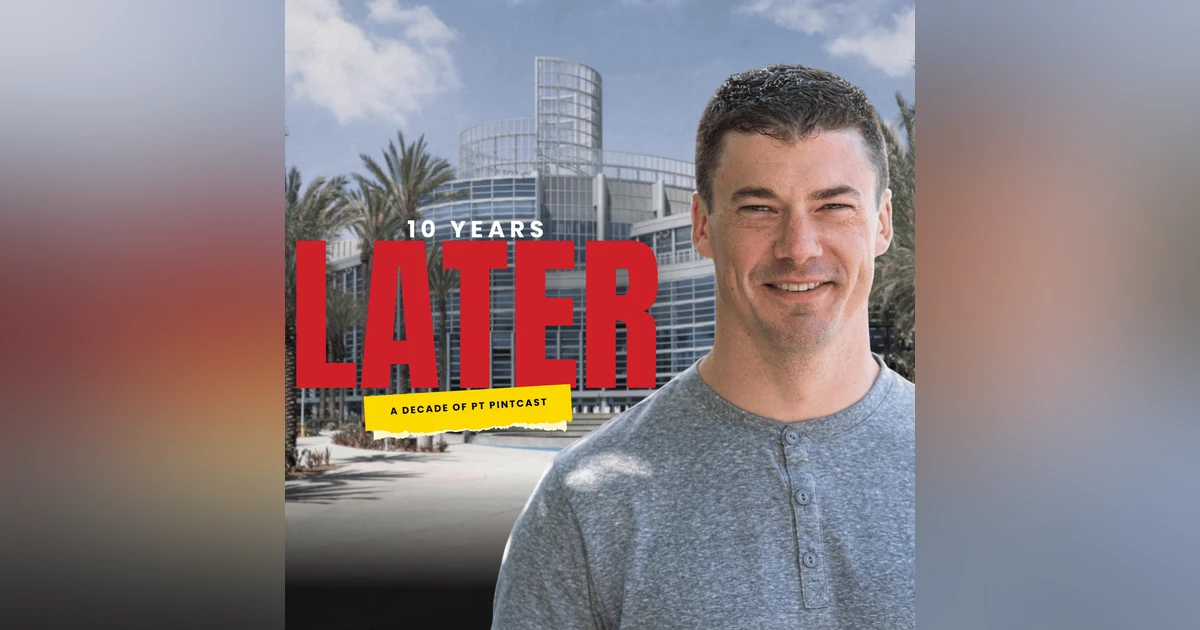
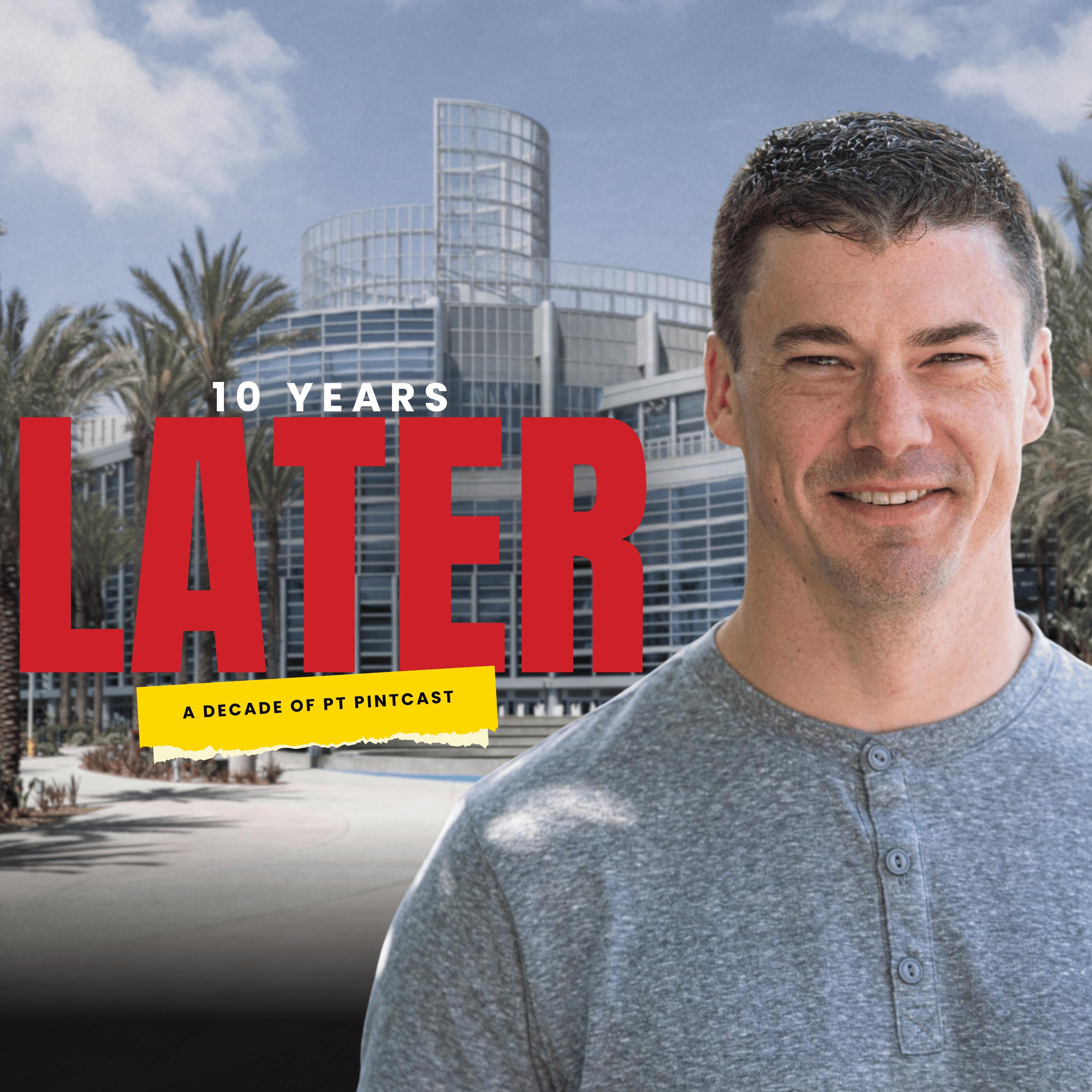


A Decade Under the Influence
Faith Stokes takes over the mic at CSM and interviews Jimmy McKay about 10 years of PT Pintcast.
This episode covers:
- Why reimbursement is the profession’s defining issue
- How students may drive the next innovation wave
- The Costa Rica wheelchair fundraiser story
- What APTA could do differently
- Why PT must embrace visibility and communication
- The difference between communicating and being understood
The Line That Sticks:
Science isn’t finished until it’s understood.
If you’re a PT, clinic owner, or healthcare leader trying to protect trust and earn attention in your market — this episode matters.
Sponsors Mentioned
- SaRA Health
- EMPOWER EMR
- U.S. Physical Therapy
<p>This episode is part of the <a href="/physical-therapy-business-podcast">Physical Therapy Business Podcast</a>, where physical therapists and clinic owners learn how to get more patients, improve operations, and grow their clinic without relying only on referrals.</p>
<p>Looking for more episodes? Explore the full <a href="/physical-therapy-business-podcast">Physical Therapy Business Podcast</a> for real-world strategies on physical therapy marketing, patient acquisition, and clinic growth.</p>
0:00 uh there's like footage yeah oh that's beautiful yeah i shot that myself that's a lot that's just stock footage but it looks cool i put the look i put my logo on there we're live from anaheim csm i didn't realize how close to disney we are literally across the street i gotta hit a pitching wedge there uh face soaks back on the show It's good to be here. All right. Thank you. Just want to make sure people can hear you. Perfect. Good. Today's not about me. Today's, all right. This was your idea, so you're in charge. This was my idea. You're in charge. I am in charge. I have questions and everything. I'm not going to be the same quality of host, but I'm excited to hear his answers. So today's guest. is proof that you can switch tracks without losing the beat he was a rock radio dj who became a doctor of physical therapy and then fused both to create pt pinecast the show that basically is if a ted talk and a radio show had a baby and raised it in a pt clinic After hundreds of interviews and a global audience, he's still spilling pints and pulling out the truths we all wish someone would say out loud.
1:04 And today, we get to celebrate ten years under the influence of Jimmy McKay. So welcome to your hijacked show, Jimmy. Thank you. I do like the ten years under the influence. It's kind of cool. You came up with that. A decade under the influence. I think that was an album title. I think that's a Taking Back Sunday, I think, or a song title. I don't know. I might have made that up. Well, thank you for doing this. This is fun. Yes. So it's your podcast birthday. And the weird part is I started the podcast in twenty fifteen. So this is like ten and change. But shortly after I started the podcast, my professor, Sky Donovan, was like, you have to go to this thing. It's called CSM. Yes. I hadn't I didn't have two nickels together, but I had to fly from Virginia to Anaheim. So this is where my first CSM was a decade ago.
1:46 And this is where I met you. And yes, ago again, you told me that. Where were we? I don't remember. It was a staircase. We were in a staircase. That happens. You know, a lot of stories like that. All right. It's your podcast birthday. Okay. So we're going to do a birthday flight. Good. Five drinks. Each one is tied to a question. You can take a shot, tell a story or both. Okay. Your call. Are you ready? Let's do it. All right. You may wish he took a starting shot when I took over this show. I did take espresso this morning, so I got a little edge on me. But we're going to ease in a little bit with a nice bourbon. Okay. Let's call that the starting shot, though. What's one thing you haven't gotten to talk about at CSM twenty twenty six that you want to talk about right now?
2:29 Oh, gosh. I mean, we talk about it a lot, but it's what everybody talks about in the middle. It feels like we have no solution, which is like, do we don't we get paid crappy and everything's too expensive? Everything's everything's on fire and everyone talks about it. We talked about it at Graham sessions a few weeks ago and it was like, what were the answers? I'm like, I don't know. I don't know. I wish I could fix it. I wish it was a magical combination of words because the largest portion of PTs here are students. And I'm like, I don't know what to tell them. Should you not? It's too late. You're already here. Keep going, right? And if you want to do this, I don't want to back people out. But that's the big hairy scary. APTA just put out a strategic plan. I haven't read it yet, but the smart people told me what was in it.
3:11 They're like, here's what was on it. They were like, number one thing APTA is going to be doing, reimbursement. How do we fix all the things? And like the number two thing is seven miles away. It's the number two is seven. And then the next thing, I don't know what the next thing was because they were like, it's reimbursement. If we don't get paid more, we're not going to have a profession. So I guess, I guess we're all, I'm talking, my answer is we're talking about it. It's just, there's no real good answer, which I like answers. There isn't one. But at the same time, if you're going places like this podcast where they're having these conversations, that's how we find the solution. So especially as a student, because the next question's about y'all.
3:52 As a student, making sure you're going places where there's conversations are happening is One, I find my students often have these unusual solutions I never considered because I have developed biases. I've been in the field ten years. So I'm looking for specific things. I am bringing the same solutions to the table and they've got. these like creative juices that I hadn't imagined. A different life experience. Even if you grew up in the same town that I did, but you're eighteen years younger than me, it's not the same town like and you did different thing. I mean, somebody was talking about yesterday. She was born in nineteen ninety seven. I graduated high school in nineteen ninety seven.
4:32 And she the the the idea was she's never known a world without phones. And I was like, oh, yeah, what's that like? Because there weren't any. And then there were and we adapted to that. Oh, Thank you. Yeah, we're just doing a live stream, but I appreciate you driving by. Thanks. Thanks, guys. That's why it's not scripted. So, I mean, I heard someone talk about, it doesn't sound like it's related, but landfills. And, like, how do we reduce landfills? What are we going to do? Like, where are we going to put the garbage? And they're like, dude, no. Some kid who's seven years old right now is going to figure out a way to develop a thing that eats plastic and makes it into candy. Wait, didn't they?
5:12 Probably, yeah. I'm almost positive that a child did invent something like that. But that's the thing. We're never going to undo the sins of us or our parents. It's going to be, we just have to invent. It's the movie The Martian, which is like, I'm just going to science the shit out of it. It's like, we have to keep going. It's not slowing down. Everybody's like, how do we slow AI down? I'm like, my man, jeans out of the bottle. I remember in two thousand ninety whatever when Napster was the thing. So, kids, you didn't always just be able to go to Spotify and just listen to whatever you wanted. You had to have these discs. And if you scratched it. But Napster was just like you just get a song. And like Metallica was like, and I heard someone smart was like, you never legislate. You can't legislate against technology.
5:53 It's going to pop up somewhere else. And the smart people like Steve Jobs was like, OK. What if we have to come to a compromise where everybody gets it or else they're going to use alternative means of breaking the rules. Like you can go to Pirate Bay and get any video you want. But when I have Amazon and it's like two dollars, I'm like that that feels reasonable. I'll do that. Someone had someone pointed it out before. Like if you want people to stop just leaving trash in your public place, put garbage cans up, put garbage can and empty them. It's like they want to do the right thing. But if you make it too hard, they will do the wrong. There's a well. I'm done here. So we want to do the right thing. And maybe we have gone full circle, which is back to reimbursement.
6:35 Maybe we just haven't hit the nail. Someone who's fifteen, who's going to be twenty five in ten years, probably has a better solution. Did you ever hear about three M like the tape company or whatever? They had this thing where they couldn't you know, they were engineers. And they had a bunch of engineers trying to figure out a problem. And they kept all doing the same things and getting no result. So this guy put the problem up on a website and put a bounty on it. And then like, and I might be making this up, but it was like a shepherd was like, why don't you use this method? And then they did it and it worked. It's like, because he, you can't. can't teach outside the box thinking unless you let people just leave the box the engineers were all in a lab the shepherd's on a hill and he had to solve a shepherd problem and he's like well this is the way to do it and they did it and then they figured out if we put bounties on this problem like whatever bounty the shepherd figured out was a million dollar problem they gained fifty grand they were like well that's a good roi and the shepherd's like great i'll buy more sheep We've got more sheep.
7:36 So I love the policy people and the advocacy people, but the answer might be a podcast, or the answer might be we all do a flash mob at the Capitol. I don't know, but doing the same thing over and over again and getting crappier results. Not even the same results, the crappier results. We are losing ground here, guys. So let's think about it from this angle. As much as we're excited for their innovation, they still benefit from mentorship. Correct. So let's go with your next drink. Okay. All right. We've got a bunch of up and coming PTs here at CSM. They're about to turn twenty one and get their license. You are going to buy them their first beer. Okay. What advice do you want to tell them before they start their career?
8:20 I would say, this is a quote from the seventies journalism, trust but verify, which is if someone tells you don't start a business until you're three years in, trust them, but then ask someone else. All advice isn't universal, right? There's always the outliers. I was told not to start a podcast because it would distract from me studying. And I was like, but you don't know how I study. And the person was right in that they were like, I hear you starting the side project when the important thing is in front of you. And I was like, I... I learn a lot from doing this weird thing. In fact, I learn in different ways. And then when I sit down to study, I come at it differently. So I would say there's a lot of advice. There are people on stages.
9:01 They are not trying to deceive you. They are just giving you their advice from their singular point of view. And I want you to take the greatest hits, and then slam that all together. And if you get to a point where the greatest hits aren't doing it for you, start getting more greatest hits. Lifelong learning is cool, but maybe there's a better term, which is lifelong adapting, which is you don't have to be the same person that just gets old. You're a different person each time. Go with it. I love that. Yeah. All right. She made that up. That was perfect. Goes off the cuff is what we've grown to love him for. All right. Next drink. Okay. Someone has just seen your podcast at CSM. Yeah. Excuse me.
9:41 They come up to you and they ask for the specials. What episodes do you want them to go back to? This is great. Um, I was, do you know Chad cook? Yes. So Chad cook did, do you know what predatory journals are? Yes. So predatory journals are anybody can get published, but I mean, they'll publish anything. So Chad did one where predatory journals come to Chad Cook because he's Chad Cook and they're just like, publish here, publish here. So he wanted to show that he literally could fling trash at them and pay the fee and it would get published. So he did a study that was so tongue-in-cheek that the tongue actually just came outside of the cheek.
10:23 And it was repeated cervical manipulations on a post-mortem person. Essentially, they were like, so we had a patient who died. Twenty minutes later, we did repeated neck manips, and then they came back to life. They were showing any reasonable person who read this would be like, this is insane. And they published it. And it was just like, see, they'll publish anything. So I want trust but verify with that. And the second one, so when you go on Spotify or Apple, you can only see the last two or three hundred episodes. So every time you publish one, one falls off. So if there's good ones, I try to make sure, repost it so it doesn't fall off the back.
11:04 But, um, I went on a service learning trip in my third year PT school. I was one foot out the door. I was going to graduate because I mean, if you're close to the end, graduate, still going to owe the money. Um, but, uh, I was, I was like, I don't know where I fit. I don't know where I fit in the profession. So we were in Costa Rica for two weeks. We worked at an orphanage, but I still was like, cool when i get back to america my problems are gonna still be there and i don't know what i'm doing but i got paired up with this one young man who had just turned who had uh uh m d let's go dystrophy uh and for two weeks like just happiest kid in the world like just happy and i'm like but you're in an orphanage you don't even own your own clothes like I went down there to be like, I can't wait to show you how smart we're all.
11:52 Talk to your students. And look how smart I am. And I'm just sitting there going, what is your secret, kid in an orphanage in Costa Rica who doesn't own his own clothes, who's in a Tilton Space wheelchair all day? And you wake up and you're like, hola. And I'm like, what is your deal? Yeah. And then I got angry because I wasn't able to help him. He had muscular dystrophy. He's just going to degrade. I mean, he was past the average age for someone with his condition. And spring break was right after our trip. So you're a bunch of twenty five year olds. I was like thirty five, but all my classmates were twenty five. So we rented Airbnbs and stayed in the jungle with monkeys. And the first night I'm there, I'm like angry because I'm like, we left him no better than we found him.
12:36 He's happy, but I'm pissed. So I started a GoFundMe page because my professor was a mobility specialist. And I was like, if you were in the United States, what would you get? And she was like, well, he would get a crazy expensive wheelchair. And she's like, what do you just turn into a learning moment, teaching moment? What do you think that would cost? And I'm like, I don't know, ten grand. And she's like, oh, let's sit down. So she sat like almost like we played Battleship. She was like, tell me about him. And I was like this and this. And she's like, do you think he needs this for this? And I was like this. So she's building the chair on a website, like building a car scratch as I'm telling her. And then she's like, what do you think it costs? And I was like. And she was like, okay. And she like hits enter and like spins the laptop around. And it was like, thirty six thousand dollars.
13:18 Wow. And he doesn't own his own clothes. So I'm like, all right, but I'm angry. And I just started the podcast maybe like six months before that. And when I got back to the US, I was like, so I started the GoFundMe page while I was drunk and on spring break. I just started telling a story over and over and over again. And I was like, hey, give me five bucks. Give me five bucks. I was smart enough to go for the easy ask. And of course, no one gave me five bucks because if you're going to take your wallet out, you're going to do twenty because it's easy. So bang, bang, bang. the more we raise, the more people are like, what's that kid doing? He seems pissed. And then like, someone would be like, if you raise a thousand dollars in the next three days, I'll match it. So it was like a thousand. We too. And then a company was like, I'll throw in two grand. And then per mobile, I want to say their name as much as possible.
14:00 The wheelchair company saw what I was doing and they were like, so that's, thirty whatever thousand dollars what if we made it like what if we so their price was coming down we've got a display model we can give you and the price is coming down the money's going up so we raised like thirty three thousand dollars in sixty six days and I was like I'm not a mathematician we raised two thousand dollars a day just because we just kept repeating and then the school got a hold of the idea they were like some students doing a weird thing they paid for me to go to Costa Rica with a professor because I didn't speak any Spanish and And we gave him the chair and it was like a full circle moment because we changed his minute to minute existence. And I was like, now I can walk across the stage of graduation and be like, we did we did at least one thing.
14:43 And it sort of showed me that you could just do stuff without permission and that stuff could be good and it didn't have to be traditional. Like there was no manual for that. There's no syllabus for this. This was see a problem. solve it which is also ironically uh david petrino who i got a chance to work with at mount sinai he's the director of rehab innovation it's literally his job title and his definite definition of innovation working at a large hospital system with access to technology and this and this is the most stunningly simple definition of innovation find a problem that no one else is solving solve that you are innovative. It doesn't need to be lasers, it doesn't need to be AI, it can be, it should be stunningly simple, so it's repeatable.
15:25 Because if it's not, no one's gonna do it. So technically, we were innovative because we saw a problem, because that orphanage had medical schools, dental schools, PT schools, around the country, constantly going in. It's one way they funded themselves. Medical tourism, right, in a good way. There's some problems about that, but we'll talk about that in November. And it really just showed me, like, if you just give a shit enough, you can kind of solve it. And if you get more people to give a shit, it's easier and faster. So that was probably my favorite episode. The Chad Cook one was just hysterical. People would reference that a lot. But the Hainer episode was the money ball. What I really like about that story though, is you took the thing they told you was probably not a good idea, but then you leveraged that to create something that was meaningful because that's the way you learn and that's the way you progress.
16:14 So I think, especially for our new students and our new grads, when we're looking at those gifts that we have, you know yourself, you know what you're good at, you know the way you learn, you know the way you drive change. Sometimes you need to trust that gut feeling. Yeah. So there's some walls too. So I started a podcast and this isn't a knock on my classmates, but like the thirty seven people sitting next to me every day when I was launching this crazy thing that's still been around for ten years, they were not impressed. And that's not a knock on them. They didn't. It was one more thing. I mean, I have other crazy ideas that never go off. I mean, this looks like I did one thing and it made, I have a lot of things that don't work. So they're like, here's one more thing.
16:56 When you start on a thing and it's in your gut and other people don't, it's not that they don't believe you. They can't see it. Right. Even if you explain it a hundred times, sometimes you can't, you can't just do this and be like, there it is. And they're like, all right, man, let's cool. So I have learned number one, You have to get to step fifteen before people start to be like, huh. And it's probably not going to be the people around you. Right. And when you see someone, if someone comes with you, like, I have an idea. Don't shit on it. Absolutely. But not even just don't shit on it. Like, put yourself back in that spot and be like, I might not see it now, but they're not asking me to approve or disprove of this idea.
17:36 They might just need to say it. Yes. Fifty times. Let them say it. I used to be a rock radio DJ. we would make fun of things like if someone did something stupid on the night before we would that would be all we talk about the next day and that's funny i now i'm older and if you come to me and you tell me you love you like the northeast champion of pokemon like i would have tanked on p i would have dunked on like that's dumb listen to whatever now i don't like pokemon i'm like look how excited that girl is about pokemon i want to focus on the excitement and i don't care what it is you like gardening i'm like tell me why you like gardening What do you like about that? Oh, I love to watch something grow. That's awesome. So boil it down to what it is. It's not about Pokemon.
18:16 It's not about gardening. It's about the elements of, if you want to get all sciencey, break it down to whatever the elements of. People used to shit on me, like, oh, you're doing that podcast still? And I'm like, yeah, I'm having conversations with super smart people that you read books that they write, and I hang out with them, and I can ask them anything I want. And when I put it that way, they're like, oh, shit, that feels like a life hack. I'm like, it is. It is. So what up, podcast boy? Isn't the dunk you think it is? Because I like it. It sounds like you've defined, well, we know you've defined yourself by not having boundaries. Yeah. Your next drink involves a boundary, though. Okay, hit me. Okay. It is a shot roulette. Okay. I'm going to give you three topics.
18:57 Go. You can only talk about one. Okay. Well, good. That is a hard thing, me not talking about something. You ready? Go. All right. Option one, APTA membership. What would you do on day one if you were suddenly in charge? Ooh, I like that one. Two, AI and PT. What's the bold claim you stand by even if people disagree? Three, the PT hill you'll die on. What's the opinion you refuse to let go of? So I'm going to go outside the rules again. I'll leave AI off the table. We'll talk about that enough. I'll talk about if I got hired by APTA, what would I do? And the hill, because I would die on this hill. So... the people that are walking around us right now like if they did the math on why they came to csm members or not the math don't math for ceus that's not why you're here i don't think apta is a membership organization because membership is a how like then by definition netflix is a membership organization because i pay and i have access i'm a member But the two different things between Netflix and APTA is Netflix lets you have access to data or movies, and APTA lets you have access to people.
20:05 So you're a belonging organization. The line that I hope APTA steals for CSM next year is come to CSM. Why? And some people might list features, feature, feature, feature. We have this many speakers and this many this and this many CUs and this many vendors. No, see future versions of yourself walking around everywhere or find where that future version of yourself is. Find people that you don't like their viewpoint and figure out why and be like, that's cool. You can have that. I'm just gonna, I don't like that. And then find people you appreciate their viewpoint. And don't just follow it dogmatically until you run off the hill like a lemming. I kinda like that.
20:46 Which parts do you like? I like this, this, not this, this. Great, take that. So I would say we need to lean into that more. How do you do that? the hell I will die on is this is not, this profession is not a tell business. We are in show business. And that doesn't mean you need to have a ticky-tock and do dance and do, I don't do any of the dancing. You're welcome in videos. But it, The more you show, the more people will understand, the more the profession will grow. Some people get annoyed by missed or disinformation or what they determine as missed or disinformation. There's no internet police. You can't get that removed, but you can dilute it by putting out tons and tons and tons and tons of good information.
21:27 So I would say we're a belonging organization that's masquerading as a professional association, which we are, but this is why people come and fifteen thousand people are here out of a profession of three hundred thousand that's a fraction of something i don't know what it is i can't do math fast but you can reach these people with these stupid little devices because if i belong to apta and then i go around the sun once right for twelve months and i don't feel because i can't come to a conference it's not the only way so but if state chapters are outmanned and outgunned and underfunded it's not their fault Sections and academies, they all want to do the right thing. They're great.
22:09 You need to show more. And that's my lens. I'm a communications guy. Of course, I'm going to think it's a communications problem and solution. But that would be my hill to die on and APTA statement. All right. Tell me your parting shot. My parting shot is... Oh, I love this one. Wait, let's do the graphic. Do the graphic. You have a graphic? Yeah, I'll do this. Boom. This is the parting shot. One last mic drop moment. No pressure. Just your legacy on the line. Is pressure filled when it is you? Literally his legacy on the line. Ten years. So if I were to get a tattoo... Uh, I know, but I would, this would be it. So there was a guy over in the UK, like the British version of the attorney or surgeon general.
22:51 And he said, science isn't finished until it's communicated. And as a guy in science and communications, I ran around for a month. That was like my email signature. And I was like, this is great. Science isn't finished until it's communicated, communicate, communicate. And then I said, wait a minute. I don't think that's complete. I was watching a beautiful mind. And he was like, that's his whole line was that's incomplete. Like you're not, you're close, but you're not there. I think science isn't finished until it's understood. Here's what I mean. I could be the most efficient third grade teacher on the planet. I could blow through that third grade syllabus in a week. Now the children would have no idea what I said, because my job would have just been to communicate it. No, the job is to do it at the speed and in the ways, and sometimes you think this lesson's gonna take five minutes, but it takes fifty-five minutes.
23:32 Why? Because you're not doing it right. They're not not getting it. You're not doing it right for them. So I think as soon as you think that you've communicated and your job's done, it's not. The onus is still on you for patient education or student education or public education. Well, we said it. We put it on a billboard. That's not how brains work, my friend. We repeat. We do different methods. So science isn't finished until it's understood and it's still on you or us. to continually educate and change and be better at communication. So science isn't finished until it's understood. That's my parting shot. That's fantastic. Yeah. Jimmy, thank you for hanging out with me today. I had a blast. Thank you for interviewing me on my show. Appreciate it.
24:13 Thanks, folks, everybody.